

Waterproof Mattress Protector Super King Size UK Guide

A glass of water tips over during the night, or a child climbs into bed with a damp sleeve. On a super king mattress, the immediate worry is obvious: will the liquid reach the mattress? But the less dramatic problem can be just as frustrating. A protector that's too narrow, too shallow, or prone to bunching may leave part of the bed exposed even when its label says “super king”.
The right choice starts with the mattress itself, not the product name. Check the full footprint, measure the depth, then weigh the waterproof layer against the fabric feel you want to sleep on.
Table of Contents
- Why Super King Beds Need a More Careful Protector Choice
- Understanding Super King Dimensions and What They Mean for Fit
- How Miracle Membrane Waterproofing Actually Works
- Choosing the Right Fabric for How You Sleep
- Fitting a Protector on a Deep Super King Mattress
- Waterproof Does Not Always Mean Allergy-Proof or Cooling
- Delivery, Warranty and What to Check Before You Order
Why Super King Beds Need a More Careful Protector Choice
A UK super king mattress measures 180 × 200 cm, giving two sleepers about 90 cm of width each. Its top surface covers approximately 3.6 square metres, before you account for the sides, mattress depth or the extra fabric needed for a secure fitted edge. That larger footprint makes accurate coverage the first requirement, not a detail to check after choosing a fabric.
A king protector can't cover a super king properly. A UK king mattress is typically 150 cm wide, leaving a 30 cm difference across the width when matched with a super king. That mismatch can expose mattress fabric along the sides or force the protector to stretch, pulling its corners out of place. A larger mattress also needs side panels deep enough to reach beneath it without straining.
Think beyond spills
Liquid protection matters if a child has an accident, a pet jumps onto the bed after a wet walk, or someone knocks over a drink. But a protector also sits between the mattress and perspiration, household dust and allergen-bearing material. UK allergy evidence identifies house-dust-mite allergen as relevant to mattresses and bedding, while also making clear that a protector isn't a treatment for asthma or allergy symptoms (UK evidence on dust-mite sensitisation and respiratory symptoms).
The fabric matters because it's the part you'll feel through your sheets. A waterproof layer can stop liquid, but comfort depends on how the fabric rests against the bed, how it handles moisture vapour, and whether it stays smooth across the whole 180 × 200 cm surface. A protector that feels too warm or wrinkles beneath you may be technically fitted yet uncomfortable in everyday use.
For a useful starting point on the different features to compare, this overview can help you find a mattress protector. Use it to organise your questions, then check the exact dimensions and depth range on the product you're considering. The “super king” label alone doesn't confirm a complete, comfortable fit.
Understanding Super King Dimensions and What They Mean for Fit
For a UK super king, the mattress footprint is 180 cm wide by 200 cm long. The king size is typically 150 cm wide, so a king protector is not a close substitute: it's narrower by 30 cm. That difference can leave mattress fabric uncovered or put undue tension on the protector's corners.
Use this short comparison to check the size label before you look at materials or features.
| Size | Width (cm) | Length (cm) | Notes for protectors |
|---|---|---|---|
| Single | Not specified here | Not specified here | Check the mattress dimensions on its product label |
| Double | Not specified here | Not specified here | Check the mattress dimensions on its product label |
| King | Typically 150 | Not specified here | Too narrow for a super king mattress |
| Super king | 180 | 200 | Look for both dimensions and a suitable depth range |
The key comparison is between king and super king. The other principal UK sizes are single and double, but their dimensions aren't needed to assess a super king protector. Independent UK retail size guidance identifies the super king format as 180 × 200 cm (super king mattress size guidance).
Measure the mattress, not the bed frame
A super king bed frame's outside measurements don't tell you the mattress size. Measure the mattress itself, since frame dimensions can differ from the mattress footprint. Check the length and width, then measure depth from the top sleeping surface down to the underside, including any pillow-top or topper that will remain on the bed.
Compare that depth with the protector's stated maximum mattress depth. The skirt should accommodate the measured mattress depth, with enough fabric to tuck securely underneath. If the skirt is too shallow, it can pull away at the corners and stress the seams. If the protector is much too loose, it can gather into wrinkles and shift while you sleep.
Practical rule: Reject a listing that doesn't state the protector's footprint in centimetres. For a UK super king, look for 180 × 200 cm, then confirm the depth range separately.
This quick measurement routine gives you the two details that decide whether the protector can cover the mattress: its surface dimensions and its depth. Don't rely on a size name to supply either one.
How Miracle Membrane Waterproofing Actually Works
A waterproof protector usually combines a soft fabric surface with a thin barrier underneath. Think of that barrier as a selective gate: it's designed to resist liquid water while allowing water vapour to pass through. A solid rubber sheet would block both, which is why a flexible, breathable membrane is a different proposition from an impermeable plastic layer.
The phrase Miracle Membrane refers to Protect-A-Bed's membrane technology. The concept is easier to understand through everyday fabrics: moisture resistance and breathability can be designed to coexist, although the specific performance depends on the materials and construction used. For a wider look at moisture-resistant textiles, this guide to Atlanta custom upholstery fabrics offers useful context on how fabric choices affect liquid exposure.
Ask how the complete protector is tested
“Waterproof” is a performance claim, so ask what test supports it. Hydrostatic-head testing, associated with BS EN 20811, exposes fabric to increasing water pressure until penetration occurs. In the cited UK textile guidance, 10 kPa is approximately equivalent to a 1,000 mm water column and is described as a minimum penetration-resistance level in the relevant British Standard discussion (UK explanation of waterproof and breathable fabric testing).
That test concept matters for a mattress protector because a sleeper can press down on liquid. A static puddle isn't the only condition the barrier may face. When comparing products, look for the test method and pressure result, and check whether the claim covers the complete protector, including seams and elasticated edges, or only a sample of the central membrane.
Breathability also needs a meaningful basis. A moisture-vapour transmission or permeability result is more informative than the unqualified word “breathable”. It can help you judge how vapour may move through the barrier, but it doesn't guarantee that every sleeper will feel cool. Liquid resistance and vapour management are related, but they aren't the same claim.
Choosing the Right Fabric for How You Sleep
On a super king bed, the membrane protects a broad surface, but the top fabric determines much of the feel against your sheets. The name of the fabric can help you narrow down options, yet it doesn't tell you exactly how warm or soft the protector will feel in your room. Think about your sleep habits first, then verify the product's own description and care instructions.
Match the material to your routine
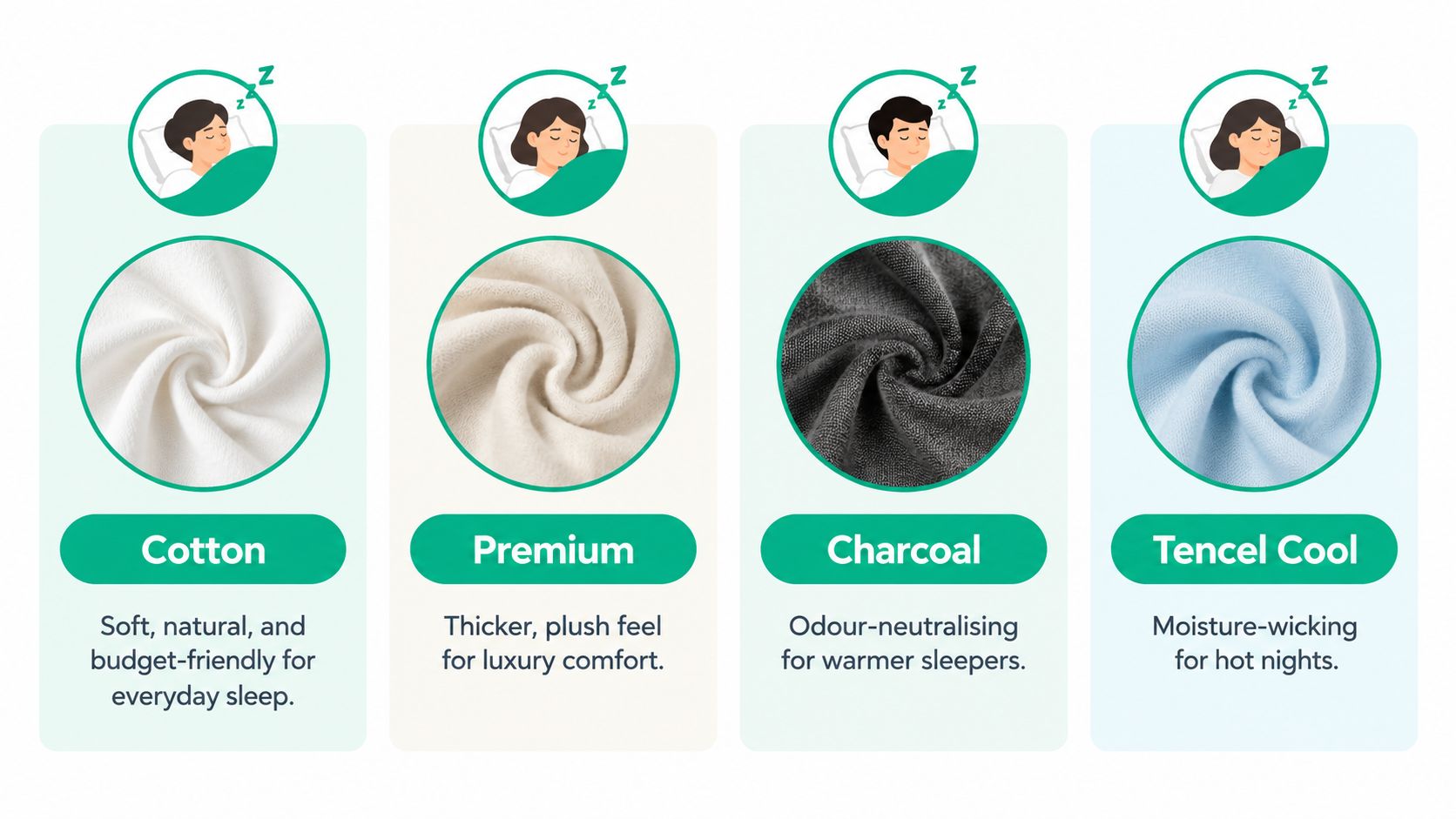
Cotton is a familiar choice for a family bed used through changing seasons. If a child shares the super king or you want a straightforward everyday surface, consider whether the product's cotton layer suits your preferred bedding feel. Don't assume the fabric name alone tells you how the finished protector will feel.
Premium is the option to investigate if you want a softer, more substantial surface. Check the stated fabric construction and how it sits beneath a fitted sheet, especially across the broad centre of a super king mattress. A plush feel can be appealing, but it's still worth checking whether the full protector remains smooth once fitted.
Charcoal may suit someone who likes a darker-looking product or wants a cooler touch, according to the product's own description. Treat claims about odour control or temperature as features to verify rather than guarantees that the bed will stay cool.
Tencel Cool is positioned for people who tend to sleep warm or want a fabric described as moisture-wicking. If you often wake feeling hot, this may be a candidate to compare, but waterproofing itself doesn't make a protector cool. The fabric above the membrane and your room's conditions both affect comfort.
For a broader explanation of the relationship between waterproof protectors and warmth, see this discussion of whether waterproof mattress protectors make you sweat.
A quick decision rule: if you sleep cool, start with the feel you prefer; if you sleep warm, compare fabric descriptions and vapour-management information. For a family bed, prioritise a secure fit and care instructions you can follow. If your bedding changes with the seasons, favour a surface that feels comfortable under both lighter and heavier sheets.
Before ordering, check the fabric name, the exact super king footprint and whether the protector's stated depth suits your mattress. A comfortable fabric won't compensate for a loose or strained fit across 180 × 200 cm.
Fitting a Protector on a Deep Super King Mattress
A deep mattress makes the skirt measurement as important as the top-surface dimensions. A protector can be wide and long enough but still pull off the corners if its fitted sides don't reach below the mattress. Measure the sleeping surface to the underside, including a pillow-top or topper that stays in place, then choose a stated skirt depth that exceeds that measurement.
Fit it without stretching the corners
Lay the protector on the bed and line up its corners with the mattress corners before pulling the skirt down. Secure one corner, then the opposite corner, and repeat with the remaining pair. This keeps the fabric spread evenly across the 180 × 200 cm top instead of dragging it diagonally and putting excess strain on one side.
Smooth the side panels down by hand, then tuck the skirt beneath the mattress. Don't yank the elastic to make a shallow skirt fit; that can pull the waterproof layer away from the edge and place unnecessary stress on seams. If it seems slightly loose, smooth the surface and confirm that the product is made for your measured depth before deciding the fit is acceptable.
A fitted protector covers the top and sides like a fitted sheet. A fully enclosed encasement surrounds the mattress and closes with a zip. They serve different needs: choose based on whether you need a simple removable surface layer or a sealed enclosure.
For more on checking the skirt range against mattress height, consult this guide to protectors for deep mattresses.
Check the fit and care label
After fitting, run your hand across the top and along the sides. The protector should lie flat without exposed corners, tight seams or folds gathered under the sleeping area. If it shifts when you smooth it, check whether the dimensions and depth match the mattress rather than trying to solve a sizing mismatch by stretching the fabric.
Before washing, follow the care label for water temperature, detergent and drying. There isn't one safe temperature for every membrane or fabric, so don't assume a hot wash is suitable. UK clinical guidance advises washing unencased bedding at 60°C or above for dust-mite allergen management, but a protector may have different washing limits (NICE recommendations on indoor allergen exposure). Follow the protector's own care instructions, and use them to plan cleaning without damaging its waterproof layer.
Waterproof Does Not Always Mean Allergy-Proof or Cooling
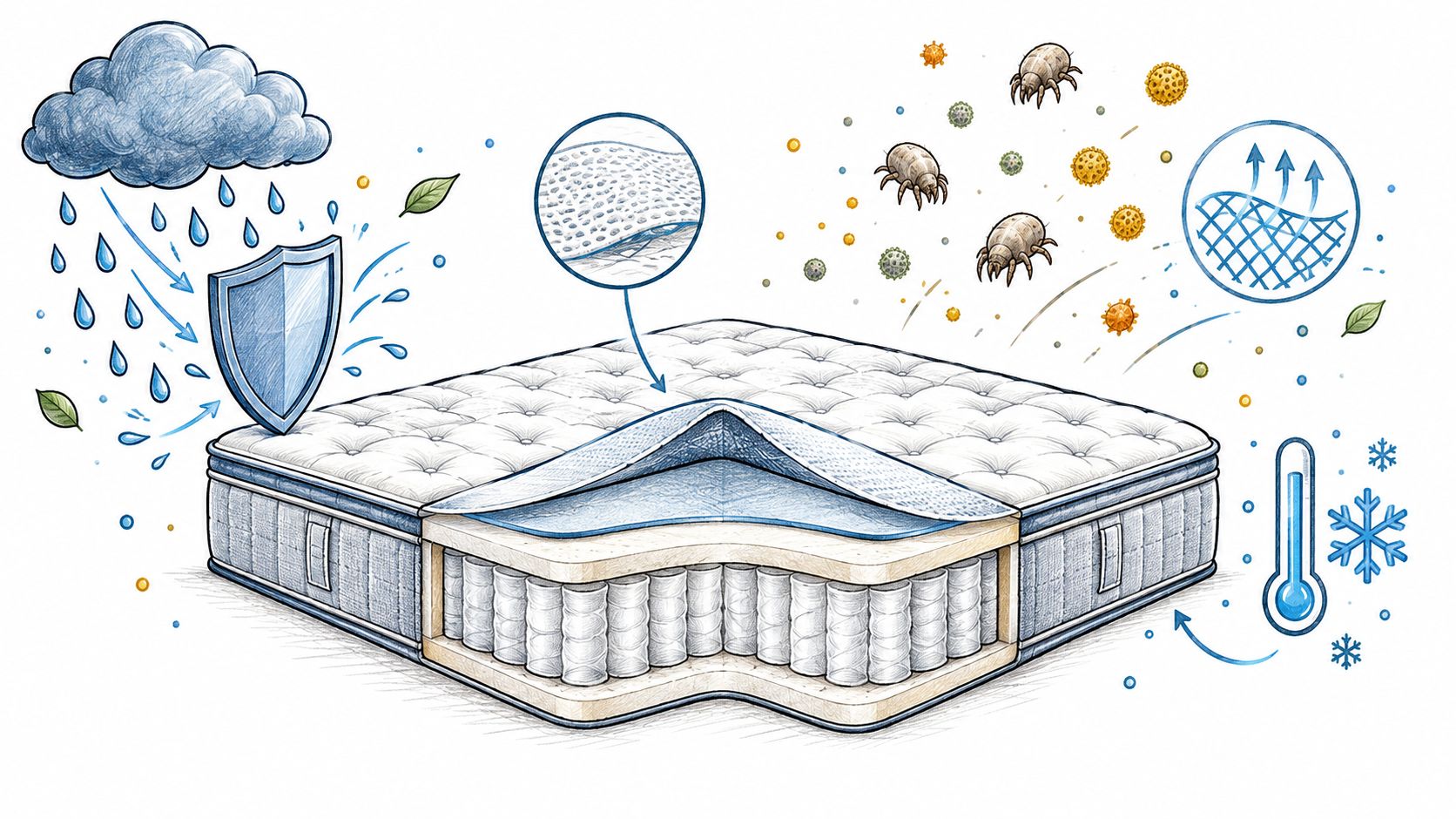
A fitted waterproof protector and an allergy encasement aren't interchangeable. A waterproof layer can resist liquid, but that alone doesn't show that the entire mattress is enclosed or that the product has been tested to contain house-dust-mite allergen. UK clinical guidance recommends breathable covers that completely enclose the mattress for people allergic to house-dust mites; a standard fitted protector may not meet that requirement.
Nor should a protector be described as a treatment for allergies or asthma. UK evidence supports the relevance of mattress and bedding hygiene, but covers are one part of exposure reduction, alongside cleaning, ventilation and regular washing. If you're weighing fitted protection against a more complete barrier, this overview of allergy mattress protectors can help clarify the distinction.
Consider moisture in the room as well as on the bed
A waterproof layer may protect the mattress from spills without removing water vapour quickly enough for every sleeper to feel comfortable. Government guidance says house-dust mites thrive in warm, humid environments and recommends ventilation to remove moisture; NICE also advises reducing damp and condensation through ventilation (UK guidance on indoor airborne allergens). That's a reminder to consider room conditions and drying habits, not just the protector's label.
If you're comparing ways to manage comfort at the sleep surface, this discussion of breathable mattress options from Ocodile provides broader context on ventilation and material choice. For your own bed, check the fabric, allow a washed protector to dry fully, and ventilate the room. A waterproof cover isn't a cure for damp, condensation or mould.
Before checkout, ask yourself:
- Coverage: Does the protector state 180 × 200 cm?
- Depth: Does its fitted range suit the measured mattress, including any topper?
- Purpose: Do you need liquid protection, a fully enclosed allergen barrier, or both?
- Comfort: Are the fabric and vapour-management claims clear?
- Care: Can you wash and dry it according to the label?
Delivery, Warranty and What to Check Before You Order
Treat delivery terms and warranty cover as part of the fit decision. A quick delivery promise won't help if the protector doesn't match the mattress depth, and a warranty only matters if you understand what it covers. Check whether the stated cover applies to material or manufacturing defects, and whether seam or membrane problems fall within the terms.
Use this checklist when comparing a UK listing:
- Footprint: Confirm 180 × 200 cm in centimetres.
- Depth: Match the stated maximum mattress depth to your measurement.
- Performance: Look for details of waterproof testing and coverage.
- Care: Read washing and drying instructions before buying.
- Service: Check delivery timing, shipping conditions, returns and warranty exclusions.
Protect-A-Bed's UK storefront lists waterproof protectors in multiple fabric options and sizes, with Miracle Membrane technology. Its stated delivery, shipping and warranty conditions can change, so confirm the current terms on the product and checkout pages before ordering. A visible review score or international stockist footprint can provide context, but neither substitutes for checking local delivery arrangements and the specific product's fit.
Choose your mattress depth and preferred fabric, then confirm the protector's stated 180 × 200 cm footprint and care instructions before ordering. Protect-A-Bed offers waterproof protectors in several fabric options, including products using Miracle Membrane technology. Visit Protect-A-Bed to compare the UK range and check the current fit and delivery details.