

Do Waterproof Mattress Protectors Make You Sweat?

No, waterproof mattress protectors don't make you sweat on their own. A bedroom around 16–18°C can still contain a roughly 30°C microclimate next to your body, and only fully sealed, non-breathable plastic layers are likely to make that warmth and moisture feel trapped.
You fit a new protector, smooth the corners beneath the sheet and feel reassured that a spilled drink or night sweat won't reach the mattress. A few hours later, you wake at 3 a.m. clammy, throw back the duvet and blame the waterproof layer.
That reaction makes sense, but waterproofing itself isn't automatically the problem. The important question is how the protector is waterproof. A solid plastic sheet blocks liquid and vapour alike, while a breathable membrane is designed to stop liquid passing downwards and allow heat and moisture vapour to move away from your body.
The difference becomes more noticeable if you already sleep hot, your room is warmer than comfortable, or hormonal changes contribute to night sweats. If that sounds familiar, understanding why menopause triggers night sweats can add useful context, because the protector may be intensifying an existing heat-management problem rather than causing it by itself.
Table of Contents
- Why Your Waterproof Protector Feels Warm at Night
- How Waterproof Layers Interact With Body Heat and Moisture
- Old Plastic-Backed Protectors vs Modern Membrane Designs
- Comparing Protector Fabrics for Hot Sleepers
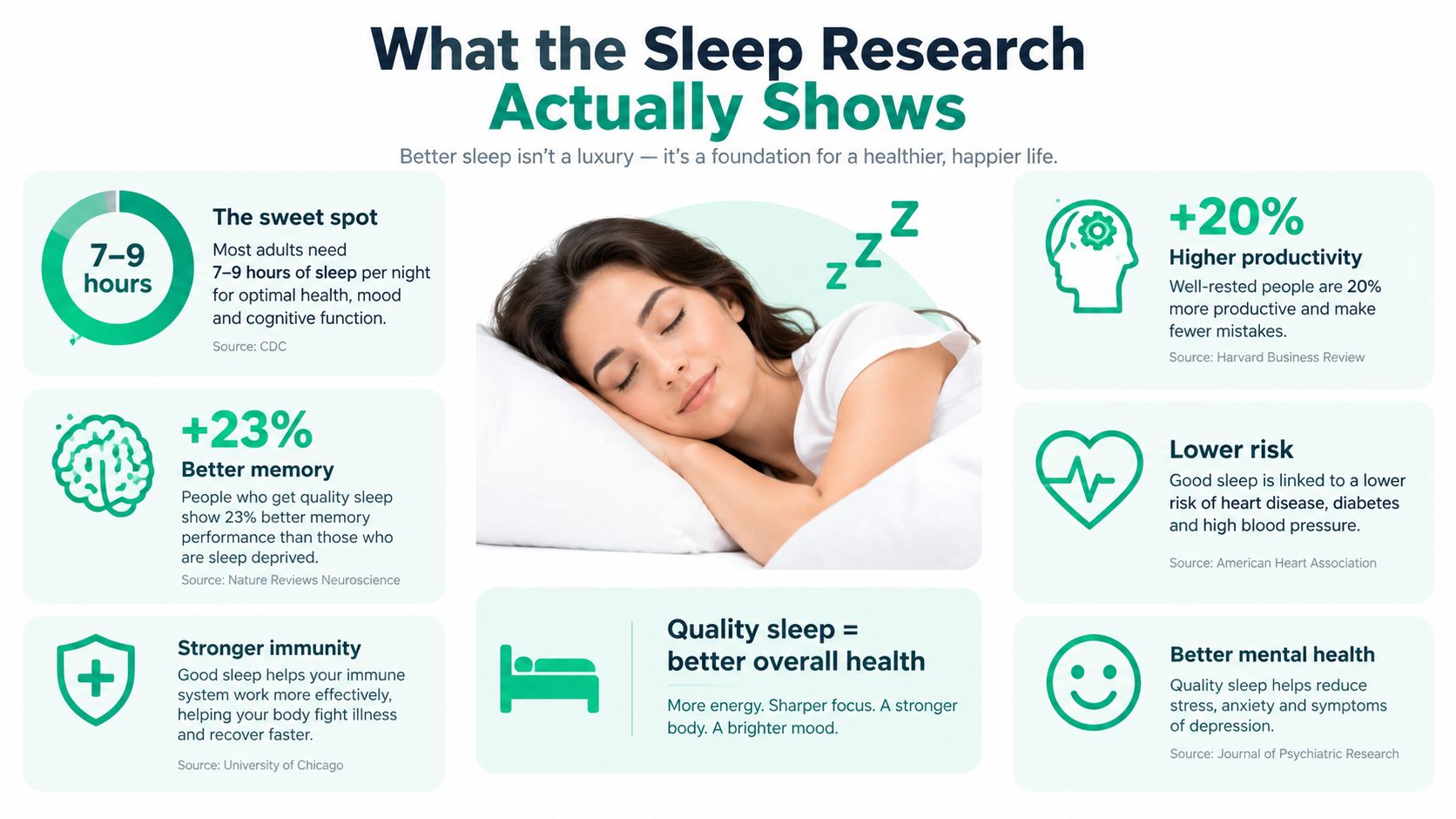
- What the Sleep Research Actually Shows
- Practical Ways to Reduce Night Sweats While Staying Waterproof
- What Hot Sleepers Should Look For Before Buying
Why Your Waterproof Protector Feels Warm at Night
The 3 a.m. test
You fit a new protector, smooth it beneath the sheet and settle under the duvet. At 3 a.m., the surface feels clammy, so the waterproof layer gets the blame. That reaction is understandable, but several parts of the bed are managing heat at once: your body produces warmth, your skin releases moisture, the duvet slows heat loss and the protector sits between you and the mattress.
A continuous, non-breathable backing can leave humidity with nowhere to go. A membrane is built differently. It blocks liquid while allowing some heat and moisture vapour to move away from the skin. The result depends on the barrier and the face fabric, whether that is a basic synthetic layer or a more moisture-managing cotton or Tencel surface.
Two protectors can therefore feel entirely different beneath the same sheet. One may feel like a thin fabric layer. Another may feel crinkly, cling to the mattress and create a sealed surface. Both can stop a spill reaching the mattress, yet the sealed plastic-backed design is more likely to hold warmth and dampness against you.
The difference makes sense once you separate room temperature from the microclimate next to your skin. UK guidance from the Sleep Charity places a comfortable bedroom at around 16–18°C, while research from London Metropolitan University describes the air immediately around a sleeper as roughly 30°C. Read the sleep-temperature research from London Metropolitan University for the distinction between the cooler room and the warmer layer surrounding the body.
Construction, not the label
The word waterproof describes the protection offered, not the way the material handles air and vapour. Check the backing layer and the fabric that touches the sheet.
The practical answer: If a protector makes you sweat, inspect its barrier construction before giving up on waterproof protection.
Hot sleepers and people experiencing menopausal night sweats may notice a poor match sooner. If the room already feels warm, a sealed layer leaves less opportunity for heat to disperse and the surface can become clammy faster. Understanding why menopause triggers night sweats can add context when the protector is intensifying an existing heat-management problem rather than creating it alone.
How Waterproof Layers Interact With Body Heat and Moisture
A protector has two jobs that sit in tension with each other. It must block liquid, including spills and perspiration, from reaching the mattress, while still letting body heat and moisture vapour move away from the skin.
The easiest way to see the difference is to separate the room from the layer of air around your body. The bedroom may feel cool, but the air trapped next to your skin is warmer and damper, so the protector has to deal with that smaller microclimate, not just the room itself. A plastic poncho keeps rain out, yet it traps your own warmth and perspiration. A breathable waterproof jacket still resists rain, while giving vapour a route out. A mattress protector works best when its construction follows the second approach.
Liquid versus vapour
Liquid water and water vapour behave differently. A spilled drink is a visible liquid that needs to be blocked. Perspiration starts as warmth and moisture at the skin, and your bedding should let that excess move away instead of holding it in place. If the protector stops both liquid and vapour, the surface above it can feel hot and sticky.
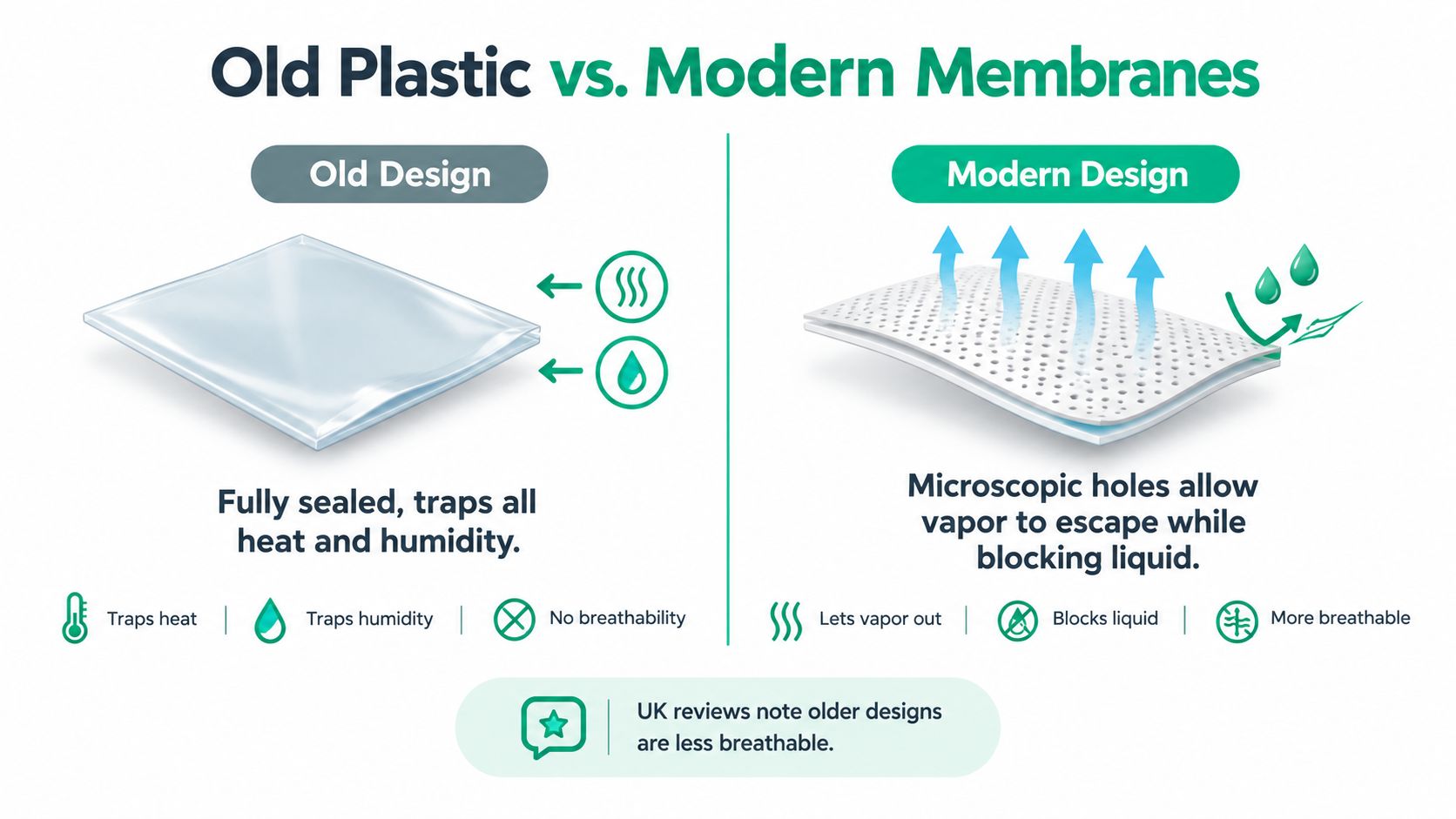
Membrane-based protectors are designed for that distinction. They keep liquid out while allowing some air, heat and humidity to pass through the material. UK product guidance describes breathable membranes as waterproof barriers that still encourage airflow and help moisture vapour escape, which is the useful point to check in product copy.
What happens beneath the sheet
Your skin warms the air right beside you. If that air can move through the sheet and protector, heat and humidity have a better chance of dispersing into the room. If a continuous plastic layer blocks that movement, moisture lingers near the skin and the bed can feel clammy even though the mattress stays protected.
This does not mean a breathable protector will make every hot night comfortable. Your duvet, pyjamas, sheets, room temperature and personal heat regulation all play a part. It does mean the protector does not need to become another sealed layer in the bedding stack.
Look for wording such as breathable membrane, air-permeable, vapour transmission or moisture wicking. Treat vague claims about a “cool feel” with care unless the construction explains how the protector handles heat and humidity.
Old Plastic-Backed Protectors vs Modern Membrane Designs
Older protectors often use a continuous synthetic or plastic-backed layer. It creates a straightforward barrier, but UK consumer coverage has long distinguished these designs from newer breathable constructions, describing fully waterproof protectors as less breathable than cotton or natural-fibre alternatives and more likely to feel warm. That's the design most closely associated with complaints about rustling, heat and a sticky surface.
Modern membrane designs take a different approach. A thin TPU or similar membrane can block liquid while allowing air and vapour to pass through. The membrane remains the waterproof component, but it isn't necessarily a solid plastic sheet covering the entire surface in the same way.
A side-by-side comparison
| Construction | Liquid protection | Heat and vapour handling | Likely feel |
|---|---|---|---|
| Fully sealed plastic backing | Strong barrier against liquid | Very limited airflow and vapour movement | Warmer, potentially clammy or crinkly |
| Breathable membrane | Designed to block liquid | Allows greater airflow and vapour transmission | Quieter and less sticky |
| Membrane with a breathable fabric face | Combines barrier protection with a surface layer | Better moisture management at the skin-facing side | More fabric-like and comfortable |
Hot sleepers tend to notice the difference quickly because they produce more warmth at the skin surface or are more sensitive to heat build-up. Menopausal sleepers may also be particularly aware of a protector that slows heat loss during a night sweat. The issue isn't that waterproofing always causes sweating. It's that a non-breathable barrier can worsen overheating once sweating has started.
A breathable construction can't control the room or your body's temperature changes. It can remove one avoidable source of heat and humidity retention. That's a meaningful distinction when you're deciding whether to keep a protector, replace it or change the rest of your bedding first.
For a closer explanation of how a plastic backing changes the feel of a bed, see this guide to plastic in waterproof mattress protectors.
Comparing Protector Fabrics for Hot Sleepers
The barrier layer determines whether liquid reaches the mattress, but the fabric face determines much of what you feel beneath the sheet. A breathable membrane paired with a heavy, heat-retaining surface may still feel warmer than expected. Conversely, a suitable fabric face can make waterproof protection feel much more like ordinary bedding.
Fabric differences at a glance
| Fabric face | Breathability | Moisture handling | Best for |
|---|---|---|---|
| Tencel | High when paired with a breathable membrane | Smooth, moisture-managing surface that helps reduce a damp feel | Hot sleepers who want a soft, cool-feeling finish |
| Cotton | Generally good, depending on the weave and backing | Absorbs and manages moisture in a familiar fabric layer | Sleepers who prefer natural-feel bedding |
| Quilted polyester | Variable, often lower when densely padded or paired with a sealed backing | Can hold warmth and feel less comfortable when humidity builds | Sleepers prioritising cushioning over heat management |
| Cooling knit or thermoregulating blend | Variable by construction | Designed to move or manage moisture and heat at the surface | Sleepers looking for targeted temperature features |
These are broad categories, not guarantees. A thin cotton face over a breathable membrane may feel cooler than a thick polyester quilt. A Tencel face can still feel warm if the underlying protector traps vapour. Always judge the complete construction rather than the fabric name alone.
The strongest combination for a hot sleeper is usually a breathable waterproof membrane with a cotton or Tencel face. The membrane prevents liquid ingress, while the surface fabric helps manage the moisture and heat closest to your skin. You can explore how Tencel is used in this Tencel mattress protector guide.
Match the surface to your habits
If you wake with damp sheets, prioritise moisture handling. If you dislike a slick or plastic feel, choose a fabric face that feels natural beneath your fitted sheet. If you sleep hot but don't experience much perspiration, airflow and a thin construction may matter more than absorbency.
Avoid assuming that “quilted” means cooler or that “cooling” guarantees a lower temperature all night. Those descriptions can refer to the surface texture or marketing position rather than the protector's ability to transmit vapour. Check whether the product combines its face fabric with a breathable membrane and whether the protector is thin enough not to add unnecessary insulation.
What the Sleep Research Actually Shows
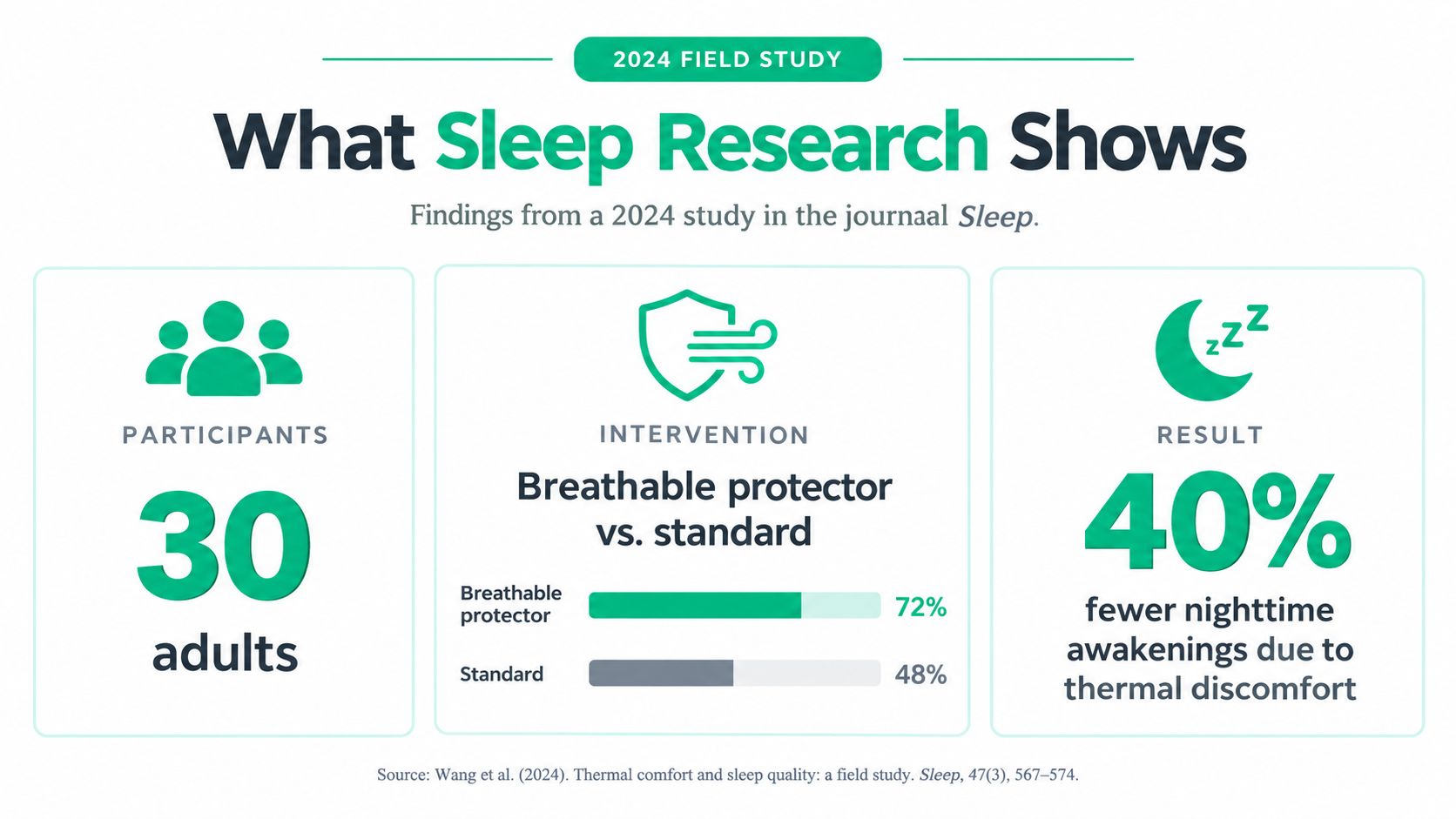
A 2024 field study published in the journal Sleep followed adults aged 21–76, with women making up 69% of the participants. During a three-week intervention within the study, participants used a protector designed with breathable materials to draw heat away from the body. The study reported a 7-minute reduction in sleep-onset latency, alongside self-reported improvements in feeling cooler and experiencing less night sweating. The UK review of breathable mattress-protector research summarises those findings and places them alongside practical advice for hot sleepers.
That result doesn't prove that every breathable protector will produce the same experience. It does support a more careful answer to the question. A protector's thermal behaviour matters, and a design that helps heat move away from the body may feel different from a standard construction.
The bedroom changes the result
The wider bedding environment matters just as much. A Loughborough University study found that targeted bed cooling in a 30°C bedroom improved thermal comfort, increased total sleep time by 19 minutes and reduced the time needed to fall asleep by 10 minutes in overheated conditions. The Loughborough University report on targeted bed cooling shows why a protector shouldn't be assessed in isolation.
If the room is hot, the duvet is too warm and the sheets hold moisture, even a well-made protector has limited work to do. A less breathable protector, however, can add another restriction to heat dissipation. That's why airflow and moisture management are central to preventing overheating rather than optional comfort extras.
The practical conclusion is modest but useful. Don't expect a mattress protector to regulate your entire sleep environment. Do expect the construction to either help vapour escape or make that escape more difficult. Clothing also affects the skin-level microclimate, so guidance on comfortable sleep tee styling may help you reduce warmth elsewhere in the bedding system.
Practical Ways to Reduce Night Sweats While Staying Waterproof
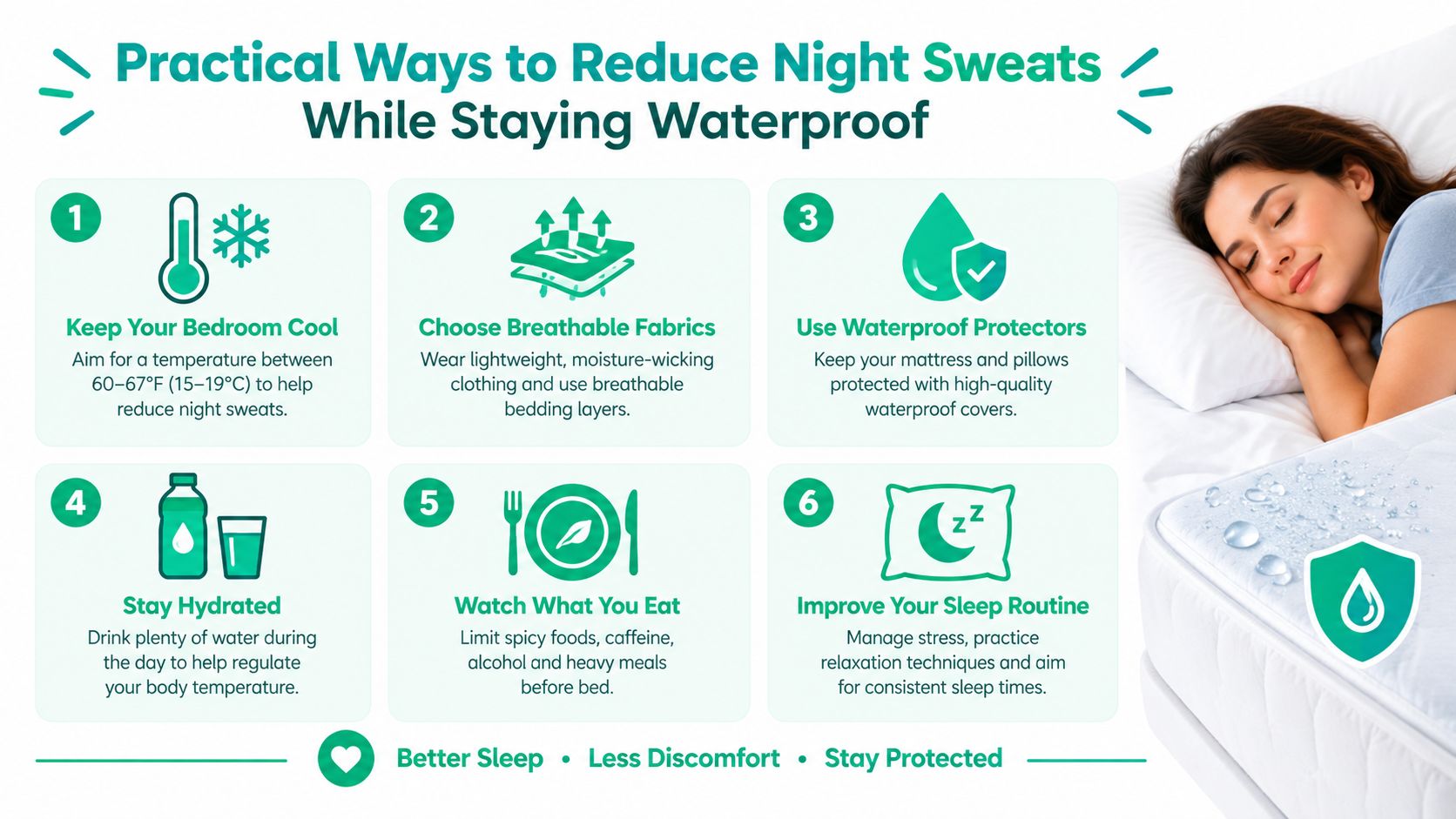
You can improve comfort without giving up waterproof protection. Start with the layers closest to your body, then check whether the protector itself is fitted and cared for properly.
A useful way to judge the bed is by the skin-level microclimate. If the air trapped beside you stays warm and damp, sweat has less chance to disperse. A protector is only one part of that system, so the aim is to let heat and moisture move away rather than trap them in the stack.
Adjust the bedding stack
- Lower the duvet warmth: Breathable bedding and lighter duvets give heat somewhere to go. If the top layer is too warm, even a good protector will feel hotter than it should.
- Aim for 16–18°C: The Sleep Charity suggests a bedroom range of around 16–18°C. A warmer room leaves less room for your body to shed heat, so the protector is more likely to feel noticeable. The point is not perfection, just a cooler starting point.
- Use breathable sheets: Cotton or other moisture-managing sheet fabrics usually feel less clingy than synthetic surfaces. The sheet sits nearest your skin, so it shapes how quickly moisture spreads and dries.
- Reduce unnecessary layers: A thick pad between the sheet and protector can act like an extra blanket. If you do not need more cushioning, a simpler stack often sleeps cooler.
Check the protector itself
- Fit it smoothly: A protector that bunches under you creates warmer patches, much like a fold in clothing traps heat. Smooth out wrinkles and confirm the corners suit the mattress depth.
- Wash it as directed: Perspiration, detergent residue and body oils can change how the surface feels over time. Follow the care instructions, and avoid harsh treatments that may damage the membrane.
- Listen for clues: Crinkling, a rubbery feel or a surface that seems tightly sealed can point to a design that blocks liquid well but moves air less easily. Those clues do not prove poor breathability, but they are worth checking against the product details.
- Pair the right layers: A breathable membrane works best with sheets and sleepwear that do not hold heat close to the skin. For a practical overview of bedding choices, see this guide to bedding for night sweats.
What Hot Sleepers Should Look For Before Buying
A hot sleeper doesn't need to reject waterproof protection. They need to reject the wrong construction. Read the product description as a description of airflow and moisture management, not just a promise that liquid won't reach the mattress.
Use this buying checklist
- Choose a breathable membrane. Look for a membrane or air-permeable barrier rather than a fully sealed plastic backing. The product should explain how it blocks liquid while allowing heat and vapour to move through.
- Prioritise the face fabric. Cotton and Tencel are sensible starting points for a natural-feel surface. Cooling-knit and thermoregulating fabrics may also suit you, but check what sits underneath and how the complete protector handles moisture.
- Keep it thin and quiet. A protector shouldn't substantially change the feel of your mattress. Thin, flexible construction is less likely to add unwanted insulation or create the crinkling associated with older plastic designs.
- Check care instructions and support. Regular washing matters for a layer exposed to perspiration. Clear care guidance and warranty-backed support can also indicate that the manufacturer expects the protector to remain functional through normal use.
A useful rule: Choose the barrier and surface together. A breathable membrane with a suitable face fabric is more relevant to heat comfort than the word “waterproof” on its own.
The UK bedding market increasingly treats protection and temperature control as connected needs. That reflects a practical reality: people want to protect mattresses from spills and perspiration without recreating the feel of a plastic sheet. Modern membrane designs, especially those paired with cotton or Tencel-style surfaces, are intended to meet both requirements.
Protect-A-Bed offers UK mattress protectors with a breathable Miracle Membrane, including fabric options such as cotton and Tencel, alongside other bedding protection products. The right choice still depends on your sleep temperature, room conditions, sheet fabric and preferred feel.
You can have a waterproof bed and a comfortable night. If your current protector makes you wake clammy, check whether it has a sealed plastic backing before blaming waterproofing as a whole.
Protect-A-Bed offers waterproof, breathable mattress protectors designed to block liquid while allowing airflow, with fabric options suited to different sleeping preferences. Visit Protect-A-Bed to compare the UK range and choose a protector that protects your mattress without adding an unnecessary heat barrier.