

Pillow Protectors King Size: The Complete Guide

You've changed the pillowcase, made the bed, and everything looks clean. Yet the pillow underneath has been absorbing moisture, skin oils and household dust night after night. With a king-size pillow, there's another problem too: a protector that looks “large” may still be too short to cover the pillow properly.
That size mismatch can leave edges exposed, make the cover bunch beneath your head and weaken the barrier you bought it to provide. This guide focuses on pillow protectors king size, with practical advice for choosing the right dimensions, fabric, closure and washing routine in the UK.
Table of Contents
- The Hidden Life of Your Pillow
- Understanding King Size Standards
- Fabric and Membrane Choices
- Fit, Fastening, and Closure Types
- Allergies, Asthma, and Health Needs
- Care, Cleaning, and Longevity
The Hidden Life of Your Pillow
A pillowcase creates a clean-looking surface, but it isn't a sealed hygiene layer. During sleep, the pillow beneath it is exposed to moisture from breathing and perspiration, skin oils, loose skin particles and dust. Those materials can work their way through the weave of a case and settle into the fill over time.
The change is gradual, which makes it easy to miss. A pillow may still look bright after its case has been washed, while the filling has become less fresh and the fabric has absorbed odours. The pillowcase is like a shirt worn over a coat. It can be cleaned regularly, but the coat still needs its own protection and care.
A dedicated protector adds that second layer. Depending on its construction, it can help limit liquid penetration, reduce contact with allergens and keep the pillow itself cleaner between washes or replacements.
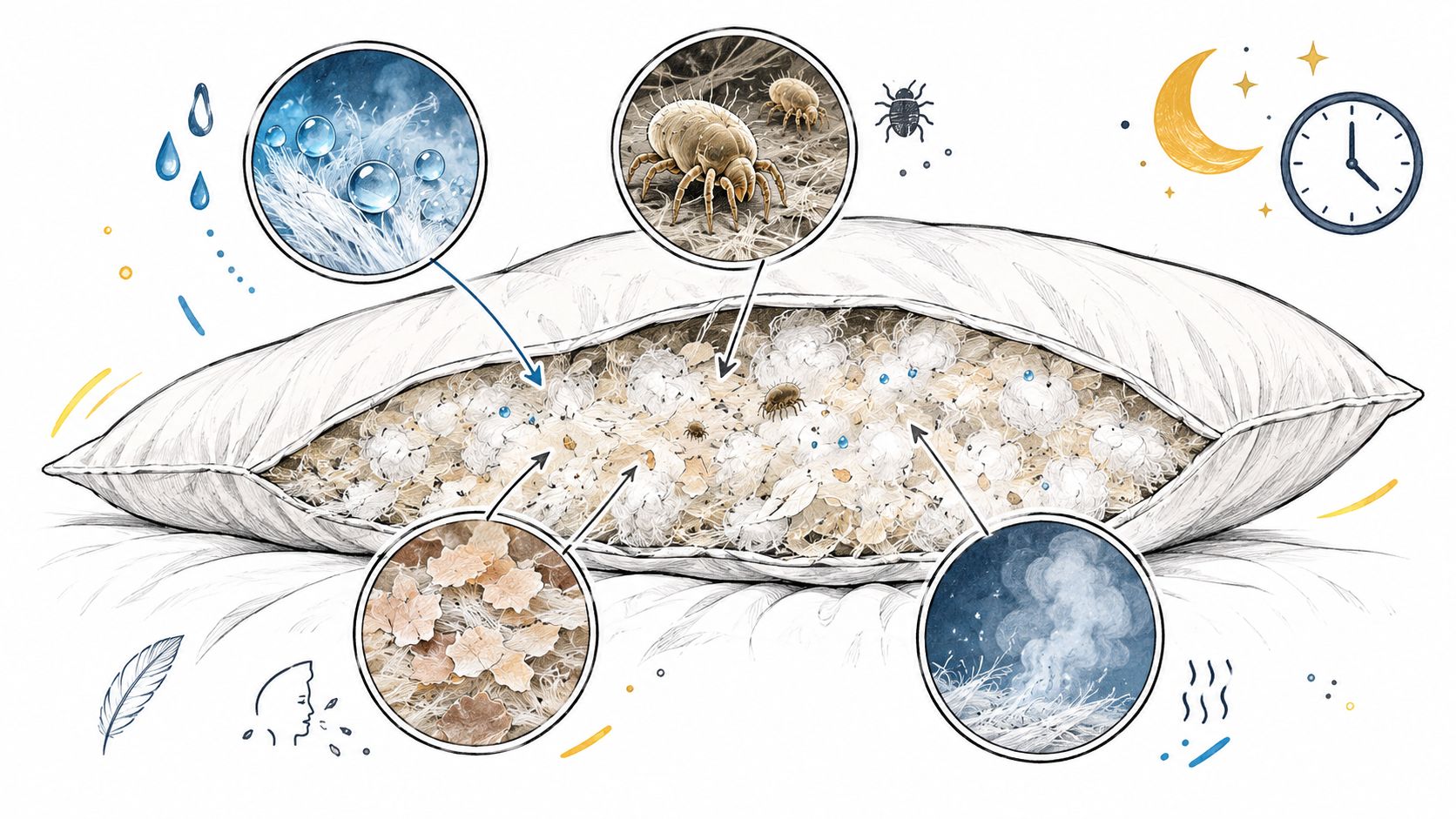
Why a pillow needs its own barrier
The most useful way to think about a protector is as a replaceable outer shell. Your pillow remains supportive and comfortable, while the shell takes the daily exposure and can be removed for cleaning. That distinction matters even more with a king-size pillow, which is longer and can be harder to wash thoroughly at home.
A protector also supports a broader bedding-care routine. If you're reviewing the condition of the whole sleep surface, guidance on home care mattress solutions can help you consider pillow, mattress and pressure-relief needs together rather than treating each item in isolation.
Practical rule: A clean pillowcase improves the surface. A correctly fitted protector protects the pillow beneath it.
For households concerned about dust mites, the protector should be treated as part of bedroom hygiene, not as a decorative extra. The value comes from maintaining a continuous barrier around the pillow, then removing and cleaning that barrier when needed.
Understanding King Size Standards
The central UK sizing issue is simple. A standard UK pillow commonly measures 50 x 75 cm, while a king-size pillow commonly measures 50 x 90 cm, as outlined by UK pillow sizing guidance. The width is similar, but the king format is substantially longer.
That difference is large enough to make a standard protector unsuitable. A 50 x 75 cm cover can't stretch to provide reliable coverage around a 50 x 90 cm pillow. It may stop short at the ends, pull the zip out of alignment or force the filling into compressed corners.
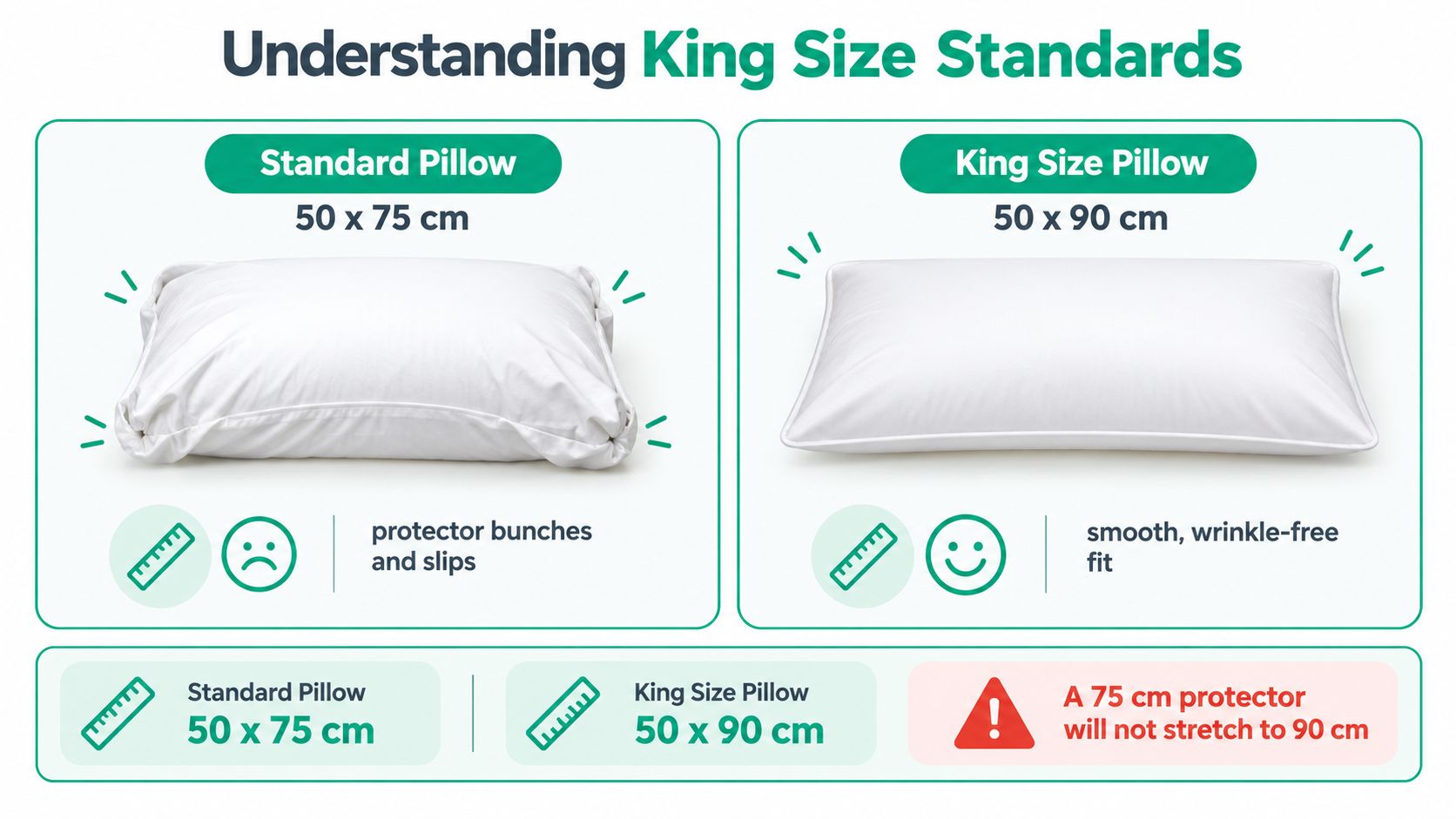
Why a close fit matters
A protector works best when it follows the pillow's shape without distorting it. If it's too short, the ends may be uncovered. If it's too generous, the fabric can fold under your head, the closure may sit awkwardly and the pillow may move inside the shell.
Retail specifications can add another layer of confusion. Some king-size protectors are sold for pillows measuring 20 x 36 inches, approximately 51 x 91 cm, while UK retailers also distinguish standard housewife pillows at about 50 x 75 cm. Check the protector's stated pillow dimensions, not just the word “king”, using UK protector and pillow size listings as a useful reference point.
Measure before you order
Use a flexible tape measure and measure the pillow while it is lying naturally, without compressing the fill. Record its length and width, then compare those measurements with the manufacturer's recommended pillow size.
Pay attention to construction as well. A quilted protector may need a little working room for its loft, while a close-fitting zipped encasement should be selected with particular care because excess fabric can't be tucked away easily. If your pillow has a shaped edge, gusset or unusually full filling, treat the product dimensions as more important than the bedding label.
Victoria Linen also presents king-size pillows as a separate UK format and recommends measuring before buying, reinforcing the need to check the actual pillow rather than guessing from the bed size.
Fabric and Membrane Choices
Fabric choice affects two separate experiences: what you feel against the pillow and how the protector handles moisture. A soft top fabric may feel comfortable, but it won't necessarily stop spills. A waterproof layer may protect against liquid, but if it isn't breathable, it can feel warm or noisy.
Modern membrane systems work more like a fine rain jacket than a sheet of plastic. The membrane blocks liquid droplets from passing through while allowing water vapour to move away from the sleeping surface. That balance is why breathable waterproof pillow protector guidance matters when comparing products.
| Material | Key benefit | Best for |
|---|---|---|
| Cotton | Familiar softness and a natural-feeling surface | Sleepers who prioritise a traditional fabric feel |
| TENCEL fibres | Smooth feel and temperature-conscious construction when paired with a suitable membrane | People who tend to feel warm during sleep |
| Copper-infused fabric | A material option marketed around hygiene-focused performance | Buyers who want to consider fabric treatments alongside a physical barrier |
| Waterproof membrane | Helps block liquid while breathable versions allow vapour transfer | Spill, perspiration and moisture protection |
Cotton and everyday comfort
Cotton-rich surfaces are often chosen because they feel familiar beneath a pillowcase. They can make a protector feel less clinical, particularly when the underlying membrane is flexible and quiet. Still, cotton alone isn't a waterproof solution, so read the construction details rather than assuming the fabric name tells you everything.
TENCEL and heat management
TENCEL fibres appear in cooling-style protector constructions because they provide a smooth textile layer that can be combined with a polyurethane-backed membrane. Technical information from TEMPUR's UK protector collection describes a breathable, waterproof PERLAM membrane and a cooling version using TENCEL fibres, a polyurethane backing and OEKO-TEX Standard 100 certification.
The practical analogy is a waterproof coat with ventilation. Rain stays outside, but vapour has a route out. That doesn't guarantee every sleeper will feel cool, because pillow filling, room temperature and personal comfort also matter, but breathable construction is preferable to an impermeable plastic feel.
Treatments versus washable barriers
Copper-infused or antibacterial descriptions may sound reassuring, but they shouldn't distract from the basics. A protector still needs the correct dimensions, a reliable closure and a care label you can follow. Which? also distinguishes hypoallergenic from anti-allergy, so don't treat those phrases as interchangeable proof of allergen control.
For many households, the most dependable decision is a combination of close fit, breathable waterproof construction and practical washability. Those features address the route of contamination rather than relying on a single treatment claim.
Fit, Fastening, and Closure Types
The closure is the point where protection either becomes continuous or breaks down. A zipped encasement surrounds the pillow and closes along its edge, creating a more complete barrier than a loose cover. An envelope design wraps the pillow inside overlapping fabric, which can be quick to remove but may leave a less secure closure depending on its construction.
Choose the fastening by considering both hygiene and your routine. If allergy control is the priority, a fully enclosing zip is usually the more logical format. If you remove the protector very frequently and find zips difficult to operate, an envelope style may be easier to handle, provided it still covers the pillow securely.
A reliable insertion routine
- Open the protector fully. Don't force the pillow through a partly opened zip, as this can strain the closure and distort the seams.
- Insert the pillow from the far end. Work the corners into place before pushing the remaining fill inside. This prevents the pillow from folding into a lump.
- Smooth and close. Run your hand across the surface, align the edges and close the fastening without trapping fabric in the teeth.
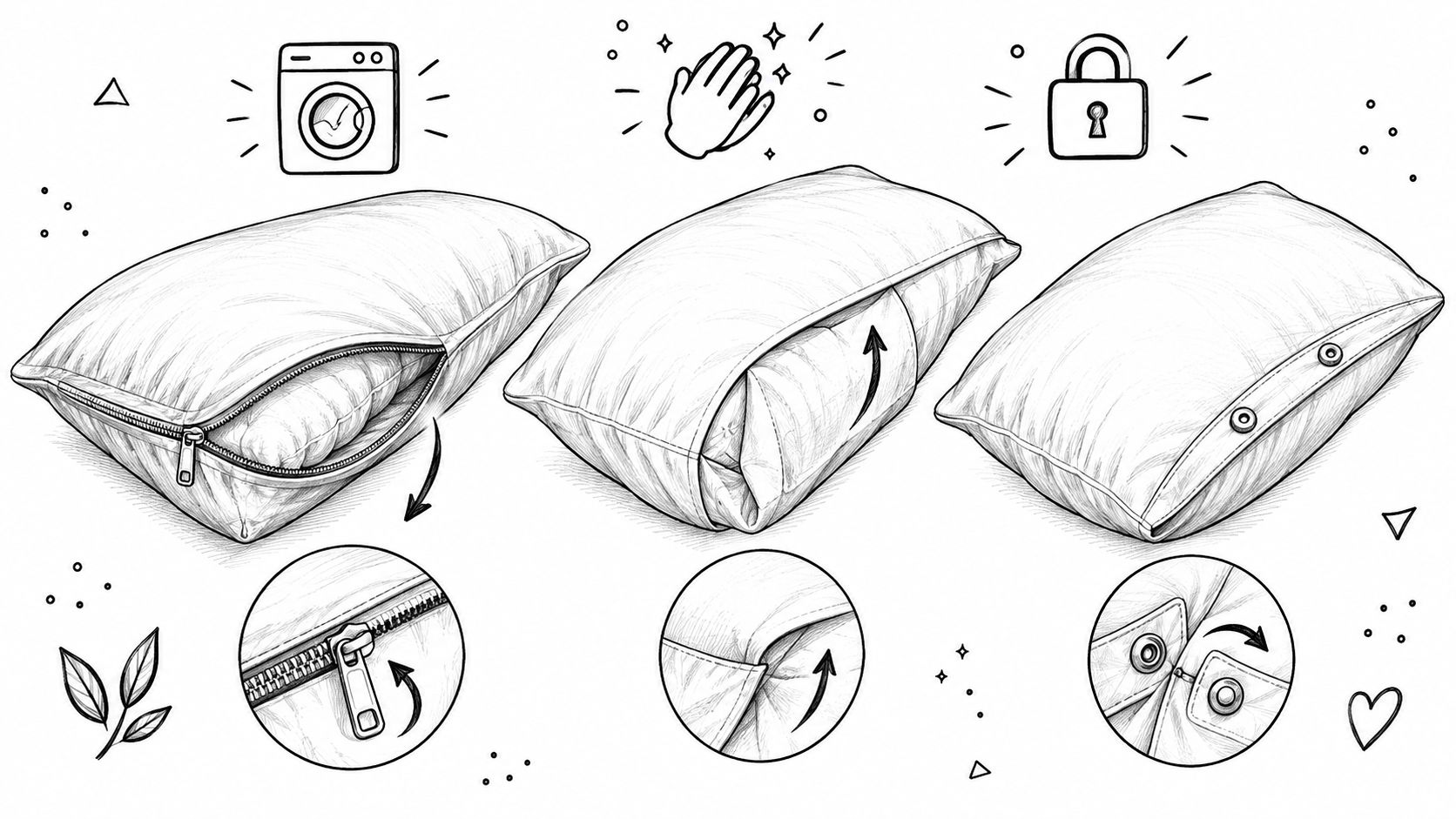
A zip should feel firm, not forced. If the pillow is visibly overfilled inside the protector, the problem may be the protector's dimensions rather than your technique. For readers interested in how zip types are selected for sewn covers, this guide to zip selection for cushions provides useful context, although pillow protectors have their own bedding-specific requirements.
Look for flat seams, a closure that reaches the intended edge and enough room for the pillow to sit naturally. Elasticated skirts can help grip some protector styles, but they shouldn't be used to disguise a length mismatch.
Allergies, Asthma, and Health Needs
A pillow can look clean while dust mites and their allergens remain inside its filling. For households managing asthma or allergies, the protector needs to work like a sealed envelope around the pillow, with fabric that blocks particles while allowing heat and moisture to pass through.
Cambridge University Hospitals recommends allergen-proof covers made from fabrics that prevent house-dust mites from passing through. The cover should be breathable, completely enclose the pillow and be tested to prevent dust-mite allergen escaping, as explained in its dust-mite home guidance. A general “anti-allergy” label does not establish that level of barrier performance. Our guide to the anti-allergy pillow protector explains which testing and construction details to examine.
Allergy UK separately recommends washing non-encased bedding at 60°C or above to kill mites. Together, these measures address two different routes of exposure: the encasement limits contact with the pillow filling, while suitable washing helps clean the removable bedding layer.
Protection is a system, not a single feature
A waterproof membrane can add a continuous physical layer, much like a raincoat between the pillow and its surroundings. Waterproofing alone does not show that the protector has been tested for dust-mite allergen containment. Check the product information for full encasement, barrier testing, breathability and washing instructions.
The size problem matters here too. A protector sold for a UK king-size pillow may still leave exposed fabric if its measurements do not match the pillow, even when its material is suitable. A loose opening or strained closure can create a weak point in the barrier. Read the stated dimensions rather than relying on “king size” alone.
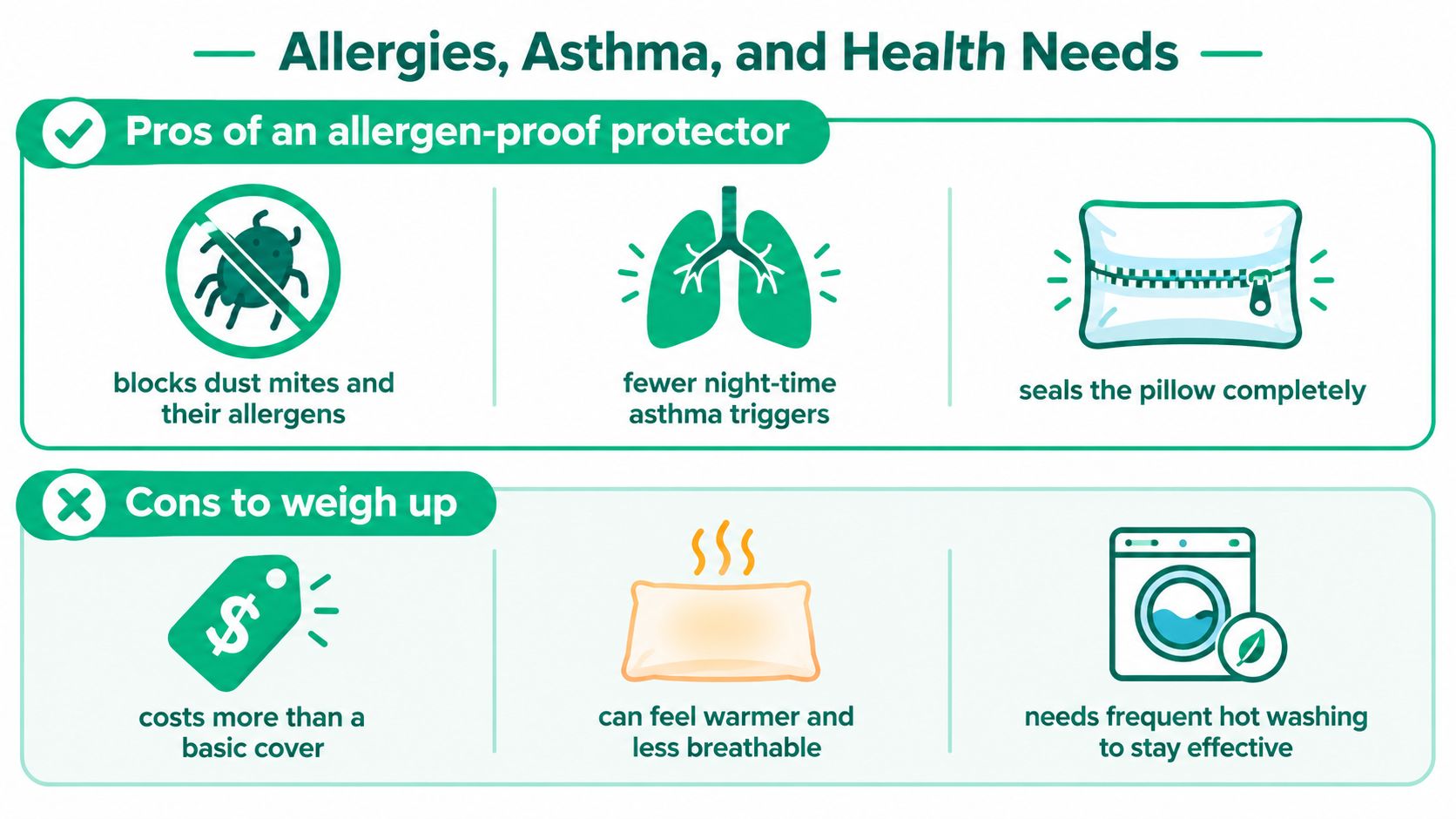
Anti-allergy treatments may involve biocides, and hypoallergenic and anti-allergy aren't the same thing. A washable protector still needs complete coverage and a care routine that suits the household. If it traps moisture or cannot be cleaned as directed, its practical value may decline.
A barrier works consistently only when it remains intact, fits the pillow correctly and can be cleaned in a way that matches the household's health needs.
For diagnosed asthma or persistent allergy, use bedding measures as practical support rather than as a treatment. A correctly chosen protector can reduce one exposure route, but it cannot replace advice from a clinician.
Care, Cleaning, and Longevity
A protector earns its keep through regular use and sensible maintenance. Follow the care label, wash it at the permitted temperature and avoid practices that could damage the membrane, such as harsh chemicals or excessive heat beyond the manufacturer's instructions. The correct routine depends on the fabric, coating and closure, so a general washing assumption isn't enough.
Hot washing has an important place in dust-mite management, but the product must be designed to tolerate it. Advice on machine-washable pillow protectors can help you assess whether a model fits your cleaning routine before you buy it.
A simple maintenance check
- Inspect the seams: Look for split stitching, damaged zip teeth or gaps around the closure.
- Check the membrane: Hold the protector up to the light and examine areas that have become thin or cracked.
- Dry it completely: Damp bedding should not be returned to the pillow, because trapped moisture defeats the purpose of a clean barrier.
- Keep the pillow dry: Air the pillow as permitted by its care instructions, without relying on direct heat that could damage the filling.
A correctly fitted protector limits staining, perspiration and odour absorption in the pillow itself. That helps preserve the pillow's condition and reduces the need to replace a large king-size pillow just because its interior has become soiled.
For a UK king-size pillow, begin with the measurement, then choose the closure, membrane and washing routine that you can maintain consistently. Protect-A-Bed offers king-size pillow protection in options including cotton, TENCEL and copper-related constructions, with breathable waterproof membrane technology across its protector range. Visit Protect-A-Bed to compare the available formats and select a protector that matches your pillow dimensions and care needs.