

Breathable Waterproof Pillow Protector: The Complete UK

You've washed the pillowcase, changed the sheets and gone to bed expecting a clean sleep surface. Yet the pillow inside may still be absorbing perspiration, skin oils, saliva and spilled drinks night after night. A normal pillowcase makes the surface feel fresh, but it doesn't create a liquid-proof barrier around the filling.
That leaves many UK households choosing between two unsatisfactory options. An unprotected pillow can become harder to keep hygienic, while a cheap plastic cover may feel warm, crinkle whenever you move and make sleep less comfortable. A breathable waterproof pillow protector is designed to occupy the useful middle ground, blocking liquid while allowing air and moisture vapour to pass through.
Table of Contents
- Why Your Pillow Needs More Than a Pillowcase
- How Breathable Waterproof Membranes Actually Work
- Allergen Control and Dust Mite Protection in UK Homes
- Choosing the Right Fabric for Your Sleep Temperature
- Getting the Right Fit and Caring for Your Protector
- Who Benefits Most from a Breathable Waterproof Pillow Protector
- Making the Right Choice for Your Bedroom
Why Your Pillow Needs More Than a Pillowcase
A pillowcase is a comfort layer, not a sealed protective system. Its fibres can absorb moisture and oils, but they don't stop those substances reaching the pillow beneath. Once moisture enters the filling, ordinary laundering of the pillowcase can't remove everything that has travelled below the surface.
Consider a typical bedroom routine. Someone goes to bed after a warm day, sweats lightly during the night, applies moisturiser before sleep and occasionally falls asleep with damp hair. A child may add a spilled drink or an accident. None of these events needs to be dramatic. Repeated small exposures are enough to make the pillow core more difficult to clean and dry properly.
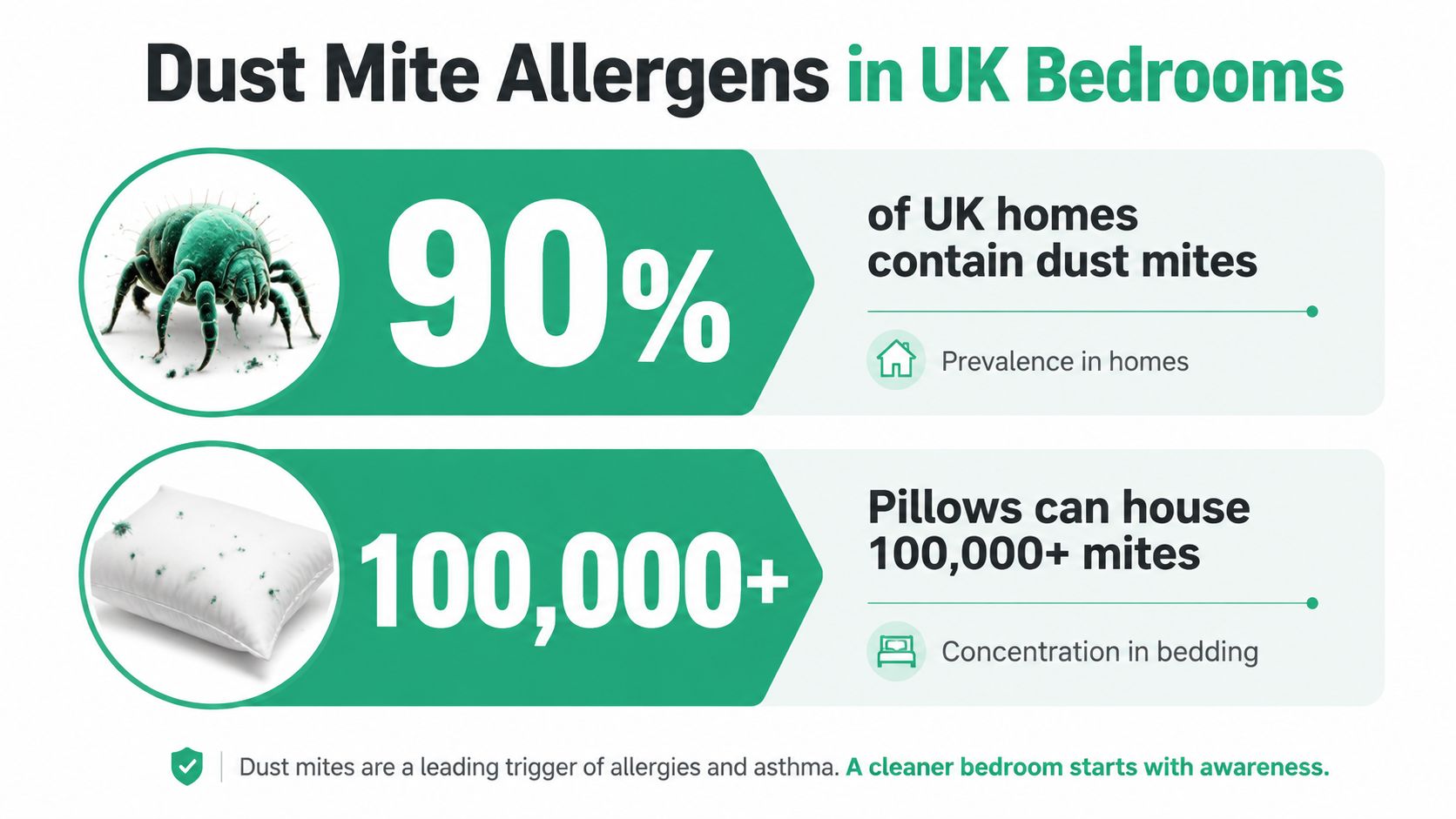
Dust mites also make bedding especially relevant to household hygiene. The North West Allergy Network's house-dust-mite guidance says house dust mite is found in all UK homes, while one in 20 young children and one in five adults test positive for house-dust-mite allergy. Asthma + Lung UK explains that mites favour warm, humid and damp places, including bedding, carpets, blankets and pillows.
The practical gap between a case and a cover
A protector sits directly over the pillow and beneath the pillowcase. Its job is to create a physical barrier that limits liquid penetration into the filling, while its outer fabric keeps the surface flexible and comfortable.
That distinction matters for several reasons:
- A pillowcase improves surface comfort, but it isn't designed to block perspiration, saliva or spills.
- A waterproof protector limits contamination, helping the pillow stay cleaner between washes.
- A breathable construction manages vapour, so the barrier doesn't automatically create the sealed, clammy feeling associated with plastic.
- A fitted or enclosed design stays in place, reducing exposed areas where moisture can reach the pillow.
Practical rule: If you want to protect the pillow itself, put the protector on first and use the pillowcase over it.
A breathable waterproof pillow protector won't solve every allergy or sleep problem. It also won't remove the need to wash bedding, control damp or replace a worn pillow. Its value is more specific: it protects a high-contact bedding item from liquid exposure while helping preserve a more comfortable sleep microclimate.
How Breathable Waterproof Membranes Actually Work
The technical detail that matters most is hidden beneath the surface fabric. In a quality breathable waterproof protector, the face fabric isn't solely responsible for waterproofing. A thin laminated polyurethane, or PU, membrane, and in some constructions thermoplastic polyurethane, or TPU, provides the liquid barrier.
Think of the membrane as a selective gate rather than a solid sheet of plastic. Liquid water arrives as relatively large droplets and is blocked from passing through. Moisture vapour is in a different physical form, allowing it to move through the membrane and away from the sleeper.
The result depends on the whole construction, not just the word “waterproof” on the packaging.
The layers in simple terms
- Face fabric: This is the layer beneath your pillowcase. It affects softness, touch, moisture handling and much of the immediate temperature experience.
- Laminated membrane: This is the working barrier. It stops liquid reaching the pillow core while remaining air permeable in the type of construction described by UK bedding guidance.
- Seams and closure: Even a good membrane can't protect a pillow if liquid can enter through poorly finished seams or an open edge.
This is why a protector can be waterproof without feeling like a carrier bag. UK-facing guidance on breathable waterproof membrane construction contrasts breathable PU membranes with PVC and vinyl. Those older constructions commonly feel hotter, make more noise and can deteriorate more quickly with use.
Why the membrane isn't the whole comfort story
Breathability doesn't mean the protector feels identical to an uncovered pillow. Adding another layer can alter the way heat and moisture move, particularly if the face fabric is dense, the membrane is poorly made or the pillowcase itself is heavy.
The useful question is therefore not “Is it waterproof?” It's “What type of waterproof barrier is used, and what fabric sits above it?” A flexible, quiet membrane paired with a suitable textile is more likely to balance liquid protection with ordinary sleep comfort than a rigid impermeable sheet.
A membrane can also help limit the movement of allergens into the pillow filling. That makes the design relevant to hygiene and dust-mite management, but it shouldn't be treated as proof that every sleeper will experience a respiratory improvement.
Allergen Control and Dust Mite Protection in UK Homes
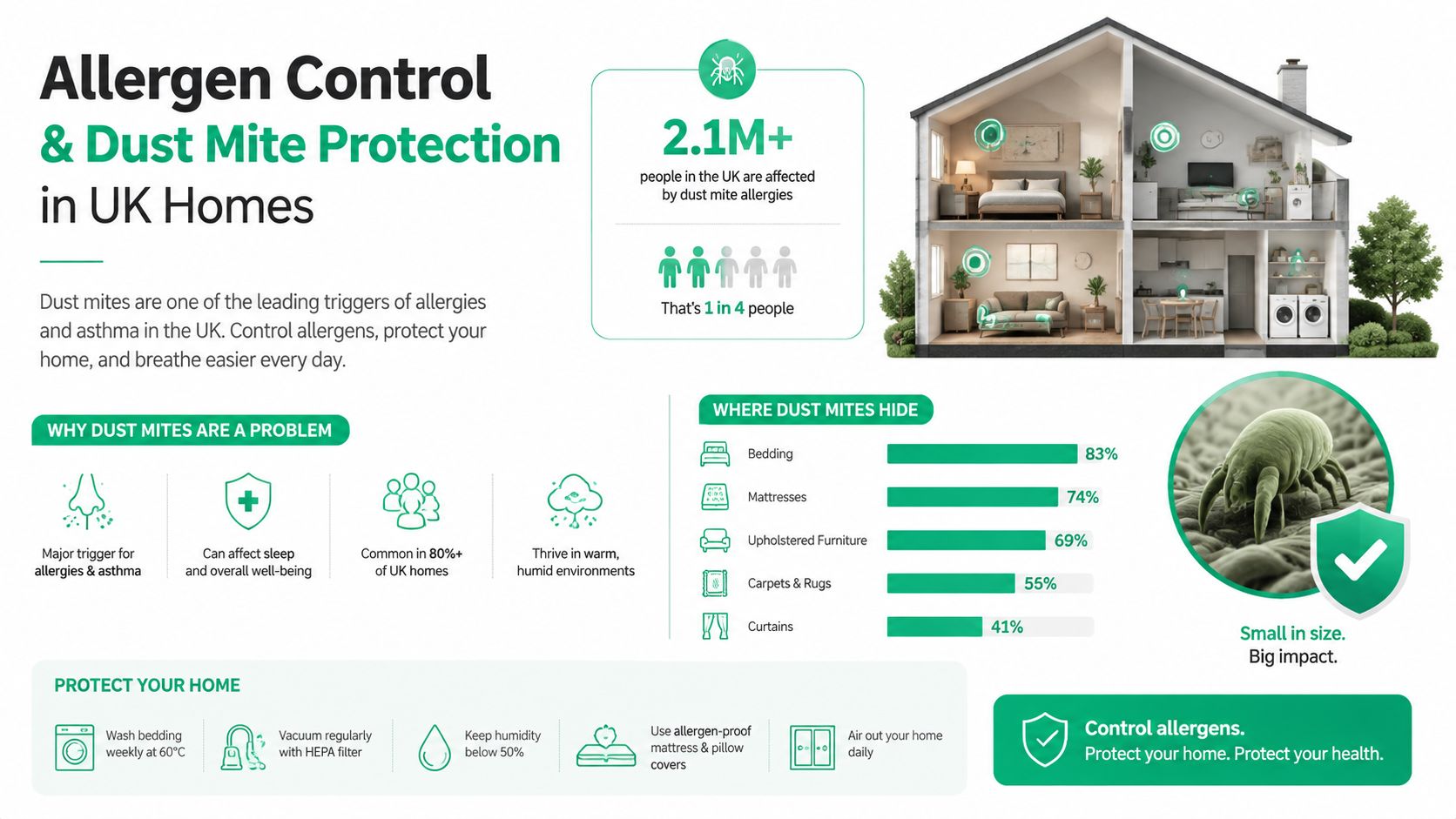
UK evidence places bedroom textiles at the centre of dust-mite exposure. Asthma + Lung UK says mites commonly live in bedding and prefer warm, humid and damp environments. Its 2024 survey found that one in two people with a lung condition said dust made their condition worse. That doesn't prove that a pillow protector will improve symptoms, but it does explain why the pillow deserves attention alongside the mattress and duvet.
A Manchester study of UK homes measured the dust-mite allergen Der p 1 and found the highest levels in mattresses, with a geometric mean of 1.19 micrograms per gram of dust. The same study reported that two-thirds of homes had Der p 1 above 2 micrograms per gram in at least one dust reservoir, while 40.3% exceeded 10 micrograms per gram. The researchers linked higher allergen levels with older homes, damp, condensation, carpets and older mattresses in their published study.
Those findings concern household dust reservoirs rather than pillow protectors specifically. They still matter because a pillow rests beside the mattress and sits close to the nose and mouth for much of the night.
What a barrier can realistically do
A membrane barrier can reduce the movement of liquid and may help limit allergen passage into the pillow filling when the protector encloses the relevant surfaces effectively. It can also make routine cleaning more manageable because the removable cover takes the main exposure instead of the pillow core.
That's different from claiming that waterproofing alone treats asthma. The evidence is mixed. A large placebo-controlled study found that allergen-impermeable bedding reduced mite allergen in dust but didn't improve asthma symptoms in adults, while UK-led research in children found fewer severe asthma exacerbations with mite-proof bedcovers. The study evidence supports a careful conclusion: barrier protection may form part of an allergy-management plan, but results depend on factors such as age, sensitisation and the wider bedding system.
For households managing respiratory sensitivity, combine the protector with practical controls:
- Wash suitable bedding at 60°C, because NHS-linked guidance states that this temperature kills dust mites.
- Address damp and condensation, which can create more favourable conditions for mites.
- Protect the mattress as well as the pillow, rather than treating one item as the entire solution.
- Follow clinical advice, especially when asthma symptoms or diagnosed allergies are involved.
Resources covering allergen filtration and surface hygiene can also help households think about the difference between removing allergens from surfaces and stopping them entering soft furnishings. For bedding-specific context, dust mites in bedding explains why the barrier approach is more useful as a system than as an isolated purchase.
Choosing the Right Fabric for Your Sleep Temperature
Two protectors can use a similar waterproof membrane and still feel very different. The face fabric determines what your skin senses through the pillowcase, how quickly surface moisture moves away and whether the pillow feels crisp, soft, cool or slightly brushed.
Protect-A-Bed's pillow-protector range includes Cotton, Tencel Cool, Snow, Copper and Copper Cool variants. The right choice depends on your sleep pattern, but product names shouldn't replace checking the actual construction and care information.
| Fabric Type | Best For | Temperature Regulation | Key Feature |
|---|---|---|---|
| Cotton | Everyday sleepers who prefer a familiar natural feel | Breathable and balanced | Straightforward, soft bedding surface |
| Tencel Cool | Sleepers who often feel warm | Designed with cooling comfort in mind | Smooth feel and moisture-management focus |
| Snow | People prioritising a cooler-feeling surface | Intended to support a fresher sleep experience | Cooling-oriented textile design |
| Copper | Households interested in a distinctive technical fabric | Depends on the full construction and sleep environment | Copper-infused face-fabric approach |
| Copper Cool | Warm sleepers wanting a technical, cooling-oriented option | Combines the stated cooling focus with copper fabric design | Aimed at thermal comfort and surface freshness |
Match the material to the problem
If you sleep at a fairly stable temperature, Cotton may be the uncomplicated choice. It offers a familiar feel and doesn't ask you to prioritise a specialised cooling feature.
If you wake up hot or deal with night sweats, look more closely at cooling-oriented options. The cooling pillow protector guidance is useful because it separates the surface textile from the hidden waterproof membrane. A cooling face fabric can improve the contact experience, but it can't guarantee that every hot sleeper will feel cool. Room temperature, pillow filling, duvet weight and your own heat regulation all contribute.
OEKO-TEX Standard 100 is another useful consideration. UK allergy-facing product information describes premium protector constructions that pair breathable membranes with OEKO-TEX certification and cooling textiles such as TENCEL. The certification addresses tested harmful substances, not a promise of breathability or a particular temperature outcome.
A cooling label is a starting point, not a complete performance test. Check the membrane, face fabric, closure and care instructions together.
Getting the Right Fit and Caring for Your Protector
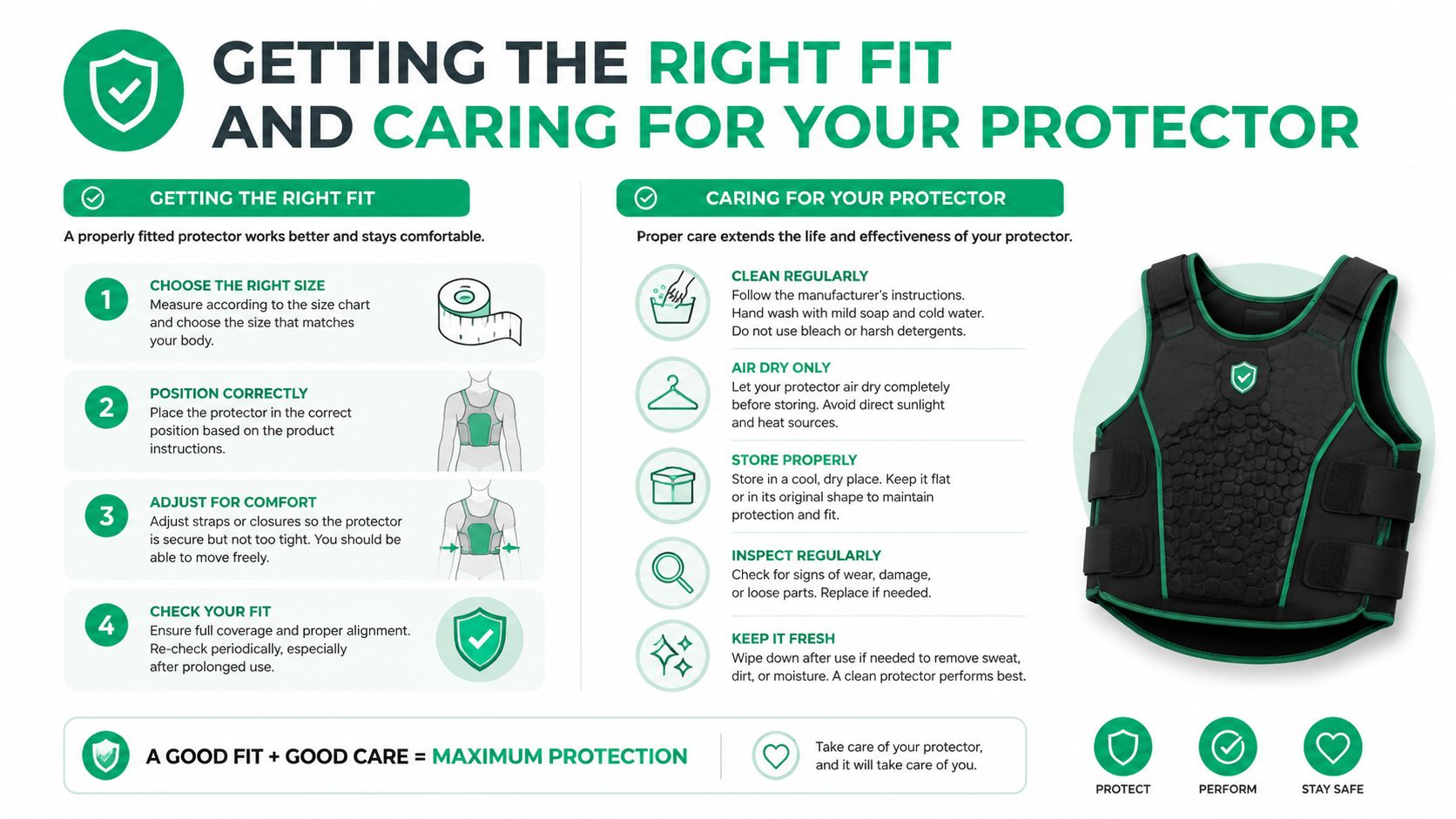
A protector only works across the area it covers. If it's too loose, it can bunch beneath the pillowcase and create movement or noise. If it's too tight, the zip or seams may be under unnecessary strain, and the pillow may lose the shape that makes it comfortable.
Measure the pillow itself before ordering, especially if it's a deep memory-foam design, a highly filled feather pillow or a shape that differs from a standard UK rectangle. Use the manufacturer's size chart rather than assuming that every “standard” size is identical.
Fit and closure checks
- Choose the closest listed dimensions: A little room may be necessary for loft, but excess fabric encourages bunching.
- Check the closure design: A zippered enclosure can surround more of the pillow, while an envelope opening may be easier to fit and remove but leaves a less enclosed edge.
- Protect the zip: Don't force it over an overfilled pillow. Compress the pillow gently and guide the zip around corners.
- Smooth the surface: Run your hand over the protector before adding the pillowcase so folds don't become pressure points.
Washing without damaging the barrier
NHS-linked dust-mite guidance states that a 60°C wash kills dust mites, making that temperature relevant for households using laundering as part of their control routine. Follow the protector's own care label first, because fabric blends, membrane construction and closure details affect the permitted cycle.
Wash after a significant spill or illness, and wash routinely according to household use. Use the recommended detergent and avoid treating the cover as though it were an ordinary towel. Excessive heat, unsuitable chemicals and rough handling can shorten the useful life of laminated materials.
Dry the protector exactly as directed. If tumble drying is permitted, use the stated heat setting. If air drying is required, spread it fully so moisture doesn't remain trapped in folds. Before putting it back on the pillow, inspect the seams, zip and membrane for visible damage.
Who Benefits Most from a Breathable Waterproof Pillow Protector
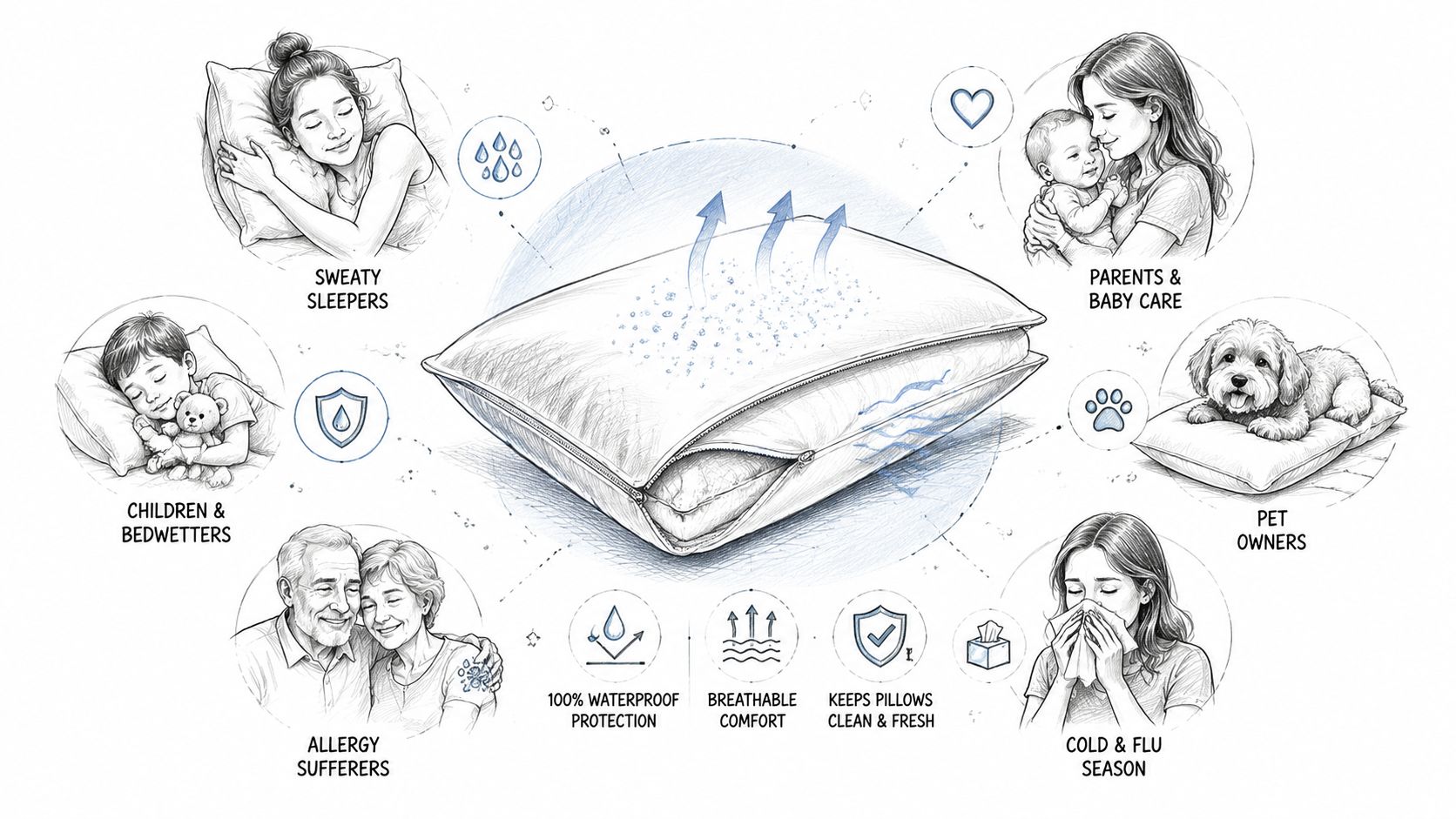
The strongest reason to buy a protector depends on what's happening in your bedroom. A parent dealing with spills needs a different priority from a hot sleeper, even though both want waterproofing.
Families with children
Children's bedding faces accidents, drinks, food residue and frequent washing. A washable protector can keep those incidents from reaching the pillow filling, so the response is less disruptive: remove the cover, launder it according to its instructions and refit it once dry.
Choose a soft face fabric and a secure fit. If the child sleeps warm, prioritise a breathable membrane and a cooling-oriented textile rather than accepting a noisy plastic cover.
Allergy-sensitive households
For someone with dust-mite sensitisation, the important feature is a barrier that encloses the pillow effectively and works alongside mattress protection and appropriate laundering. A protector can limit allergen ingress, but it isn't a substitute for medical guidance or wider damp and dust control.
Look for clear construction information rather than relying on “anti-allergy” wording alone. The closure, seam finish and ability to wash the cover matter as much as the membrane label.
Hot sleepers and people with night sweats
These sleepers notice the waterproofing trade-off most sharply. Liquid protection is useful, but a cover that traps heat can make the original problem worse. Choose a breathable membrane and a face fabric designed around moisture handling or cooling comfort, then review the rest of the bed if overheating continues.
Rental, hospitality and care settings
Landlords, property managers, hotels and care facilities need repeatable hygiene processes. A washable protector can make pillow protection easier to standardise across rooms, provided staff follow the care label and inspect covers for damage.
In these settings, consistency matters more than a fashionable feature. Record the correct sizes, keep replacement covers available and choose a construction that suits the expected washing routine.
Making the Right Choice for Your Bedroom
The central decision is simple, but the details matter. You want a protector that blocks liquid without creating the hot, stiff and noisy experience associated with impermeable plastic. That means checking the membrane type, the face fabric, the closure, the fit and the wash instructions as one system.
UK allergen evidence gives the purchase a practical context. Dust mites are widespread in homes, bedding is a common habitat and the pillow sits close to your breathing zone. A protector can support a broader hygiene strategy by limiting liquid exposure and allergen ingress, but it shouldn't be sold as a standalone asthma treatment.
Use this checklist before ordering:
- Barrier: Is the membrane described as breathable and air permeable?
- Comfort: Does the face fabric suit whether you sleep warm, cool or variably?
- Enclosure: Will the closure protect the areas that matter?
- Fit: Do the listed dimensions match your actual pillow?
- Care: Can you wash and dry it in a way that fits your household routine?
- Support: Are the warranty and delivery terms clearly stated?
Protect-A-Bed states that its UK service offers 1–3 working day delivery for in-stock items, free shipping above £90, and warranty coverage of up to 10 years against material or manufacturing defects. Those practical terms may matter if you're protecting several beds or need a replacement cover quickly.
A breathable waterproof pillow protector is worth considering when you want liquid protection without giving up everyday comfort. Judge the construction, not just the label, and choose the fabric and fit around the actual problem in your bedroom.
Protect-A-Bed offers UK pillow protectors in Cotton, Snow, Tencel Cool, Copper and Copper Cool options, using breathable waterproof protection designed for routine bedding use. Visit Protect-A-Bed to compare the available constructions, check sizing and choose a protector suited to your sleep temperature and household needs.