

Anti Allergy Pillow Protector Guide for UK Buyers

You wake with a blocked nose, itchy eyes and a throat that feels dry, then spend the first part of the morning wondering whether you're coming down with something. If the pattern repeats, your pillow deserves attention. It sits close to your face for hours, and its filling can hold dust-mite allergen even when the pillowcase looks clean.
The right anti allergy pillow protector can create a physical barrier between you and that reservoir. The wrong one may offer little more than a reassuring label. This UK-focused guide separates treatment-based bedding from barrier-based protection, explains which construction details matter, and shows why a pillow cover works best alongside mattress protection and regular washing.
Table of Contents
- Why Your Pillow Might Be the Reason You Wake Up Blocked
- What an Anti Allergy Pillow Protector Actually Is
- Materials and Technologies That Block Allergens
- Who Really Benefits From an Anti Allergy Pillow Protector
- How to Choose the Right Anti Allergy Pillow Protector
- Washing and Caring for an Anti Allergy Pillow Protector
- Protect-A-Bed Pillow Protector Options in the UK
- Making the Switch and Getting the Most From Your Protector
Why Your Pillow Might Be the Reason You Wake Up Blocked
You wake with a blocked nose, itchy eyes or a dry throat, then feel better as the morning progresses. That repeated pattern makes the pillow worth checking first. It stays close to your face for hours, and its filling can hold dust-mite allergen even when the pillowcase appears clean.
House dust mites are a recognised indoor-allergen concern in UK clinical guidance. They thrive where shed skin scales collect, including mattresses and pillows. The UK NHS guidance on dust mites explains why pillow protection belongs in the bedroom plan, not just mattress care.
Morning congestion, sneezing, itchy or watery eyes, coughing and unsettled sleep can all point towards a bedding trigger. They can also have other causes, so treat the pattern as a reason to improve mite control rather than as a diagnosis. For practical steps that may help with nasal symptoms, read this blocked nose relief guide.
A standard pillowcase covers the surface you touch, but it does not enclose the filling. Sweat, skin oils and moisture can enter over time, while allergen particles already inside remain close to your breathing zone. A protector fits beneath the pillowcase and should surround the pillow completely.
The practical test: if the cover does not seal the pillow from edge to edge, it is not a complete allergen barrier.
Choose construction carefully. A fitted slipcover can keep the pillow cleaner, but a zippered, fully enclosed protector creates a more credible physical barrier between the filling and your face. Wash the outer bedding regularly too, and address the mattress as well. Guidance on dust mites in bedding supports treating the bed as one connected mite-control problem, not a single-pillow purchase.
What an Anti Allergy Pillow Protector Actually Is
An anti allergy pillow protector is an under-cover designed to reduce contact with allergens in the pillow while keeping the pillow usable and comfortable. The phrase covers two different approaches, and shoppers should separate them before judging a product.
Treatment-based finishes use a chemical or other treatment applied to the textile. The treatment may be marketed as reducing allergen viability or limiting the conditions that support allergens. That doesn't necessarily mean the fabric stops particles moving from the pillow towards your face. A treated cover can still be useful, but its performance depends on the treatment, its durability and the manufacturer's care instructions.
Barrier-based covers work mechanically. Their fabric or membrane forms a dense layer that blocks allergen particles from passing through. A tightly woven textile can provide this function, while a thin laminated membrane adds a more deliberate separation between the pillow and sleeper.
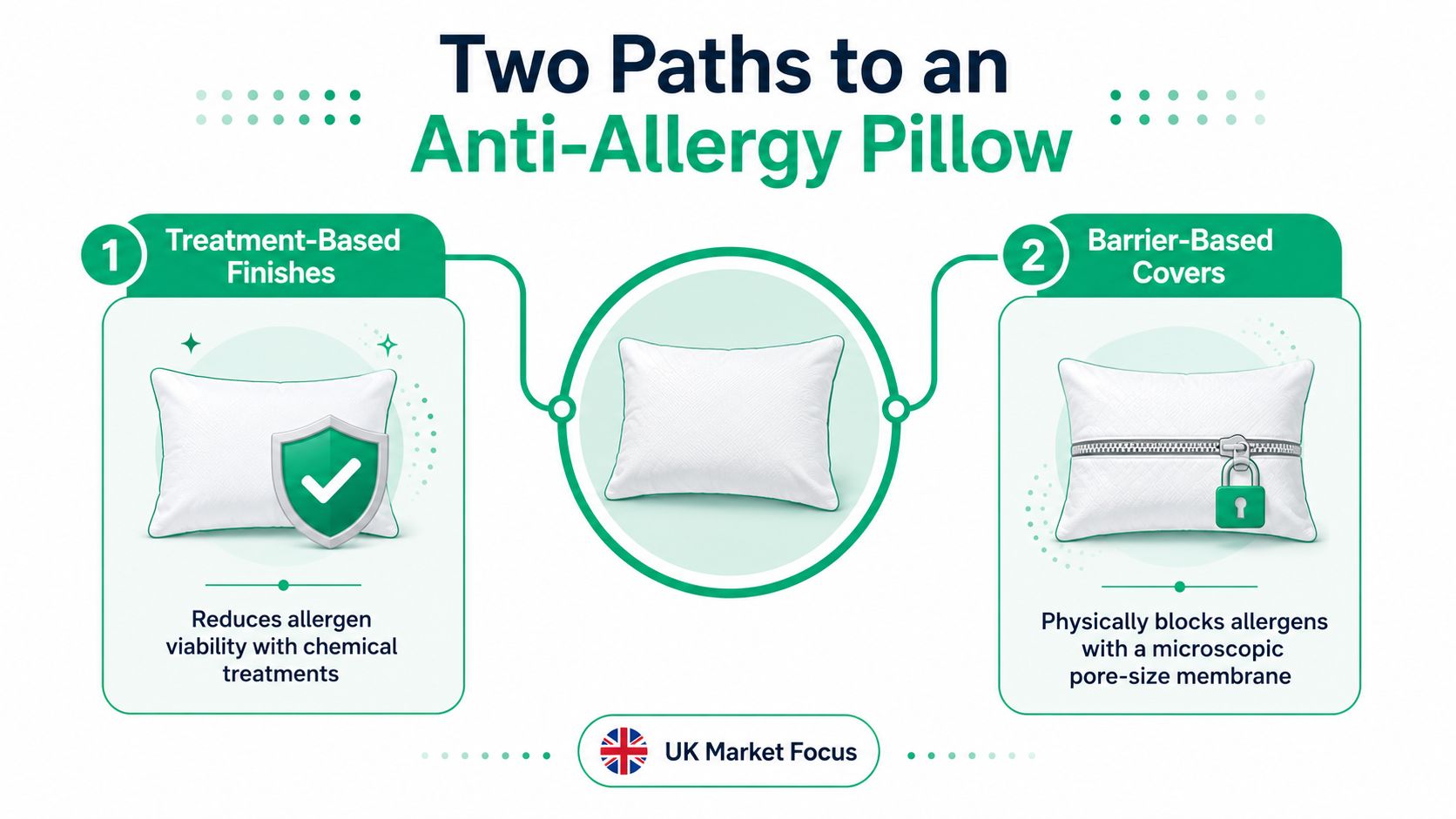
The simplest analogy is a mosquito net compared with a sealed screen door. Both create separation, but the screen door controls the opening more reliably because its frame and closure matter. In bedding, that means the fabric alone isn't enough. Seams, zip construction and full enclosure determine whether the barrier remains continuous.
NHS advice specifically recommends allergen-proof pillow and mattress covers that are breathable and completely enclose the item, because they prevent dust-mite allergen from reaching bedding surfaces. The NHS guidance therefore supports a physical-barrier interpretation of protection, not a vague promise based solely on a finish.
When comparing products, ask three questions:
- Is it a true barrier? Look for a clear explanation of how the material blocks allergen transfer.
- Is it breathable? A barrier shouldn't leave you feeling clammy or trapped in a plastic-like layer.
- Does it close fully? A zippered encasement is more convincing than an open-ended cover.
Materials and Technologies That Block Allergens
The engineering is straightforward to describe, but easy for listings to obscure. A protector needs a dense material, a continuous construction and a closure that doesn't leave an exposed section of pillow.
A tightly woven fabric relies on small spaces between fibres to restrict particle movement. A membrane laminate takes a different route. It bonds a thin layer to the textile, creating a barrier that can also manage liquid while allowing air and water vapour to pass through. Protect-A-Bed's Miracle Membrane is presented as a thin, flexible and air-permeable waterproof layer, which addresses the common concern that protective bedding will feel noisy or plasticky.
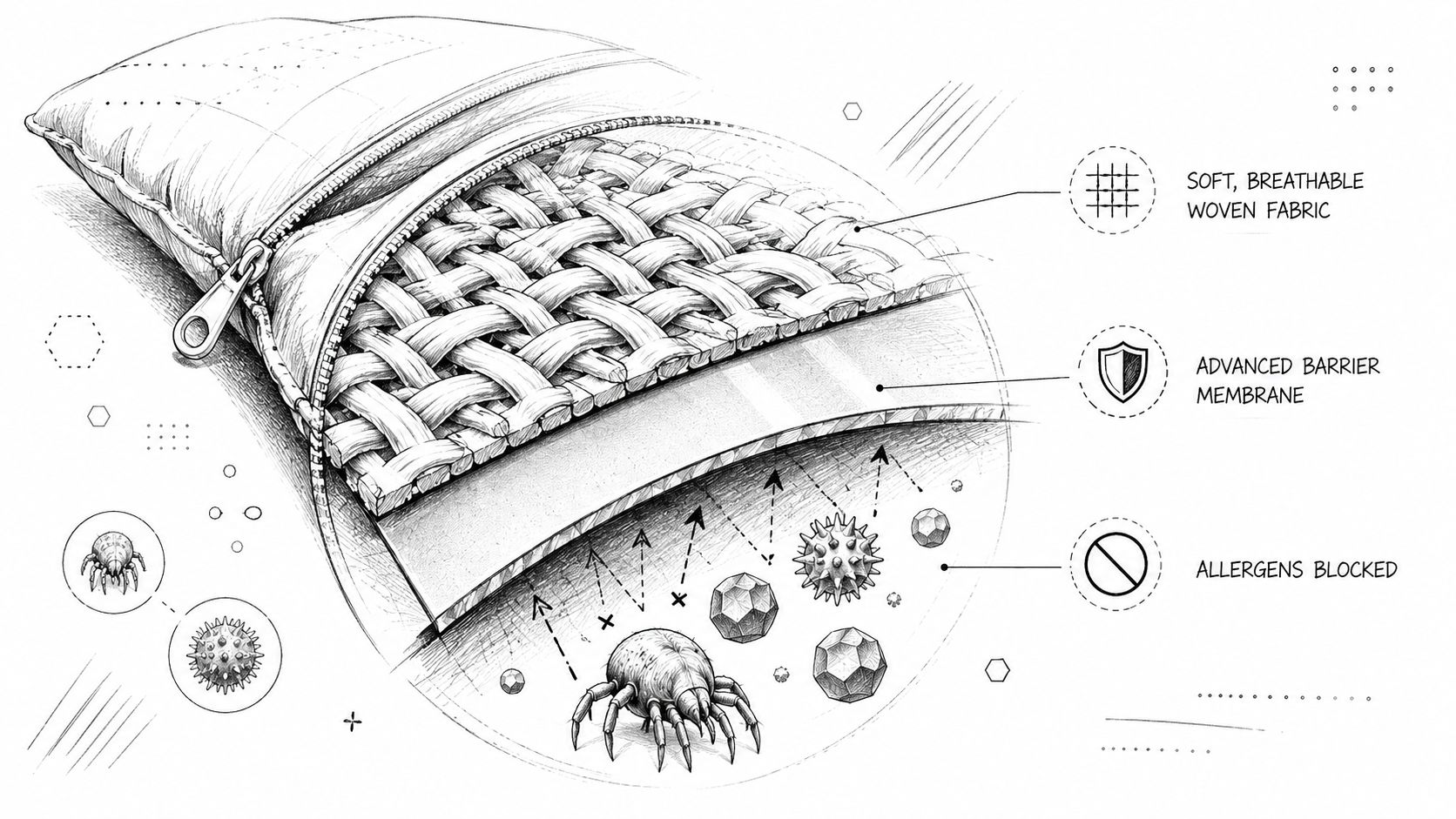
Pore control is only part of the answer
A small pore structure matters because it limits the movement of allergen particles. But buyers shouldn't assess pore size in isolation. A protector can have a dense face fabric and still underperform if the zip, seams or corners leave a route around the barrier.
Look for:
- A membrane or tightly woven barrier, described in technical rather than purely promotional terms.
- A complete zip closure, ideally with construction that keeps the zip area covered.
- Bound or reinforced seams, which reduce the chance of weak points developing.
- A quiet hand feel, especially if you're sensitive to crinkling sounds.
- A smooth outer surface, so the pillowcase slides over it without bunching.
The protector should fit the pillow without stretching the zip or leaving loose folds. Too much tension can strain the closure, while excess fabric creates ridges that affect comfort. A well-fitted protector sits taut beneath the pillowcase.
Bedroom cleaning still matters because a cover only addresses the pillow interface. If you're dealing with a wider build-up of dust, this resource on Birmingham allergen reduction cleaning offers useful context for reducing reservoirs around the sleeping area. You can also review practical principles in this guide to hypo-allergenic bedding, but keep the priority clear: barrier, breathability and sealed closure come before marketing language.
Who Really Benefits From an Anti Allergy Pillow Protector
The clearest candidates are people who notice a repeatable pattern of morning symptoms and want to reduce exposure at the pillow. That includes adults and children with suspected dust-mite sensitivity, people managing asthma alongside indoor allergies, and households trying to make bedding easier to keep clean.
A protector also makes sense for anyone using a premium or difficult-to-wash pillow. It helps separate everyday sweat, oils and moisture from the filling, which can support better hygiene and preserve the pillow's condition. Hot sleepers may appreciate a breathable membrane, but shouldn't assume that every waterproof layer will feel cool. Fabric choice and airflow matter more than the word “waterproof” alone.
The clinical evidence requires a firm expectation reset. In a UK randomised trial involving 1,122 adults with asthma, allergen-impermeable bed covers used alone were clinically ineffective for dust-mite avoidance outcomes. The intervention didn't produce measurable improvements in peak flow, symptoms or medication use in that study. The UK trial report supports using a pillow protector as exposure control, not as a standalone asthma treatment.
A separate UK evaluation found that anti-allergic mattress covers significantly reduced Der p 1 concentrations in carpet-free bedrooms, but the reduction didn't improve airway hyperresponsiveness or clinical outcomes in people with moderate-to-severe asthma. The clinical evaluation points to an important distinction: a product can reduce allergen at the source without guaranteeing symptom relief.
Build a control stack, not a single-product solution
Use the protector with other measures recommended in UK guidance:
- Enclose the pillow and mattress, rather than treating the pillow as the only reservoir.
- Wash bedding at 60°C or hotter weekly where the fabric and care label allow.
- Reduce soft-furnishing reservoirs in the bedroom.
- Discuss persistent or worsening asthma symptoms with a clinician.
Cleaner air can also support a more comfortable sleep environment for older adults, so this resource on clean air for senior sleep may be useful when caring for someone with additional sleep or breathing needs. The recommendation remains practical: buy a protector for local source control, then address the rest of the room.
How to Choose the Right Anti Allergy Pillow Protector
Treat the product listing like a specification sheet, not a sales pitch. Start with the construction detail that can make or break the purchase, then move through comfort, evidence and maintenance.
1. Check the fit and enclosure
Choose a protector made for your pillow's dimensions. It should cover the whole pillow and close securely with a zip. An open end, loose flap or cover that leaves part of the pillow exposed weakens the point of buying an encasement.
2. Identify the barrier
Look for a clearly described allergen-impermeable fabric or membrane. “Anti-allergy” on its own is too vague. Ask whether the product relies on a physical barrier, a treatment, or both. A physical barrier is the stronger starting point when your priority is preventing allergen transfer.
3. Prioritise breathable comfort
The protector sits beneath your pillowcase, but you'll still notice it if it traps heat, feels stiff or makes noise when you move. Choose a soft, air-permeable construction and read care instructions before buying. A technically effective cover that makes you overheat may end up removed.
4. Look for meaningful certification
Recognised textile or allergy-related certification can add confidence, but don't treat a logo as a substitute for construction information. Check what the certification covers and whether it applies to the finished protector rather than only a component fabric.
5. Inspect durability signals
Examine product photography and specifications for reinforced stitching, a secure zip and a membrane designed for repeated washing. A warranty against material or manufacturing defects is useful, particularly if the protector is intended for frequent use.
6. Match care instructions to your routine
Some treated bedding is advised to be washed at 40°C to preserve the treatment, while NHS-linked advice recommends 60°C washing for non-encased bedding. That distinction matters. If you need frequent hot washing, favour a barrier-based protector with care instructions that explicitly support your routine.
| Criterion | What to look for | Red flag |
|---|---|---|
| Enclosure | Full coverage with a secure zip | Open-ended slipcover |
| Barrier | Clear physical allergen-blocking explanation | “Anti-allergy” with no mechanism |
| Comfort | Breathable, quiet, flexible fabric | Plastic-like feel or crinkling |
| Certification | Recognised certification with scope explained | Unverifiable badge |
| Construction | Strong seams and reliable zip | Fragile stitching or strained closure |
| Care | Instructions compatible with your washing needs | Vague or conflicting washing advice |
| Support | Clear warranty and returns information | No durability or defect policy |
My buying rule is simple: never trade a sealed enclosure for a fashionable fabric claim. Comfort comes next, then appearance.
Washing and Caring for an Anti Allergy Pillow Protector
Care instructions expose the main trade-off in allergy bedding. Hot washing helps control mites in ordinary bedding, but some treatment-based fabrics may need gentler washing to preserve their finish.
One NHS leaflet recommends washing bedding weekly at 60°C or hotter, while UK allergy guidance notes that some treated bedding should be washed at 40°C to protect the treatment. The NHS-linked dust-mite advice makes the practical point clear: the correct temperature depends on what you're washing and how it's constructed.
Use a simple care protocol
- Read the label first. Follow the protector's specific temperature, drying and ironing instructions rather than assuming every cover can take the same treatment.
- Wash the pillowcase regularly. It's the layer in direct contact with your face and should carry most of the routine surface-cleaning burden.
- Wash the protector when needed. Increase the frequency if you sweat heavily, have been ill or have contamination concerns.
- Dry it completely. Damp fabric can create its own comfort and hygiene problems. Avoid putting the protector back on the pillow while it's still moist.
- Skip unnecessary additives. Fabric softener can leave residues that affect the hand feel and may interfere with some membrane constructions, so use it only if the manufacturer specifically allows it.
A protector doesn't kill every mite already inside a pillow. It limits transfer and protects the pillow from new contamination, which is why it belongs in a broader plan. NHS leaflets also describe replacing pillows every six months unless special covers are used, or using mite-impermeable covers instead of frequent replacement. The same guidance mentions deep-freezing pillows for eight hours every three months as another control measure.
Inspect the protector after repeated washing. Replace it if the zip no longer closes completely, seams split, the membrane peels or the fabric develops holes. A damaged barrier is no longer a dependable barrier, regardless of its original specification.
Protect-A-Bed Pillow Protector Options in the UK
Protect-A-Bed's UK advanced pillow-protector range includes Cotton, Snow, Tencel Cool, Copper and Copper Cool variants. The practical choice depends on whether your priority is straightforward everyday protection, temperature comfort or a particular surface fabric. Product construction and care instructions should still take precedence over the name of the finish.
The Cotton and Snow options are sensible starting points for shoppers who want an everyday barrier without making cooling the main requirement. Tencel Cool and Copper Cool are more relevant to sleepers who run warm or prefer a cooler-feeling cover. Copper and Copper Cool may appeal to buyers interested in a copper-infused option, but the key allergy question remains whether the protector provides the required enclosed barrier.
| Range | Most suitable for | Decision point |
|---|---|---|
| Cotton | Everyday pillow protection | Choose when familiar fabric feel matters |
| Snow | General protection with a soft surface focus | Check warmth and care preferences |
| Tencel Cool | Hot sleepers | Prioritise cooling feel and breathability |
| Copper | Shoppers seeking a copper-infused option | Confirm barrier and washing details |
| Copper Cool | Hot sleepers wanting a copper-infused option | Balance cooling preference with care requirements |
UK fulfilment is a practical advantage when you need replacement bedding promptly. In-stock items are listed with one to three working days' delivery, free shipping applies over £90, and delivery insurance is included. Warranty coverage extends to up to 10 years against material or manufacturing defects, subject to the stated replacement policy.
The range also includes allergy-focused options such as AllerZip Smooth Pillow Protectors, described as barriers against dust mites, bacteria and other allergens. Review the specific product page rather than assuming every style has identical construction or care requirements. The UK pillow protectors guide is a useful place to confirm the available formats, sizing and intended use before ordering.
My recommendation is to select by sleeping conditions first. Choose Cotton or Snow for a straightforward everyday setup, Tencel Cool or Copper Cool if heat is the reason you remove bedding, and any option only after confirming that the fit, zip and washing instructions match your needs.
Making the Switch and Getting the Most From Your Protector
Start with the pillow, but don't stop there. Wash the new protector according to its label, place it over the entire pillow and close the zip fully before adding your normal pillowcase. Make sure the protector lies flat, because bunching creates discomfort and can put unnecessary pressure on the closure.
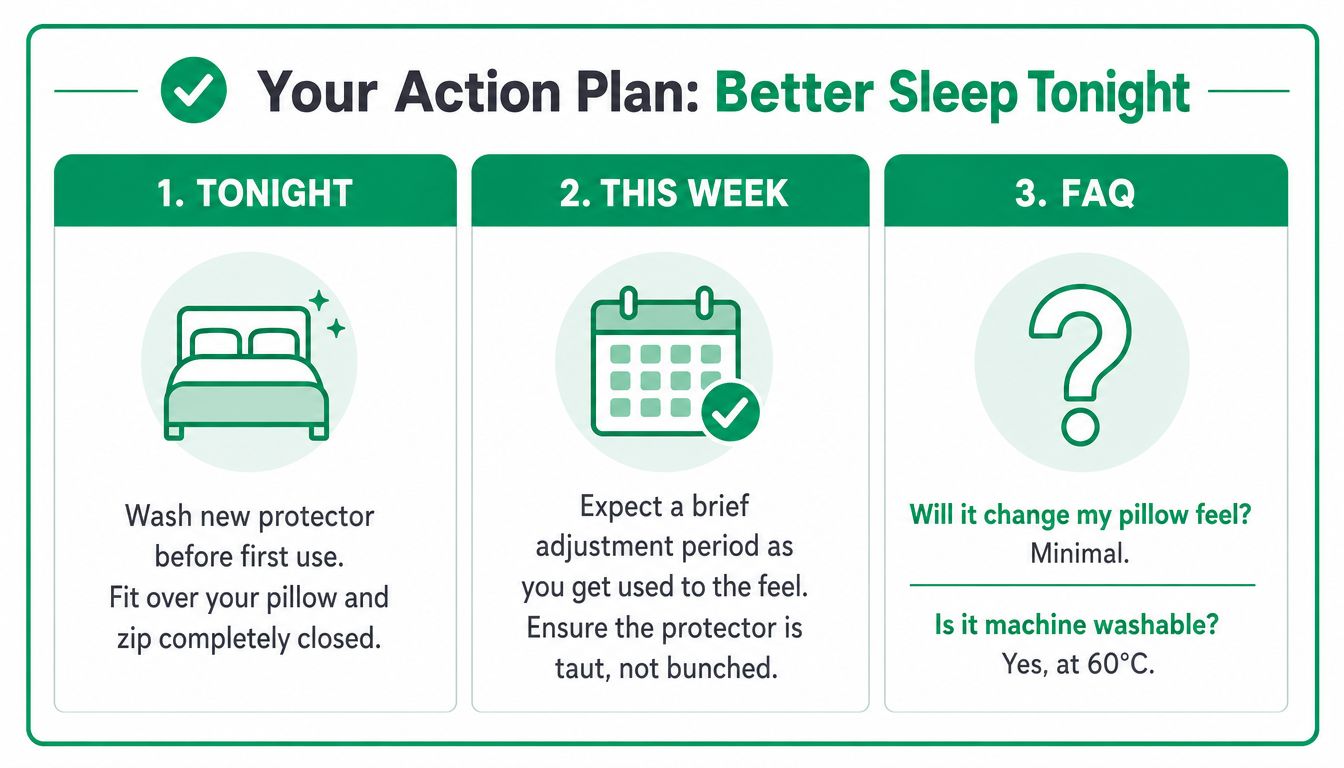
Keep your expectations realistic. A protector can reduce exposure at the pillow, but the adult-asthma trial discussed earlier shows why it shouldn't be treated as a standalone promise of symptom relief. If congestion, wheezing or disturbed sleep persists, review mattress coverage, bedding care and the rest of the bedroom, then seek clinical advice where appropriate.
Quick answers before you buy
Can a pillow protector alone improve asthma symptoms? It may reduce allergen transfer from the pillow, but it shouldn't be expected to improve asthma by itself. The evidence supports a layered mite-control approach.
Will anti-allergy protection survive repeated hot washes? A physical barrier can remain useful through washing when the manufacturer's instructions are followed, but inspect the zip, seams and membrane over time. Treatment-based bedding may require a lower temperature to preserve its finish.
Will it change the feel of my pillow? A well-made protector should have little effect beneath a pillowcase. Stiff, noisy or poorly fitted covers are the ones most likely to disrupt sleep.
Use the checklist, choose the construction rather than the slogan, and protect the mattress as well if dust mites are a serious concern.
Protect-A-Bed offers UK pillow protectors in Cotton, Snow, Tencel Cool, Copper and Copper Cool styles, with barrier-focused options for different comfort needs. Visit Protect-A-Bed to check the current sizes, care instructions, delivery details and warranty before choosing the cover that fits your bedroom routine.