

Machine Washable Pillow: A Complete Care Guide

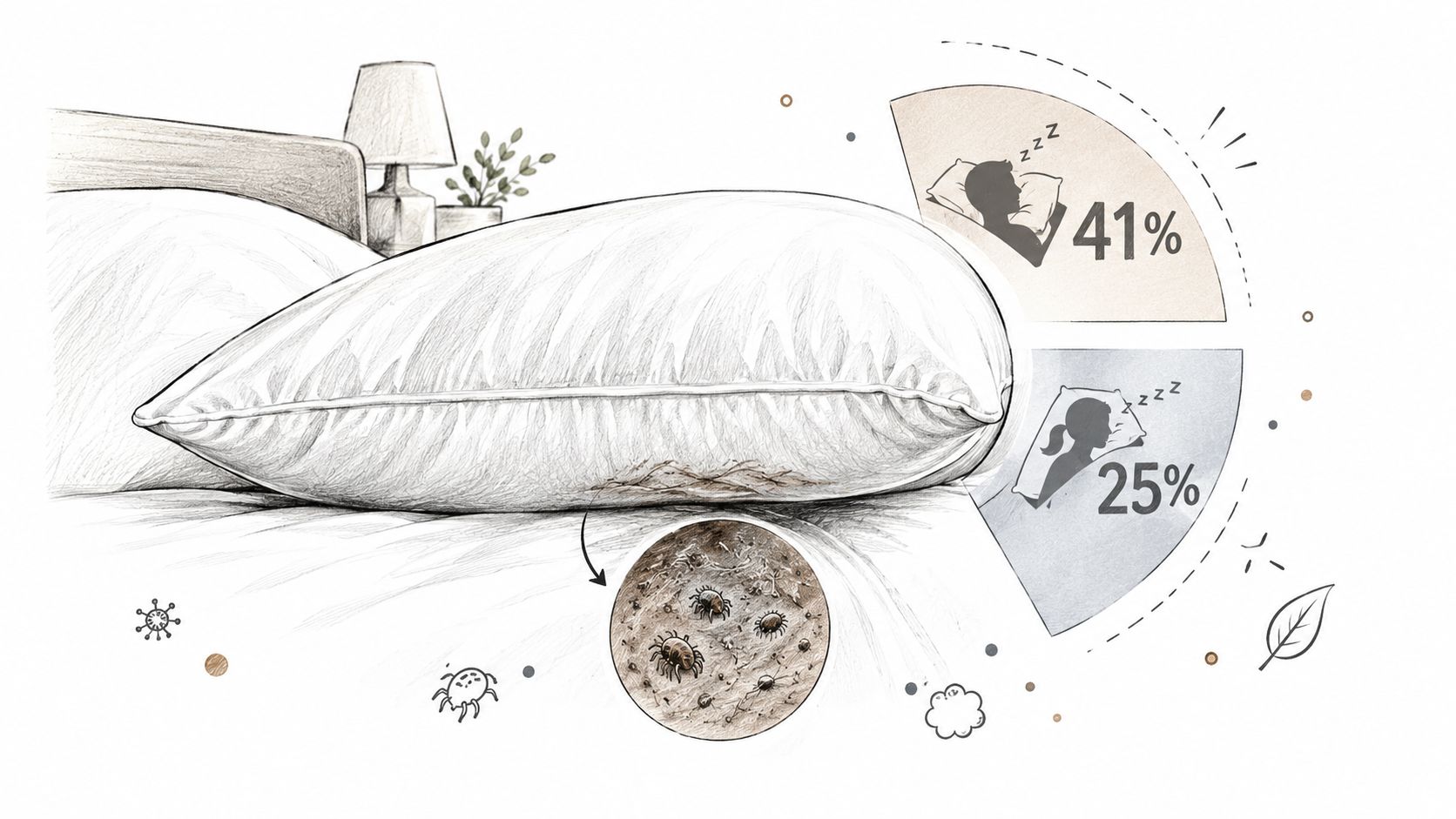
In the UK, 41% of people reported sleeping on a dirty pillow, and a quarter had never washed their pillow at all. A machine washable pillow can close that hygiene gap, but only if its filling tolerates the right wash temperature and the pillow can be dried completely.
That distinction matters more than the label suggests. “Machine washable” should mean more than surviving one trip through a drum. It should mean the cover, seams and filling can withstand repeated care without severe clumping, flattening, shape loss or moisture retention. A pillow that washes easily but stays damp in the centre isn't a practical hygiene solution.
The useful question is therefore not merely, “Can this pillow go in the washing machine?” Ask instead, “Can my household wash it at the required temperature, rinse it properly and dry it all the way through?” That performance test separates a properly washable pillow from a product that's only technically washable.
Table of Contents
- Understanding the Machine Washable Pillow Reality
- Which Pillow Fillings Can Withstand Machine Washing
- How to Wash a Machine Washable Pillow Correctly
- Drying Risks and Why Moisture Is the Real Enemy
- Machine Washable Pillows versus Non-Washable Options
- How Pillow Protectors Extend Machine Washable Life
- Choosing the Right Pillow Care Approach for Your Sleep Needs
Understanding the Machine Washable Pillow Reality
The Silentnight survey provides a useful starting point. It found that 41% of people in the UK were sleeping on a dirty pillow, while 20% had been using an unwashed pillow for five years or more. The same research reported that a quarter of Brits had never washed their pillow at all. These figures show a practical gap between recommended bedding hygiene and what households can realistically manage. (House Beautiful reports the Silentnight survey findings)
A washable construction can make regular care less intimidating. Instead of relying only on a pillowcase, you can remove accumulated sweat, skin oils and household dust from the pillow itself. But that benefit depends on the filling retaining its structure after laundering and on the fabric remaining secure around the filling.
What the label should promise
A reliable machine washable pillow needs several things to work together:
- Wash-tolerant filling: The fibres, feathers or down must recover after immersion and agitation.
- Secure construction: Seams must resist opening, particularly when the filling becomes heavy with water.
- Stable loft: The pillow should regain a useful shape after drying rather than forming permanent lumps.
- A realistic care route: The household needs access to a suitable machine, enough drum space and a workable drying method.
The care label remains the controlling instruction. A filling may be generally washable, but the finished pillow can still have restrictions because of its casing, stitching or treatment. A “washable” claim also doesn't guarantee that every temperature is safe. The label sets the ceiling.
This is why pillow care belongs alongside the wider sleep environment. Someone managing discomfort or trying to keep a particular pillow arrangement may also explore specialist resources such as a portable heat pillow for arthritis, but heat-based comfort products and washable sleeping pillows serve different purposes. One supports comfort, while the other must withstand laundering and drying without losing performance.
Practical rule: Treat machine washability as a durability-and-hygiene promise, not as permission to use any cycle you like.
A suitable pillow can reduce the effort involved in cleaning, but it won't remove the need for judgment. Check the label, inspect the seams and plan the drying stage before you start the wash.
Which Pillow Fillings Can Withstand Machine Washing
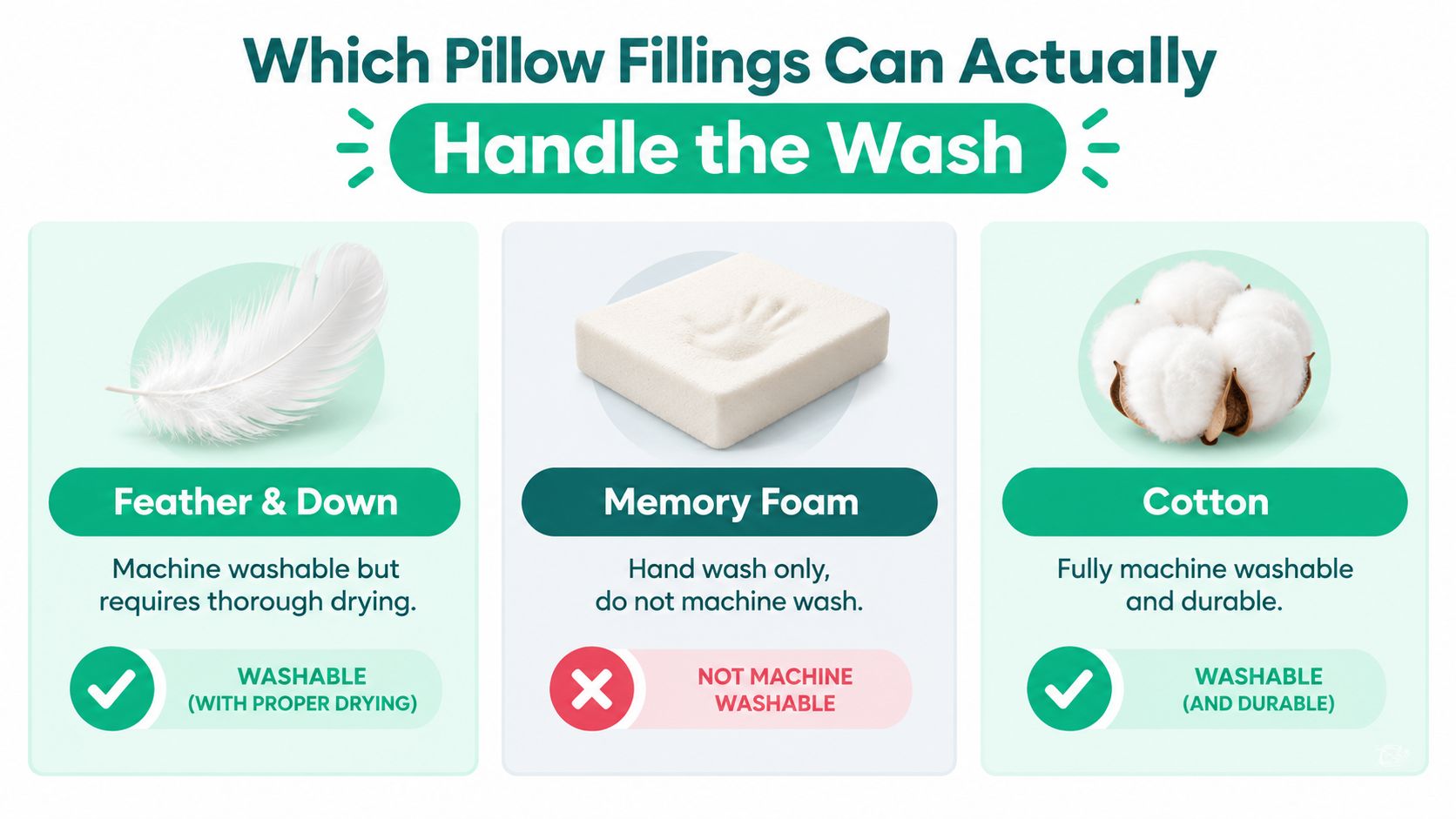
The filling sets the practical limit on cleaning. UK guidance commonly associates feather, down, cotton and synthetic fillings with machine-washable pillows, while memory foam is generally excluded because machine washing can damage it. Which? explains pillow materials and washing guidance
Washability is a performance claim, not a simple label. Water makes the filling heavier, agitation shifts it inside the casing, and heat places further stress on fibres and foam. A pillow may survive one wash yet lose loft, develop clumps or retain moisture after repeated cycles. The drying method often determines whether the pillow remains usable.
Common washable fillings
Synthetic fibres are usually the easiest choice for regular care. They can withstand washing well, but the fibre cluster may compress or migrate if the pillow is forced into a crowded drum, spun too aggressively or used before the centre has dried.
Cotton filling can tolerate machine washing when the finished pillow is designed for immersion. Cotton holds water, so the surface can feel dry while the interior remains damp. That moisture can affect loft and create stale odours if the pillow returns to the bed too soon.
Feather and down can be washable in finished pillows with suitable care instructions. They require thorough drying and regular redistribution during the process. Uneven drying encourages clumps, while excessive heat can damage delicate filling. A washable feather pillow still demands more attention than a synthetic one.
Fillings requiring a different routine
Memory foam and latex are generally unsuitable for machine washing. Their structure can retain water, and mechanical agitation may damage the core. Follow the label's surface-cleaning instructions, prevent the core from becoming saturated and use a removable protector as the washable layer.
Product construction also changes the care system. For a shaped insert or handmade cover, the minky pillow kit guide offers useful context on how an outer cover, insert and cleaning method work together. A removable cover can be washed regularly, while the insert may need spot cleaning instead of immersion.
| Filling | General wash position | Main risk |
|---|---|---|
| Feather and down | Often washable when the label permits | Clumping and incomplete drying |
| Cotton | Often washable when the construction permits | Retained moisture and compression |
| Synthetic | Commonly washable | Flattening, fibre migration and residue |
| Memory foam or latex | Generally not machine washable | Structural damage and water retention |
For allergy-sensitive households, temperature matters alongside the filling. Allergy UK states that washing at 60°C or above kills dust mites, while lower-temperature washing may remove allergens temporarily without eliminating the mites. Allergy UK guidance on house dust mite allergy The pillow must tolerate the temperature required for the intended hygiene result, and its label remains the final authority.
How to Wash a Machine Washable Pillow Correctly
Start with the care label, not a generic washing routine. It specifies whether the pillow is machine washable, the maximum temperature, the suitable cycle and whether tumble drying is permitted. Check the casing before washing. A loose seam can release filling into the drum, clog the filter or leave the pillow damaged.
Remove the pillowcase and protector, then treat visible marks only if the label permits the product. Close zips and other fastenings. In a large-capacity machine, washing two pillows together can help balance the load, provided the drum has enough space for both to move and rinse properly.
Set up the wash
Choose a delicate or gentle cycle unless the manufacturer specifies another programme. Bulky pillows need room to circulate. If the load cannot turn freely or the machine repeatedly becomes unbalanced, stop the cycle and use a larger machine rather than forcing an ineffective wash.
Use a smaller amount of mild liquid detergent than you would for a full clothing load. Too much product can remain in the filling, making rinsing difficult and leaving a stiff, perfumed residue. Skip fabric softener unless the care instructions expressly allow it, because coatings may change the pillow's feel and reduce absorbency.
Temperature and mechanical action serve different purposes:
- A higher permitted temperature supports the hygiene goal, but only when the filling and casing are designed to tolerate it.
- A lower setting protects delicate materials when hotter water could cause shrinkage, fibre damage or loss of shape.
- A gentle cycle limits physical stress, yet it cannot compensate for an unsuitable temperature or poor rinsing.
The label therefore determines the practical limit. Do not raise the temperature just because the pillow feels heavily soiled. A wash that harms the casing or weakens the filling defeats the purpose of a machine washable design. Washability is a performance claim, and repeated care tests both the fabric and the internal construction.
Rinse and inspect
Run an additional rinse if the pillow feels slippery or smells strongly of detergent after the first cycle. Residue is more difficult to remove once it has dried inside the filling.
Remove the pillow promptly when the programme ends. Press different areas gently to find dense or waterlogged sections, reshape the casing and begin drying immediately. The wash has loosened the filling and loaded the interior with water. Leaving the pillow compressed in the drum encourages uneven drying and can make the pillow harder to restore.
Drying Risks and Why Moisture Is the Real Enemy
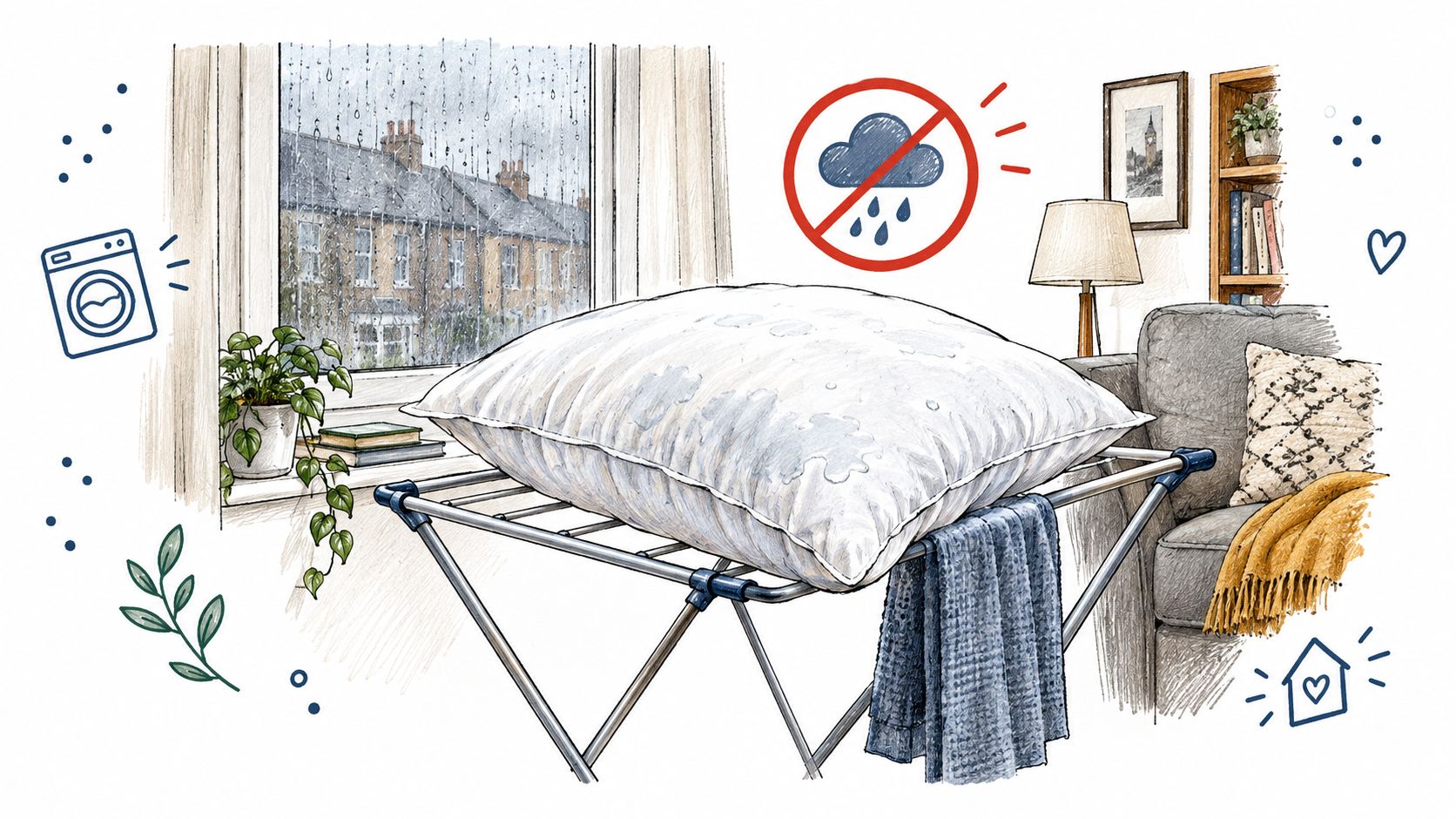
A pillow isn't clean when the wash ends. It's clean when the filling is dry throughout. UK guidance warns that drying can take up to four or five hours, making available laundry capacity and drying time central to machine-washable pillow care. (The White Company sets out drying expectations for pillows)
This is especially important in UK homes where indoor drying is common. A cool room with limited ventilation can allow the outside fabric to dry while the centre stays damp. That trapped moisture can lead to mould, mildew, stale odours and a loss of support. It can also encourage you to put the pillow back into service before the filling has recovered.
Choose the drying route carefully
Use a tumble dryer on low heat only when the care label permits it. Stop periodically to shake and reshape the pillow, particularly when the filling tends to gather in pockets. A dryer can move air through the casing more consistently than a still indoor room, but high heat can damage fibres, coverings or delicate filling.
Air-drying can work when you have strong ventilation and enough time. Lay the pillow so air can reach as much of its surface as possible, turn it regularly and avoid placing it in a damp or poorly ventilated space. Don't cover it with a pillowcase until the inside feels fully dry.
A breathable barrier can reduce how much sweat and liquid reaches the pillow between washes. Guidance on a breathable waterproof pillow protector is useful here because it addresses the compromise directly, protecting against moisture without treating breathability as an afterthought.
A cool centre is a warning sign, not proof that the pillow has finished drying.
Press the middle and check thick seams, corners and any areas where filling has clumped. If any area feels cool, heavy or tacky, continue drying. The practical test is simple: the pillow should feel evenly light, dry and odour-free before it returns to the bed.
Machine Washable Pillows versus Non-Washable Options
A machine washable pillow offers a direct route to deeper cleaning, but it isn't automatically the longest-lasting or most suitable choice. Repeated immersion can stress seams, compress some fillings and gradually alter the original loft. The advantage is strongest for households that value straightforward laundering and need a pillow that can tolerate the hygiene routine they intend to follow.
Non-washable options, such as memory foam and latex designs, require a different maintenance system. You can surface-clean marks and air the pillow, but you can't put the core through a hot machine cycle. A contoured memory foam pillow illustrates why shape and support can come with care restrictions. The moulded structure that supports the head and neck is also the reason the insert shouldn't be treated like a loose synthetic-filled pillow.
Compare the practical trade-offs
| Priority | Machine washable pillow | Non-washable pillow |
|---|---|---|
| Deep cleaning | Possible when the label permits | Limited to surface treatment |
| Hot-wash hygiene | Available only if construction tolerates it | Usually unavailable for the core |
| Shape retention | Can decline with unsuitable cycles or drying | May remain stable when kept dry |
| Routine effort | Higher during wash and drying days | Lower for the core, higher reliance on barriers |
| Moisture control | Depends heavily on complete drying | Depends on preventing saturation |
The washable option suits someone who wants the pillow itself to enter the laundry routine. That could be valuable for an allergy-sensitive household, provided the pillow tolerates the required temperature and the drying setup is reliable.
The non-washable option can still work well when its protector is treated as the washable component. That arrangement changes the priority from periodic immersion to consistent barrier care. It may preserve the shape of a specialist pillow, but it won't give you the same ability to hot-wash the internal core.
A pillow's value therefore depends on the care behaviour it encourages. A theoretically washable pillow that's too difficult to dry may receive less care than a non-washable pillow paired with a protector that can be removed and laundered routinely.
How Pillow Protectors Extend Machine Washable Life
A pillow protector creates a cleaning hierarchy. The pillow handles support, while the removable outer layer intercepts sweat, skin oils, spills and household allergens. You then wash the protector more readily than the pillow itself, reducing the need to subject the filling to repeated laundering.
That matters even with a machine washable pillow. Every full wash introduces mechanical movement, detergent exposure and a significant drying requirement. A protector reduces the moisture load reaching the filling and helps the pillow retain its original loft for longer.
Barriers need to breathe
A waterproof protector shouldn't create a clammy sleeping surface. Protect-A-Bed's Miracle Membrane technology is described as blocking liquids, sweat, dust mites and allergens while remaining air permeable. Its role is to create a barrier between the sleeper and the pillow, not to replace the pillow's own care label.
The best routine depends on the sleeper. Someone who sweats heavily needs reliable moisture interception. An allergy-sensitive household needs a barrier that limits allergen ingress and still allows the removable layer to be washed according to its instructions. A hot sleeper may prefer a breathable fabric construction over a heavy, poorly ventilated cover.
Build a layered routine
Use the pillowcase as the first visible layer, the protector as the main washable barrier and the pillow as the less frequently laundered support layer. This approach makes local cleaning easier because many spills and deposits stop at the removable cover.
For households reviewing their wider bedding habits, practical guidance on creating a fresh bed for better sleep can sit alongside pillow-care decisions. The important point is to match the cleaning frequency and protection level to actual use, rather than washing every component indiscriminately.
A protector also gives non-washable pillows a viable maintenance route. The core stays dry and protected, while the cover carries the regular laundry burden. More detail on why use pillow protectors helps explain that role as part of a complete bedding system.
Choosing the Right Pillow Care Approach for Your Sleep Needs
Choose a machine washable pillow if you need the internal filling to tolerate regular laundering and, where permitted, a 60°C wash for dust-mite control. Choose a non-washable specialist pillow when its shape or support matters more, then protect it with a removable barrier. Hot sleepers should prioritise breathable protection, while allergy-sensitive households should check both the permitted wash temperature and the protector's care instructions.
Don't buy the word “washable” in isolation. Confirm the filling, machine capacity, drying method and expected shape retention. The right routine combines an appropriate pillow, a suitable protector and honest adherence to the care label.
Protect-A-Bed offers waterproof, breathable pillow protectors designed to help block liquids, sweat, dust mites and allergens while keeping the removable layer practical to wash. Visit Protect-A-Bed to choose a UK pillow-protection option that fits your sleep environment and care routine.