

Why Use Pillow Protectors: A Practical UK Guide

A pillow protector is the simplest way to keep sweat, skin oils, saliva and allergens off the pillow itself, especially when one in 20 young children and one in five adults test positive for house dust mite allergy in the UK. It adds a washable barrier between your face and the pillow filling, so the part that's hardest to clean doesn't have to absorb every night of use.
You probably change your pillowcase regularly, then put the pillow back on the bed and forget about it. Meanwhile, the pillow has spent hours against your hair, face and neck in a warm bedroom, collecting moisture and fine particles that a normal case can't fully stop. That's why the useful answer to why use pillow protectors goes beyond freshness: they're practical hygiene and risk-management covers for an item that often can't be hot-washed frequently.
Table of Contents
- What Really Builds Up Inside an Unprotected Pillow
- How Pillow Protectors Actually Work as a Barrier
- Allergy and Dust Mite Defence in UK Bedrooms
- Waterproofing, Sweat and Spill Protection
- The Overlooked Case for Pillow Protectors Against Bed Bugs
- Caring for Your Pillow and Protector the Right Way
- Who Benefits Most and What to Look For When Buying
What Really Builds Up Inside an Unprotected Pillow
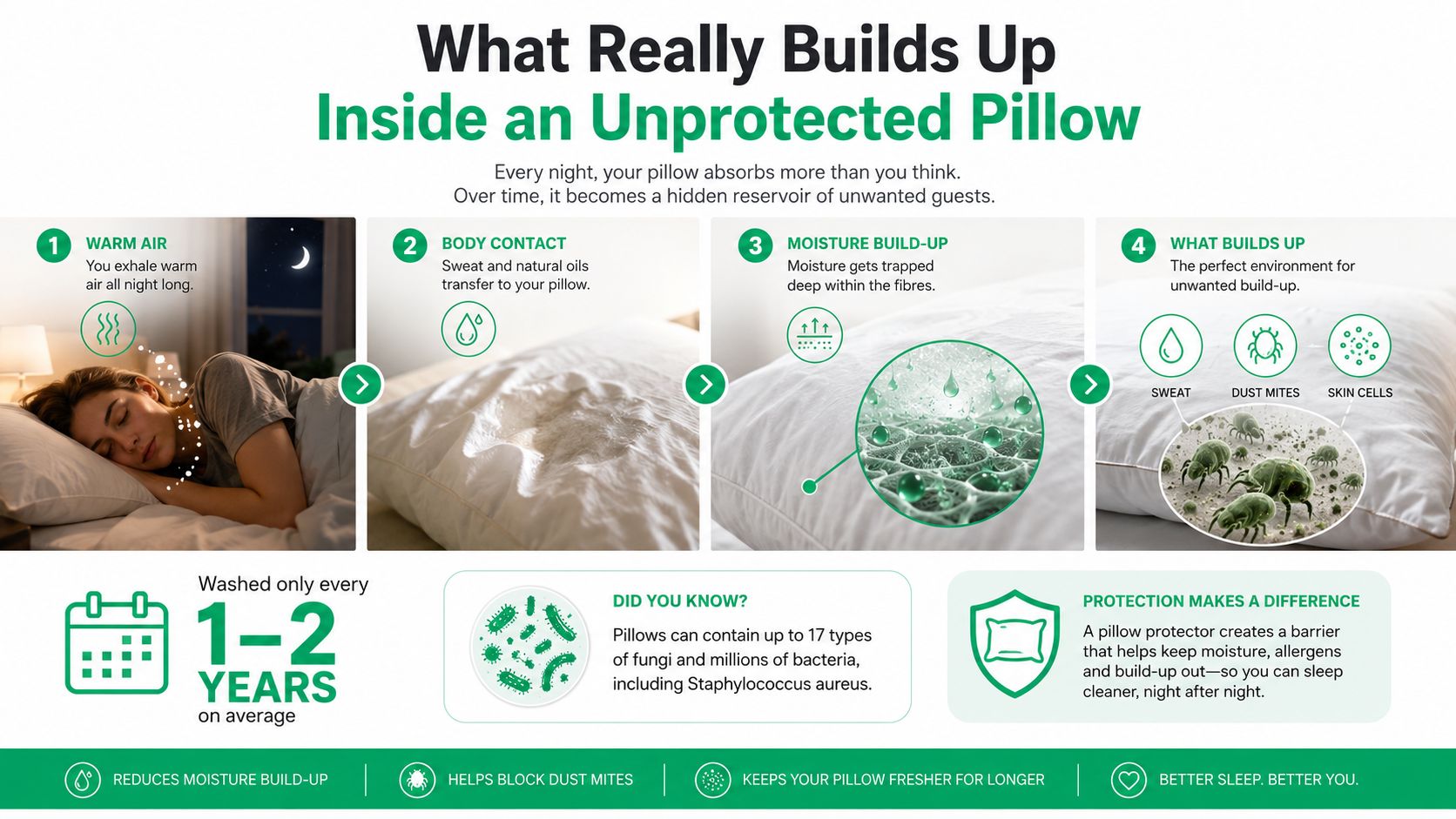
At bedtime, the pillow looks clean. By morning, it has been exposed to warmth, body contact and moisture for hours. Perspiration, skin oils, hair, saliva and cosmetic residue move through the pillowcase, while tiny flakes of shed skin settle deeper into the filling. A child might add dribble or a drink spill, while an adult may bring in face cream, hair products or pollen from an open bedroom window.
The problem isn't usually one dramatic incident. It's the steady accumulation that happens between washes. Many households wash the pillow itself only occasionally, sometimes every year or two, so the filling gets far less attention than the removable case. House dust mites also benefit from the warmth and skin debris found in bedding, which is why the UK guidance on dust mites in bedding focuses attention on the bed as an important control point.
A pillowcase isn't a sealed shield
A pillowcase has an important job. It gives you a comfortable, attractive surface that can go into the wash frequently. But its fabric is designed to feel soft and breathable, not to form an impermeable enclosure around the filling. Fine particles and moisture can still travel through the weave, seams and open end.
That distinction matters because the pillowcase deals with surface contact, while the protector deals with deeper contamination. If someone is ill, has a runny nose during hay fever season or spills water overnight, the case may catch some of the mess, but the pillow beneath can still be affected.
The simplest hygiene improvement
A protector sits directly over the pillow and beneath the pillowcase. It becomes the washable, replaceable first-line barrier, protecting the absorbent core from the routine build-up that's difficult to remove later.
For everyday use, choose a cover that fits closely and can be laundered according to its care instructions. You'll still wash the pillowcase as usual, but the protector gives the pillow itself a second layer of protection. That small change is often more useful than replacing a pillow because it has become stained, flattened or musty.
How Pillow Protectors Actually Work as a Barrier
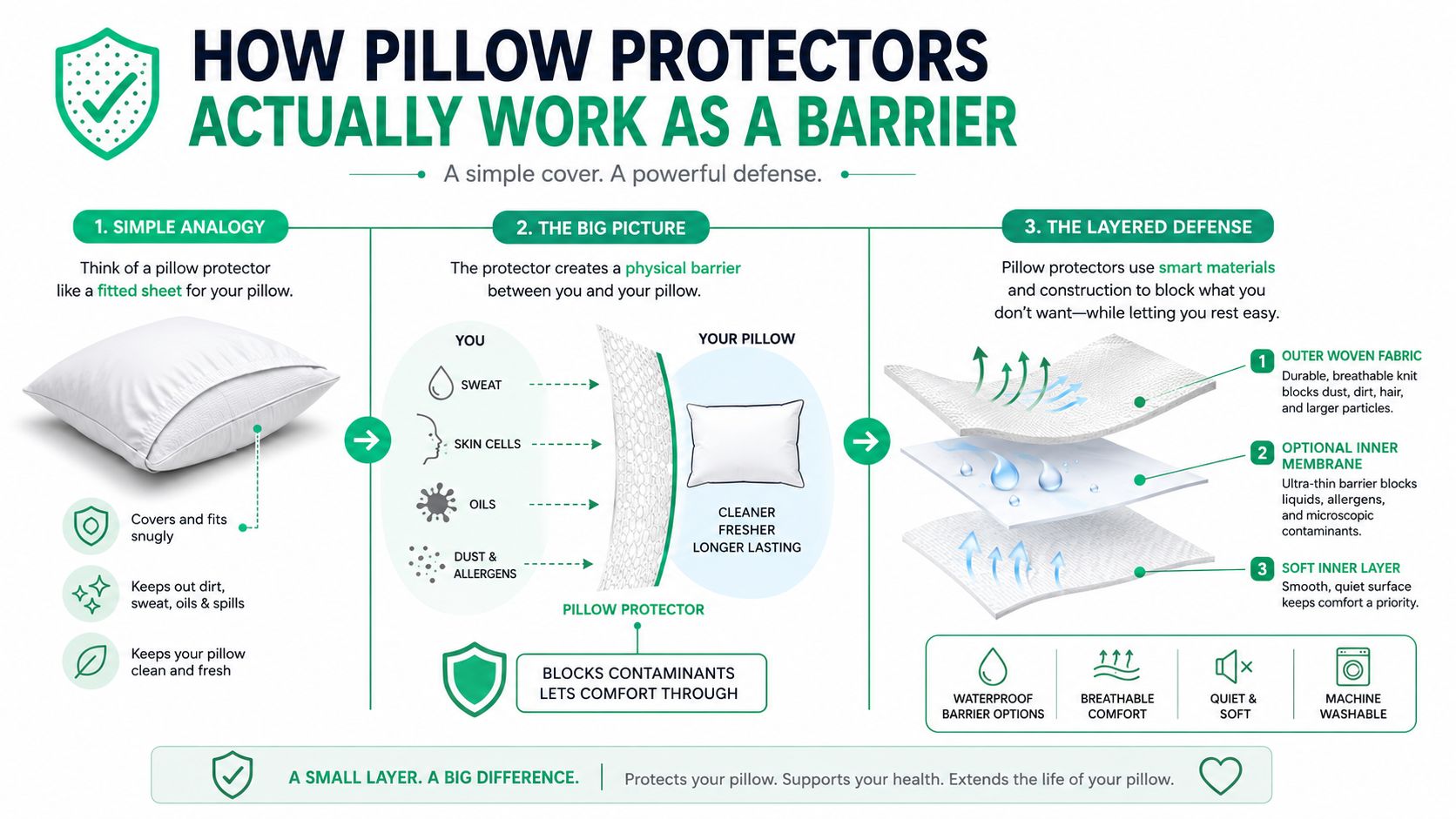
Think of a pillow protector as a fitted cover for the pillow, much like a raincoat under a coat. The pillowcase is the layer you see and touch. The protector is the hidden layer that takes the wear, moisture and fine debris before they reach the filling.
A basic protector may use a tightly woven fabric. A more advanced design adds a thin liquid-resistant membrane, often made from polyurethane or a similar material. The outer textile provides softness and structure, while the inner layer helps block liquids and reduce the movement of allergens.
Three parts determine the result
- The fabric controls feel, airflow and how easily particles pass through. Dense, low-permeability fabrics offer more resistance than a loose quilted cover.
- The membrane adds liquid protection. A breathable membrane is intended to block liquid moisture while allowing some water vapour to pass, which is more comfortable than a completely plastic-like layer.
- The closure determines whether the pillow is enclosed. An open envelope cover protects the main surface but leaves an access point. A zippered encasement surrounds the pillow more completely and is the stronger choice for allergen or pest control.
The protector doesn't replace the pillowcase. Use both. The case can be changed whenever it needs washing, while the protector can be removed for a more thorough clean or after a spill. For a broader explanation of how barrier materials work in bedding, these Orlando mattress protector insights offer useful context, even though a pillow protector needs to remain quieter and lighter than a mattress cover.
Practical rule: Choose the most complete barrier that suits your priority, then check that it remains breathable, quiet and washable.
A protector with a membrane is not automatically better for every sleeper. If your main concern is dust and routine hygiene, a tightly constructed non-membrane cover may be sufficient. If you're managing spills, night sweating or a pest concern, a sealed design offers more control. The breathable waterproof membrane guidance can help you understand the trade-off between liquid resistance and airflow.
Allergy and Dust Mite Defence in UK Bedrooms
A pillowcase can look clean while the pillow beneath it remains exposed. In UK bedrooms, that matters because house dust mites are found in all UK homes, according to the North West Allergy Network's house dust mite avoidance guidance. The mattress and pillowcase area provides a suitable environment for them, while their faeces can remain close to the bedding surface.
Allergy UK recommends allergen-proof barrier covers on all mattresses, duvets and pillows. The cover needs to be breathable and enclose the item completely. A pillow protector therefore forms one part of a wider routine. Ventilation, suitable cleaning and washing bedding at an appropriate temperature still have a role.
Why physical barriers matter
Washing can remove allergens, yet many pillows cannot be hot-washed often without damaging their filling or shape. A sealed protector changes the task. It places a washable layer between the sleeper and the pillow core, much like a removable liner inside a coat. Moisture and debris still need managing, but they are less likely to work directly into the filling.
For a deeper examination, see our guide to the pillow protector for dust mites.
UK-linked bedding evidence reported baseline mite-allergen levels typical of the country. Approximately one quarter of beds were above 10 micrograms of dust-mite allergen per gram of dust, while another quarter were between 2 and 10 micrograms per gram. The findings indicate that measurable allergen loads in UK bedding are common enough for physical barriers to have a practical place. The figures are discussed in the UK-linked bedding guidance and study summary.
A separate UK double-blind trial found that encasing mattresses, pillows and duvets reduced mattress mite allergen by a median 480 nanograms, or 100%, at six weeks, compared with 215 nanograms, or 53%, with placebo treatment. The study did not find short-term peak-flow benefits unless the covers were combined with other measures. A protector should therefore be presented as an exposure-control measure, not as a treatment for asthma. The randomised controlled trial of mite-allergen-impermeable bed covers supports that measured conclusion.
Pillow construction changes the risk
The pillow's outer fabric makes a difference too. UK research found that, after 24 hours, all 20 live house dust mites had penetrated standard synthetic pillow coverings, while none penetrated the tested feather pillow or new synthetic coverings during the tested periods. Dust permeability was 0.88% for standard synthetic covers and 0.02% for a commercial occlusive pillow cover. The published pillow-covering research shows why an ordinary pillowcase and a tightly sealed protector perform different jobs.
| Pillow Type | After 6 months | After 2 years | Recommended Action |
|---|---|---|---|
| Washable pillow without a protector | May have received some cleaning, but the filling remains exposed between washes | Repeated moisture and allergen contact may make deep cleaning more difficult | Add a washable barrier and follow the pillow's care label |
| Non-washable or rarely washed pillow | Surface case changes don't fully protect the core | The filling can become a long-term allergen reservoir | Use a complete allergen-proof encasement |
| Pillow with a sealed protector | The protector carries the routine contact load | The pillow core remains better isolated from external debris | Launder the protector and inspect the zip and seams |
This matters in homes managing hay fever, perennial rhinitis, asthma or childhood eczema, particularly when symptoms are worse overnight or on waking. It also explains the broader value of a protector: it is a first-line hygiene barrier for an item that is often difficult to wash frequently, not merely a way to keep the pillow feeling fresh.
Waterproofing, Sweat and Spill Protection
A pillow protector also answers a more ordinary question: what happens when the pillow gets wet? The answer might involve night sweating, saliva, a child's drink, a leaking nappy, a pet's damp fur or a glass knocked over during a night feed.
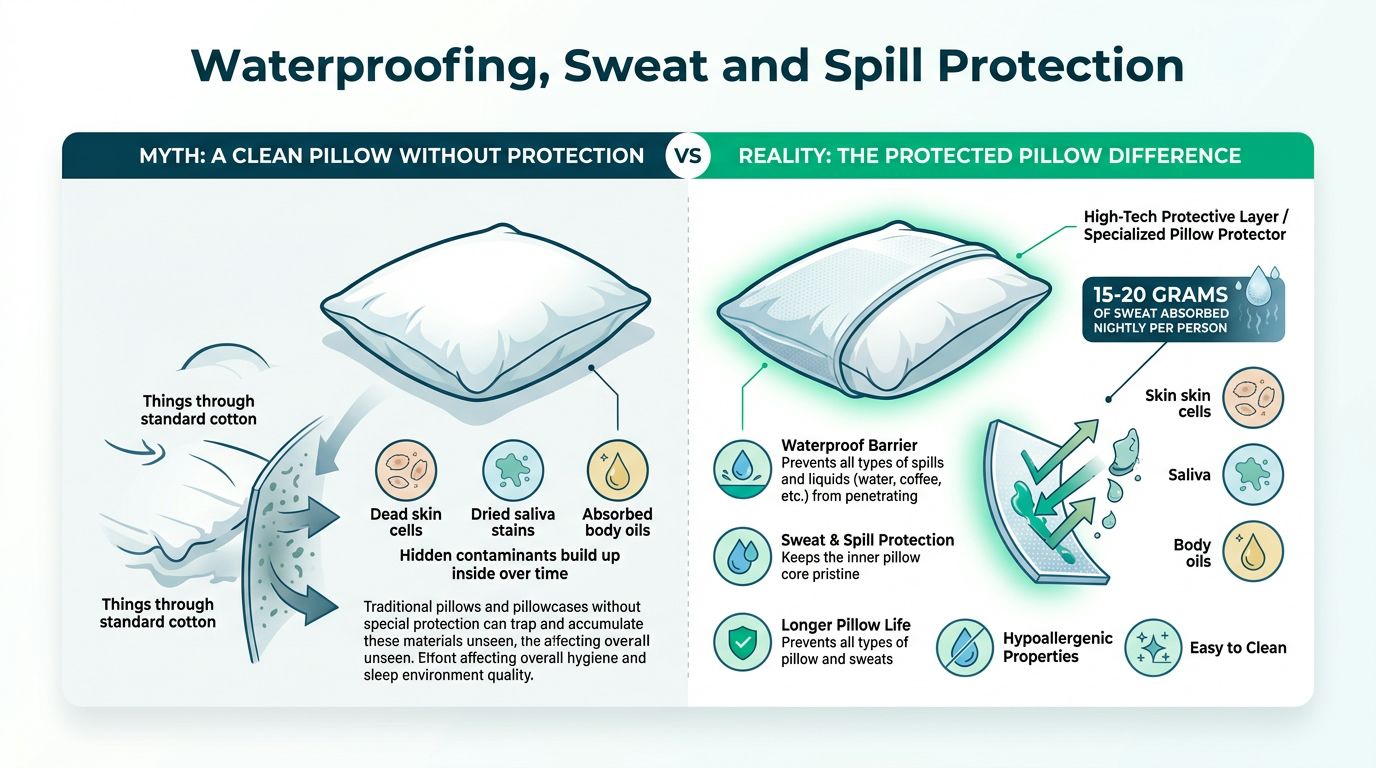
A waterproof protector works like a washing-up bowl beneath a plate. The plate still needs cleaning, but the bowl stops a spill reaching the worktop. In the same way, the pillowcase remains the soft daily-use layer, while the protector catches moisture before it soaks into the filling.
Small incidents create long-term wear
A single spill is easy to understand. The less visible issue is repeated exposure. Dampness can contribute to yellowing, odour and deterioration of the fill, particularly when the pillow can't dry thoroughly between uses.
A waterproof layer is useful for:
- Children's bedding: Accidents and drinks can be handled by removing the protector rather than discarding the pillow.
- Hay fever periods: Runny noses and frequent wiping create more moisture and residue around the face.
- Hot sleepers: A breathable barrier can keep liquid sweat away from the core without requiring the whole pillow to be washed.
- Pet-owning households: Drool, damp fur and outdoor debris are easier to isolate from the pillow.
The protection doesn't make a pillow maintenance-free. You still need to wash the case and launder the protector. It does make the unpleasant jobs more contained and can help preserve the pillow's shape and feel for longer.
For readers comparing fabrics, membranes and whole-bed approaches, this guide to best waterproof bedding provides broader background. For a pillow, prioritise a soft outer fabric, a quiet construction and care instructions that match your washing routine.
The Overlooked Case for Pillow Protectors Against Bed Bugs
Allergy control is the familiar reason to buy a protector. Risk management is the less discussed reason, particularly in rented homes, shared accommodation, guest rooms and properties with frequent turnover.
Recent UK reporting says confirmed bed bug activity rose by an average of 44% year on year between 2023 and 2025. The UK bed bug activity report describes a materially worsened risk environment, but the number shouldn't be used to imply that every pillow needs specialist treatment. It does support taking prevention and inspection seriously.
Bed bugs hide in seams, folds and crevices during the day, then emerge at night. A normal pillowcase leaves the pillow's edges and closure area accessible. A fully enclosed, zippered protector creates a much more controlled surface for inspection and cleaning.
What an encasement can and can't do
A bed-bug-rated encasement may help prevent bugs from entering the pillow core and can contain insects already inside, provided it is correctly fitted and remains intact. It can also reduce the number of hiding places available within the pillow itself.
It cannot solve a whole-room infestation. Bed bugs may be present in the mattress, bed frame, skirting boards, furniture and luggage. Professional inspection and treatment may still be necessary, and every seam and fastening needs checking.
| Feature | Standard Pillowcase | Zippered Pillow Protector |
|---|---|---|
| Covers the sleeping surface | Yes | Yes |
| Seals the pillow filling | No | Depends on the encasement design |
| Limits access through the opening | No | Yes, when the zip is properly closed |
| Helps inspection and cleaning | Limited | More practical |
| Treats a room-wide infestation | No | No, it forms only one part of a wider response |
For additional practical context on prevention, the Green Advantage bed bug guide is useful. The important distinction is between a protector used as a passive barrier and a complete pest-control plan. In a hotel, rental property or shared home, sealed pillow protection can make routine checks and replacement decisions simpler, but it doesn't replace prompt reporting and coordinated treatment.
A pillow encasement is a containment and inspection tool, not a substitute for treating the room.
Caring for Your Pillow and Protector the Right Way
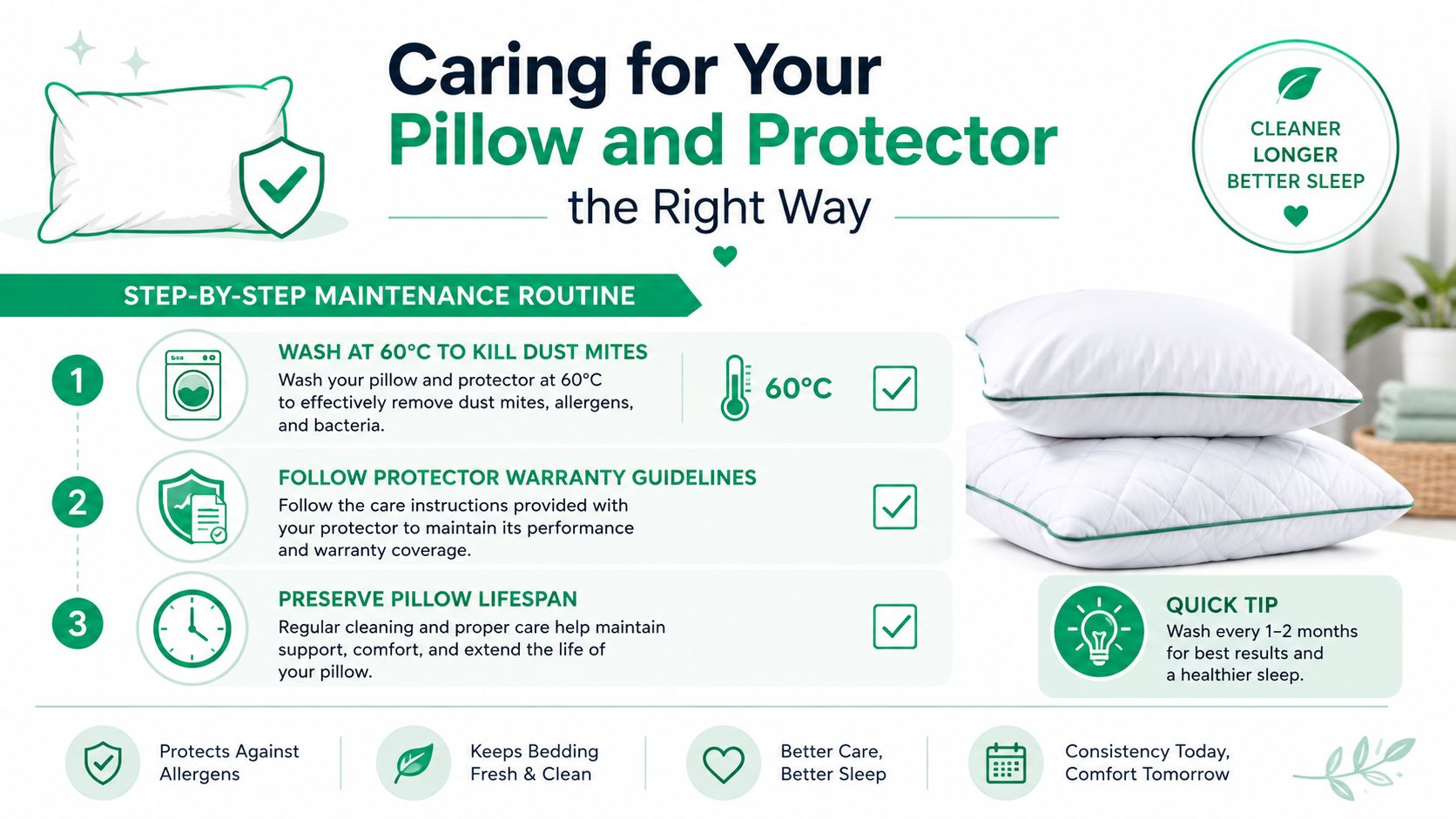
The protector only works if the cover remains intact and clean. Start by checking the care label, because membrane construction, fabric and zip design vary. The label should determine the washing temperature, drying method and products you use.
For allergy-focused households, UK bedding guidance commonly recommends washing at 60°C every two weeks for symptomatic households, as outlined in UK dust-mite bedding advice. That recommendation applies to the broader bedding routine. Don't assume every pillow or protector is designed for that cycle, so confirm the manufacturer's instructions before washing.
A practical care routine
- Wash the protector: Use the stated cycle and temperature, particularly after illness, a spill or heavy sweating.
- Protect the membrane: Avoid fabric softener and bleach unless the care label specifically permits them. These products can affect coatings and reduce performance.
- Dry it properly: Follow the drying guidance rather than assuming high heat is safe. Inspect the protector once dry, especially around the zip and seams.
- Air the pillow: Remove the protector when practical and allow the pillow to air in a dry, well-ventilated room. Avoid leaving it damp beneath freshly made bedding.
- Check the fit: A strained zip, torn seam or loose closure can create an opening for moisture, allergens or pests.
A useful bedding system has three layers: the pillow, the protector and the pillowcase. The case handles daily contact and comfort. The protector handles the deeper barrier function. The pillow itself should be cleaned only in the way its filling allows.
Who Benefits Most and What to Look For When Buying
The right protector depends on the problem you're trying to prevent. Someone with dust-mite sensitivity needs a different level of enclosure from someone who mainly wants to protect a guest pillow from occasional spills.
Match the cover to the household
| Sleeper Profile | Best Protector Type | Priority Feature | Key Buying Check |
|---|---|---|---|
| Dust-mite-sensitive sleeper | Full allergen encasement | Low-permeability barrier | Confirm that it completely encloses the pillow |
| Asthma or hay fever household | Breathable allergen-rated cover | Reliable seal and airflow | Check the care instructions and barrier description |
| Parent of a young child | Waterproof encasement | Liquid resistance | Make sure the size fits without stressing the zip |
| Hot sleeper | Breathable waterproof cover | Air-permeable construction | Look for a quiet fabric and membrane |
| Pet owner | Washable full cover | Easy cleaning | Inspect seams and closure after washing |
| Student or shared household | Zippered encasement | Pest and spill control | Choose a cover that's easy to inspect and launder |
| Guesthouse or rental property | Durable sealed protector | Repeatable hygiene routine | Standardise sizing and keep replacement covers available |
Check the construction, not just the label
Look for an allergen-rated barrier fabric if dust mites are the concern. A basic quilted cover may protect against marks but won't necessarily provide the same enclosure or low permeability.
A full zip is generally more suitable than an open envelope when the priority is pest or allergen defence. Check whether the zip closes fully, whether the seams are protected and whether the protector is designed for your pillow's dimensions.
For waterproofing, assess the membrane and the outer fabric together. You want liquid resistance without a clammy, noisy surface. Certifications such as OEKO-TEX may help you assess the finished textile, but they don't by themselves tell you how well the protector seals or how quiet it feels.
The practical shortlist is straightforward:
- Choose a full encasement first for allergy or bed bug risk management.
- Add breathable waterproof protection when children, pets, sweating or spills are central concerns.
- Use a basic washable allergen cover as a minimum if your main aim is to keep routine grime away from the pillow core.
Protect-A-Bed offers UK pillow protectors and encasement-style bedding barriers, including breathable waterproof options designed to help block liquids, sweat, dust mites and allergens. Visit Protect-A-Bed to compare the available pillow-protection formats and choose a cover that fits your household's cleaning and risk priorities.