

Pillow Protectors Allergy

Approximately 1 in 5 UK adults test positive for house-dust-mite allergy, and that makes a breathable, fully enclosing pillow protector a sensible first step for cutting bedroom exposure. It won't cure allergy on its own, but it can help reduce what you breathe in while you sleep.
Table of Contents
- Why Your Pillow Is an Allergen Reservoir
- How Barrier Technologies Reduce Allergen Exposure
- Comparing Fabric Options and Membrane Technologies
- Certifications and Claims That Actually Matter
- Care and Washing Instructions for Long-Term Protection
- Building a Complete Allergy Management Strategy
Why Your Pillow Is an Allergen Reservoir
You can wash your pillowcase every week and still wake up blocked, scratchy, or tight-chested. That's because the problem often sits deeper than the fabric you see, inside the pillow core where warmth, moisture, and skin flakes create the conditions mites prefer. UK guidance notes that approximately 1 in 5 adults and 1 in 20 children test positive for house-dust-mite allergy, while also warning that a positive test doesn't always mean symptoms show up the same way for everyone.
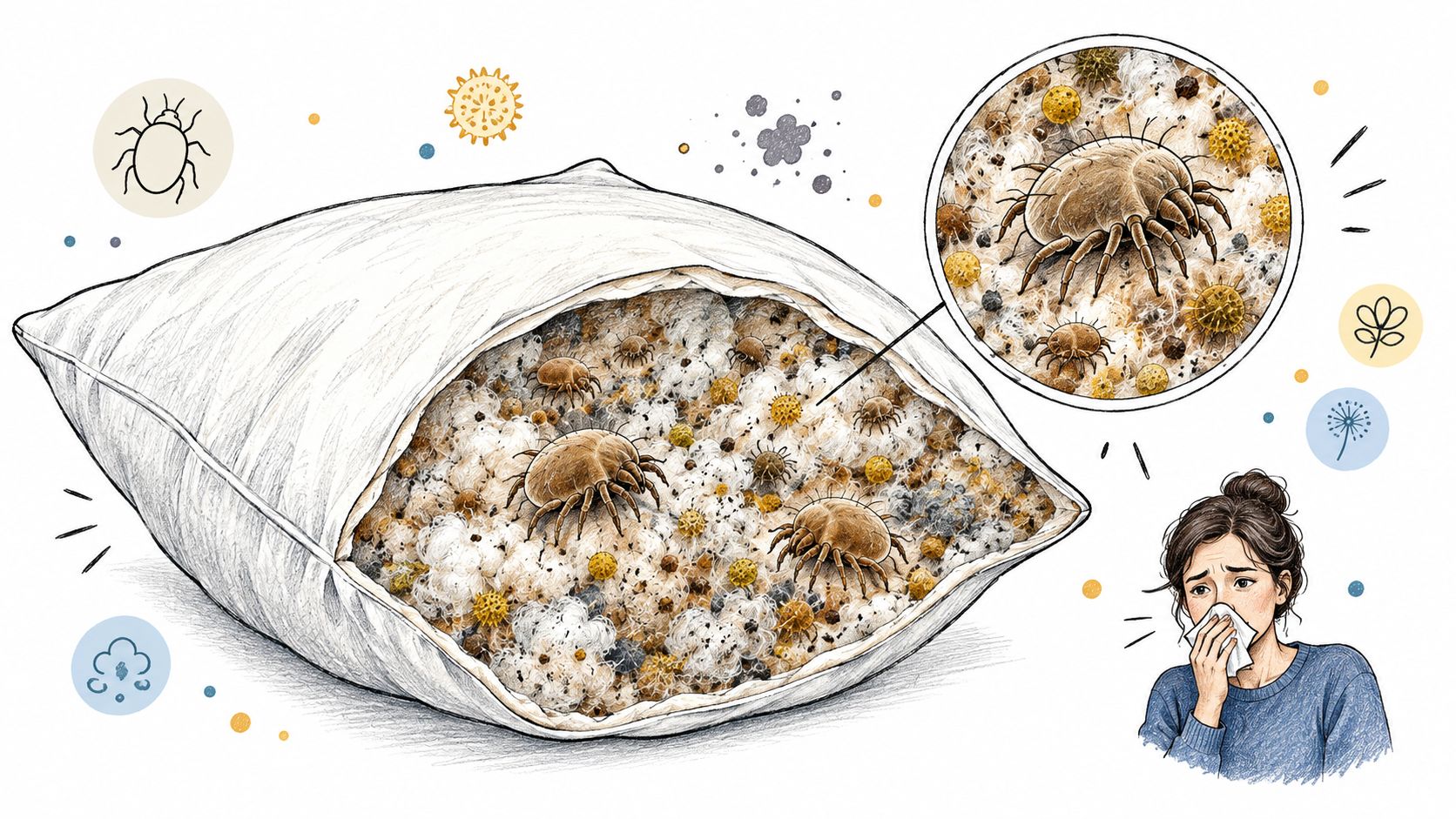
A pillow is a nightly contact point, not just a soft surface. You spend hours with it beside your nose and mouth, which is why dust-mite debris inside the filling matters so much. The bedding itself becomes part of the bedroom reservoir, especially when the pillow has absorbed sweat, humidity, and shed skin material over time.
Practical rule: if the allergen source is inside the pillow, cleaning the outside alone won't solve the exposure problem.
That's where terminology starts to confuse people. A pillow protector is often treated like a decorative extra, but in allergy control it's more like a barrier between you and the reservoir. If you're trying to understand the sleep side of exposure in more detail, the note on implement effective allergen filtration is a useful read because the logic is similar, block the material before it reaches the breathing zone.
The terms also overlap with mattress care. The internal guide on pillow protector for dust mites fits here because the pillow and mattress work as a single sleep surface in practice. If one part is left unprotected, the bedroom still holds on to allergens.
How Barrier Technologies Reduce Allergen Exposure
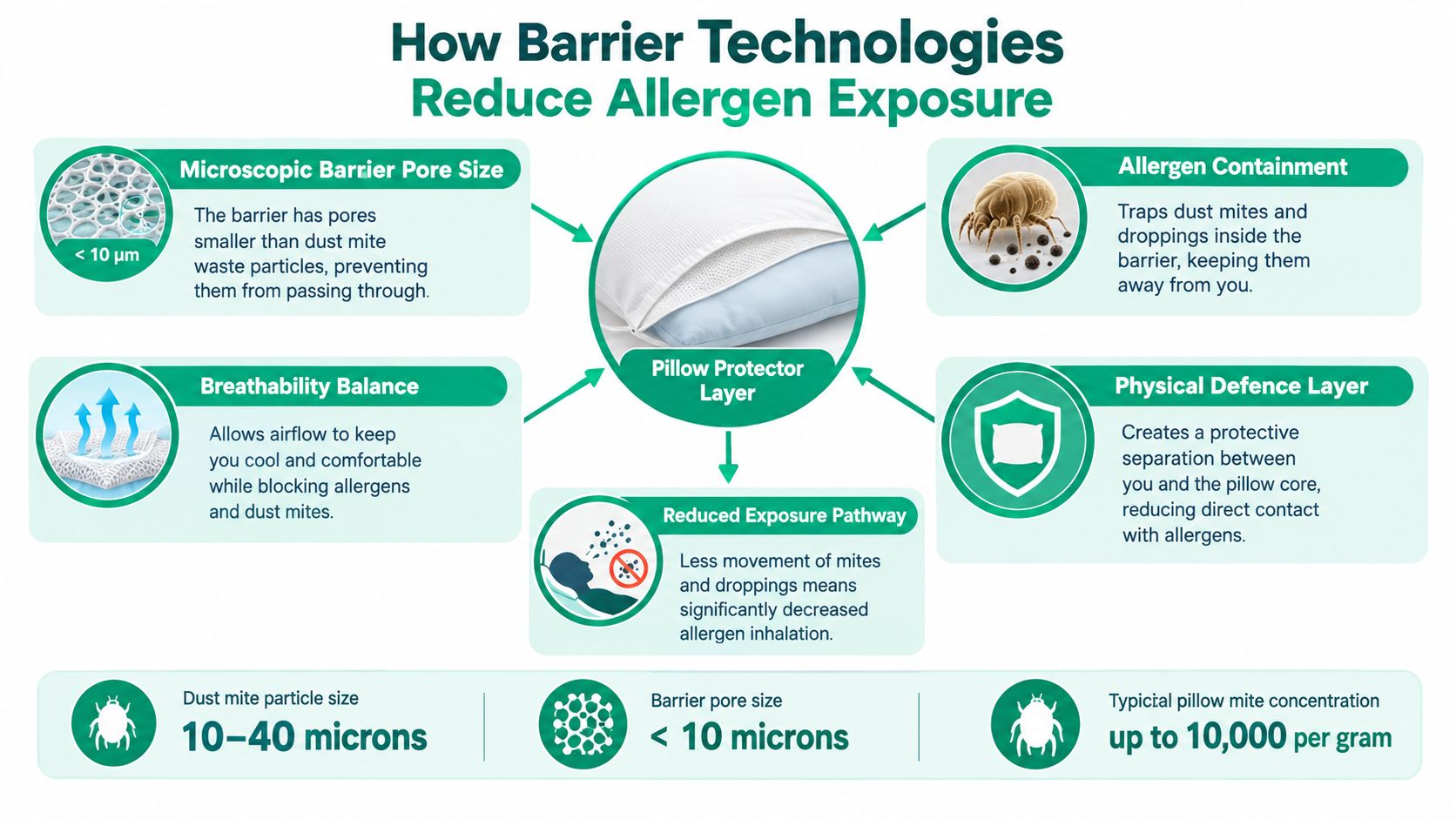
A proper barrier cover works by separating you from the pillow core, so allergen-containing dust stays contained instead of drifting into the breathing zone. Cambridge University Hospitals describes barrier bedding covers as the single most effective individual household measure, provided they're breathable and tested to stop house-dust-mite allergen escaping. That detail matters, because a loose cover or partial wrap doesn't give the same control as a fully enclosing design.
What complete coverage really means
Complete coverage means the protector encloses the pillow all the way round, then closes securely so the filling can't spill allergen out through gaps. Zips, seams, and membrane integrity matter because any weak point becomes the escape route. That's why a product description should tell you more than “hypoallergenic”, it should tell you that the enclosure is tested to prevent allergen penetration.
The UK housing research on dust-mite allergen levels is a good reminder of why this matters. In a North Lanarkshire study of volunteer asthmatics, 78% of bed samples contained Der p 1 above the World Health Organization sensitisation threshold of 2 micrograms per gram of dust, and 56% were above 10 micrograms per gram, the study's upper threshold associated with severe allergic reactions, both figures from the same source that also reported high carpet contamination. That doesn't mean every bed causes the same response, but it does show that beds can hold enough allergen to matter clinically. The same research found no symptom difference in one barrier-bedding trial with children, which is why a barrier should be treated as exposure reduction, not a guaranteed symptom fix. The earlier trial summary is useful context if you're comparing claims.
A barrier works when it blocks the pathway, not when it merely sounds protective on the packet.
What to check before you buy
Look for three things. First, the enclosure should be fully sealed rather than just “covering” the pillow. Second, the material should still let moisture pass through so you don't end up sleeping in a clammy pocket. Third, the product should be tested for allergen escape, because a breathable barrier that leaks is just expensive fabric.
The internal note on breathable waterproof pillow protector is relevant here because breathability and protection need to coexist. If a cover is too stiff, too noisy, or too hot, people stop using it properly, and the barrier fails in real life.
Comparing Fabric Options and Membrane Technologies
Shoppers looking for pillow protectors allergy solutions typically want two things at once, lower allergen exposure and a bed that still feels comfortable. That's where fabric choice and membrane design start to matter. A barrier can be technically effective and still be a poor match if it sleeps too hot, feels plasticky, or makes the pillow noisy.
Protect-A-Bed's Miracle Membrane is described as flexible, silent, and thin while blocking dust mites, allergens, liquids, and sweat, with Charcoal, Premium, Tencel Cool, and Cotton variants available. That combination is useful because it shows the trade-off clearly, the membrane does the blocking, while the fabric layer shapes the feel against your face and pillowcase.
| Pillow Protector Fabric Comparison | Breathability | Cooling Feature | Best For |
|---|---|---|---|
| Cotton | Comfortable and familiar | Limited | People who prefer a classic natural feel |
| Tencel Cool | Strong moisture handling | Better for warmer sleepers | Hot sleepers and people worried about sweat |
| Charcoal | Practical and low-fuss | Mild temperature support | People who want a balanced everyday option |
| Premium | Depends on build and finish | Varies by model | Buyers who want a more refined feel |
How to choose without overthinking it
If you sleep hot, cooling isn't a luxury, it's what keeps you using the protector consistently. A barrier that you remove after two uncomfortable nights doesn't help much. If you dislike a crinkly surface, a thin and silent membrane matters more than flashy marketing language.
If your main concern is feeling enclosed or stuffy, prioritise breathability over everything else. If sweat is part of the problem, look for a fabric that handles moisture well without giving up barrier performance. And if you want the most neutral option, a cotton-facing cover often feels easiest to live with.
A simple way to think about it is this.
Fit the protector to the sleeper, not the slogan.
The claim set should also reflect what the protector blocks. Allergen exposure is the main point here, but liquid resistance and sweat control are useful because damp bedding can make the sleep environment less comfortable and less stable over time.
Certifications and Claims That Actually Matter
A label can sound reassuring and still tell you very little. Hypoallergenic is broad, dust-mite proof sounds strong, and allergen barrier is the phrase that usually matters most, but only if the product has been tested for penetration rather than just described in marketing copy.
How to read the claim
Start with the wording. If a protector is presented as a barrier, it should specify that it's designed to stop allergen escape or allergen entry, not just reduce exposure in a vague way. Then check whether the product documentation says it's independently tested, because testing is what separates a real enclosure from a soft cover with a reassuring name.
Standards such as ASTMD6447 and ISO 12948-2 are useful because they give you a way to judge whether the material has been checked against objective benchmarks. You don't need to memorise the standards, you just need to know that serious barrier products should point to a test method, not only a brand promise.
A quick buyer's checklist
- Ask for the testing basis: If the packaging or product page doesn't mention how the barrier was verified, treat the claim cautiously.
- Look for full enclosure language: A pillow protector should wrap the whole pillow, not leave the filling partly exposed.
- Prioritise breathable barrier wording: Breathability matters because you need a product you can keep on the pillow overnight.
- Treat “hypoallergenic” as a starting point, not a finish line: It can describe a product's design intent, but it doesn't automatically prove allergen blocking.
The internal guide on do dust mite covers work is useful if you want a plain-English explanation of why those claim differences matter. The key point is simple, the right words should describe a tested barrier, not just a comfortable cover.
Care and Washing Instructions for Long-Term Protection
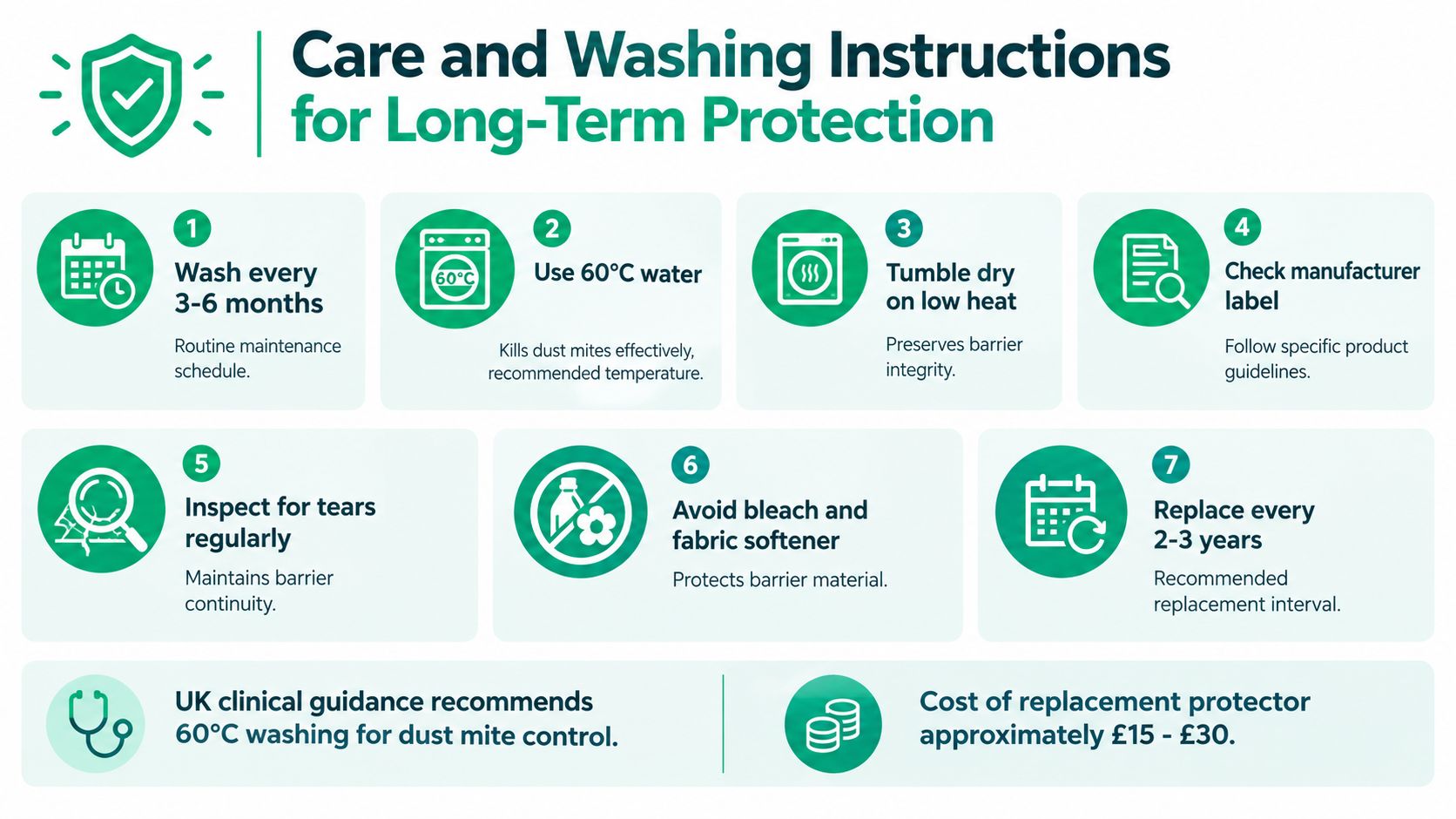
A pillow protector only keeps doing its job if you look after it properly. UK guidance recommends washing bedding and covers at 60°C, because that temperature is intended to kill mites, while cooler cycles are less reliable. Royal United Hospitals Bath also advises covering pillows, duvets, and mattresses with barrier covers and reducing indoor humidity because mites thrive in bedroom environments.
The care routine that protects the barrier
Wash the outer bedding regularly, then inspect the protector itself for wear. Zips should close cleanly, seams should stay intact, and the membrane shouldn't show cracking or thinning after laundering. If you see damage, the barrier is no longer doing the job you bought it for.
Avoid fabric softener if the care label doesn't explicitly allow it, because softening agents can interfere with how some barrier materials behave. Strong heat can also be a problem, so drying needs to follow the manufacturer's instructions rather than a one-size-fits-all rule. The aim is to preserve the enclosure, not just get it dry quickly.
Best habit: check the protector after washing, not months later when symptoms have already returned.
The maintenance rhythm matters too. A protector that's only washed occasionally can build up the very debris you're trying to keep out of the pillow filling. If the item is removable, keep the outside layer clean, keep the enclosure intact, and make sure the pillowcase still sits over it properly.
The infographic's replacement interval is a useful practical marker as well, because all barrier materials age. Once seals start to fail, the product becomes less reliable even if it still looks fine on the bed. Good care slows that decline, but it doesn't stop wear forever.
Building a Complete Allergy Management Strategy
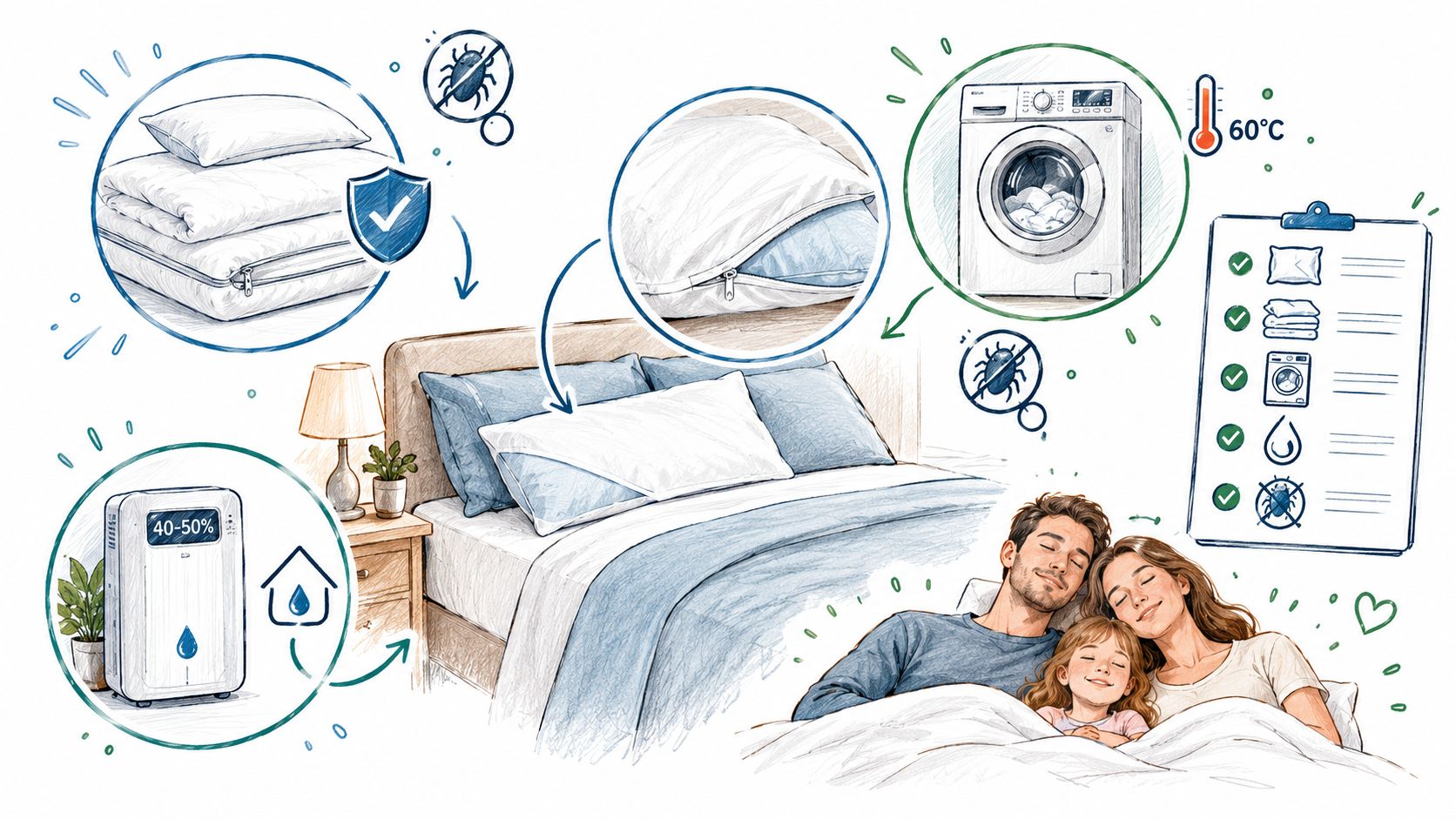
A pillow protector helps most when it sits inside a wider plan, not on its own. Allergy control works better when you reduce the reservoir, reduce moisture, and reduce the amount of allergen that reaches the breathing zone during sleep. NHS guidance on airborne allergens recommends covering the pillow, duvet, and mattress, then washing uncovered bedding at 60°C and improving ventilation and humidity control, because each part of the sleep setup can hold on to dust-mite allergen.
What to do in the real world
Start with the surfaces you touch for the longest time. The pillow is close to your nose, the mattress holds deeper reservoirs, and the duvet adds another fabric layer that can trap dust. If only one of those is protected, you've still left part of the exposure chain untouched.
Then make the room less friendly to mites. Airing the bed, keeping moisture down, and stopping damp conditions from building up in the bedroom all support the barrier cover you've fitted. The protector blocks contact, but the room conditions still matter because they affect how much allergen accumulates in the first place.
If you want a simple routine, keep it like this.
- Protect the sleep surfaces: Use fully enclosing covers on the pillow and, where needed, other bedding surfaces.
- Wash the outer fabrics hot: Stick to 60°C for uncovered bedding when the label allows it.
- Lower moisture: Don't let humid air linger in the bedroom after showers, drying clothes indoors, or overnight steam.
- Check symptoms: Track whether mornings feel less congested, because that's often the earliest sign of better exposure control.
The UK guidance also notes that sensitisation and clinically significant allergy aren't the same thing, which is why results vary from one household to another. Barrier bedding can reduce exposure, but it shouldn't be sold as a guaranteed asthma treatment or a substitute for medical care. If you're still trying to make sense of how cleaning habits fit into this, a practical note on recurring cleaning for allergy sufferers can help connect the bedroom routine to the rest of the home.
If you want a pillow protector that fits the logic of a layered dust-mite strategy, look for a fully enclosing, breathable barrier rather than a loose cover. Protect-A-Bed offers pillow and mattress protection products built around breathable waterproof membrane designs, which can sit inside a broader cleaning and washing routine instead of replacing it. Visit Protect-A-Bed to review the range and choose the pillow protector style that fits your sleep setup.