

Memory Foam Mattress Protector: UK Buyer's Guide

You've invested in a memory foam mattress for its pressure relief, yet you're waking hot, worrying about a spilled drink, or wondering whether a waterproof layer will make the bed feel stiff and noisy. That concern is reasonable. A poorly chosen protector can trap heat, shift beneath the sheet, and interfere with the close, responsive feel that made you choose memory foam in the first place.
The right memory foam mattress protector should do more than block liquid. It should protect a material that's difficult to clean, preserve its pressure-relieving response, fit securely around a deeper profile, and remain quiet enough that you forget it's there. For UK sleepers, the most important decision is the balance between waterproofing, breathability, fit, and allergen control.
Table of Contents
- Why Memory Foam Needs Special Protection
- The Heat and Moisture Challenge
- Key Features That Actually Matter
- Fabric Options and Their Trade-offs
- Allergen and Dust Mite Protection
- Care and Maintenance for Longevity
- Making Your Final Decision
Why Memory Foam Needs Special Protection
A memory foam mattress often feels excellent during the first few nights. Your shoulders and hips settle into the surface, movement becomes quieter, and the foam responds gradually rather than pushing back like a traditional spring surface. The problem starts when the mattress meets real life. Perspiration, a knocked-over drink, a child's accident, or a pet-related stain can penetrate the cover and reach foam that isn't convenient to wash.
Memory foam also reacts to heat. As your body warms the surface, the material can soften and allow deeper contouring. That response is part of its appeal, but it can also leave warm sleepers feeling enclosed. Add a thick, non-breathable protector and the sleep surface may feel warmer, less flexible, and slightly clammy.
Why ordinary protection can disappoint
A thin cotton cover may feel pleasant but offer limited defence against liquid. A rigid waterproof layer may stop spills but create a crackling sound or block the airflow that helps manage moisture. Neither option addresses every requirement.
A traditional spring mattress usually has more internal space for air movement and may be easier to handle after a small spill. Memory foam is denser and absorbent, so prevention matters more than rescue. Once liquid has reached the foam, drying can be difficult, and odours or staining may remain even after the outer cover looks clean.
Practical rule: Protect the mattress before the first night, not after the first accident.
The protector also needs to respect pressure relief. If the fabric is tight, slippery, or bulky, it can change how your body settles into the foam. A loose protector may bunch beneath the fitted sheet, producing pressure ridges exactly where the mattress was designed to cushion you.
A well-designed option uses a flexible waterproof membrane beneath a soft sleeping surface. It should move with the mattress rather than forming a stiff board above it. Look for a secure fitted construction, enough depth for the mattress, and a quiet surface that won't distract you when you turn.
The aim isn't to make memory foam feel like another type of mattress. It's to keep the foam clean and dry while allowing its original pressure-relieving behaviour to remain noticeable.
The Heat and Moisture Challenge
A protector can stop a spill and still make a memory foam bed feel clammy. Because the foam contours closely around the body and responds to warmth, heat and perspiration may remain near the sleeping surface if the cover cannot release vapour effectively. Sheets, duvets, sleepwear, bedroom temperature, the protector's top fabric, and its membrane all influence the result.
Older PVC or vinyl-style constructions show the problem clearly. They may feel sweaty, make a plastic-like noise, and form a poor match for temperature-sensitive foam. For UK sleepers, the practical requirement is a breathable upper fabric combined with a membrane that manages moisture without sacrificing liquid protection.
Modern polyurethane membrane protectors handle that balance differently. The membrane blocks liquid while permitting some vapour transfer, giving perspiration a better route away from the surface. It will not make every mattress feel cool, nor remove memory foam's natural warmth. The top fabric, weave, quilting, and overall thickness still determine much of the overnight feel.
What to look for if you sleep warm
Choose a protector with a soft, breathable top layer and a membrane described as air permeable or vapour permeable. Treat “cooling” as a description to investigate, not proof of overnight temperature control. Check the construction and care information instead.
Bulk also affects pressure relief. Heavy padding can change how your body settles into the foam, particularly if you already like its close-contouring feel. A thin waterproof layer with an effective membrane is usually a sensible starting point for a warm sleeper who wants protection without masking that feel.
Moisture management works best as a bedding system. Advice on bedding for night sweats offers further practical guidance for reducing trapped warmth and perspiration. The target is straightforward: keep moisture moving away from the surface while retaining the liquid barrier that protects the foam.
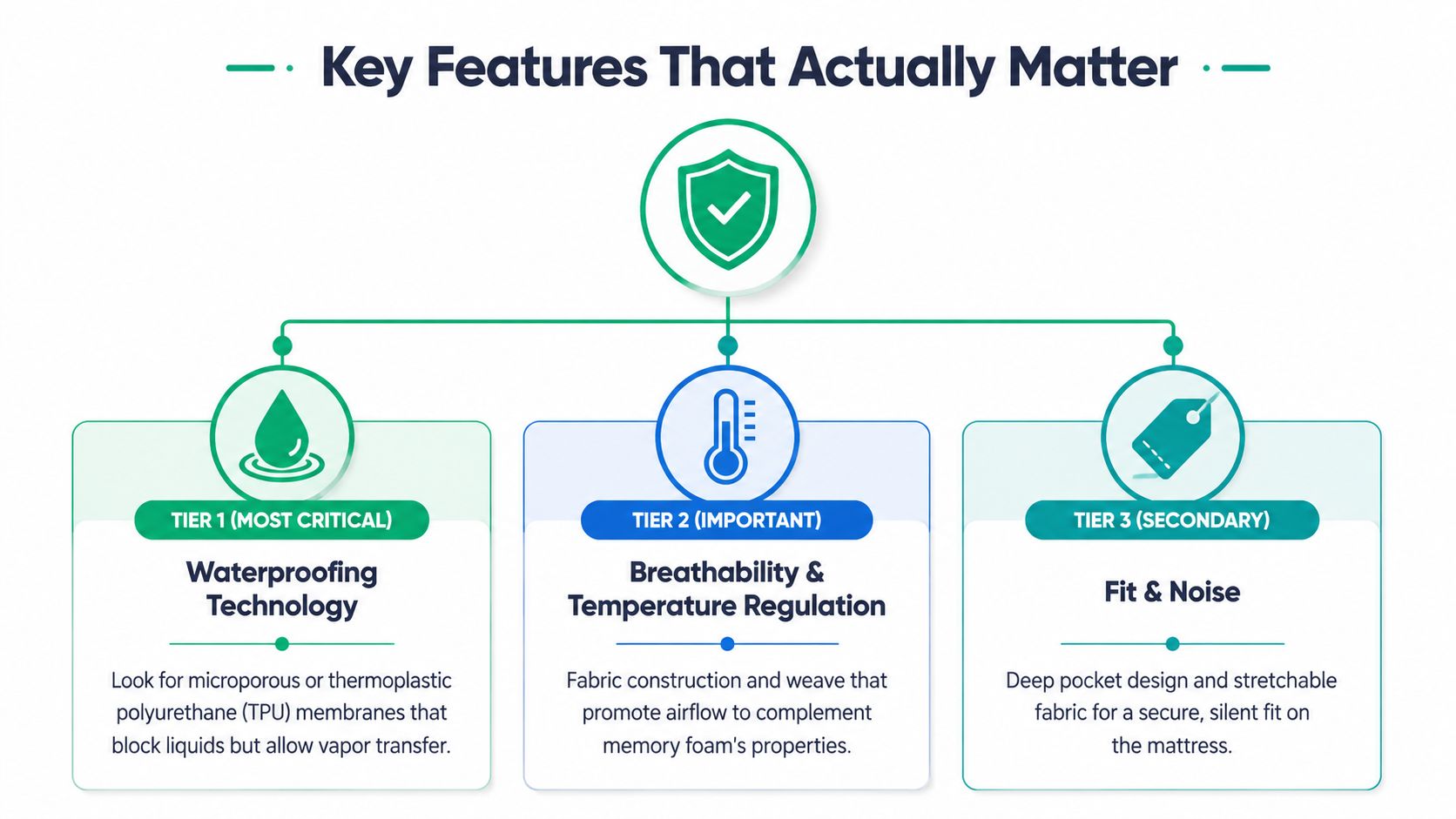
Key Features That Actually Matter
Product descriptions often lead with soft fabrics, luxury quilting, or broad claims about cooling. Those details can matter, but they shouldn't distract from the construction underneath. A memory foam protector earns its place by managing liquid, movement, heat, and cleaning demands without changing the mattress's feel.
Start with the membrane
The membrane is the working layer. Microporous or thermoplastic polyurethane constructions can block liquid while supporting vapour movement, which is generally more suitable for memory foam than older vinyl barriers. Check how the membrane is described, then look for practical evidence in the care instructions and warranty terms.
Waterproofing also depends on the seams and sides. A protector that covers only the top may be adequate for routine spills, but a full encasement offers more complete coverage where allergens or bed bugs are a concern. Choose the construction according to the risk rather than paying for coverage you won't use.
Fit affects comfort
Measure the mattress, including any integrated topper or substantial cover, before ordering. A deep-profile memory foam mattress needs a skirt or fitted edge that reaches around the sides without pulling the top tight. UK buyer guidance commonly points shoppers towards deeper skirts for taller mattresses, which is a practical fit issue, not a decorative feature.
The best fit should remain stable when you turn. It shouldn't slide across the foam, wrinkle under the sheet, or expose the corners. Stretch fabric around the edge helps, but it needs to be paired with an appropriate depth range.
Noise and surface feel
The fabric touching your sheet affects the experience more than many buyers expect.
- Quietness: A flexible membrane and soft top layer should avoid the rustling associated with stiff plastic.
- Surface texture: Smooth fabrics feel less noticeable, while quilted surfaces can add cushioning but may slightly change the foam response.
- Thickness: More padding can feel comfortable, yet it also creates more distance between your body and the mattress.
- Warranty wording: Check whether the warranty covers manufacturing defects, membrane failure, or only specific faults. Don't assume it covers staining caused by unsuitable care.

A protector can be waterproof and still sleep uncomfortably if its top fabric is dense or its skirt shifts. Conversely, a breathable cover with no dependable liquid barrier leaves the foam exposed. The useful specification is the one that matches your actual risk, whether that's perspiration, children, pets, allergies, or a premium mattress that needs long-term protection.
Fabric Options and Their Trade-offs
The top fabric determines the first impression when you lie down, but the membrane beneath it determines much of the protection. Cotton, Tencel, bamboo-derived fabrics, and synthetic blends can all work when paired with a suitable waterproof layer. Their differences appear in softness, moisture handling, durability, and how much they alter the feel of the bed.
Cotton remains a practical everyday choice. It feels familiar, is generally easy to wash, and suits sleepers who want a natural-feeling surface. Its weakness is that cotton alone isn't a dependable liquid barrier, so waterproof performance comes from the membrane beneath it.
Tencel Cool-style fabrics appeal to warm sleepers who prioritise a smooth hand feel and moisture management. Bamboo-derived fabrics can also feel soft and breathable, although buyers should judge the complete construction rather than treating a fibre name as proof of cooling. Synthetic blends usually offer useful durability and easy care, but some feel warmer or less natural against the skin.
For broader context on how protectors fit into a complete bedding setup, this complete bedding guide from Gates provides a helpful overview of related bedding choices.
| Fabric Type | Breathability | Moisture Wicking | Best For | Price Range |
|---|---|---|---|---|
| Cotton | Good when used with a breathable membrane | Moderate | Everyday use and familiar natural feel | Budget to mid-range |
| Tencel Cool | Very good in a well-constructed protector | Good | Warm sleepers and smooth surface preference | Mid-range to premium |
| Bamboo-derived fabric | Good | Good | Softness and a natural-feeling sleep surface | Mid-range |
| Synthetic blend | Variable, depending on weave and membrane | Moderate to good | Easy care, durability, and value | Budget to mid-range |
Match the fabric to the sleeper
Sensitive skin often benefits from a smooth, soft top layer with minimal surface irritation. Hot sleepers should prioritise the full construction, including the membrane and quilting, rather than choosing by fibre label alone. Allergy sufferers need a reliable barrier and correct cleaning routine, not just a fabric marketed as natural.
The most expensive fabric isn't automatically the most effective. Spend first on a dependable waterproof membrane, stable fit, and quiet construction. Then choose the top fabric that suits your skin and temperature preferences. Guidance on cotton waterproof mattress protectors can help if you like cotton but don't want to sacrifice liquid protection.
Allergen and Dust Mite Protection
A protector can support a cleaner sleeping environment, but allergy control requires realistic expectations. NHS guidance says house dust mites are found in all UK homes, and testing identifies HDM allergy in one in five adults and one in 20 young children. The same guidance explains that mattress and pillow encasements help prevent mites and their faeces from reaching bedding, which is directly relevant when protecting a memory foam mattress. NHS house dust mite avoidance guidance
A fitted protector covers the upper mattress surface and sides to a degree. A full encasement closes the mattress inside a sealed barrier, making it the more appropriate choice when the priority is limiting contact with the mattress reservoir or addressing a bed bug concern. The zip, seams, and fit matter as much as the fabric.
Set expectations about asthma
Barrier bedding can reduce allergen contamination without guaranteeing symptom relief. In one UK adult primary-care trial, Der p 1 in mattress dust fell from a geometric mean of 1.71 µg/g in controls to 0.58 µg/g at six months, but the difference disappeared by twelve months, and the authors concluded that a single bedding-barrier intervention was clinically ineffective for routine adult asthma management. The UK asthma trial
A large UK trial involving children likewise found no improvement in peak expiratory flow, symptom scores, medication use, or asthma consultations from barrier bedding alone. The childhood asthma research supports a careful conclusion: a barrier is a contamination-control measure, not a stand-alone asthma treatment.
Use it as part of a wider routine:
- Encase the mattress: Select full coverage if dust mite or bed bug exposure is the central concern.
- Wash removable bedding: Follow the care label and keep the protector clean rather than allowing allergen-containing dust to accumulate.
- Maintain the surrounding sleep area: Clean floors, bed frames, and nearby soft furnishings as part of the same hygiene plan.
- Follow medical advice: Persistent asthma or allergy symptoms need professional assessment, regardless of the protector used.
Care and Maintenance for Longevity
A protector earns its place only while the waterproof layer remains intact and the fit stays stable. Start with the care label, since fabrics, seams, elastic, and laminated membranes tolerate different treatment. Aggressive washing can weaken the barrier and leave memory foam exposed to sweat or spills.
Use mild detergent and skip harsh chemicals unless the manufacturer allows them. Lower-temperature washing and careful drying reduce stress on waterproof membranes, elastic, and bonded layers. Do not iron the membrane, and never put the protector back on while it is damp.
A practical cleaning routine
Wash after a significant spill or accident. Clean more often if children, pets, heavy perspiration, or allergy concerns are part of the household. Otherwise, follow the label rather than washing on an arbitrary schedule. For step-by-step guidance, see how to wash a mattress protector.
Before washing, close zips, remove loose debris, and check for tears. Once dry, inspect the corners, seams, and waterproof surface. Replace a protector showing thinning, peeling, cracked coating, persistent odour, or leaks. Repeated patching is unlikely to restore dependable protection.
Refit it gently after every wash. Pulling one corner too hard can strain the elastic and create an uneven sleeping surface. Let the mattress settle under the protector before replacing the sheet, then run a hand across the bed to find ridges or folds beneath your usual position. Those pressure points can change how memory foam feels, particularly for side sleepers.
A protector need not flatten memory foam's response or make the bed hotter. Discomfort usually follows from a stiff membrane, unnecessary padding, poor sizing, or a heat-retaining top fabric. This benefits of a mattress protector guide covers practical ownership considerations. Protect the mattress, but keep checking whether the construction still allows the pressure relief and airflow that made memory foam comfortable in the first place.
Making Your Final Decision
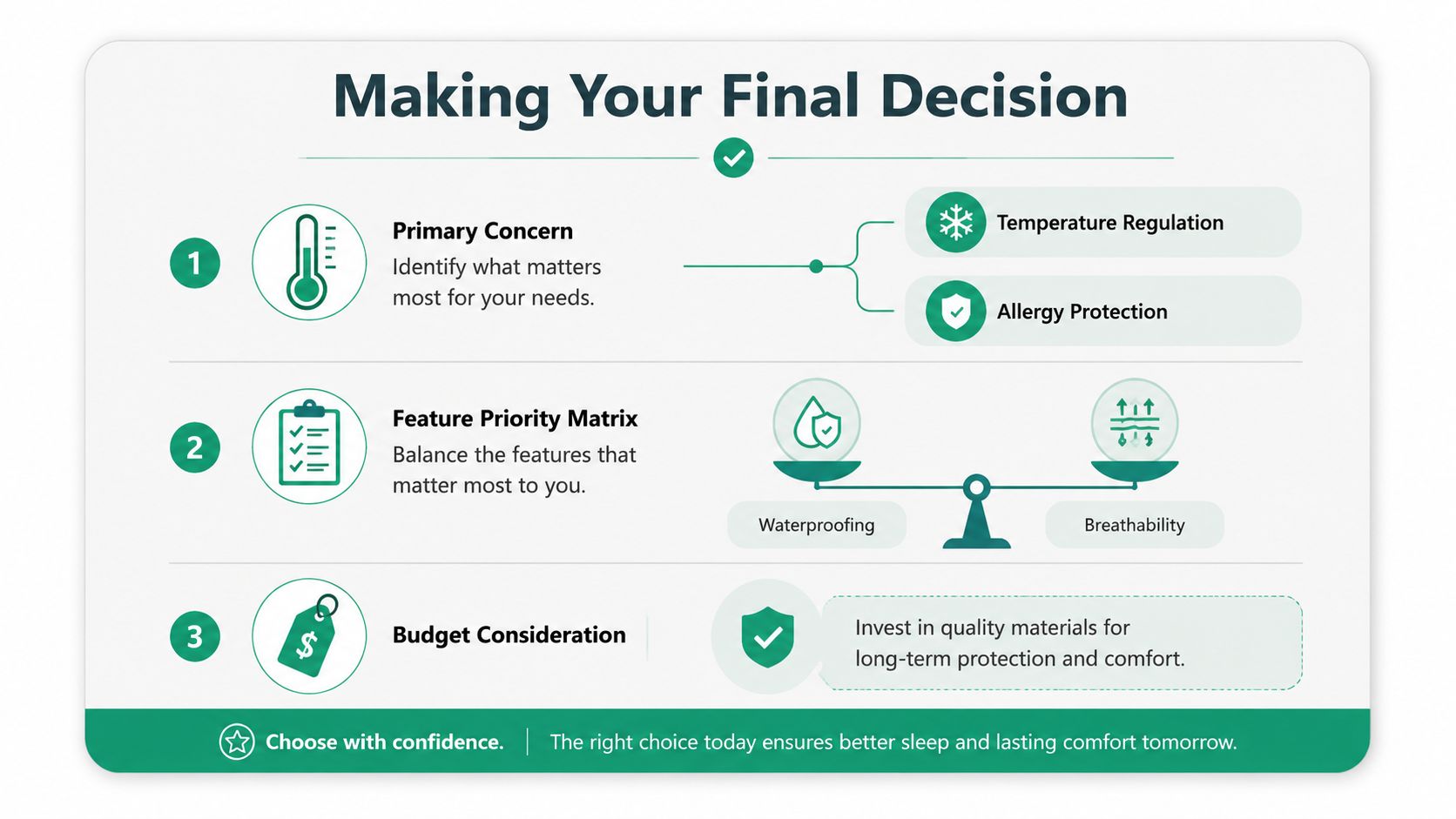
Choose your protector by ranking the risk you're trying to control. If spills and perspiration are the concern, prioritise a breathable waterproof membrane. If allergies or bed bugs are the concern, consider a full encasement with secure seams and closure. If comfort is your main worry, choose a thin, quiet construction with a stable fit.
Use this final checklist before buying:
- Measure the mattress: Include its full depth and any attached comfort layers.
- Check the membrane: Look for flexible waterproofing designed to support vapour movement.
- Assess the top fabric: Choose cotton for familiarity, Tencel-style fabric for a smooth warm-sleeper feel, bamboo-derived fabric for softness, or a suitable synthetic blend for practical durability.
- Inspect the care label: Confirm washing and drying instructions before purchase.
- Read the warranty: Understand what the manufacturer covers and what care mistakes may invalidate it.
- Match the coverage: Choose a fitted protector for routine surface protection or an encasement for more complete allergen and pest control.

Landlords, hotels, and care settings should also consider how quickly a damaged mattress can be isolated, cleaned, or removed from service. A planned process for bulk mattress pickup for hotels becomes relevant when protection has failed or a mattress reaches the end of its usable life, but prevention remains less disruptive than replacement.
For a UK household, the best purchase is rarely the thickest or most heavily marketed protector. It's the one that blocks the specific hazards in your home while staying quiet, breathable, correctly fitted, and easy to care for.
Protect-A-Bed offers UK mattress protectors with waterproof, air-permeable Miracle Membrane technology, including cotton and cooling-fabric options, alongside bed bug encasements for full coverage. Visit Protect-A-Bed to choose a protector that safeguards your memory foam mattress without needlessly compromising its feel.