

Waterproof Mattress Protector Cotton: The Complete UK Guide

You notice the problem at bedtime. A drink tips over, a child has a night-time accident, or your partner says the mattress feels damp after a warm night. The fitted sheet can be washed, but the mattress underneath is harder to clean, and replacing it is a far more serious expense.
A waterproof mattress protector cotton option solves that problem through layering. Cotton provides the familiar surface against your sheet, while a hidden waterproof membrane does the work of stopping liquid from reaching the mattress. That distinction matters because “cotton” describes the feel you sleep on, not necessarily the protection beneath it.
Table of Contents
- Why a Cotton Waterproof Mattress Protector Is on So Many UK Shortlists
- How Cotton and Miracle Membrane Work Together
- Cotton Compared With Tencel, Snow and Charcoal Options
- Who Should Choose Cotton
- Sizing and Fit for UK Mattresses
- Care, Longevity and the UK Warranty and Delivery Details
- Practical FAQs Before You Buy
Why a Cotton Waterproof Mattress Protector Is on So Many UK Shortlists
After a long day, the last thing you want beneath the fitted sheet is a protector that feels stiff, noisy or unfamiliar. Cotton is often shortlisted because its surface feels like ordinary bedding. It offers a soft, recognisable texture and can make a protective layer easier to accept, particularly when it lies directly beneath the sheet.
The cotton choice is really a layering decision. Cotton provides the sleep surface, while the waterproof barrier underneath handles spills, perspiration and other moisture. A cotton fabric on its own cannot perform that second job.
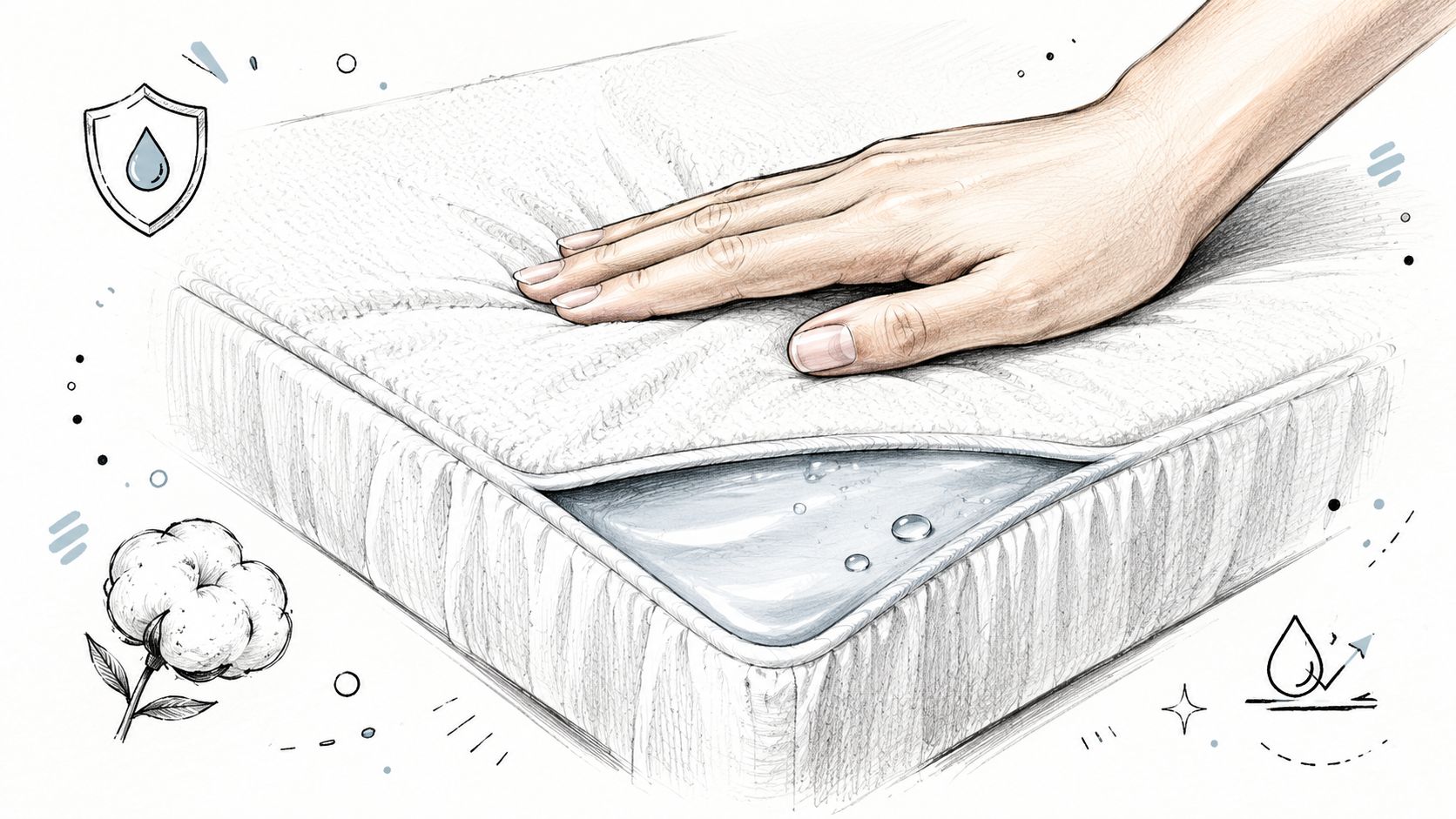
Cotton is the comfort layer
The product makes more sense when you separate its jobs:
- The cotton face provides the soft, familiar contact surface.
- The waterproof membrane stops liquid reaching the mattress.
- The fitted construction helps keep the protector in position as you turn and move.
This means “cotton” describes the layer you feel, not the whole protection system. UK product descriptions commonly pair cotton faces with polyurethane or thermoplastic polyurethane barriers. These constructions are described as waterproof and breathable, with air circulation intended to reduce the heat-trap effect linked with older vinyl-backed protectors. Technical information on cotton-faced waterproof protector construction explains how the outer fabric differs from the concealed barrier.
The better buying question is therefore: what is the top fabric, what forms the waterproof layer, and how will the protector fit your mattress?
Practical rule: Choose cotton if you want a normal bedding feel. Then check the membrane, construction, wash instructions and skirt depth before buying.
Cotton suits shoppers who prioritise a familiar surface beneath the sheet. Someone focused mainly on waterproof coverage may give greater attention to the membrane and fit, while a shopper sensitive to texture may value the cotton face most. No single surface is automatically right for every bed.
Moisture control can also matter in homes concerned about allergens. Allergy UK guidance identifies house dust mite allergy as a common indoor allergy and recommends breathable, allergen-proof barrier covers that fully enclose mattresses, duvets and pillows. The guidance recommends keeping indoor humidity under 50% but over 30%, which helps explain the appeal of a breathable waterproof layer. Read the UK guidance on mattress barriers and indoor humidity before treating a cotton protector as a complete allergy solution.
How Cotton and Miracle Membrane Work Together
A useful way to understand a waterproof cotton protector is to imagine a sandwich. The top slice is the cotton face, the filling is the waterproof membrane, and the bottom layer supports the structure. Each part has a different job, so judging the whole product by the fibre on top can lead to confusion.
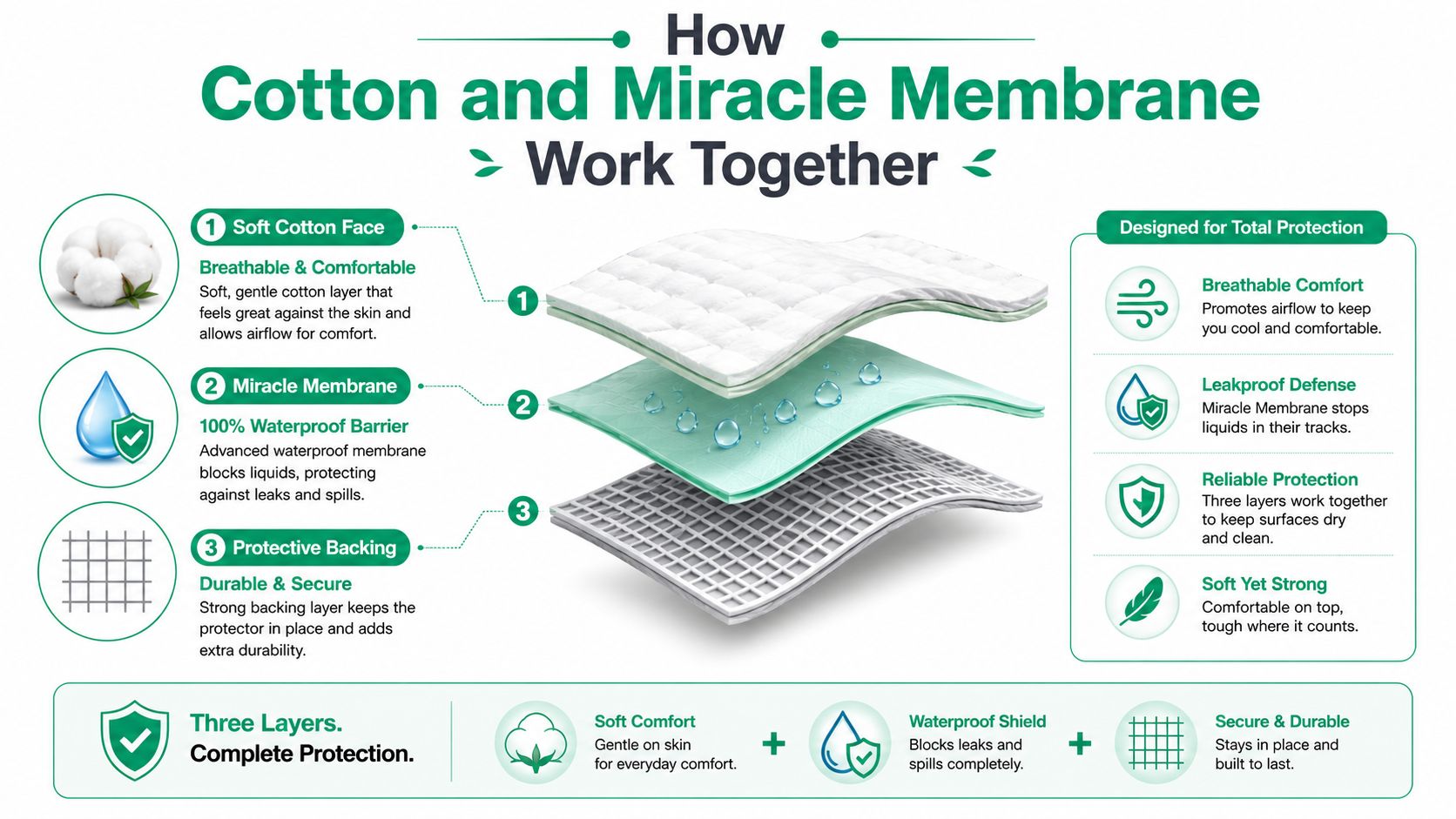
The three layers in plain English
First comes the soft cotton face. This is the part that contributes most to the hand feel. It helps the protector feel more like bedding and less like a sheet of waterproof material. Cotton is also a familiar choice for shoppers who want a natural-feeling surface beneath the fitted sheet.
In the middle sits the Miracle Membrane. Protect-A-Bed describes this as a flexible, thin and silent waterproof layer that blocks liquids while remaining air permeable. In practical terms, it acts like a very selective gate. Liquid water is stopped, while air can move through the material, so waterproof and breathable aren't automatically opposites.
The backing and fitted construction complete the sandwich. This layer helps the protector hold together and sit securely over the mattress. A protector can have an effective membrane but still feel frustrating if the corners lift, the skirt is too shallow or the fabric shifts during the night.
The membrane also explains why modern protectors can feel quieter than older vinyl-backed designs. A flexible layer bends with the mattress instead of making a stiff plastic sheet fold and crackle whenever you move. It won't make the protector disappear completely, but it should help the bed feel closer to normal bedding.
Waterproof doesn't mean sealed like a raincoat
People sometimes assume that waterproofing requires a completely closed surface. That comparison is too simple. A breathable membrane is designed to stop liquid penetration while allowing some air or water vapour movement, which can reduce the clammy feeling that makes a protector uncomfortable.
The same principle appears in other protective fabrics. If you're curious about how manufacturers balance liquid resistance with comfort in fabric design, this drizzle-proof fabric advice offers useful background without treating all waterproof materials as identical.
For the product-specific membrane explanation, see how a breathable waterproof membrane works. The key point is simple: cotton determines much of the surface feel, while the membrane determines liquid protection.
That separation helps you compare products sensibly. A different top fabric may change how cool, smooth or dry the protector feels, but the protection level depends on the quality and coverage of the barrier, plus the seams, fit and care instructions.
Cotton Compared With Tencel, Snow and Charcoal Options
Cotton isn't automatically the right answer. Protect-A-Bed's fabric options are better understood as different choices for the sleep surface, with the waterproof membrane providing the underlying protection. Your decision should therefore begin with how you sleep, rather than with the assumption that one fibre is universally superior.
Cotton offers the most familiar everyday feel. It suits shoppers who want a soft, natural-feeling surface without a strongly “cooling” or specialised sensation. It's a sensible default for shared bedrooms, children's beds and guest rooms where broad comfort matters more than a particular temperature effect.
Tencel Cool is aimed at people who prioritise moisture management and temperature regulation. Its smooth feel can appeal to sleepers who find ordinary cotton comfortable but want a surface that feels more deliberately cooling or moisture-aware. The Tencel mattress protector guide provides more detail on that option.
Snow is the choice for a cooler initial touch. That first-contact sensation can matter if you dislike climbing into warm bedding, although it doesn't change the fact that your room, duvet and body temperature also affect how hot you feel overnight.
Charcoal is positioned around odour absorption. It may appeal to households managing frequent use, moisture or a room where freshness is a particular concern. It's still worth checking the care instructions, because any odour-related benefit depends on keeping the protector clean and dry.
| Fabric | Sleep Feel | Best For | Key Benefit |
|---|---|---|---|
| Cotton | Familiar, soft and everyday | Families, shared beds and guest rooms | Comfortable, recognisable surface |
| Tencel Cool | Smooth and temperature-conscious | Sleepers who prioritise moisture management | Cooling and moisture-wicking feel |
| Snow | Cooler on initial contact | People who dislike a warm first touch | Fresh, cool sensation |
| Charcoal | Practical and freshness-focused | Bedrooms where odour control matters | Odour-absorbing properties |
Match the fabric to the person
A couple may choose cotton if both sleepers are generally comfortable at night but want protection against spills and perspiration. A person who regularly wakes hot may prefer Tencel Cool or Snow, while someone managing repeated moisture or freshness concerns may investigate Charcoal.
The membrane remains the central protective component, but the top surface changes the relationship between your body and the bed. That's why the wrong choice is often a feel problem, not a waterproofing problem.
Before ordering, ask three questions:
- Do I want familiar bedding comfort? Choose cotton.
- Do I actively seek a cooler or moisture-conscious surface? Consider Tencel Cool or Snow.
- Is freshness and odour absorption a priority? Charcoal may be more relevant.
Who Should Choose Cotton
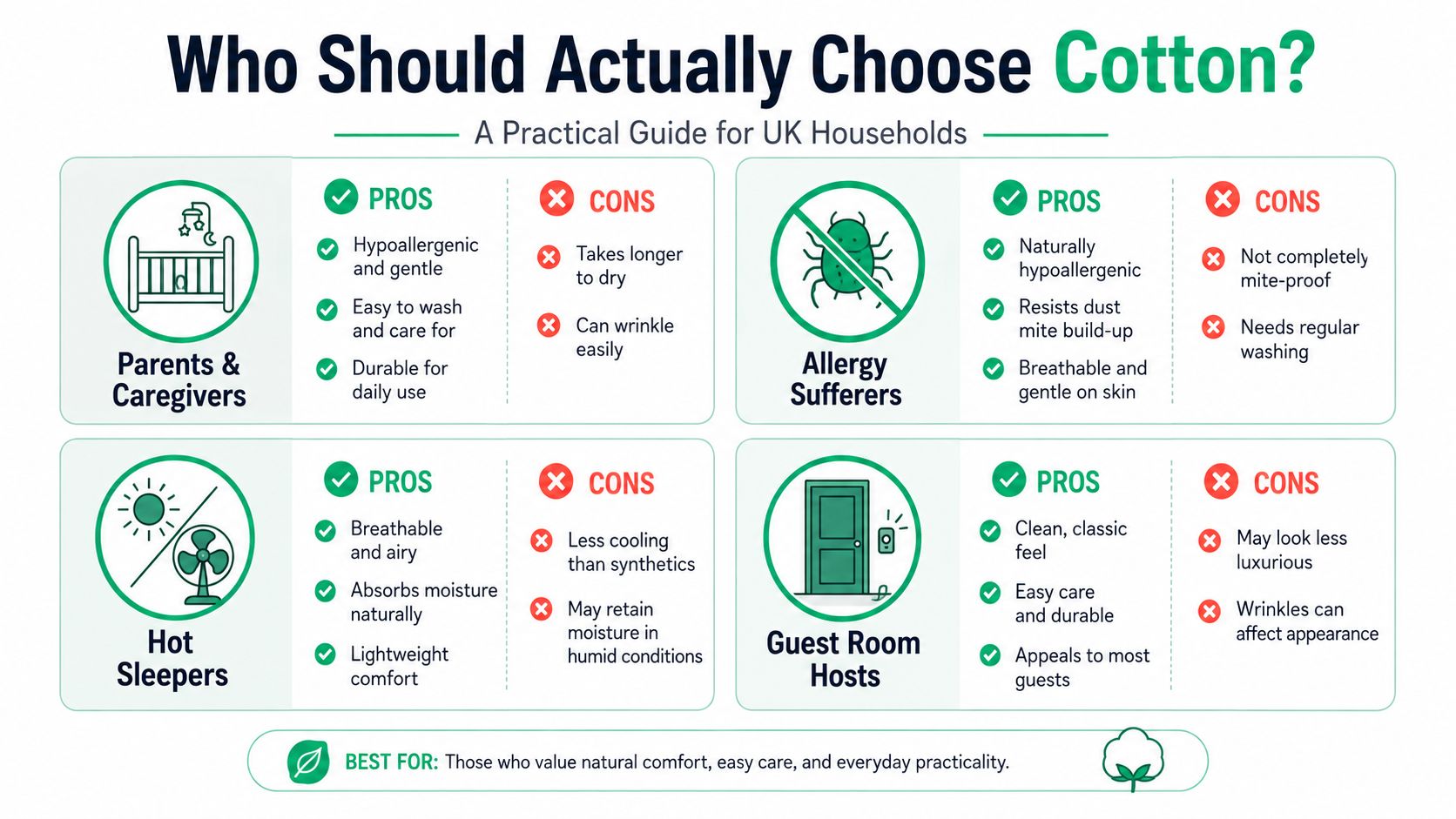
Cotton suits households that want waterproof protection while keeping the bed feeling familiar. It works well when children, adults, guests or several sleepers share the same room, because the surface does not make the bedding feel specialised.
The choice is best understood as a layering decision. Cotton forms the comfortable top layer, while the hidden Miracle Membrane base handles liquid protection. You are choosing the feel against the body, not choosing between cotton and waterproofing.
Parents and caregivers
Children's beds can face spills, accidents and frequent washing. A cotton-faced waterproof protector gives the sheet a softer, ordinary feel, while the barrier beneath helps reduce liquid reaching the mattress. Washing the protector is also more practical than trying to clean the mattress itself.
For allergen control, washable bedding at 60°C matters, alongside tightly woven, fully enclosing barrier covers where dust-mite exposure is the main concern. A cotton label alone does not confirm that a protector provides this type of coverage.
Allergy-aware households
Cotton can be a suitable top layer for people who prefer a breathable-feeling surface, but cotton alone is not an allergen barrier. The weave, closure and washing instructions all affect how the protector performs. A design covering only the top and sides does not provide the same physical containment as a sealed encasement around the whole mattress.
Waterproofing and allergen containment perform different jobs. The membrane helps reduce liquid penetration. A tightly woven, closed encasement is the more relevant choice when dust-mite allergens are the main concern.
Couples and guest-room hosts
Cotton can suit couples when one sleeper feels warm but the other does not want a strongly cooling surface. It is also a practical guest-room option, where visitors may prefer different sleep sensations. The familiar top layer keeps the choice broadly comfortable, while the Miracle Membrane base supplies protection beneath the sheet.
Landlords and guest-house operators may prefer the same neutral feel. Cotton is less likely to seem unusual to different sleepers, and the waterproof base helps protect the mattress between visits.
When cotton isn't the best fit
Hot sleepers who regularly wake sweaty or dislike warm bedding may be better matched with Tencel Cool or Snow. Charcoal is more relevant when odour absorption is central to the decision.
- Choose cotton for familiar comfort, children's beds, shared bedrooms and guest accommodation.
- Choose a full encasement when dust-mite allergen containment is the main concern.
- Choose Tencel Cool or Snow when cooling matters more than a traditional cotton feel.
- Choose Charcoal when odour absorption is the priority.
Sizing and Fit for UK Mattresses
A protector can have the right width and still fail if its fitted skirt isn't deep enough. Thick pocket-sprung and pillow-top mattresses often need more room than a standard mattress, and a shallow skirt may pull away from the corners as soon as the mattress flexes.
Start by measuring the mattress itself, not the bed frame. Measure width from side to side, length from head to foot, then measure depth from the bottom edge to the highest point of the sleeping surface. If you use a topper, include its height in the total you need the protector to accommodate.
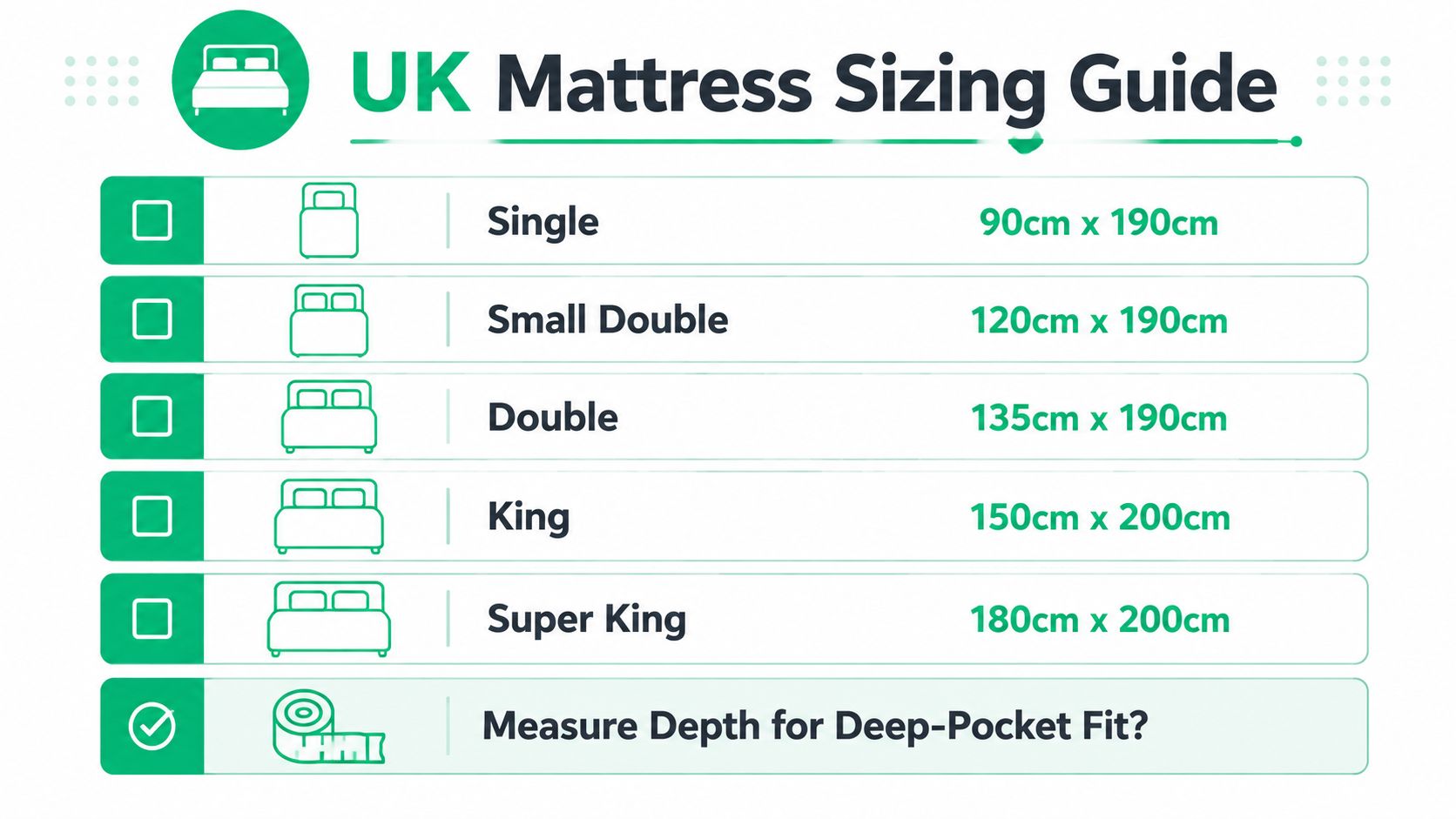
| UK Size | Width (cm) | Length (cm) | Recommended Skirt Depth |
|---|---|---|---|
| Single | 90 | 190 | Match the measured mattress depth |
| Small Double | 120 | 190 | Match the measured mattress depth |
| Double | 135 | 190 | Match the measured mattress depth |
| King | 150 | 200 | Match the measured mattress depth |
| Super King | 180 | 200 | Match the measured mattress depth |
Use the depth measurement properly
The dimensions identify the mattress footprint, but the skirt depth determines whether the protector stays attached. If your mattress is thick, look for a deep-pocket or generously fitted design rather than buying by width alone.
Before clicking to order, run this check:
- Confirm the mattress size, including whether it's a small double rather than a standard double.
- Measure the full depth, including any topper that will sit beneath the protector.
- Compare that measurement with the stated skirt range, leaving enough room for the fabric to tuck beneath the mattress.
Cotton can make a loose protector feel especially untidy because the soft fabric bunches and creases beneath the sheet. Correct sizing keeps the surface smoother and helps the waterproof layer remain where it needs to be.
Care, Longevity and the UK Warranty and Delivery Details
A cotton-faced waterproof protector needs regular washing, but harsh care can shorten the useful life of its membrane. Follow the product label first, particularly for drying instructions, because construction and finishes vary between models.
For allergen control, washable bedding at 60°C is part of the guidance cited for dust-mite management. UK guidance on washing and allergen barriers supports that temperature in the relevant context. For everyday households, washing every few weeks is a practical routine, while children's beds or allergy-sensitive rooms may need more frequent attention.
Wash the surface, protect the membrane
A sensible care routine includes these habits:
- Use the recommended wash temperature: This helps remove sweat, oils and household residue while following the product's care requirements.
- Skip fabric softener: It can leave a coating on the fabric and may interfere with the intended breathability of the membrane.
- Avoid excessive heat: High-heat tumble drying can place unnecessary stress on the waterproof layer.
- Check the seams and skirt: Inspect them after washing, especially if the protector has dealt with a substantial spill.
The guide to washing a mattress protector gives product-care instructions in a more practical format. If you have room to store a spare, rotating between two protectors can make laundry easier and reduce the temptation to put a damp protector back on the bed.
Understand the purchase terms
Protect-A-Bed's UK store states a 10-year warranty against material and manufacturing defects, with replacement covered under its stated policy. It also states 1–3 working day delivery for in-stock UK items and free shipping above £90. Check the current product and delivery terms before ordering, since eligibility can depend on stock, destination and the specific item.
Those details don't replace checking construction and fit. A warranty addresses defects, not choosing the wrong size, using unsuitable washing conditions or expecting a top-only protector to perform like a fully sealed encasement.
Practical FAQs Before You Buy
Does cotton feel like sleeping directly on the sheet?
It should feel closer to normal bedding than a stiff plastic-backed protector, because cotton forms the sleep-facing surface. You'll still have a protective layer beneath it, but a well-fitted protector should sit beneath the fitted sheet rather than feeling like a separate rubber sheet.
Will a cotton waterproof protector make the bed hotter?
Cotton doesn't guarantee a cool night, but it avoids the obvious plastic-sheet feel associated with older vinyl-style designs. A breathable membrane is intended to allow air movement, while Tencel Cool or Snow may suit you better if active cooling is your main priority.
Will it solve dust-mite allergies?
Not by itself. UK allergy guidance recommends a breathable, allergen-proof barrier cover that fully encloses the mattress, and it also highlights washing bedding at 60°C. A cotton waterproof protector can help manage liquid and moisture at the sleep surface, but an allergy-focused household should check the weave, closure, coverage and washability before deciding whether a sealed encasement is necessary.
How can I spot a quality protector?
Look beyond the word “cotton”. Check the membrane material, waterproof coverage, seam construction, fitted depth, washing instructions and whether the product is designed as a top protector or a full encasement. Then compare those details with your mattress measurements and your actual sleep priorities.
What should I check in under a minute?
Confirm the mattress width and length, measure its depth, identify whether you need a waterproof surface or a full allergen encasement, and choose the fabric based on sleep feel. Finally, check care instructions and delivery terms before adding the protector to your basket.
Protect-A-Bed offers cotton, Tencel Cool, Snow and Charcoal waterproof mattress protectors built around Miracle Membrane technology, alongside mattress and pillow protection options for different sleep needs. Visit Protect-A-Bed to compare the available cotton sizes, fabric surfaces, fit details and UK delivery information before you choose.