

Mattress Encasement UK: What It Is, Why You Need One in 2026

You've woken with unexplained marks, noticed dark specks near a mattress seam, or watched a coffee spill spread across the bed before you could grab a cloth. Perhaps you're a landlord preparing a furnished room for a new tenant, and the mattress looks clean but impossible to inspect properly. A mattress encasement in the UK can make that situation easier to manage, but it isn't a cure-all. It's a physical barrier that protects the mattress while wider cleaning, monitoring, allergy management, or pest-control measures deal with the rest of the room.
Table of Contents
- The Hidden Cost of an Unprotected Mattress
- How Mattress Encasements Actually Work
- Bed Bugs, Allergens, and the Case for Sealing
- Choosing the Right Encasement for Your Home
- Installation and Maintenance Made Simple
- Warranty, Replacement, and UK Buying Confidence
The Hidden Cost of an Unprotected Mattress
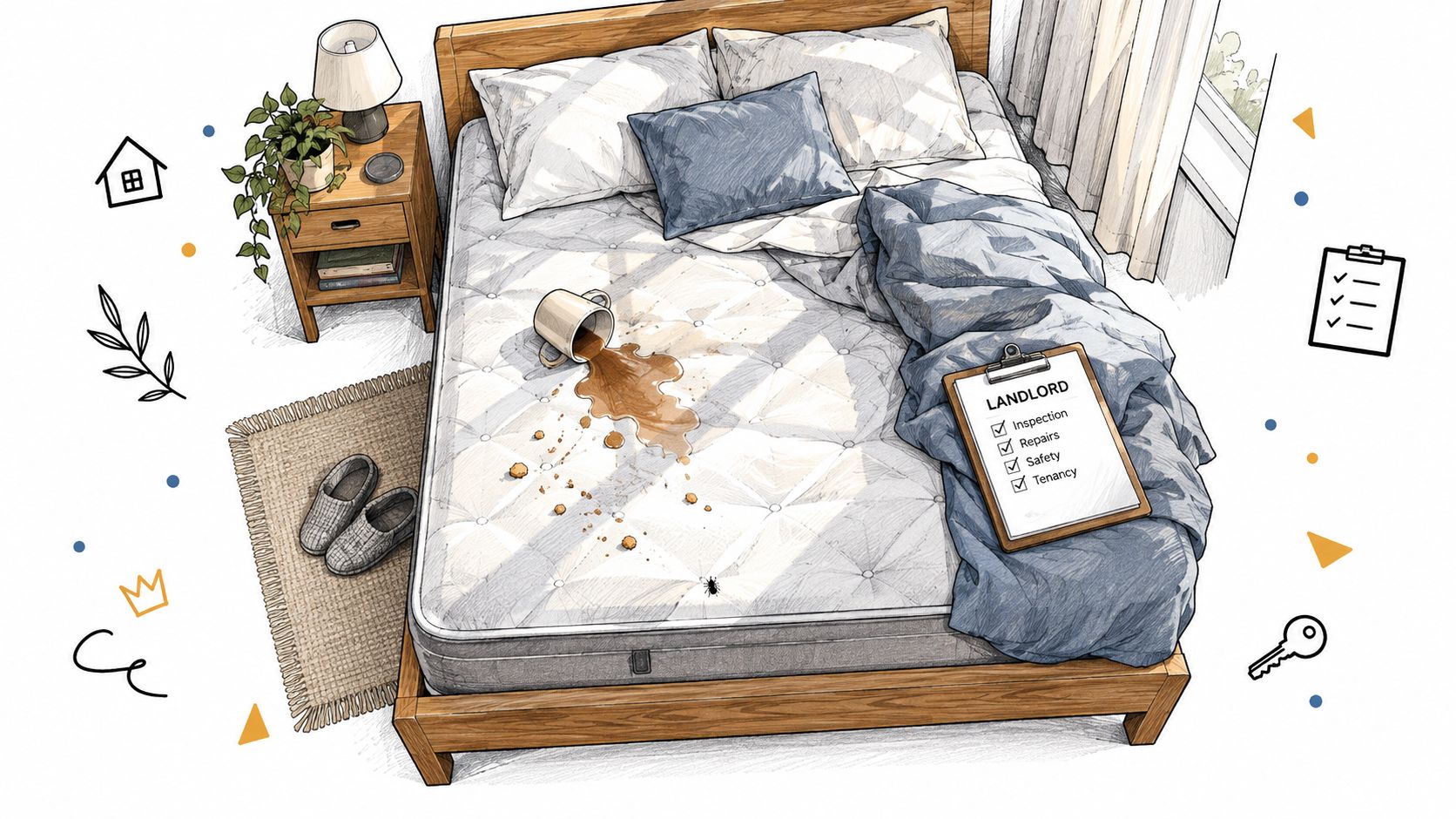
A mattress often sits at the centre of the bedroom for years, absorbing sweat, skin particles, dust and the occasional accident. A drink tipped over at night can reach the inner layers before anyone notices. A child's spill, a period stain or repeated dampness may leave odours and marks that ordinary washing can't remove because the mattress itself isn't designed to go in the machine.
The problem becomes more complicated when a homeowner suspects bed bugs. The mattress may look normal from above while seams, labels, piping and the underside provide places that are difficult to examine. Throwing it away immediately may be unnecessary, yet continuing to use it without a plan can make inspection and treatment harder.
Why the risk matters in rented and shared homes
The UK has a documented, organised bed-bug control burden. Local authorities delivered 15,067 bed-bug treatments in the 2011–12 financial year, and bed bugs accounted for 2.3% of all pest-control treatments administered by local authorities during that period. England represented 95.4%, while London accounted for 47.8%, or 7,221 treatments, as recorded in the British Pest Control Association's local-authority research summary.
Those historical figures don't predict the condition of an individual home, but they do explain why mattress protection matters to more than private householders. Landlords, housing providers, hotels and other accommodation operators need a way to protect an expensive sleep surface while arranging inspection and treatment.
Practical rule: Protect the mattress, but never mistake mattress protection for treatment of the room.
A fully enclosed cover can reduce potential hiding space inside the mattress and create a smoother, more inspectable surface. It can also help prevent spills and perspiration from reaching the mattress core. The hidden cost isn't just replacement. It includes disrupted sleep, emergency cleaning, room downtime and the uncertainty of not knowing whether the mattress can remain in use.
How Mattress Encasements Actually Work
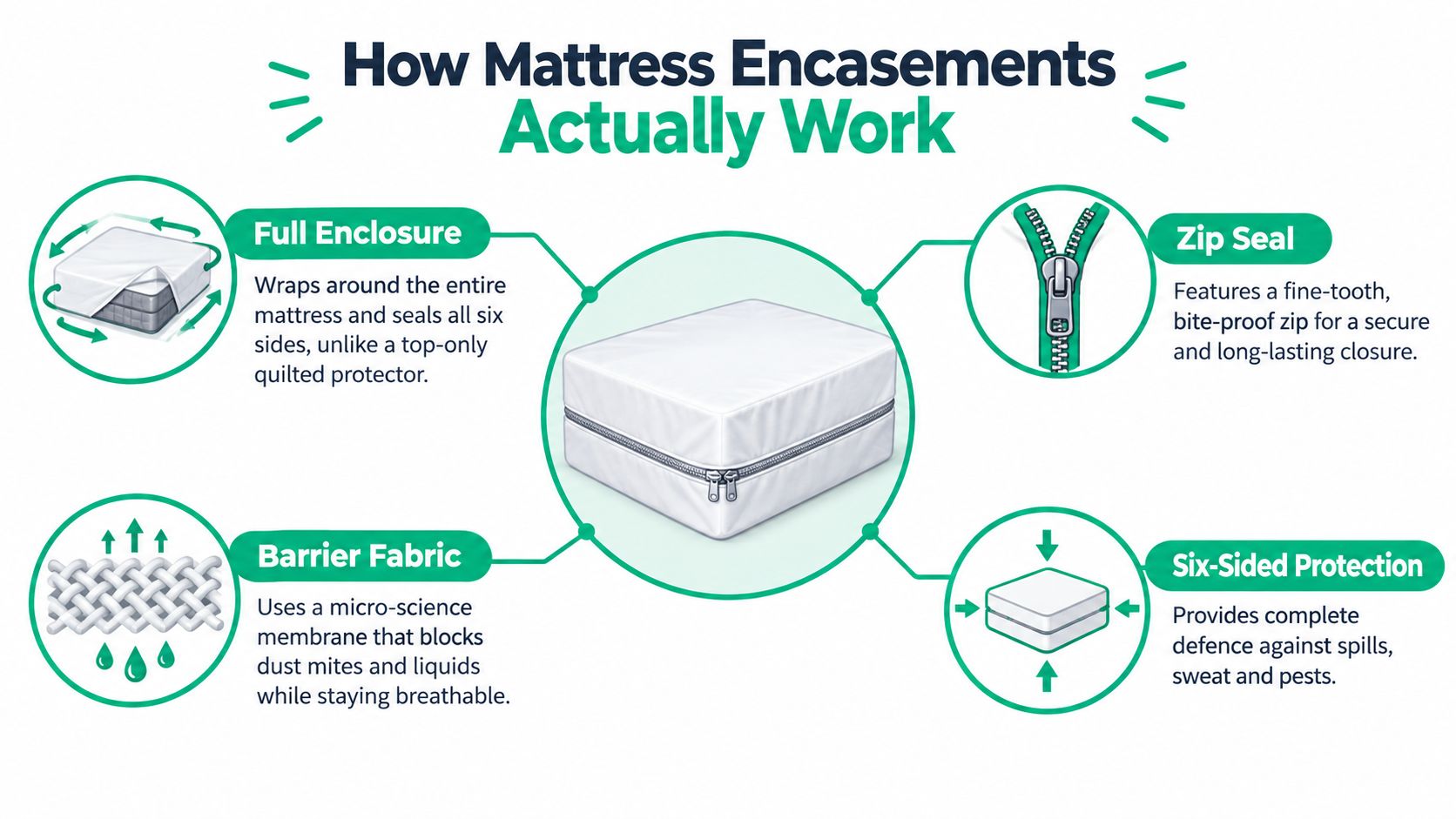
A proper encasement surrounds the mattress on all six sides. That makes it different from a quilted protector, which usually covers the sleeping surface and may extend partway down the sides but leaves the underside accessible.
Think of an encasement as a carefully fitted envelope. The mattress goes inside, the fabric closes around it, and a zip completes the barrier. If any side remains open, or if the zip finishes with a gap, the mattress isn't fully enclosed.
The construction that makes the difference
Several features work together:
- Full enclosure: The cover wraps the top, bottom and sides, unlike a top-only protector.
- Zip closure: The zip must close continuously and securely around the mattress. It's the point most likely to undermine an otherwise sound barrier.
- Barrier fabric: A waterproof, allergen-impermeable layer can block liquids and help contain mattress dust while remaining suitable for normal sleep use.
- Correct fit: The dimensions must match the mattress length, width and depth. Excess fabric can bunch, while an undersized cover can strain the seams and zip.
“Allergen-impermeable” describes a physical barrier, not a guarantee that symptoms will disappear. Similarly, “bed-bug proof” should refer to the complete construction, including the fabric, seams, zip and closure end, rather than the top panel alone.
A fitted sheet can make the bed feel protected, but it doesn't seal the mattress. A standard protector may reduce staining, yet it usually leaves the underside and structural seams exposed. An encasement is designed for a different job, containment and full-surface protection.
Breathability still matters
A barrier doesn't need to feel like a plastic sheet. Modern membranes can block liquid while allowing air movement, which helps the cover remain more comfortable during sleep. Product construction still varies, so check the care instructions, fabric description and intended use rather than relying on a single marketing phrase.
The most useful buying question is simple: Does this cover remain completely sealed when fitted to my mattress? If the answer depends on an open side, a loose flap or an exposed zip end, it isn't the right product for bed-bug containment.
Bed Bugs, Allergens, and the Case for Sealing
Bed bugs and indoor allergens create different problems, even though both can justify a mattress barrier. Bed-bug control depends on containment and inspection. Allergen management focuses on reducing exposure to material such as house-dust-mite allergen, alongside cleaning, ventilation and medical advice.
For a confirmed or suspected bed-bug infestation, the cover must be fully enclosed and securely sealed. The British Association of Dermatologists' guidance on managing bed-bug infestations advises leaving a completely sealed mattress encasement in place for at least one year, and longer in cold homes. The reason is that bed bugs can survive for extended periods without feeding, so removing the cover too soon may release surviving insects.
Two use cases, two expectations
| Need | What the encasement does | What it can't do |
|---|---|---|
| Bed-bug management | Seals the mattress, traps insects that may be inside and reduces access to the mattress | Treat bed frames, carpets, furniture or other room harbourages |
| Allergen reduction | Creates a washable barrier around a long-term textile reservoir | Remove allergens from bedding, floors, curtains or the air |
| Spill protection | Helps stop liquids reaching the mattress core | Repair existing stains or damage |
UK clinical and population evidence also supports the relevance of dust-mite protection. A random population survey reported house-dust-mite excreta as 27% of identified allergic triggers, placing it among the three most commonly reported household triggers in that survey, as detailed in the UK population study. The same evidence base reported asthma in 12% of household-reported allergic disease and hay fever in 10%.
That doesn't mean an encasement prevents asthma or rhinitis. In a UK-led randomised trial involving 1,122 adults with asthma, impermeable mattress and bedding covers reduced mattress-dust Der p 1 concentrations at six months, but the difference was no longer statistically significant at 12 months, and the trial found no significant improvement in several respiratory outcomes. The trial report supports a careful conclusion: an encasement may reduce measured mattress allergen under some conditions, but it isn't a stand-alone asthma treatment.
For practical bed-bug habits beyond the mattress, these bed bug prevention tips provide useful complementary guidance. You can also read this explanation of whether bed-bug encasements work before deciding what role a cover should play in a wider response.
Choosing the Right Encasement for Your Home
Start with the mattress, not the product label. Measure its length, width and depth, including any built-in padding or unusual shaping. A cover that's too tight may pull against the zip and seams, while one that's too loose can fold and become uncomfortable.
Match the barrier to the problem
For everyday spill protection, a washable waterproof cover may be enough. For allergies, look for a fully enclosed, allergen-impermeable design that can stay intact around the entire mattress. For bed bugs, prioritise a secure zip, durable seams and a design specifically intended to seal the mattress rather than a protector that only covers its upper surface.
Fabric affects comfort. Cotton may suit sleepers who prefer a familiar natural feel. Cooling textiles may appeal to people who feel warm at night, while a stronger technical membrane may be more important in a rental or accommodation setting where durability and cleaning take priority. You can explore how a breathable waterproof membrane balances liquid resistance with sleep comfort.
Use your household context as the filter
The right choice depends on who handles the bed and what happens around it:
- Family bedroom: Prioritise quiet fabric, straightforward washing and protection from spills.
- Allergy-sensitive household: Choose full enclosure and combine it with regular bedding washing, dust reduction and humidity control.
- Furnished rental: Check the zip, seams and fit at every room change, and keep installation records.
- Hospitality or care setting: Choose a resilient design that staff can inspect and clean consistently.
The NHS notes that dust mites are found particularly in mattresses and bedroom furnishings. Its guidance recommends washing bedding at 60°C, keeping bedroom walls dry and reducing dust reservoirs such as carpets, curtains and soft furnishings, as explained in NHS advice on house dust and dust mites.
Certification, testing information and warranty terms deserve more attention than decorative fabric names. A credible product description should explain what is tested, which parts form the barrier and how damage or defects are handled. No label removes the need for proper fitting and inspection.
Installation and Maintenance Made Simple
Fitting an encasement takes care because forcing the fabric can damage the very seal you need. If bed bugs are suspected, don't carry the mattress through other rooms without a plan. Inspect the mattress and surrounding bed first, and consider professional pest-control advice where an infestation is confirmed.
Fit the cover without stressing it
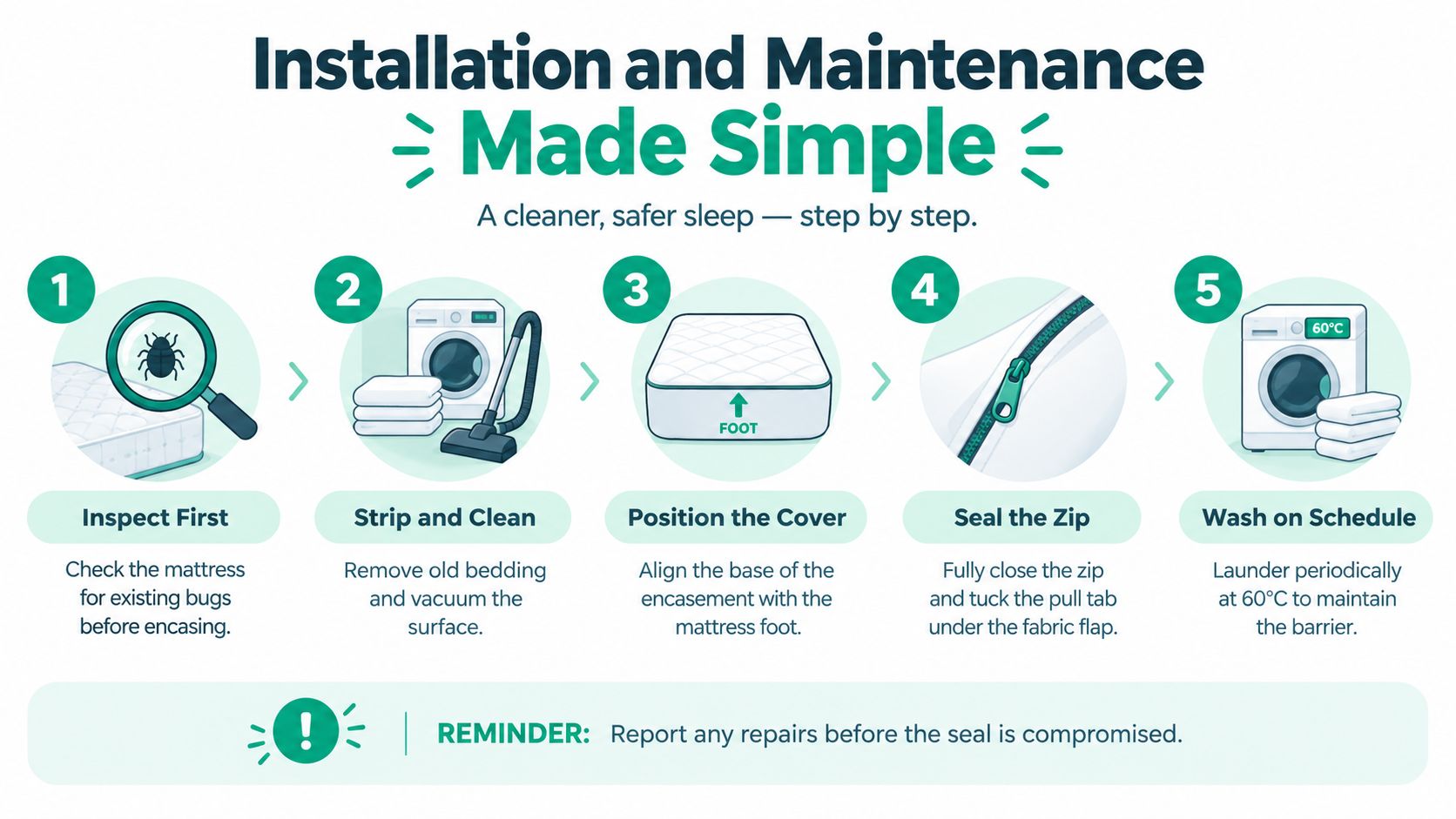
- Inspect first. Examine seams, labels, corners, the bed frame, headboard and nearby furniture. An encasement won't solve insects hiding outside the mattress.
- Strip and clean. Remove bedding carefully. Vacuum the mattress surface and surrounding area, then seal vacuum contents outside the property if bed bugs are suspected.
- Position the cover. Place the encasement over the mattress gradually, keeping the fabric aligned with the corners. Use another person if the mattress is heavy.
- Seal the zip. Check that no fabric is caught in the teeth. Close the zip completely and secure the pull tab beneath any protective flap.
- Check the finished fit. Run your hands around the edges and inspect the zip end, corners and seams for strain, gaps or exposed mattress.
Keep the barrier serviceable
Follow the manufacturer's care label rather than assuming every membrane can be treated the same way. NHS guidance supports washing bedding at 60°C for dust-mite control, but the encasement itself must be washed at the temperature and method its manufacturer specifies.
Check the zip and seams whenever you change bedding. Look for punctures, stretched corners or abrasion from the bed frame. Don't remove a cover used for bed-bug containment merely because the mattress looks clean. UK residential-accommodation guidance also recommends laundering affected bedding at a minimum of 60°C for ideally 90 minutes, tumble-drying for at least 30 minutes where possible, vacuuming surrounding areas and obtaining professional treatment when needed, as set out in guidance for residential accommodation and home visits.
For more detail on closure construction and care, review these zipper mattress covers before fitting one in a household or managed property.
Warranty, Replacement, and UK Buying Confidence
A mattress encasement is a long-term barrier, so the cheapest initial price isn't the only useful comparison. A weak zip, unclear care instructions or slow replacement process can leave the mattress exposed when protection matters most.
What to verify before ordering
- Coverage: Check which material or manufacturing defects the warranty includes, and note any exclusions for misuse or ordinary wear.
- Replacement process: Find out how to report a damaged product and whether proof of purchase or photographs are required.
- Sizing support: UK mattresses vary in depth, so reliable guidance before purchase can prevent a poor fit.
- Delivery clarity: Confirm dispatch timing, delivery charges and whether the item is available.
- Product evidence: Look for clear construction details, testing information and instructions for maintaining the seal.
These details matter particularly for landlords, hotels and care providers, where a damaged cover can affect room readiness and documented hygiene routines. Keep the receipt, product details and installation date with the room or property record.
Protect-A-Bed offers UK mattress protectors and bed-bug encasements, including waterproof, breathable designs intended to help block liquids, allergens and mattress contamination. If you're replacing a worn cover or protecting a mattress before a new occupant arrives, visit Protect-A-Bed to review the available UK options, sizing information and support terms.