

Do Bed Bug Encasements Work and When to Use Them

Yes, bed bug encasements can work: in controlled testing, fully zipped encasements contained 100% of the tested bed bugs, but they aren't a standalone cure. They seal and protect the mattress, while bugs elsewhere in the room, including the bed base, still need separate attention.
You may be reading this after waking with unexplained bites, spotting dark marks on the bedding, or finding a live insect near the mattress seam. A sealed cover sounds like a simple answer, especially when replacing a mattress feels expensive and disruptive. The useful question, however, isn't only whether encasements work. It's which part of the bed they protect.
A mattress encasement can close off the mattress as a hiding place, contain insects already inside it, and stop new insects from colonising that mattress. It won't repel bed bugs from the bedroom, kill insects in a divan base, or remove harbourages in a headboard, skirting board, furniture, or flooring.
That distinction prevents two common mistakes. Some people discard a mattress that could have been isolated and protected. Others put a cover on the mattress, assume the infestation has ended, and overlook the bed base where insects may still be sheltering.
The evidence supports a calm, practical approach. Use the right encasement, close it completely, keep it intact, and treat it as one layer in a wider remediation plan. UK guidance also makes clear that mattress encasements have limited value as a standalone measure, particularly when insects have spread beyond the mattress according to the Bed Bug Foundation's UK evidence summary.
Table of Contents
- Introduction Do Bed Bug Encasements Work at a Glance
- How Bed Bug Encasements Block Bugs and Bites
- What the Evidence Says About Effectiveness and Limits
- Mattress Encasements Versus Bed Base Encasements
- How to Install an Encasement Correctly So It Works
- Using Encasements as Part of a Full Remediation Plan
- Final Takeaways on Whether Encasements Are Worth It
Introduction Do Bed Bug Encasements Work at a Glance
A bed bug encasement works by turning the mattress into a sealed unit. Think of it as a breathable, close-fitting bag with a secure zip that surrounds every surface, including the underside and edges that ordinary fitted protectors leave exposed.
The barrier has two jobs. It can trap bed bugs already inside the mattress, and it can prevent insects elsewhere from moving into the mattress. Once sealed, the mattress becomes easier to inspect because its original seams, folds, and labels are no longer available as open hiding places.
That doesn't mean the bugs disappear immediately. An encasement isn't an insecticide, a repellent, or a treatment for the whole bedroom. If bed bugs are in the divan, box-frame structure, headboard, bedside furniture, or cracks around the bed, they can remain active outside the sealed mattress.
Practical rule: A mattress encasement protects the mattress first. It doesn't automatically protect the bed.
This is why the answer to “do bed bug encasements work” needs a qualification. They work well as containment and prevention barriers, provided the product is designed for bed bugs, fits properly, and remains fully closed. They work less well when someone expects a mattress cover to solve an infestation that has already spread through the bed or room.
A suitable cover should also be comfortable enough to stay in place. Protect-A-Bed's UK range uses its Miracle Membrane technology in protective bedding products, designed to block liquids while allowing air permeability. Comfort matters because a cover that feels noisy, hot, or poorly fitted may be removed, and removal breaks the containment plan.
The most important decision comes before purchase: identify whether the risk is limited to the mattress or includes the base. A mattress-only solution may be appropriate for prevention or as part of a targeted plan. A bed base encasement deserves attention when the bed has a divan or box-frame construction, particularly if signs appear around the lower structure.
How Bed Bug Encasements Block Bugs and Bites
Start with the physical barrier. A full encasement surrounds the mattress in the same way a sealed storage bag surrounds clothing, except it must be breathable, durable, and constructed to resist escape. The mattress goes inside, the zip closes around it, and the seams and closure become the points that determine whether the barrier remains effective.
The process is straightforward:
- Remove open hiding places: The cover conceals mattress seams, tufts, labels, and folds where bed bugs may shelter.
- Contain existing insects: Bugs already inside the mattress remain inside rather than moving out towards the sleeper.
- Block new colonisation: Insects outside the cover can't enter the protected mattress when the enclosure is intact.
- Create an inspectable surface: You can check the outside of the cover for signs without opening the mattress itself.
Why the zip matters
A normal mattress protector covers the top and sides but leaves the underside open. It may help with spills or allergens, but it doesn't isolate the mattress. A bed bug encasement must close around the entire mattress, and the zip must be completely shut.
A tiny opening can provide an escape route. The same applies to a torn fabric panel, a split seam, or an enclosure that's too small to close without strain. Check the zip after fitting, then inspect it periodically for damage caused by moving the bed or laundering the cover.
A useful shopping distinction is the difference between a protector and an encasement. If you need general guidance on storing bedding safely, you can choose a mattress storage cover, but a bed bug control plan requires a purpose-designed, zip-around enclosure rather than a loose dust cover.
What the barrier doesn't do
The cover doesn't lure bugs in, drive them away, or kill insects on the carpet. It also doesn't prevent bites from insects that are hiding outside the mattress. It changes access to one part of the bed, which can reduce opportunities for mattress-based activity, but the rest of the environment still needs inspection and treatment.
What the Evidence Says About Effectiveness and Limits
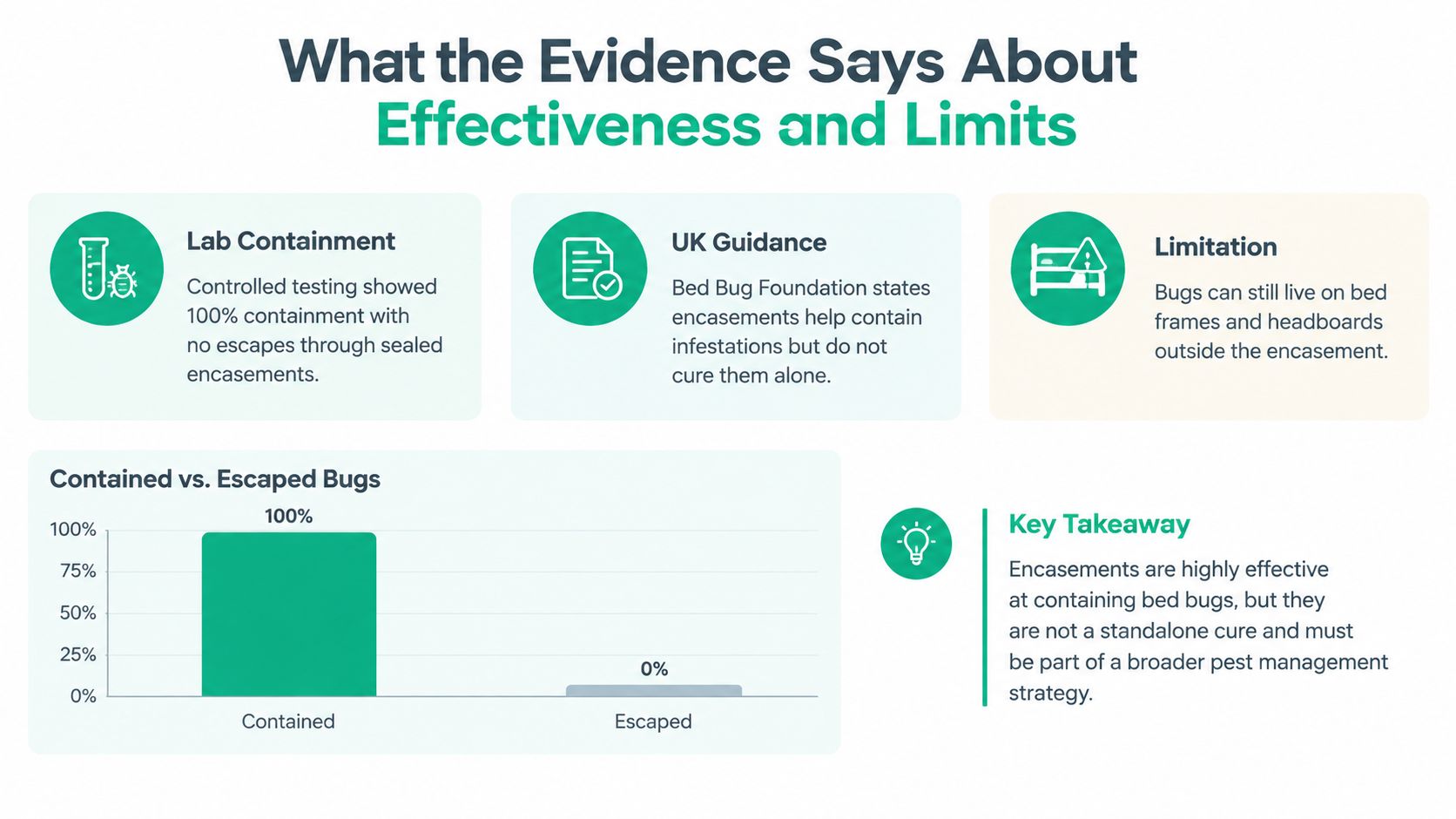
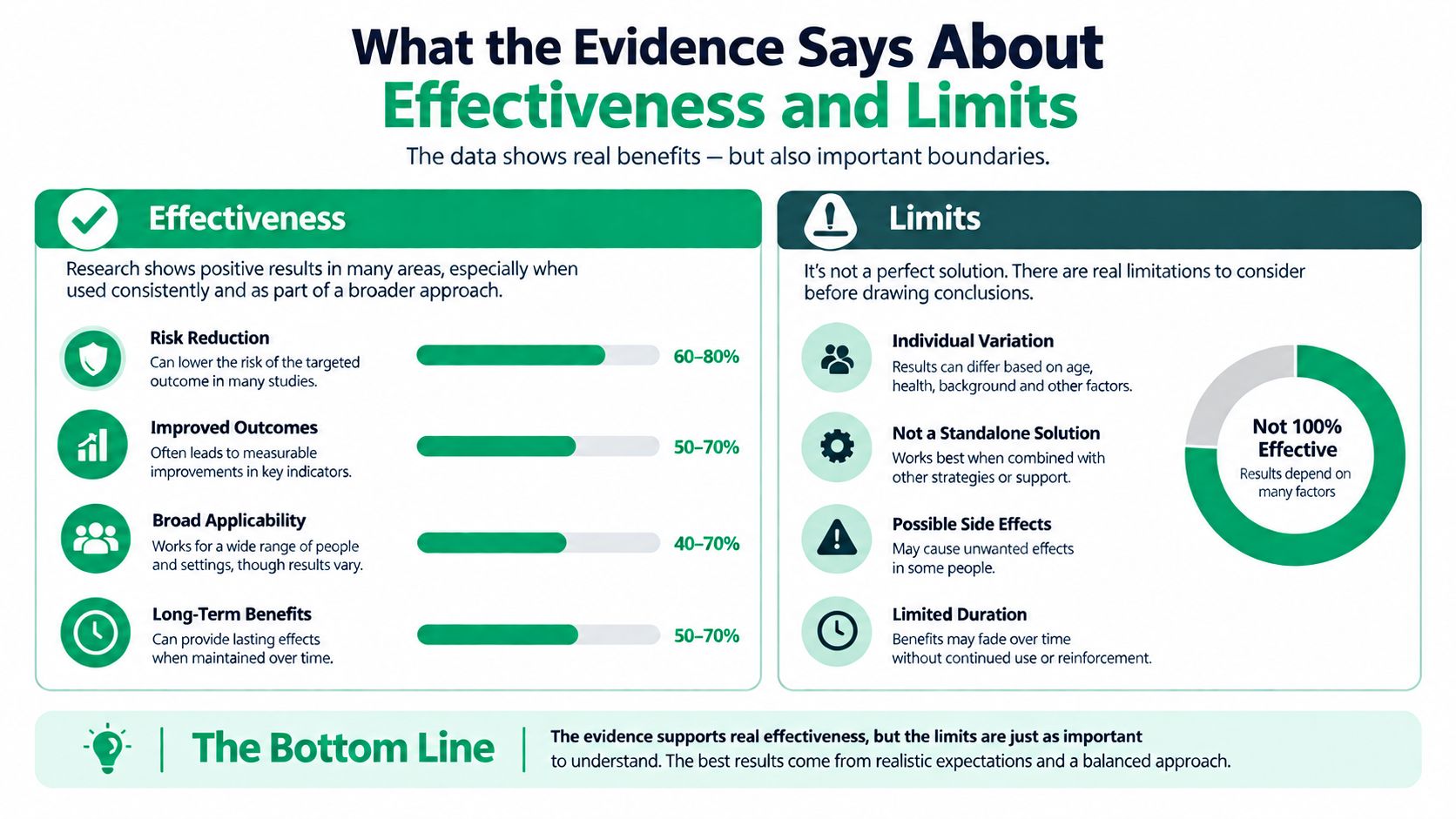
A sealed mattress can remain in use while its seams and folds become easier to inspect. That practical benefit is different from treating every bed bug in the room. As reported in the controlled evaluation, controlled testing examined five treated units with fully zipped bed bug mattress protectors. All bed bugs tested were contained and recovered from inside the encasements across the treated units. Untreated control units began showing escapes within one week, and all five controls had at least one escape by week four.
The finding supports the barrier mechanism. A correctly fitted, fully zipped enclosure can exclude adult and late-instar bed bugs from the mattress. In simple terms, it turns the mattress from an open set of hiding places into a sealed, inspectable surface.
The test did not establish that the room was pest-free. Its result applied to insects contained inside the tested encasements. Bugs in a headboard, divan frame, floor joint, furniture item, or wall gap would not be affected by covering the mattress.
How UK guidance frames the result
The Bed Bug Foundation's UK evidence summary describes encasements as well-fitting, zippered bags that remove hiding places by sealing the mattress and, where applicable, the bed base. The Foundation's guidance says they may support prevention or control by permanently sealing bed bugs inside. It also limits their role: they protect the enclosed item, while insects elsewhere require measures such as vacuuming, steam, or other treatment.
The guidance gives the evidence clear boundaries:
- Useful: The encasement seals a vulnerable item and reduces mattress harbourages.
- Helpful during treatment: It keeps that item isolated while surrounding areas receive attention.
- Insufficient alone: It does not affect insects living outside the sealed surface.
- Dependent on use: The zip, seams, fit, and continued enclosure all affect the result.
For product-specific context, Protect-A-Bed explains what mattress protectors can and can't do against bed bugs. The practical question is therefore which part of the bed has been sealed. Mattress-only protection can leave a divan or base harbourage close to the sleeper, so fit and installation must match the bed's construction.
Mattress Encasements Versus Bed Base Encasements
A sealed mattress can still sit on an exposed hiding place. In many UK homes, the base is a divan or box-frame structure with fabric panels, joints, cavities, drawers, staples, and folds. These areas are harder to inspect and treat than the mattress surface, yet bed bugs living there remain close to the sleeper.
A mattress encasement protects the mattress itself. A base encasement extends that barrier to the structure underneath. The suitable option depends on the bed's construction and where signs have appeared.
| Bed situation | Mattress encasement | Bed base encasement | Why it matters |
|---|---|---|---|
| Mattress with no signs, used for prevention | Strongly relevant | Consider if the base has enclosed fabric or cavities | It protects the sleep surface and limits future mattress harbourages |
| Signs on mattress seams or labels | Appropriate as part of control | Inspect the base before deciding | Sealing the mattress doesn't address insects already below it |
| Divan or box-frame bed with signs near the lower edge | Useful but incomplete | Particularly important to assess | The base may provide hidden harbourages that are difficult to reach |
| Mattress and base both affected | Required for the mattress | Needed for complete bed coverage | Treating only one component leaves the other exposed |
| Signs beyond the bed | Helpful as one control layer | May still be necessary | Furniture, flooring, walls, and soft furnishings need separate attention |
Why the base changes the decision
A divan base is more than a platform. Its covered panels, seams, joints, drawers, and internal spaces can give bed bugs several places to hide. Moving the mattress may reveal activity that was invisible from above, so checking only the sleep surface can create false reassurance.
The UK evidence summary identifies bed base encasements as especially useful for divan and box-frame beds, where harbourages can be difficult to reach. The distinction matters because a mattress cover may be working exactly as designed while the main infestation remains below it. The question is not whether encasements work. It is which part of the bed they enclose.
A mattress-only approach can therefore fail through incomplete coverage. If signs appear around the lower edge, beneath the mattress, or on the base fabric, inspect and address the base rather than treating the mattress as the whole bed. If the base contains cavities or enclosed fabric, its construction should guide the choice of protection.
Bed bug pressure can also change over time, so households should assess the whole sleeping area rather than rely on a single protected surface. Figures compiled by the Bed Bug Foundation from UK reports indicate that infestations have placed substantial demands on local services, while reported activity has also risen in recent years. These figures do not show that every household needs a base encasement. They do support a careful inspection of the mattress, base, nearby furniture, flooring, walls, and soft furnishings.
For a practical comparison of UK product types, see this guide to mattress protectors versus bed bug encasements. The main lesson is simple: protect the component that can harbour the insects, not only the component closest to the sleeper.
How to Install an Encasement Correctly So It Works
A well-designed encasement only works as intended when installation preserves the seal. Prepare the mattress before opening the new cover, because once it is enclosed you want to avoid repeated removal and handling.
Prepare the mattress and surrounding area
Inspect the mattress seams, piping, labels, handles, and underside. Use a vacuum with care around accessible edges, and follow suitable pest-control advice for any live insects or debris you find. The mattress should be dry before enclosure, since trapping moisture creates a separate hygiene problem.
Clear enough space to fit the cover without dragging it across rough flooring or snagging it on bed hardware. If the bed has a separate base, inspect that component at the same time rather than assuming the mattress is the only source.
Fit and close the cover
Slide the mattress into the encasement gently. Keep corners aligned and avoid forcing the zip over a twisted section of fabric. A strained closure may fail later, while a loose fit can create folds that make inspection and handling more difficult.
Close the zip fully around the mattress. Run your fingers along the closure and inspect the end stop, seams, and panels. The enclosure should sit smoothly without visible gaps, open corners, or fabric caught in the zip.
Keep the barrier intact
Leave the encasement in place according to the product instructions and any advice from a pest professional. Removing it to inspect the original mattress reopens the harbourages you were trying to isolate.
Common mistakes include:
- Using a standard protector: A fitted waterproof protector isn't the same as a full zip-around bed bug encasement.
- Leaving the zip partly open: Even a small unsealed section defeats the enclosure.
- Ignoring damage: Tears, split seams, and broken closures need prompt attention.
- Washing without checking instructions: Use the recommended cycle and drying method so heat, agitation, or shrinkage doesn't damage the fit.
- Treating the mattress but not the base: A sealed mattress can't compensate for an untreated divan or box-frame harbourage.
For guidance on the construction and purpose of zip-around products, see Protect-A-Bed's information about zipper mattress covers. Correct fitting isn't a cosmetic detail. It is the point at which the product changes from a cover into a containment barrier.
Using Encasements as Part of a Full Remediation Plan
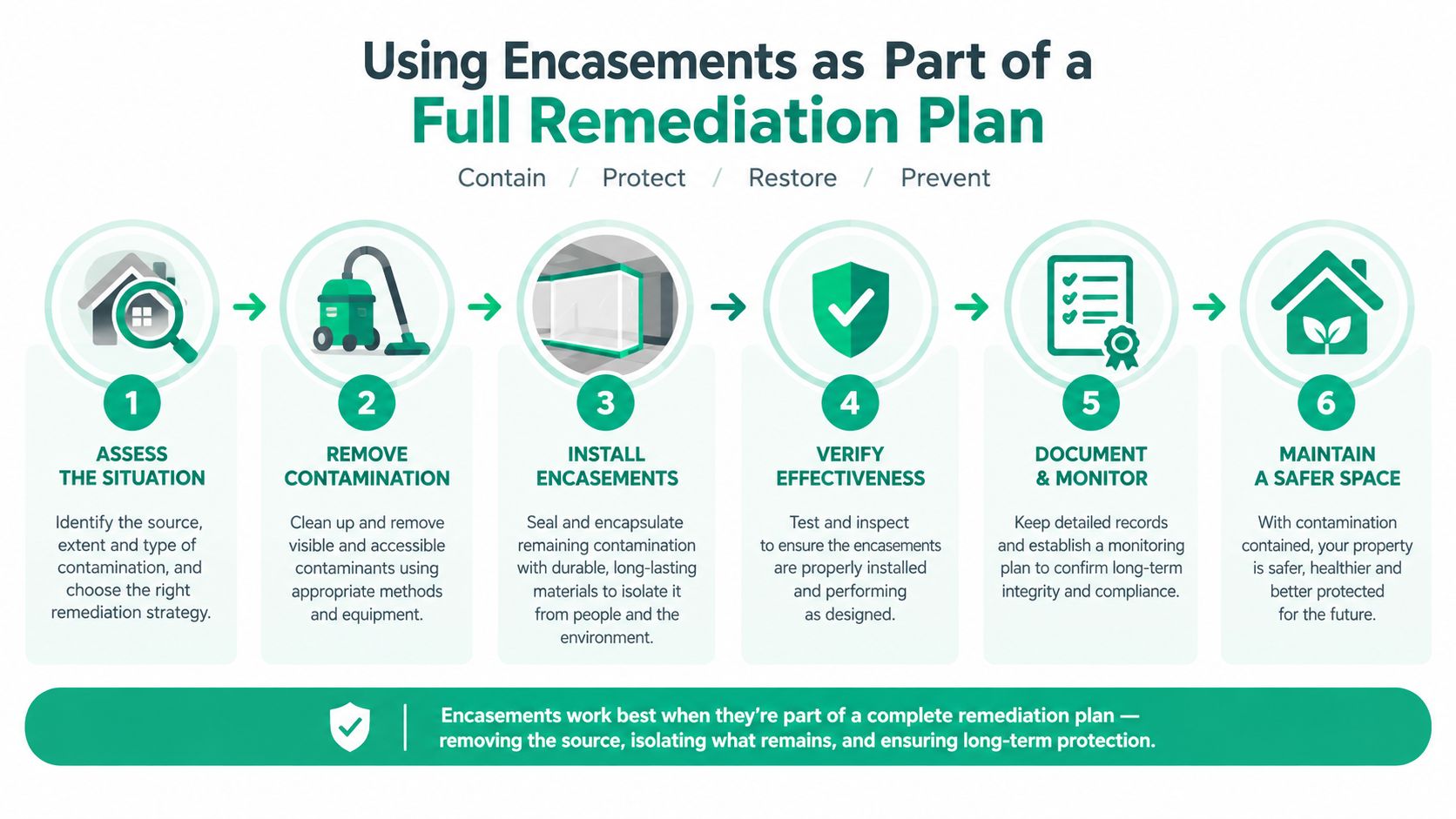
An encasement works best as one boundary within a wider plan. It seals the mattress while other measures address the bed frame, divan or base, floor, furniture, and nearby cracks. Bed bugs may harbour in the base rather than the mattress. A mattress-only barrier can be intact while activity continues elsewhere.
Begin with the whole sleeping area, not just the mattress. Check mattress edges, the underside of the base, headboard joints, bedside furniture, skirting boards, and clutter near the bed. Avoid carrying suspected infested items through the home. Handling can spread insects to new locations.
Match each action to the harbourage
Vacuuming can remove accessible insects and debris from seams, cracks, and edges. Dispose of the contents carefully, following local pest-control guidance.
Steam treatment can address suitable hard surfaces and fabric edges when applied correctly. Move slowly and maintain contact so heat reaches the areas being treated. Rushed work can leave protected sections untouched.
Laundering helps manage bedding and clothing that can be safely washed and dried. Seal clean items after processing so they do not pick up insects again.
Decluttering reduces hiding places and improves access for inspection. It does not automatically mean throwing away furniture. Carrying unnecessary items through shared areas can spread insects.
Professional treatment may be needed when activity is heavy, recurring, difficult to locate, or concentrated in a bed base and surrounding structure. A trained technician can assess the harbourages and choose a suitable treatment plan for the property.
Choose the role of the encasement
For prevention, an encasement protects a clean mattress from becoming an easy harbourage. During active control, it isolates the mattress while the base, bed frame, and room receive attention. After treatment, it keeps the mattress enclosed and makes changes in activity easier to monitor.
The Bed Bug Foundation's UK evidence summary, cited earlier, cautions that encasements have limits as a standalone solution. Use them for the area they can seal, then assign other methods to the places they cannot reach. The key question is not only whether the encasement works. It is whether it protects the part of the bed where the insects are hiding.
Final Takeaways on Whether Encasements Are Worth It
So, do bed bug encasements work? Yes, as a properly fitted barrier. Controlled testing found complete containment in the treated encasements when they were fully zipped, and UK guidance recognises their value for sealing mattress and bed-base harbourages.
They aren't a standalone cure. A mattress-only cover won't deal with insects living in a divan, box-frame base, headboard, furniture, flooring, or wall gap. If you protect the wrong part of the bed, the product may work perfectly while the infestation continues elsewhere.
Use this decision guide:
- For prevention: Choose a purpose-designed, full zip-around encasement that fits the mattress correctly.
- For an active mattress issue: Seal the mattress, inspect the base and surrounding bed, and combine the cover with appropriate treatment.
- For a divan or box-frame bed: Assess the base as a separate harbourage and consider whether it also needs enclosure.
- For activity beyond the bed: Treat the room and seek professional advice when signs persist or the source isn't clear.
- For ongoing protection: Keep the encasement closed, inspect it for damage, and avoid removing it unnecessarily.
Protect-A-Bed offers UK bed bug encasements alongside broader bedding-protection products, including waterproof and breathable options using Miracle Membrane technology. The sensible purchase isn't the first cover you find. It is the enclosure that matches your bed construction, fits securely, and forms one layer of a realistic control plan.
Assess the mattress and base separately, install the correct coverage carefully, and act on signs beyond the sleep surface. That approach gives you genuine protection without placing unrealistic expectations on a single cover.
Protect-A-Bed provides bed bug mattress encasements designed to seal and protect the mattress as part of a wider control plan. Visit Protect-A-Bed to review the UK range and choose coverage suited to your bed.