

How to Allergy Proof Your Bedroom: Step-by-Step Guide

Allergy-proofing a bedroom means sealing the mattress and pillows with allergen barriers, keeping relative humidity below 50%, washing bedding weekly at 60°C, and using HEPA filtration. These four actions address the majority of dust-mite exposure.
You wake with a blocked nose, itchy eyes or a dry cough, even though the bedroom looks tidy. The bed is made, the floor has been vacuumed and there's no visible mould, yet symptoms return after a night's sleep. That pattern is common because allergy-proofing isn't mainly about making surfaces look clean. It's about controlling the moisture, fabrics and hidden reservoirs closest to your face for hours at a time.
For UK homes, the most effective order is simple: protect the bed, stabilise humidity, wash and clean the surrounding fabrics, then remove habits that keep adding moisture or allergens. The right routine also needs to work in a rented flat, beside a busy road or during a cold winter when opening windows can waste heat.
Table of Contents
- Why Your Bedroom Is the Biggest Allergen Reservoir
- Sealing Mattresses and Pillows with Allergen Barriers
- Controlling Humidity to Starve Dust Mites
- Cleaning Routines That Reduce Allergen Load
- Building a Realistic Weekly Allergy-Proof Routine
- Common Mistakes That Undermine Allergy-Proofing Efforts
Why Your Bedroom Is the Biggest Allergen Reservoir
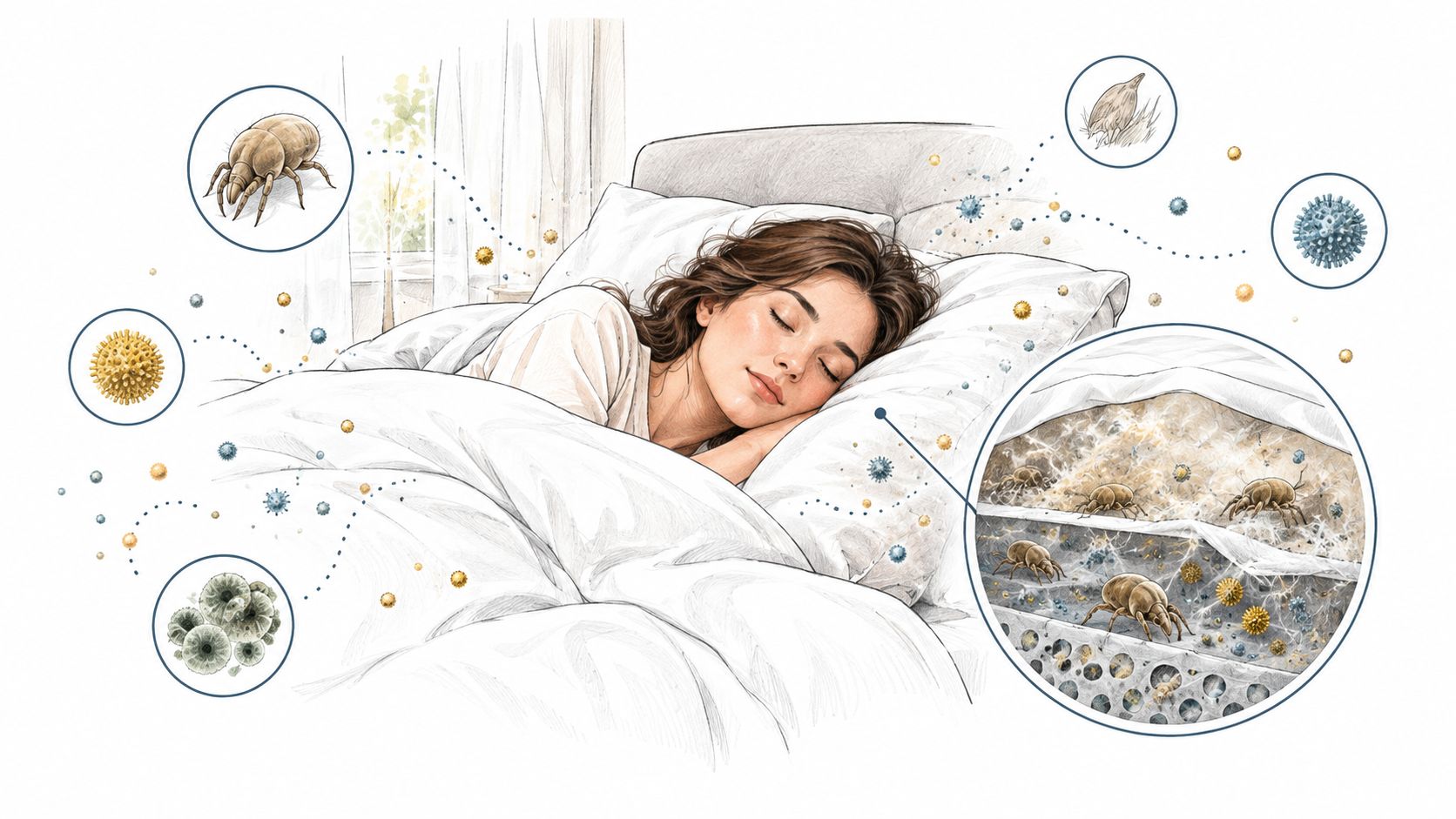
A clean-looking bedroom can still expose you to a substantial allergen load. Mattresses, pillows, duvets and carpets hold fine particles deep within their fibres, where ordinary dusting cannot reach them. Because you spend the night in direct contact with these materials, the sleep environment deserves more attention than a quick sweep of visible surfaces.
A UK study involving 68 people with asthma in North Lanarkshire, including children, found that Der p 1 dust-mite allergen exceeded the World Health Organization sensitisation threshold in 78% of beds and 75% of bedroom-carpet samples. Levels associated with severe allergic reactions appeared in 56% of beds and 50% of bedroom carpets (UK housing and damp guidance). The finding matters because a mattress can remain an exposure site without looking dirty or showing mould.
Contact matters more than appearance
When you lie down, your face is close to the mattress, pillow and bedding. Movement can disturb settled particles, while body heat and moisture create conditions that allow mites to persist. A person may therefore wake congested in a bedroom that appears organised and freshly cleaned.
Practical rule: Treat the bed as a reservoir first, not as the final item on a cleaning list.
This changes the priority order. Vacuuming the carpet is useful, but it won't compensate for an unprotected mattress or a pillow with an open seam. Likewise, an air purifier may reduce airborne particles while you sleep, but it can't remove allergens embedded in the bed.
Moisture keeps the cycle going
Dust mites thrive in warm, moist surroundings. Bedding also collects moisture overnight, and a room that stays humid gives soft furnishings less opportunity to dry. That's why effective allergy-proofing combines barrier protection with humidity control, rather than treating cleaning as a standalone task.
Sealing Mattresses and Pillows with Allergen Barriers
The bed barrier is the most direct way to reduce contact with allergens already inside the mattress and pillows. Choose a fully enclosed, zipped encasement, not a cover that merely lies over the top. A conventional protector may guard against spills while leaving the sides, seams or zip area exposed.
Measure the mattress before buying, including its depth. The encasement should fit without excessive strain on the zip, and the zip should close completely around the mattress. For pillows, use protectors that enclose the entire pillow rather than a conventional pillowcase-style layer.
Fit the barrier carefully
Start with a clean, dry mattress. If the mattress is damp, airing it first is more important than enclosing it immediately. Once fitted, check the entire zip path and inspect the seams whenever you change the outer bedding.
Use the same approach for pillows and duvets where a suitable enclosed protector is available. Products such as Protect-A-Bed's AllerZip mattress encasements and pillow protectors are designed as sealed barriers, while its Miracle Membrane construction is described as breathable and resistant to liquid penetration. Fabric choice then becomes a comfort decision. Cotton may suit a familiar, natural-feel surface, while cooling fabric options can help people who sleep hot.
Inspecting the closure is more important than choosing a fashionable finish. A small gap, damaged seam or incompletely closed zip creates a route for allergen-containing dust to move between the mattress and the sleeper. For practical guidance on sealed bedding and dust-mite protection, see dust-mite-proof bedding guidance.
Keep the encasement functional
Don't remove the encasement for routine cleaning unless the care instructions require it. Wash the outer sheets and pillowcases regularly, and deal with spills promptly so moisture doesn't remain trapped against the protected surface. If a mattress has been affected by smoke, odour or contamination, barrier fitting may not be the only issue. A specialist resource on when to call a pro for smoke can help you judge when professional treatment is more sensible than repeated home cleaning.
A barrier limits exposure, but it doesn't make the room immune to humidity or dust. The surrounding carpet, curtains and uncovered soft furnishings still need attention.
Controlling Humidity to Starve Dust Mites
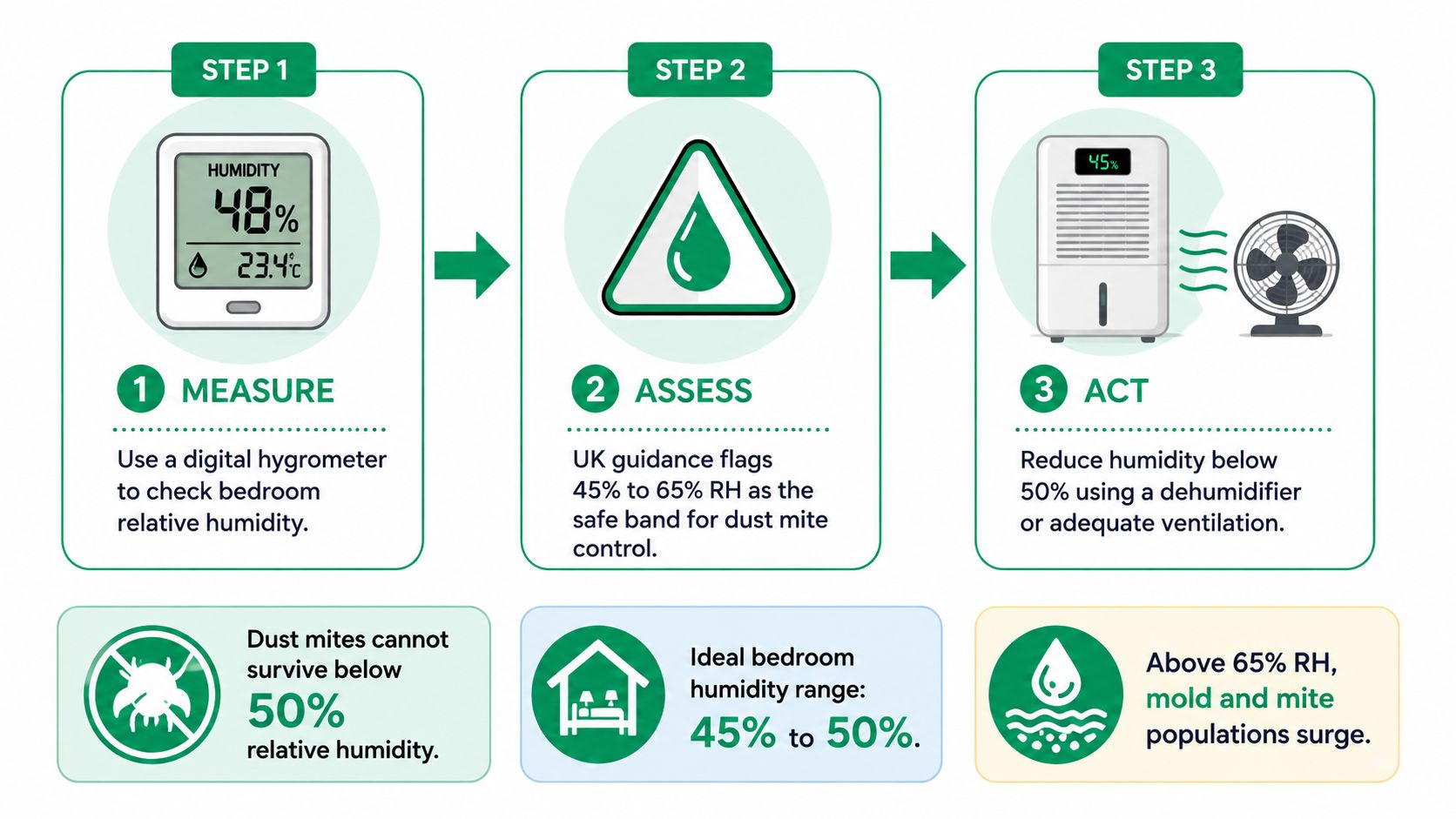
A bedroom can look clean and still hold conditions that support dust mites. Moisture is often the deciding factor. If humidity stays high, cleaning offers only a short reset. Measure the room rather than relying on condensation, which shows moisture at one moment only.
Put a calibrated digital hygrometer near bed height, away from radiators, windows and the direct airflow of a dehumidifier. Camden Council gives 45% to 65% relative humidity as a general indoor range, while Wiltshire guidance recommends staying below 50% to make conditions less suitable for mites (Camden damp and mould policy). Cambridge University Hospitals advises keeping humidity below 50% but above 30% (dust-mite advice from Cambridge University Hospitals). For a fuller walkthrough, see our dust-mite allergy prevention guide.
Ventilate without wasting heat
After waking, turn back the bedding and ventilate for up to 20 minutes, if outdoor conditions allow. This releases moisture built up overnight. In a winter flat, short, deliberate airing is generally more practical than leaving a window open all day, cooling the room and increasing heating demand.
Urban bedrooms need a different approach where traffic pollution is a concern. Use trickle vents, mechanical extraction or a dehumidifier instead of drawing polluted outdoor air inside. The aim is controlled moisture removal, not just more airflow.
Do not dry clothes in the bedroom. Wet laundry can quickly reverse progress in a small rented room. If readings remain high, check whether extraction works properly and use a dehumidifier with a setting that stops the air becoming excessively dry.
Mould prevention follows the same moisture-control principle. Government guidance from 2023 classifies damp and mould as housing-related health hazards and recognises that dampness can increase health risks even without visible mould (UK guidance on asthma and airborne allergens). In rented accommodation, photograph persistent condensation, leaks or damp patches and report them to the landlord in writing.
Cleaning Routines That Reduce Allergen Load
A bedroom can look tidy while still holding allergen-containing dust in the mattress, bedding, carpet, curtains, upholstery and clothing. Vacuuming helps, but cleaning only the floor leaves several reservoirs untouched. Treat the room as a connected system: remove settled particles, wash fabric layers and avoid adding moisture that cannot dry.
Start with the fabrics closest to your face. Wash sheets, pillowcases, duvets and blankets that are not enclosed by an allergen barrier on a 60°C cycle, where the care label allows it. Washable bedding and soft furnishings can also be washed or tumble-dried at 60°C for at least 10 minutes, according to the relevant local guidance. A weekly bedding change is a practical benchmark, provided every item is dried fully before the bed is remade.
Clean from the bed outward
Use a HEPA-filter vacuum on carpets, upholstery and curtains. Move slowly around the bed, along skirting boards and beneath furniture. Quick passes can disturb dust without collecting much of it. If cleaning triggers symptoms, wear a suitable mask or ask someone else to vacuum, then leave the room until disturbed particles have settled.
Use this order:
- Bedding first: Remove washable layers and place them in a laundry basket. Do not shake them inside the bedroom.
- High-contact fabrics next: Vacuum the mattress encasement surface, upholstered headboard and nearby chair.
- Floor coverings after that: Cover carpet edges, the space under the bed and areas around storage.
- Curtains and clothing last: Reduce loose fabric and keep worn outdoor clothing away from the bed.
Keep bedding turned back after waking so trapped moisture can escape. Damp sheets should not go straight onto the mattress, even with a protective cover. Follow the care label and this guide to washing a mattress protector before laundering encasements or protectors.
Steam cleaning needs care. It may remove some contamination, but it also puts moisture into soft furnishings and the room. If the material cannot dry thoroughly, the treatment can support the damp conditions associated with mites and mould. For wider dust-control measures, these dust-free home tips complement a bedroom-focused routine.
Evidence from an intervention in North Lanarkshire combined cleaning and bedding measures with mechanical heat-recovery ventilation. It reduced dust-mite allergen reservoirs in beds and carpets by more than 96% during the intervention and reduced bedroom moisture by about 12% (indoor air quality guidance). That outcome is a benchmark, not a guarantee for every UK home. It does show why source removal and moisture management work better together than vacuuming alone.
Building a Realistic Weekly Allergy-Proof Routine
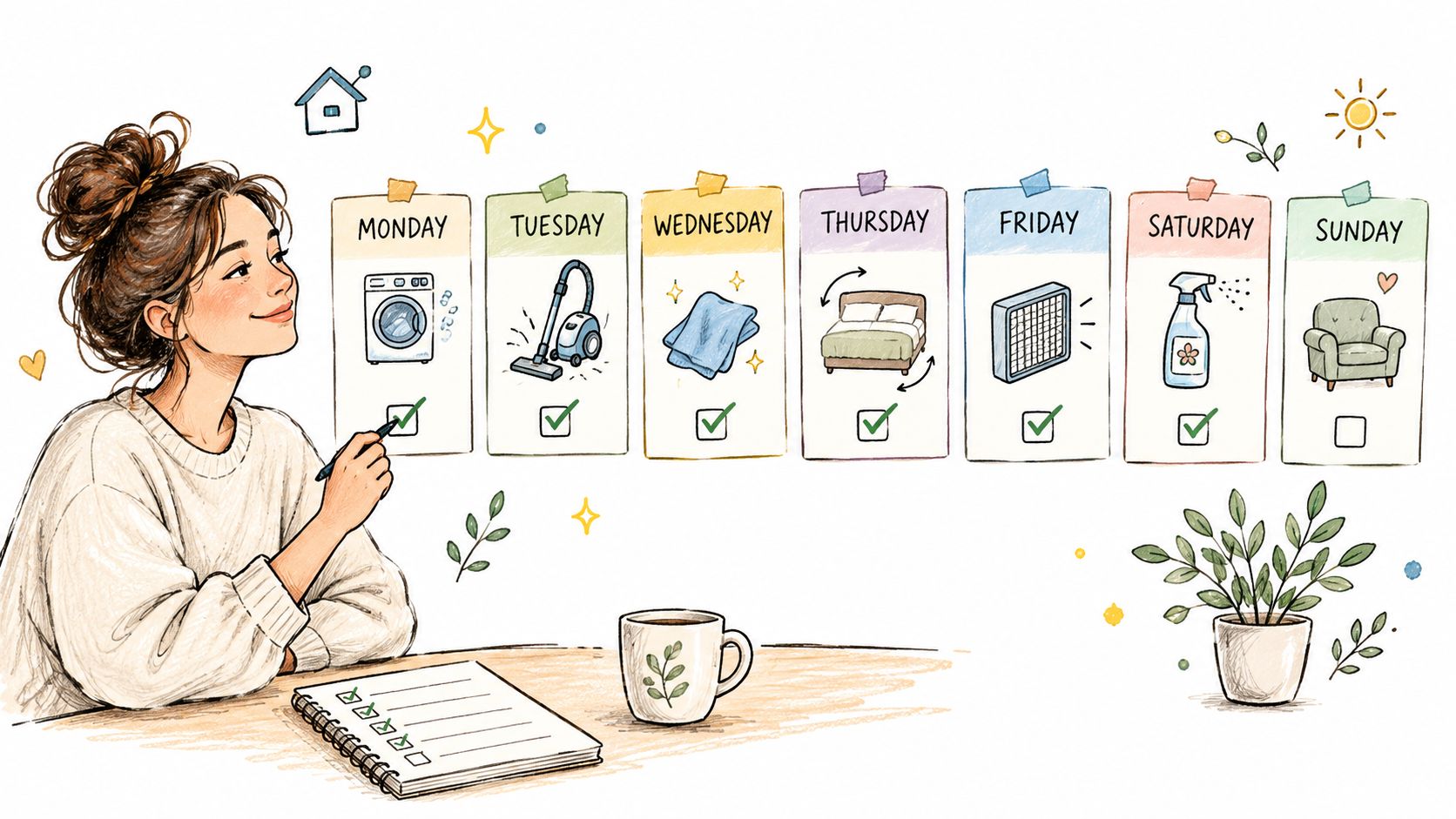
A routine succeeds when it fits ordinary life. The aim isn't to create a daily cleaning project, but to keep the most important controls from slipping. Assign one small task to each day and keep the equipment close to the bedroom.
A workable weekly pattern
Monday: Wash non-encased bedding on a 60°C cycle where the fabric allows it. Air the room after waking and dry every item thoroughly before remaking the bed.
Tuesday: Vacuum carpet, the area around the bed, upholstery and curtains with a HEPA-filter vacuum. Work slowly and avoid shaking fabrics indoors.
Wednesday: Inspect mattress and pillow encasements. Run your fingers along the zip and seams to identify gaps, strain or damage.
Thursday: Check the hygrometer at a consistent time. If humidity is rising, increase controlled ventilation, improve extraction or adjust the dehumidifier.
Friday: Change pillowcases and wash other frequently handled textiles. Keep outdoor clothing, bags and shoes away from the sleep area.
Weekend: Vacuum beneath the bed, reduce loose fabric clutter and turn or rotate pillows according to their care instructions.
Make the plan easier to repeat
Keep a small HEPA handheld vacuum available for quick work around the headboard and skirting board. A separate laundry bag for pillowcases can also reduce the temptation to postpone a full bedding change. In a rented property, portable measures such as a hygrometer, dehumidifier and sealed encasements can help when you can't install mechanical ventilation.
Travel creates a different challenge. Use a washable pillow barrier if practical, keep outdoor clothing away from the sleeping surface and avoid bringing damp laundry into the room. During seasonal changes, adjust the ventilation method rather than abandoning humidity checks. A general household schedule can offer useful structure, such as this Gulf Coast house cleaning routine, but the bedroom should always prioritise bed barriers and moisture readings over low-contact chores.
Common Mistakes That Undermine Allergy-Proofing Efforts
The most expensive mistake is often doing the wrong job thoroughly. A household may vacuum repeatedly while leaving an unsealed mattress and pillow exposed. That effort can improve the room's appearance without addressing the reservoir closest to the sleeper.
| Common assumption | What happens | Better alternative |
|---|---|---|
| Vacuuming is enough | Hidden soft furnishings continue to hold allergen-containing dust | Encase the bed, wash bedding and vacuum the surrounding fabrics |
| Every mattress protector blocks mites | A top layer may leave sides, seams or zips open | Choose a fully enclosed barrier with a sealed zip |
| Open windows always improve air | Outdoor pollution, cold weather or heating loss can make ventilation impractical | Measure humidity and use controlled extraction or dehumidification |
| Steam cleaning is automatically healthier | Added moisture may linger in fabric and raise humidity | Use it only when the room and item can dry completely |
| A tidy room has low allergen exposure | Microscopic reservoirs remain invisible | Prioritise mattresses, pillows, duvets, carpets and curtains |
| Plants make the bedroom healthier | Soil and watering add another source of moisture and potential mould | Keep the sleep environment dry and easy to monitor |
Urban flats need a more careful ventilation decision than generic checklists suggest. A room beside a busy road may need its window closed during polluted periods, while a cold bedroom may need short bursts of airing followed by steady heating rather than constant ventilation. If the property has leaks, persistent condensation or damp, cleaning won't solve the underlying defect. Report the problem and keep written records, especially in rented accommodation.
Don't overlook symptoms that continue after environmental changes. Dust mites may not be the only trigger, and persistent nasal blockage, wheezing or breathing difficulty deserves medical advice. Bedroom controls can reduce exposure, but they aren't a substitute for diagnosis or prescribed treatment.
The strongest plan is therefore selective: seal the highest-contact reservoirs, keep humidity controlled, wash what touches your face and remove practices that add moisture. Packaging claims and fragrance-heavy cleaning products matter less than whether the barrier is closed, the bedding is dry and the room stays within a measured humidity range.
Protect-A-Bed offers fully enclosed mattress encasements and pillow protectors designed to create barriers against dust mites, allergens and liquids, including options built with its Miracle Membrane technology. Visit Protect-A-Bed to choose bed protection suited to your mattress, pillow and sleeping comfort needs.