

Dust Mite Allergy Prevention: A Practical UK Home Guide

You've vacuumed the bedroom, dusted the skirting boards, changed the washing powder and perhaps even bought another “allergy-friendly” spray. Yet you still wake with a blocked nose, itchy eyes or a tight chest. That pattern is frustrating, but it usually means your cleaning effort is aimed at the wrong place.
Dust mite allergy prevention starts at the bed, not with an exhausting whole-house scrub. House dust mites are found in all UK homes, and the North West Allergy Network reports positive testing for house dust mite allergy in one in 20 young children and one in five adults. The same leaflet says dust mite proof mattress and pillow covers can stop mites and their faeces reaching bedding, while NHS guidance recommends hot washing, ventilation, damp dusting and regular vacuuming. (North West Allergy Network guidance)
The sensible approach is layered. Contain the mattress and pillows, wash bedding with enough heat, keep moisture under control, then deal with carpets, toys and clutter according to what your household can realistically manage.
Table of Contents
- Why Your Bed Is the Main Reservoir
- What Dust Mites Actually Are and Why They Trigger Allergies
- Sealing the Sleep Surface With Mattress and Pillow Protectors
- Washing Bedding at the Right Temperature and the Right Rhythm
- Humidity, Ventilation, Flooring, and Vacuuming
- Living With Carpets, Divans, and Soft Toys Without Losing the Plot
- When Prevention Needs Backup From Medical Support
- A Realistic UK Routine and Common Dust Mite Questions Answered
Why Your Bed Is the Main Reservoir
A child wakes congested after sleeping beside a favourite soft toy. Under the mattress, a divan base holds storage drawers, while a bedroom carpet runs right up to the bed. The room looks tidy, yet symptoms return each morning.
The problem is exposure at the sleep surface. A bed stays warm and picks up shed skin, creating a habitat close to your face for hours. Dusting the bedside table does little to change what is held inside the mattress, pillow, duvet and nearby soft furnishings.
A cleaner floor can help, but it does not deal with the material surrounding your nose and mouth overnight. Start by reducing that contact, then work outwards through the bedroom. This is why guidance on dust mites in bedding deserves attention before another general cleaning product.
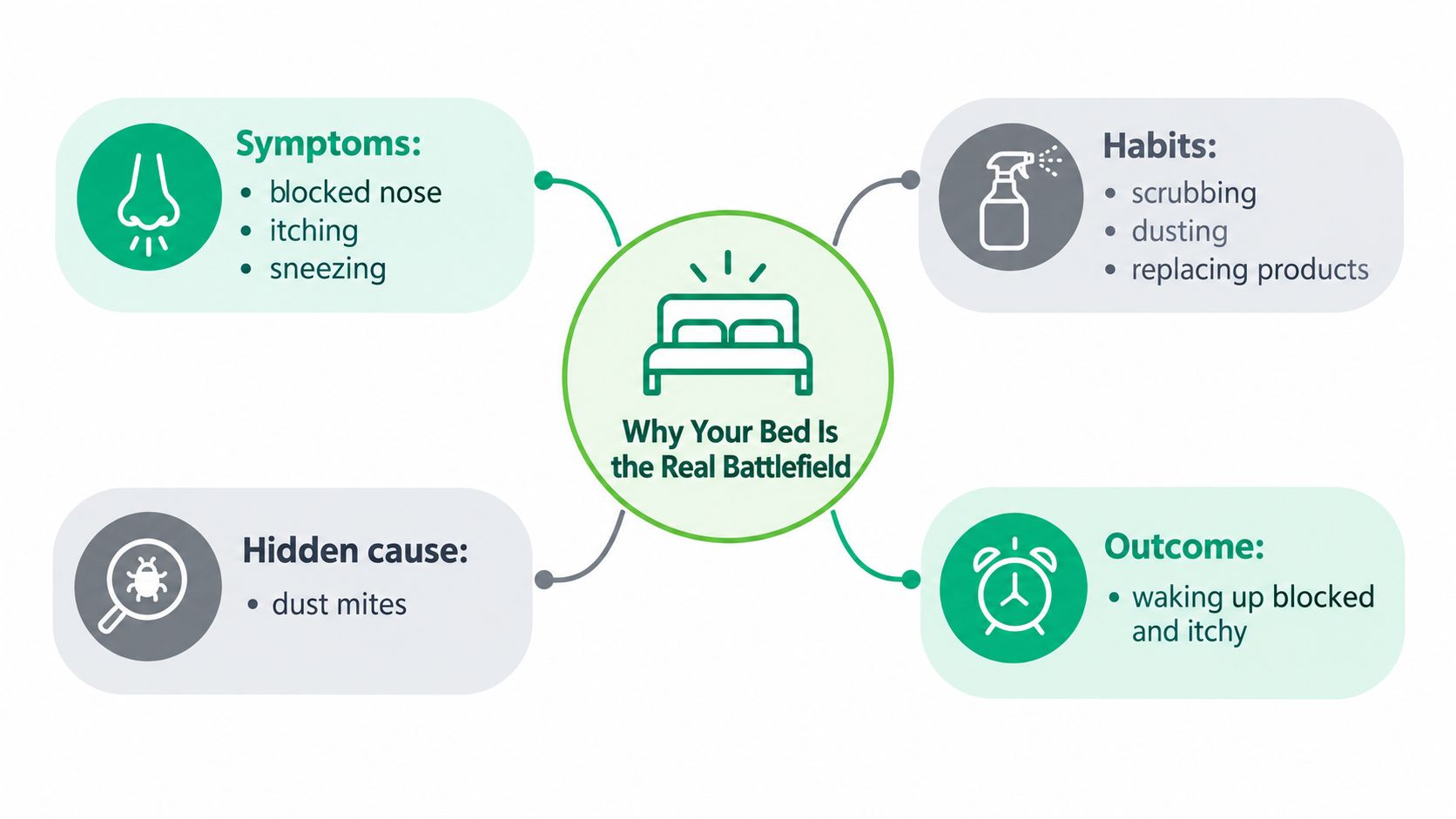
Start with the nearest reservoir
The order matters. A properly fitted mattress and pillow barrier contains allergen where it has accumulated. Hot washing deals with washable bedding, while ventilation helps limit the damp conditions mites favour. Vacuuming and decluttering support those measures around the bed, but they should not replace them.
Practical rule: Protect the sleep surface before spending money on sprays, gadgets or a complete bedroom renovation.
Carpets, curtains, divan upholstery and soft toys can still hold allergen. They deserve attention when symptoms persist, especially if they sit close to the bed. However, the bed remains the first target because it stays against you for the longest uninterrupted period.
NHS advice can read as though every household can remove fitted carpets, avoid divan beds and replace soft furnishings at once. Ordinary UK homes often cannot. Use a layered plan instead: contain the mattress and pillows, manage bedding, improve ventilation, then reduce nearby reservoirs as time and money allow. That approach is more useful than treating the whole bedroom as one cleaning job.
What Dust Mites Actually Are and Why They Trigger Allergies
Dust mites are microscopic arachnids, related to spiders and ticks. They feed on shed human skin and favour warm, humid places such as mattresses, pillows, carpets and upholstered furniture.
The detail is that the live mite isn't the whole problem. Allergy symptoms are mainly triggered by proteins in mite faeces and decomposed body fragments. Those particles settle in bedding and soft furnishings, and movement can disturb them into the air.
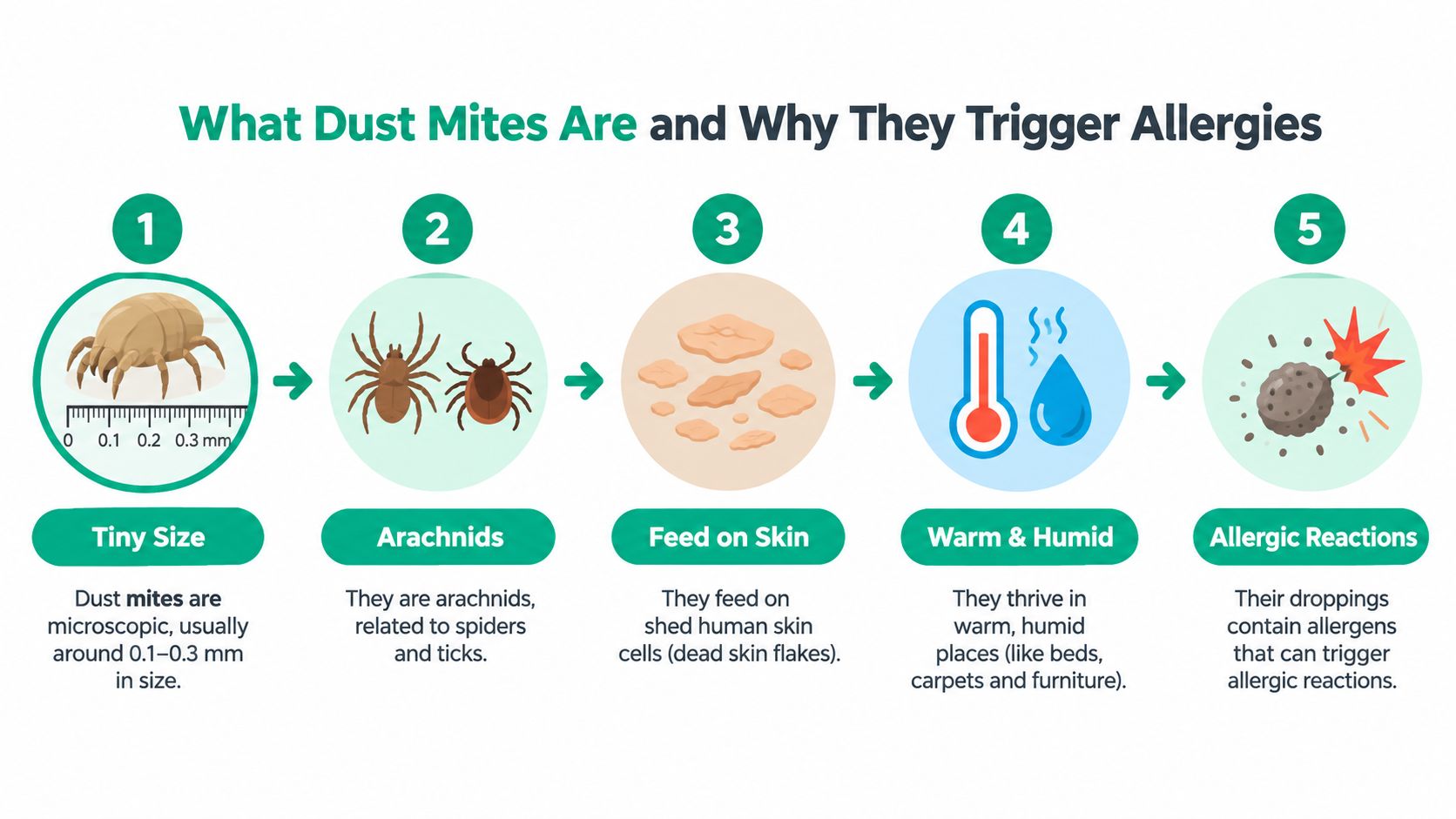
Prevention must interrupt the whole cycle
Killing mites doesn't automatically remove the allergen they've left behind. Effective control therefore needs several different actions:
- Block contact. Encasements separate you from allergen held inside the mattress and pillows.
- Use heat on washable textiles. Hot washing kills mites and removes allergenic material from sheets, pillowcases and covers.
- Reduce dampness. Ventilation makes the bedroom less favourable to mite growth.
- Remove settled debris carefully. Damp dusting and suitable vacuuming reduce material on accessible surfaces.
Morning congestion, itchy eyes, repeated sneezing and symptoms that worsen in the bedroom can fit a dust mite allergy pattern. Asthma symptoms at night deserve more attention, especially if coughing, wheezing or breathlessness interrupts sleep. A person reacting to dust mite allergen isn't “intolerant of dust”, and ordinary dusting won't necessarily solve the exposure.
For readers who want practical information on treating dust in soft floor coverings, this resource on dust mites from Rubber Ducky Rug Cleaning Birmingham offers useful cleaning context. Keep the distinction clear, though. Cleaning may reduce allergen on a surface, but it doesn't replace bed barriers and heat-based laundry.
Sealing the Sleep Surface With Mattress and Pillow Protectors
A proper encasement is the highest-priority purchase for many dust mite allergy sufferers. It creates a physical barrier between the sleeper and allergen stored in the mattress or pillow, rather than relying on repeated surface cleaning.
Look for a tightly woven, allergen-impermeable cover with a fully enclosed, zipped construction. Retail listings should explain the barrier performance clearly, rather than merely calling the item “soft”, “protective” or “hypoallergenic”. A cover that protects against spills but leaves the mattress sides and zip exposed isn't the same as a complete mite barrier.
Don't strip an old mattress and assume replacement is automatically necessary. A sound mattress can usually be enclosed. Replacement becomes a more sensible discussion when the mattress is damaged, persistently damp, heavily contaminated or impossible to fit with a properly sealed cover.
Compare the barrier, not the marketing language
| Type | Typical pore size | Allergen barrier | Best for |
|---|---|---|---|
| Fully zipped allergen encasement | Stated by manufacturer | Encloses the sleep surface | Existing mattresses and pillows containing allergen |
| Fitted protective cover | May not be stated | Covers the upper surface | Spill protection with some exposure reduction |
| Loose decorative cover | Usually not stated | Limited or unclear | Appearance and basic cleanliness |
| Waterproof protector without full enclosure | May not be stated | Depends on construction | Liquid protection, not necessarily complete allergen containment |
The pore-size figure must be stated and supported by the manufacturer if you're using it to judge a product. Don't assume every waterproof cover blocks mite allergen. The zip, seams and fit matter just as much as the fabric.
A barrier also needs care. Wipe the outer surface when you change bedding and follow the washing instructions. If the cover tears or the zip no longer closes properly, replace it. For more detail on choosing a pillow barrier, see this guide to a pillow protector for dust mites.
Professional cleaning advice can help when a mattress has accumulated visible soil or odour, but expert advice from Eco Clean Solutions shouldn't distract from the central point. Cleaning may improve the accessible surface. Encasement prevents the existing reservoir from continuing to expose the sleeper.
Washing Bedding at the Right Temperature and the Right Rhythm
Laundry is where many households lose consistency. Washing bedding occasionally at a cool temperature may make it look clean, but it doesn't deliver the same dust mite control as a hot wash.
UK NHS guidance repeatedly recommends washing bedding at 60°C or above, because that temperature kills house dust mites and helps remove their faecal particles. Manchester Foundation Trust advises washing sheets, pillowcases and duvet covers at a minimum of 60°C at least every two weeks. (Manchester Foundation Trust advice)
For a household managing active symptoms, make the washable layer part of the weekly routine where care labels permit it. The exact cycle must still follow the textile manufacturer's instructions. Heat addresses live mites, while rinsing and laundering remove allergen residue. Those are related but different jobs.
| Item | Temperature | Frequency |
|---|---|---|
| Sheets | 60°C or above, if permitted | Weekly |
| Pillowcases | 60°C or above, if permitted | Weekly |
| Duvet covers | 60°C or above, if permitted | Weekly |
| Mattress and pillow encasements | Follow care label | Regularly, and when soiled |
| Washable soft toys | Hot wash where permitted | Regularly, especially if kept in bed |
Don't forget the child's favourite toy
Soft toys are easy to overlook because they aren't technically bedding. Wash washable favourites according to their care labels, and keep children away from the room while vacuuming or disturbing dusty items. For a non-washable toy, freezing is an option mentioned in NHS guidance, but it still needs careful handling and cleaning afterwards because dead mites don't remove the allergen.
A dryer can help finish laundry thoroughly, but it can't compensate for ignoring the correct wash temperature. If the encasement sits beneath the sheet and remains clean, it won't need the same washing rhythm as the exposed bedding.
Humidity, Ventilation, Flooring, and Vacuuming
The bedroom environment determines how hard the bed has to be managed. Damp air supports mite survival, so ventilation belongs in the prevention plan, not on a separate “nice to have” list.
Open windows or use vents in kitchens and bathrooms, avoid drying clothes indoors where possible, and air bedding before remaking the bed. Cambridge University Hospitals also recommends weekly vacuuming and damp dusting, with increased ventilation to reduce humidity. (Cambridge University Hospitals dust mite guidance)
Modern UK homes can be tightly sealed, especially in winter. Short periods of purposeful airing, functioning trickle vents and sensible moisture control are more useful than leaving a window permanently open in cold weather. Deal with condensation rather than wiping it away each morning.
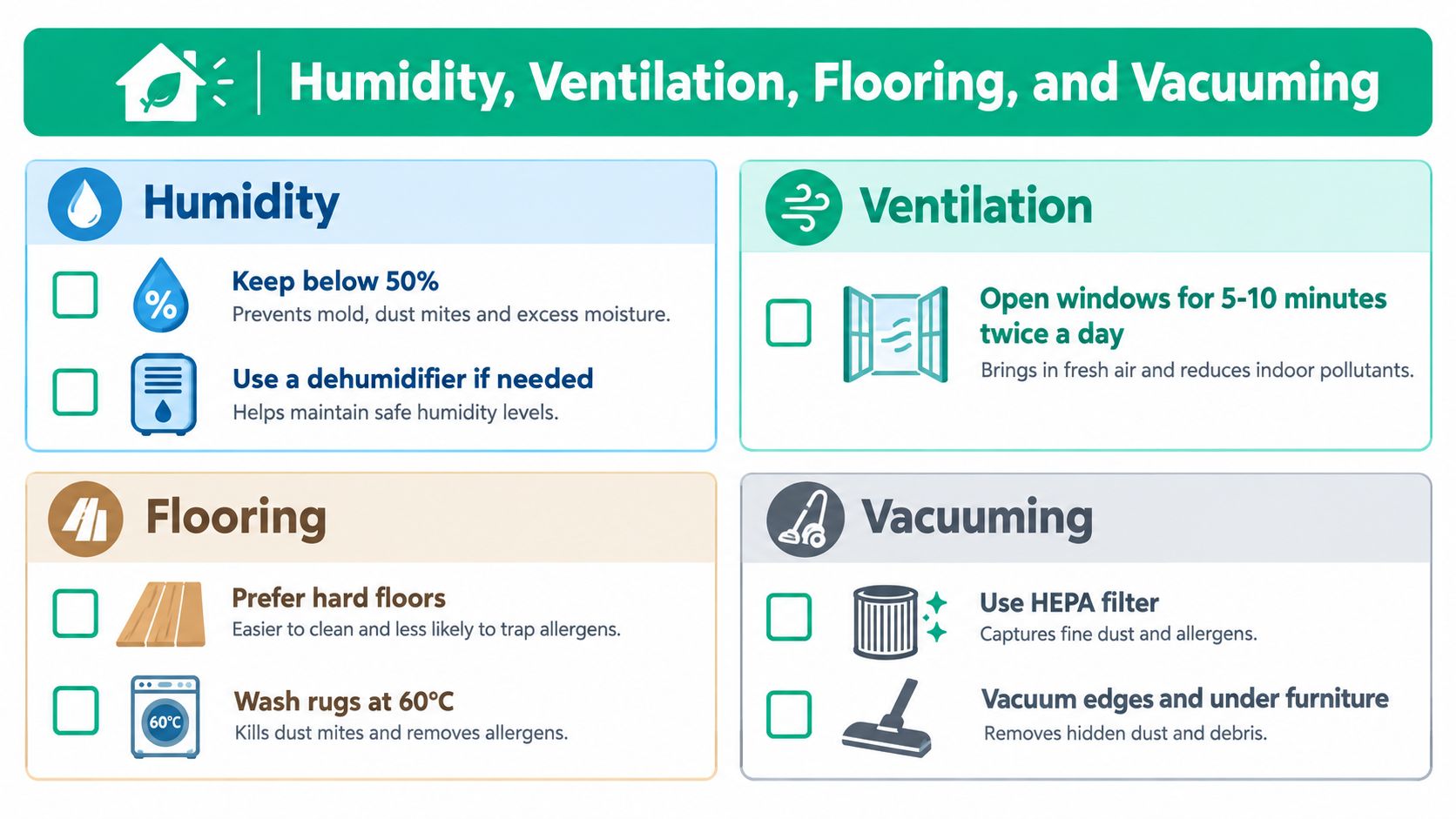
Make the floor easier to manage
Hard flooring is generally easier to clean than thick pile carpet, and NHS advice suggests considering wood or vinyl flooring in severe cases. That doesn't mean every carpeted bedroom must be stripped tomorrow. Use the resources you have well, keep clutter off the floor and vacuum methodically.
A vacuum with a HEPA filter can help capture fine particles. Move slowly, cover edges and clean beneath furniture rather than racing over the centre of the room. Vacuum the mattress surface according to the manufacturer's care instructions, and keep the person with asthma or strong symptoms out of the room during cleaning.
For a practical overview of how regular routines can prevent dust with cleaning routines, focus on repeatable habits rather than dramatic one-off treatments. Mite sprays and acaricidal products are often marketed as shortcuts. They may kill live mites on treated surfaces, but they don't seal a mattress or remove all allergen, so they shouldn't outrank barriers, hot washing and moisture control.
Living With Carpets, Divans, and Soft Toys Without Losing the Plot
NHS advice often describes the ideal bedroom: hard flooring, minimal soft furnishings, no divan and very few toys. That ideal has value, but presenting it as the only acceptable route leaves ordinary households stuck. A rented flat, a child's beloved toy and a perfectly serviceable divan can't always be replaced on demand.
Partial control is still worthwhile. Keep the mattress and pillows enclosed, then make the carpet less disruptive by vacuuming slowly with a HEPA-filtered machine. Focus on the space around the bed, edges, skirting boards and under furniture. A cleanable rug is preferable to adding more deep-pile material.
Divan storage needs discipline. Use wipeable liners where appropriate, keep stored items in closed boxes and don't allow loose clothes, bedding or soft toys to accumulate beneath the bed. The aim is to remove dust traps that you don't regularly inspect.
Soft toys need a clear policy
A child doesn't need a bare bedroom to reduce exposure. Keep only a small bedtime selection within reach, wash suitable toys regularly and rotate others out of the sleeping area. If a toy cannot be washed, freezing it is included among the practical mitigation options in Oxford University Hospitals guidance, alongside keeping children away while cleaning. (Oxford University Hospitals allergy leaflet)
Don't turn the bedroom into a laboratory. A sealed mattress cover, hot-washed bedding and sensible toy rotation usually offer a more useful return than buying every marketed treatment. Guidance itself recognises that full replacement of carpets and furnishings isn't realistic for everyone, so build a reduction plan around the constraints you face.
Before replacing bedding, check whether it is damaged, damp or no longer washable. This guide on when to replace duvets and pillows can help you make that decision without treating replacement as the automatic answer.
When Prevention Needs Backup From Medical Support
A bedroom plan should reduce exposure, not become a reason to tolerate untreated symptoms. For mild, predictable symptoms, a pharmacist can advise on an over-the-counter antihistamine or suitable nasal treatment. Follow the product instructions, and ask before use if the medicine is for a child, during pregnancy, with another health condition, or alongside existing treatment.
Book a GP appointment if congestion, irritated eyes or coughing keeps returning, interrupts sleep or affects daily life despite sensible prevention. Wheezing, chest tightness, breathlessness and repeated night-time coughing need particular attention. They can indicate asthma, not a blocked nose.
What a GP can add
A GP can assess the symptom pattern, review current medicines and decide whether a nasal spray or another treatment fits. Allergy testing or referral may be appropriate when the diagnosis is uncertain, symptoms persist, or asthma requires specialist input.
Immunotherapy is a specialist option, not a quick fix. For suitable people with confirmed house dust mite allergy, treatment may involve tablets under the tongue or injections, followed by regular clinical supervision. Suitability and likely benefit depend on the diagnosis, age, asthma control and local NHS assessment. Do not buy an unregulated home treatment that claims to provide the same result.
Medication can control symptoms, but it does not remove the allergen reservoir in a mattress. Use a layered plan: reduce exposure around the bed and agree a medical plan with a clinician. Prevention advice should support treatment, not replace it. The North West Allergy Network patient advice also places household dust-mite reduction within practical allergy management.
Get same-day medical help for severe breathing difficulty, rapidly worsening wheeze, blue or grey lips, faintness, confusion, or an asthma attack that is not responding to your prescribed reliever. Stop cleaning and seek help when breathing is becoming unsafe.
A Realistic UK Routine and Common Dust Mite Questions Answered
A prevention plan only works if someone can maintain it. Keep the routine centred on the bed and assign the less frequent jobs to a monthly list.
Weekly bedroom rhythm
- Strip the bed: Wash exposed sheets, pillowcases and duvet covers at 60°C or above when the care label allows.
- Check the barrier: Wipe mattress and pillow encasements, then inspect zips and seams.
- Clean carefully: Vacuum the mattress surface and bedroom floor with suitable equipment, keeping vulnerable people out of the room during cleaning.
- Control moisture: Air bedding before remaking the bed and deal with visible condensation.
- Manage toys: Wash washable bedtime toys and remove unnecessary soft items from the sleeping area.
Monthly jobs include vacuuming under and behind the bed, cleaning accessible curtains, checking storage drawers and maintaining the vacuum filter according to its instructions. Don't turn every Sunday into a deep-cleaning marathon. Consistency beats a punishing routine that lasts only a fortnight.
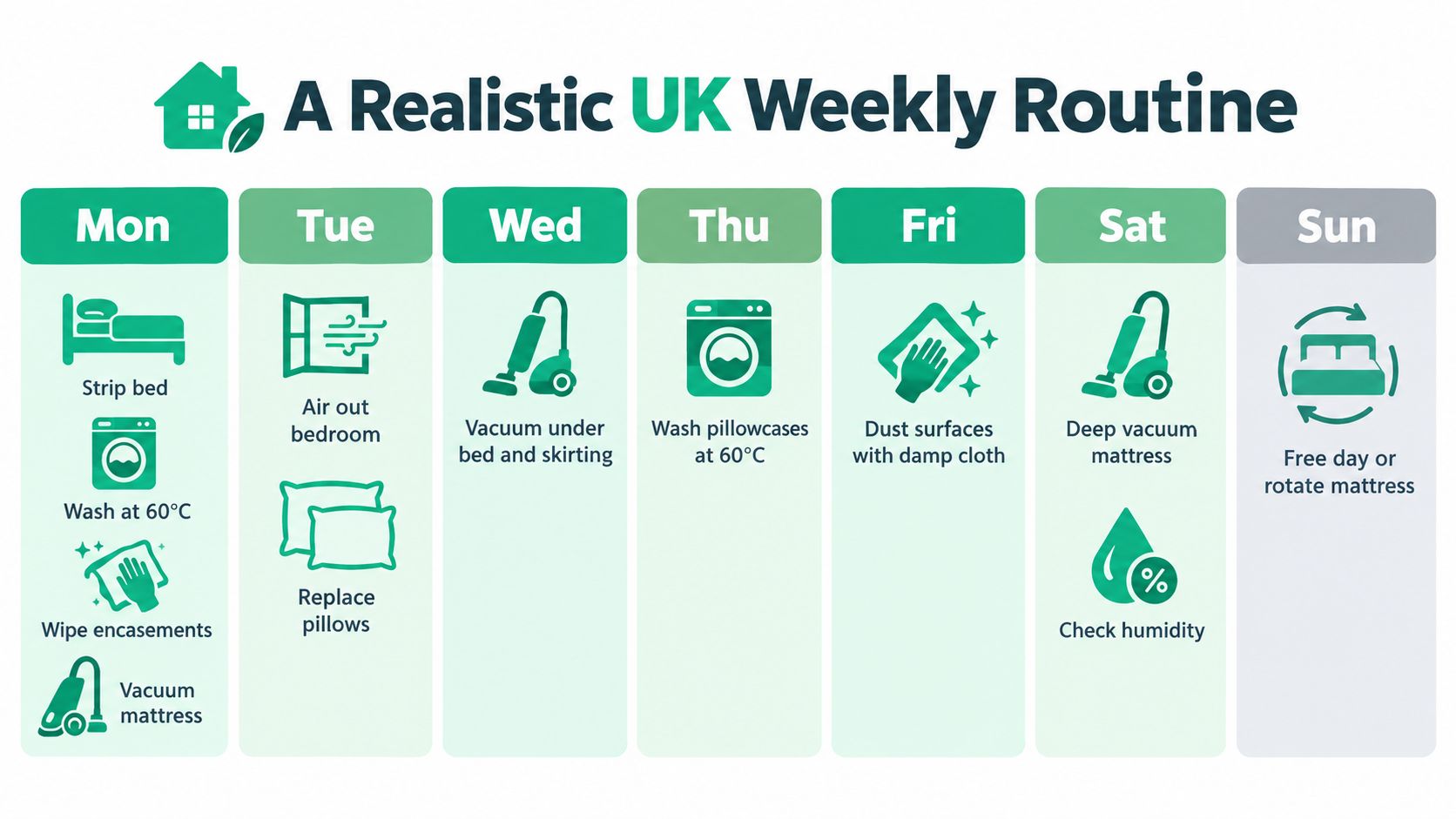
Quick answers to the questions that keep coming up
Are mite sprays and essential oils worth prioritising? No. They don't replace a sealed sleep surface, hot laundering or moisture control, and marketing often makes them sound more decisive than they are.
How quickly will encasements help? They reduce direct contact with the mattress reservoir, but symptoms don't necessarily change overnight. Existing allergen remains elsewhere in the room, so keep the laundry and cleaning routine running.
Will a new mattress solve the problem? Not automatically. A new mattress can acquire allergen too, so protect it from the start.
Do pets cause dust mite allergy? Pets can contribute shed skin and household debris, but dust mite allergy is a specific response to mite allergen. Keep the bed protected rather than blaming the animal.
Are air purifiers essential? They may help with airborne particles while running, but they don't clean the mattress, pillows, carpet or bedding. Treat one as supplementary, not central.
Dust mite allergy prevention is an ongoing micro-environment strategy. Contain the bed, wash the exposed layer properly, reduce dampness and adapt the room instead of chasing a perfect renovation.
Protect-A-Bed offers mattress and pillow protectors designed to create barriers against dust mites, allergens and liquids, including breathable options for UK bedding. Visit Protect-A-Bed to choose suitable sleep-surface protection and start with the part of the bedroom that matters most.