

How Long Do Duvets Last

A duvet generally lasts between 5 and 10 years, but its fill type and care can stretch or shorten that window significantly. Synthetic duvets may wear out sooner, while well-maintained natural fillings can remain comfortable for longer.
So, how long do duvets last in a real UK home? The answer isn't just the number printed on a care guide. A duvet can look acceptable from the outside while its filling has flattened, its warmth has declined, and moisture or allergens have accumulated inside. Conversely, a well-aired duvet that still recovers its loft may have useful life left, even if it has reached the lower end of the usual replacement range.
The better question is not, “How old is my duvet?” It's, “Does my duvet still perform cleanly and evenly?”
Table of Contents
- Why the lifespan question matters more than a date
- Duvet lifespan by fill type and construction
- Signs your duvet is past its useful life
- Care habits that extend duvet life
- When to replace versus when to keep going
- Protecting your wider bedding investment
Why the lifespan question matters more than a date
Could your duvet be past its useful life while still looking perfectly presentable? The first clues often appear during an ordinary duvet day. You notice a stale smell when pulling it close, find a flat patch where the filling once felt lofty, or wake with a cold area around your feet. These changes reveal how the duvet is coping with nightly use more reliably than its age alone.
UK guidance commonly places duvet life between 5 and 10 years, yet households replace bedding at different points. A UK survey found that the average mattress was 5.9 years old, while duvets typically lasted 3 to 5 years, depending on material quality and care. That comparison suggests a duvet can reach the practical end of its service life before the rest of the bed is replaced. UK bedding replacement guidance and survey context
Two ways a duvet reaches the end
A duvet usually approaches replacement through two connected failure modes: fill breakdown and hidden hygiene loading.
Fill breakdown is easier to see. Repeated compression, unsuitable washing, and uneven movement can flatten synthetic fibres or damage natural clusters. The duvet then holds less air, loses loft, and provides less even warmth. Clumps, thin areas, and filling that stays misshapen after shaking are useful warning signs.
Hidden hygiene loading develops inside the casing. Nightly use introduces perspiration, skin debris, dust, and odour compounds. If moisture remains trapped, the duvet can become heavier, less breathable, or noticeably damp. A clean-looking cover does not prove that the filling remains fresh, just as a closed cupboard can conceal stale air.
Treat the calendar as a prompt to inspect, not an automatic instruction to discard the duvet.
Your sleeping environment changes the rate of wear. A warm bedroom, frequent night sweats, limited morning airing, and nightly use can all increase moisture and compression. A spare duvet rotated by season may receive less continuous pressure. Incorrect washing, however, can shorten its useful life quickly, even when the casing still looks intact.
Air quality and allergy concerns also belong in the assessment. These Castus assisted living tips offer wider context on keeping a bedroom environment cleaner. The practical lesson for duvet care is straightforward: reduce trapped moisture and airborne irritants, then judge the duvet by its warmth, loft, smell, and freshness rather than by age alone.
Duvet lifespan by fill type and construction
The filling determines how a duvet responds to compression, moisture, washing, and time. It doesn't tell the whole story, though. The casing, stitching, care instructions, and how often you use the duvet can shift its practical lifespan.
The following ranges reflect UK guidance for common fill types. They're a starting point, not a guarantee.
| Fill type | Typical lifespan | Main failure mode | Construction detail that matters most |
|---|---|---|---|
| Synthetic hollowfibre or microfibre | 2 to 5 years | Flattening, reduced bounce, and moisture retention | Secure quilting that limits movement and survives repeated washing |
| Feather | 5 to 8 years | Clumping, compression, quill poke-through, and uneven warmth | Tightly woven casing with durable stitching |
| Feather and down | 7 to 10 years | Loss of loft after moisture exposure and repeated compression | Baffle-box construction that supports even cluster distribution |
| Wool | 10 to 15 years | Gradual compaction and reduced resilience | Breathable casing and stitching that allows stable fill distribution |
| Silk, cashmere, and premium natural constructions | Varies by product and care | Compression, delicate fibre damage, or reduced loft | Care label, fine casing, and protection from over-washing |
The cited UK ranges for synthetic, feather, feather-and-down, and wool fillings come from specialist UK bedding guidance. UK fill-specific duvet lifespan ranges
Synthetic fillings
Synthetic duvets are often practical, washable, and accessible, but hollowfibre and microfibre can flatten sooner than resilient natural clusters. Once the fibres lose their spring, shaking the duvet may redistribute the filling without restoring its original loft. Moisture can also leave an ageing synthetic duvet feeling dense rather than light and airy.
Feather and down
Feather duvets tend to develop uneven areas as feathers shift or compress. You may notice heavier sections, cold patches, or occasional quills working through a weakened casing. Feather-and-down blends generally hold loft for longer because down clusters trap air efficiently, but they still need careful drying after washing. Residual dampness can encourage clumping and shorten useful life.
Construction changes how well the filling stays in place. Box-stitch quilting divides the duvet into sections and helps control movement, while channel construction can allow more migration between channels. Baffle-box designs use internal fabric walls to give down more room to expand, supporting loft and more even warmth.
A duvet's tog rating describes warmth, not durability. A higher tog doesn't automatically mean a longer-lasting product. For a clearer explanation of how warmth ratings work, see this guide to the warmest duvet tog.
Wool and finer natural fillings
Wool can remain resilient because its fibres recover after compression, but it absorbs and releases body moisture differently from synthetic filling. Over time, it can compact, particularly if it isn't aired properly or is stored while damp. Silk, cashmere, and other premium constructions may feel light and breathable, yet their care requirements can be more demanding. Follow the specific washing and drying instructions rather than assuming a luxury fill can tolerate the same treatment as a synthetic one.
Signs your duvet is past its useful life
A duvet rarely fails in a single dramatic moment. Most show a collection of clues. One sign may call for cleaning or redistribution, while several together indicate that the filling and casing have passed their useful service point.
Start with what you can see and feel.
- Flat patches: Run your hands across the duvet in sections. If some areas remain thin after shaking and airing, the fill may have lost its structure.
- Cold spots: A sudden difference in warmth often means the filling has shifted or broken down rather than just needing a quick fluff.
- Persistent odour: A smell that remains after appropriate washing and complete drying points to trapped moisture or accumulated residue.
- Yellowing or discolouration: Gradual yellow marks can reflect perspiration, body oils, skincare products, or moisture entering through the cover.
- Escaping filling: Loose fibres, feathers, or down around seams suggest that the casing or stitching is weakening.
- Stubborn clumping: A few temporary lumps after washing may resolve with correct drying. Clumps that remain dense and uneven are more concerning.
What the casing doesn't reveal
The less obvious signs relate to what has accumulated inside. If your duvet feels heavier than it used to, it may be holding moisture or residue rather than just containing more filling. A damp sensation after a full night's sleep can indicate that the duvet isn't releasing moisture effectively.
Pay attention to your morning routine as well. More sneezing, itchy eyes, or a blocked nose on waking can be a reason to inspect the bedding environment, particularly if those symptoms improve away from the bedroom. A discoloured pillow beneath the same duvet may also indicate that body moisture is moving through the bedding layers.
An average duvet age of 4.6 years has been reported in UK consumer data, but that figure includes households replacing much sooner and others keeping the same duvet for considerably longer. The useful point is not that every duvet should be replaced at that age. It's that a duvet may be approaching a period when loft loss, residue, and allergen accumulation become more noticeable. UK consumer data on average duvet age and ageing effects
A duvet that smells neutral, dries fully, and regains an even loft may still be serviceable. A duvet that stays damp, lumpy, or irritating deserves closer attention, regardless of its date.
Care habits that extend duvet life
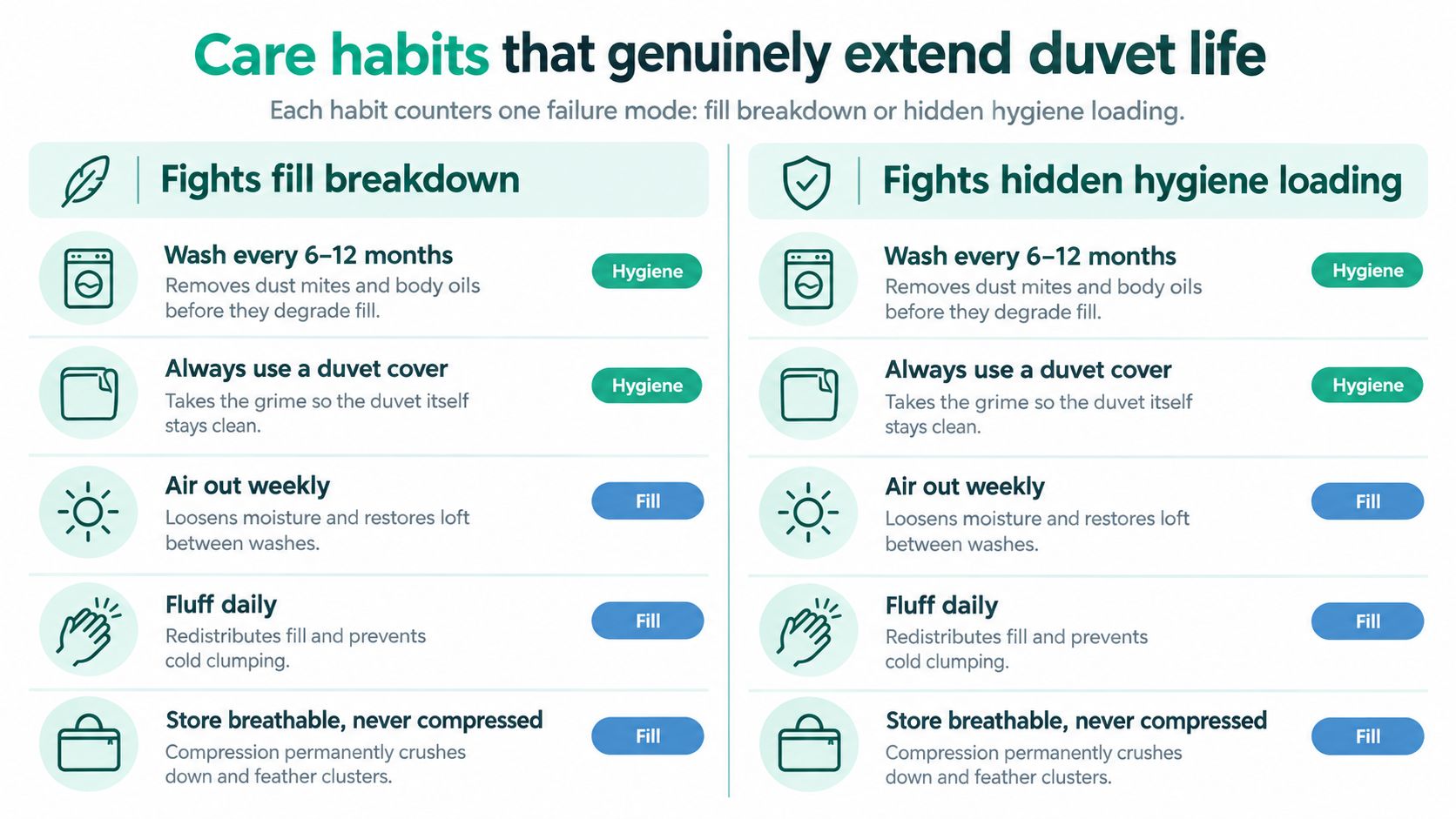
Good care addresses the two ways a duvet usually declines: fill breakdown and hidden hygiene loading. The first reduces loft and warmth. The second comes from moisture, oils, skin cells, and debris held within the casing. Treat care as routine maintenance, much like airing a room or servicing a coat, rather than waiting for visible damage.
Wash according to the filling
Read the sewn-in care label before washing. Use the largest suitable drum. A bulky duvet forced into a small machine may become tightly compressed, leaving the filling poorly rinsed and the baffles under unnecessary strain. Choose a gentle detergent and avoid using more than needed, since residue can stiffen fibres and give fresh soil something to cling to.
Wash at the interval recommended for the filling and its use. Annual washing may suit some duvets, while heavier perspiration, year-round use, allergies, or accidental soiling may require more frequent attention. A duvet used beneath a washable cover usually receives less direct exposure than one used with minimal protection, so the right interval depends on the whole bedding setup.
Wool and silk need different handling from synthetic bedding. They may require gentler treatment, professional cleaning, or regular airing instead of routine machine washing. If the duvet will not fit comfortably in your household machine, use a laundrette service wash rather than packing it tightly into the drum. This king size comforter cleaning guide explains practical considerations for bulky bedding.
Dry it completely
A duvet is not clean until it is fully dry. Down and feather fillings generally suit low-heat tumble drying with clean dryer balls when the care label allows it. Pause the cycle to shake the duvet and redistribute the filling. Never remake the bed or put the duvet into storage while the centre still feels cool or damp.
Synthetic, wool, and silk fillings may need different treatment. Follow the label and use flat air-drying where instructed. High heat can damage fibres or the casing. Incomplete drying creates the damp conditions that encourage stale smells, clumping, and faster deterioration.
Air, shake, and protect
After waking, pull the duvet back and let trapped warmth and moisture escape before making the bed. A regular shake spreads the filling and helps prevent compressed areas from becoming permanent. Small marks are usually better handled with spot cleaning than by washing the entire duvet after every minor spill.
Store seasonal bedding only when it is clean and completely dry. Use a breathable cotton bag rather than plastic, which can trap residual moisture. Avoid tight compression because crushed loft may not recover fully.
A washable duvet protector forms a barrier against perspiration, skin cells, and spills, reducing how often the duvet itself needs washing. For practical advice on preventing perspiration stains, see the linked guide. These habits do not make a duvet permanent, but they slow both fill breakdown and the hidden hygiene loading that can bring replacement forward.
When to replace versus when to keep going
A five-year-old duvet isn't automatically finished, and a ten-year-old duvet isn't automatically fine. The calendar gives you a useful prompt to inspect the bedding, but performance should decide what happens next.
Use a simple evidence check. Keep the duvet in service if it:
- Regains an even loft: The fill spreads across the whole surface after shaking or drying.
- Feels consistently warm: There are no unexplained cold zones or thin sections.
- Smells neutral: Airing leaves it fresh rather than stale or damp.
- Shows no persistent damage: The casing and stitching contain the filling.
- Doesn't trigger new discomfort: You aren't waking with unexplained irritation or allergy-like symptoms.
If two or more of these checks fail, replacement becomes reasonable even if the duvet is younger than the usual range. A duvet that causes night sweats, snuffly mornings, or skin irritation presents a hygiene concern as well as a comfort problem.
Adjust the threshold for the fill
Synthetic filling usually deserves closer inspection when it has become visibly flat or dense. Feather duvets need attention when quills escape, sections feel heavy, or warmth becomes patchy. Down tends to announce ageing through reduced loft and slower recovery after compression.
Wool and other delicate natural fillings may remain usable for longer, but gradual compaction still matters. A duvet that no longer regulates comfort, dries properly, or feels pleasant against the body has reached its practical limit, whatever the label says.
Replacement isn't a failure of care. Sometimes it's a sensible refresh of the sleep environment, especially when cleaning can no longer restore a neutral smell, even distribution, or reliable warmth.
Protecting your wider bedding investment
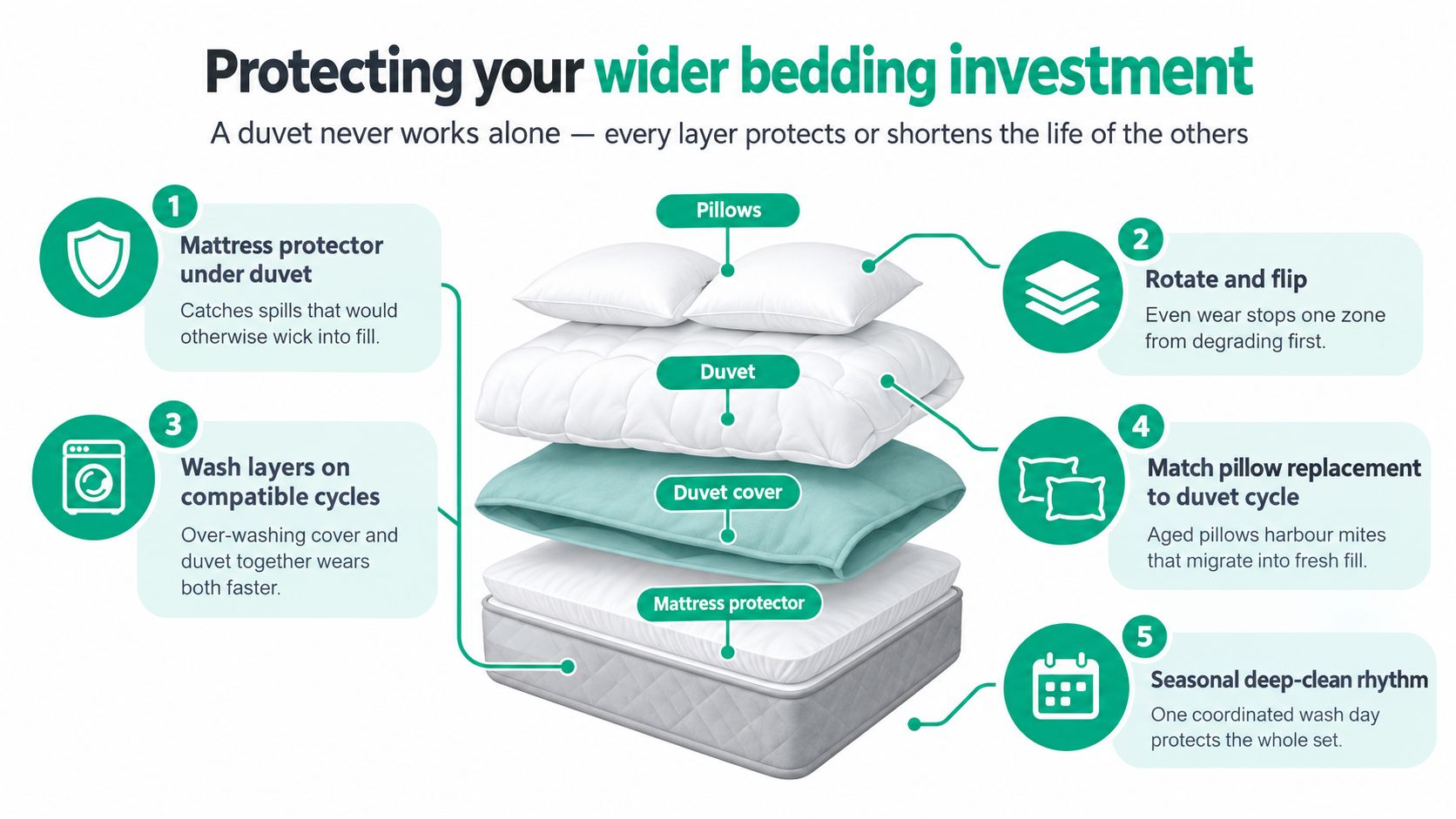
Your duvet sits within a system. The mattress beneath it and the pillows around it encounter many of the same sources of moisture, skin debris, spills, and allergens. If those layers remain unprotected, a clean duvet can quickly become part of a less hygienic sleep surface.
A mattress protector helps intercept spills before they reach the mattress, while pillow protectors reduce the transfer of perspiration and debris into the pillow filling. A washable duvet protector serves the same broad purpose for the top layer. Together, these barriers can reduce how often bulky bedding needs washing, which helps limit unnecessary strain on its construction.
A simple maintenance rhythm
Use a regular bedroom check to catch small problems before they become replacement issues:
- Strip the bed: Remove covers and inspect the duvet, pillows, and protectors for dampness or odour.
- Shake the duvet: Redistribute the fill and check for areas that remain flat.
- Rotate the duvet: Turn it head to foot so the same section doesn't receive all the nightly compression.
- Air the layers: Open the window when conditions allow and let the mattress and bedding release moisture.
- Wash compatible protectors: Follow each care label and avoid treating every layer as though it has identical washing needs.
For households concerned about dust and allergens, dust mite proof bedding explains how protective layers can support a cleaner bedding environment. The central idea is simple: protect the layers that are difficult to wash, and clean the layers designed to be removed.
Protect-A-Bed offers waterproof, breathable mattress and pillow protectors, as well as bed bug encasements for UK households and other bedding environments. Visit Protect-A-Bed to choose protection that helps limit moisture, spills, and allergen build-up around the duvet and the wider bed.