

What Is the Warmest Duvet Tog and How to Choose

15 tog is the warmest standard duvet rating widely available in the UK, and some specialist duvets go up to 18 tog. That sounds simple, but in practice the warmest duvet isn't always the one that feels best once you're under it at night.
You can stand in a shop on a cold evening, glance at the labels, and still feel unsure. The number on the packet tells you how much heat the duvet is designed to hold, but your room, your bedding, and the way you sleep all change the result.
Table of Contents
- What Is the Warmest Duvet Tog
- How the Tog Rating System Actually Works
- UK Tog Ratings From Lightest to Warmest
- What Else Affects How Warm a Duvet Feels
- Matching Tog Ratings to Sleepers and Seasons
- Why the Warmest Tog Is Not Always the Best Choice
- Building Warmth Beyond the Tog Label
- Common Tog Myths That Lead to Overheating
What Is the Warmest Duvet Tog
If your bedroom feels icy at 3 a.m. and the heating is off, the first question is usually whether your duvet is too light. In the UK, 15 tog is the warmest standard duvet rating you'll commonly find, and some products are marketed at up to 18 tog for very cold rooms and sleepers (Argos duvet and pillow guide, The Guardian's UK duvet testing coverage).
That does not mean you should always choose the highest number. Tog is a thermal resistance measure, so a higher rating holds onto more body heat, but it doesn't automatically mean the duvet will feel more comfortable. A high tog can feel lovely in a draughty room, then too warm once the bedroom warms up.
Warmest does not mean thickest
People often assume a thicker duvet must be warmer. That's not how tog works. The number is about how well the duvet resists heat loss, not how bulky it looks on the bed.
A duvet with a high tog can be light in the hand if the filling and construction trap air efficiently. A heavier-feeling duvet can still be less insulating if its fill doesn't hold heat well. That's why the label matters more than visual heft.
Practical rule: if you're deciding between two duvets, trust the tog first, then check how the fill and construction support that rating.
The simplest way to think about it is this. Tog is the warmth score, but it's only one part of the warmth equation. Room temperature, fill type, stitching pattern, and your own sleep style all affect whether 15 tog feels cosseting or stifling.
How the Tog Rating System Actually Works
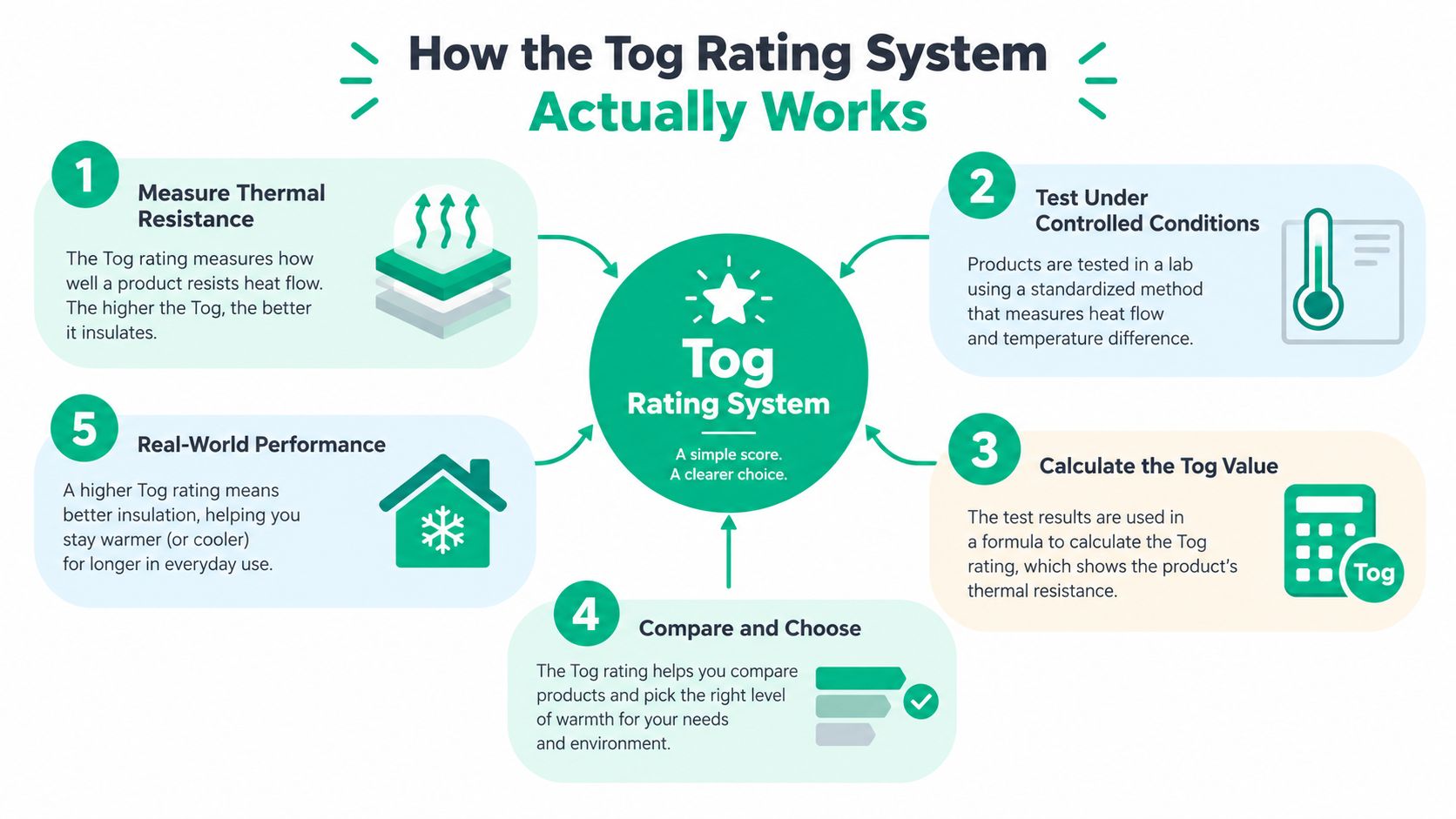
Think of tog like layers of clothing. One thin jumper gives less insulation than three layers that trap more still air between them. A duvet works in the same way, because the filling and construction slow down the movement of heat away from your body.
The UK tog scale is standardised, and it runs from low ratings for summer through to much higher ratings for winter. The important point is that tog measures thermal resistance, which means the higher the number, the slower heat moves through the duvet. That's why two duvets can look similar yet feel very different in bed.
What the label is actually telling you
British Standard BS 5335 gives shoppers a common way to compare duvets, because products are tested under the same lab conditions before they're labelled. That matters more than people think, because it means tog isn't just a marketing word, it's a standardised warmth rating.
The scale can stretch from very light summer options up to much warmer winter products, but the numbers don't rise in a way your body always notices equally. A jump from 13.5 tog to 15 tog is usually easier to feel than a smaller step in the middle of the scale. That's why people often notice the difference when they move from a winter duvet into a heavier one, especially in a cool bedroom (The English Home duvet tog guide).
A duvet's warmth comes from how well it traps air, not from how dense it looks on the bed.
Keep tog separate from fill power and GSM. Fill power describes how much volume a down fill creates, and GSM describes material weight, but neither one replaces tog as the headline warmth number on the label. If you only check thickness or weight, you can end up buying the wrong duvet for your room.
UK Tog Ratings From Lightest to Warmest
A cold bedroom, a warm sleeper, and a heavily insulated duvet can produce an uncomfortable night. Reading the tog scale from summer to deep winter helps, but the number is only one part of the warmth equation. Room temperature, filling, construction, and personal comfort all affect the result.
| Tog Rating | Best Season | Room Type | Sleeper Profile |
|---|---|---|---|
| 1 to 4.5 tog | Summer | Warm, well-insulated bedrooms | Hot sleepers, people who overheat easily |
| 7.5 tog | Spring and autumn | Mild rooms with moderate night temperatures | Sleepers wanting a light seasonal layer |
| 10.5 tog | Autumn through much of winter | Typical UK bedroom, often centrally heated | People wanting a practical all-round option |
| 13.5 tog | Winter | Cool or less insulated rooms | Cold sleepers, draughtier homes, unheated bedrooms |
| 15 tog | Deep winter | Very cold bedrooms | People who feel chilled quickly and want the warmest standard option |
| Up to 18 tog | Extreme cold | Specialist use in very cold rooms | Rare cases where maximum insulation is needed |
The middle of the UK scale is commonly used for everyday conditions. 10.5 tog is a practical all-round choice, while 13.5 tog is widely associated with winter bedding. Retail guidance also places 12.5 to 15 tog in the heavier winter range, though the right choice still depends on the room and sleeper.
15 tog can feel excessive in a well-heated modern flat, despite its impressive label. A lower tog duvet with an efficient filling may feel warmer than a bulkier option if it holds air effectively and fits the sleeper's needs.
For a closer look at the everyday default rating, see our guide to the 10 tog duvet. Use the table as a starting point, then adjust for the actual bedroom rather than choosing the highest number automatically. A very cold, draughty, or unheated room may justify the upper end, while a warm room usually calls for less insulation.
What Else Affects How Warm a Duvet Feels
Two duvets with the same tog can feel completely different at night. That difference usually comes from the filling, the stitching, the cover fabric, and the person sleeping under it. Once you understand those four variables, the tog label becomes much easier to read.
Fill, construction, cover, sleeper
Fill type changes how warmth is held. Natural down tends to trap a lot of still air for its weight, so it can feel very warm without feeling heavy. Hollowfibre and microfibre can also feel insulating, but the sensation depends on how the fibres are built and how much air they trap.
Construction matters because it decides whether the filling stays evenly spread. Box construction and baffle-style designs help hold the fill in place, which reduces cold patches. If the filling shifts around, the duvet can feel patchy even when the tog number looks right.
Cover fabric changes the surface feel. A brushed cotton or flannel cover can feel cosier because the fabric itself adds a little insulation, while a smoother weave usually feels cooler against the skin. If you care about skin comfort as well as warmth, a guide like Resty on skin friendly materials is useful context for thinking about what sits closest to your body.
The sleeper is the final variable. Some people run hot, some feel cold easily, and some wake up chilly only because the room is dry, draughty, or poorly layered. Body type, night sweats, and even what you wear to bed all change how a duvet feels at the same tog.
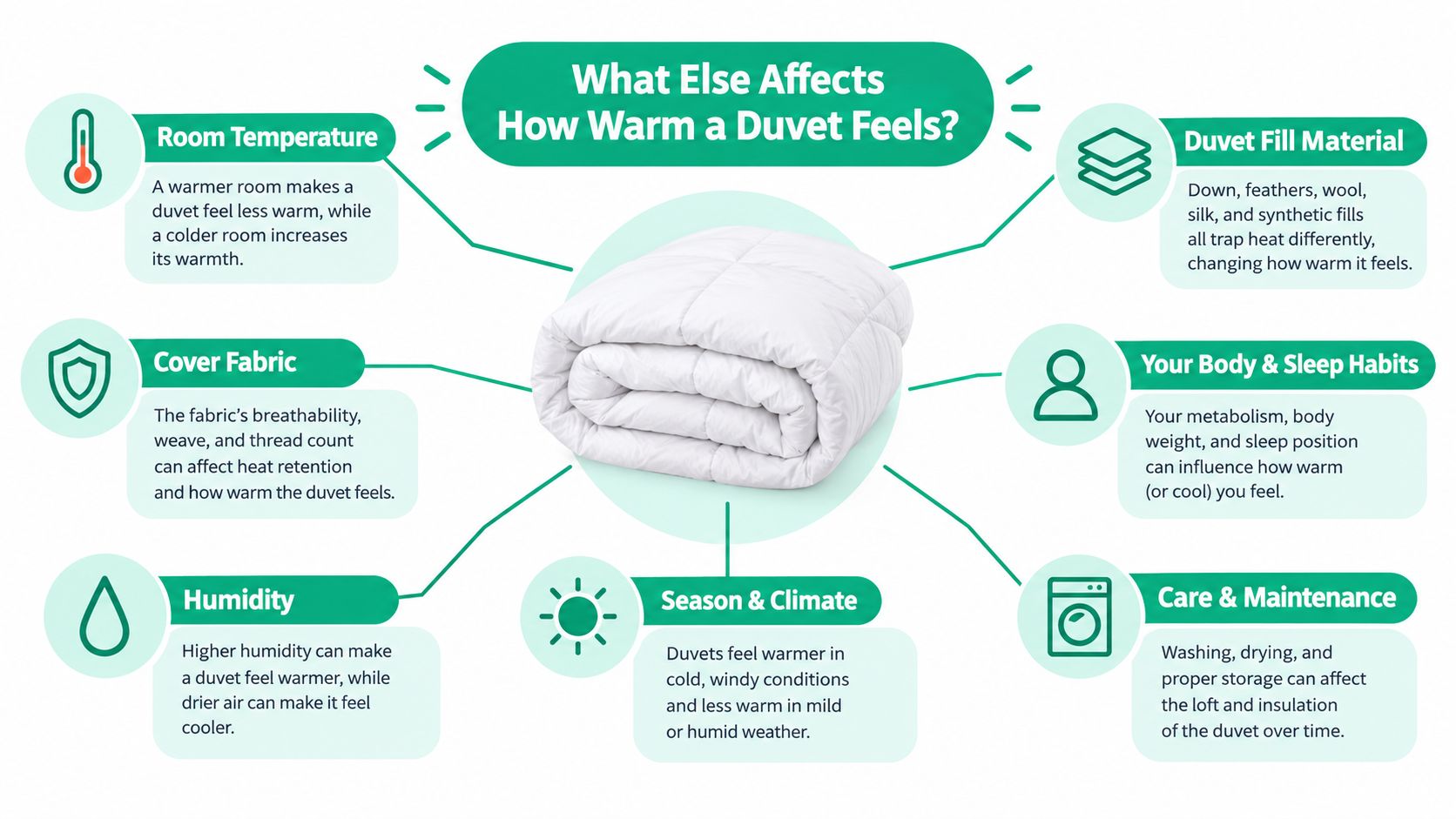
The same tog can feel warmer or cooler depending on what lies underneath it and how evenly the fill stays in place.
That's why a cheaper duvet can sometimes feel warmer than a pricier one with the same number on the label. Warmth is a system, not a single statistic.
Matching Tog Ratings to Sleepers and Seasons
The fastest way to choose is to start with the room, then match the sleeper to it. A duvet that suits a draughty spare room in winter won't suit a centrally heated bedroom in spring, even if both sleepers describe themselves as “always cold”.
| Sleep Scenario | Recommended Tog | Best Fill Type |
|---|---|---|
| Warm loft room in summer | 1 to 4.5 tog | Lightweight synthetic or breathable natural fill |
| Mild spare room in spring | 7.5 tog | Balanced fill that doesn't trap too much heat |
| Centrally heated bedroom in autumn | 10.5 tog | Versatile fill for everyday use |
| Cool cottage bedroom in winter | 13.5 tog | Lofty, insulating fill such as down or well-made hollowfibre |
| Very cold, draughty room | 15 tog | Warm fill with good air-trapping construction |
| Shared bed, one hot sleeper and one cold sleeper | Split approach, not one compromise | Two lighter duvets or layered bedding |
Warm sleepers usually feel best in the lower part of the scale for most of the year, especially in heated homes. Cold sleepers in unheated rooms tend to get more value from the winter end, but even then, 13.5 tog is often the useful anchor and 15 tog is the extreme.
A good room-and-sleeper match matters more than chasing the highest rating. If you're trying to warm up a bed without buying too much tog, the broader bedding setup helps too, and these warmer-weather sleeping tips are helpful when you want to avoid overheating in transitional seasons.
For households where one partner sleeps hot and the other sleeps cold, a single compromise duvet often disappoints both people. A layered setup, or two lighter duvets used together or separately, usually gives more control than one oversized winter rating. If you want a broader seasonal adjustment approach, mattress setup tips from Indian River Furniture are a useful reminder that the bed itself influences comfort too.
Why the Warmest Tog Is Not Always the Best Choice
A 15 tog duvet sounds like the safe answer for cold weather, but in a moderately warm bedroom it can trap more heat than your body wants to hold. That's why some people buy the warmest option, then kick it off before dawn and wake up feeling less rested.
The better question is not “what's the warmest duvet tog”. It's “what's the warmest duvet I can sleep under comfortably in my actual room?” A well-matched 10.5 tog can feel snug in a cool but not freezing bedroom, while a 15 tog can feel stifling if the heating stays on or the room holds warmth well.
Comfort per degree beats raw warmth
The reason high tog can backfire is simple. Your body needs to release heat through the night, and a very insulating duvet can slow that process too much. Once you get too warm, you sweat, then the bed feels clammy, then you throw the covers off, which often creates more sleep disruption than a slightly lighter duvet would.
That's also why weight and warmth aren't the same thing. A duvet can feel substantial without being the best insulator, and a lighter one can sometimes hold heat more efficiently if the fill and construction do the job well. The smartest purchase is the one that fits the bedroom temperature, not just the strongest-looking label on the shelf.
If you're unsure, choose the rating that feels slightly warmer than your summer duvet, not the highest number you can find.
A quick self-check helps. Think about how often you wake up too hot, whether your room keeps heat overnight, and whether you already add extra blankets. If you're reaching for layers often, you may need a warmer setup. If you're already too hot by midnight, going up a tog band is probably the wrong fix.
Building Warmth Beyond the Tog Label
A duvet is only one part of the bed's heat retention. If you want more warmth without jumping straight to the highest tog, start from the mattress upward and build in layers that hold heat where you need it.
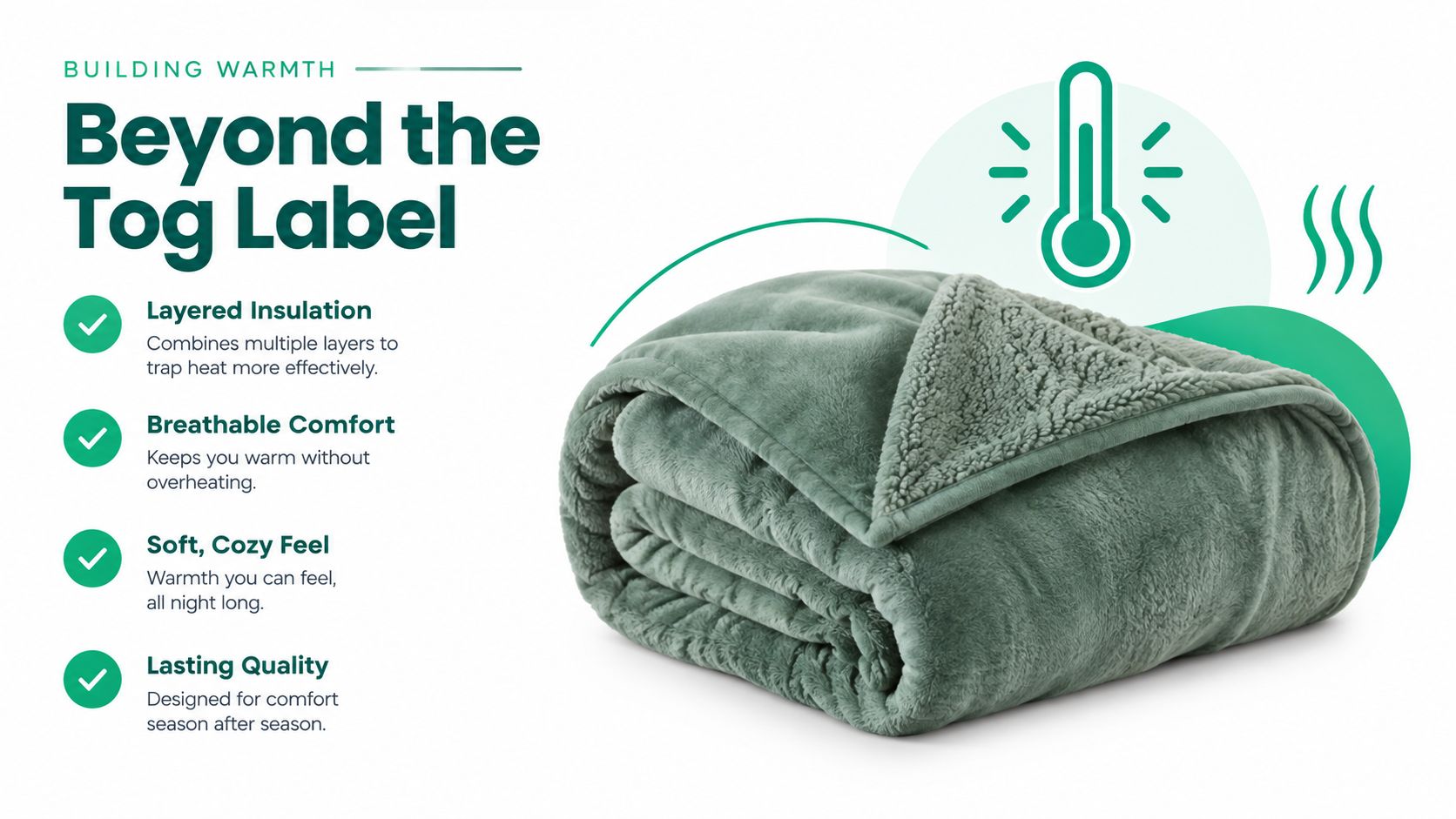
Layer the bed, not just the duvet
A breathable, insulating mattress protector helps reduce the cold feel that comes up from below, and an underblanket adds another buffer in winter. On especially cold nights, a low-setting electric blanket can pre-warm the bed so the duvet doesn't have to do all the work.
Keep a throw at the foot of the bed if your temperature changes during the night. That gives you a quick extra layer without forcing you to sleep under a duvet that's too hot from the start. It's a small adjustment, but it makes the bedroom more adaptable.
Rotating between two duvets through the year also helps both retain loft. When a duvet sits compressed for too long, it loses some of the airiness that helps it insulate. If you're deciding whether an older duvet still has life left in it, this guide to replacing duvets and pillows is a sensible reference point.
A few small habits help too. Warm the bed with a hot water bottle before sleep, air the room briefly in the morning, and store bedding away from direct heat. If you're using down or a down-rich fill, keeping it dry and lofted matters because compressed or damp fill won't feel as warm.
Common Tog Myths That Lead to Overheating
People often buy the wrong duvet because they're using tog as the only decision rule. That's where the trouble starts. A high number can look reassuring, but it can also push you into a bed that's too warm for your room.
| Common Myth | What Actually Happens |
|---|---|
| Higher tog always means better quality | Warmth depends on fill, construction, and fit, not just the number |
| One duvet should work all year in the UK | Seasonal temperature swings usually make one rating feel too hot or too cold |
| My partner's preference should decide | Shared beds often need a layered or split approach instead |
| Tog tells you everything about warmth | Two duvets with the same tog can feel very different once you're under them |
| Children can use the same tog as adults | Smaller bodies and different sleep patterns often need a lighter rating |
The biggest myth is that the warmest duvet is always the right buy for cold sleepers. Some sleepers are cold because the room is cold, not because the duvet is weak. Others are cold for the first hour, then overheat once body heat builds up under the covers.
That's why the earlier matching table matters more than brand-led claims or shelf labels. If you start with room type, sleep style, and the season, you're much less likely to end up with a duvet that feels perfect for five minutes and wrong for the rest of the night.
For families, the same logic applies across ages. Children usually don't need to match adult warmth choices, because their bodies respond differently to heat and bedding layers. The safe move is to check the room and the child's comfort, not assume the highest rating is the most suitable.
If you want to protect the duvet you choose and keep your bed feeling cleaner, drier, and more comfortable, take a look at the waterproof and breathable bedding protection options from Protect-A-Bed. A well-matched protector helps support the rest of your sleep setup, especially when you're trying to balance warmth, airflow, and everyday spill protection.