

Dust Mite Covers for Bedding: A Practical UK Guide

You've changed the sheets, opened the bedroom window and perhaps even bought a new pillow, yet someone still wakes with a blocked nose, itchy eyes or a cough that seems worse in bed. In many UK homes, the search for dust mite covers for bedding starts with a snuffly child, a partner with a streaming nose, or an asthma review where house dust mites finally enter the conversation.
The answer isn't to cover everything and hope for a miracle. NHS guidance supports barrier bedding as an important way to reduce exposure in the bed, but it also says covers work alongside hot washing, cleaning and sensible humidity control. This guide explains what a cover does, what it cannot do, how to choose one, and how to build a routine that helps reduce the allergen load where you sleep. For a useful overview of bedroom prevention measures, see this advice on dust mite allergy prevention.
Table of Contents
- Why UK households end up searching for dust mite covers
- What dust mite covers actually do to your bedding
- Materials, weaves and barrier standards explained
- What the NHS evidence really says about results
- How to choose the right size, fit and certification
- Care, washing and the full bedroom routine
- Putting it all together and where to start
Why UK households end up searching for dust mite covers
A typical British bedroom can be comfortable for people and comfortable for mites. Double glazing keeps warmth in, heating comes on as autumn arrives, and a thick duvet makes the bed inviting. Bedding may be washed at a cooler setting because energy costs are a concern, while pillows, duvets and mattresses remain difficult to clean thoroughly.
Then the morning pattern becomes familiar. A child rubs their eyes before breakfast. One partner reaches for tissues as soon as they sit up. Someone notices that symptoms ease during a weekend away, only to return after the first night back home. These signs don't prove dust mite sensitivity, but they explain why families start looking closely at the mattress and pillows.
House dust mites are found in homes across the UK, and UK allergy guidance reports that one in 20 young children and one in five adults will test positive for house dust mite sensitivity. North West Allergy Network guidance helps explain why bedding is such a common focus when people investigate indoor allergy symptoms.
Why the bed receives so much attention
The bed collects warmth, moisture and the skin flakes that mites feed on. Thick duvets, deep pillows and heavy curtains may feel cosy, but layers of fabric can also make cleaning and drying more difficult. The mattress is especially awkward because it can't just go into a domestic washing machine.
That doesn't mean every morning cough comes from mites. Colds, pollen, mould, pets and other irritants can cause similar complaints. If symptoms persist, affect sleep or involve asthma, speak with a GP or respiratory professional rather than relying on bedding changes alone.
Practical rule: Treat a cover as an exposure-control measure, not as a diagnosis and not as a promise that symptoms will disappear.
The sensible starting point is therefore modest. Seal the main bed reservoirs, wash the bedding that sits above the barrier, improve ventilation where possible and keep the room less damp. A cover can earn its place in that plan, but it can't clean the whole bedroom by itself.
What dust mite covers actually do to your bedding
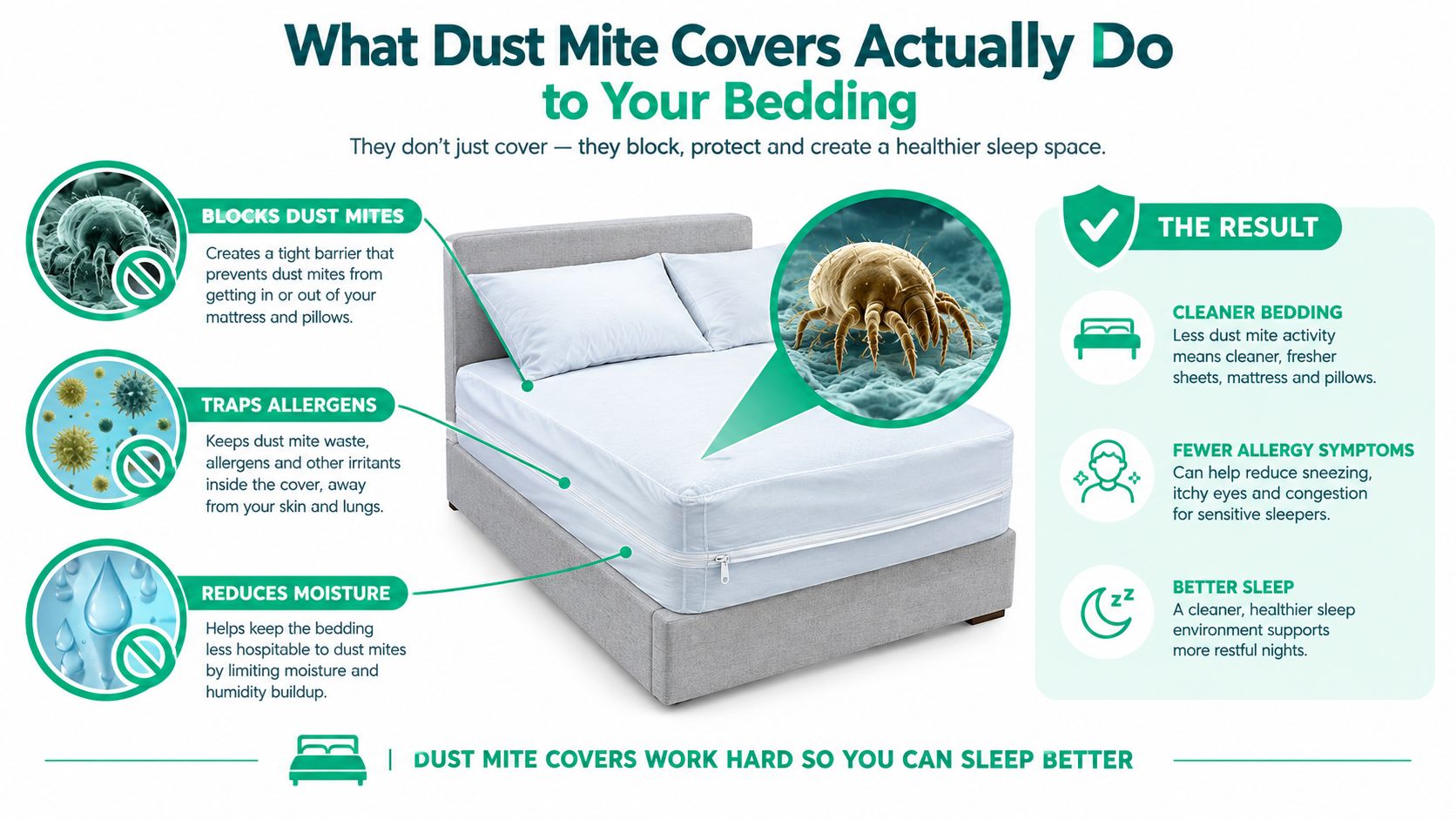
Dust mites are microscopic relatives of spiders. They live in places such as mattresses, pillows and duvets, where warmth, moisture and shed skin provide suitable conditions. The concern is mainly their faeces and body fragments, which can become airborne or remain in bedding and trigger reactions in sensitised people.
Think of an old mattress as a sponge. Dust and allergen can work their way into the filling, while an ordinary sheet sits over the surface. Washing the sheet removes what is on the sheet, but it doesn't wash the inside of the mattress. A purpose-made encasement creates a continuous barrier between that reservoir and the sleeper.
The barrier principle
A genuine allergy cover uses a tightly constructed fabric or membrane. NHS bedding guidance describes micro-porous membrane covers that block the escape of mite allergen while remaining suitable for use around the sleeper. The material needs to be breathable, and the cover should completely enclose the mattress, duvet or pillow rather than stopping at the top surface.
That last point matters. A fitted protector may cover the top and sides but leave the underside, seams or edges exposed. A zip-around encasement is designed to close the entire item. It doesn't necessarily kill the mites already inside. Instead, it separates the sleeper from the allergen reservoir and limits further movement through the bedding.
What should be enclosed
For a bed-based approach, consider the three areas closest to the face and body:
- Mattress: Use a full encasement that closes around all sides.
- Pillows: Choose covers that fit the pillow properly and leave no open end.
- Duvet: Enclose it if the product is designed for that purpose, then continue washing the duvet cover and other unencased bedding.
The same principle applies when learning about carpet and bed dust mites. A mattress cover only addresses the mattress. It can't seal a carpet, curtain or upholstered chair, so room-wide habits still matter.
A cover is therefore best understood as a hygiene layer and an allergy-control layer. It protects the bedding from sweat and spills when designed for that purpose, while its barrier construction reduces contact with allergen from the enclosed item. It doesn't remove mites from every textile in the room, and it won't replace laundering.
Materials, weaves and barrier standards explained
Shopping labels can make dust mite bedding protection sound more complicated than it is. Start with the construction, then consider how the material feels against the skin, how it handles washing and whether the manufacturer provides credible barrier testing.
A membrane-only cover usually combines a thin barrier film with a supporting fabric. It can provide a close barrier without adding much bulk, although the feel may be less like an ordinary sheet. A membrane combined with cotton or polyester tends to feel more familiar, with a little more structure between the sleeper and the mattress.
Lyocell fabrics, including Tencel-style options, are often chosen for their smooth hand feel and moisture management. They may suit people who dislike the sensation of a coated protector. The important question remains whether the finished product has a tested allergen barrier, not whether the outer fabric sounds premium.
Woven and membrane barriers
A tightly woven fabric relies on the spaces between fibres being small enough to restrict allergen movement. A non-woven barrier typically relies on a membrane with a defined pore structure. In both cases, look for a clear barrier claim backed by test information rather than relying on words such as “natural”, “hypoallergenic” or “high thread count”.
Thread count alone is a poor guide. A high-count cotton may feel dense but still lack the construction needed to prevent allergen passage. Seams, zips and the way the cover closes matter just as much as the fabric panel.
| Material type | Barrier method | Comfort and feel | Best for |
|---|---|---|---|
| Membrane with basic backing | Micro-porous film bonded to a base fabric | Light and practical | A close barrier with limited bulk |
| Membrane with cotton or polyester | Film combined with a softer outer textile | More like conventional bedding | Regular bedrooms where feel matters |
| Lyocell-style fabric with barrier layer | Barrier combined with a smooth, moisture-conscious outer fabric | Soft and cool to the touch | Sleepers who dislike a coated feel |
| Tightly woven textile | Dense weave restricts allergen movement | Natural fabric feel | People prioritising a textile surface |
What to check before paying
Read the product specification rather than the front of the packet. Look for full encasement details, seam construction, the closure method, care instructions and independent barrier testing. If you're comparing a Protect-A-Bed style Miracle Membrane cover with a cheaper alternative, compare those practical details rather than assuming the higher price alone proves better protection.
For further guidance on the distinction between allergy protection and general mattress protection, see allergy mattress protectors. The useful test is simple: can you identify exactly what is blocked, how the cover closes and how the manufacturer expects you to care for it?
What the NHS evidence really says about results
A sleeper may wake with a blocked nose, itchy eyes or wheezing, then wonder whether a dust mite cover will solve the problem. The answer depends on what you expect it to do. A cover can restrict allergen movement from an enclosed mattress or pillow. That is different from proving that covers alone change asthma or rhinitis across a whole household.
UK clinical guidance supports allergen-proof barrier covers as an important bedding measure. Cambridge University Hospitals calls barrier bedding the “single most effective measure”, while also making clear that it is “not enough to help on its own”. The guidance pairs covers with weekly hot washing of bedding that is not enclosed, at 60°C. Read the full Cambridge University Hospitals dust mite guidance for that combined approach.

Why symptom results can be less dramatic
A pragmatic English trial of mite-barrier bedding in children with house-dust-mite-sensitive asthma lowered allergen levels in mattresses. Over six months, however, it did not improve peak expiratory flow, symptoms, medication use or asthma consultations. The findings do not show that the barrier was useless. They show that one reservoir is only part of the exposure picture, alongside the rest of the bedroom, the wider home and a child's individual health.
The study is described in the University Hospitals Dorset house-dust-mite material.
So define success carefully. A cover can reduce exposure from a mattress that is difficult to clean, but it is not an asthma treatment. It has the clearest practical role where a sensitised sleeper spends many hours in bed, especially when it sits alongside weekly laundering and humidity control.
A lower allergen load is a reasonable aim. A guaranteed change in symptoms isn't.
Protect-A-Bed's Miracle Membrane and full encasement options fit that evidence-based role. They are barrier products that help isolate bedding, not substitutes for clinical advice or a complete-room routine.
How to choose the right size, fit and certification
A good barrier can become a poor purchase if it doesn't fit. Measure the mattress while it is resting on the bed, including any pillow-top, topper or pronounced side profile. Record the length, width and deepest point, then check the product's stated depth range rather than choosing by the usual mattress name alone.
A loose cover can wrinkle, shift or leave stressed areas around the zip. One that is too tight may strain the seams and make fitting difficult. Box-top and deep mattresses need particular care, as the side depth can be greater than expected.
Match the cover to the item
Mattresses, pillows and duvets don't share a universal sizing system. Check the dimensions and filling instructions for each item, especially if the duvet is thick or the pillow has a shaped construction.
- Measure the mattress: Include the full depth, not just the visible side panel.
- Check the pillow opening: A cover should close fully without compressing the pillow into a distorted shape.
- Confirm duvet capacity: The cover needs enough room for the duvet to lie evenly, without stressing the seams.
- Plan the route to the bed: A large zipped encasement may need two people to fit over a heavy mattress.
For a practical measuring method, use this guide on measuring mattress depth.
Choose the right style
A full zip-around encasement is the more complete option for an existing mattress with a suspected allergen reservoir. It closes around all sides and stays in place beneath the sheet. A fitted-style protector is simpler to remove and may suit a guest bed or a situation where daily spill protection is the priority, but it doesn't enclose the whole mattress in the same way.
| Cover style | Best for | Barrier | Notes |
|---|---|---|---|
| Full zip-around encasement | Main beds and allergy-focused routines | Encloses the complete item | Measure carefully before ordering |
| Fitted-style protector | Easy removal and everyday surface protection | Covers the sleeping surface and sides | Check what remains exposed |
| Pillow encasement | Pillows close to the face | Fully closes the pillow | Match the pillow dimensions |
| Duvet encasement | Duvets that are difficult to launder often | Encloses the duvet | Follow the product's care label |
Look for a stated allergen-barrier test, secure seams and a closure that doesn't leave a gap. Certifications such as OEKO-TEX can provide information about textile testing, but they don't replace checking the actual allergen-barrier specification. Also read the warranty and returns policy, because fitting errors are easier to resolve before the cover has been used.
Care, washing and the full bedroom routine
The cover should sit at the centre of a routine, not at the end of a shopping list. It creates a barrier around the mattress or pillow, while the sheet, duvet cover and pillowcase remain directly exposed to the sleeper and need regular cleaning.
The clearest NHS instruction is to wash unencased bedding weekly at 60°C. That includes the sheets and other bedding items that the care label permits you to wash at that temperature. Use the garment label for delicate fillings and membrane products, because a high-temperature cycle that damages the barrier is a false economy.
Keep the barrier in good condition
Many encasements are better cleaned by wiping the surface with a damp cloth and mild detergent than by repeatedly washing them at high heat. Manchester University NHS Foundation Trust advises wiping micro-porous membrane covers clean with a damp cloth when bedding is changed. This preserves the cover while removing surface dust and marks.
Check the cover every time you change the bed. A broken zip, torn seam or split corner can create a route around the barrier. Replace it when damage compromises closure, rather than continuing to rely on a cover that no longer encloses the item properly.
A manageable weekly rhythm
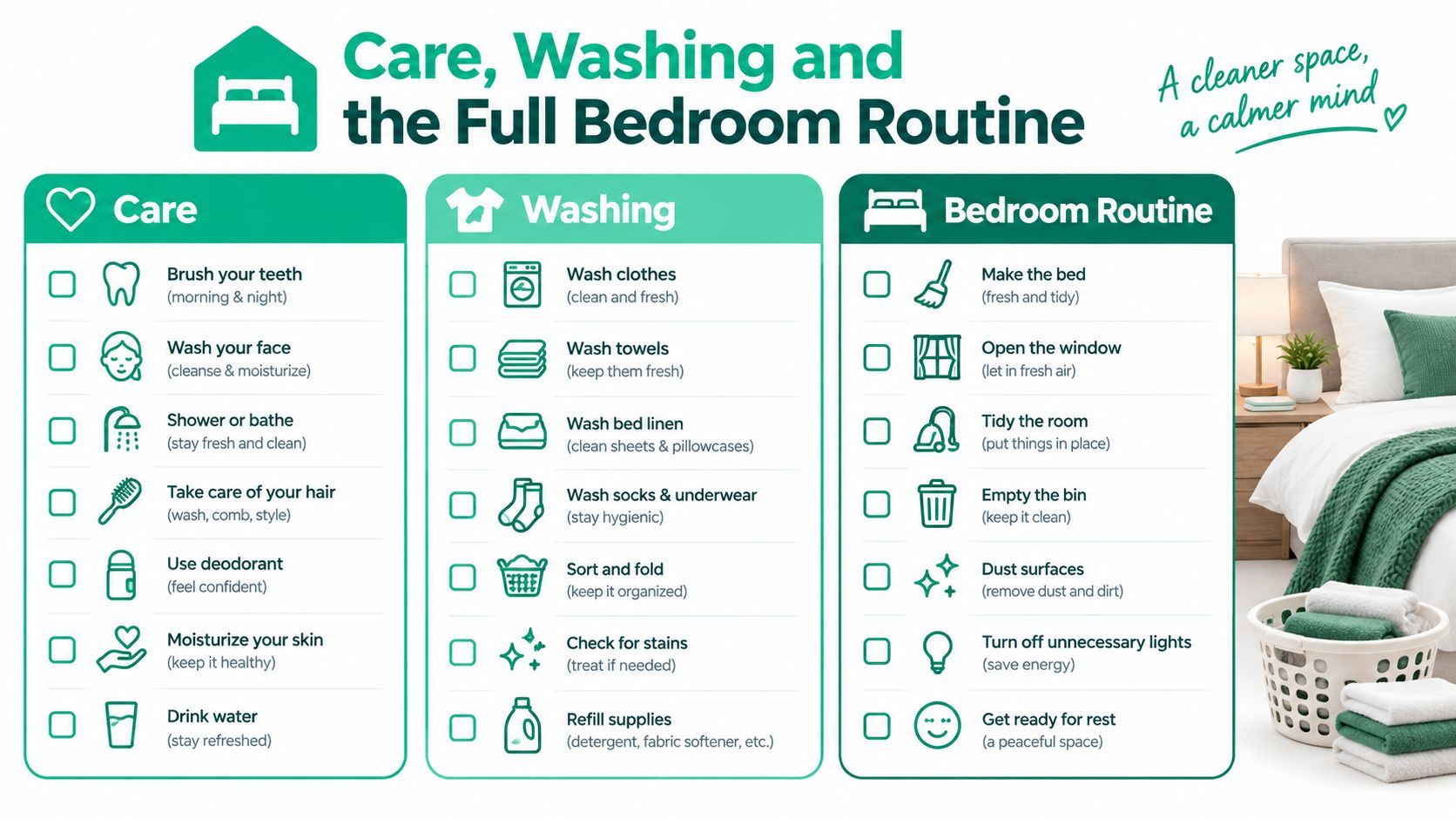
- Wash exposed bedding: Put sheets, pillowcases and the duvet cover through the hottest suitable wash, using 60°C where the care label allows.
- Air the room: Open the window when practical and avoid making the bed while bedding is still warm and damp.
- Reduce clutter: Fewer stored textiles and clear access around the bed make cleaning easier.
- Control moisture: Use ventilation or dehumidification to keep the bedroom drier where possible.
- Clean the floor and nearby surfaces: Vacuuming removes settled dust and skin flakes from the area around the bed.
The cover itself doesn't need constant replacement. Its useful life depends on construction, washing and wear. Inspect it regularly, and treat any tear or failed closure as a reason to replace it rather than waiting for a fixed date.
Care reminder: Clean the bedding that touches you, maintain the barrier that encloses the reservoir and keep the room dry enough to discourage build-up.
Putting it all together and where to start
Return to the household with the snuffly child and the partner reaching for tissues. Buying a cover may help reduce exposure from the mattress, but the result will be limited if the duvet, pillowcase and bedroom air remain part of the same allergen problem.
Start with the bed rather than trying to overhaul the whole house in one weekend. A sensible order is:
- Measure the mattress, including its full depth and any topper.
- Choose a full zip-around encasement for the mattress if the aim is to isolate the existing mattress reservoir.
- Add suitable pillow and duvet covers where the products are designed to enclose those items.
- Wash exposed bedding weekly at 60°C when the care label permits.
- Improve ventilation and humidity control, especially in a warm, closed bedroom.
- Vacuum the floor, bed base and accessible surfaces regularly, using a machine with suitable filtration if available.
- Inspect the covers for damage, open seams or a faulty zip.
The cover earns its keep inside that routine. It isn't a whole-room cure, and the English trial described earlier is a useful reminder that lower mattress allergen levels don't guarantee better asthma outcomes. If symptoms continue, arrange proper medical advice rather than repeatedly buying new bedding.
Protect-A-Bed offers mattress and pillow protection using its Miracle Membrane construction, with full encasement options alongside other fabric choices. Its UK service includes stocked products, delivery information and warranty details, so compare the construction, fit and care instructions with your needs rather than choosing on the word “allergy” alone.
The most useful action this week is simple: measure the bed, arrange the right barrier and put the exposed bedding into a consistent washing routine.
Choose a full, correctly fitted barrier for the mattress and pair it with washable pillow and duvet protection where needed. Visit Protect-A-Bed to review the UK range, check sizing and choose a cover that fits your bedroom routine rather than relying on a partial fix.