

Breathable Mattress Protector UK: Does It Keep You Cool?

The popular advice is simple. Buy a protector labelled breathable and cooling, and you'll stop sleeping hot. That's wrong, and it's why so many people replace a protector within months.
Breathable describes whether water vapour can pass through a layer. It doesn't mean the layer lowers temperature, pulls heat from your mattress or cools a warm bedroom. A breathable mattress protector UK buyers actually benefit from does one practical job well. It blocks liquid while letting perspiration vapour escape, so the sleep surface feels less clammy.
Judge it on construction, not adjectives. Check the membrane, surface fibre, quilting and skirt depth, then match those details to your real problem. Heat, night sweats, spills and allergy exposure don't all need the same product.
Table of Contents
- Why Breathability Matters in UK Bedrooms
- What Breathable, Waterproof and Cooling Mean and How They Work
- Tencel, Cotton and Charcoal Compared Side by Side
- Sweat, Temperature and Allergen Control in Practice
- UK Sizes, Delivery and Warranty Before You Buy
- How to Fit, Wash and Dry Your Protector
- Choosing the Right Breathable Protector for Your Bed
Why Breathability Matters in UK Bedrooms
For most UK hot sleepers, a Tencel Cool or Miracle Membrane protector with a deep skirt is the sensible starting point. A plastic-like sheet is the wrong choice for a warm bed.
The overheating problem is not occasional. Analysis in Buildings and Cities of the English Housing Survey Energy Follow-Up Survey found that during the unusually hot summer of 2018, approximately 4.4 to 4.6 million main bedrooms, about 18.6 to 19% of English homes, overheated at night, exposing roughly 7.4 million people to excessive bedroom temperatures. Flats face a higher risk than houses, so ventilation and bedding choices matter more there.
The same source reports a later study of 83 London bedrooms monitored during the summers of 2021 and 2022. More than 86% exceeded the CIBSE TM59 criterion, under which bedroom temperatures should exceed 26°C for no more than 1% of sleeping hours. Among 110 participants, 60% recorded troubled sleep using the Pittsburgh Sleep Quality Index, and 40% of 611 summer-night questionnaire responses identified air temperature as affecting sleep.
Name Your Problem First
- Heat: the room stays warm and every layer feels too much.
- Moisture: you wake damp even when the room isn't extreme.
- Allergy: you need a barrier and a washable routine.
- All three: you need vapour transfer, liquid protection and easy laundering.
That diagnosis points to different features. Pair it with sensible temperature control for your mattress and bedroom, rather than expecting one thin layer to cancel a hot room.
What Breathable, Waterproof and Cooling Mean and How They Work
Shoppers meet four terms that are often used as if they're interchangeable. They aren't. Separate them before you compare prices or fabrics.
| Term | What it means | What it does not guarantee |
|---|---|---|
| Breathable (vapour-permeable) | Water vapour can pass through the layer, so sweat can leave the sleep surface | Does not make the bed cold or stop night sweats on its own |
| Waterproof (liquid barrier) | Liquids are stopped from soaking through to the mattress | Says nothing about how much heat the layer traps |
| Cooling fabric (e.g. Tencel Cool) | Surface fibre that wicks moisture and feels cool on contact | Cannot lower room temperature, and the cool feel fades under heavy bedding |
| Impermeable PVC or PU sheet | Blocks liquid and vapour completely | Holds perspiration at the sleep surface, so it is not breathable |
Breathable Is About Vapour, Not Temperature
A useful comparison is a rain jacket. The better versions use pores or a membrane structure that resists raindrops while letting body vapour escape. A bin bag also keeps rain out, but it traps vapour inside and quickly feels damp.
A protector works the same way. If liquid can't pass but vapour can, sweat has somewhere to go. If neither can pass, moisture stays between your skin, sheet and protector. You may not see a wet patch at first. You'll feel humidity building around your shoulders, lower back and legs, where contact with the bed is longest.
Label test: If a listing says waterproof but names no membrane and makes no vapour or air-permeability claim, treat it as an impermeable sheet until the seller proves otherwise.
That distinction matters during a heatwave. The UK government Homes for Net Zero findings from summer 2025 found that bedroom temperatures exceeded 26°C for an average of 54 minutes per day during summer 2025, compared with 23 minutes in 2024. After heatwave days, bedrooms exceeded 26°C for an average of 282 minutes, and more than half of respondents said they were rarely or never able to maintain a comfortable bedroom temperature at night.
No protector cancels that room heat. It can only avoid making the sleep surface worse.
How the Layers Work Together
Look at the protector from top to bottom:
- Surface fabric: This touches your sheet and sets the first feel. It absorbs, spreads or wicks moisture before vapour reaches the membrane.
- Membrane: This is the waterproof layer. Miracle Membrane is described as a thin, flexible and silent layer that blocks liquids, dust mites, allergens and sweat while staying air permeable.
- Base or filling: This can add softness, but thick quilting also adds insulation. Extra padding isn't free if you sleep hot.
- Elasticated skirt: This holds the protector around the mattress. A skirt that's too shallow strains and lifts. One that's far too deep can leave loose material and trapped air.
The membrane doesn't block heat rising from a warm mattress. It manages liquid and vapour. If your mattress itself stores heat, a protector won't convert it into a cold bed. It can, however, stop a waterproof layer from adding a sealed, sticky surface to an already warm mattress.
What Cooling Fabrics Can Realistically Do
Tencel Cool uses lyocell fibres. They absorb moisture and spread it across the fibre so it can evaporate faster. That usually feels smoother and drier than a fabric that holds moisture in one place.
The cool contact feel fades once your body warms the fabric. That's normal. Under a heavy duvet, it fades faster because there's less temperature difference and less air movement. I would judge Tencel Cool on whether you wake less clammy, not on whether the bed still feels cold at 3am.
Quilting can undo part of that benefit. A thin cooling surface over a thick, lofty filling creates a warm sandwich. The top may feel cool when you first get in, then the filling stores heat through the night. For a hot sleeper, a flatter protector is usually the better choice.
Your sheet matters too. A dense, brushed sheet over a vapour-permeable protector slows moisture movement. So does doubling protectors or adding a thick pad on top. The layer closest to your skin has a strong influence, and stacking products rarely improves vapour transfer.
Before buying, I would check four details in this order. First, find the named membrane. Second, identify the surface fibre. Third, look at quilting thickness. Fourth, confirm the skirt depth against your mattress. If a seller won't state those basics, the word breathable is doing too much work.
Tencel, Cotton and Charcoal Compared Side by Side
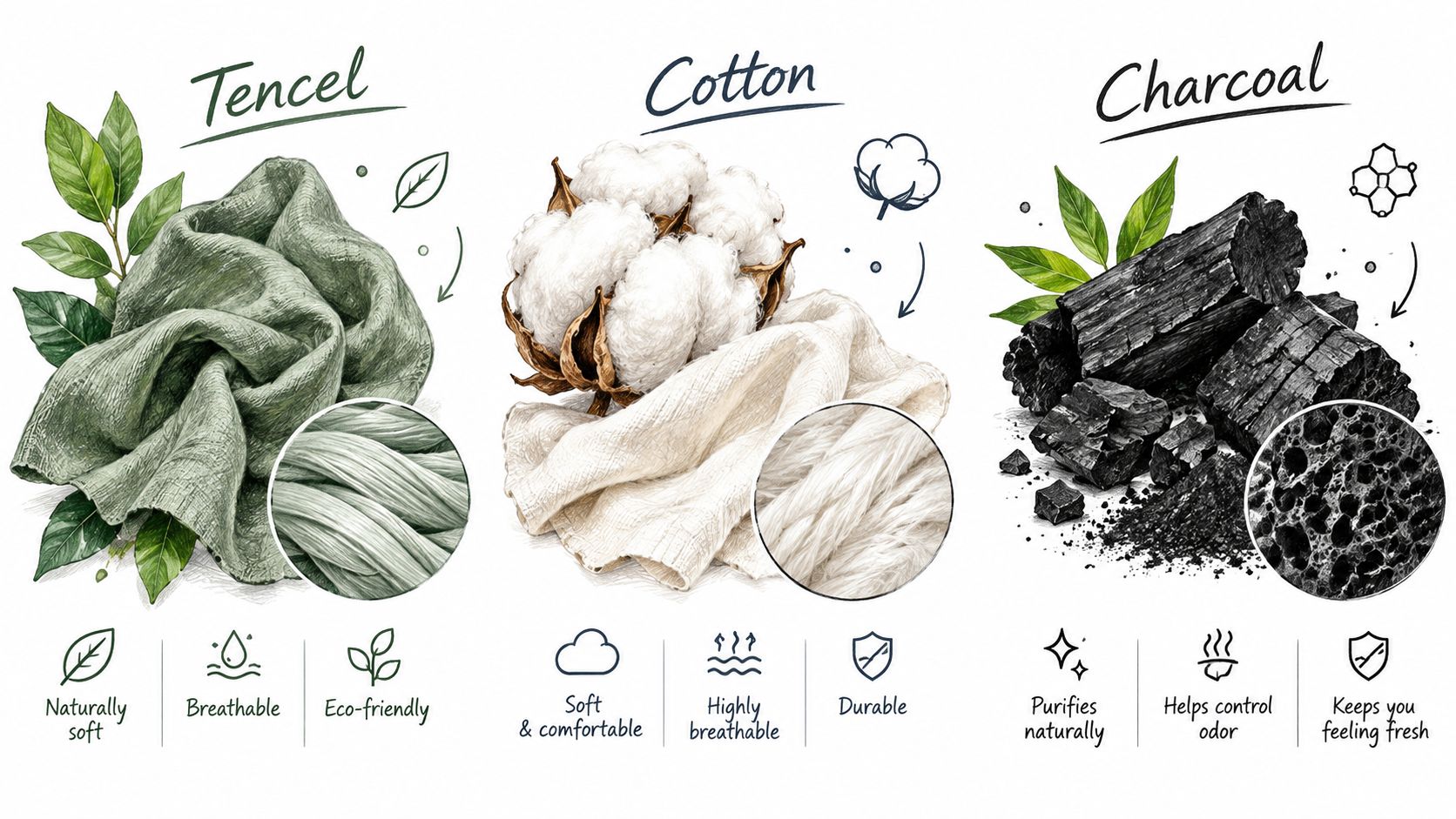
Compare surface fabrics on four criteria: moisture handling, feel and warmth, washing and best use. The waterproof membrane underneath can be the same while the sleeping experience changes a lot.
| Option | Moisture handling | Feel and warmth | Care notes | Best for |
|---|---|---|---|---|
| Tencel Cool (lyocell) | Absorbs and releases moisture quickly, spreading sweat across the fibre | Smooth and cool to the touch | Usually washable at lower temperatures; check the label | Hot sleepers and night sweats |
| Cotton | Absorbs moisture but dries more slowly than lyocell | Soft and familiar; can feel warmer when damp | Tolerates hot washing; dry thoroughly to avoid shrinkage | Everyday protection on a tighter budget |
| Charcoal | Carbon-infused fabric; breathability depends on construction | Feels close to cotton or a synthetic blend | Odour-control claims vary; ask for the specification | Beds that need extra odour control |
| Miracle Membrane laminate | Membrane stays air-permeable while blocking liquids and allergens | Thin and silent, not plastic-like | Follow the care label; surface can be wiped between washes | Waterproof everyday protection under any surface |
Reading the Table in Practice
Tencel Cool usually costs more because the buying case is speed. It moves moisture faster and feels cooler on first contact. That's useful if your main complaint is dampness rather than a bedroom that stays hot from the moment you enter it.
Cotton is the familiar option. It absorbs sweat readily and feels like ordinary bedding, which many people prefer. Its weakness shows after a heavy night sweat because it dries more slowly. Damp cotton can then feel warm and heavy against the sheet.
Charcoal needs more scrutiny. Odour claims depend on how much carbon is used, where it sits in the fabric and what test supports the claim. Ask the seller for specifics. The word charcoal alone doesn't tell you how breathable the finished surface is.
The Miracle Membrane laminate row is different because it describes the barrier, not the top feel. Its job stays broadly the same under each surface. Choose the membrane for protection, then choose the surface for comfort.
Hot sleepers should prioritise the fabric that dries fastest. Households with children or pets should prioritise the surface that can be wiped or washed most often.
Don't place the Premium range in this comparison without a specification. Check its listing for a named membrane, surface fibre and care label before buying. If those details are missing, I would choose a product that states them clearly.
Sweat, Temperature and Allergen Control in Practice
Start with the room target. Richmond Council professional indoor-air guidance recommends maintaining bedroom relative humidity at 30 to 50% to limit dust-mite conditions, alongside airing bedrooms and washing bedding at 60°C where possible. Dust mites prefer warm, humid bedding, so a protector works inside a room climate you still need to manage.
Follow the Sweat
During a night sweat, moisture leaves your skin and enters your sleepwear and sheet. A vapour-permeable protector lets part of that moisture continue through and evaporate. An impermeable layer stops liquid reaching the mattress, but holds perspiration at the sleep interface, increasing perceived heat and dampness.
A good protector can reduce:
- Liquid staining: Spills and accidents stay above the membrane.
- Moisture reaching the mattress: Less sweat soaks into upholstery layers.
- Allergen escape: A continuous barrier limits material passing from the mattress to the sleeper.
It can't lower room temperature, control humidity or dry a mattress that's never aired. If the bedroom stays humid, vapour moves more slowly and bedding dries more slowly. Open a window when outdoor air is cooler, use trickle vents if fitted and leave the duvet pulled back for a while in the morning.
A Practical Heatwave Setup
Ventilate during cooler hours and close curtains or blinds against strong daytime sun where that helps your room. Use a lightweight summer tog instead of doubling thick duvets over a protector. Let the protector and sheet dry fully before remaking the bed.
For allergy-sensitive households, treat the cover as one part of the system. Practical mattress allergen advice for Dublin families can help you think through mattress cleaning alongside barriers, and this guide to how to allergy-proof your bedroom covers the wider room routine. Reducing exposure supports that routine, but it isn't a cure for allergy.
UK Sizes, Delivery and Warranty Before You Buy
UK mattress sizes are nominal, so use the table as a starting point and measure your own mattress before ordering. Fit depends on the mattress, not the bed frame.
| Size | Dimensions (cm) | Typical fitted depth |
|---|---|---|
| Small single | 75 x 190 | Measure mattress depth and match the skirt on the listing |
| Single | 90 x 190 | Measure mattress depth and match the skirt on the listing |
| Small double | 120 x 190 | Measure mattress depth and match the skirt on the listing |
| Double | 135 x 190 | Measure mattress depth and match the skirt on the listing |
| King | 150 x 200 | Measure mattress depth and match the skirt on the listing |
| Super king | 180 x 200 | Measure mattress depth and match the skirt on the listing |
Measure Depth, Not Just the Top
Measure length and width across the top. Then measure depth at a corner, from the underside to the highest sleeping surface. Include a pillow top if your mattress has one.
The elasticated skirt must reach under the base and stay there when you move. If it's stretched tight just to fit, corners will lift and the surface may crease. If it's far too deep, loose fabric can bunch under your sheet. Compare your measurement with the stated skirt depth and choose the closest secure fit.
A topper changes the calculation. Decide whether the protector goes over the mattress only or over the mattress and topper together, then measure that full stack. I would not guess this from the size name printed on old bedding.
Delivery and Warranty Checks
The Protect-A-Bed UK storefront quotes 1 to 3 working days for in-stock items, free shipping above £90 and delivery insurance included. Check stock and delivery terms at checkout rather than relying on a headline elsewhere on the page.
Its stated warranty cover is up to 10 years against material or manufacturing defects. Before buying, check whether normal wear is excluded, how a claim is made and what the replacement policy covers. Keep the order confirmation until you've fitted and tested the protector on the bed, and photograph any defect before washing if something looks wrong on arrival.
How to Fit, Wash and Dry Your Protector
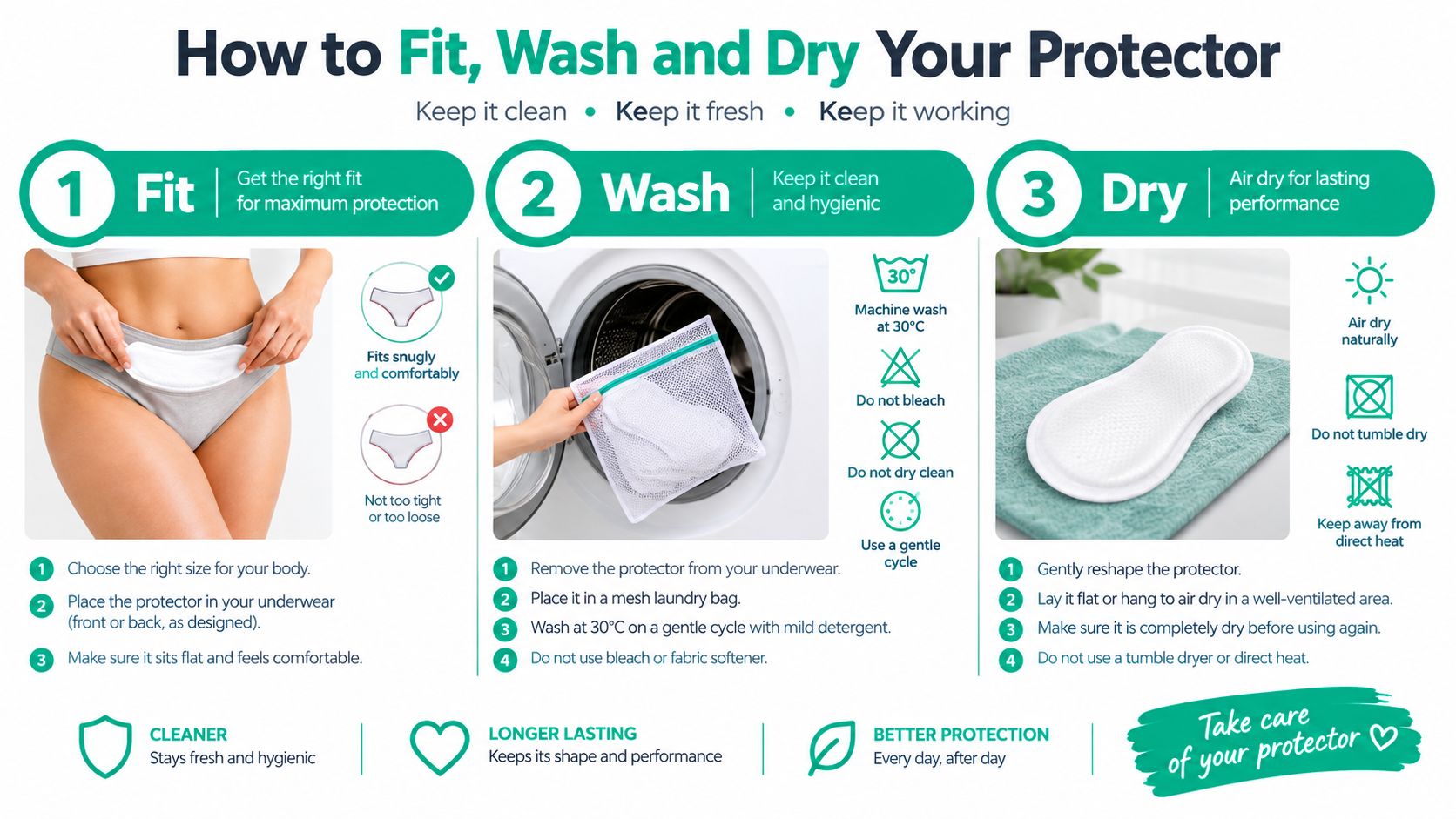
Fit and drying affect breathability more than many buyers expect. A damp or bunched protector won't feel like the product described on the listing.
Fit It in the Right Order
- Strip the bed: Check the mattress is clean and fully dry before you cover it.
- Identify the surface: Lay the protector flat with the label side up and confirm which side faces you.
- Fit corner by corner: Secure one corner, then the next, working around so the skirt sits under the base.
- Smooth the top: Remove creases and check all four corners are fully seated.
- Keep layers light: Add your sheet and duvet without stacking heavy pads above the protector.
Wash Without Coating the Surface
- Follow the care label: Wash at the stated temperature, usually 60°C where the label allows it, on a gentle cycle. The detailed guide to how to wash a mattress protector is worth checking against your product label.
- Skip fabric softener: Softener can coat fibres and reduce moisture movement. Use a measured dose of detergent and rinse well.
- Dry fully: Use a low setting or air dry before refitting. Trapped damp can cause odour and mould.
- Inspect after washing: Check seams, elastic and skirt. Replace the protector if the membrane cracks, delaminates or starts leaking.
Drying rule: If the skirt still feels cool and damp, the protector isn't ready to go back on the bed.
If a leak appears after washing, inspect seams and the skirt for pulls or damage. If odour remains, dry it for longer and air the room before assuming the membrane has failed. Some surfaces are wipe-clean between washes, which helps with small spills, but wiping doesn't replace laundering when sweat and skin oils have built up.
Choosing the Right Breathable Protector for Your Bed
For most UK hot sleepers, start with a Tencel Cool or Miracle Membrane protector and a skirt deep enough for your mattress. Then adjust for the problem that matters most in your household.
| Your situation | Choose | Why |
|---|---|---|
| Hot sleeper, no allergy | Tencel Cool or Miracle Membrane protector | Moves moisture away from the skin and blocks liquid |
| Dust-mite allergy or asthma | Membrane protector with allergen barrier, plus weekly 60°C washing | Reduces exposure when combined with humidity control; not a cure |
| Child or pet bed | Miracle Membrane protector with a washable surface | Frequent accidents need a barrier you can wash often |
| Bed bug concern | Sealed encasement, not a standard protector | Standard protectors do not seal the mattress; encasements need to stay in place for at least a year |
For allergy management, NHS home dust mite allergy guidance from University Hospitals Birmingham recommends enclosing mattresses and pillows with tested allergen-barrier covers, washing unencased bedding weekly at 60°C, and reducing bedroom humidity through ventilation. A fitted protector can support exposure reduction, but untreated pillows and duvets still leave pathways open.
Bed bugs need a separate purchase. A sealed encasement must close around the whole mattress, so check the zip, seams, closure coverage and tear resistance. Leave it in place for at least a year, and longer in a cold home. Don't rely on a standard breathable protector for that job.
Before ordering, confirm the named membrane, vapour-permeable claim, surface fibre, skirt depth, care label and warranty terms. Measure the mattress, note your bedroom temperature for a week if heat is the issue, then buy the size that matches your measurements.
Measure your mattress depth today, then compare Tencel Cool, Cotton, Charcoal and Miracle Membrane options by membrane, surface fibre and care label. Visit Protect-A-Bed to choose the protector size that fits your bed and the problem you're trying to solve.