

Waterproof Mattress Protector Small Double: 2026 Guide

You've bought what was advertised as a double mattress, fitted it into a compact UK bedroom, and discovered that the bed feels narrower than expected. Then the protector arrives. The corners sit too far in, the skirt pulls sideways, and your fitted sheet starts pinging off because the protector was made for a 135 cm standard double, not your 120 cm small double.
That awkward fit isn't a minor bedding nuisance. A loose protector wrinkles beneath you, shifts during the night and leaves exposed areas around the mattress edge. Choose the wrong fabric and you may also end up with heat, noise or a plastic feel. For a small double, measurement and construction matter more than a generic “double” label.
Table of Contents
- Why Small Double Is the Mattress Size Most Shoppers Get Wrong
- UK Mattress Dimensions and Where Small Double Fits
- How Waterproof Protection Actually Works
- Choosing the Right Fabric for Your Sleep Style
- Measuring, Sizing, and Fitting Your Protector
- When to Upgrade to a Full Encasement
- Buying Checklist and Next Steps
Why Small Double Is the Mattress Size Most Shoppers Get Wrong
You order a “double” protector for a compact bedroom, wash it, and fit it to the bed. The mattress is covered, but the fabric bunches along the sides, the corners sit badly, and the fitted sheet starts working loose. The problem is usually the label, not the waterproofing.
A small double is a distinct UK size, not a shortened standard double. It measures 120 x 190 cm, while a standard double measures 135 x 190 cm. That 15 cm width gap is enough to make a standard double protector loose across the mattress. A single protector creates the opposite problem, because it is too narrow and strains at both sides.
The common bedroom mistake
Shoppers often judge the frame by eye, search for “double mattress protector”, then choose the first suitable-looking waterproof option. That approach ignores the protector's actual dimensions and skirt depth. Excess width gathers beneath the sheet, ridges form at the corners, and movement through the night can pull the sheet out of position.
The same mismatch can affect sheet compatibility. A protector made for a standard double adds loose material beneath a small double fitted sheet, while a single-size layer cannot sit flat over the mattress. The 15 cm difference is easy to miss on a product page and obvious once the bed is made.
Practical rule: If the mattress label says small double, buy a protector specifically labelled UK small double. Treat “double” on its own as incomplete sizing information.
This matters in guest rooms and rental properties, where bedding is changed quickly and the fit may not be checked after every wash. It also matters in compact bedrooms, where the small double has been chosen to preserve floor space. A protector that shifts or bunches undermines that tidy setup and can leave parts of the mattress edge exposed.
The hygiene case is straightforward. Bedding collects sweat, drink spills and accidental moisture, and a mattress is difficult to clean thoroughly once liquid reaches its inner layers. A waterproof protector provides a barrier, but only when it lies flat and stays in place. For a small double, accurate sizing is part of the protection, not a finishing detail.
Check the mattress label, confirm the 120 x 190 cm dimensions, and match the protector to that specification before buying.
UK Mattress Dimensions and Where Small Double Fits
Start with the sizing ladder, not the retailer's product photograph. UK mattresses follow familiar dimensions, but labels can become confusing when online shops mix UK, European and international terminology.
| Size | Width (cm) | Length (cm) | Typical Use |
|---|---|---|---|
| Single | 90 | 190 | One sleeper, children's rooms |
| Small double | 120 | 190 | Compact bedrooms, teens, guest rooms |
| Standard double | 135 | 190 | Two sleepers in a conventional double room |
| King | 150 | 200 | Larger bedrooms and extra length |
| Super king | 180 | 200 | Spacious bedrooms and maximum sleeping width |
A small double is 30 cm wider than a UK single and 15 cm narrower than a standard double. That makes it a genuine middle size, not a standard double with a little less room. The small double mattress guide is useful when checking whether your mattress, frame and bedding are all using the same UK specification.
Confirm length as well as width
The usual UK small double is 120 x 190 cm. Don't assume every 120 cm mattress has the same length, because European sizing can use 120 x 200 cm. That extra length leaves a protector short at the foot, even if its width appears correct.
Depth deserves equal attention. Modern mattresses often have a profile of roughly 20 to 30 cm, and pillow-tops or mattress toppers can increase the total height you need to cover. Measure the mattress from the seam at the side to the highest sleeping surface. Then compare that measurement with the protector's stated pocket-depth range.
A suitable waterproof mattress protector small double should state the 120 x 190 cm dimensions clearly and provide enough elasticated skirt to wrap around your mattress depth. Ignore US “full” terminology unless the seller also confirms the measurements in centimetres. UK sizing is less ambiguous when you use the tape measure.
How Waterproof Protection Actually Works
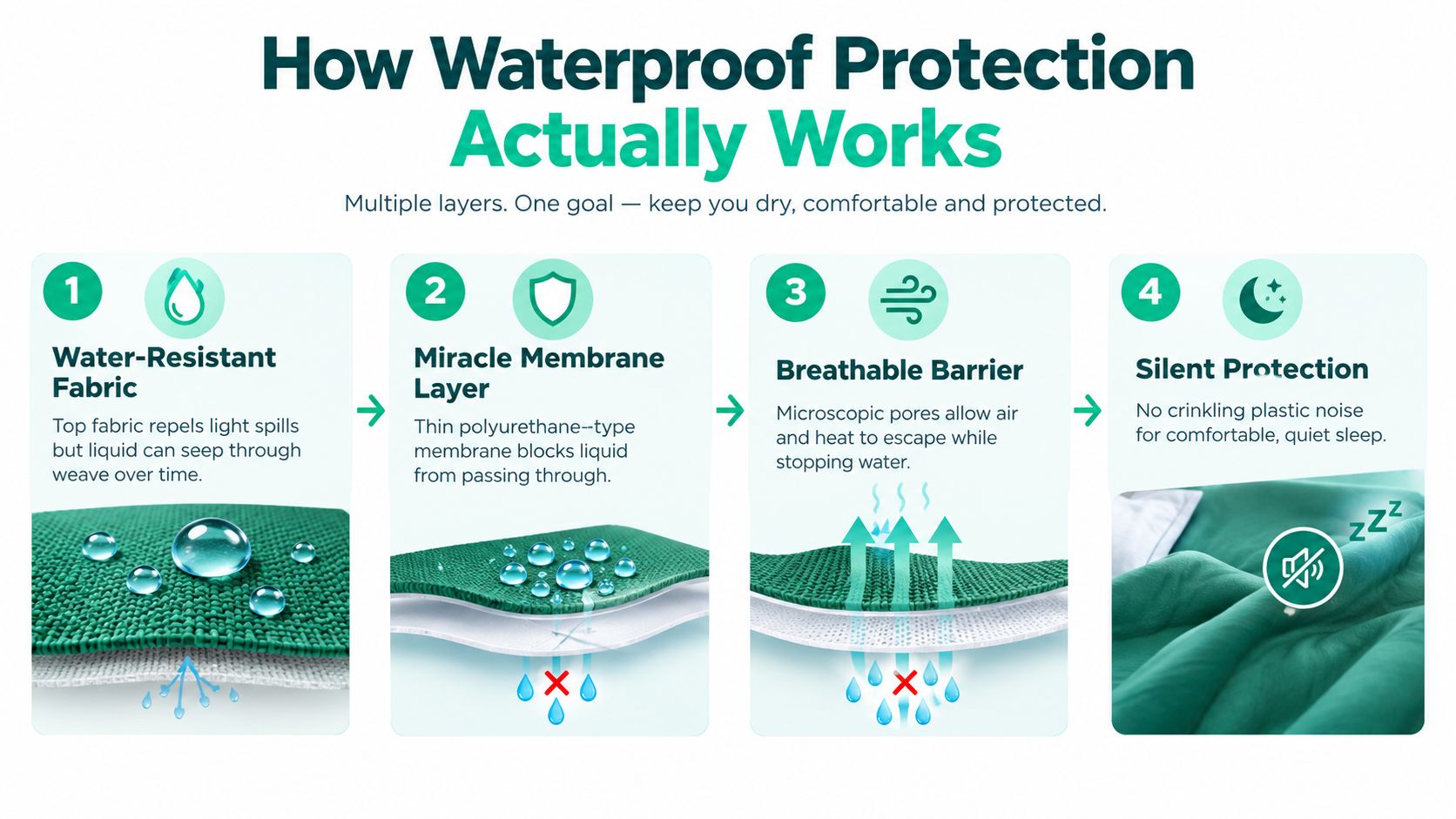
A small double protector faces a practical test: stop liquid before it reaches the mattress, without turning the bed noisy or clammy. Water-resistant fabric alone cannot do that reliably. A woven topside may repel a splash, yet allow liquid through under pressure or after prolonged contact. Proper protection needs a separate waterproof barrier.
Protect-A-Bed's Miracle Membrane is described as a thin, flexible, quiet polyurethane-type layer bonded to a textile face. It blocks liquid from reaching the mattress while allowing vapour and airflow to move away from the sleeping surface. That construction explains why a modern protector feels more comfortable than an old rubberised cover. Read more about whether waterproof mattress protectors work before relying on a basic water-resistant pad.
The test behind the label
Manufacturers can assess waterproof fabric with a water column test, which applies hydrostatic pressure to the material. Industry guidance aligned with BSI testing treats fabric as waterproof at around 150 cm H2O. The test does not recreate a column of water on your bed. It separates a genuine liquid barrier from fabric designed only to handle surface splashes.
Older PVC-backed covers often feel stiff, warm and noisy. Thick rubberised designs can crinkle as you turn, while plastic coatings may become unpleasant against the skin and less dependable after repeated machine washing. A thin membrane with a soft textile topside avoids most of those drawbacks.
Flexibility matters on a small double because the protector must stretch across the mattress without pulling the corners out of place. Choose a construction that stays quiet beneath the fitted sheet, resists spills and sweat, and can be removed for regular washing. Ignore the word “waterproof” on its own. Look for a named membrane, breathable construction and clear care instructions.
Choosing the Right Fabric for Your Sleep Style
The membrane handles the barrier. The topside determines much of what you feel. Choose it according to how you sleep and how the room is used, not according to the most impressive-sounding fabric name.
| Fabric | Best For | Feel | Care |
|---|---|---|---|
| Premium cotton-poly jersey | Everyday family use | Soft, flexible and familiar | Practical for regular washing |
| Tencel Cool | Hot sleepers and warmer rooms | Smooth and moisture-managing | Follow the product care label |
| Cotton | Natural-feeling bedding setups | Traditional and comfortable | Can hold more heat and dry more slowly |
| Charcoal-infused fabric | Homes concerned with odour control | Soft textile surface | Wash according to manufacturer guidance |
Match the surface to the room
Premium cotton-poly jersey is my all-round choice for a family bedroom. It handles daily use well and gives a familiar sheet-like feel without making the protector the main feature of the bed. Choose it when durability and straightforward care matter more than specialised cooling.
Tencel Cool suits hot sleepers, warm bedrooms and anyone who dislikes a heavy, clammy layer beneath the sheet. Eucalyptus-derived fibres are used for their smooth handle and moisture-managing qualities. It's the sensible choice when temperature is your main complaint.
Standard cotton feels recognisable and natural, but it can retain more warmth and may take longer to dry. That's not a deal-breaker in a lightly used guest room. It's less compelling if you wash bedding frequently or already sleep hot.
Charcoal-infused fabric is aimed at households that prioritise odour control and a fresher-feeling sleep surface. It makes sense where children, pets or night sweating create more frequent washing demands. The fabric still works with the same breathable waterproof barrier beneath it, so the decision is about the surface experience and household routine.
Choose the fabric you'll be happy to sleep on and wash regularly. A technically impressive protector that feels too warm will spend more time in the airing cupboard than on the mattress.
Measuring, Sizing, and Fitting Your Protector
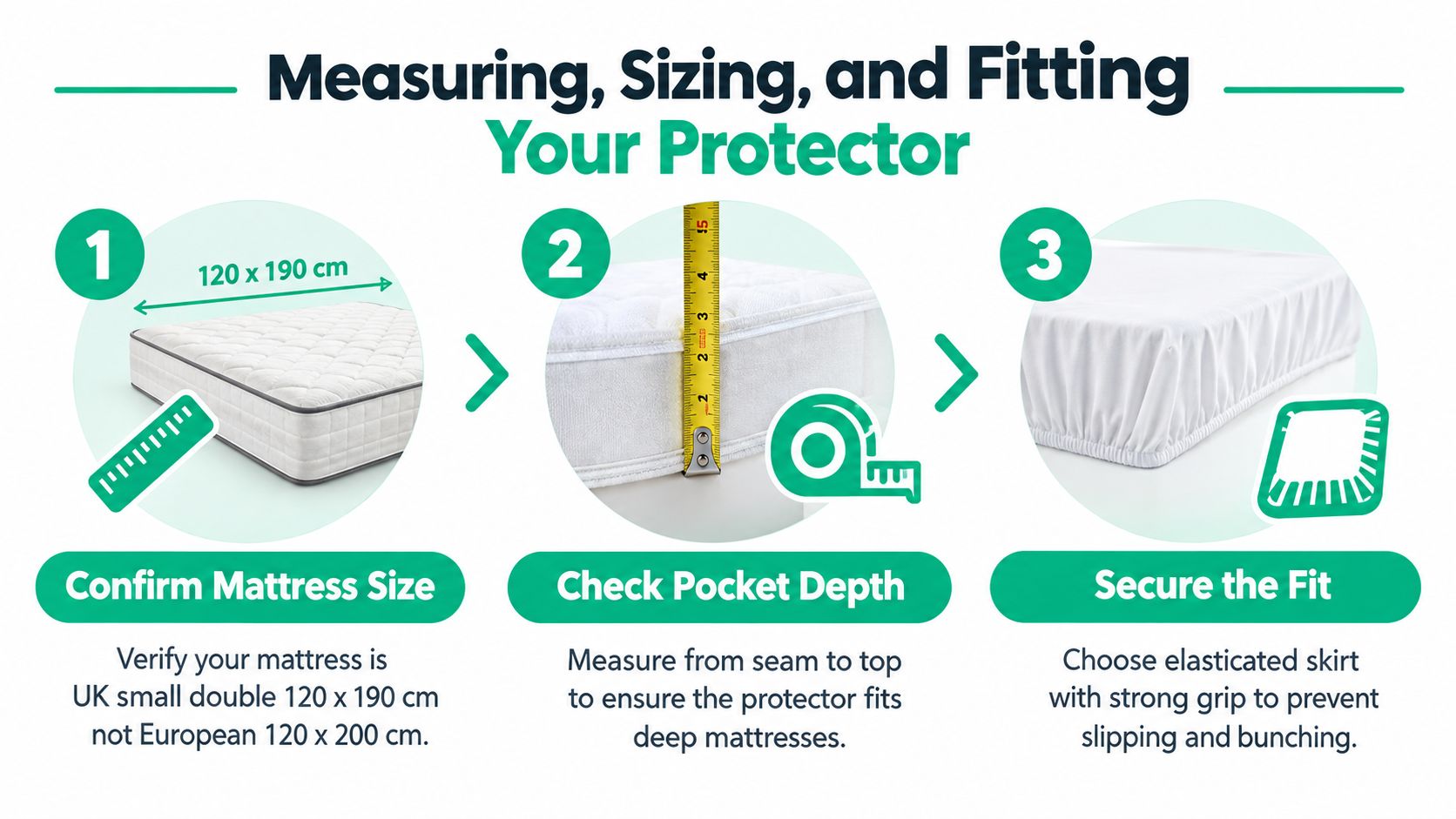
A small double is an awkward fit, not a narrower double. That 15 cm width gap affects both protector fit and sheet compatibility, so measure the mattress before ordering. A pillow-top, foam comfort layer or separate topper can also change the depth you need.
Take three measurements
- Confirm the footprint. Check that the mattress is 120 x 190 cm, rather than a European 120 x 200 cm model. Measure the mattress itself. The bed frame is not a reliable guide.
- Measure the depth. Run a tape measure from the side seam to the highest point of the mattress. Include a permanently fitted pillow-top. Measure a removable topper separately if the protector must cover both. Follow this guide on how to measure mattress depth before choosing the pocket range.
- Compare the depth range. A shallow protector can pull off a deeper mattress. An overly generous fit leaves surplus fabric beneath the sheet, causing folds and movement.
Fit the protector centrally before stretching any corner. Secure each elasticated corner under the mattress, then smooth from the centre outward. Pulling hard across the surface can twist the waterproof membrane and create uneven tension.
Keep the sheet from fighting the protector
Your fitted sheet must clear the mattress and protector together. Choose a pocket depth greater than their combined height. A standard 30 cm deep sheet often accommodates a fitted protector, but check its actual measurements. Small double sheets must also match the 120 x 190 cm footprint. A double sheet will leave excess width, while a single sheet cannot cover the mattress properly.
Wash the protector according to its care label. UK hygiene guidance commonly recommends washing bed linen at 60°C to help control bacteria and dust mites, as reflected in UK bedding hygiene evidence. Use the approved cycle to remove moisture residue and household allergens without harming the membrane. Avoid fabric treatments or drying methods the manufacturer does not permit.
When to Upgrade to a Full Encasement
A fitted protector covers the sleeping surface and usually extends over the mattress sides. A six-sided encasement surrounds the top, sides, base and ends, then seals with a zip. That extra coverage matters when contamination, pests or allergens may reach beyond the sleeping surface.
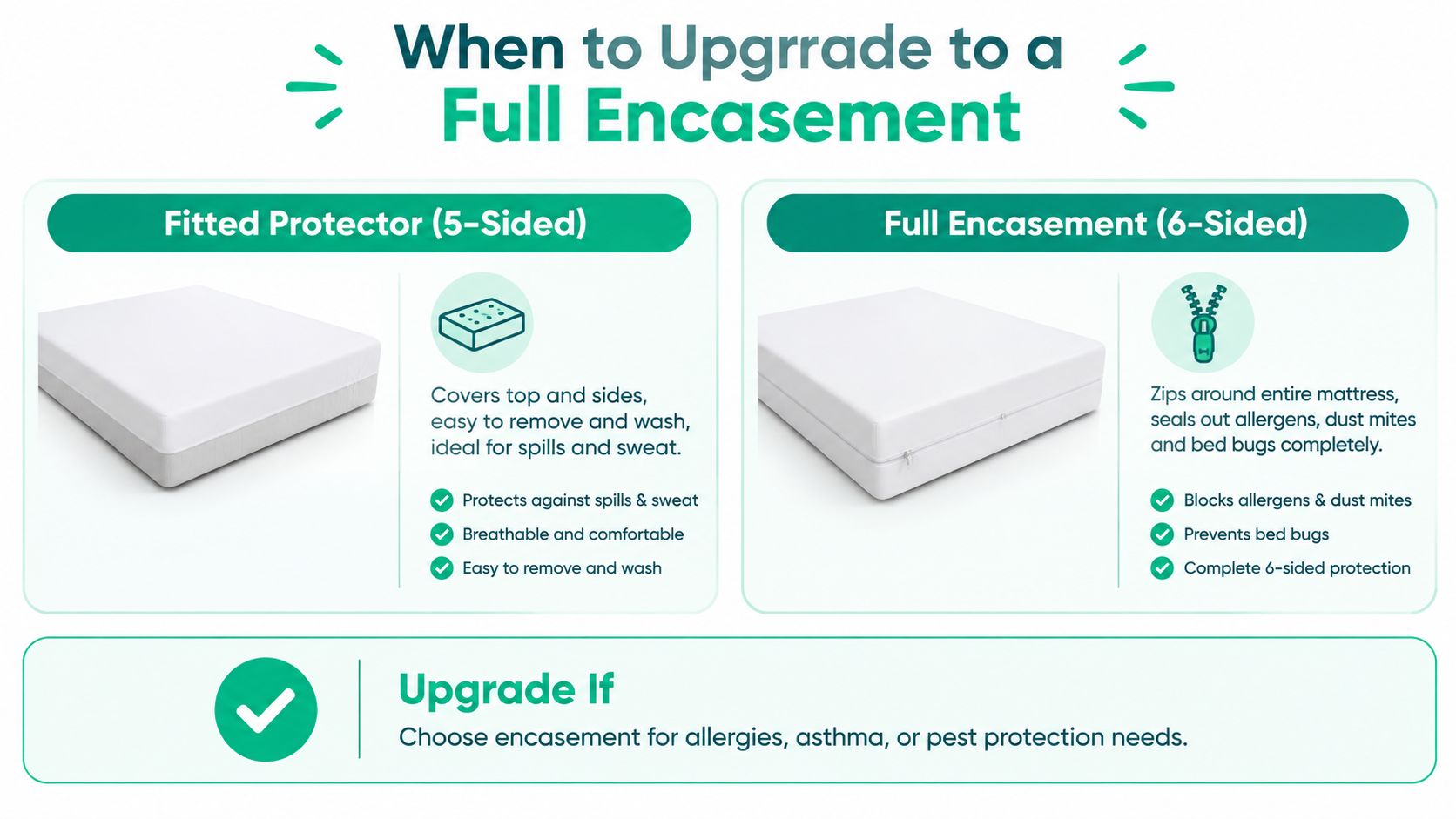
For routine spills, perspiration and everyday mattress care, choose a fitted protector. It is quicker to remove, easier to wash and less awkward to handle on a small double. That convenience usually leads to more regular washing, which makes it the practical choice for most bedrooms.
Situations that justify the extra coverage
Choose an encasement when the risk extends to the mattress sides or base:
- Bed bug concerns: A sealed cover limits hiding places and supports a wider pest-control response. It does not replace professional treatment or careful inspection.
- Allergy-focused bedrooms: Allergen-proof barrier covers are recommended for mattresses, duvets and pillows in UK allergy guidance. Evidence has reported that 58% of allergy sufferers react to house dust mites, while 59% of indoor allergy sufferers say symptoms are worse in the bedroom. The historical findings are summarised in this UK allergy and bedding report.
- Rental properties and holiday lets: A full cover gives landlords and operators control over the mattress sides and base between occupants.
- A mattress you must preserve: Enclosing the whole mattress gives broader protection from stains and contamination when replacement would be disruptive or expensive.
Clinical evidence also supports impermeable bedding covers in suitable cases. NICE cites a moderate-quality trial involving people with atopic dermatitis. The intervention included impermeable mattress and pillow covers and produced a significant reduction in eczema severity over six months, with n=48 and a mean difference of -4.2. The evidence is detailed in NICE evidence on material and structural interventions.
Do not buy an encasement because it sounds more protective. For a child's drink spill, use a washable fitted protector. Upgrade when you need side and base protection, a sealed allergen barrier or pest-focused coverage.
Buying Checklist and Next Steps
Make the decision in this order. Fabric comes after fit, and features come after the waterproof barrier.
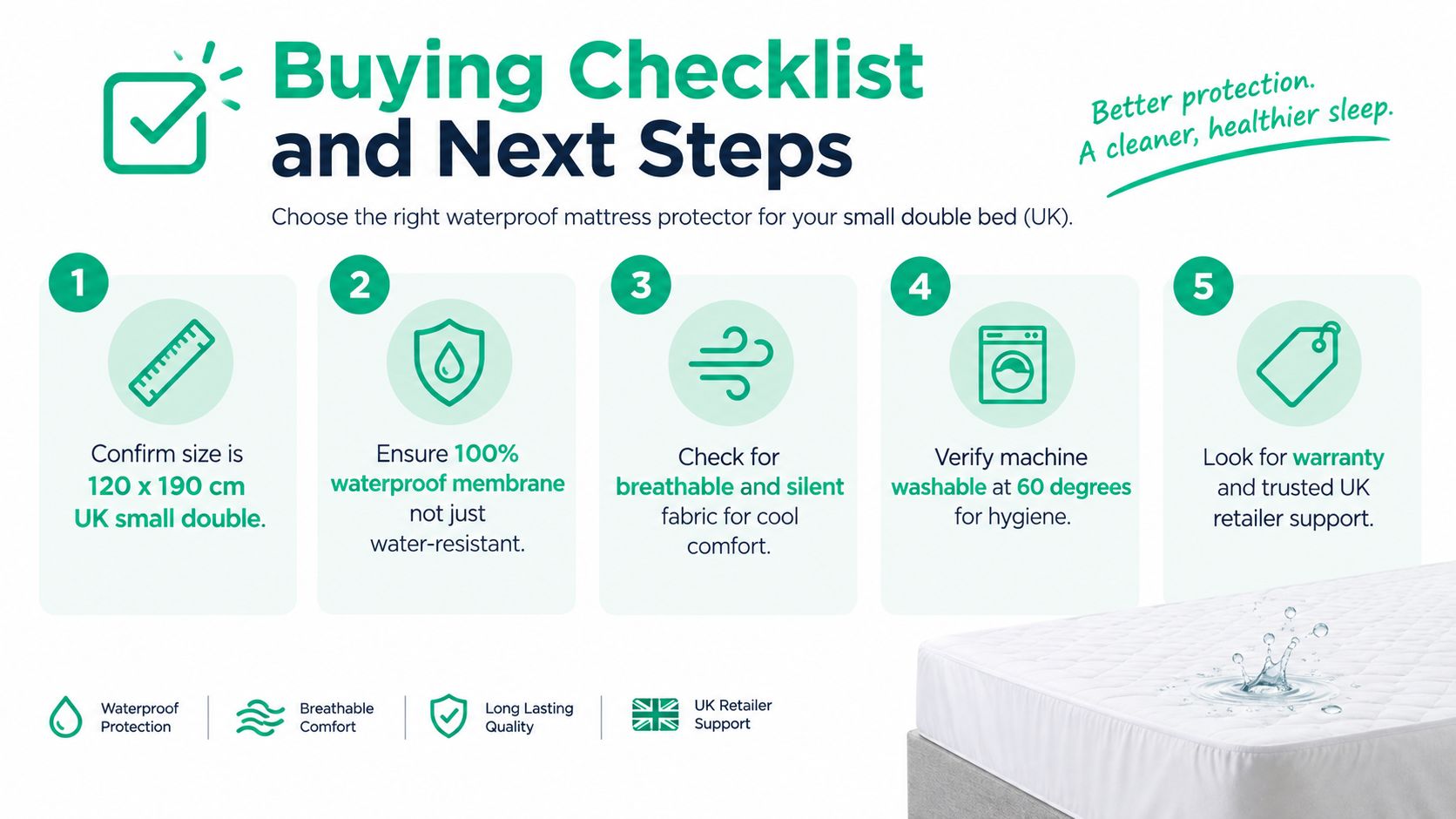
- Verify the size. Your UK small double should measure 120 x 190 cm. If the length is 200 cm, stop and check whether you have a European mattress before buying UK bedding.
- Measure the depth. Record the mattress profile, including any fixed top layer. Many small doubles fall within the 20 to 30 cm range, but your own tape measurement matters more than a typical size.
- Confirm the barrier. Choose a protector with a stated waterproof membrane, not fabric described only as water-resistant. A membrane-based design is the sensible defence against spills, sweat and accidents reaching the mattress.
Choose the surface by priority
- For hot sleepers: Select Tencel Cool for a smooth, moisture-managing surface.
- For a familiar natural feel: Choose cotton, accepting that it may retain more warmth and dry more slowly.
- For odour control: Consider charcoal-infused fabric where freshness is the main concern.
- For family use: Premium cotton-poly jersey is the most balanced option for regular wear and washing.
- For pests or serious allergy concerns: Move beyond a fitted cover and choose a properly sealed encasement.
Avoid two common overspends. First, don't pay for full encasement coverage when you only need protection from ordinary spills. Second, don't choose a premium cooling or odour-control fabric for an occasional guest room unless those properties solve a real problem.
For a properly sized small double, Protect-A-Bed offers waterproof protectors with Miracle Membrane technology in fabric options including Premium, Tencel Cool, Cotton and Charcoal, alongside bed bug encasements for situations that require six-sided coverage. Check the product dimensions, pocket depth and care instructions before ordering, then use the measuring guidance above if the mattress profile isn't obvious.
Choose the exact 120 x 190 cm size first, measure your mattress depth, then select the fabric that matches how you sleep. Visit Protect-A-Bed to view the UK small double waterproof range and choose a breathable protector that will stay smooth, quiet and properly fitted.