

Mattress Protector Waterproof

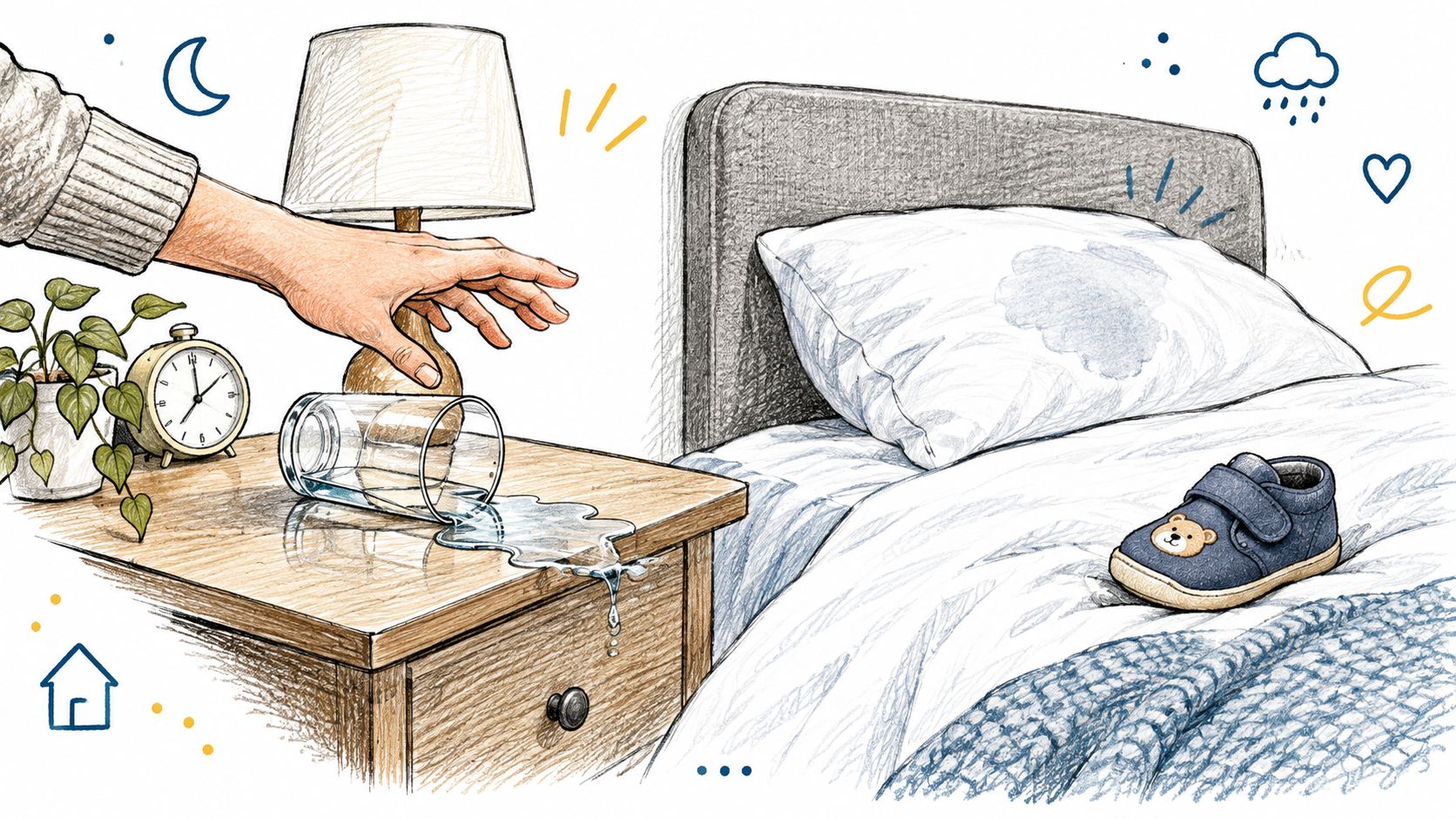
You've just knocked over a glass of water beside the bed. Or perhaps your child has had another nighttime accident, and the mattress is already showing a faint stain. Maybe there's no obvious spill at all, but persistent night sweating has left you wondering what's happening beneath the sheets.
A waterproof mattress protector adds a washable barrier between those everyday incidents and the mattress itself. The right design can help limit liquid penetration, simplify cleaning, and support a more hygienic sleeping surface without turning the bed into a hot, noisy sheet of plastic.
Table of Contents
- Why a Waterproof Mattress Protector Matters
- How Waterproofing Technology Actually Works
- Fabric Options and Cooling Performance Explained
- Allergy Benefits and Hygiene Realities
- What to Look for When Buying a Mattress Protector
- Care Instructions and Common Questions
Why a Waterproof Mattress Protector Matters
A mattress is difficult to clean thoroughly once liquid has soaked into its inner layers. A protector gives you a removable surface to wash after spills, bodily fluids, or other contamination, while the mattress stays dry underneath. It won't prevent accidents, but it can make the aftermath far easier to manage.
That matters in ordinary UK homes. A UK report estimates that about 2.7 million people require hospital treatment each year after accidents in the home, and identifies the bedroom as the location for 22% of home injuries. Those figures describe accidents, not mattress damage, but they show how much activity takes place in bedrooms. A washable barrier is a practical response to a high-contact household environment. The UK everyday-risk report provides wider context on domestic accidents and injury-related events.
Protection is also about hygiene
Mattress protection became a distinct hygiene concern in the UK partly because sleeping areas have historically been important locations for bed-bug exposure. A specialist review reports that bed bugs were widespread in the early twentieth century, declined from the 1930s, and began a renewed upsurge in the late 1990s. The review also records that, between 1967 and 1973, about 61% of infestations in one UK dataset occurred in domestic residential properties, while roughly 25% occurred in institutional hostels, hotels, and hospitals. The historical review explains why mattresses and other sleeping surfaces deserve more than occasional attention.
A standard protector isn't the same as a bed-bug encasement, and it won't solve an infestation. It can, however, form part of a sensible contamination-control routine. The key is choosing a barrier that fits properly, remains comfortable, and matches the problem you're trying to prevent.
Practical rule: Buy protection for your actual household risk. A child's bed, a guest room, a care setting, and a hot sleeper may need different materials or constructions.
How Waterproofing Technology Actually Works
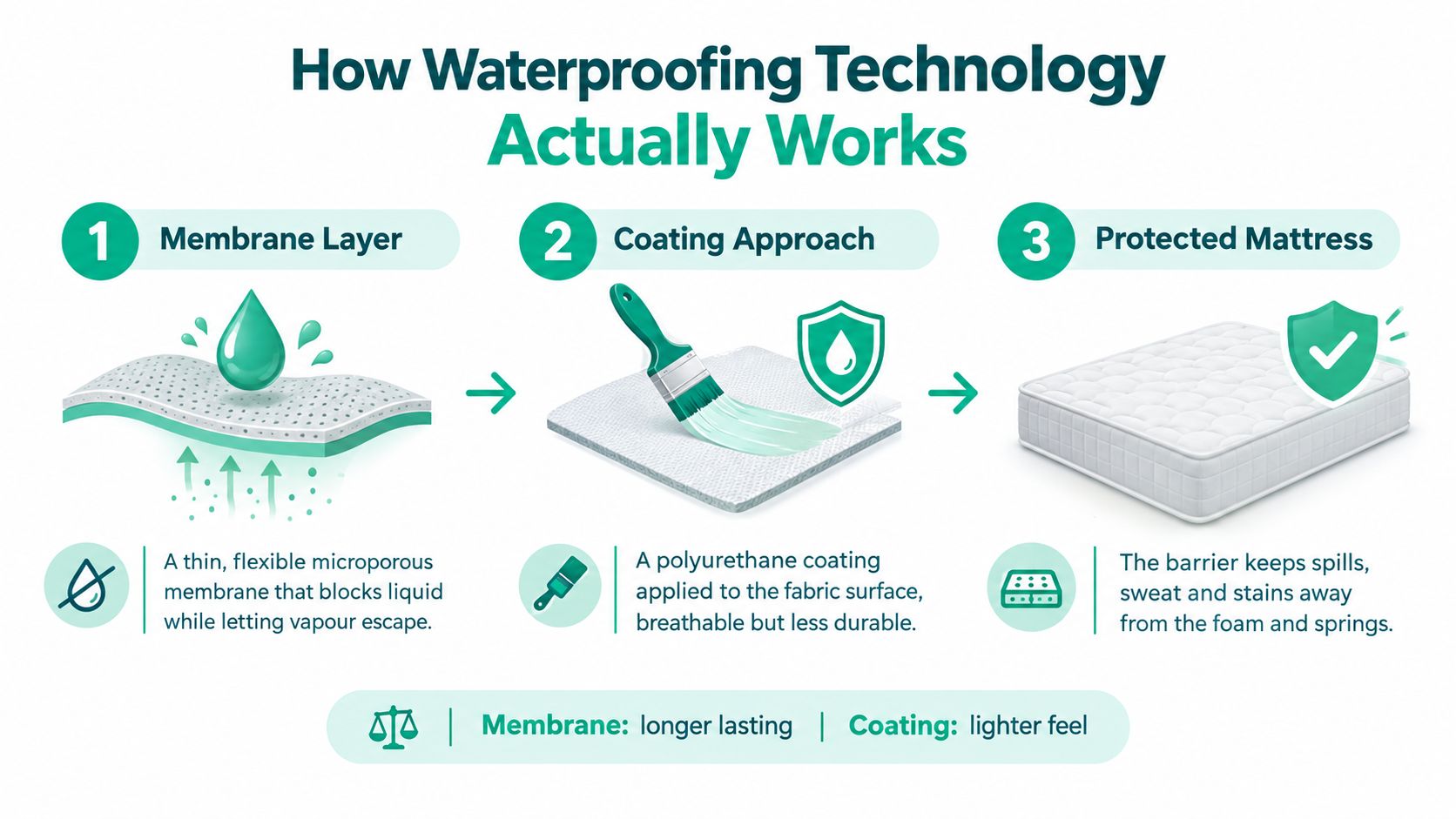
Waterproofing depends on the barrier beneath the fabric, not just on a label. Most modern designs use either a thin membrane bonded to the textile or a coating applied across the fabric surface. Both can resist liquid, but their comfort, flexibility, durability, and performance after washing may differ.
Think of a membrane as a one-way filter. It blocks bulk liquid from moving down into the mattress while allowing some water vapour to move away from the sleeper. This distinction matters because waterproofing and breathability are separate technical properties. UK buyers should look for evidence of both liquid-resistance testing and water-vapour permeability, rather than assuming that “waterproof” automatically means cool or comfortable. The practical difference is explained in this guide to a breathable waterproof membrane.
Membranes and coatings aren't identical
A membrane is a separate, flexible layer joined to the fabric. The membrane may be thin enough to stay quiet beneath a sheet while forming a continuous liquid barrier. Protect-A-Bed describes its Miracle Membrane as a thin, flexible, air-permeable layer used in its protection products.
A coating, by contrast, is applied directly to the textile. It can create a light barrier and may feel less structured, but repeated washing, stretching, and friction can affect how well it performs. That doesn't make a coating unsuitable. It means the construction and care instructions deserve closer attention.
For broader background on waterproofing terminology, this explanation of a seamless shield against water is useful because it separates the idea of a barrier from the fabric or surface carrying it.
Ask for evidence, not just adjectives
Before buying, check whether the supplier explains:
- Liquid resistance: Look for testing or a clear description of how the barrier prevents penetration.
- Water-vapour permeability: A breathable claim should refer to moisture vapour movement, not merely airiness in the top fabric.
- Construction: Find out whether the product uses a membrane, a coating, or another barrier system.
- Seam protection: Water can enter through stitching, zips, or exposed joins even when the centre panel is waterproof.
- Wash durability: A membrane should stay flexible, quiet, and intact when cleaned according to the care label.
A waterproof protector shouldn't feel like a loose plastic layer. If it traps perspiration, crackles whenever you turn, or develops stiff patches after washing, it isn't meeting the comfort part of the brief.
Fabric Options and Cooling Performance Explained
The fabric you sleep against controls much of the protector's feel, while the waterproof layer determines most of its liquid performance. That means choosing between cotton, Tencel Cool, Charcoal, and premium blends is not just a style decision. It's about skin feel, temperature, odour management, washing habits, and the people using the bed.
Cotton suits shoppers who want a familiar, soft textile. It's a sensible choice for family bedrooms and sensitive skin, provided the waterproof backing is breathable and the product fits smoothly. Cotton doesn't guarantee coolness, but a well-made cotton cover can feel less synthetic than a heavily coated surface.
Tencel Cool is aimed at sleepers who dislike a warm or clammy bed. Its appeal comes from the fabric feel and moisture-management design, but it still needs a breathable barrier underneath. A cooling top layer can't compensate for an impermeable membrane.
Charcoal fabrics are useful for households concerned about odour. Charcoal is best viewed as a fabric feature within a wider protection system, not as a replacement for washing or bedroom ventilation. Premium blends generally target a balance of softness, resilience, and repeated use.
| Fabric Type | Best For | Cooling Rating | Allergen Friendliness |
|---|---|---|---|
| Cotton | Sensitive skin and familiar softness | Moderate, depending on construction | Good as part of a complete, washable barrier |
| Tencel Cool | Hot sleepers and those who prefer a smoother feel | High when paired with a breathable membrane | Good when seams and closure are well protected |
| Charcoal | Odour-conscious households | Moderate, dependent on the backing | Useful for hygiene, but not automatically allergen impermeable |
| Premium blends | Busy family beds and frequent laundering | Variable, based on fibre and membrane | Depends on the enclosure and leakage points |
Match the material to the sleeper
For a child's bed, prioritise a soft surface, secure fit, and simple washing. For someone who wakes hot, start with vapour permeability and then choose a cooling fabric. For allergy concerns, don't treat any fabric name as proof of an allergen barrier. Complete enclosure, seam construction, and laundering matter more.
Protect-A-Bed presents Cotton, Tencel Cool, Charcoal, and Premium options in its UK range, showing how fabric selection can be paired with the same general protection purpose. The product name alone doesn't tell you whether a design will suit your bedroom.
A cool-feeling fabric and a waterproof membrane can work together, but only when the barrier allows moisture vapour to escape.
For more detail on the relationship between waterproof layers and heat, see this explanation of whether waterproof mattress protectors make you sweat. Use it to assess construction rather than relying on the word “cool” on a product page.
Allergy Benefits and Hygiene Realities
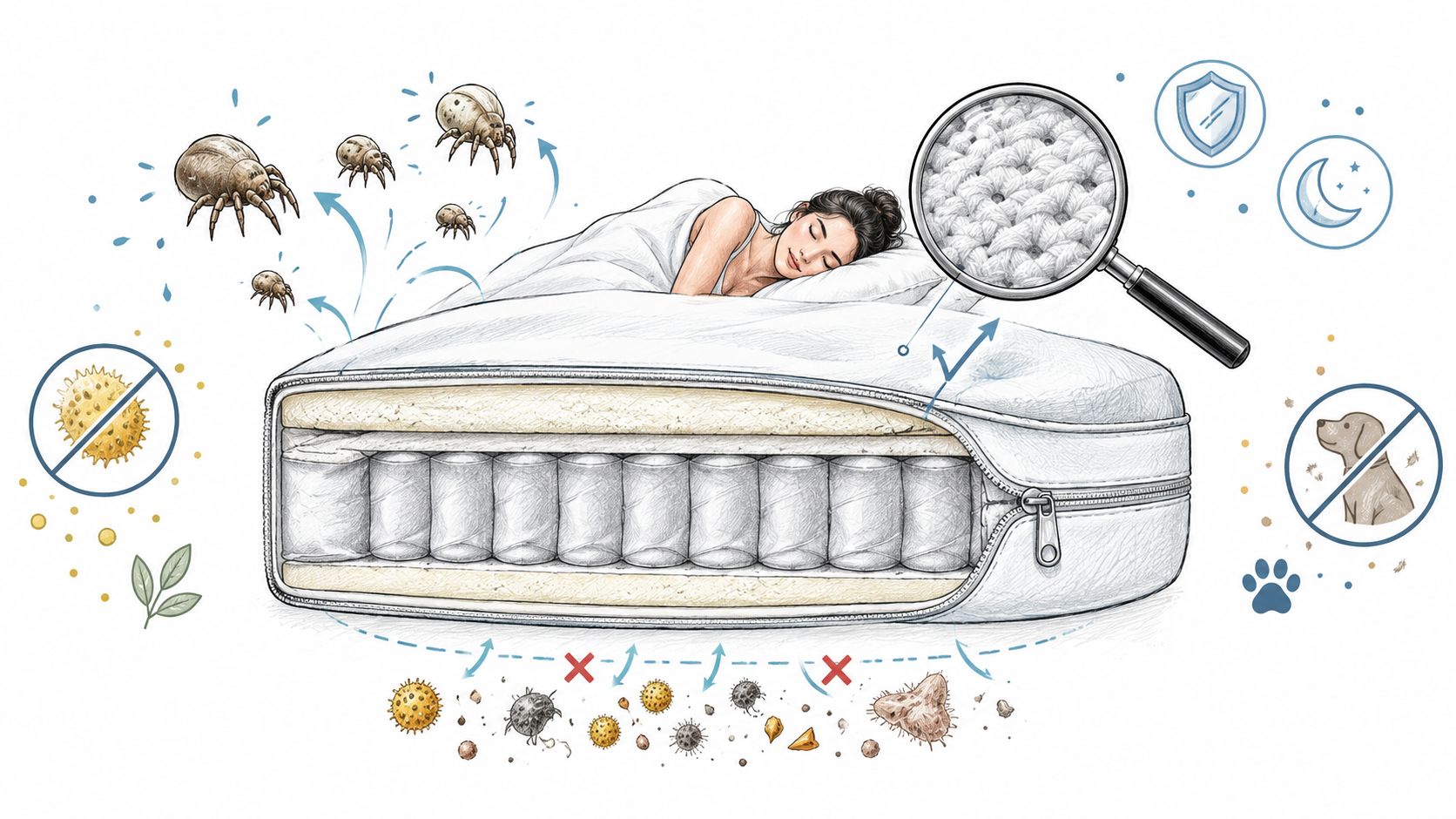
A waterproof protector and an allergen barrier perform different jobs. A liquid barrier can stop spills while still allowing dust-mite allergens to pass through gaps around the zip, seams, or mattress edges. Allergy-sensitive households should therefore look for a fully enclosed design with sealed or well-protected seams, not just a fitted cover with a waterproof centre panel.
UK clinical evidence describes allergen-impermeable mattress, duvet, and pillow encasings as a common method for reducing exposure to house-dust-mite allergens. In a large randomised trial, mattress encasings reduced mattress-dust Der p 1 concentration at six months to 0.58 micrograms per gram, compared with 1.71 micrograms per gram in controls. However, systematic reviews found no consistent improvement in asthma outcomes from mite-avoidance interventions alone. The clinical review supports a careful interpretation.
Treat the protector as one layer of a routine
A protector won't replace medical advice, prescribed treatment, or control of the room environment. UK guidance says dust mites thrive in warm, humid bedding, while ventilation helps limit damp and mould risks. Cambridge University Hospitals recommends keeping indoor humidity below 50% but above 30%, and says mattress and pillow covers should be breathable and completely enclose the item. UK guidance on indoor airborne allergens provides the broader public-health context.
A practical routine includes:
- Wash compatible bedding at 60°C: This applies to uncovered bedding that can safely tolerate that temperature. Always follow each item's care label.
- Ventilate the bedroom: Air the room regularly and avoid drying clothes in the bedroom.
- Monitor humidity: Use a humidity monitor if condensation, damp smells, or mould are recurring problems.
- Enclose the mattress fully when needed: Protect the zip and seams as carefully as the main fabric.
- Follow clinical advice: A protector supports hygiene, but it isn't a standalone asthma treatment.
The humidity point is easy to overlook. A sealed cover may reduce allergen movement from the mattress, but a damp bedroom can continue to create favourable conditions for mites and mould elsewhere in the room. Cleaning the surrounding surfaces also matters, and households wanting a broader approach can explore the Gmaids cleaning guide for general cleaning considerations.
What to Look for When Buying a Mattress Protector
Start with the mattress, not the marketing copy. Measure its length, width, and depth, including any pillow-top section, then compare those measurements with the protector's pocket depth. A close-fitting cover should stay flat beneath the sheet. If it rides up, exposes corners, or bunches under your body, the barrier becomes less reliable and the bed less comfortable.
Choose the right construction
A fitted-sheet style is straightforward to install and remove. It usually protects the top and sides, making it suitable for everyday spills, perspiration, and household accidents. A zip-around encasement covers all sides and is more appropriate when dust-mite containment or bed-bug protection is a priority.
A standard protector isn't automatically bed-bug proof. Bed-bug encasements need a secure closure and construction designed to prevent harbourage and escape. If you're dealing with suspected bed bugs, combine the encasement with a qualified pest-control plan rather than treating the cover as the entire solution.
Buying test: If the product page doesn't explain fit, barrier performance, breathability, seams, and washing limits, you don't yet have enough information to judge it.
Compare support as well as fabric
Look for a quiet membrane, a flexible hand, and a transparent warranty. Protect-A-Bed's UK range covers residential and commercial protection, with stated UK-wide delivery, free shipping over £90, and warranties of up to 10 years against material or manufacturing defects. These details may change, so check the current product and delivery terms before ordering.
Use this checklist:
- Measure first: Include the full mattress depth.
- Select the enclosure: Fitted protection for routine use, full encasement for wider coverage.
- Read the care label: Washing temperature and tumble-drying limits affect long-term performance.
- Check the seams: A waterproof centre doesn't guarantee waterproof edges.
- Review the warranty: Confirm what defects are covered and what care might invalidate it.
The best choice is the one that fits your mattress, matches your household risk, and remains easy to clean.
Care Instructions and Common Questions
Wash the protector according to its care label, not according to a generic bedding routine. Waterproof layers can be damaged by excessive heat, harsh chemicals, or unsuitable drying. Check the permitted washing temperature and tumble-drying setting before the first cycle, and replace the protector if the membrane cracks, delaminates, or fails a simple seam-and-surface leak check.
A protector needs laundering whenever it has been soiled. Otherwise, wash it as part of your normal bedding routine, balancing hygiene with the manufacturer's instructions. Keep a spare if the bed is used by a child, an older adult, or anyone with frequent accidents.
For step-by-step guidance, follow how to wash a mattress protector.
Common questions
Will it feel noisy? A thin, flexible membrane should be quieter than older plastic-style covers, but fabric, construction, and the fitted sheet all influence sound.
Will it change firmness? A close-fitting protector should add little thickness and shouldn't alter the mattress's support in a meaningful way.
How do I know it has failed? Look for cracking, peeling, stiffness, exposed backing, or moisture appearing beneath the protector after a spill.
Can I deep-clean the mattress instead? Mattress cleaning and protector washing are different tasks. A protector reduces future contamination, while professional or manufacturer-approved mattress cleaning addresses existing problems.
Protect-A-Bed offers waterproof mattress protectors, fabric options, and bed-bug encasements for UK households seeking practical protection for mattresses and other sleep surfaces. Visit Protect-A-Bed to check the current range, confirm fit and care details, and choose a barrier suited to your bedroom, sleeper, and cleaning routine.