

Mattress Protector for Night Sweats: A Practical Guide

You're probably here because the same thing keeps happening. You fall asleep fine, wake at 2am clammy, kick the duvet off, flip the pillow, drift off again, then wake later with the sheet damp and the mattress starting to feel less like a place to sleep and more like a sponge you're trying to protect.
A mattress protector for night sweats can help a lot. But people buy the wrong one, then decide protectors are hot, plasticky and pointless. They're not pointless. Bad ones are.
Table of Contents
- Waking Up Soaked and What It Actually Means
- What a Night Sweat Mattress Protector Must Do
- Choosing the Right Fabric for Your Sleep Style
- Why Waterproof and Breathable Can Work Together
- Layering Your Bedding for Cooler Drier Nights
- Fitting Washing and Caring for Your Protector
- Common Mistakes and When to Talk to a GP
Waking Up Soaked and What It Actually Means
You go to bed in a cool room, wake in the early hours with your top damp, the fitted sheet wet, and the mattress taking the hit again. After a few nights of that, this stops being a minor annoyance. It becomes a sleep problem, a laundry problem, and sometimes a health question.
The useful line is simple. Night sweats means sweating heavily enough to soak sleepwear and bedding even when the room is not hot, as the NHS explains in its guidance on night sweats symptoms and when to seek help. If that sounds familiar, stop treating it like ordinary overheating.
Night sweats are common around hormone changes, especially menopause, and they can also show up with medication changes, illness, anxiety, alcohol, or no obvious trigger at all. What matters for bedding choices is the pattern. A warm night after a thick duvet is one thing. Repeated drenching in a cool bedroom is different.
Bedding helps, but only as part of the full setup
A mattress protector is one layer in the system, not the system itself.
If the bedroom is warm, the duvet is too heavy, the sheets are clingy synthetic fabric, and airflow is poor, the protector gets blamed for a problem the whole bed created. Get the full setup right and the protector does its actual job. It stops sweat reaching the mattress while letting the bed feel drier and less swampy.
That is the right way to shop for one. Not as a miracle fix. As the protective layer inside a cooler, better-balanced sleep setup.
If you want to cool down night sweats naturally, combine bedding changes with practical fixes outside the bed too, such as room temperature, sleepwear, and evening habits.
When shopping can wait and a GP matters more
Buy a protector if your main problem is repeated moisture, mattress hygiene, and washing bedding far too often.
Book a GP review if the sweating is new, frequent, drenching, happens in a cool room, affects one side more than the other, or comes with fever, unexplained weight loss, swollen glands, pain, or other changes you cannot explain. Bedding can protect the mattress and make the night easier. It cannot tell you why the sweating started.
What a Night Sweat Mattress Protector Must Do
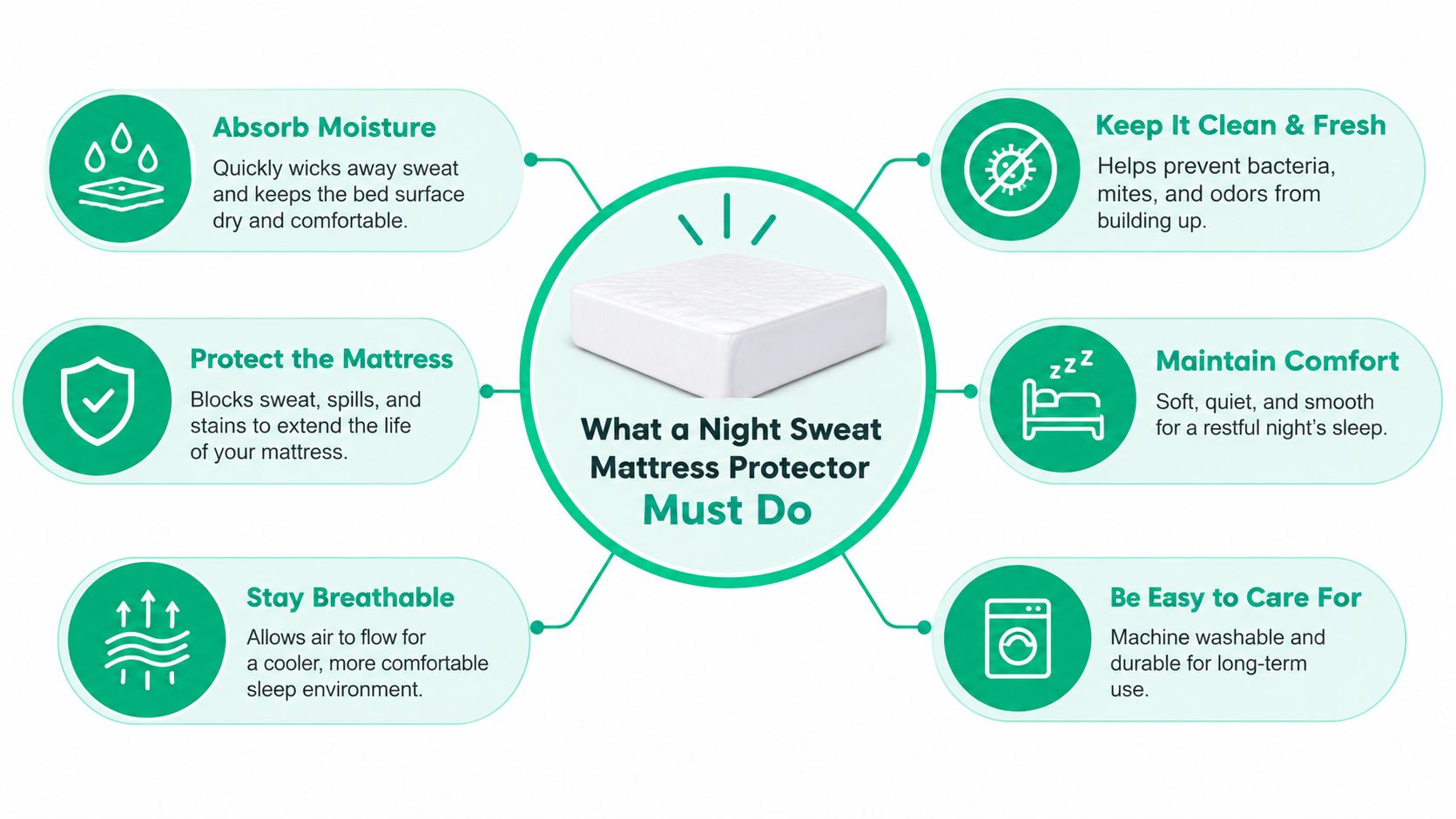
Most product pages drown you in soft-focus nonsense. Ignore that. A night-sweat protector has four jobs, and if it fails one of them, it fails the brief.
It must block liquid properly
Heavy sweating isn't a light mist. It's repeated moisture over hours.
A UK review of mattress protectors made the practical point clearly. A water-resistant quilt isn't enough for serious sweating. One tested quilted model leaked after 1 to 2 minutes, while waterproof TPU-backed protectors were the recommended option for people who sweat heavily.
If the product only says “water resistant”, move on.
It must let moisture vapour escape
Stopping liquid is only half the job. If sweat can't evaporate away from the surface, you'll feel swampy even though the mattress stays dry.
That's where layered construction matters. A proper membrane setup uses a comfort fabric on top, a thin waterproof layer in the middle, and a support fabric below. The point isn't just to block sweat. The point is to stop sweat reaching the mattress while avoiding a sticky microclimate around your body.
It must stay quiet
Noise gets ignored in sales copy because it's hard to glamorise. But if the protector crackles every time you roll over, you'll hate it by night two.
Thin TPU-backed designs are usually far better than old-school plastic-feel covers. The membrane should be flexible and silent enough that you stop noticing it once the fitted sheet goes on.
It should help with allergens too
Warm, humid beds aren't only uncomfortable. They're also exactly the kind of environment where people want better hygiene control. The same protective layer that blocks sweat can also act as a barrier against dust mites and allergens when the product is built for that purpose.
One example in this category is a protector that uses a thin waterproof membrane construction such as Miracle Membrane, where the barrier layer sits beneath the sleep surface instead of behaving like a crude plastic sheet. If you're also dealing with hot flushes linked to hormonal change, this kind of product sits alongside broader evidence-based menopause relief, not instead of it.
Practical rule: Buy the membrane first, then the fabric feel. People do this the wrong way round all the time.
Choosing the Right Fabric for Your Sleep Style
There isn't one universal winner. The right mattress protector for night sweats depends on how you sleep, how warm your room gets, and whether you care more about cool touch, softness, absorbency or odour control.
Night-sweat mattress protector fabrics compared
| Fabric | Feel | Best For |
|---|---|---|
| Tencel Cool | Smooth, cooler-touch, slicker surface | Hot sleepers who flush fast and dislike a warm bed surface |
| Cotton | Familiar, soft, breathable, less slippery | People who want a classic natural-fibre feel and straightforward comfort |
| Premium | Balanced feel with a bit more substance | Shoppers who want a middle ground between softness, absorbency and durability |
| Charcoal | Slightly weightier, grippier hand-feel | Sleepers who care about freshness and prefer a less silky surface |
Tencel Cool suits the overheated sleeper
If you throw the duvet off with one leg every night and hate anything that feels stuffy, Tencel Cool usually makes the most immediate difference to feel. It tends to feel smoother and less clingy against the sheet above it, which matters when heat spikes are sudden.
Pair it with a lighter duvet and breathable sleepwear. If the rest of the bed is too warm, the protector can only do so much.
Cotton works for people who hate “technical” bedding
Some hot sleepers still want the bed to feel like a normal bed. Cotton is often the easiest choice for that. It has the familiar drape people expect, and it doesn't feel slippery or overly engineered.
This is the fabric I'd push towards anyone who says, “I just want it to feel natural and not weird.”
Premium is the sensible middle ground
Some people don't need the coolest hand-feel. They need a protector that feels substantial enough for regular washing and repeated use without becoming annoying. That's where a premium all-rounder makes sense.
It's a practical choice for guest rooms, shared beds and homes where one person runs hotter than the other.
Charcoal is for freshness-focused sleepers
If odour control is part of the problem, charcoal-style fabric options make sense. They also tend to appeal to sleepers who dislike a very slick top surface and want something a touch more grounded in feel.
Don't choose fabric in isolation. Match it to your duvet, room temperature and how heavily you sweat.
A cool-touch fabric under a heavy duvet won't save you. A balanced protector under breathable sheets and the right duvet weight usually will.
Why Waterproof and Breathable Can Work Together
People still think waterproof means sweaty. That's true if you buy the wrong backing. It's not true if the barrier is built properly.
Breathability has a real metric
Barrier textiles use Ret as a measure of moisture-vapour resistance. Lower numbers mean easier vapour transfer. In the UK-linked benchmark for these textiles, under 5 m²Pa/W is rated “very good”, 5 to 20 m²Pa/W is “good”, 20 to 35 m²Pa/W is “acceptable”, and anything above 35 m²Pa/W is insufficient for breathable protection. The same test report measured experimental fabric and cotton-blend bedding at 2.03 to 2.08 m²Pa/W, which sits in the “very good” band (water vapour resistance benchmark and bedding test).
That's the framework that matters. Not “cooling” printed on the packet.
Ret values compared
| Backing Material | Typical Ret Value | Breathability Verdict | Night Sweat Suitability |
|---|---|---|---|
| Low-Ret breathable barrier fabric | Under 5 m²Pa/W | Very good | Strong fit for hot sleepers |
| Mid-range breathable waterproof barrier | 5 to 20 m²Pa/W | Good | Usually workable if the rest of the bed is cool |
| Heavier less breathable barrier | 20 to 35 m²Pa/W | Acceptable | Risky for people who sweat heavily |
| Poor breathable protection | Above 35 m²Pa/W | Insufficient | Bad choice for night sweats |
The membrane matters more than the marketing
A thin TPU-backed membrane can block liquid water while still allowing moisture vapour to pass. That's the whole trick. You're not asking sweat in liquid form to pass into the mattress. You're asking the humidity generated by your body to escape instead of building up under you.
That's why I'd take a thin laminated membrane over a thick coated backing every time. If you want a simple plain-English explanation of this construction, Protect-A-Bed's guide to a breathable waterproof membrane is useful. If you're comparing broader buying features, this roundup on how to find durable mattress protectors is also a decent prompt for what to check.
Waterproofing isn't the enemy. Heat-trapping backing is the enemy.
Layering Your Bedding for Cooler Drier Nights
You wake at 3am with a damp T-shirt, the sheet stuck to your legs, and the room feeling stale. In that setup, the protector is only one part of the problem. Night sweats are managed as a system. Room temperature, airflow, sheets, duvet, sleepwear, and the protector all need to pull in the same direction.
Start with the room. Hot sleepers usually do better in a cool bedroom, roughly in the high teens, and with air that does not feel muggy. If the room is warm and still, your bedding cannot dump heat and moisture fast enough. A fan aimed across the bed usually works better than one pointed into a corner because it helps moisture leave the sleep surface.
Then build the bed in the right order.
- Mattress: Keep the base protected and dry.
- Optional wool topper under the protector: Useful if you need extra moisture buffering and a less clammy feel.
- Waterproof breathable protector: Put the barrier here, close enough to catch sweat, but under the sheet so it does not dominate the feel of the bed.
- Breathable fitted sheet: Percale cotton or Tencel are the sensible choices for heavy sweaters.
- Light duvet: If you are sweating under a thick all-seasons duvet, the protector will get blamed for heat that the duvet is causing.
- Breathable sleepwear: Cotton, linen, or Tencel usually handle moisture better than slippery synthetics.
If you want a fuller guide to bedding for night sweats, look at the whole stack rather than chasing one miracle product.
Pillows matter too. If your pillow runs hot and soaks up sweat, the bed will still feel uncomfortable even if the mattress setup is right. A pillow protector made from similarly breathable materials keeps the feel more consistent across the whole sleep surface.
One more point. If you are sweating heavily and regularly, especially if it is new, unexplained, or severe enough to soak the bed, focus on your health as well as your bedding. At that point, a GP review matters more than another product swap.
A good protector supports a cooler sleep system. It does not cancel out a warm room, dense sheets, and an overheated duvet.
Fitting Washing and Caring for Your Protector
People ruin decent protectors through bad care, then blame the product. The membrane needs looking after if you want it to stay breathable and waterproof.
Fit it properly first time
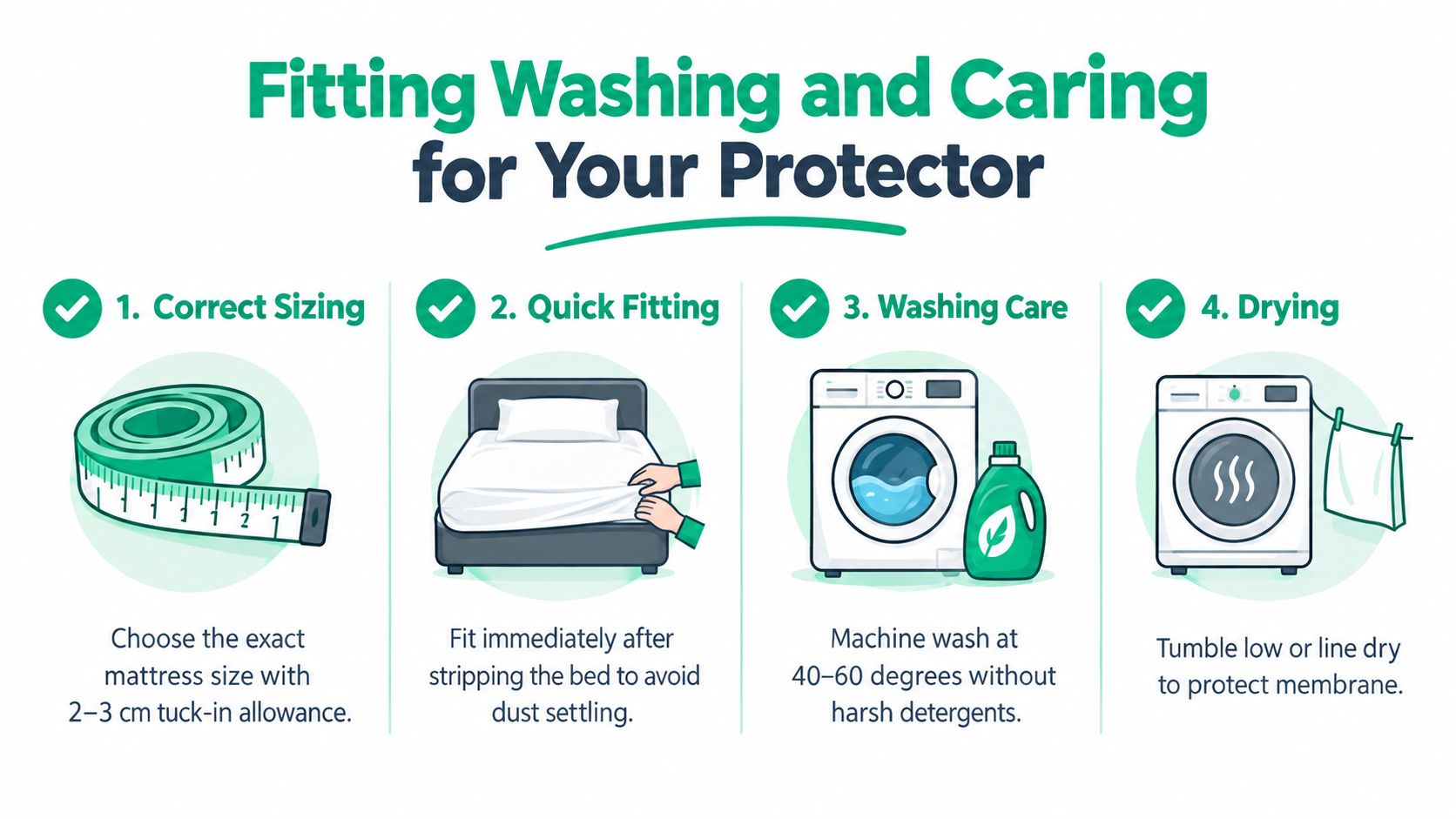
Get the exact mattress size. Allow roughly 2 to 3 cm of tuck-in depth so the skirt sits securely without pulling the surface tight. Fit the protector straight after stripping the bed, shake it flat, then dress each corner evenly so it doesn't bunch under the fitted sheet.
If the protector is straining at the corners, it's the wrong depth. If it's loose and rippling, it's too big.
Wash for hygiene, not just appearance
Wash it every two to four weeks in regular use. If sweating is heavy, don't wait for it to look dirty.
Use a non-bio liquid detergent. Skip fabric softener because it can coat the surface and interfere with moisture movement. If you need step-by-step care basics, this guide on how to wash a mattress protector covers the core routine clearly.
Dry gently and replace before failure becomes obvious
Tumble dry on low or line dry. Avoid bleach and don't iron it. High heat and harsh chemicals are a fast way to shorten the life of the waterproof backing.
Replace the protector every two to three years, or earlier if you notice:
- Pilling on the sleep surface: Comfort drops and the top fabric starts feeling rough.
- Delamination: The backing begins separating or bubbling.
- Rising heat with no other explanation: Sometimes the membrane has degraded enough that the bed starts sleeping worse.
- Persistent odour after washing: A sign the product may have reached the end of the road.
Common Mistakes and When to Talk to a GP
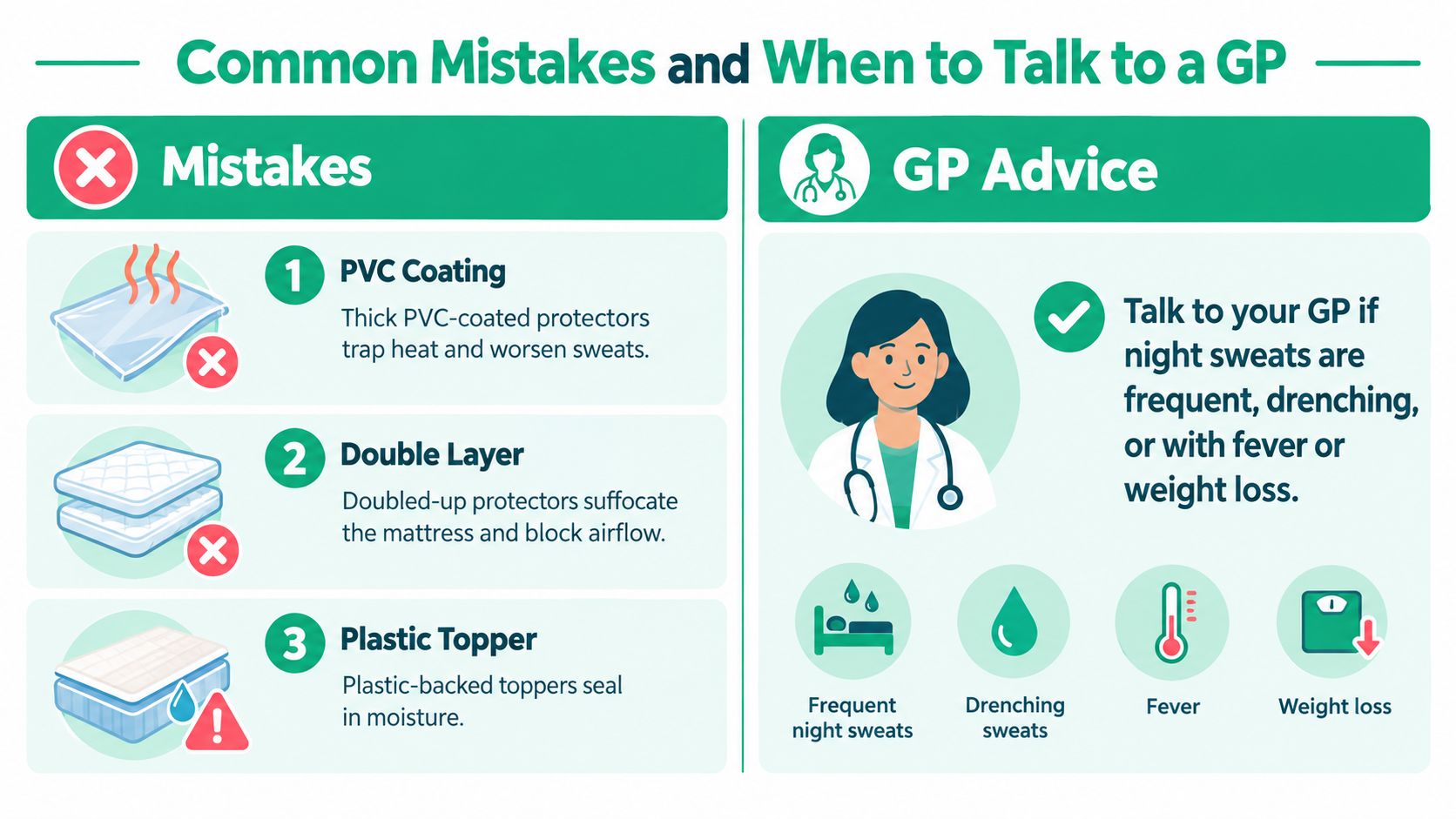
The biggest mistakes are boring, predictable and expensive. People buy the thickest protector they can find because it feels more protective, then they trap more heat and make the sweating worse.
Mistakes that make night sweats worse
- PVC-style heavy backing: It blocks liquid, yes. It also tends to feel hot and unforgiving.
- Doubling up protectors: Two barriers don't give you two times the comfort. They usually flatten airflow and create more heat retention.
- Using a plastic-backed topper as the main fix: Toppers change feel. They're not a substitute for a breathable waterproof barrier.
- Falling for the word cooling alone: Cooling fabric on top means little if the layer underneath traps vapour.
- Skipping protection because the mattress is new: New mattresses stain and absorb perspiration just as easily as old ones.
A protector's job is moisture management and mattress hygiene. It doesn't cure menopause, infection-related sweating, medication-related sweating or any other underlying cause.
The technical reason cheaper barriers fail hot sleepers
The sleep environment around your body matters more than most shoppers realise. Research from a London Metropolitan University repository paper on sleep temperature states that people sleep comfortably when temperatures are 29 to 31°C in their personal bed space, and another version of the same work puts the immediate sleeping microclimate at about 30°C for comfort and adequate sleep. The same UK research summary also points to hygiene pressures beyond sweat alone, including reports from the Chartered Institute of Environmental Health that UK bed bug outbreaks increased by nearly two-thirds in 12 months after the pandemic slowdown, plus a university survey recording 1,224 bed bug reports across 105 universities over three years, with 71% of universities logging at least one incident and 54% lacking a formal mattress replacement policy (sleep environment and hygiene research summary).
That matters because the wrong protector ruins that bed-space climate. The right one protects the mattress without pushing the sleeper into a hotter, wetter micro-environment.
Know when the product stops being the answer
A field study published in SLEEP tracked 973 nights across 33 participants and found a cooling mattress protector was associated with benefit for hot sleepers and people reporting night sweats, including a 7-minute reduction in sleep onset latency (cooling protector field study). That's useful because it shows bedding design can make a measurable difference.
It still doesn't replace medical judgement.
Talk to a GP if:
- Your bedding is getting drenched in a cool room
- It's happening most nights for more than two to four weeks
- You also have fever
- You've had unexplained weight loss
- The night sweats started after a medication change

This week, do five things. Switch to a breathable waterproof protector. Lower the bedroom temperature into a cooler range. Drop to a lighter duvet. Track what's happening for two weeks. If the sweating is drenching or comes with red flags, book the GP.
When sweating crosses into a recurring symptom, no product is the answer on its own.
Protect-A-Bed makes waterproof, breathable mattress and pillow protection built for exactly this problem: keeping sweat out of the mattress without adding the old plastic-sheet feel. If you want a mattress protector for night sweats that fits into a proper cooler sleep setup, visit Protect-A-Bed and look closely at the membrane construction and fabric options, not just the marketing words.