

Mattress Covers Waterproof: How to Pick the Best

You don't think about mattress protection until something goes wrong at 1 a.m. A glass of water tips over, a child has an accident, a guest room mattress starts showing marks you can't explain, and suddenly you're dealing with a stain that's already travelled too far into the bed. That's when mattress covers waterproof stop being a nice extra and start looking like common sense.
The problem is that you buy on the wrong basis. They ask whether it's waterproof, but the questions are how it feels, how the membrane behaves, and whether the cover suits the job you need it to do. If you get those three things right, you get a quieter, cooler, more durable result. If you get them wrong, you end up with a sweaty, noisy cover that technically blocks liquid but still annoys you every night.
Table of Contents
- Why Waterproof Mattress Covers Matter More Than Most People Think
- What a Waterproof Mattress Cover Actually Does
- How Miracle Membrane and Other Waterproof Layers Work
- Fabric Options Compared
- Getting the Right Size and Fit
- Use Cases That Change the Right Answer
- Installation and Long-Term Care
- Choosing the Right Cover and What to Expect from Protect-A-Bed
Why Waterproof Mattress Covers Matter More Than Most People Think
A spilled drink is the obvious scenario, but it's not the one that does the most damage over time. The enemy is slow, repeated exposure, sweat, skin oils, humidity, and the everyday moisture that works its way through bedding long before anyone notices a stain. A mattress that looks fine on the surface can still be absorbing contamination month after month, and once that happens, odour, discolouration, and a shorter usable life follow.
That's why I treat a waterproof protector as mattress insurance, not as a decorative layer. In the wider bedding-protector market, waterproof protection sits in the dominant segment, with waterproof protectors accounting for about 45% of market revenue in 2024 and the market projected to grow from USD 3.43 billion in 2024 to USD 6.91 billion by 2035 (market study). That doesn't mean every product is worth buying, but it does show this isn't a niche comfort accessory. It's the core product type.
The situations that expose a mattress fastest
A family with young children usually learns this the hard way. So does a landlord who opens a property after a tenancy and finds a mattress base that's been mistreated. Hotels and guesthouses know the same truth at scale, every bed has to survive liquids, sweat, and repeated laundering without becoming shabby.
Practical rule: if a mattress is expensive enough to replace reluctantly, it's expensive enough to protect properly.
There's another reason I push waterproof covers so hard in UK homes. Our bedrooms aren't all warm and dry. Damp conditions, cold nights, and heavy duvets can make mattress moisture management more important, not less. That's why a cover that only blocks liquid, but sleeps hot, is a bad compromise.
For the deeper case on whether protectors are worth having at all, the internal guide on are mattress protectors really necessary is a useful companion read.
What a Waterproof Mattress Cover Actually Does
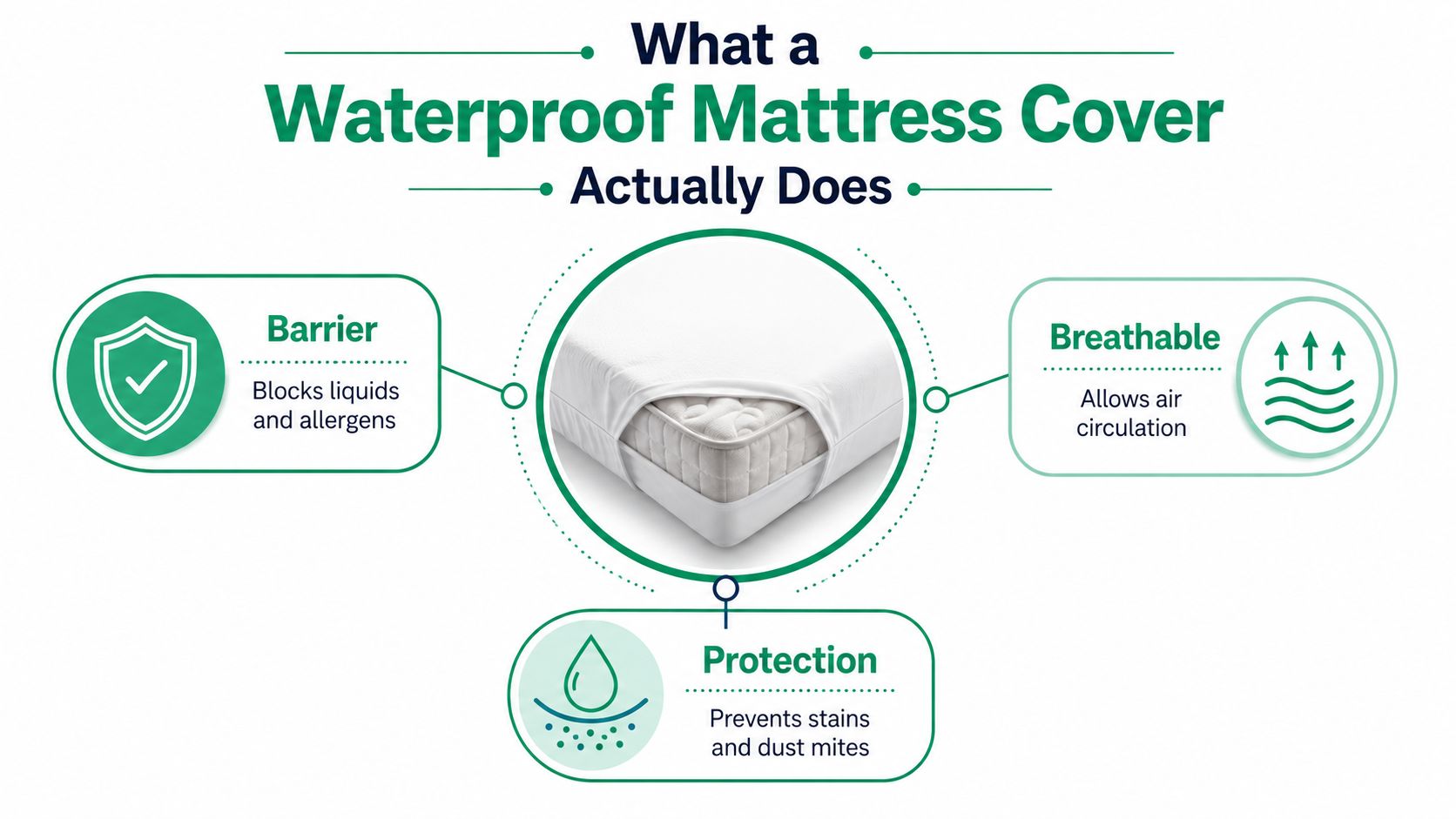
A waterproof mattress cover is a barrier, not a bulky pad. It sits between the sleeper and the mattress, then uses a thin membrane layer to stop liquid passing through while still allowing air and water vapour to move. That's the part people miss. The fabric on top is for comfort, but the membrane is the protection.
A rain jacket, not a bin liner. A bin liner blocks water badly and feels awful. A proper jacket keeps you dry while still letting moisture escape, which is exactly the standard you want in bedding. The old plastic-feel protectors failed because they tried to solve waterproofing without respecting sleep comfort.
The useful distinction is between a fitted protector and a full encasement. A fitted protector covers the sleeping surface and sides like a sheet. A full encasement wraps the whole mattress and closes with a zip, which matters when the goal is containment rather than just surface protection. That difference becomes important for bed bug control later.
Why the membrane matters more than the top fabric
The visible fabric can be cotton, Tencel, charcoal, or a premium knit. None of that is what stops the liquid. The membrane underneath does the blocking, and the fabric above it decides how the bed feels. That's why two protectors can look similar on a product page but sleep completely differently in real use.
If the membrane is good, the cover feels like part of the bed. If the membrane is poor, you get the cheap, crackly sensation people hate. For a plain-language comparison of the difference between waterproof and water-resistant construction, the internal page on waterproof vs water-resistant is worth reading.
How Miracle Membrane and Other Waterproof Layers Work
Miracle Membrane works best when you understand the layer stack properly. The top fabric sets the hand feel, the membrane blocks liquid, and the backing keeps the whole cover stable without turning the mattress into a plastic wrapper. Protect-A-Bed describes Miracle Membrane as thin, flexible, silent, and air-permeable, which is the right profile for anyone who wants waterproofing without the usual crackly feel.
That same construction logic applies to healthcare-grade waterproof layers. A good protector in that category is usually described as fully waterproof, vapour-permeable, and built with a polyurethane-coated backing that stops liquid ingress while still allowing water vapour to pass through. That is the practical point. Modern waterproof covers do not need to feel like shower curtains, and they should not sound like one either.
What good waterproofing feels like in practice
A proper membrane does three jobs well. It stays quiet when you move, it avoids the hot, trapped feeling associated with older vinyl styles, and it keeps the mattress surface wipeable instead of letting spills soak through. That is what buyers mean when they say a cover feels protective without feeling cheap.
Fit and edge sealing matter just as much as the membrane itself. A protector can have a sound waterproof layer and still fail at the sides if the depth is wrong or the elastic does not hold the edges flat. That is why a fitted protector and a full encasement are not interchangeable, even if both are sold as waterproof. The internal guide on waterproof mattress sheet is useful if you want a clearer breakdown of fitted styles versus full encasements.
A good waterproof layer is a thin barrier that disappears under normal sleep.
The practical test is simple. If the cover changes the feel of the mattress more than it protects it, the membrane or the construction is wrong. A well-made layer should block liquid, stay calm under movement, and leave the mattress feeling like a mattress.
Fabric Options Compared
The membrane is the same broad idea, but the top fabric changes the experience completely. That's where buyers make the wrong call most often. They choose by price or colour, then discover the cover sleeps too warm, feels too flat, or doesn't suit the room it's going into.
Fabric Options at a Glance
| Fabric | Feel | Best For |
|---|---|---|
| Tencel Cool | Smooth, cool, moisture-managing | Hot sleepers and night sweats |
| Cotton | Familiar, breathable, straightforward | Families, hospitality, everyday use |
| Charcoal | Sleeker, modern, slightly more structured | Buyers wanting odour-control cues and a firmer hand-feel |
| Premium | Softest and most universal-feeling | Buyers who want comfort first |
How I'd choose between them
Tencel Cool is the obvious pick if you sleep hot. It's the fabric I'd steer towards for night sweats, stuffy rooms, or anyone who gets irritated by bedding that holds warmth. If you already run warm, don't fight that with a heavier fabric.
Cotton is the safest all-rounder. It feels familiar, breathes well, and suits family beds where comfort and washability matter more than a specialist finish. Premium is the softer option, so it makes sense when the mattress is in regular use and the sleeper wants a more cushioned surface feel.
Charcoal is for buyers who want a cleaner, more modern feel and care about a slightly sleeker hand. I'd lean that way for people who are sensitive to odour perception and don't want a bright, obvious protector look under the sheets.
My blunt recommendation: if you're unsure, buy for the sleeper, not for the mattress. The mattress already has a job. The cover has to disappear in daily use.
For hot bedrooms, I'd start with Tencel Cool. For homes with kids, cotton or Premium is the more forgiving choice. For hospitality or heavy rotation, cotton is the practical option because it's the least fussy in repeated laundering.
Getting the Right Size and Fit
A waterproof cover can be well made and still fail in daily use if the fit is wrong. That is the mistake I see all the time. People buy the right type, then ignore mattress depth, which leaves slack at the sides or corners and lets the cover shift when it should stay put.
The first measurement is simple, length and width. The one people miss is depth. A cover made for a shallower mattress will pull too hard, ride up, or leave a gap where liquid can reach the mattress. A 30 cm mattress paired with a cover designed for 25 cm depth is exactly the kind of mismatch that causes trouble at the edge.
Fit types that suit different beds
A fitted protector works best when the mattress shape is standard and the job is quick, everyday protection. An elasticated skirt gives speed and makes fitting easy. A zip-around encasement makes sense when you need full coverage and a sealed barrier around the whole mattress.
Close sizing should be part of the product, not an afterthought. Reputable suppliers treat mattress dimensions that way, with clear size-specific measurements instead of vague one-size language. That is the level of precision I expect before buying.
- Measure length, width, and depth: Do not guess from the bed frame label.
- Check corner stretch: Some covers handle neat corners better than thick pillow-top profiles.
- Match the use case: Surface protection and full encasement do not do the same job.
A cover that fits properly seals better, lies flatter, and lasts longer because the seams are not fighting the mattress shape every night.
Use Cases That Change the Right Answer
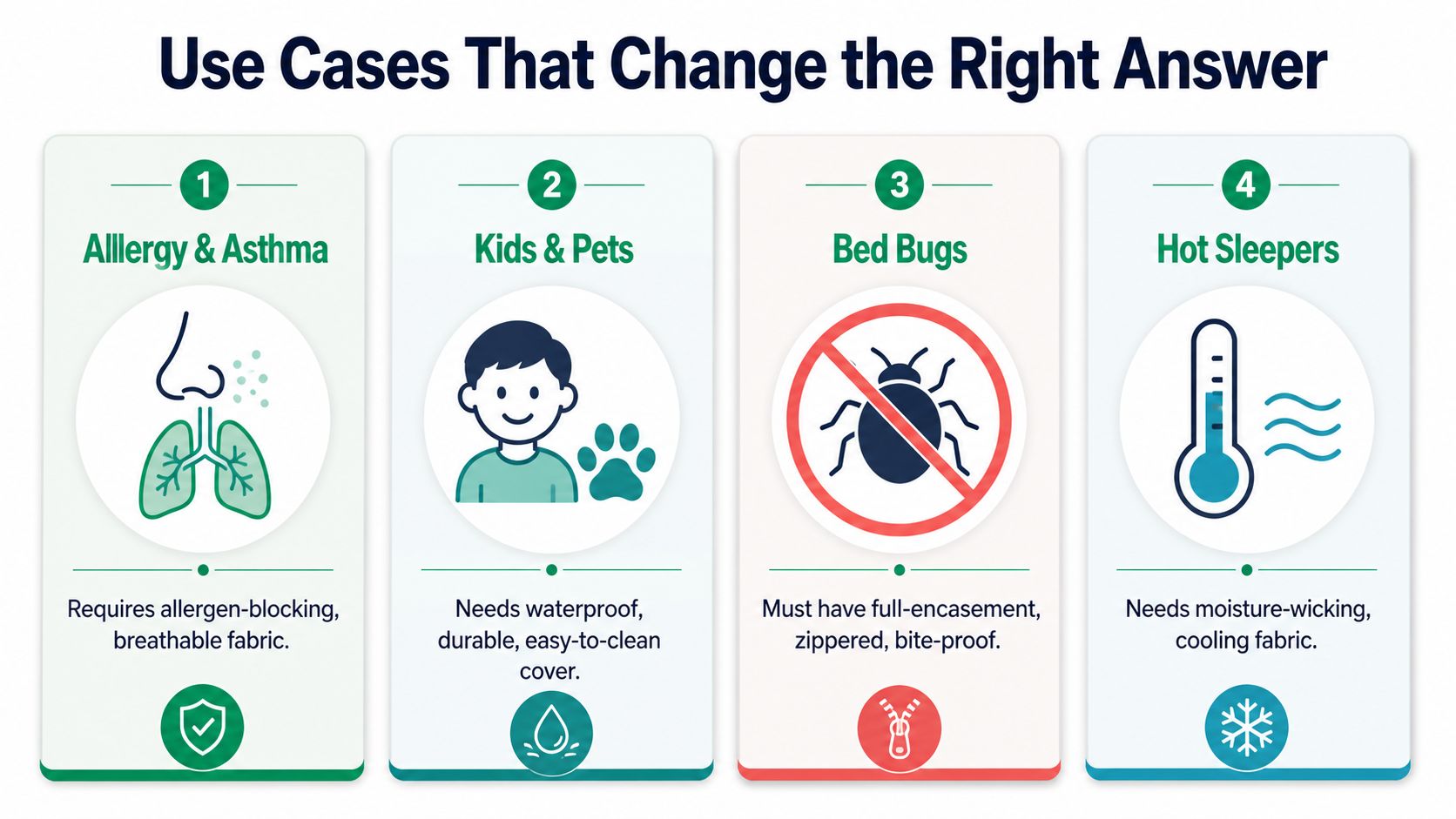
A buyer with allergies needs a different answer from a parent with a toddler, and both need something different from a landlord worried about bed bugs. Most generic buying advice falls apart. The use case decides whether you want surface protection, allergen control, or a sealed enclosure.
For allergy and asthma households, the right target isn't just liquid blocking. It's a breathable barrier that keeps dust mite allergens on the outside and can be washed properly. A waterproof cover that sleeps hot won't stay on the bed long if it makes the room feel clammy.
For kids and pets, durability and quick cleaning matter most. You need a cover that handles accidents without fuss and still feels acceptable enough that no one complains about sleeping on it. Cotton or Premium fabrics tend to be the best balance here because they don't feel overly clinical.
When the answer stops being a fitted protector
Bed bug concerns change the category altogether. A fitted protector isn't enough, because seams and openings still leave room for the problem to persist. A full zip-around encasement is the right form when the objective is containment.
Hospitality, care, and rental use put pressure on laundering and consistency. You want protection that survives repeated washes, predictable sizing, and fast turnaround between guests or residents. That's not a comfort-first problem, it's an operations problem.
The UK review pattern supports that. In one independent dataset, 31.3% of negative reviews cited inadequate waterproofing, which tells you the wrong use case is a major reason buyers end up dissatisfied (UK mattress cover trend data). If the protection fails at the moment you need it, nothing else about the cover matters much.
Installation and Long-Term Care
Put the cover on the right way and it behaves like part of the bed. Rush it, twist it, or ignore the care label and you shorten its life for no good reason.
Start with a stripped mattress. Fit the cover like a fitted sheet, then make sure the labelled end sits at the head of the bed if the product specifies one. Smooth the surface, pull out the corners, and check that no edge is bunched under the mattress before adding sheets.
The care habits that actually matter
Practical rule: heat and harsh additives are usually what ruin waterproofing, not ordinary use.
Keep washing gentle and follow the label. Avoid fabric softeners and chlorine bleach because they can degrade membrane performance over time. Dry on low heat if the care label allows tumble-drying, or air-dry fully before putting the cover back on the mattress. Don't iron the membrane side, don't dry-clean it, and don't put it back on while it's still damp.
A few habits make a real difference:
- Wash after accidents promptly: Don't let liquid sit in the fibres longer than it needs to.
- Use the right detergent: Mild and straightforward beats heavily perfumed every time.
- Inspect for micro-tears: Small damage is usually the first sign it's time to replace the cover.
A well-cared-for protector should keep doing its job for years. The point isn't to treat it delicately, it's to stop avoidable damage from turning a durable barrier into a weak one.
Choosing the Right Cover and What to Expect from Protect-A-Bed
The cleanest decision process is simple. Start with the use case, then choose the fabric, then decide whether you need a fitted protector or a full encasement. Hot sleepers should lean cooling and breathable. Allergy-prone households should prioritise a barrier that handles dust mite exposure cleanly. Bed bug concerns need a sealed encasement, not a standard surface protector.
For UK buyers comparing options, Protect-A-Bed's range centres on the Miracle Membrane approach, with waterproof protectors and bed bug encasements designed around breathable barrier protection. The brand also states a global patent introduced in 2010 for its bedbug-proof encasement, a warranty of up to 10 years against material or manufacturing defects, and UK fulfilment with 1 to 3 working day delivery on in-stock items plus free shipping above £90. It also states products are sold in 49 countries and stocked in nearly 15,000 stores worldwide, with an on-site Trustpilot score of 4.6 from 201 reviews. For readers comparing budget choices too, this budget mattress protection guide is a useful reminder that price should never outrank fit and membrane quality.
If you want waterproof protection that's breathable enough for real sleep, not just marketing copy, start by matching your mattress size, your sleeper type, and your main risk. Then visit Protect-A-Bed and choose the cover that fits the bed you own, not the one you wish you had.