

Waterproof Mattress Sheet Guide: How to Choose the Right One

You know the moment. A glass tips over in bed, a toddler has a night-time accident, or you strip a rented mattress and find an old stain staring back at you. A waterproof mattress sheet is the quiet fix that sits between everyday life and a mattress you'd rather not replace early.
For UK households, it's less about a gimmick and more about practical damage control. It helps with spills, bedwetting, sweat, allergens, and the kind of small accidents that become expensive if they soak in.
Table of Contents
- What a Waterproof Mattress Sheet Actually Does
- How Waterproof Membrane Technology Works
- Waterproof Sheets, Protectors, and Encasements Compared
- Who Benefits Most From a Waterproof Mattress Sheet
- Key Buying Criteria for UK Shoppers
- Care, Washing, and Long-Term Maintenance
- Common Myths About Waterproof Mattress Sheets
- Choosing the Right Waterproof Mattress Sheet for Your Bed
What a Waterproof Mattress Sheet Actually Does
A waterproof mattress sheet looks a lot like a normal fitted sheet, which is why people often ignore it until something goes wrong. Then it earns its place in the bedroom fast, whether the problem is a child's bedwetting accident, a knocked-over drink, or a rental mattress that needs protecting from the next occupant.
The basic structure
At its simplest, the product has three jobs. The top fabric layer gives the bed a familiar feel, the middle membrane stops liquid from passing through, and the base layer helps the sheet sit properly on the mattress. That structure matters because it's what separates a proper waterproof sheet from a towel, an old blanket, or a “should be fine” improvisation that usually isn't.
The fitted shape is useful too. Instead of lying loosely on top, it hugs the mattress so liquid doesn't find an easy route around the edges.
Practical rule: if a product only handles the top surface but doesn't wrap securely around the mattress, it's not doing the full job a fitted waterproof sheet should do.
Who actually needs one
Plenty of people think these sheets are only for babies. That misses the primary use cases. Families, students in rentals, landlords, hotels, guest rooms, and anyone dealing with sweat or incontinence can all benefit from the same basic protection.
The UK market backing helps explain why the product is now mainstream rather than niche. Bedding protectors are forecast to grow from USD 2,061 million in 2024 to USD 3,323 million by 2035, and the U.K. is separately projected to grow at a 4.2% CAGR from 2025 to 2035 in that category, with a historic growth rate of 3.7% from 2020 to 2024 in the broader market Fact.MR bedding protectors market. In the related mattress-protection market, the waterproof segment accounted for about 45% of revenue in 2024, which shows how central waterproof performance has become Spherical Insights bedding protector mattress protector market.
That's why the product is best understood as a household safeguard, not a special accessory.
How Waterproof Membrane Technology Works
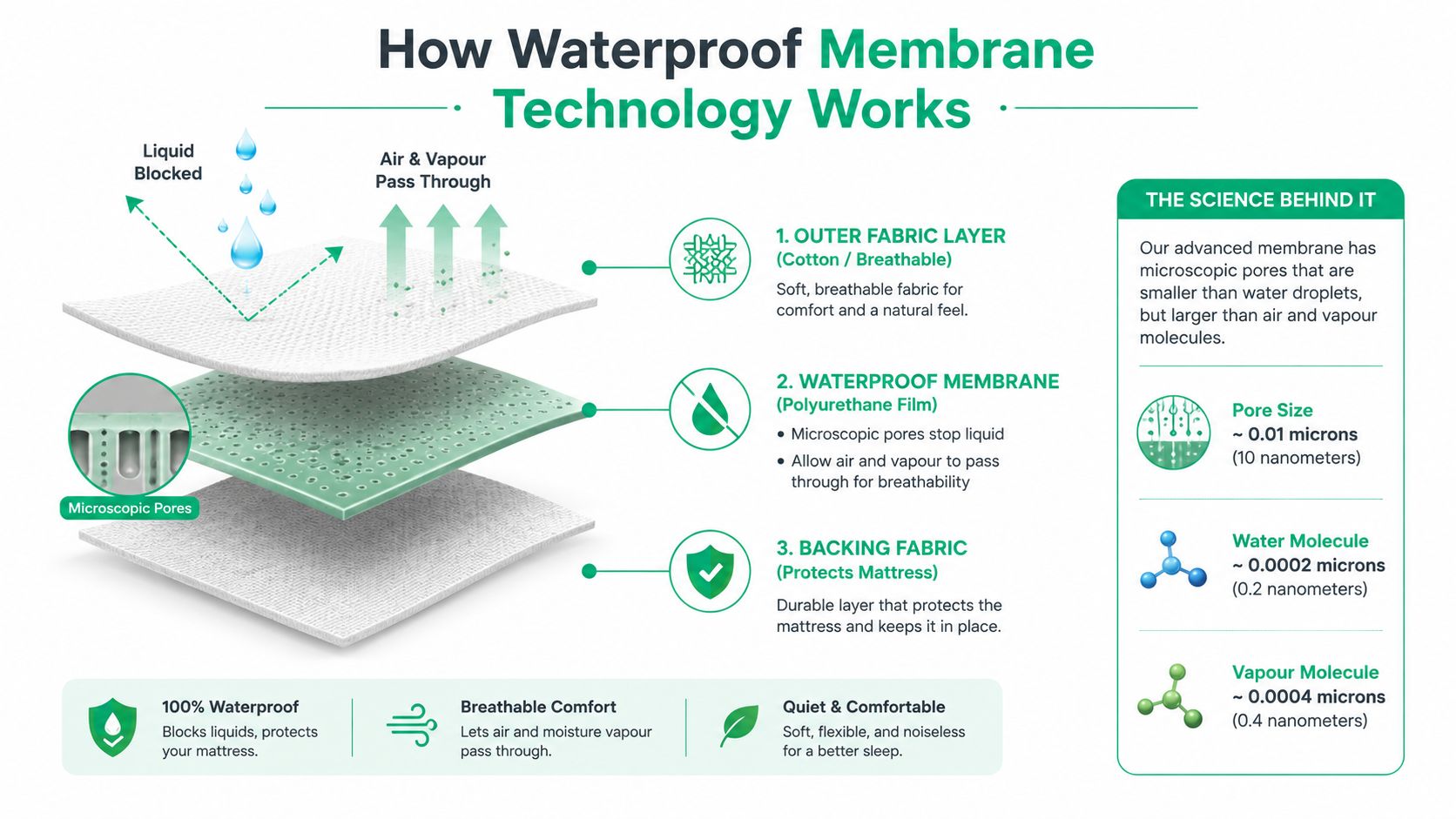
Modern waterproof bedding is built around a simple idea. Stop liquid, keep the bed comfortable, and avoid the stiff plastic feel people remember from older products. The membrane does the hard work, while the fabric face decides how the sheet feels against the body.
What the layers are doing
A typical product pairs a cotton, polyester, or similar face fabric with a thin polyurethane or TPU membrane, then adds a backing that helps the sheet stay stable on the mattress. The membrane blocks liquid penetration, while the fabric layer keeps the sleep surface from feeling like a sealable shower curtain.
That is the key difference between a breathable waterproof sheet and a fully sealed cover. Breathable membranes are meant to block liquid while still allowing air to pass. In normal bedrooms, that balance matters because people don't want a hot, noisy barrier under their body all night.
The idea of a silent, thin barrier is exactly what Miracle Membrane is used for in Protect-A-Bed protectors, where it's described as a flexible, silent, thin layer that blocks dust mites, allergens, liquids, and sweat while remaining air permeable. Protect-A-Bed breathable waterproof membrane
Why breathable matters
A waterproof membrane doesn't need to feel oppressive. If it's engineered well, it can be both protective and comfortable. That's the reason people now buy these sheets for more than spill protection, because they're trying to manage night sweats, moisture from perspiration, and year-round sleep comfort without giving up hygiene.
Breathability is not a bonus feature. In the right build, it's what makes waterproofing usable every night instead of only when an accident happens.
UK shoppers should also notice wording like silent, thin, and air permeable. Those are the clues that a product is designed for regular sleep, not for temporary emergency use.
Waterproof Sheets, Protectors, and Encasements Compared
These three products get mixed up all the time, and the naming doesn't help. A waterproof mattress sheet is made to feel like bedding. A mattress protector is a removable layer over the mattress. A mattress encasement is the most enclosed option, with a zip and full-sided coverage.
| Feature | Waterproof Mattress Sheet | Mattress Protector | Mattress Encasement |
|---|---|---|---|
| Main shape | Fitted sheet style | Cover under the sheet | Fully zippered cover |
| Everyday comfort | High, because it feels like bedding | Varies by build | Usually less like normal bedding |
| Protection focus | Spills, sweat, bedwetting, stains | Hygiene and surface protection | Full enclosure and pest barrier |
| Ease of removal | Simple | Simple | More involved |
| Best use case | Daily sleep with protection built in | Added layer of mattress care | Bed bug and full-mattress isolation needs |
A useful way to think about it is this. If someone wants a normal sleeping feel with built-in liquid protection, the waterproof sheet makes sense. If they mainly want a removable layer to keep the mattress cleaner, a protector works as a separate layer. If the goal is to isolate the mattress completely, the encasement is the specialist option.
That distinction matters in rental homes and hospitality too. A fitted waterproof sheet may handle everyday spills well, but it doesn't solve the same problem as a sealed cover when full mattress isolation is needed.
For anyone trying to compare household products by function rather than marketing, comparing diaper costs for dogs is a useful reminder that the cheapest-looking option isn't always the most practical once laundry, replacement, and repeat use are factored in.
A simple way to choose
- Choose a waterproof sheet if you want comfort first and liquid protection second, with both built into one layer.
- Choose a protector if you want a removable barrier under your regular sheet.
- Choose an encasement if you need full mattress sealing for pest or deep-isolation reasons.
Who Benefits Most From a Waterproof Mattress Sheet
Parents usually notice the need first, but they're not the only ones. A toddler who's nearly trained can have good nights and bad nights, and nobody wants to strip a mattress at 2 a.m. just because one accident got through the bedding. For that household, a waterproof sheet is less about perfection and more about reducing stress.
The same logic helps in baby setups, which is why practical prep lists often include sleep protection alongside nursery basics. If you're building a home list, newborn must-haves for UK parents is a sensible place to see how these basics fit into a wider routine.
Real-world buyer profiles
A student tenant wants to avoid arguments over stains. A landlord wants fewer replacement costs and fewer awkward check-out conversations. A hotel or guesthouse needs quick room turnaround and predictable hygiene. A care setting often needs bedding that handles frequent changing without turning every incident into a full mattress clean.
There's also a quieter group that often gets overlooked. Hot sleepers, people with night sweats, and those dealing with menopausal temperature swings may need a breathable barrier that handles moisture without trapping too much heat. The right sheet won't solve every comfort issue, but it can reduce the feeling of waking up damp.
Allergy and asthma sufferers have another reason to care. Waterproof bedding is commonly used to limit what reaches the mattress interior, where dust and dust mites can build up over time. That's not the same as making a mattress sterile, but it can reduce the amount of direct exposure from the sleep surface.
If the mattress is expensive to replace, hard to clean, or shared by different sleepers, protection becomes a sensible default rather than a special purchase.
The best fit is the one matched to the actual problem. Bedwetting, sweat, allergen control, and property protection all point to the same product type, but for different reasons.
Key Buying Criteria for UK Shoppers
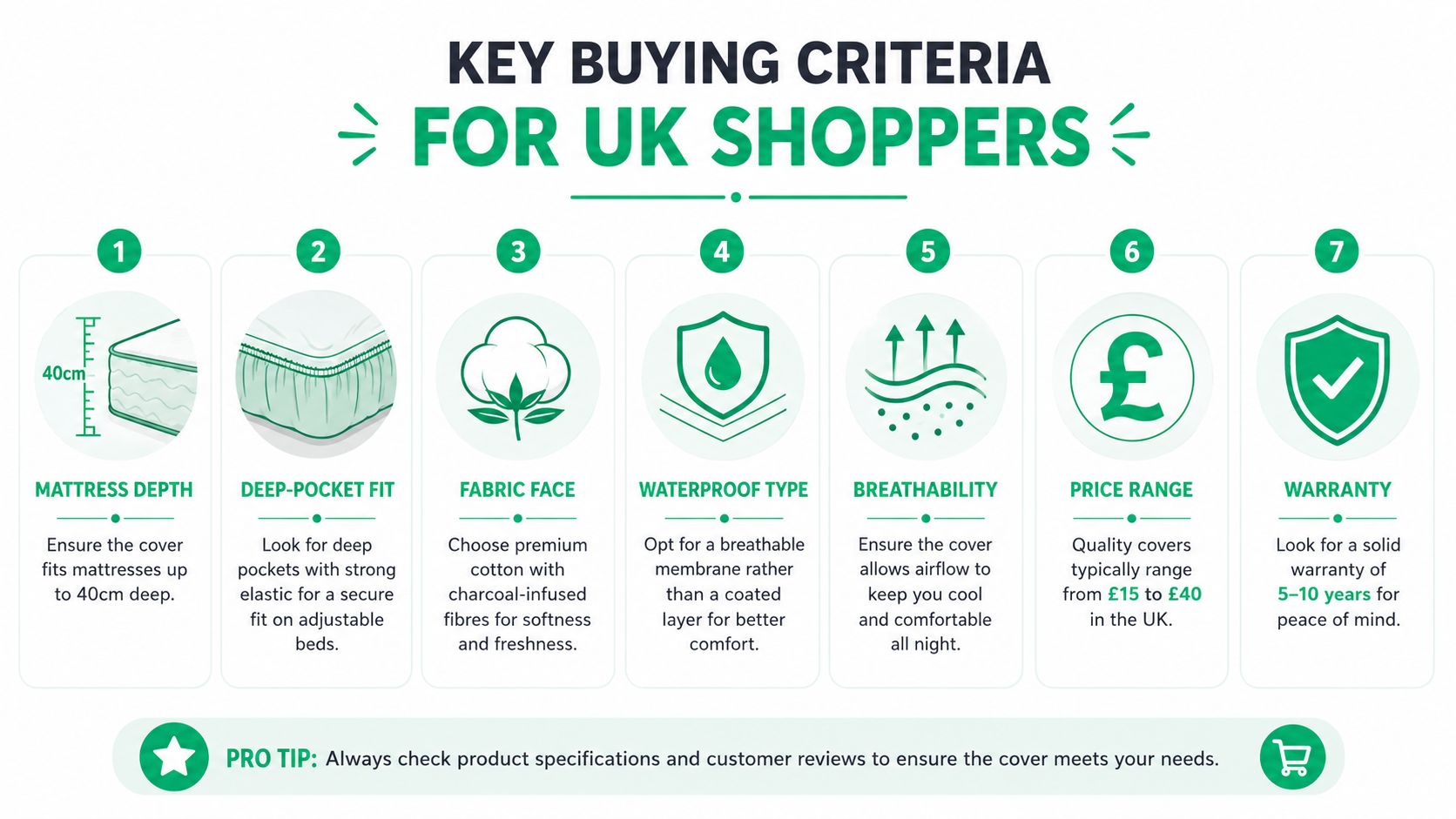
Fit comes first. A sheet that's too shallow will ride up, while one that's too loose will move around and stop feeling secure. UK shoppers should check mattress depth carefully, especially for deep-pocket or adjustable beds, because the sheet has to stay put when the bed moves.
What to check before you buy
- Mattress depth: Measure the mattress, not just the bed size label. The wrong depth is the fastest way to end up with a sheet that pops off.
- Deep-pocket fit: If the bed is adjustable, the corners need enough give to handle movement without strain.
- Fabric face: Cotton feels familiar, while premium blends and cooling fabrics change how the sheet feels against skin.
- Waterproof type: A membrane build is usually the route for breathable comfort, while coated surfaces can feel more sealed.
- Breathability: If you sleep hot, this is one of the first things to prioritise.
- Noise level: Silent fabrics are a real benefit if you turn over a lot in sleep.
- Warranty and support: Look for terms that make sense for the price and the expected use.
Protect-A-Bed states UK-wide delivery with 1–3 working day dispatch on in-stock items, free shipping above £90, and warranty coverage of up to 10 years against material or manufacturing defects. Those details matter because a protection product should arrive when you need it and last long enough to justify the decision.
A quick reading rule
If a listing talks about “waterproof” but stays vague on fabric, fit, and membrane type, treat it cautiously. If it tells you how deep the fitted corners go, what the surface feels like, and how the barrier behaves, you're reading a product description that's trying to help you choose properly.
The right sheet should answer three questions immediately. Will it fit? Will it feel acceptable every night? Will it still protect the mattress after repeated washing?
Care, Washing, and Long-Term Maintenance
A waterproof sheet only earns its keep if it's cared for properly. People often buy one, wash it once, then assume it will handle anything forever. In reality, the membrane and the face fabric both need sensible laundering so the barrier keeps doing its job.
Washing habits that protect the membrane
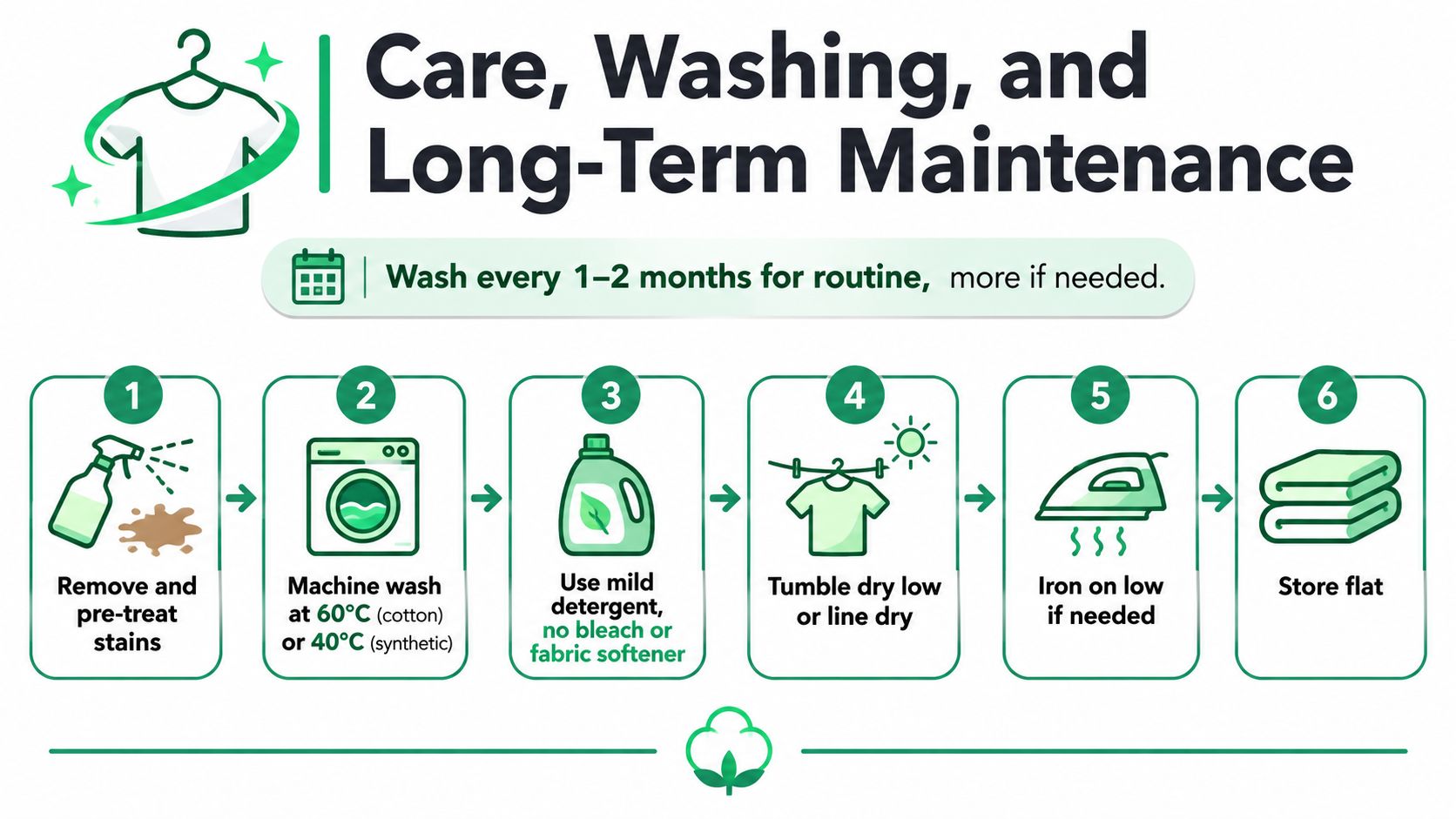
A washable waterproof sheet often handles standard machine care, and UK retail listings commonly specify 60°C wash care for some cotton-faced versions. The point of washing is to remove sweat, spills, and soil without damaging the membrane layer underneath. Harsh treatment can shorten the useful life of the sheet, especially if fabric softener or strong bleach is used too often.
That's why maintenance should be simple and consistent. Wash it regularly enough that moisture and odours don't build up, then dry it in a way that doesn't overcook the barrier.
- Use mild detergent: It cleans without overworking the surface.
- Skip fabric softener: It can interfere with performance.
- Avoid harsh bleach: That's where unnecessary wear starts.
- Dry gently: Low tumble heat or line drying is usually the safer route.
- Check the surface: If you notice damp patches or a less reliable feel, the sheet may be ageing.
How often to wash
For routine home use, a practical rhythm is every 1 to 2 months, then more often if the bed gets heavy use. Child beds, guest rooms, and short-let rooms need more frequent attention because accidents and turnover happen more often. After a visible spill or accident, don't leave it sitting, clean it promptly.
The care guide on how to wash a mattress protector is useful here because the same basic laundering discipline applies.
Replacement rule: when washing no longer restores the original feel, fit, or barrier confidence, it's time to replace the sheet rather than keep hoping for one more cycle.
The aim isn't perfection. It's getting a long, reliable service life from a product that's meant to protect a much more expensive item underneath it.
Common Myths About Waterproof Mattress Sheets
The biggest myths survive because people picture old-fashioned plastic bedding. That's not what modern membranes are built to feel like. The better products are made to be worn through the night, not noticed every time you roll over.
One common myth is that waterproof sheets are noisy. That may have been true of older plastic-style materials, but a membrane-based sheet can be thin and silent instead. Another is that they make you hot. Breathable constructions are designed to let air move while stopping liquid, which is a very different experience from lying on a sealed sheet.
The third myth is that they're only for babies. That's too narrow for how people use them in UK homes. Renters, allergy sufferers, older adults, hospitality operators, and anyone dealing with sweat or incontinence may all find the same protection useful.
A fourth mistake is assuming all “waterproof” products perform the same way. They don't. Face fabric, membrane type, stitching, and overall fit can change the result a lot, which is why careful reading matters more than a bold label.
For a clearer distinction between claims, the page on waterproof vs water-resistant is worth a look if you want to separate genuine barrier performance from looser marketing language.
A waterproof sheet should solve a problem without creating a new one, like extra heat, excessive noise, or awkward fit.
The final myth is that a waterproof sheet alone handles bed bugs. It doesn't. That's where a full encasement comes into the picture, because the job changes once the goal is mattress sealing rather than everyday spill protection.
Choosing the Right Waterproof Mattress Sheet for Your Bed
Start with the sleeper, not the label. A child's bed, a guest room, and a shared rental mattress all need different levels of protection, even if the product category looks similar on the shelf. Then decide whether your biggest concern is spills, sweat, allergens, or a more specialised isolation need.
Fabric choice is the next filter. Cotton suits people who want a familiar feel, Premium styles often aim for a softer finish, Charcoal can suit buyers who like a more technical bedding feel, and Tencel Cool is the obvious one to look at if breathability and temperature comfort matter most. The right choice isn't the fanciest one, it's the one that matches the room and the person sleeping there.
If you want a starting point for UK shopping, Protect-A-Bed's waterproof sheet range is one example of how a fitted sheet style can be built around a breathable membrane and different fabric faces. For readers also researching specialist accessibility needs, find waterproof sheets for NDIS participants can help put the product into a care context.
Buying one good sheet is usually easier than repeatedly replacing a damaged mattress. Once you've matched fit, feel, and protection level, the decision becomes simple. You're not buying a trend, you're setting up a reliable barrier for the bed you already own.
If you're ready to protect a bed from spills, sweat, or accidents, visit Protect-A-Bed to review the UK waterproof mattress sheet options, compare fabric choices, and check current sizing and delivery details before you buy.