

How to Cool Down at Night Without Air Conditioning

In a Loughborough study of a controlled bedroom maintained at approximately 30°C, total sleep time fell by 24 minutes and participants reported significantly worse sleep quality and morning freshness, findings reported in the Loughborough University overheated bedroom sleep study. That's why learning How to Cool Down at Night isn't just about feeling nicer for ten minutes. Heat around your body can shorten sleep and leave you groggy, even in a UK home that cools down eventually.
Most homes here don't have air conditioning, so you need order, not gadgets. Cool the room first, stop the bed sending heat back, then cool your body gently. I'd start with the cheapest fix every time, a thermometer at bed height, because guessing from how stuffy a room feels leads people to open windows at exactly the wrong moment.
Table of Contents
- Cool the Bedroom Tonight
- Bedding and Breathable Protectors
- How to Cool Your Body Without a Cold Shock
- Safer Cooling for Children and Vulnerable Sleepers
- Tonight's Room-or-Move Decision
Cool the Bedroom Tonight
Keep the bedroom below 26°C between 22:00 and 07:00 where possible. The UK housing evidence review on bedroom overheating explains the CIBSE TM59 criterion: temperatures above 26°C should occur for no more than 1% of annual night-time hours. The number is a decision tool. It helps you choose whether to shade, ventilate, use a fan or sleep in another room.
Match Tonight to One Row
| When | Do this | Do not | Target |
|---|---|---|---|
| Afternoon, outdoor air hotter than indoors | Close blinds or curtains and shut sun-facing windows | Open windows because the room feels stuffy | Limit solar and outdoor heat gain |
| Outdoor air cooler than indoors | Open opposite windows and safe internal doors for cross-ventilation | Leave ground-floor windows unsecured | Bring cooler air through the dwelling |
| 22:00 to 07:00 | Check the bedroom temperature | Rely on a wall thermostat in direct sun | Below 26°C; above 26°C for no more than 1% of annual night hours |
| Fan in use | Move air across exposed skin towards an exit | Point it at a wall or run it all night in a sealed, hot room | Help sweat evaporate; a fan does not cool the room |
| Noisy, polluted or allergy-sensitive home | Use a window restrictor or mechanical ventilation | Import pollen, noise or insecure night air | Cooler air without a new risk |
Bedrooms can stay hot well into the night. The UK Government Homes for Net Zero monitoring for summer 2025 found that bedrooms exceeded 26°C for an average of 54 minutes per day in summer 2025, compared with 23 minutes per day in 2024. Its findings also report that after a heatwave day, bedrooms stayed above 26°C for an average of 4.70 hours.
The Five Room Steps in Order
- Block heat in late afternoon: Close curtains or blinds on sun-facing glass. Switch off lights, chargers and cooking equipment you are not using. Any heat they add will need to leave the room later.
- Compare indoor and outdoor air: If outside is still warmer, keep windows shut. Opening them then brings heat into the home.
- Ventilate when outdoor air is cooler: Open windows on opposite sides where safe, and open internal doors if security allows. A through-route helps warm air escape; one tilted window in a closed bedroom mostly stirs it.
- Set the fan to move air: Aim it across the bed towards an exit. Moving air over exposed skin helps sweat evaporate; a fan pointed at a wall does little.
- Move if the room stays heat-soaked: Sleep in the coolest secure room available rather than the hottest one. Downstairs or north-facing rooms may hold less stored heat.
Daytime shading gives evening ventilation less stored heat to shift. For a wider whole-house view, Covenant Aire Solutions home cooling tips cover related steps to consider alongside this bedroom routine.
Practical rule: Ventilate when the outdoor air is cooler than the indoor air. Otherwise, wait.
Opening sun-facing windows all afternoon because the room feels stuffy can undo the routine. The moving air may feel pleasant briefly, but hot outdoor air and direct sun add heat to the room. By bedtime, walls, bedding and furniture can release that stored warmth, leaving cross-ventilation less effective.
If noise, pollution, pollen or security makes open windows impractical, use a locked restrictor, trickle vents or mechanical ventilation if available. A slower temperature drop is preferable to an unsecured ground-floor window or a night of streaming eyes.
Bedding and Breathable Protectors
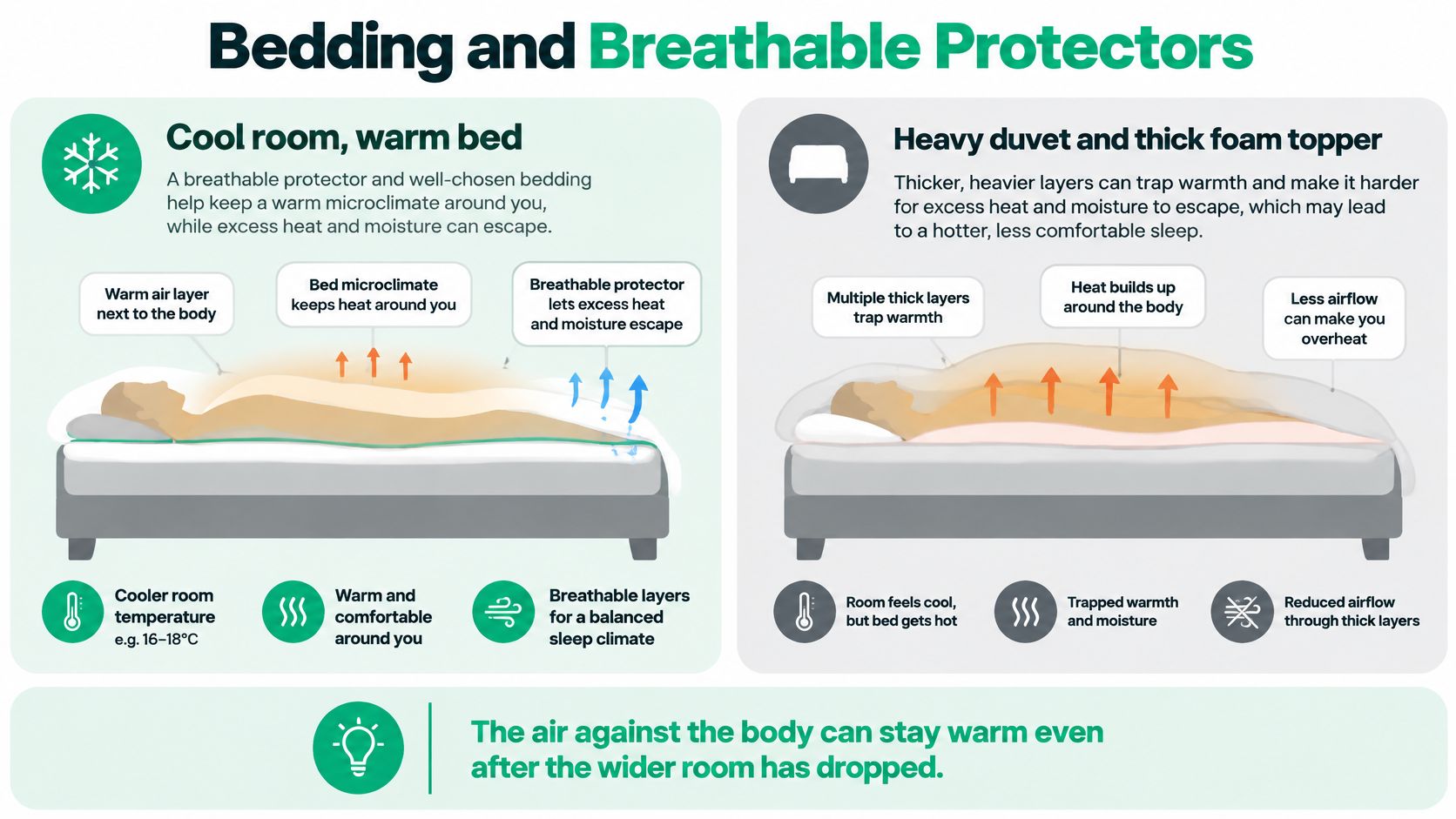
A mattress can keep you warm after the bedroom has cooled. The thin layer of air between your body and the bed, often called the bed microclimate, holds heat and moisture. Your mattress, topper, protector, sheet and duvet all affect how easily that heat escapes.
Compare the Sleep Surface Before You Buy Anything
| Material | Heat behaviour | Best for | Watch-out |
|---|---|---|---|
| Light cotton percale | Breathes and absorbs some moisture | Everyday hot-weather sheets | Dense or high-tog weaves can hold damp heat |
| Linen | Loose weave allows airflow | Sleepers who overheat in cotton | Creases and a higher price |
| Lyocell such as Tencel | Smooth and moisture-wicking | Night sweats | Performance varies by weave and finish |
| Polyester or microfibre | Can trap heat and feel clammy | Lower-cost bedding | Often uncomfortable for hot sleepers |
| Thick foam topper | Insulates the body from the mattress | Cool-weather comfort | Can retain heat on summer nights |
| Vinyl or plastic-backed protector | Blocks liquid but restricts airflow | Short-term spill cover | Can leave the bed feeling damp |
| Thin, air-permeable waterproof membrane | Blocks liquid, sweat and allergens while allowing air through | Mattress protection with less added heat | A heavy backing can reduce airflow |
For a cooler bed, choose light cotton percale, linen or lyocell sheets, then use a light summer duvet or just a sheet. Keep mattress protection thin and breathable, too. A bare mattress may feel cooler at first, but sweat can soak into a surface that is difficult to wash.
On a humid night, a vinyl-backed protector under a polyester sheet can leave sweat trapped against your back. The sheet feels clammy, so you kick off the duvet, cool down, pull it back and repeat the cycle.
A breathable waterproof layer should block spills and sweat from reaching the mattress while allowing air to pass through.
Pillows, Allergy Barriers and One Practical Pick
Your face and neck stay against the pillow for hours. A dense foam pillow in a synthetic case may feel hot even when the rest of the bed is comfortable. Use a breathable pillowcase, turn the pillow if one side warms up, and keep a protector in place if night sweats are regular.
For allergy and asthma households, removing the barrier can expose the bed to allergens. Look for protection that combines breathability with dust-mite blocking and can be washed and dried promptly. The guide to choosing a cooling mattress protector for breathable protection explains what to consider when comparing constructions.
The Protect-A-Bed Tencel Cool Mattress Protector costs from £34.98. Its Miracle Membrane blocks dust mites, allergens, liquids and sweat from penetrating the bed. Protect-A-Bed's Nordic Chill fabric dissipates body heat up to 10 times faster than cotton.
After a spill or heavy night sweat, wash the protector in warm or hot water and tumble dry it at medium temperature as quickly as possible. Dry protectors with towels or other bed linen, never by themselves. A damp protector left on the bed can make the sleep surface feel muggy.
How to Cool Your Body Without a Cold Shock
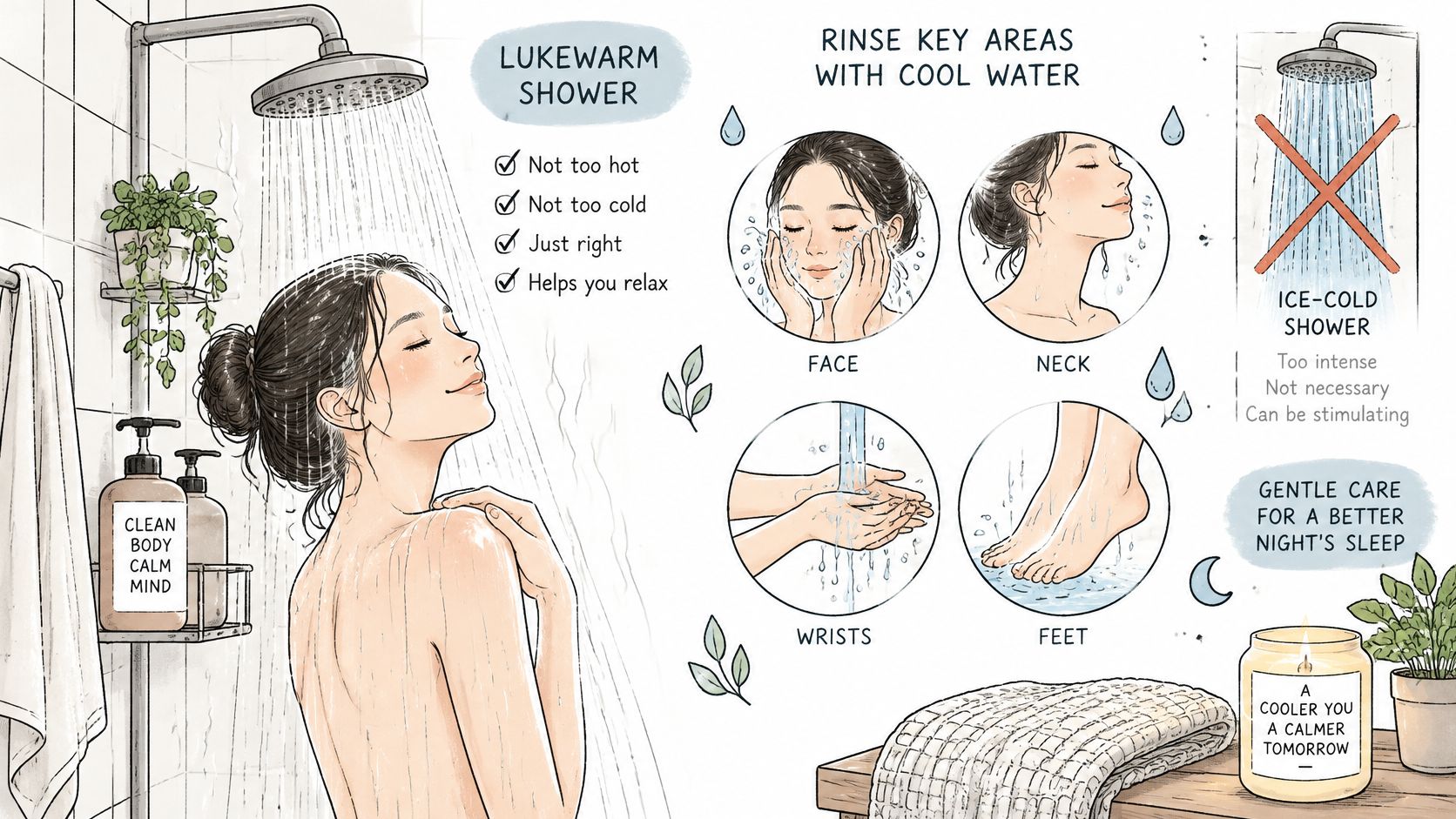
Once the room is as cool as it's going to get, work on your body in a gentler order. The University of Liverpool repository study on passive cooling in London care settings supports reducing room heat load first, then using a lukewarm shower, drying thoroughly, wearing loose lightweight sleepwear, and drinking normally rather than forcing large volumes before sleep.
The Body Sequence
- Take a lukewarm shower: Or wash your face, neck, wrists and feet if a shower isn't practical. An ice-cold shower can make you clamp down, shiver, and feel hotter once you're back in bed.
- Dry thoroughly: Damp skin under covers can chill, then turn sweaty again as the bed warms. A quick pat with a towel isn't enough on a humid night.
- Wear loose, light sleepwear: Cotton or moisture-wicking fabric in a relaxed cut lets air move. Tight synthetics hold a warm, damp layer against your skin.
- Drink normally through the evening: Keep water within reach, but don't force a large glass in bed. You'll trade heat waking for a loo trip waking.
- Use the fan with limits: Airflow helps sweat evaporate, but it doesn't remove heat from the room. If the air itself is dangerously hot, a fan can worsen discomfort and dehydration.
If you're considering an extra cooling layer on top of the mattress, read the guidance on whether a cooling gel pad helps or just warms up before you spend money. Anything placed under your body will absorb heat over time, so judge it by how it feels after several hours, not by the first cool touch in a shop.
Two pitfalls are worth naming plainly. Don't put ice straight on skin, and don't run a fan behind closed windows all night in a sealed hot room and call that cooling. The first risks skin damage and a shock response, the second recirculates warm air while you lose moisture.
Order card: Room first, then wash, dry, light clothes, normal fluids. If you reverse it, you'll get back into a hot bed and undo the shower in minutes.
Keep the routine boring and repeatable. A lukewarm wash you do every hot night beats an elaborate ice routine you abandon after two attempts.
Safer Cooling for Children and Vulnerable Sleepers
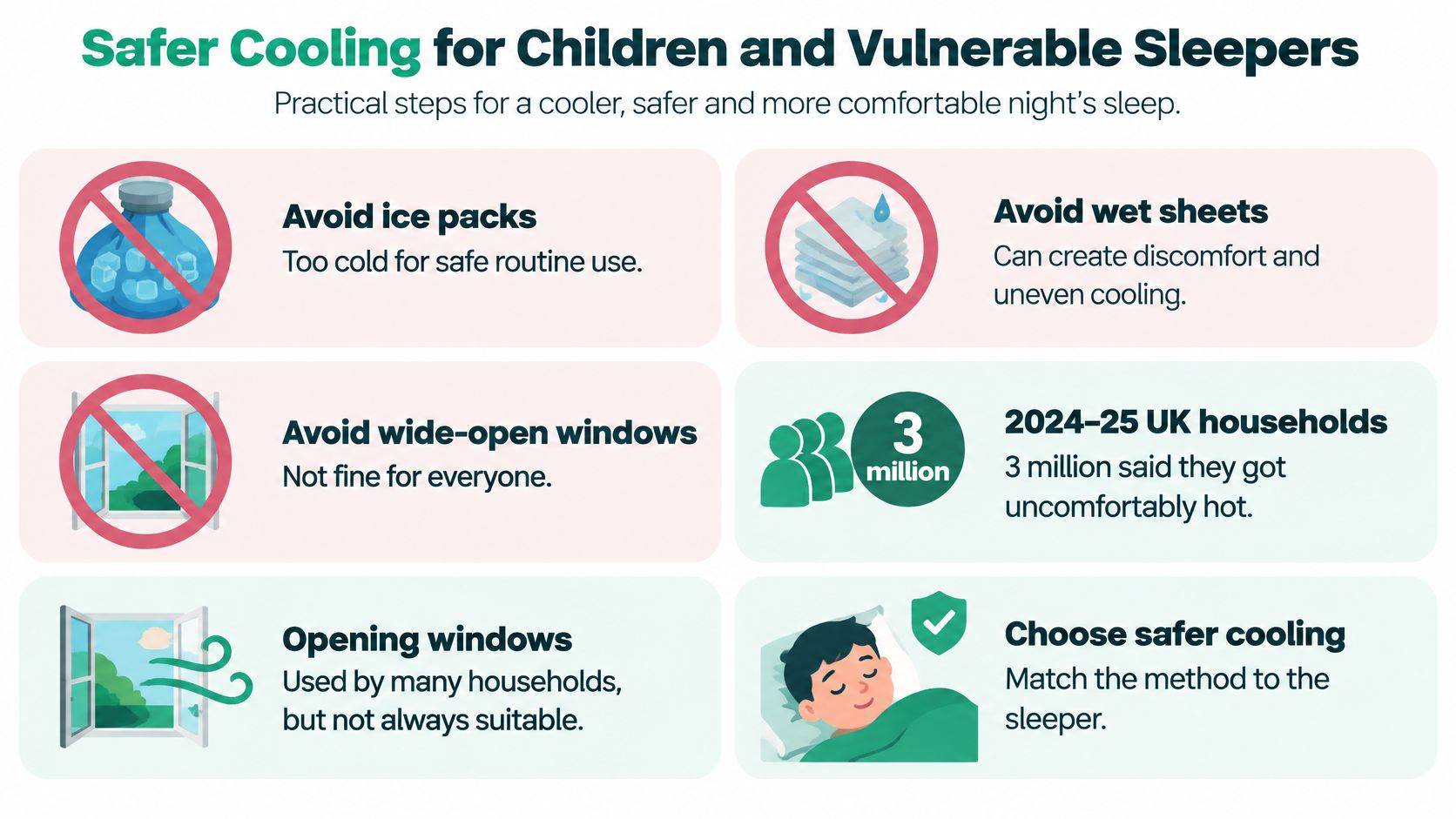
Bedrooms were the household room most commonly reported as uncomfortably hot, at 7%, according to the English Housing Survey 2024 to 2025 weather resilient homes fact sheet. The same survey recorded 3 million households reporting uncomfortable heat in 2024-25. Opening windows and using fans were more common than air conditioning, so a safe plan needs to work without bought cold air.
Change the Routine for the Sleeper in Front of You
Adapt cooling for the person, not just the room. Older adults, children, people with asthma or allergies, and anyone on a fluid restriction may need different precautions. Keep drinks accessible, but follow any fluid limit rather than encouraging extra water.
Check the temperature where a child sleeps, at bed height. Keep bedding light, and use a mattress protector suited to the bed's needs. A breathable, waterproof baby mattress protector can help keep leaks and perspiration from reaching the mattress. Choose a dry, washable surface that lets air pass through.
Watch for confusion, weakness, dizziness or reduced urination during the night and the next morning. These signs warrant attention, especially in someone who cannot clearly describe how they feel.
- Keep bedding dry: Wet sheets cool unevenly, can chill a child or older adult, and leave the mattress damp.
- Avoid ice against skin: A cold shock can be uncomfortable; use lukewarm washing and gentle airflow instead.
- Keep water away from electrics: Place bowls, damp cloths and sprays clear of uncovered equipment and extension leads.
- Manage pollen exposure: Ventilating at peak pollen can worsen wheezing and itchy eyes. Where possible, ventilate later, when pollen and outdoor heat have eased, and keep the sleep surface dry.
Tonight's Room-or-Move Decision
Make one decision tonight. Can shading and ventilation, once outdoor air is cooler, bring the bedroom under 26°C? Measure at bed height, do the room steps in order, then measure again before you commit to sleeping there.
If the answer's no, don't keep fighting the room. Move the sleeper to the coolest secure room, keep the body steps in place, and recheck later in the night if you wake. A camp bed, sofa bed or mattress on the floor in a cooler room can give better sleep than a proper bed in stored heat.
Check Before Lights Out
- Bed dry and breathable: No damp protector, no heavy foam layer banking heat, no vinyl cover making you sweat.
- Fluids within reach: Normal drinking, adjusted for anyone with a restriction, without forcing a large glass at bedtime.
- No unsafe improvisation: No wet bedding, no ice on skin, no unsecured window left open for the sake of a breeze.
- Exit route for warm air: Windows and doors arranged so cooler air can enter and warm air can leave where it's safe.
If you do have air conditioning in part of the home, don't undermine it by ventilating that same space at the same time. The explanation of how open windows affect your AC is useful context if you're mixing mechanical cooling in one room with open-window cooling elsewhere.
Repeat the same routine on the next warm night, and replace any hot, plastic-feeling cover before then. The action stays simple: measure, shade, ventilate in the right order, move if needed, and keep the bed dry and breathable. That's how to cool down at night in a UK home without relying on cold shocks or expensive equipment.
If your room cools but your bed still sends heat back, visit Protect-A-Bed to compare breathable waterproof mattress and pillow protectors built to block sweat, spills and allergens without a plastic feel. Choose a thin, air-permeable option for hot sleepers, children or allergy-sensitive households, and check the current size and price before you order.