

Baby Mattress Protector: The Complete UK Safety Guide

At three in the morning, a nappy leak can turn a quiet feed into a full bedding change. Spit-up, perspiration, and illness create the same problem: the fitted sheet may look clean again, but moisture can already have reached the cot mattress. A baby mattress protector gives you a washable barrier, but choosing one safely means looking beyond the word “waterproof”.
The right protector should preserve a firm, flat, clear sleep surface, fit securely, allow practical laundering, and help limit contact with moisture and allergens. This UK guide brings safer-sleep advice, mattress hygiene, nursery damp, and everyday laundry together so you can make a calm, informed choice.
Table of Contents
- Why Every UK Nursery Needs a Mattress Protector
- Understanding UK Safer Sleep Guidelines and Hygiene
- Balancing Waterproofing with Breathability
- Navigating UK Safety Standards and Sizing
- Managing Allergens and Damp in the Nursery
- Choosing the Right Protector for Your Child's Stage
- Common Questions and Care Mistakes to Avoid
Why Every UK Nursery Needs a Mattress Protector
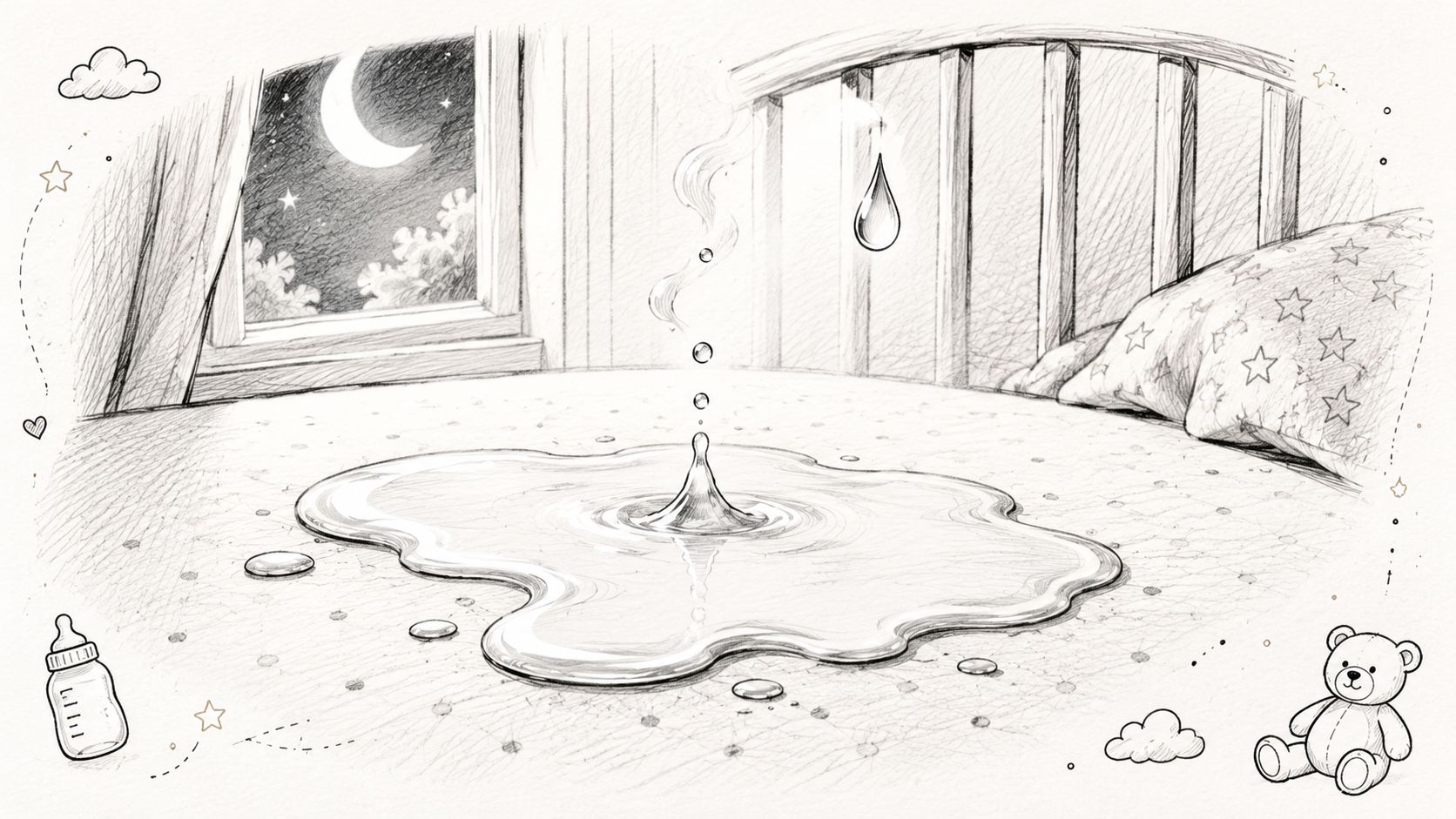
A night-time accident doesn't wait for a convenient washing day. If milk spills through the sheet, or a baby is sick after a feed, the mattress underneath can absorb moisture into its surface and inner layers. A protector lets you remove the contaminated layer quickly while keeping the mattress itself in better condition.
That matters for more than appearance. A cot mattress needs to remain firm, flat, and in good condition. Repeated wetting, staining, and difficult drying can leave a mattress unpleasant to use and harder to keep hygienic. A fitted, waterproof barrier supports the practical care routine needed to maintain the sleep surface.
The overnight problem is predictable
UK parents already treat cot-mattress cleaning as a regular task. In a Which? survey of 1,008 parents conducted in February 2019, 13% said they cleaned the baby's cot mattress every day, 28% wiped it down or washed the cover weekly, 18% did so two or three times a week, 17% every fortnight, and 19% less often than every other fortnight. The survey also found that just under two-thirds used a waterproof protector to guard against accidents and sickness. These figures are reported in UK anti-allergy bedding guidance.
Those routines show why a protector has become a practical nursery staple rather than an occasional extra. Families need a surface that can be removed, washed, dried, and put back without repeatedly handling the mattress itself.
Practical rule: Protect the mattress before the first accident, not after the first stain.
A protector shouldn't replace the mattress's own safety properties. It should sit smoothly on top, stay in place beneath the sheet, and avoid creating ridges or loose folds. The aim is simple, clean protection that doesn't alter the underlying firmness or shape.
Understanding UK Safer Sleep Guidelines and Hygiene
The safer-sleep foundation is straightforward: babies need a firm, flat, clear sleep surface. The Lullaby Trust recommends a waterproof mattress cover and advises parents to check that the mattress is in good condition and meets relevant British safety requirements. You can also review this practical summary of Lullaby Trust safe sleeping advice if you want a parent-friendly explanation.
A protector supports that advice by helping the mattress remain dry and usable. It isn't a substitute for a suitable mattress, and it shouldn't be thick, padded, loose, or capable of bunching beneath the sheet.
What the UK guidance means in practice
A 2025 safer-sleep update from the National Child Mortality Database, summarising ONS England-and-Wales data, reported 171 unexplained infant deaths in 2022, equivalent to 0.28 deaths per 1,000 live births. The update listed “use a firm, flat, waterproof mattress” among its key safer-sleep points and stated that unexplained infant deaths represented 64% of all SUDI in 2022. The figures and advice appear in the NCMD mattress and bedding factsheet.
That wording is important. Waterproofing belongs within a broader safe-sleep arrangement, alongside the mattress's firmness, a snug sheet, and a clear cot. It doesn't mean a protector can compensate for an unsuitable mattress or extra bedding.
Cleaning frequency changes the buying decision
A removable layer makes routine care realistic. After a leak or illness, you can take off the sheet and protector, inspect the mattress, and wash the affected items according to their care labels. If the mattress has been soaked, it needs to be dried fully before use. Persistent dampness, damage, or an odour that won't clear is a reason to seek advice about replacing it.
Choose a protector that:
- Stays flat: The surface shouldn't quilt into thick ridges or shift during sleep.
- Fits the mattress: Elastic edges should hold the protector securely without lifting corners.
- Supports laundering: The care instructions should match the washing routine you can maintain.
- Adds no loose material: Avoid separate pads or layers that can move beneath the sheet.
A waterproof protector is therefore a hygiene tool with a safety role. Its value comes from preserving the mattress while leaving the sleep surface firm, flat, and clear.
Balancing Waterproofing with Breathability
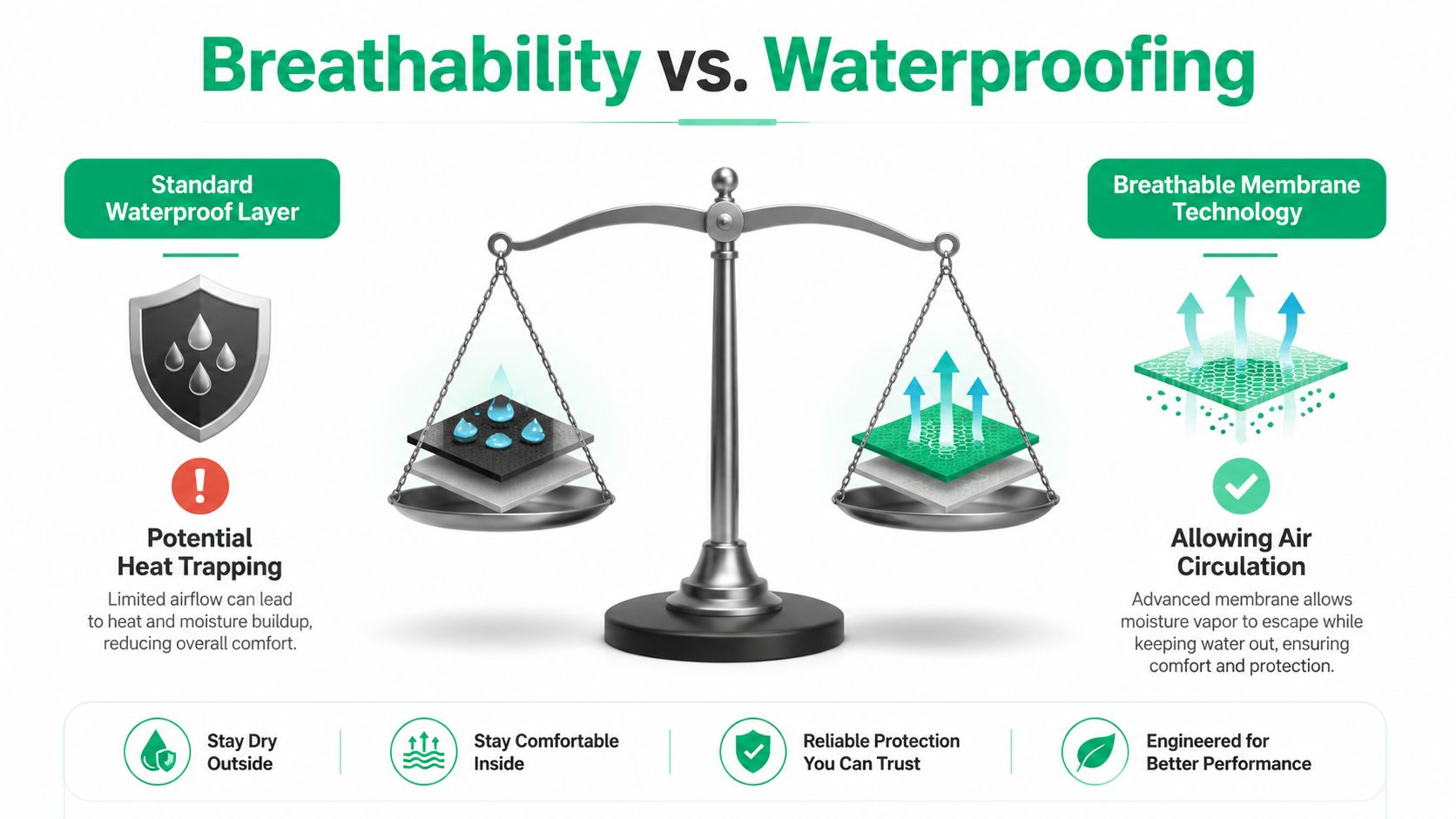
“Waterproof” describes liquid resistance, not comfort. A protector can block urine, milk, or vomit while still feeling clammy if its backing prevents vapour from escaping. That concern is especially understandable in a warm nursery, a well-insulated home, or during summer.
The useful distinction is between a solid plastic-feel barrier and a waterproof breathable membrane. The first may feel stiff or noisy and can make the top fabric feel warmer. The second is designed to stop liquid passing through while allowing air vapour to move away from the sleeping surface.
Read the construction, not just the marketing
Look for clear descriptions such as air-permeable, breathable membrane, or a named fabric designed for moisture management. A soft cotton terry top can absorb a small amount of surface moisture before it reaches the barrier. Tencel-style fabrics may be presented as a smooth, temperature-conscious option. The important point is that the complete construction matters, including the face fabric, waterproof layer, seams, and elastic edge.
A protector must also be quiet. A crinkly layer can disturb a light sleeper and make night-time changes more difficult. Flexible backing and a close fit generally make the product easier to live with than a rigid sheet that shifts under the bedding.
Breathability doesn't remove the need for safe sleep
A breathable protector isn't a licence to add blankets, toppers, or loose padding. Temperature should still be managed through the room, the baby's clothing, and the safer-sleep guidance you follow. The protector's job is narrower: block liquid while avoiding unnecessary stiffness, heat retention, or movement.
A waterproof layer should protect the mattress without becoming a noticeable layer beneath the baby.
Before buying, check whether the manufacturer explains:
- The waterproof membrane, including whether it is described as air permeable.
- The top surface, such as cotton terry or a smooth thermoregulating fabric.
- The edge construction, including fitted-sheet styling or elastic coverage.
- The care instructions, because a membrane that can't withstand your routine won't remain useful.
Don't judge breathability by touch alone. A soft surface can still have a poorly designed backing, while a thin membrane may feel unobtrusive once correctly fitted. Product specifications and the care label give you more reliable information than a photograph.
Navigating UK Safety Standards and Sizing
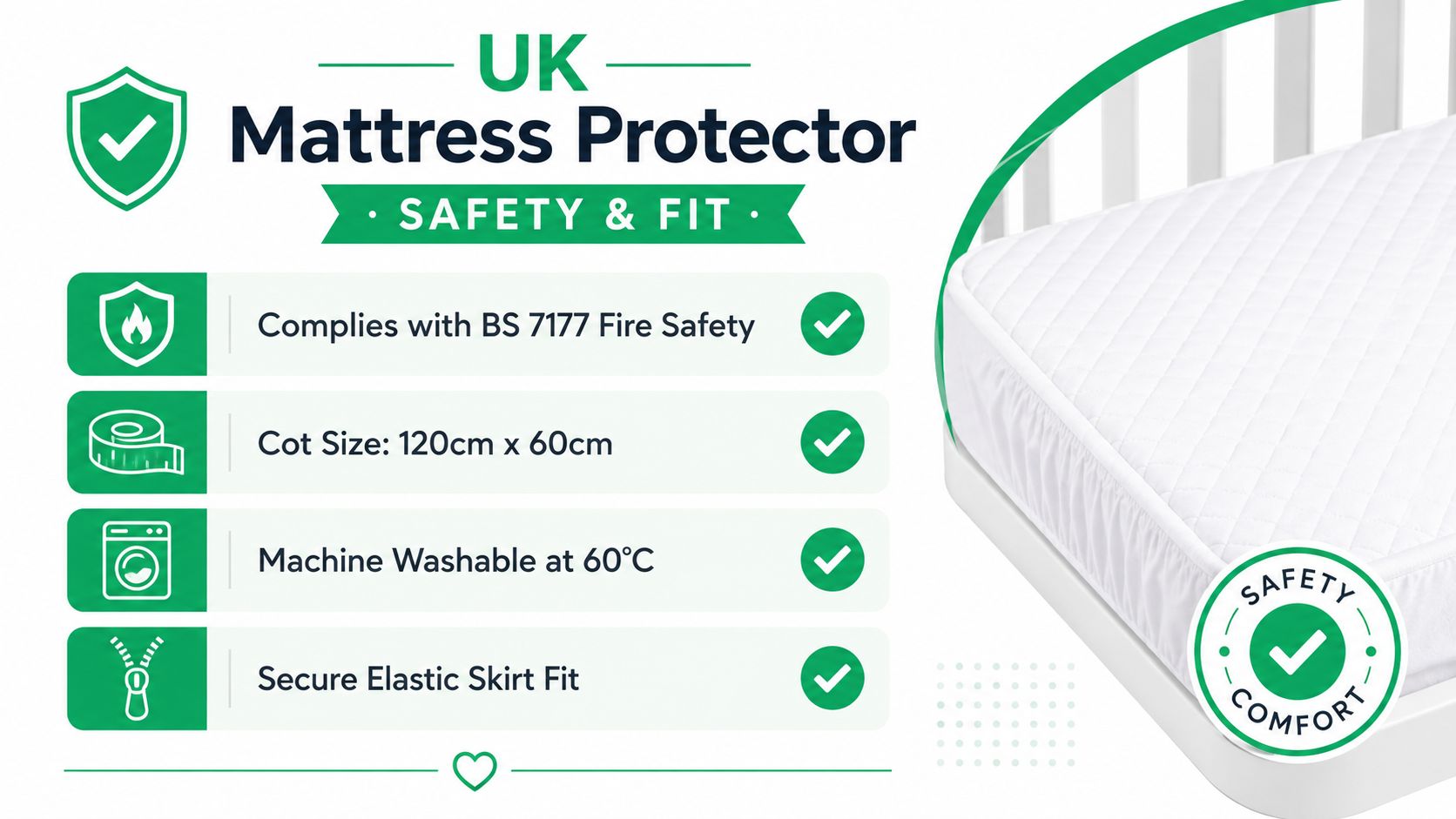
Fit is a safety feature. A protector that's too large can wrinkle; one that's too small can pull against the mattress, lift at the corners, or distort the surface. Measure the mattress itself, including its length, width, and depth, rather than relying only on the cot's advertised size.
Start with the sleep space. Moses baskets, bedside sleepers, travel cots, cots, and cot beds can all use different mattress dimensions. Match the protector to the exact mattress, then check that the fitted edge reaches securely around it without forcing the mattress to bend.
Use a simple fit check
- Measure first: Record the mattress length, width, and depth.
- Check the product dimensions: Don't assume a protector labelled for a cot will fit every cot mattress.
- Fit it directly: Place the protector on the mattress before adding the sheet.
- Inspect the corners: Look for lifting, slack fabric, diagonal pulling, or folds.
- Recheck after laundering: Shrinkage or loss of elasticity can change the fit.
The finished surface should remain smooth and firm. If the protector bunches, slips, or creates a raised area, stop using it until the problem is corrected.
Understand the 2025 regulatory change
In the UK, children's mattresses measuring under 170 cm by 75 cm were moved out of the scope of the Furniture and Furnishings (Fire) (Safety) Regulations in 2025. They now fall under general product safety law, as explained in the 2025 furniture and furnishings fire-safety amendment.
This change doesn't mean safety checks no longer matter. A protector can affect the complete sleep system through its fabric, backing, seams, and fit. Ask the seller or manufacturer for clear compliance information, follow the mattress and cot instructions, and avoid making assumptions based on a single label.
For related cot hardware and edge protection, this explanation of a cot teething rail can help you understand how other fitted nursery components should work alongside, rather than interfere with, the sleep surface.
Managing Allergens and Damp in the Nursery
A waterproof protector can help limit what reaches the mattress, but it isn't a complete damp-control plan. In a humid room, moisture can come from condensation, wet laundry, poor ventilation, leaks, or mould elsewhere in the home. If the nursery has visible mould or persistent damp, address the housing problem and follow the safety advice in the Lullaby Trust guidance on sleeping safely in a home with damp or mould.
Dust-mite allergens can sit deep inside mattresses. A tightly sealed, low-permeability cover can reduce allergen exposure at the mattress surface, but clinical results aren't uniform. One controlled trial found about a 100% median reduction in mattress mite allergen with bedding covers plus acaricide, compared with 53% in placebo-treated controls after six weeks. A separate large placebo-controlled study in early childhood found no protective effect on symptoms, eczema, or sensitisation during the first two years. The evidence is summarised in this PubMed record on mite-allergen reduction.
Treat protection as exposure control
That distinction matters for anxious parents. A mite-impermeable protector may reduce allergen loading, but it shouldn't be presented as a guaranteed way to prevent asthma, eczema, or sensitisation. Children with persistent symptoms need advice from a GP or allergy professional.
The protector's wash routine matters just as much as its barrier. Check whether the product can be washed at a temperature suitable for allergen management, whether the membrane tolerates repeated washing, and whether it can dry completely before returning to the cot. Follow the actual care label rather than relying on general laundry advice.
For a closer explanation of how a barrier can limit mattress exposure, see this guide to mattress protectors and dust mites. Keep the room ventilated where possible, dry wet items promptly, and never place a damp protector back beneath a sheet.
Choosing the Right Protector for Your Child's Stage
The best choice depends on the nursery problem you're trying to solve. A newborn's protector needs a quiet, smooth fit. A toddler's version has to cope with heavier laundry demands and larger accidents. A child with allergy concerns may need more complete mattress coverage rather than a surface-only layer.
A fitted waterproof protector is usually the most practical starting point because it combines liquid resistance with a washable sleeping surface. For a crib or bassinet, confirm the exact dimensions and edge depth before ordering. This guide to waterproof covers for cribs is useful when the sleep space is smaller or shaped differently from a standard cot.
Match the feature to the problem
| Primary concern | Recommended fabric or feature | Why it works |
|---|---|---|
| Newborn comfort | Quiet, breathable membrane with a soft surface | Helps avoid a stiff or noisy layer beneath the sheet |
| Frequent spills and nappy leaks | Waterproof fitted-sheet construction | Keeps liquid away from the mattress and simplifies changes |
| Toddler accidents | Durable waterproofing with reliable elastic | Supports repeated removal and washing |
| Allergy and dust exposure | Mite-impermeable or encasing construction | Creates a more complete barrier around the mattress |
| Warm nursery | Air-permeable construction or a temperature-conscious fabric | Reduces the chance of a clammy feel compared with rigid plastic-style layers |
Protect-A-Bed offers UK mattress protectors in fabric options including Tencel Cool and Cotton, using its Miracle Membrane technology to block liquids while remaining air permeable. Treat those specifications as selection information, then verify the particular product's cot size, fit, and care instructions before purchase.
Think about the stage ahead
A newborn may only need protection from milk, nappy leaks, and perspiration, while a toddler may need a layer that tolerates frequent accidents. If potty training is approaching, durability and quick laundering become more important than decorative quilting.
For allergy concerns, a surface protector may not provide the same coverage as a full encasement. Select the level of protection that matches the problem, and don't add thick layers that could compromise the firm, flat surface.
Common Questions and Care Mistakes to Avoid
Do I need more than one? One spare makes night-time changes easier. You can remove the used protector, put on the clean one, and wash the other without leaving the mattress uncovered.
Will it make the mattress too soft? A suitable protector should lie flat and add only a thin protective layer. Avoid padded designs that create a noticeable change in firmness, and check the surface after fitting.
Can I tumble dry it? Follow the care label. High heat can damage some waterproof backings, while incomplete drying can leave moisture trapped against the mattress.
Can I use household odour remedies? For general mattress-odour information, this guide to baking soda and vinegar for mattress odour discusses common cleaning approaches. For a baby mattress, don't use a strong substance unless the product and mattress instructions permit it, and ensure everything is fully dry before use.
Fabric softener can coat fibres and may affect the performance of some breathable membranes. Wash the protector as directed, avoid overloading the machine, inspect the waterproof layer for cracks or peeling, and replace it if it no longer stays flat or keeps liquid out. These practical steps are covered in this guide to washing a mattress protector.
Protect-A-Bed offers waterproof, breathable mattress protectors in UK sizes and fabric options suited to different nursery needs, including fitted protection for cot and crib mattresses. Visit Protect-A-Bed to check the correct dimensions, membrane construction, and care instructions before choosing yours.