

How Often to Wash Mattress Protector: A Practical UK Guide

Wash a mattress protector every two to three months in a typical UK household, which works out at roughly four to six washes a year. Wash it sooner after a spill, illness, allergy flare-up, pet contact or heavy night sweating.
You know the moment. The fitted sheet is in the wash, the duvet is folded over a chair, and you're holding up the protector, wondering whether that faint mark means “wash it now” or “put it back and deal with it later”. The right answer depends on what the protector has been exposed to, not how long it's been on the bed.
A protector catches sweat, dust, skin debris and other build-up before they reach the mattress. It needs regular laundering to stay fresh, but unnecessary washing and harsh drying can shorten the useful life of a waterproof membrane. UK guidance generally places routine washing in months rather than weeks. Which? advises washing mattress toppers and protectors once every two to three months for normal use, while other UK care guidance places normal intervals between two and six months depending on the product and exposure. (UK product-care guidance summarises this range.)
Table of Contents
- The Routine Wash Cadence and When to Break It
- Washing Frequency by Household Type
- How to Wash and Dry Without Damaging the Membrane
- Fabric-Specific Care for Tencel, Cotton, Premium and Kids
- Everyday Habits That Stretch Time Between Washes
- Common Washing Mistakes That Void Your Warranty
- Building Your Personal Wash Schedule
The Routine Wash Cadence and When to Break It
Strip the bed and inspect the protector before deciding. If it looks clean, smells fresh and has only had ordinary use beneath a fitted sheet, keep to the two-to-three-month routine. That interval is a sensible compromise between hygiene and unnecessary wear, and it matches the main UK consumer guidance for normal households.
The protector is doing a specific job. It takes the contact that would otherwise reach the mattress, including perspiration, dust and everyday body debris. Washing it too rarely allows that material to accumulate. Washing it aggressively every few days, especially with high heat, can fatigue the waterproof layer and elastic edging.
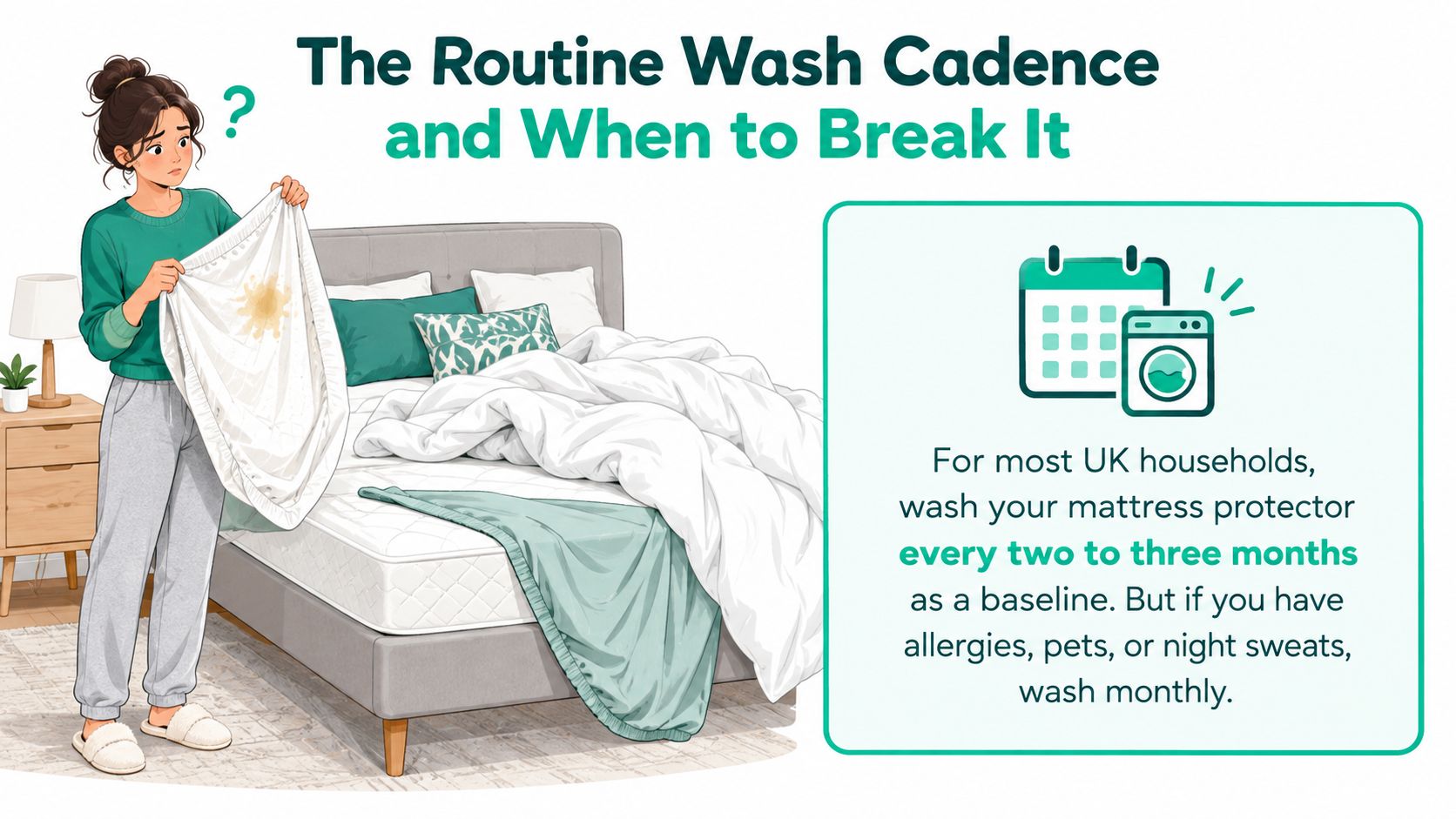
The four reasons to wash sooner
Break the calendar when the protector faces a higher contamination risk:
- Visible spills or stains: Treat the mark promptly and wash the protector rather than waiting for the scheduled date.
- Illness: Wash it after a cold, flu-like illness or stomach bug, particularly if bodily fluids reached the bedding.
- Allergy flare-ups: Shorten the interval if dust or bedding exposure is aggravating symptoms.
- Pets on the bed: Fur, dander and outdoor debris justify more frequent laundering than ordinary adult use.
Heavy perspiration also deserves a shorter cycle. The same applies after bedwetting, incontinence or any accident. The calendar is a baseline, not permission to leave a soiled protector in place.
Practical rule: If you can see it, smell it or identify a clear exposure event, wash it now.
For readers organising care across a busy home, the same scheduling principle works beyond bedrooms. A best practice office cleaning schedule can help you separate routine maintenance from event-led cleaning, which is exactly the distinction needed here. Keep the normal wash date in the calendar, then reset it after a spill, illness or allergy-related clean.
Washing Frequency by Household Type
The standard interval suits a quiet bedroom with one or two adults, a fitted sheet above the protector and no unusual exposure. It doesn't suit every household. A child's bed, a pet-friendly bedroom and an allergy-sensitive home all place different demands on the same layer of fabric.
Use the table as a starting point, then move the date forward whenever the protector is visibly dirty or has been exposed to illness or an accident.
Recommended wash frequency by UK household type
| Household type | Recommended interval |
|---|---|
| Single adult or couple, no pets or allergies | Every two to three months |
| Allergy-sensitive or asthma household | Every four to six weeks |
| Pets sleeping on the bed | Every four to six weeks |
| Family with young children | Every four to six weeks |
| Guest bedroom used occasionally | About every four months, with regular airing |
| Any household after illness, spill or accident | Wash immediately |
For ordinary adult use, less frequent washing reduces mechanical and thermal stress on the protector. That doesn't mean neglect it. Inspect the surface when you change the bedding, and bring the wash forward if the fabric feels damp, looks marked or has picked up an odour.
Allergy and pet households need a firmer routine because the protector is collecting material that may irritate sensitive sleepers. A four-to-six-week interval is a practical choice, particularly when animals sleep directly on the bed or a sleeper notices symptoms at night. Keep the wash gentle, because more frequent washing makes correct detergent and drying choices even more important.
Young children create a different pattern. Accidents and sickness override the planned date, while a four-to-six-week routine gives the protector regular attention between incidents. Don't confuse a clean-looking surface with a clean protector after bedwetting. Wash it promptly and make sure the mattress itself is dry before rebuilding the bed.
Guest rooms can run on a longer cycle when they're used rarely. Air the protector, check for stale odours and wash it after each meaningful period of guest use if there has been perspiration, illness or a spill. The trade-off is simple: wash according to exposure, not the room label.
How to Wash and Dry Without Damaging the Membrane
A waterproof protector needs a calmer wash than a towel. The objective is to remove sweat, dust and detergent residue while protecting the laminated barrier that keeps liquid away from the mattress.
Before loading the machine, remove the protector and shake it outdoors or over a clear floor. This loosens surface debris before the wash. Dab visible marks with a small amount of mild liquid detergent, then lift the stain gently. Scrubbing hard can roughen the face fabric and push residue into the membrane.
A safe home-machine routine
- Prepare the protector. Close any fastenings, remove loose debris and check the care label. Wash it with similar bedding only if the drum still has enough space for the protector to move freely.
- Choose a gentle programme. For a Protect-A-Bed protector with Miracle Membrane, use a gentle or delicate cycle at 40°C, unless the specific care label says otherwise. Choose a mild liquid detergent.
- Keep damaging products out. Don't use bleach, fabric softener, optical brighteners or aggressive stain removers. These products can interfere with the membrane's waterproofing and breathability.
- Add an extra rinse. If your machine offers one, use it. A second rinse helps remove detergent left in the fabric and reduces the chance of residue affecting the breathable layer.
- Dry with restraint. Line dry flat or use a low-heat tumble setting where the care label permits it. Direct high heat is the wrong choice for a laminated waterproof protector.
- Refit only when fully dry. A damp protector pressed against a mattress traps moisture. Let both surfaces dry completely before making the bed.
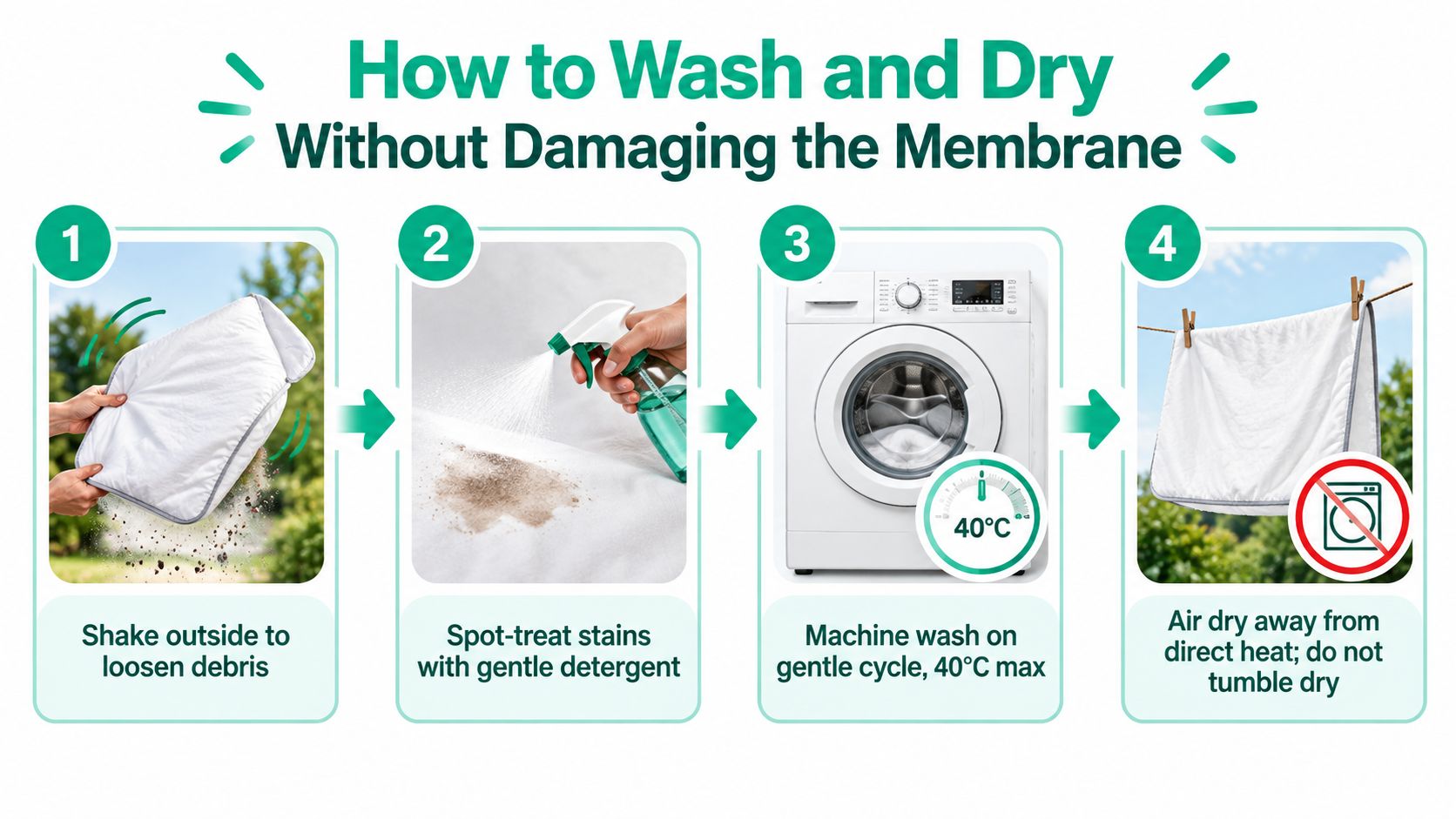
Temperature is the control point
UK consumer guidance says many protectors can be machine-washed with bedding at 40–60°C, depending on the construction and care label. Which? identifies that temperature range as the key technical control for removing sweat, dust and build-up without damaging the waterproof layer. For a membrane protector, don't assume that a hotter wash is automatically better. The label on your exact product takes priority.
For wider laundering questions, VirusFAQ.com's viral inactivation guidance provides useful background on how washing conditions affect hygiene decisions. It doesn't replace the protector's care instructions. The membrane still needs the correct temperature, detergent and drying method.
Use the manufacturer's detailed Protect-A-Bed mattress protector washing guidance when the label leaves room for doubt. If the protector comes out soaked, redistribute it and dry it fully rather than putting it straight back on the bed.
Fabric-Specific Care for Tencel, Cotton, Premium and Kids
The fabric changes the handling, but the membrane remains the part you must protect. A soft outer surface may feel delicate, while a cotton design may feel sturdy, yet either can lose performance if the wash or drying routine ignores the laminate underneath.
Fabric-by-fabric wash plan
| Fabric | Wash Frequency | Max Temperature | Drying Method |
|---|---|---|---|
| Tencel Cool | Every eight weeks in normal use | Cool 30–40°C | Line dry, preferably away from direct heat |
| Cotton | Every two to three months in normal use | Follow the care label, up to 60°C where permitted | Line dry or low-heat tumble where permitted |
| Premium | Every two to three months in normal use | Up to 60°C where the care label permits | Gentle spin, line dry or low heat |
| Kids' protector | Every four weeks, sooner after accidents or illness | Up to 60°C where permitted | Dry completely, with an extra rinse if needed |
Tencel Cool needs the gentlest treatment. Use a cool cycle, a non-bio liquid detergent and avoid tumble drying where the product instructions advise against it. The aim is to preserve the fibre's feel without placing avoidable stress on the waterproof construction. The Protect-A-Bed guide to Tencel mattress protectors is the sensible reference for product-specific handling.
Cotton is more forgiving, but “cotton” doesn't cancel the membrane rules. It can often be line dried or dried on low heat, provided the label allows it. Don't select a hot programme because the face fabric is cotton.
Premium ranges may combine a cotton surface with the Miracle Membrane. Treat the construction as a waterproof protector first. Respect the temperature cap shown on the label, select a gentle spin and avoid products that leave a coating behind.
Kids' protectors deserve a tighter schedule because spills, accidents and illness are more likely. A second rinse is useful when the fabric has been washed with detergent and the child has sensitive skin. Heat can be used only within the stated limit. If the product's label limits the temperature, the label wins.
Everyday Habits That Stretch Time Between Washes
Good habits won't replace laundering, but they can stop the protector becoming unnecessarily dirty between scheduled washes. The fitted sheet should take most daily contact, while the protector remains the waterproof back-up layer.
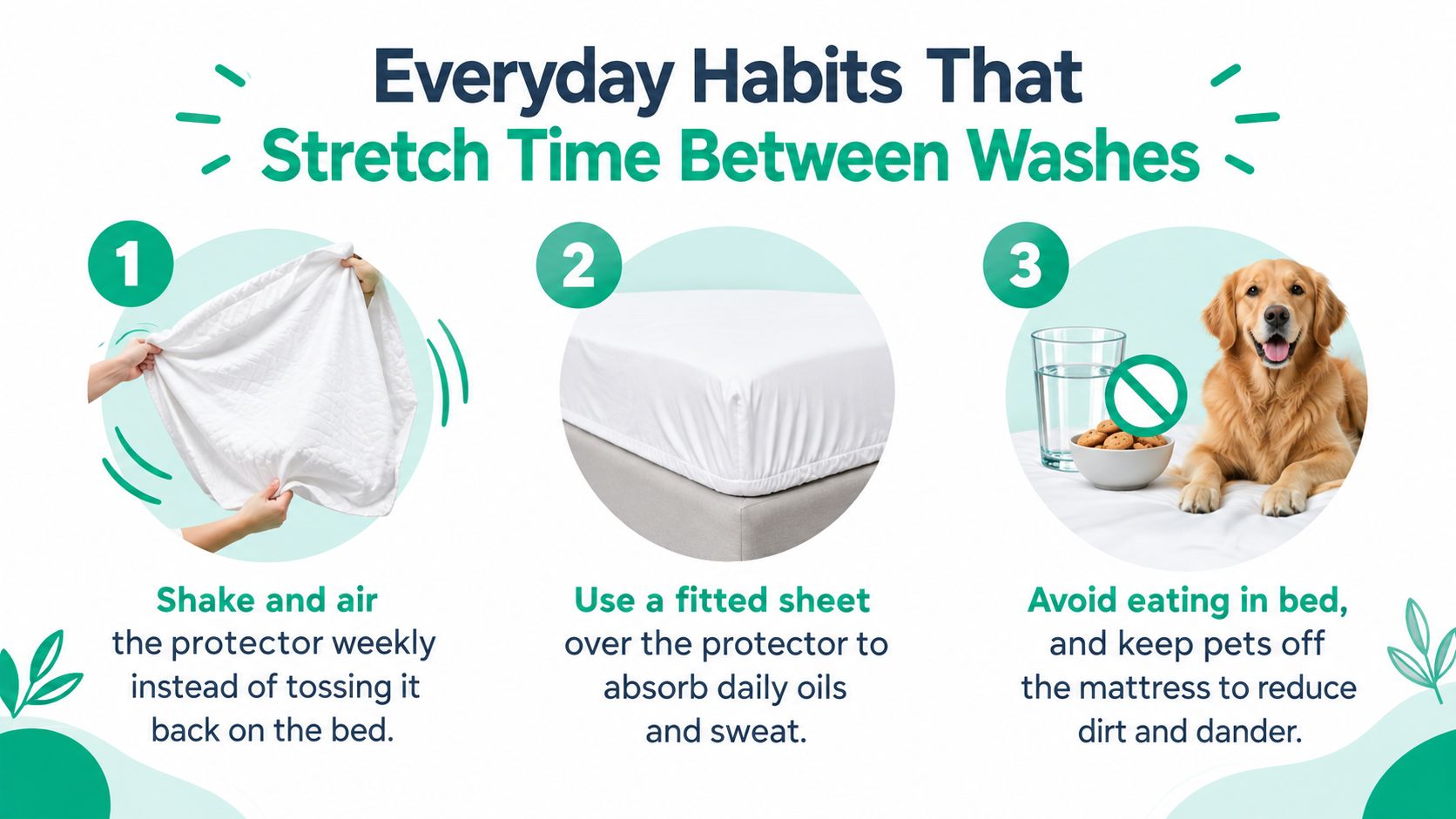
- Air it weekly: When you strip the bed, shake the protector and let it air before putting it back. Don't leave it crumpled in a laundry basket if it's still warm or slightly damp.
- Use a properly fitted sheet: The sheet absorbs much of the everyday sweat and skin oil before they reach the membrane. Replace it according to your household's normal bedding routine.
- Keep food and drinks away: A glass on a bedside surface is safer than a drink balanced on the duvet. Crumbs and spills create avoidable cleaning events.
- Manage pet contact: If a pet sleeps on the bed, use a washable cover above the protector or keep the animal off the mattress. Fur and dander make the shorter household schedule more appropriate.
- Spot-clean immediately: Blot a spill with cool water and a little mild detergent. Don't wait for the next planned wash if the liquid has reached the protector.
- Vacuum carefully: Use low suction on the mattress surface during routine cleaning, and don't drag a stiff attachment across the protector.
- Rotate when practical: Moving the protector around the bed periodically can distribute pressure and reduce wear in one repeatedly loaded area.
These actions help preserve the protector, but they aren't a licence to postpone washing after illness, accidents or visible staining. For night-sweat problems and bedding choices, the Protect-A-Bed guidance on night sweat bedding is a useful product-specific reference.
Common Washing Mistakes That Void Your Warranty
The most damaging assumption is that a mattress protector should be washed like a white cotton towel. That approach often leads to excessive heat, harsh additives or aggressive drying, all of which can harm a waterproof membrane.
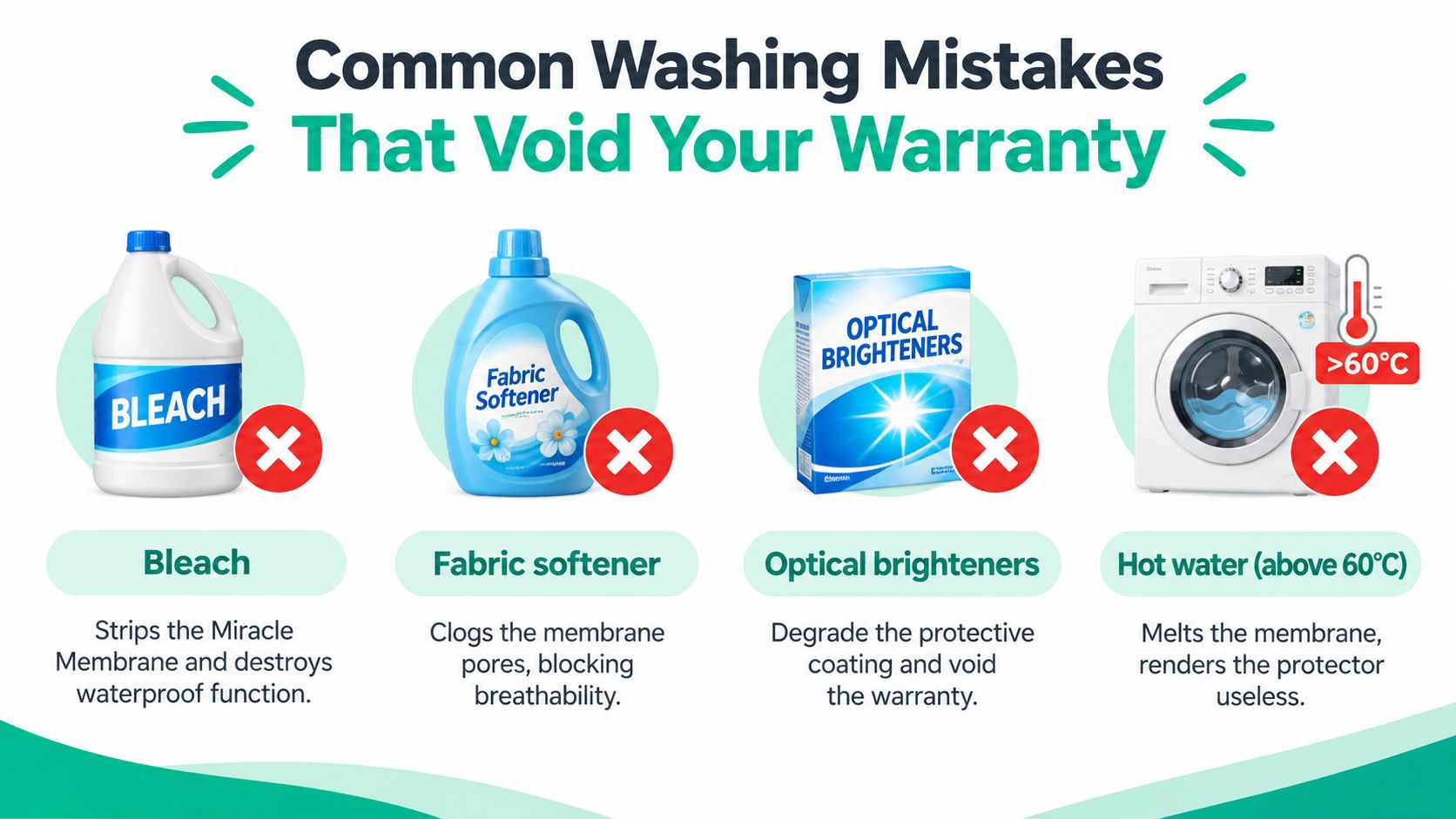
What not to put in the machine
- Bleach: It can weaken the protective construction and affect waterproof performance.
- Fabric softener: It leaves conditioning agents in the fabric and can interfere with the membrane's breathable pores.
- Optical brighteners: Avoid them unless the care instructions specifically permit their use.
- Harsh stain removers: Strong chemicals can attack the surface or laminated layers.
- Dry-cleaning chemicals: A waterproof protector isn't a dry-clean-only item. Solvents may damage the film.
- An iron: Heat and pressure are a poor combination for a laminated product.
Hot washing deserves careful interpretation. Some protectors and fabric constructions may permit temperatures up to 60°C, but you must follow the exact care label. Washing above the stated limit, using a hot tumble cycle or ironing can cause the layers to separate. The problem isn't just appearance. Once the membrane loses continuity, liquid can reach the mattress.
A warranty claim starts with care-label compliance. The wash history matters as much as the fault.
Keep a simple record if warranty protection matters to you. Photograph the care label when you buy the protector, note the wash date and record the cycle and detergent used. If waterproofing fails despite correct care, Protect-A-Bed's published product information states warranty coverage of up to 10 years against material or manufacturing defects, subject to its terms. Don't treat that as cover for misuse, neglect or a care routine that contradicts the label.
Inspect the protector after drying. Look for peeling, cracking, stretched edging or liquid penetration. A protector that has been washed correctly but no longer performs should be removed from service while you check the manufacturer's replacement process.
Building Your Personal Wash Schedule
Start with the lowest-risk scenario. If you sleep alone, have no pets or allergy concerns and use a Tencel Cool protector, put the next wash two to three months after the last one. Choose a cool, gentle cycle, use a mild liquid detergent and line dry where possible.
Then adjust for the bedroom rather than forcing the bedroom to fit a generic calendar:
- Pets or allergy symptoms: Move the wash to every six to eight weeks, with an earlier wash after visible soiling or a flare-up.
- Young children: Use a monthly routine and wash immediately after bedwetting, spills or sickness.
- Heavy night sweating: Shorten the interval and inspect the protector whenever bedding is changed.
- Illness: Wash the protector as soon as practical after recovery or contamination, then start the schedule again from that wash.
- Guest use: Air and inspect between stays, then wash when the bed has had meaningful use or shows any sign of soiling.
The Miracle Membrane needs consistency more than complicated treatment. Use the programme, temperature and detergent stated for your particular product, avoid damaging additives and dry it fully before refitting. Protect-A-Bed offers waterproof mattress protectors in fabric options including Cotton, Premium and Tencel Cool, so the correct routine should follow the construction you own rather than the product category alone.
The brand's UK information states warranty coverage of up to 10 years against material or manufacturing defects, subject to the applicable terms. Keeping the care label, using the right cycle and avoiding membrane-damaging heat gives you the clearest record if a genuine fault develops.
Mark your next wash date on the calendar today, then move it forward whenever a spill, illness, allergy flare-up or pet-related clean makes that necessary.
Protect-A-Bed offers waterproof, breathable mattress protectors in several fabric options, including Tencel Cool, Cotton and Premium designs, with Miracle Membrane protection. Visit Protect-A-Bed to choose a protector whose fabric and care instructions match your household, then add its next wash date to your calendar.