

Gel Foam Mattresses UK: A Practical Buyer’s Guide

A warm bedroom, heavy duvet and a mattress that seemed comfortable in the showroom can create a very different experience at two in the morning. If you're waking hot, feeling pressure around your shoulders or hips, or wondering whether a waterproof protector will ruin the cooling effect you paid for, the answer depends on more than the word “gel” on the label.
Gel foam mattresses can offer useful pressure distribution and a less heat-retentive feel than some conventional foam designs. They're not automatically cool, durable or compliant, though. The foam density, layer construction, fire-safety paperwork and protector you choose all affect how the finished bed performs.
Table of Contents
- What Gel Foam Mattresses Are
- How Gel Foam Construction Works
- Gel Foam Compared With Memory Foam, Latex and Innerspring
- UK Fire Safety, Regulation and Compliance You Should Check
- Why Mattress Protection Changes How Gel Foam Performs
- Who Gel Foam Mattresses Suit and Who Should Look Elsewhere
- Common Misconceptions About Gel Foam Mattresses
- How to Choose the Right Gel Foam Mattress and Protector
What Gel Foam Mattresses Are
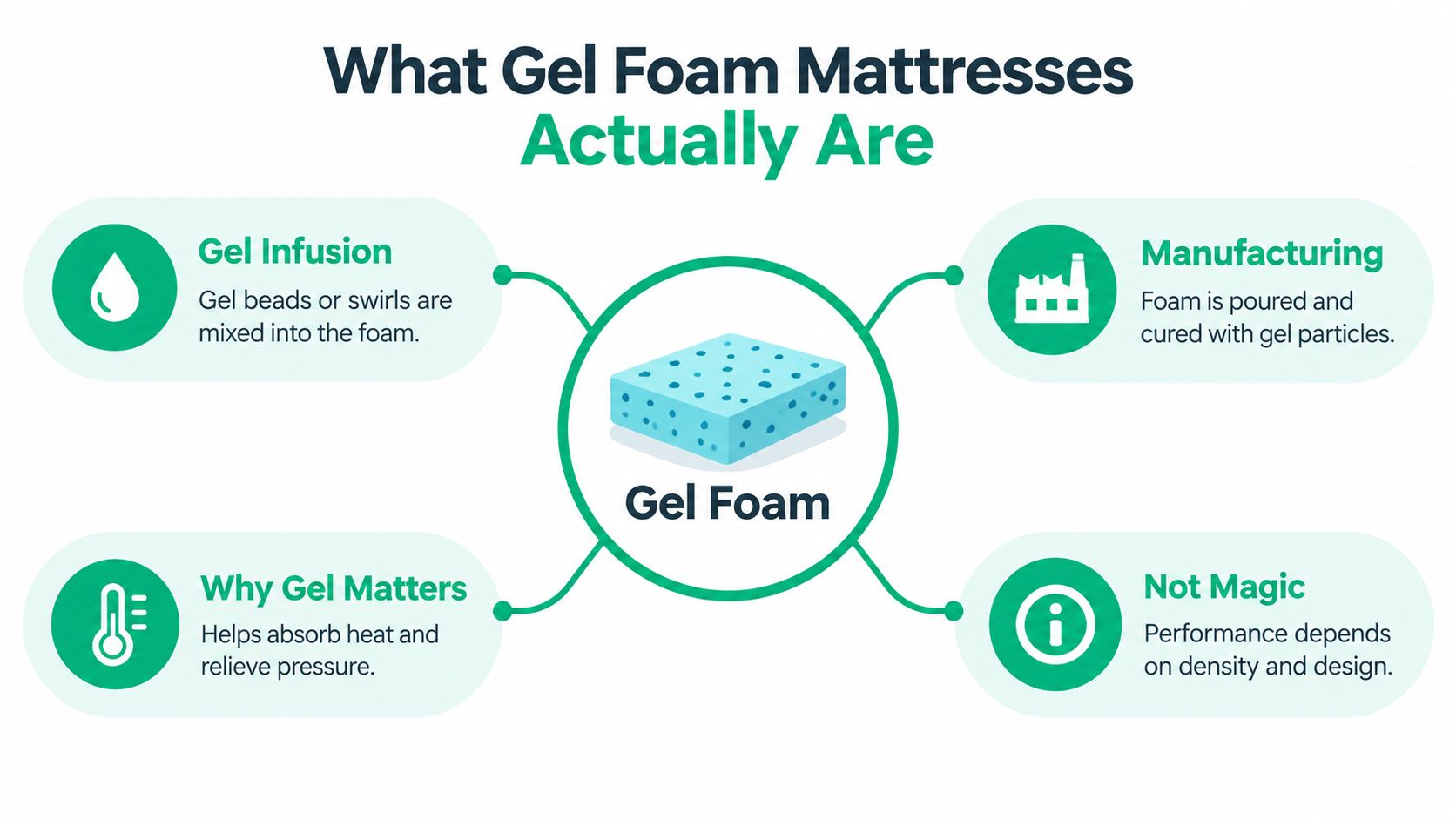
A gel foam mattress usually begins with polyurethane or viscoelastic foam. The manufacturer incorporates gel as beads, swirls, particles or a separate layer. The foam functions like a sponge, compressing around the body while the gel is intended to absorb and redistribute some warmth at the sleep surface.
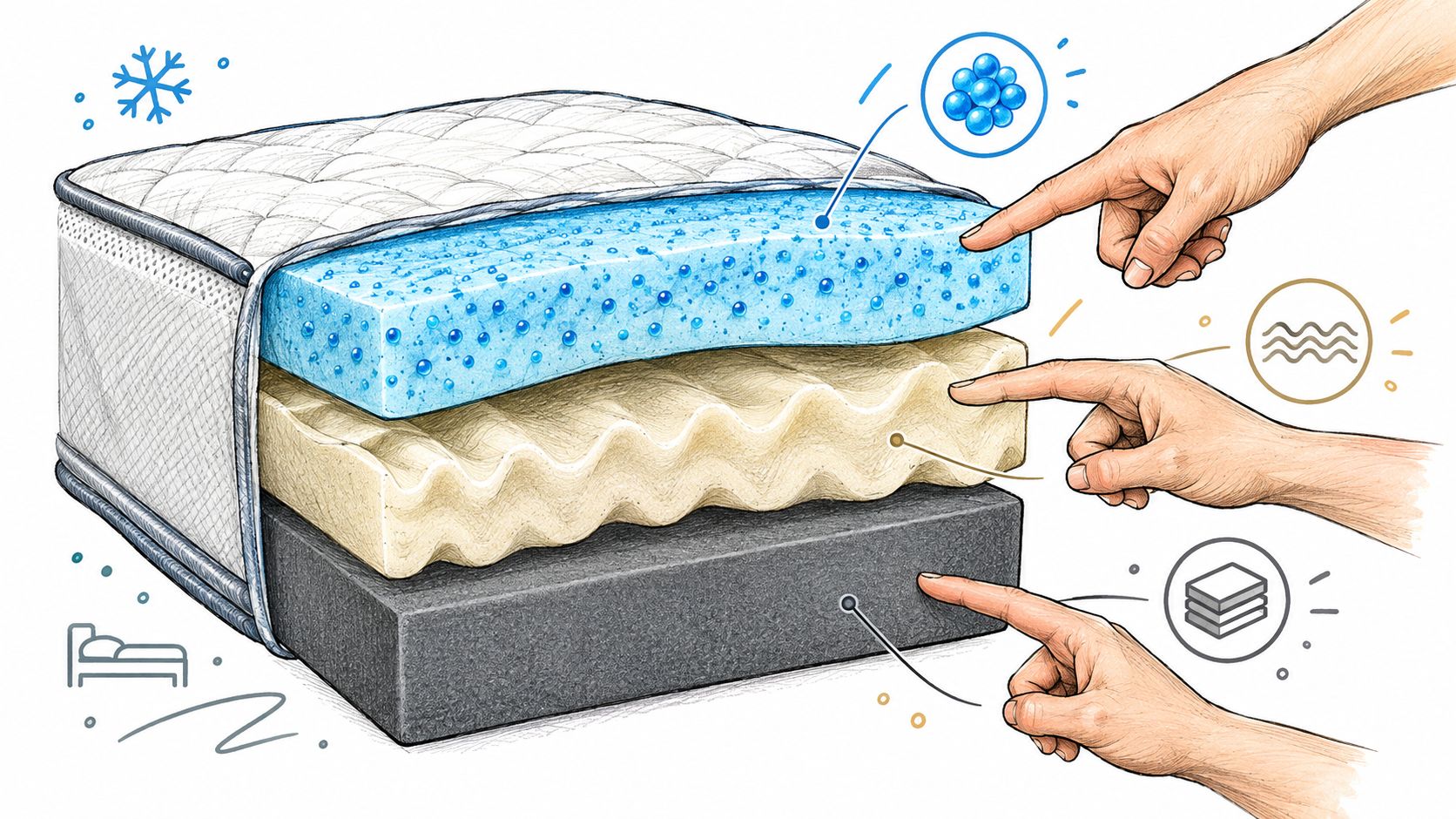
Gel rarely makes up the entire mattress. In many designs, it sits in a relatively thin comfort layer above transition foam and a more substantial support core. The overall construction determines the feel, pressure distribution and support, not the gel alone. The cover and mattress protector also matter, because a dense or poorly breathable protector can restrict airflow and make the surface feel warmer.
What the gel is trying to change
Traditional memory foam is valued for contouring. It softens under pressure, allowing the shoulders, hips and other heavier areas to sink into the surface. That can reduce pressure sensations, while dense foam may feel less ventilated than a spring-based construction.
Gel is added to address that concern. Depending on its placement and formulation, it may spread warmth across a wider area or help manage the temperature at the contact surface. It cannot guarantee a cool bed throughout the night. Room temperature, bedding, body heat, foam thickness, airflow and protector fabric all influence the result.
A useful way to assess a cooling claim is to identify the gel format. “Gel-infused” may mean particles mixed through the foam, a swirled additive or a dedicated gel layer. These arrangements can produce different surface feels and may respond differently beneath a waterproof protector.
Why UK buyers should look beyond the label
Foam products occupy an important and expanding part of the UK mattress market. One market analysis reported that innerspring mattresses held 40.85% of UK mattress-market share in 2025, while foam was forecast to be the fastest-growing product segment, with a projected compound annual growth rate of 3.02% through 2031. These figures describe wider categories, not gel foam specifically, and should not be treated as gel mattress sales estimates. The UK mattress market analysis provides context for the range of foam constructions available.
The practical lesson is simple. Cooling is one design objective, not a complete buying specification. Check how the gel is incorporated, which layer provides structural support, whether foam density is disclosed, whether the mattress has UK fire-safety documentation, and whether the protector remains breathable.
How Gel Foam Construction Works
The easiest way to understand a gel foam mattress is to read it from the top down. Each layer has a different job, and a thin gel comfort layer can't compensate for a poorly specified support core.
Start with the comfort layer
The upper layer is where you notice the surface feel. Gel-infused foam may soften around the body and distribute pressure, while the gel component is intended to moderate heat at the contact surface. Its thickness affects how far you engage with the foam, but a thicker comfort layer isn't automatically better.
A side sleeper may appreciate cushioning around the shoulder and hip. A stomach sleeper may find excessive sink uncomfortable if the pelvis drops too far. The right result depends on body shape, sleep position and the firmness of the layers underneath.
Examine the transition and support layers
The transition layer helps spread load between the softer upper foam and the base. The support core keeps the mattress stable, controls how far the body sinks and contributes heavily to long-term compression resistance.
Foam density is an important consideration. The British Healthcare Trades Association explains that density is expressed in kilograms per cubic metre and can range from approximately 14 kg/m³ to 65 kg/m³ or higher, with greater density meaning more foam mass in the same volume. The BHTA foam guide also supports an important distinction, density is not the same as firmness.
A dense foam can be made to feel relatively soft or firm through its formulation and indentation-load-deflection specification. Ask for the density of each layer, its thickness, the firmness information and any validated durability data. A seller that only says “premium gel” or “high density” hasn't given you enough information to compare construction quality.
The same principle applies to bedding placed above the mattress. A protector should preserve the intended feel and ventilation rather than adding unnecessary compression or creating a moisture-trapping interface. For a wider explanation of how bedding choices affect temperature, see this temperature-control mattress guide.
Practical rule: Treat the gel as one component in an engineered system. Judge the mattress by its full layer specification, not by the cooling name on the packaging.
Gel Foam Compared With Memory Foam, Latex and Innerspring
No mattress type wins every category. Gel foam generally aims to retain the contouring and motion control associated with memory foam while reducing some of its heat-retention concerns. Latex and innerspring designs take a different route, using responsiveness or open space to create a more buoyant feel.
| Mattress Type | Cooling Performance | Pressure Relief | Durability | Best For |
|---|---|---|---|---|
| Gel foam | May manage surface warmth better than conventional memory foam, but depends on construction and bedding | Strong contouring potential | Depends heavily on foam density and support-core design | Sleepers who want cushioning with a less enclosed feel than standard memory foam |
| Memory foam | Can feel warm where dense foam closely surrounds the body | Very good for sleepers who prefer a close, moulded feel | Varies with density and construction | Couples and sleepers who prioritise contouring and motion isolation |
| Latex | Often feels airy and responsive | Good, with less deep sink than memory foam | Typically valued for resilience | People who change position often and prefer bounce |
| Innerspring | Coil spaces can create a more open, responsive construction | Varies, with less close contouring in some designs | Depends on coil system and upholstery | Sleepers who prefer lift, edge stability and familiar spring response |
Where gel foam has a genuine advantage
Gel foam can suit someone who likes the quiet, close support of foam but dislikes the enveloping sensation of traditional memory foam. It can also reduce the movement felt from a partner because foam absorbs rather than transmits much of that disturbance.
The compromise is responsiveness. Latex and many innerspring mattresses make it easier to change position, while gel foam may allow the sleeper to sink further into the surface. Edge support also depends on the perimeter construction. An all-foam design without reinforcement may feel less stable when sitting or sleeping near the edge.
For a more detailed decision between two contouring materials, this guide to choosing between latex and memory foam offers useful background. Keep the question personal rather than ideological. The best material is the one that gives you the right balance of pressure relief, movement and temperature for your sleeping habits.
A protector belongs in this comparison from the start. A thick, poorly ventilated cover can alter the surface feel of any mattress, while a thin waterproof design with an air-permeable membrane can protect the foam without turning the bed into a sealed pocket. You can also read about the role of a cooling gel pad, but don't assume an extra cooling layer will fix a mattress whose core construction doesn't suit you.
UK Fire Safety, Regulation and Compliance You Should Check
Cooling performance is never a substitute for fire-safety compliance. In the UK, gel-infused foam remains a foam-based filling, so the mattress must be assessed as a covered upholstered product with all its constituent materials considered.
The Furniture and Furnishings (Fire) (Safety) Regulations 1988, subsequently amended in 1989, 1993 and 2010, establish fire-resistance requirements for covered domestic upholstered products and their fillings. The framework uses match and cigarette tests for cover fabrics, alongside separate tests for foam and non-foam fillings. The UK fire-safety regulatory reference is the appropriate place to check the underlying requirements.
Why the whole mattress matters
SATRA explains that mattresses must satisfy the regulations as amended and that the complete mattress or bed-base construction is assessed under BS 7177:2008+A1:2011. The relevant low-hazard ignition assessment includes EN 597-1 cigarette testing and EN 597-2 match testing, while each foam or other filling must meet the applicable filling-material requirements. SATRA's mattress compliance guidance makes the practical point clearly, an individual foam sample's compliance doesn't prove that the assembled mattress complies.
Ask the seller for evidence relating to the actual finished build, including:
- The finished construction: This should cover the gel-infused foam, support foam, ticking, quilting, seams and any fire barrier.
- The UK safety label: Check that the label is present and remains visible after fitting your protector.
- The applicable BS 7177 rating: This is particularly important where the mattress will be used in accommodation, rented property or care settings.
- Component information: Confirm that each foam component was assessed, rather than relying on a statement about the outer cover.
The issue has serious practical significance. A University of Surrey assessment published by the UK Department of Trade and Industry estimated that the regulations were associated with 710 lives saved between 1988 and 1997, approximately 70 lives per year, and about half of the reduction in UK dwelling-fire deaths during that period. A later Greenstreet Berman study for the Department for Business, Innovation and Skills estimated that during 2002 to 2007, the regulations prevented approximately 54 deaths, 780 casualties and 1,065 fires annually. The same fire-safety submission reports that upholstered items, including beds and mattresses, were the first item ignited in 12% of domestic fires in England but were associated with 29% of fatalities. The fire-safety evidence submission puts those figures in context.
A protector must not obscure required labelling or be assumed to improve the mattress's certified ignition performance. For landlords, hotels and care providers, keep the paperwork with the property or asset records rather than treating a cooling claim as evidence of suitability.
Why Mattress Protection Changes How Gel Foam Performs
A gel foam mattress spends every night absorbing body heat, moisture and pressure. Protection isn't just about preventing a visible spill. It helps control what reaches the cover and foam, which can affect cleanliness, odour and the usable condition of the bed over time.
The mistake I see most often is treating every protector as the same. A heavy quilted pad, a thin waterproof protector and a full bed-bug encasement perform different jobs. They also interact with a deep foam surface in different ways.
Waterproof does not have to mean stuffy
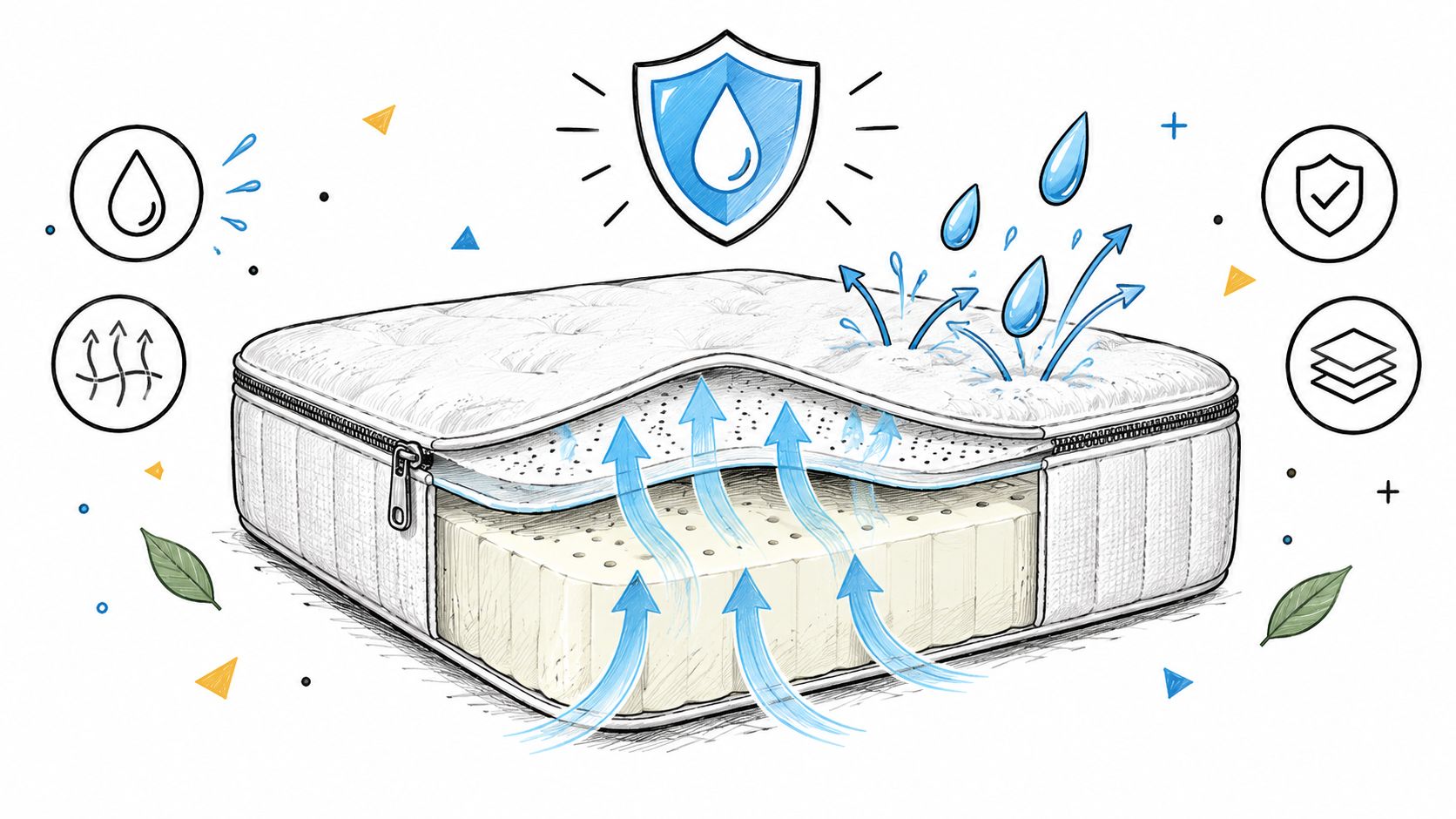
A modern protector can use a waterproof membrane that blocks liquid while allowing air and water vapour to pass through. That combination helps protect against spills, perspiration and accidents without creating the completely impermeable feel associated with older plastic-backed covers.
Fabric still matters. Options such as a cool-feel cellulosic cover, cotton or a charcoal-infused textile may change the surface sensation, but no fabric can overcome an excessively warm bedroom or dense bedding. Choose a protector that is thin enough to follow the mattress contours and breathable enough to support the mattress's intended ventilation.
Match the protection to the problem
Use an ordinary waterproof protector when the main risks are liquid, sweat, stains and everyday wear. It should fit the mattress depth securely, wash according to its care instructions and leave the safety label accessible.
A bed-bug encasement is a different intervention. It fully encloses the mattress and is selected when preventing harbourage or supporting a bed-bug control process matters. It can be appropriate in multi-occupancy properties, but it shouldn't be bought just because the word “protector” sounds reassuring.
For a broader explanation of mattress covers, toppers and their different functions, this complete bedding guide from Critelli Furniture is a useful general reference. The key buying question remains practical: will the cover protect the mattress while preserving its designed feel?
The protector should be part of the mattress specification, not an afterthought. Check its depth, membrane, fabric, washability and effect on the required fire-safety label before you order.
A topper changes comfort and pressure distribution. A protector preserves the mattress and manages contamination. Confusing the two can leave you with a cover that adds heat without solving the problem you have. This mattress protector versus topper explanation sets out that distinction in practical terms.
Who Gel Foam Mattresses Suit and Who Should Look Elsewhere
Gel foam is a sensible starting point for sleepers who like contouring but don't want conventional memory foam's most enclosed feel. It may suit side sleepers seeking cushioning at the shoulders and hips, couples who value reduced movement transfer and hot sleepers who want to investigate a cooler foam construction.
It isn't automatically the right choice for everyone. Someone who changes position constantly may prefer the immediate spring-back of latex or the lift of an innerspring mattress. A sleeper who needs substantial load-bearing support should pay particular attention to the density and thickness of the support core rather than choosing a thin gel layer with a persuasive description.
Use this decision sequence
- Describe the problem first. Is the issue heat, pressure, movement, lack of edge stability or an old mattress that no longer feels supportive? Pick the construction to solve the main problem.
- Match feel to position. Side sleepers often need enough surface cushioning for the shoulder and hip. Back and stomach sleepers usually need to avoid excessive sink through the middle of the body.
- Read the specification. Request the density and thickness of every foam layer, the firmness information and the construction of the base. If the seller can't provide those details, compare cautiously.
- Test movement and edges. Lie in your usual position, roll over and sit near the edge. A mattress that feels comfortable for a few minutes may still make repositioning awkward at night.
- Choose protection before delivery. Measure the mattress depth and select a breathable protector that won't compress the foam or cover the fire-safety label.
For heavier sleepers, durability and support-core density deserve extra scrutiny. For households that prefer a buoyant, easy-to-move-on surface, gel foam may feel too slow or enveloping. The right decision is a match between construction and need, not a verdict that one material is universally superior.
Common Misconceptions About Gel Foam Mattresses
A gel label describes one component, not a complete sleep result. Check these assumptions against construction, protection and paperwork:
- Gel always means cool: Cooling depends on gel placement, foam density, cover, airflow, bedding and room conditions. Gel can change heat feel, but it cannot guarantee a cool night.
- Thicker is always better: More depth may alter cushioning, while poorly balanced layers can still feel unstable. Thickness alone does not show support or durability.
- Gel foam never sags: Compression risk remains. Density, load, construction and use affect how the foam ages.
- All gel is the same: Beads, swirls and separate gel layers create different surface feels and heat-management results.
- A protector doesn't matter: Its fabric, membrane and fit affect ventilation, moisture control and the feel of the finished bed. A non-breathable cover can reduce the practical benefit of a gel layer.
Fire safety needs the same scrutiny. Gel is not safer by design than other foam because it sounds advanced. The finished mattress must meet applicable UK requirements, with evidence covering the assembled product and its foam components. A protector must not hide the fire-safety label or undermine the tested construction.
Environmental claims also need restraint. A protector can reduce damage from spills and stains and may help a mattress last longer, but that does not prove a measured reduction in carbon or waste. Mixed foam constructions can be difficult to separate at end of life. Ask the retailer or local authority about collection and recycling rather than putting the mattress in kerbside recycling.
How to Choose the Right Gel Foam Mattress and Protector
Use a written checklist before paying. Start with your sleep position, temperature concerns and preferred feel, then test whether the mattress provides enough support when you move and sit near the edge.
Next, request the construction details. Look for the density and thickness of every foam layer, the support-core specification and the firmness information. Treat “cooling gel” as one feature to investigate, not as evidence of durability or comfort.
Then verify the paperwork. Ask for the UK fire-safety label, the applicable BS 7177 hazard rating and confirmation that the actual finished mattress, including its foam components, was assessed. Make sure a protector won't hide the label.
Finally, choose protection that matches the household. A breathable waterproof protector is suitable for everyday liquid and stain control. A full encasement is a more specialised choice for bed-bug risk. Check the protector's depth, surface fabric, membrane, wash instructions and effect on the mattress feel.
For end-of-life planning, keep the receipt and material specification, ask the seller how the gel foam and fire barriers are handled, and use an approved retailer or local-authority collection route. In 2023, 1.36 million mattresses were recycled while 5.3 million were landfilled or incinerated, producing a reported 42% recycling rate. The UK end-of-life mattress report shows why protecting a mattress for longer and arranging responsible collection both matter.
If the mattress specification is clear, the UK compliance evidence is available and the protector preserves breathability, gel foam can be a practical choice for pressure relief with a moderated temperature feel. If the seller can't answer those questions, choose a construction you can verify rather than paying for an attractive label.
Protect-A-Bed offers waterproof, breathable mattress protectors in fabric options including Tencel Cool, cotton and charcoal, along with bed-bug encasements for more specialised protection needs. Visit Protect-A-Bed to compare UK mattress protection options and choose a cover that supports the comfort, hygiene and compliance considerations of your gel foam mattress.