

Are Waterproof Mattress Protectors Safe Explained

A child spills a drink in bed just after you've bought a new mattress. Or perhaps you wake warm and uncomfortable, notice a faint smell from fresh bedding, and wonder whether the waterproof layer underneath is making the problem worse. If you have asthma, eczema, sensitive skin, or a baby in the house, the question becomes more serious: are waterproof mattress protectors safe to sleep on every night?
Usually, yes, provided the protector is made from suitable materials, fits correctly, allows moisture vapour to escape, and is cared for according to its instructions. Safety isn't determined by the word “waterproof” alone. It depends on the construction beneath the sheet, the fabric touching your body, the way the product is washed, and whether you're expecting it to solve a problem that needs wider hygiene measures.
Modern protectors can use a thin, flexible membrane that blocks liquid while remaining air permeable. That's a different experience from the stiff, noisy plastic-style covers many people remember. UK bedding guidance describes protectors as barriers against spills, bodily fluids, allergens, dust mites, bed bugs, and mould, while also distinguishing breathable cotton from products designed specifically for allergy-sensitive sleepers UK mattress protector guidance.
This guide looks at the practical meaning of safe: breathability, heat, skin contact, odour, material choice, allergy expectations, washability, and long-term use. You'll also see where a waterproof protector helps, where it doesn't, and how to choose one without relying on vague claims such as “natural”, “cooling”, or “hypoallergenic”.
Table of Contents
- How Waterproof Yet Breathable Protection Actually Works
- Materials Compared and What They Mean for Comfort and Safety
- Off Gassing Smells and Certifications to Look For
- Allergy Asthma and Sensitive Sleepers What the Evidence Shows
- Safe Use Care and Everyday Habits That Keep Protection Effective
- Choosing with Confidence and Next Steps for Your Home
How Waterproof Yet Breathable Protection Actually Works
A breathable waterproof protector works a little like a good rain jacket. Rain cannot pass through the outer membrane as liquid, but perspiration vapour can move away from your body. The protector doesn't create open airflow in the same way as an uncovered cotton sheet, yet its membrane can provide a better balance than a sealed plastic barrier.
The key is the size and behaviour of the barrier's openings. Liquid from a drink, sweat, or an accident is stopped from reaching the mattress. Moisture vapour is handled differently, allowing some of the humidity created during sleep to move through the material. That distinction affects comfort because a protector that blocks liquid without allowing vapour movement can feel clammy or warm.
Why the fabric layers matter
A protector usually has more than one layer. The upper fabric supplies the feel against the sheet, the waterproof membrane provides liquid resistance, and the skirt or side panels help hold the protector in place. Cotton can feel familiar and breathable, while Tencel-style fabrics are often selected for a smoother, cooler hand feel. The membrane itself may be polyurethane or TPU, rather than PVC or vinyl.
The membrane isn't the only safety feature. Washability matters because a protector needs to be cleaned after spills, perspiration, or illness without becoming difficult to use. A washable surface supports better hygiene than a barrier that stays on the bed but cannot be cleaned properly. Care instructions still matter, especially if the product has a maximum wash temperature or specific drying requirements.
Breathability is a practical safety test
A protector that feels quiet and comfortable under a sheet is more likely to be used consistently. By contrast, a crinkling, heat-trapping cover may lead someone to remove it, leaving the mattress exposed when protection is most needed.
Practical rule: Waterproofing protects the mattress from liquid. Breathability, a comfortable surface, and straightforward washing help protect the sleeper's ability to use that waterproofing every night.
For a more detailed explanation of the membrane principle, see this guide to a breathable waterproof membrane. The useful question isn't whether a protector is waterproof. Ask whether it blocks liquid without turning the sleep surface into a hot, noisy, poorly washable plastic sheet.
Materials Compared and What They Mean for Comfort and Safety
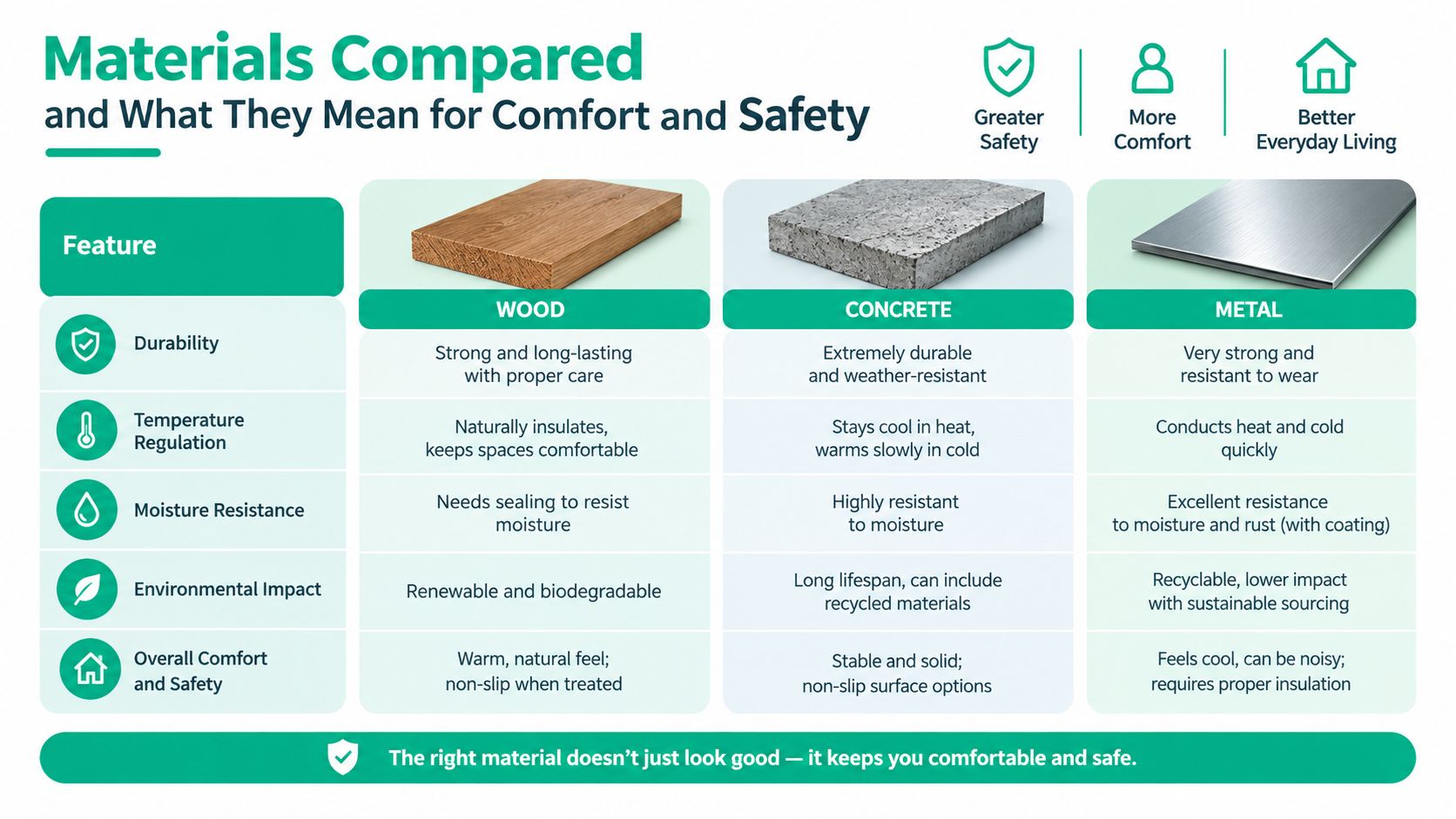
Material names can sound technical, but they answer ordinary bedtime questions. Will the protector feel soft? Will it make noise when you turn? Will it hold heat? Can you wash it after an accident? Will the waterproof layer stay intact over time?
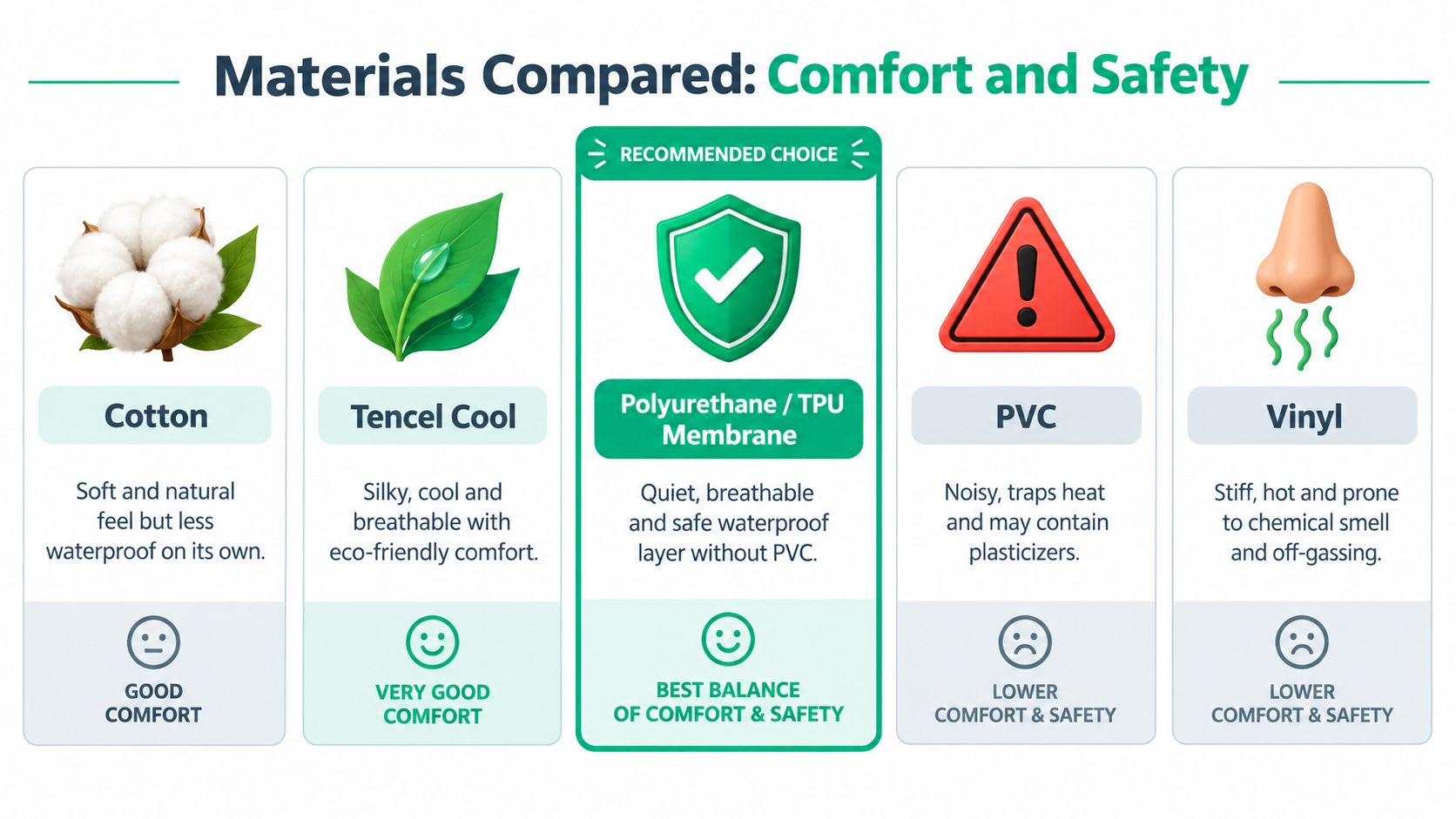
Cotton is often used for the fabric that sits beneath the fitted sheet. It has a familiar, soft feel and is naturally breathable, but cotton on its own isn't fully waterproof. It may absorb minor moisture, yet a substantial spill can still reach the mattress. For stronger liquid protection, cotton is commonly combined with a waterproof membrane.
Tencel Cool is used where a smoother hand feel and a cooler sensation are priorities. It can suit people who dislike coarse or warm bedding, although the final result depends on the complete construction, not the face fabric alone. A breathable fabric cannot fully compensate for a membrane or backing that traps heat.
Membranes that block liquid without the old plastic feel
Polyurethane and TPU membranes are flexible waterproof layers. In a well-made protector, the membrane is thin and positioned beneath the sleeping surface, so it doesn't need to feel like a separate sheet of plastic. Recent UK consumer guidance distinguishes breathable polyurethane or TPU membrane designs from PVC and vinyl, describing the former as quieter and less likely to sleep hot, while warning that PVC can feel crinkly and trap heat UK consumer comparison of mattress protector materials.
PVC and vinyl may provide a strong liquid barrier, but they're more associated with the drawbacks many sleepers are trying to avoid: noise, stiffness, heat retention, cracking, and chemical odour. That doesn't mean every product has identical performance, but it does make the material specification important. If a listing only says “waterproof backing” or “laminated layer”, ask what the laminate contains.
Match the construction to the household
A hot sleeper may prefer a lightweight protector with a breathable face fabric and quiet membrane. A child's bed may need dependable waterproofing, secure elastic, and easy washing. An allergy-sensitive household may prioritise an impermeable encasement, but should still look for a construction that feels comfortable enough to remain fitted.
Use the product description as a checklist:
- Face fabric: Check whether it's cotton, Tencel, or another clearly identified textile.
- Waterproof layer: Look for a named membrane, such as polyurethane or TPU, rather than an unexplained coating.
- Noise and feel: Look for wording about quiet construction, but treat “silent” as a product claim to verify through reviews and returns policy.
- Fit: Confirm mattress depth and whether the protector covers only the top or fully encases the mattress.
- Care: Check washing, drying, and stain-treatment instructions before buying.
For a closer look at the trade-off between a cotton surface and waterproof performance, consult this guide to a waterproof mattress protector with cotton. The safest choice is usually the one whose materials are clearly disclosed and whose care routine you can realistically follow.
Off Gassing Smells and Certifications to Look For
A new protector may have a faint manufacturing or packaging odour when first opened. That doesn't automatically mean it's dangerous. Textiles, packaging, coatings, and adhesives can all contribute to an initial smell, and the strength and persistence of the odour matter more than the mere fact that you notice one.
Start with simple steps. Remove the protector from its packaging, allow it to air in a well-ventilated room, and wash it if the care label permits. Don't cover a strong smell with fragrance sprays, because added fragrance can create another irritant and makes it harder to judge whether the original odour has gone.
Read the label rather than the headline
Safety claims need context. “Waterproof” describes liquid performance, not the absence of every substance that could affect comfort or sensitivity. “Hypoallergenic” can also mean different things between manufacturers, so look for a clear description of the barrier, fabric composition, washing requirements, and any relevant testing or certification.
Useful questions include:
- What is the membrane made from?
- What fibres touch the sheet and the mattress?
- Are finishes, treatments, or adhesives identified?
- Does the product carry a recognised textile or emissions certification?
- Can the manufacturer explain the claim in writing?
A certification can be helpful when it applies to the whole finished product, not merely one raw material. It's also sensible to separate product safety from indoor air quality testing. If you're investigating several possible sources of odour or irritation in a room, a practical resource on DIY air quality tests in LA can help you understand the limits of home testing and the value of professional assessment.
Know when to stop using it
A mild odour that fades after airing and washing is different from a strong smell that persists, causes discomfort, or returns whenever the protector warms up. If you develop a rash, breathing difficulty, headache, or other concerning symptom after introducing new bedding, remove the item and seek appropriate medical advice. People with diagnosed respiratory or skin conditions should follow their clinician's guidance rather than testing their tolerance by sleeping on a product that clearly aggravates symptoms.
The sensible approach is neither panic nor blind reassurance. Choose transparent materials, air and wash the protector before use, and return a product that remains unpleasant or poorly documented.
Allergy Asthma and Sensitive Sleepers What the Evidence Shows
Waterproof mattress protectors can support allergy control, but they shouldn't be presented as a complete treatment for asthma or dust-mite sensitivity. An impermeable cover creates a physical barrier between the mattress and the sleep environment. That can reduce movement of allergens from the mattress surface, yet exposure also comes from bedding, flooring, upholstery, humidity, and other parts of the room.
UK clinical evidence shows why expectations need to stay measured. A NICE evidence review identified moderate-quality evidence from one randomised controlled trial involving adults and children with atopic dermatitis. The trial used impermeable mattress and pillow covers alongside other dust-mite reduction measures, and eczema severity was significantly lower at six months, with n=48 and a mean difference of -4.2, with a 95% confidence interval from -6.7 to -1.7 NICE evidence review on indoor air quality and dust-mite measures.
That wording matters. The covers were part of a wider strategy, not an isolated intervention. A separate Imperial College review found no reported adverse events in the encasing studies it could assess, but it also described variable efficacy. In the largest randomised double-blind placebo-controlled bedcover trial in mite-sensitised children, mattress Der p 1 allergen fell by 84%, and emergency hospital attendance for severe asthma exacerbations was reduced, yet oral prednisolone use didn't fall Imperial College and NICE clinical evidence review.
What the barrier can and cannot do
| Outcome | What studies found | Practical takeaway |
|---|---|---|
| Eczema severity | Impermeable covers used with other dust-mite measures significantly reduced eczema severity at six months in one trial | A cover may help as part of a wider plan |
| Mattress allergen levels | One trial found Der p 1 levels of 0.58 µg/g versus 1.71 µg/g at six months, P=0.01, but not at twelve months LSHTM trial report | Early allergen reduction doesn't guarantee lasting clinical benefit |
| Routine asthma management | Bedding covers alone were concluded to be clinically ineffective for routine asthma management in adults | Don't replace prescribed treatment or professional advice |
| Reported adverse events | The assessable encasing studies in an Imperial College review reported no adverse events | A properly used encasement can be a reasonable physical barrier |
| Whole-bedroom exposure | Results varied when covers were used without broader measures | Combine mattress protection with sensible cleaning and exposure reduction |
A realistic routine for sensitive sleepers
Wash sheets and protectors according to their care labels, keep the bedroom reasonably clean, and address visible damp or mould rather than relying on bedding alone. For practical advice on laundering bedding, this expert guide to clean bedding can help you compare care approaches without treating washing temperature as a substitute for a complete allergy plan.
A protector may be especially useful if the mattress is older, difficult to clean, exposed to frequent spills, or used by someone with known dust-mite sensitivity. It may also offer reassurance to families managing eczema, although any continuing flare, wheeze, or breathing difficulty deserves clinical attention.
For households comparing different barrier designs, a hypoallergenic mattress protector should still be judged by its actual construction, fit, washability, and the wider cleaning routine around it.
Safe Use Care and Everyday Habits That Keep Protection Effective
A safe protector is only useful if it stays fitted, clean, and intact. Put it directly on the mattress, beneath the sheet, and check that it doesn't bunch under the sleeper. A loose protector can feel hotter, make more noise, and leave uncovered areas where spills or allergens can reach the mattress.
Wash after a significant spill or bodily-fluid accident, then follow the manufacturer's regular care guidance for routine cleaning. Don't automatically choose the hottest available cycle. Heat, detergents, agitation, and tumble drying can affect fabrics and membranes differently, so the label's instructions are more reliable than a general assumption that hotter always means cleaner.
A care routine that protects performance
- Fit it carefully: Match the protector to the mattress dimensions and depth. Stretch side panels over the corners without forcing seams.
- Inspect the barrier: Look for tears, split seams, worn elastic, or areas where the waterproof layer has become visibly damaged.
- Wash correctly: Use the stated cycle, detergent guidance, and maximum temperature. Avoid bleach or harsh treatments unless the manufacturer explicitly allows them.
- Dry with restraint: Use the recommended air-drying or tumble-drying method. Excessive heat can shorten the useful life of some waterproof constructions.
- Keep the sheet on top: The sheet reduces direct skin contact with the protector and absorbs everyday perspiration, making routine laundering easier.
- Replace when compromised: A protector with a puncture or failed membrane can no longer provide dependable liquid protection.
Bed bugs require a different level of containment
A fitted waterproof protector and a full bed-bug encasement aren't interchangeable. A complete encasement seals the mattress and is designed to prevent bed bugs already inside from escaping. A UK-facing allergy resource says encasements can be left on for at least a year during bed-bug management because they trap insects in the mattress and stop them climbing out at night. It also advises waiting until the infestation is fully dealt with before buying a replacement mattress UK guidance on mattress protectors and bed-bug encasements.
That long period shows why an encasement needs durable construction, a reliable closure, and regular inspection. Don't remove it casually during treatment, and don't assume a thin top-only protector will contain an infestation.
For mattresses in accommodation, care settings, or properties with heavy turnover, specialist cleaning may be appropriate after contamination or before a new occupant arrives. Guidance on casino mattress cleaning solutions illustrates the kind of professional service context where mattress hygiene needs more than routine home washing.
Choosing with Confidence and Next Steps for Your Home
The right protector depends on the problem you're trying to solve. For everyday spills, choose a washable fitted protector with a breathable membrane. For a hot sleeper, prioritise a light fabric surface, quiet construction, and clear information about moisture vapour and care. For allergy concerns, look for an impermeable barrier, but treat it as one part of a broader exposure-reduction routine.
Parents may value full liquid protection and straightforward washing above a luxurious hand feel. Renters and landlords may prefer a durable design that helps keep a mattress presentable between occupants. If bed bugs are the concern, select a purpose-built full encasement rather than assuming any waterproof cover provides containment.
Use this final buying check
- Confirm the fit: Check mattress size and depth before ordering.
- Identify the materials: Prefer a named face fabric and a clearly specified membrane.
- Assess the feel: Consider heat, noise, skin contact, and whether a sheet will cover the protector.
- Read care instructions: Make sure the washing and drying routine suits your household.
- Check the guarantee: Look for clear terms covering manufacturing faults and membrane failure.
- Plan the wider routine: Include sheet washing, mattress inspection, ventilation, and professional advice where needed.
Protect-A-Bed offers UK mattress protectors with breathable waterproof membrane construction, including cotton and Tencel Cool fabric options, as well as bed-bug encasements for homes and managed properties. Visit Protect-A-Bed to compare the available materials, check the fit for your mattress, and review the care and warranty information before choosing.