

Waterproof Quilted Mattress Protector: A Practical UK Guide

You've got a wet patch on the sheet, the kettle's still warm, and you're trying to work out whether the mattress underneath has already taken the hit. That's the moment you start looking for a waterproof quilted mattress protector, because the problem isn't just the spill itself. It's whether the bed still feels comfortable the next night, whether the liquid reaches the core, and whether the protector stays in place long enough to do its job.
The easiest way to think about this product is as a layered system, not a single object. The top layer changes how the bed feels, the middle layer handles liquid protection, and the fitted skirt decides whether the whole thing stays where it should. Once you separate those jobs, the buying decision becomes much clearer.
Table of Contents
- What a Waterproof Quilted Mattress Protector Actually Does
- The Three Layers That Make It Work
- How a Waterproof Membrane Stays Breathable
- Choosing the Right Fabric and Feel
- Getting the Right Size and Fit on a UK Bed
- Who Benefits Most and Where They Make Sense
- Care, Maintenance and Warranty
- Common Questions Before You Buy
What a Waterproof Quilted Mattress Protector Actually Does
A spill usually arrives at the worst possible time. A drink tips over at night, a child has an accident, a pet settles in and leaves moisture behind, or a tenant moves out and the mattress needs to stay presentable for the next person. A waterproof quilted mattress protector sits between those everyday mishaps and the mattress core, so the mattress does not absorb what lands on top of it.
Protection comes first, comfort still matters
Its main job is to stop liquid from reaching the mattress surface. That includes spills, sweat, and the small accidents that may not look dramatic at first, but can leave stains, odour, or deeper damage later. Some quilted protectors are built to a waterproof performance level that goes beyond a common industry benchmark, which shows that waterproofing is now treated as a measurable specification rather than a vague promise.
Comfort still matters, though. Quilted construction exists because people do not want to sleep directly on a thin plastic-feeling layer. They want the bed to keep its bedding feel, not turn into something that feels crinkly or clinical.
Practical rule: if a protector only handles spills but makes the bed unpleasant, people stop using it. Once that happens, the mattress gets less protection than it should.
Why this category exists at all
A quilted waterproof protector fills the gap between a basic washable pad and a full encasement. It is made for everyday bed use, not for sealing the mattress away inside a shell. For UK homes, that trade-off makes sense because people usually want something they can wash, refit, and live with every week, without changing the bed's feel too much.
That is also why buyers can end up puzzled. They search for “waterproof”, then find themselves judging the product on comfort, breathability, and fit as well. Those are fair questions, and the answer depends on the layers underneath, not just the label on the packet.
The Three Layers That Make It Work
A good waterproof quilted mattress protector works because each layer does a different job. If one part is weak, the whole product feels disappointing, even when the packaging sounds reassuring. The quilted top, the waterproof membrane, and the fitted skirt are separate pieces, and buyers get better results when they judge them separately.
Top layer, middle barrier, bottom skirt
The quilted top layer is the part you touch. It gives the protector its softness, its bedding-like feel, and most of its visual identity. In UK retail listings, that top layer is often described as cotton or a cotton-like face, which matters because the surface needs to feel comfortable under sheets and close to the skin.
The waterproof membrane sits underneath that quilted surface. This is the technical core. Many UK listings specify a cotton outer with 100% polyurethane backing and a fit up to 30 cm deep, or a construction with a polyurethane-laminated reverse and a fit for mattresses up to 35 cm deep. The point is simple, the waterproof layer is not the sleep surface. A clear explanation of how a breathable waterproof membrane works is useful here, because the barrier has to stop liquid without making the bed feel sealed off.
The fitted skirt is the part most buyers overlook. It anchors the protector around the mattress edges, keeps the membrane tensioned, and reduces the chance of corner lift during sleep movement. If the skirt is too shallow for the mattress depth, the top can bunch, the edges can rise, and liquid can find a path around the barrier.
How to read a product page with more confidence
Once you know those three jobs, product pages become easier to judge. Look for comfort in the top layer, barrier material in the middle, and depth fit in the skirt. If a listing is strong on one layer but vague on the others, that usually tells you where the trade-off sits.
How a Waterproof Membrane Stays Breathable
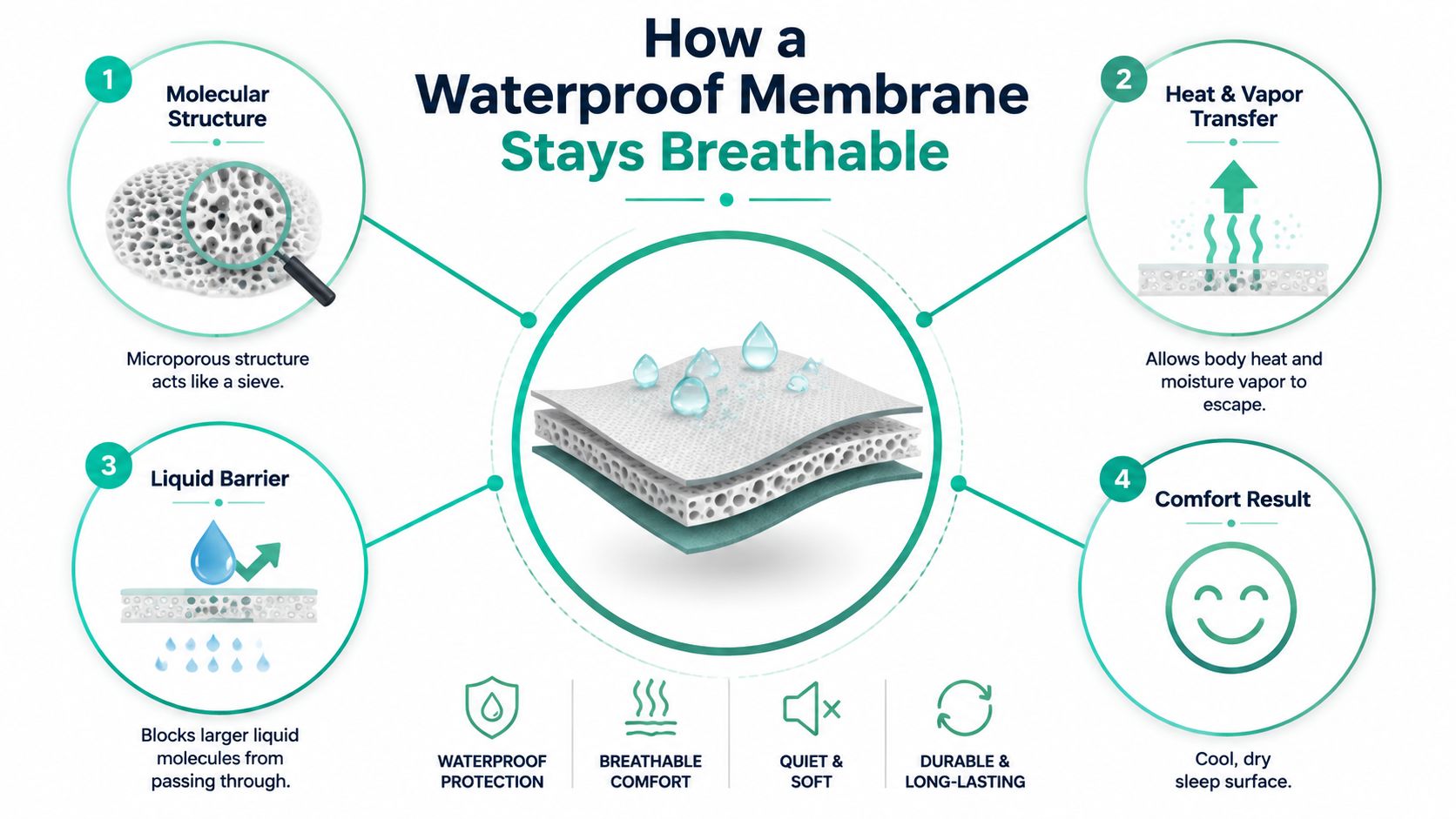
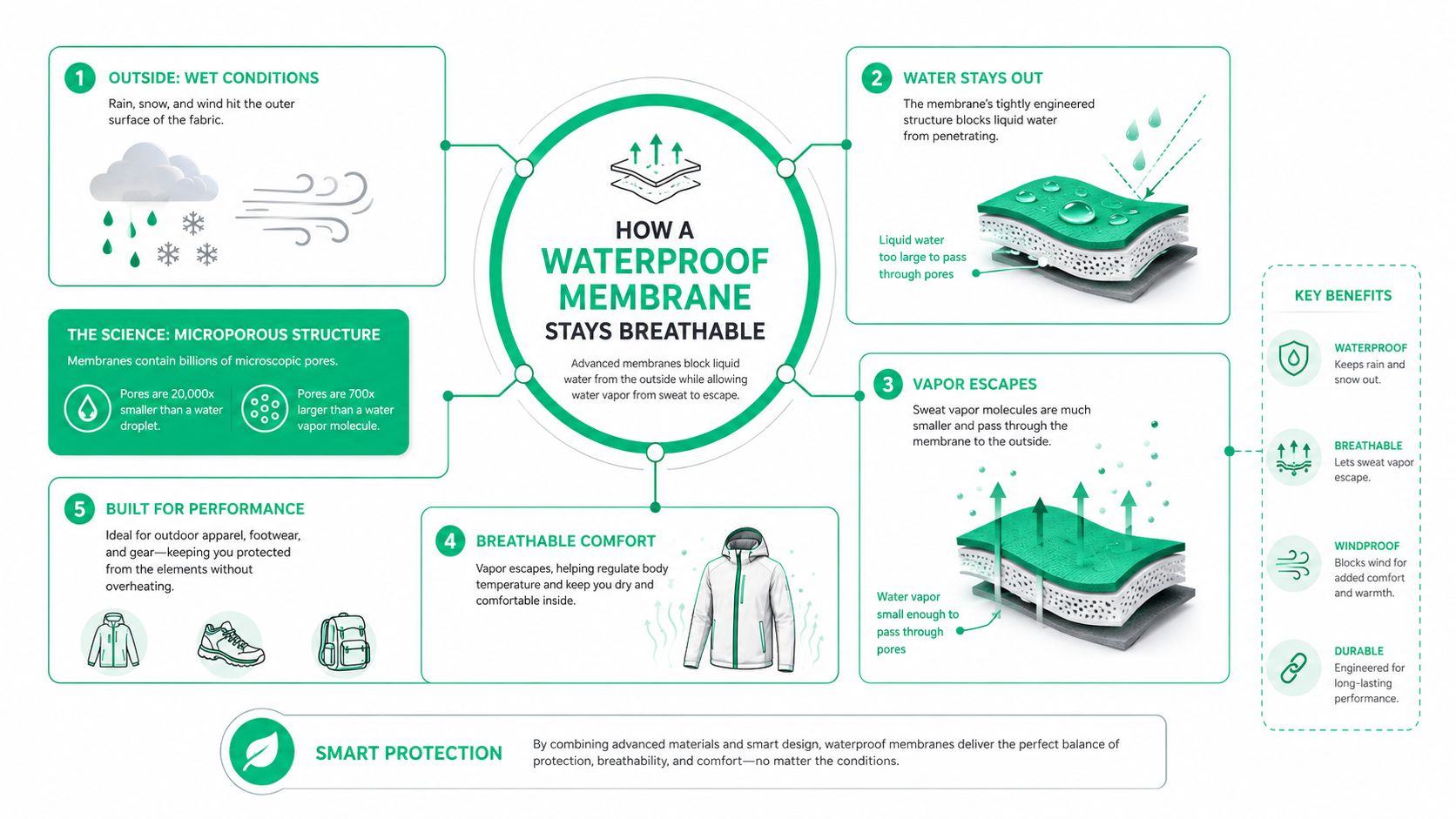
A waterproof protector can feel like it should trap heat, especially if you have ever slept on an old plastic-backed cover. That concern is understandable. Modern membrane-based protectors work differently, because the barrier is designed to stop liquid while still letting air and moisture vapour move through.
The one-way-door idea
The easiest way to picture it is through a simple barrier, not a solid sheet. Liquid water from a spill is blocked, while body heat and vapour can pass through more easily than they would through an impermeable cover. That is the basic logic behind breathable waterproof bedding.
The membrane is doing a specific job here, and the comfort comes from the textile layers around it. On Protect-A-Bed's own explanation of how a breathable waterproof membrane works, the key point is that waterproofing and breathability can sit together rather than cancel each other out. One UK product line uses this idea in its Miracle Membrane, which the brand describes as thin, flexible, and silent while blocking liquids, dust mites, allergens, and sweat. That matters because the protector does not feel like a hard barrier even though a barrier is still present below the quilted surface.
A useful reference point for the membrane mentioned earlier is the 7,000 mm waterproof rating the retailer compared against a 5,000 mm benchmark. In practical bed terms, that rating is about resistance to liquid penetration, not how soft the sleep surface feels. The waterproof layer can be strong without making the bed feel sealed or stiff.
A protector can keep liquid out without making the bed feel boxed in. The membrane blocks the spill, and the textile layers handle the comfort.
What to ask instead of just asking for waterproof
A better question is how the membrane behaves in everyday use. Does it stay quiet when you turn over? Does it change the mattress feel? Does it let warmth escape rather than holding it in? Those are the details that usually separate a protector that disappears into the bedding from one that you notice all night.
For readers who want a plain-language explanation of breathability technology, the internal note on a breathable waterproof membrane is worth a look: breathable waterproof membrane. The useful idea is straightforward, waterproofing and breathability do not have to work against each other.
Choosing the Right Fabric and Feel
Once the waterproof layer makes sense, the next question is sensory. That's where fabric choice matters, because the top surface changes how the bed feels without changing the underlying waterproof job. For many buyers, this is the part they'll notice every single night.
Fabric options in plain terms
Cotton gives a familiar, natural feel that many sleepers already trust. It's a straightforward choice if you want the protector to feel close to standard bedding. Premium cotton versions tend to feel softer or more polished, but they still sit in the same comfort family.
Charcoal and Tencel Cool are better suited to people who sleep warm or worry about night sweats. Tencel Cool is especially useful when the aim is a cooler-feeling surface, while charcoal-style options are often chosen by sleepers who want the bed to feel fresher and less clingy. The point isn't that one fabric is universally superior, it's that the surface should match the way you sleep.
Protect-A-Bed's own guidance on Tencel fabric is a useful example of how a technical face fabric can be used to change the feel without changing the waterproof purpose underneath, and its Tencel-focused material note is here: Tencel mattress protector.
A simple comparison to narrow the choice
| Fabric Option | Sleep Feel | Best For | Breathability |
|---|---|---|---|
| Cotton | Familiar, soft, everyday | Buyers who want a simple bedding feel | Generally good |
| Premium Cotton | Softer, more refined | People who want a more comfortable hand-feel | Good |
| Charcoal | Slightly more technical, fresher feel | Hot sleepers, households wanting a cooler surface | Good |
| Tencel Cool | Cooler-feeling and smoother | Night sweats, warm rooms, sleepers who dislike warmth | Very good |
The practical lesson is simple. If you want the protector to disappear under the sheet, choose a fabric that feels familiar to you. If you want the surface to help with warmth, go for a more cooling-leaning option. Either way, the waterproof job should stay the same underneath.
Getting the Right Size and Fit on a UK Bed
Fit is where many good protectors disappoint people. The problem usually is not the waterproof layer itself, it is the skirt and depth. If the protector does not sit properly on the mattress, movement at the edges can pull it out of position and leave the surface less well covered.
Start with the UK size, then check the depth
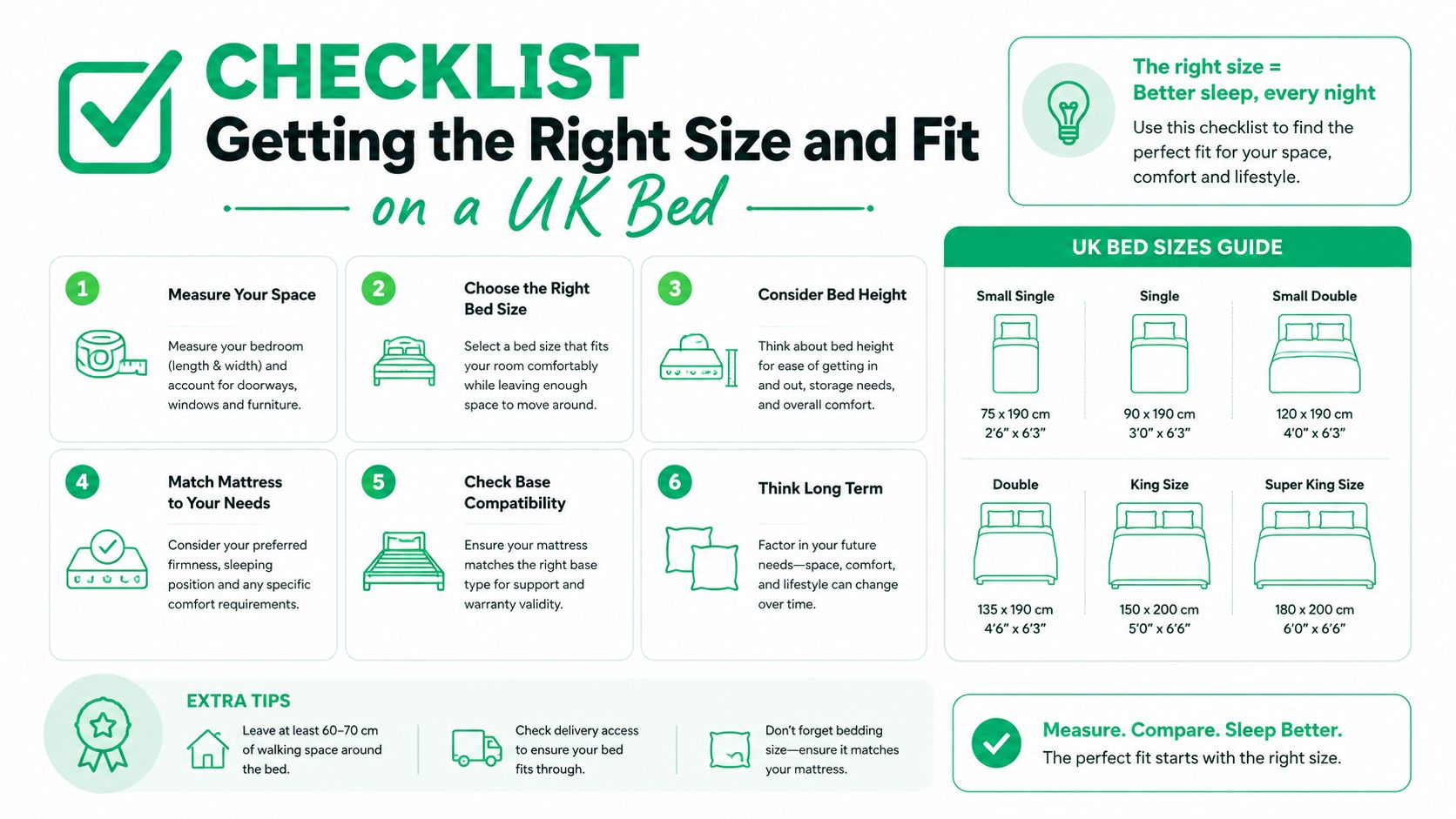
UK bedding sizes commonly include single, small double, double, king, and super king. That gives you the starting point, but size alone is not enough. You also need the mattress depth, because modern mattresses are often deeper than older ones.
A protector made for a shallower mattress can pop off the corners during normal use. Once that happens, the edges lift and the waterproof layer stops lying flat against the mattress. That is where leaks tend to find their way in, especially around movement-heavy zones like the shoulders, hips, and foot of the bed.
The safest habit is to measure the mattress itself rather than assume the bed frame tells you enough. For a clear measuring approach, see how to measure mattress depth. It helps to check the full depth before you order, then compare that against the stated fit range.
What a good fit looks like
A well-fitted protector stays smooth, the skirt stays under tension, and the corners do not need constant adjustment in the morning. In UK retail listings, fitted designs are commonly specified for mattresses up to 30 cm or 35 cm deep, which shows how much depth matters on modern beds.
If the protector is hard to stretch over the corners in the first place, it usually will not stay settled once someone sleeps on it. A snug fit should feel secure without straining the fabric, a bit like a fitted sheet that has enough depth to hold its shape without pulling loose.
Who Benefits Most and Where They Make Sense
A quilted waterproof protector makes the most sense when the mattress is expensive enough that damage matters, but the bed still needs to feel like an everyday bed. That covers a lot of UK households, but it's not only for one type of buyer.
Everyday homes, children's rooms and pet households
For families, the appeal is obvious. A protector handles spills, damp bedding, and the occasional accident without forcing the bed to feel clinical. For pet owners, it adds a washable layer between fur, moisture, and the mattress surface.
If a pet-related issue has already happened elsewhere in the room, it can help to think in layers there too. For example, if you're dealing with lingering odour in soft furnishings, this guide to DIY enzyme carpet odor treatment can help with the carpet side of the problem while the mattress protector handles the bed side. Different surfaces need different solutions.
Landlords and property managers also have a clear use case. Between tenancies, a washable waterproof layer helps reduce visible staining and keeps the mattress in better condition for turnover. In guest rooms, it gives peace of mind without changing the look of the bed too much.
Where the category stops being enough
A quilted protector is not the same as a full bed bug encasement. If the need is sealed, zip-around barrier protection, that's a different product category with a different job. Mixing those up leads to disappointment, because a quilted fitted protector is designed for comfort and everyday barrier use, not full mattress encapsulation.
That distinction matters in shared housing, hospitality, or any situation where insect-control protocols are part of the brief. For standard spills, sweat, and routine hygiene, the quilted waterproof format is usually the more practical everyday choice. For sealed protection, buyers need to look at encasements instead of expecting a fitted protector to do everything.
Care, Maintenance and Warranty
A protector only keeps protecting if people can wash it and put it back on the bed without fuss. If maintenance becomes a chore, the product gets used less often, and the mattress underneath carries the risk instead.
Washing and drying without damaging the membrane
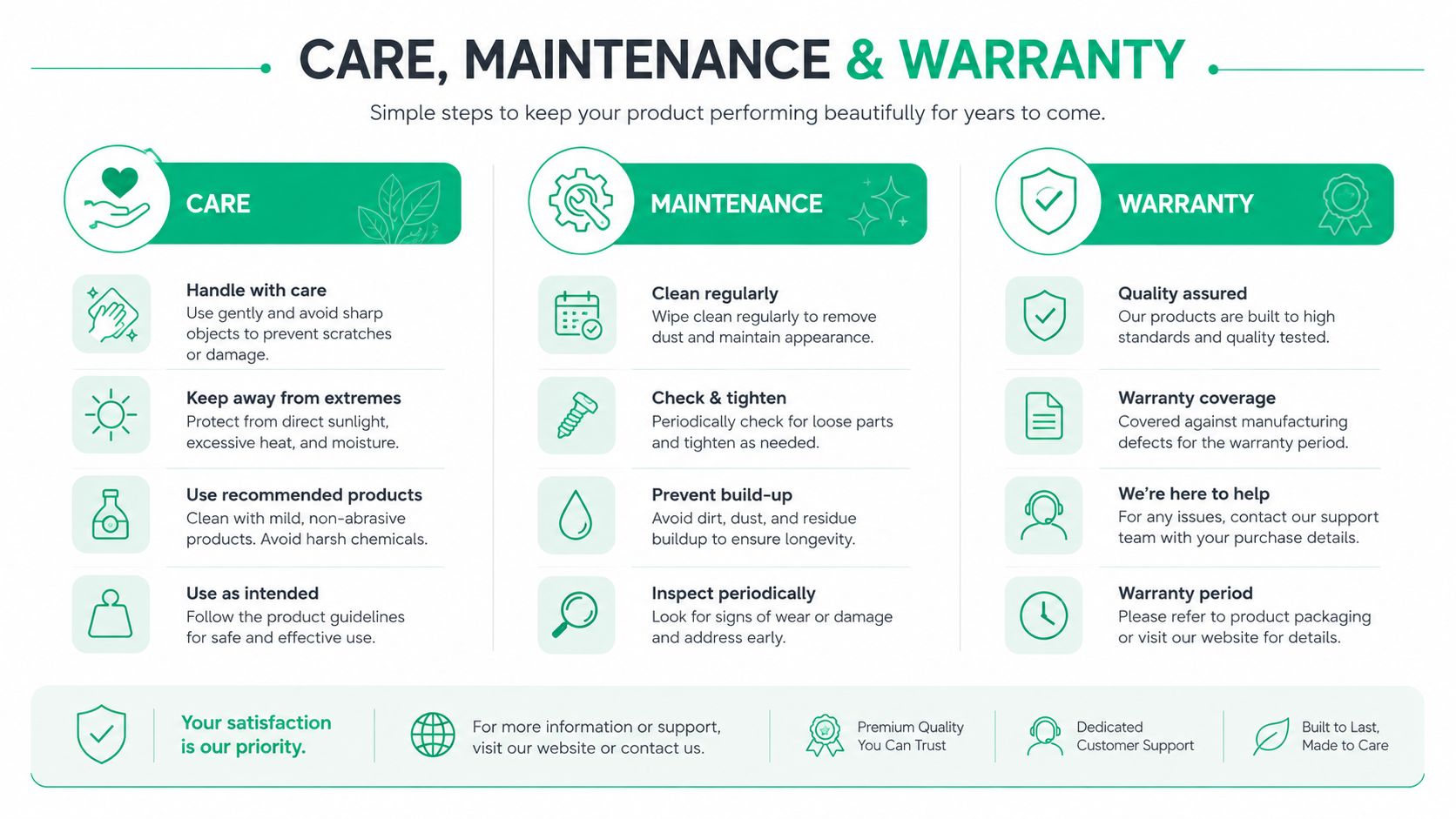
The safest routine is simple, gentle wash, moderate temperature, low-spin handling, and low-heat drying or line drying. Harsh spins can stress the fabric and the membrane backing, while excessive heat can shorten the life of the waterproof layer. Bleach and fabric softener are poor choices because they can interfere with the materials that make the protector work.
Rotation helps too. If you own a spare protector, alternating them gives each one time to dry fully and keeps the bed fresh between washes. Even with one protector, a quick air-out before refitting can help reduce dampness and keep the bedding feeling clean.
The commercial backstop behind the product
One product detail that matters for long-term buyers is the up to 10-year warranty against material or manufacturing defects, which includes a replacement policy. That doesn't mean the protector never needs care, it means the brand is backing the construction over time. The UK fulfilment note also points to 1 to 3 working day delivery on in-stock items, with free shipping above a stated threshold and delivery insurance included, which is useful if you're replacing a protector quickly rather than planning months ahead.
Treat the protector as part of the mattress system. Wash it well, dry it properly, and it'll keep doing the quiet work you bought it for.
Common Questions Before You Buy
The last questions are usually the practical ones. People already understand the layers, but they still want to know how the bed will feel at night, what level of protection they're really getting, and whether the protector will be annoying to live with.
Does waterproof mean hot
Not necessarily. A modern membrane-based protector can be waterproof without feeling sealed, because the barrier sits under a textile surface and is designed to manage vapour movement as well as liquid resistance. If you sleep warm, the fabric choice matters too, which is why cooler-feeling surfaces like Tencel Cool or other breathable fabrics are worth considering.
Will it stop bed bugs
A fitted quilted waterproof protector is not the right product for full bed bug exclusion. If the goal is to seal the mattress completely, a zip-around encasement is the category to look at. A quilted protector still has a valuable role, but it's the everyday comfort-and-barrier layer, not the sealed pest-control layer.
Will it sound crunchy or change the mattress feel
A well-made membrane protector shouldn't feel like a plastic sheet or make much noise. The quilted top is there to soften the surface, and the membrane sits underneath it. If a protector feels crunchy, the materials or construction are probably too basic for comfortable nightly use.
What if my mattress is unusually deep
Measure it first, then check the depth rating on the product page. A deep mattress needs enough skirt tension to stay in place, otherwise the corners lift and the barrier can shift. If the bed is outside standard sizing, focus on fit before you focus on fabric.
For buyers who want a waterproof, breathable, UK-ready protector built around these layering principles, Protect-A-Bed offers waterproof mattress protection, quilted comfort, and fitted options designed for everyday use. If you're comparing fabrics, sizes, and fit on a real bed rather than in theory, visit Protect-A-Bed and check the details against your mattress before you buy.