

Waterproof Mattress Protector Single: A UK Buying Guide

A glass of juice tips across a child's single bed. The fitted sheet catches some of it, but the mattress underneath is still vulnerable. In a rented flat, university halls or a guest bedroom, replacing that mattress isn't a practical response. A properly chosen waterproof mattress protector for a single bed is.
The right protector does more than stop one spill. It keeps sweat, stains and accidents away from the mattress core, creates a washable surface for allergen control and helps preserve bedding that's expensive or difficult to replace. Older plastic-backed designs made people wary of heat and crinkling, but modern breathable membranes have changed what a protector can do.
Table of Contents
- Why a Single Waterproof Mattress Protector Is Worth Buying
- How Waterproof Mattress Protection Actually Works
- Fabric and Membrane Options Compared
- Getting the Right Fit for a Single Bed
- Breathability and Cooling for Hot Sleepers
- Caring for Your Protector So It Lasts
- Warranty Delivery and UK Purchase Confidence
-
Common Questions Before You Buy
- Will a protector change how the mattress feels?
- Will it make noise when I move?
- Can I use one with an electric blanket?
- Is it suitable for asthma or eczema?
- Is waterproof the same as wipe-clean?
- What does Miracle Membrane mean?
- Can I use it on a new mattress?
- What if my bed is a non-standard single?
- Does it go above or below a topper?
Why a Single Waterproof Mattress Protector Is Worth Buying
A single mattress often belongs to the person most likely to need extra protection. Children spill drinks, sweat through bedding and have occasional accidents. Students and tenants may sleep on mattresses they didn't choose and can't easily replace. Guests, care recipients and anyone sharing accommodation create the same practical issue: the mattress needs a barrier that can be removed and washed.
A fitted waterproof protector blocks liquid before it reaches the foam, fillings and stitching inside the mattress. That matters because stains can become permanent, odours can linger and cleaning a mattress properly is awkward. Some mattress guarantees also exclude damage caused by staining or liquid, so prevention is more sensible than trying to argue about a claim later.
Practical rule: If the mattress would be difficult or expensive to replace, protect it before the first accident happens.
The hygiene case is just as strong. Which? guidance on mattress protectors describes them as a layer beneath the fitted sheet that helps guard against stains, spills, dirt and grime. Fully waterproof versions can protect against spills, sweat and bedwetting, although water-resistant models offer less coverage and waterproof materials can sometimes be noisier.
Protection that earns its place
A washable barrier also helps limit the build-up of dust, mite debris and other bedroom allergens on the mattress surface. Allergy UK's dust-mite guidance identifies dust mites as a major trigger for allergy and asthma symptoms and supports the use of protective bedding as part of reducing exposure.
That doesn't make a protector a treatment for asthma, eczema or allergies. It does make it useful sleep infrastructure, especially in a child's room, a rented home or any bedroom where repeated washing matters. The same logic applies in hospitality and managed accommodation, where smart purchasing for hospitality means assessing the full service life of bedding rather than choosing the cheapest item on the shelf.
Choose a single protector for the mattress you own, not merely for the spill you're worried about today. The best version combines liquid protection, a comfortable sleep surface, allergen control and a fit that stays secure through washing and daily use.
How Waterproof Mattress Protection Actually Works
Modern protection comes from a layered construction, not from turning the whole cover into a sheet of plastic. Each layer performs a different job, and the membrane in the middle determines whether the result feels like bedding or outdoor equipment.
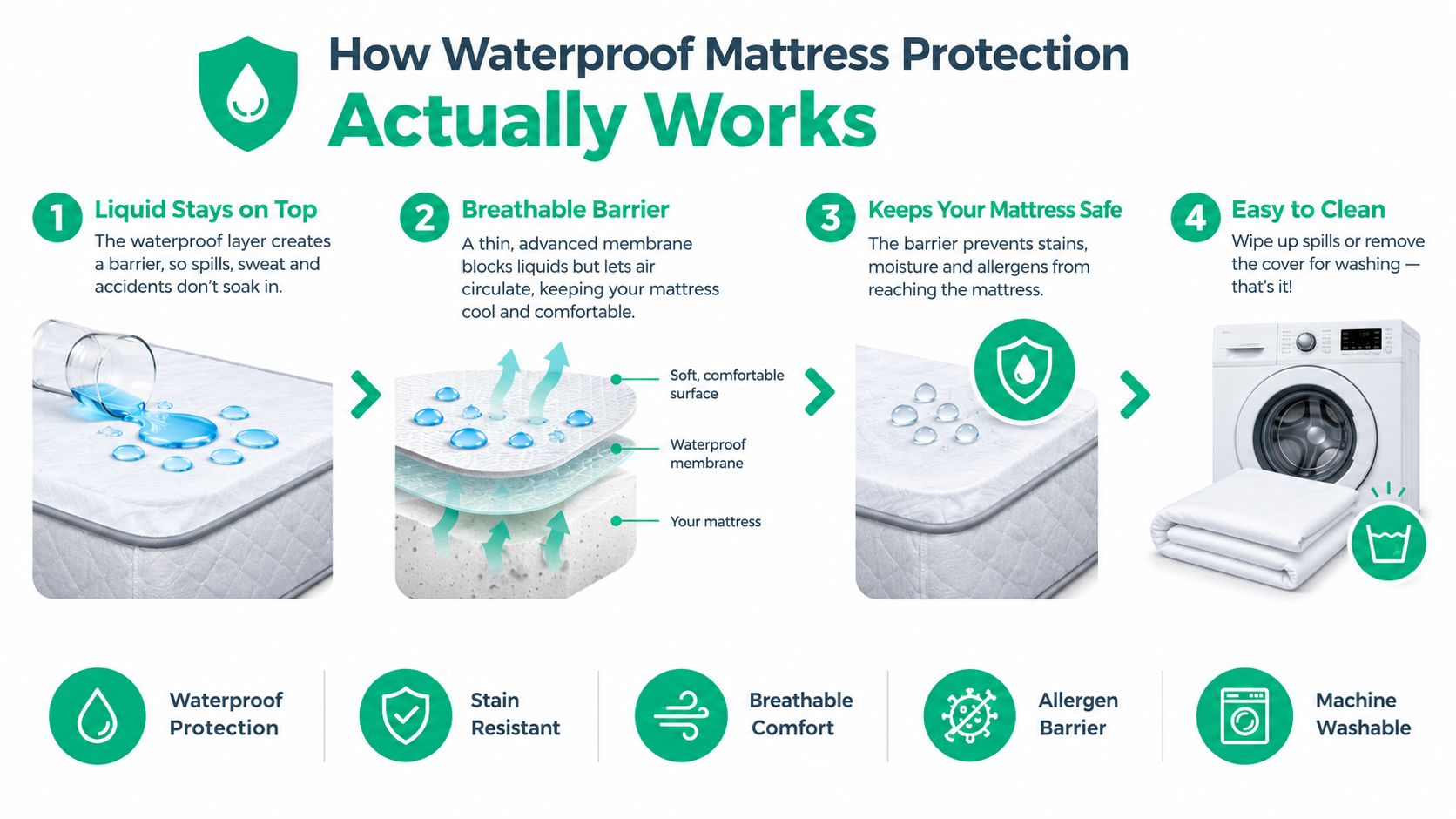
The three layers
The top fabric sits beneath the fitted sheet and against the sleeper's bedding. It is where softness, noise and moisture handling are felt. Polyester blends are practical, cotton feels familiar, and lyocell-based fabrics are often selected by hot sleepers because they move moisture away from the body effectively.
The Miracle Membrane sits below that face fabric. It's a thin polyurethane film with microscopic openings. Liquid water can't pass through those openings as droplets, while water vapour from perspiration can move through the material. That's the key distinction between waterproof and airtight.
The lower surface and skirt hold the protector in position around the mattress. A good elasticated edge prevents movement without pulling the top layer into ridges. The membrane needs to stay flat, because repeated folds and excessive tension place unnecessary strain on the laminate.
Waterproofing therefore doesn't mean sealing yourself inside a plastic bag. It means blocking liquid at the point of contact while allowing vapour to escape. Cheap PVC-coated designs often block both, which explains their familiar sweaty feel and crinkling sound.
Why lamination matters
A laminated membrane is bonded to the fabric rather than just painted onto it. That construction helps the layers move together through ordinary laundering and reduces the risk of a surface coating cracking or peeling. You'll still need to follow the care label, particularly around heat, bleach and ironing.
For a broader explanation of how waterproof layers can stay soft and usable, this guide to waterproof mattress toppers provides useful background on membrane-based construction.
Look past the word “waterproof” on a product page. If you sleep hot, choose Miracle Membrane or an equivalent vapour-permeable system, and check what the face fabric is made from. Waterproofing is only half the specification. The other half is how comfortably the protector handles heat, movement and repeated washing.
Fabric and Membrane Options Compared
The membrane controls liquid protection, but the fabric above it controls much of the day-to-day feel. Don't choose the thickest protector automatically. Choose the surface that matches the sleeper, the washing routine and the bedroom conditions.
| Fabric | Feel | Best For | Limitation |
|---|---|---|---|
| Charcoal | Soft, smooth and designed to help manage odours | Allergy-conscious sleepers and bedrooms needing a fresher-feeling surface | The charcoal feature may cost more without being necessary for every sleeper |
| Premium | Soft polyester blend with a dependable bedding feel | Children, family beds and general household use | Less naturally cool than a dedicated cooling fabric |
| Tencel Cool | Smooth, light and moisture-wicking | Hot sleepers and people dealing with night sweats | Usually positioned above basic fabrics on price |
| Cotton | Familiar, breathable and naturally comfortable | Sleepers who prefer a traditional textile feel | Can take longer to dry than faster-drying synthetic blends |
Charcoal for odour-conscious bedrooms
Charcoal fabric suits a sleeper who wants a soft surface with odour-management properties. It's a sensible choice for children, pets in the household or anyone who wants the protector to feel fresher between washes. It isn't a substitute for laundering, and people who don't have an odour concern may get better value from a simpler fabric.
Premium for the family bed
Premium polyester blends are the safe all-rounder. They're generally straightforward to wash, durable in regular use and familiar under a fitted sheet. For a child's single bed, this is often the most balanced option because it prioritises practicality without adding a specialised feature that may not be needed.
Tencel Cool for heat and moisture
Tencel Cool is the option I'd prioritise for a hot sleeper or someone who wakes with damp bedding. Its lyocell-based surface is chosen for moisture movement and a cooler hand feel. The limitation is value, not performance. If the sleeper runs cool and doesn't perspire heavily, the extra cost may offer little benefit.
Cotton for a natural hand feel
Cotton remains a good choice when the texture of synthetic fabric is a concern. It breathes comfortably and feels recognisable, although it may not dry as rapidly as a technical blend. For a detailed explanation of membrane breathability, see this discussion of a breathable waterproof membrane.
Thread feel, drying space and washing frequency matter more than a marketing label. A light, well-fitted protector with a breathable membrane will usually feel better than a bulky cover chosen only because it appears more substantial.
Getting the Right Fit for a Single Bed
A UK single mattress is commonly treated as a standard size, but the mattress depth causes most ordering mistakes. The surface may fit perfectly while the skirt pulls loose, rides up or strains across the corners.
Measure the mattress with the protector removed. Start at the base of the side, run the tape over the top and finish at the base on the opposite side. Include a pillow-top, mattress pad or topper if it will remain underneath the protector.
| Mattress Type | Typical Depth | Fitting Note |
|---|---|---|
| Standard single mattress | Around 20 to 30 cm | Choose an elasticated skirt that reaches securely beneath each corner |
| Single mattress with a topper | More than the mattress alone | Measure the combined height before ordering |
| Pillow-top or deep single | Around 30 to 40 cm or deeper | Select a deep-pocket version rather than forcing a standard skirt |
| Non-standard single | Varies | Check the manufacturer's actual width, length and depth range |
The skirt should pull fully under the corners without slack. A loose edge lets the protector shift during sleep, while an overly tight edge can distort the laminate and pull the sleeping surface into ripples.
A fitted protector should lie flat enough that liquid has no obvious channel or fold in which to collect.
Children's beds deserve one extra check. Make sure the elastic is concealed beneath the mattress and that no loose section can catch on bedding during sleep. After fitting, place the protector beneath the fitted sheet and run your hand across the surface. If you feel ridges, folds or tension lines, correct the fit before making the bed.
Breathability and Cooling for Hot Sleepers
Older waterproof protectors developed their bad reputation naturally. PVC and heavy plastic coatings could trap warmth, amplify movement and leave the sleeper feeling damp. That experience still influences shoppers who assume any waterproof layer will be noisy or clammy.
A modern vapour-permeable membrane works differently. Liquid water is blocked because the openings are too small for droplets to pass, while water vapour from perspiration can escape through the structure. The protector doesn't become airtight just because it's waterproof.
Choose the face fabric for the sleeper
A centrally heated bedroom, a humid summer night or a child who sweats heavily makes breathability a practical requirement, not a luxury. The membrane prevents the spill from reaching the mattress, while the top fabric helps manage the warmth and moisture next to the sheet.
Tencel Cool and other moisture-wicking knits are the strongest choices for known hot sleepers. Cotton remains comfortable and breathable, but it can hold more warmth and may take longer to dry. Charcoal can suit a sleeper concerned with freshness, while a premium polyester blend works well when everyday durability matters more than active cooling.
The useful label to look for is vapour-permeable, breathable or moisture-wicking, not just “waterproof”. Product descriptions should explain the membrane rather than relying on a vague promise of comfort.
For more focused cooling guidance, this advice on choosing a cooling mattress protector is relevant to hot sleepers selecting a single size.
Don't accept poor sleep as the price of mattress protection. The right construction blocks spills while allowing heat and vapour to move away from the body, which is exactly what a single protector should do.
Caring for Your Protector So It Lasts
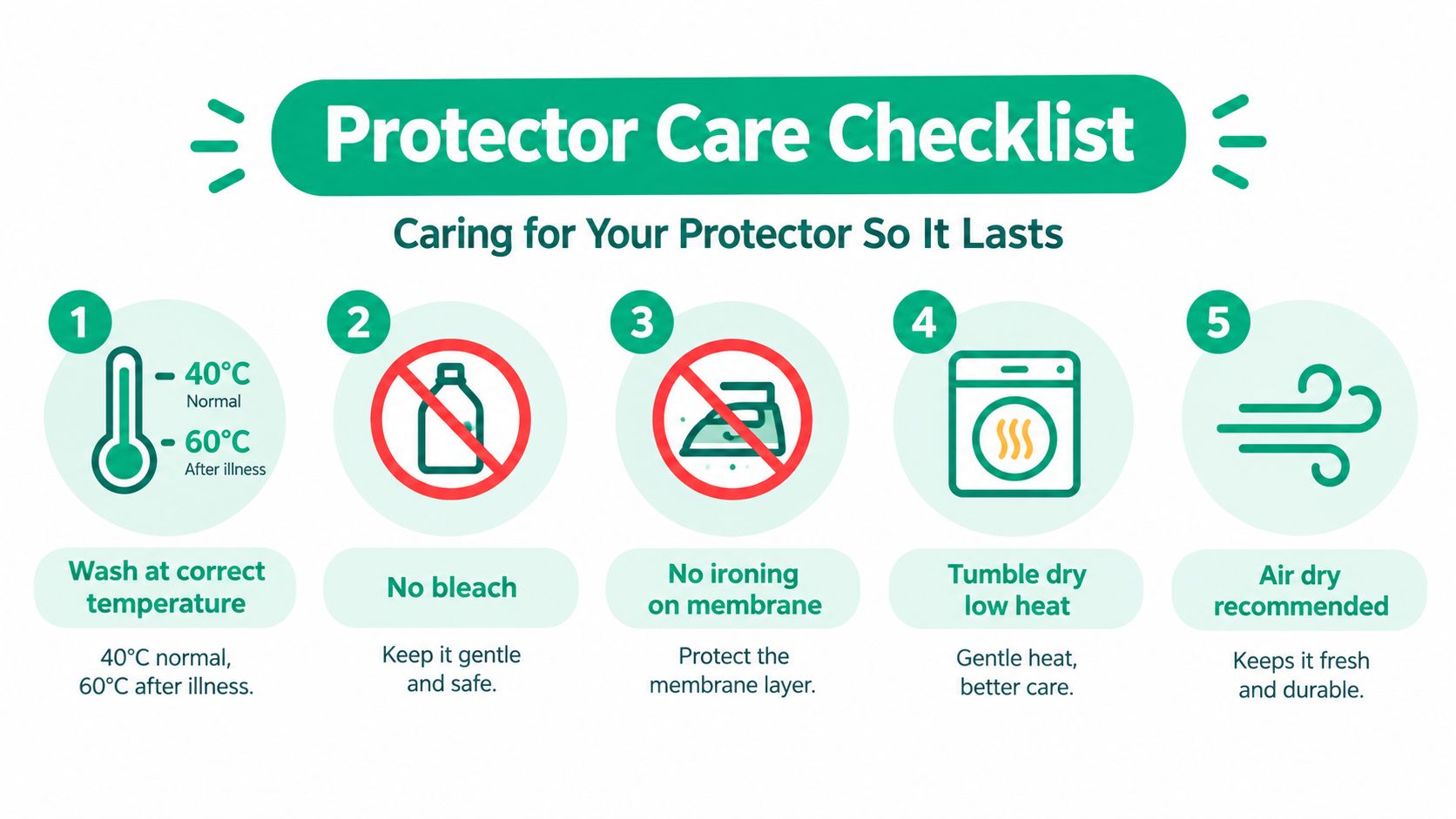
Care mistakes damage protectors faster than ordinary use. High heat, bleach, fabric softener and ironing can weaken the membrane, affect the laminate or leave the surface less comfortable.
Follow the sewn-in label first, but the practical routine is straightforward:
- Routine washing: Use 40°C for ordinary cleaning when the care label permits it.
- After illness or an accident: Use 60°C only when the product instructions allow it and a hotter wash is appropriate.
- Detergent: Choose a mild detergent and skip fabric softener. Softener can leave a film that affects absorbency and vapour movement.
- Drying: Tumble dry on low or medium heat if permitted, or air dry. High heat is the main risk.
- Avoid harsh treatment: Don't bleach, dry clean or iron the protector.
The membrane may still look intact after a damaging wash while its performance has already deteriorated. Delamination can create a crinkly feel, and excessive heat can affect the bond between the waterproof layer and the face fabric.
Wash promptly after a spill or accident rather than leaving moisture trapped against the fabric. If you need a more detailed routine, this guide on how to wash a mattress protector covers the practical points to check before laundering.
Keep the protector completely dry before remaking the bed. A spare protector is useful for children's rooms and care situations because it lets you put a clean barrier on the mattress while the used one is still drying.
Warranty Delivery and UK Purchase Confidence
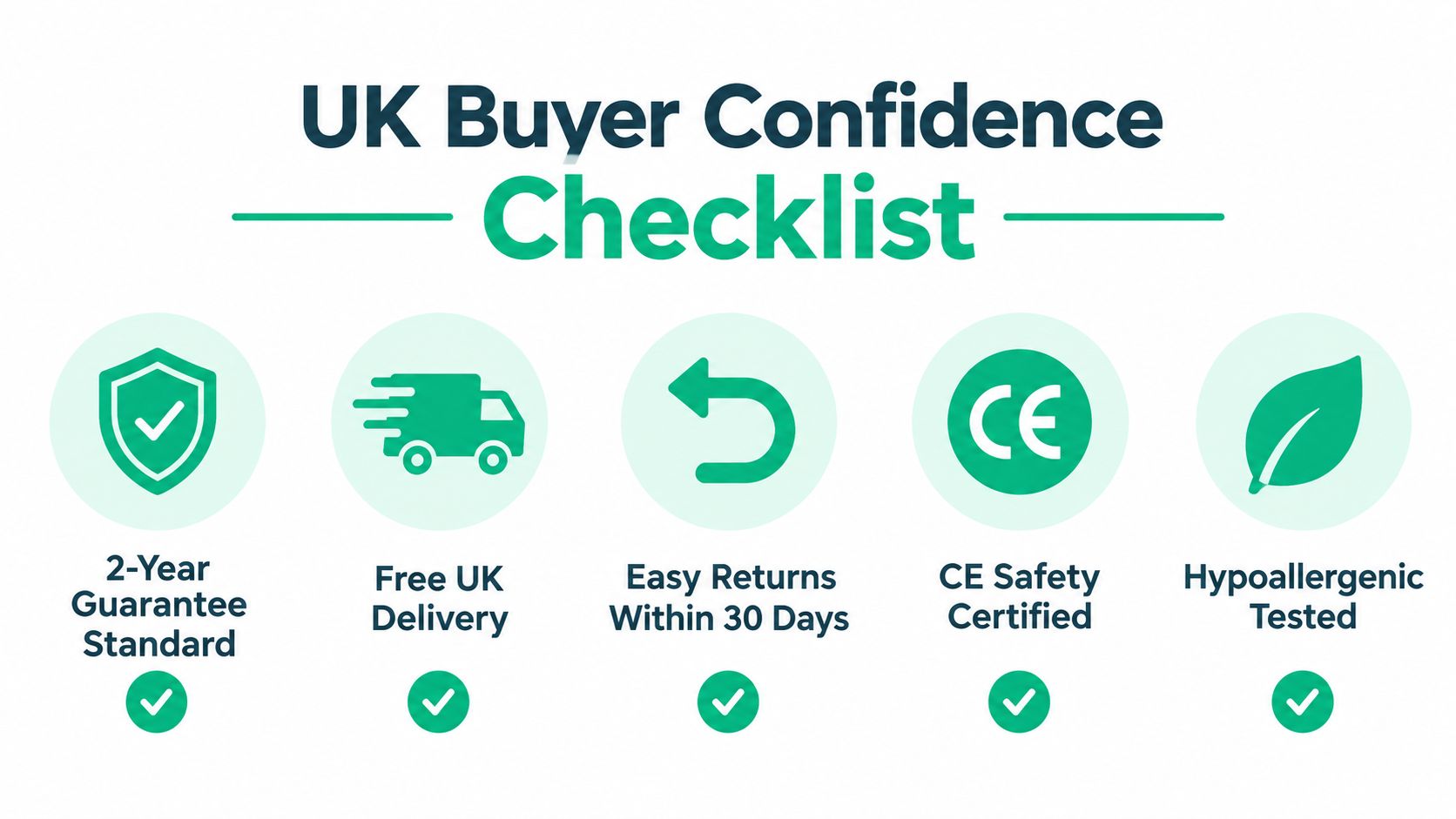
A product page can look polished and still leave important questions unanswered. Before buying a single protector, inspect the guarantee, delivery terms, returns process and support details with the same care you'd give the fabric specification.
A meaningful guarantee should explain what happens if the membrane fails, the elastic deteriorates prematurely or the item arrives with a manufacturing defect. It won't normally cover stains, accidental damage, incorrect washing or ordinary wear. Keep the order confirmation and care instructions, because both can matter if you need support.
Delivery matters most when the protector is needed for a fixed date, such as a child moving into a first single bed or a student preparing a room. Check whether the item is genuinely in stock, whether tracking is provided and whether named delivery is available. A low headline price loses its appeal if postage appears only at checkout or dispatch timing is unclear.

Read the returns conditions
Bedding returns can involve hygiene seals and unused-condition requirements. Confirm whether you can inspect the protector after opening, how long you have to return it and who pays return postage. A clear UK returns portal and a published support route are stronger signals than decorative trust badges.
Before checkout: Confirm stock status, delivery cost, guarantee exclusions and the return condition on the same day you order.
Consistent stock, transparent postage and readable terms show that the retailer has organised the part of the purchase that happens after payment. Those details don't make the protector more waterproof, but they reduce avoidable frustration when the fit isn't right or a fault appears.
Common Questions Before You Buy
Will a protector change how the mattress feels?
A thin, fitted protector under the sheet should make little difference to the mattress's support. You may notice a slight change in surface smoothness, especially with a quilted design, but the protector shouldn't replace the feel of the mattress or create a thick padded layer.
Choose a slim, flexible construction if you want the mattress to feel unchanged. Avoid oversized quilted covers if your priority is preserving the original firmness and contour.
Will it make noise when I move?
A well-made membrane should be quiet, especially beneath a fitted sheet. Older plastic-coated protectors are more likely to rustle or crinkle because the material is stiff and less flexible. If noise concerns you, look for a thin laminated membrane and a soft fabric face rather than a bare plastic backing.
Can I use one with an electric blanket?
Check both manufacturers' instructions. Some electric blankets require direct contact with the mattress or specify which layers may sit above them. Don't assume that waterproofing makes every combination safe, and never place a protector where it could interfere with the blanket's heat distribution.
Is it suitable for asthma or eczema?
A protector can help create a washable barrier against mattress-borne allergens, but it isn't medical treatment. UK clinical guidance from Cambridge University Hospitals recommends breathable, fully enclosing covers for dust-mite control, because the barrier needs to limit allergen escape while allowing moisture vapour to pass.
Clinical evidence also supports taking the barrier specification seriously. A large randomised trial reported through the London School of Hygiene & Tropical Medicine found lower Der p 1 dust-mite allergen levels in mattress dust after allergen-impermeable covers were used. That supports choosing a properly sealed, breathable barrier rather than treating any thin waterproof sheet as equivalent.
Is waterproof the same as wipe-clean?
No. Most quality protectors are designed to be machine washed. Remove the protector promptly after a spill, follow its care label and dry it thoroughly before putting it back on the bed.
What does Miracle Membrane mean?
It refers to a thin, flexible waterproof layer that blocks liquid while allowing air and water vapour to pass through. In practical terms, it's the part of the construction that lets a protector defend the mattress without creating the sealed, sweaty feel associated with basic plastic covers.
Can I use it on a new mattress?
Yes, provided the protector fits correctly and the mattress manufacturer doesn't specify a conflicting care or fire-safety requirement. Keep the mattress receipt and check its guarantee conditions. Protecting the mattress from the start is more sensible than waiting for the first stain.
What if my bed is a non-standard single?
Measure the mattress rather than relying on the word “single”. Check the actual width, length and depth, then compare those measurements with the protector's stated range. European and custom sizes may need a different fitted cover.
Does it go above or below a topper?
Usually, the protector goes over the mattress and beneath a separate topper if the aim is to protect the mattress itself. If you want to protect the topper as well, measure the combined depth and choose a protector with enough skirt capacity. The fitted sheet then sits over the final layer.
A single protector may take longer to dry than an ordinary sheet, particularly in a small UK flat. Plan for that, and don't put it back on while damp. Once fitted correctly, it sits beneath the sheet and becomes part of the bed's normal setup rather than another item you have to think about.
Protect-A-Bed offers UK single waterproof protectors using its Miracle Membrane approach, with fabric options aimed at different comfort and cooling preferences. Visit Protect-A-Bed to check the available single sizes, compare the fabrics and choose a protector that matches the mattress depth and sleeper using it.