

Waterproof Mattress Protector King: The 2026 UK Guide

You've bought, or you're about to buy, a king mattress because you wanted more space and better sleep. That bigger surface feels like a treat, until you think about everything that can shorten its life, from a spilled drink to night sweat to the slow build-up of dust and allergens that settle into the fabric over time. A waterproof mattress protector king is the practical layer that keeps that investment cleaner for longer, without turning the bed into something stiff, loud, or hot.
Table of Contents
- Why Your King Mattress Needs a Protector
- How Modern Waterproofing Keeps You Dry and Comfortable
- Choosing the Right Protector Fabric for Your King Bed
- Ensuring a Perfect Fit on a UK King Mattress
- Protection Beyond Spills Allergen and Bed Bug Defence
- How to Care for Your Waterproof Mattress Protector
- Frequently Asked Questions
Why Your King Mattress Needs a Protector
A king mattress usually costs more than a smaller bed, so a spill or stain can be expensive to put right. Once liquid reaches the mattress core, the marks can be hard to reverse, and even a small accident can change how the bed looks and feels over time. A waterproof mattress protector king is better treated as a guard for the part of the bed you would least want to replace.
The need for that guard builds up over time. Mattress care advice from Protect-A-Bed explains why mattress protectors are considered necessary, because everyday use sends sweat, spills, and skin debris into the sleep surface whether you notice it or not. A protector gives those messes a removable layer to land on first, so the mattress itself stays cleaner for longer.
Practical rule: protect the mattress from the first night, not after the first accident.
A protector also helps with the quieter problem of allergens settling into the sleeping surface. That matters on a king bed because the larger surface area means more fabric to keep fresh and more value to preserve. The result is simpler care, less wear, and a mattress that is easier to keep in good condition through normal use.
How Modern Waterproofing Keeps You Dry and Comfortable
A modern waterproof mattress protector king should feel like part of the bed, not a layer sitting on top of it. The old worry about waterproof bedding usually comes from stiff, noisy covers that trapped heat and made sleep feel cluttered. Breathable protectors work differently, because they are built to stop liquid from passing through while still letting moisture and heat move away from the body.
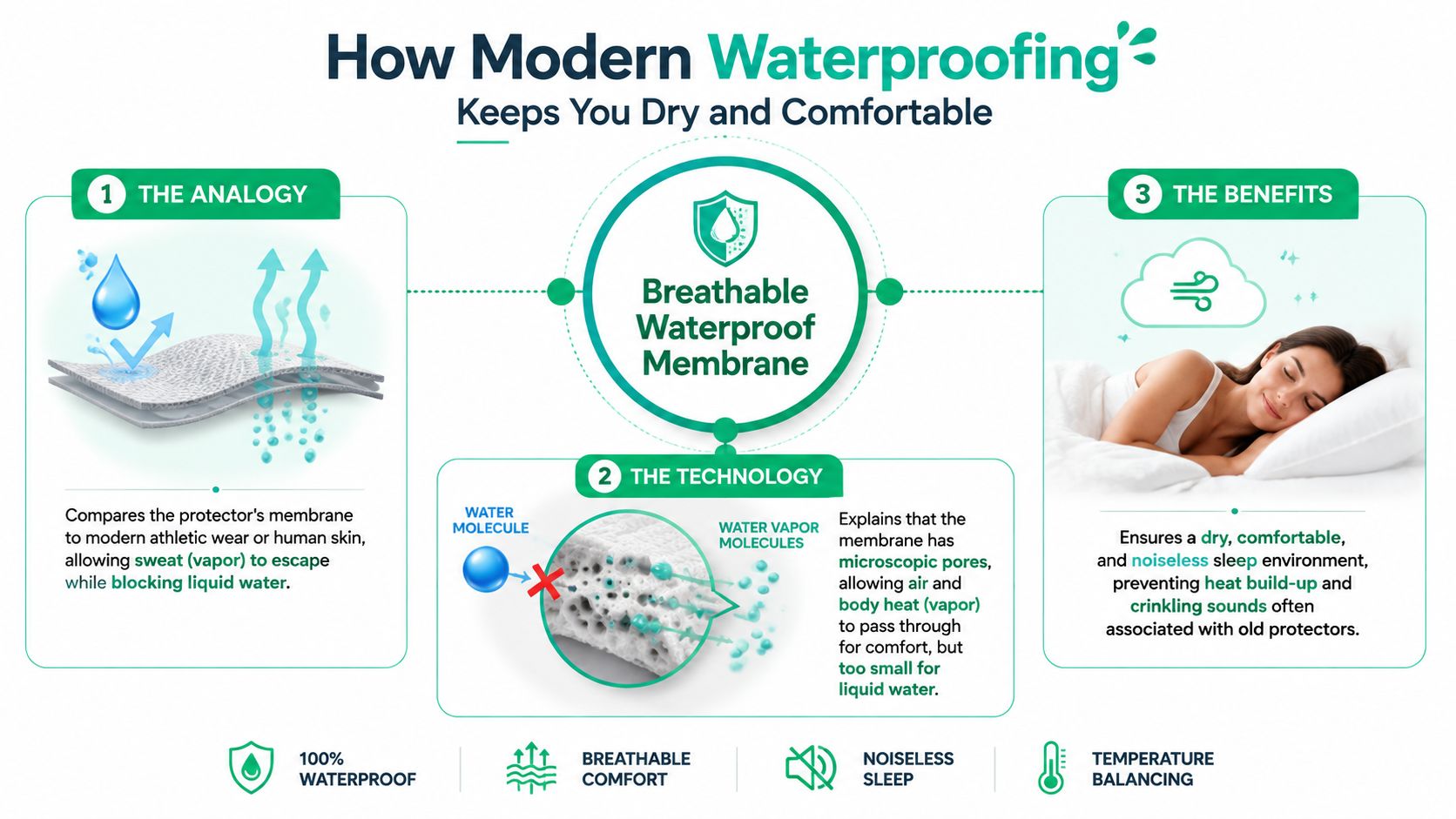
The hidden layer that makes this possible is usually a TPU or polyurethane membrane. It acts like a thin barrier with tiny pathways that keep spills out while allowing air movement through the protector. Breathable waterproof membrane basics explain the idea clearly, and the simple version is this, the membrane blocks liquid but does not trap the bed in a sealed shell. That is why a protector can stay waterproof without turning the mattress into something sweaty or plasticky.
The outer fabric matters too, because that is the part you touch. A protector can use the same waterproof core and still feel very different depending on the surface layer, just as two jackets can both shed rain but feel very different against the skin. The membrane does the protection work, while the fabric above it shapes how quiet, soft, or cool the bed feels once the sheets are on.
If you sleep warm, that distinction matters even more. A protector that feels hot or sticky tends to get ignored, and then the mattress loses the benefit of having it in place. The right construction keeps the protective layer working in the background while your sleep surface still feels normal.
A good protector should fade into the bedding and stay out of the way until it is needed.
Wash care is part of the comfort story as well. A protector that can handle 60°C laundering is easier to keep hygienic in ordinary home washing, which helps it keep doing its job without special treatment. The goal is straightforward, the bed should stay protected, the cover should still wash well, and the surface should remain comfortable enough that you are happy to keep using it night after night.
Choosing the Right Protector Fabric for Your King Bed
The membrane does the waterproof work, but the fabric you sleep on changes how the bed feels night after night. That surface layer matters if you sleep warm, prefer a softer hand-feel, or want something that feels more familiar under the sheet. A king-size bed gives you space, but it also means you'll notice comfort differences across a wider sleep area.
Tencel is a strong choice if you like a smoother feel and a cooler surface. Cotton suits people who want a classic, breathable touch that feels familiar. Charcoal is aimed at sleepers who want extra moisture-handling and a fabric that helps with odour control. A Premium finish usually focuses on a plush, more cushioned feel.
Protect-A-Bed's Tencel guidance is useful because it shows how much the sleep surface can change the experience even when the waterproof layer underneath stays the same. That is the primary decision point for many buyers. You are not choosing between waterproof and not waterproof. You are choosing the feel that matches your sleep style.
| Fabric Type | Best For | Key Benefit |
|---|---|---|
| Tencel | Hot sleepers and anyone who likes a smoother surface | Feels cooler and softer to the touch |
| Cotton | People who prefer a familiar bedding feel | Classic breathability and comfort |
| Charcoal | Sleepers who want a more practical, low-fuss surface | Helps with moisture and odour management |
| Premium | People who want a plusher feel under the sheet | More cushioned surface comfort |
A useful way to decide is to think about your nightly habits. If you wake up warm, prioritise a cooler-feeling top layer. If you want the least change from standard bedding, cotton usually feels the most natural. If you're choosing for a guest room or a bed that needs to stay fresher between washes, a more practical fabric can make maintenance easier.
Match the fabric to the sleeper, not just to the mattress.
That's especially true on a king bed, where two sleepers may have different preferences. One person might care most about temperature, while the other wants the quietest, softest surface possible. A sensible choice is the one both of you can live with every night, not the one that sounds best on a product page.
Ensuring a Perfect Fit on a UK King Mattress
A protector only does its job if it stays flat and anchored through the night. On a UK king mattress, the first check is the mattress footprint itself, because a standard UK king measures 150 cm × 200 cm and the protector needs to match that surface closely (Amazon UK listing).
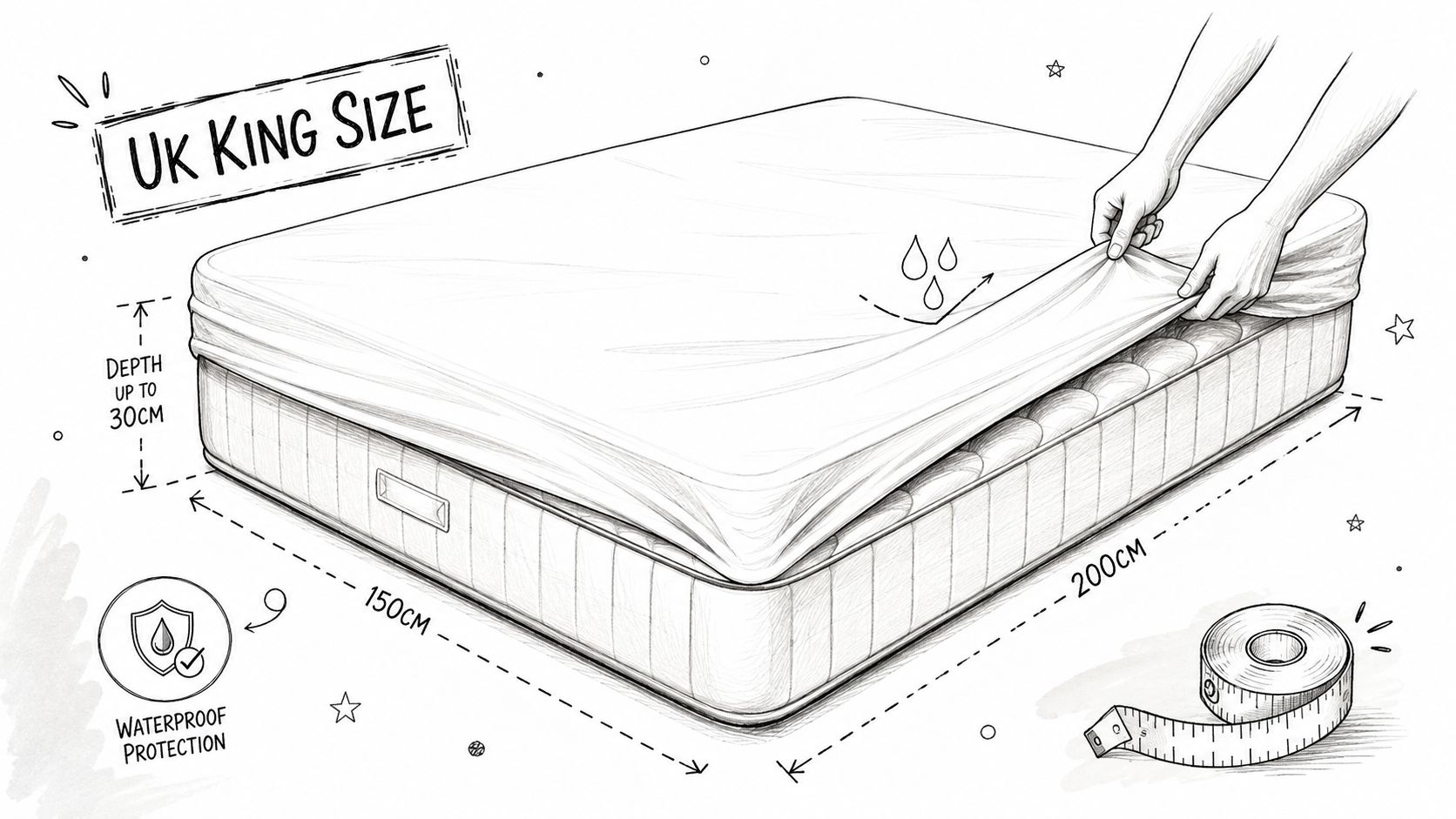
Pocket depth matters just as much as length and width. Modern king protectors are often made with deeper pockets, commonly around 30 cm to 46 cm, because many mattresses are thicker than older styles. If the fit is too tight, the corners pull, the sides lift, and the waterproof layer is put under stress. Once that happens, the protection can stop sitting as it should.
A fitted-sheet style protector is the option most households know well. It pulls on like bedding and covers the top and sides of the mattress. A full encasement works differently, because it wraps around the entire mattress and zips closed, which suits people who need a more sealed layer of protection.
The mistake many buyers make is focusing only on the king label. A mattress can be king size and still vary in thickness, and a protector that stretches too far will not lie properly. A good fit feels secure without being strained.
If the corners fight back when you make the bed, the protector is probably too shallow.
You can check fit in a few seconds. Confirm the UK king dimensions, check the pocket depth, and make sure the protector lies flat across the sidewalls. If the product is described as deep-pocket, that detail should match the actual mattress depth, not just the general size label.
Protection Beyond Spills Allergen and Bed Bug Defence
A waterproof mattress protector does more than catch the odd spill. Once it sits between the sleeper and the mattress, it also creates a physical barrier against the dust, debris, and tiny particles that build up over time. For a king bed, that matters because a larger sleep surface gives allergens and pests more places to settle if the mattress is left exposed.
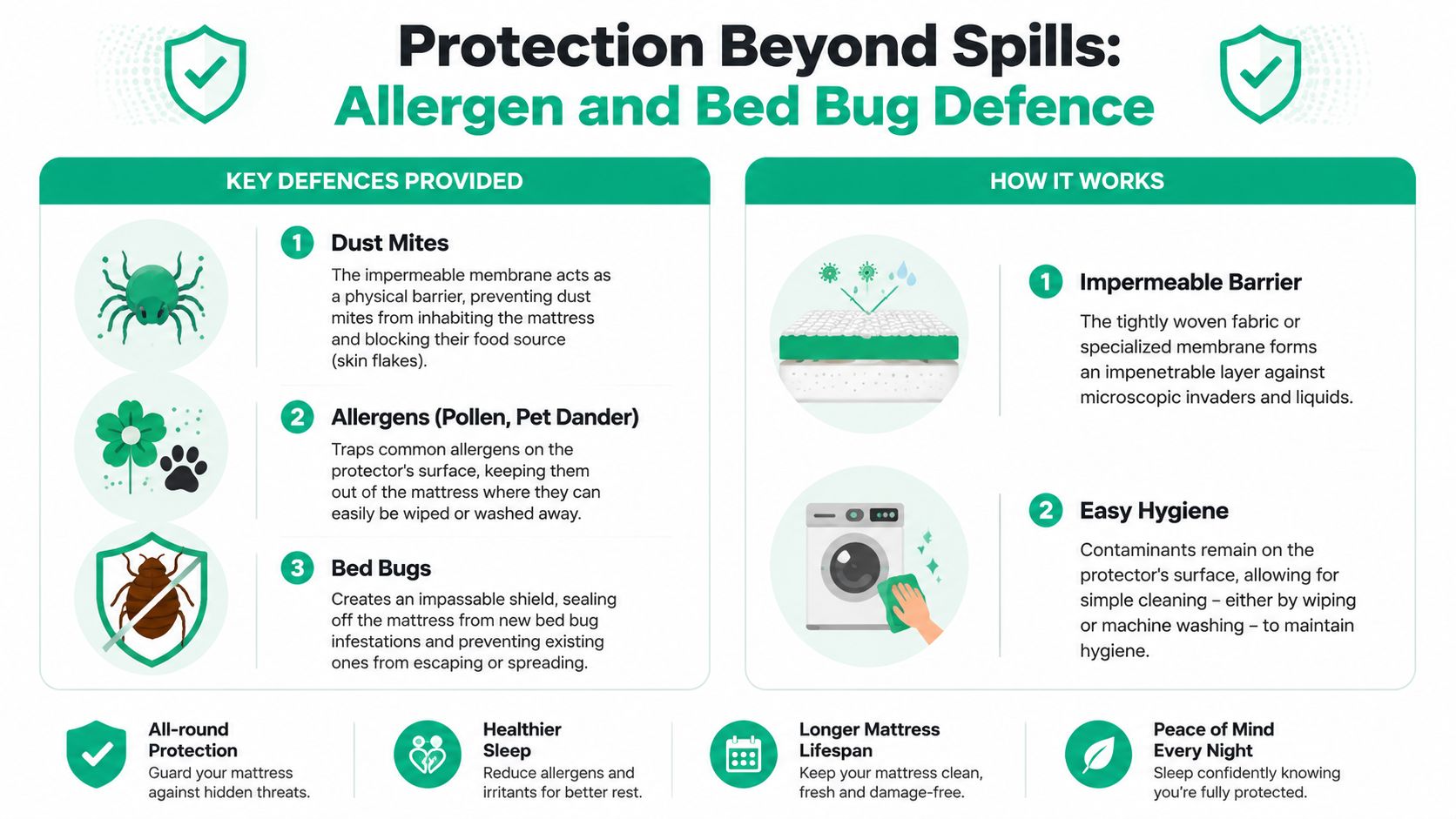
A clinical study found that allergen-impermeable mattress covers significantly reduced Der p 1 dust-mite allergen in mattress dust after one year, but they did not necessarily improve clinical asthma outcomes in people with moderate-to-severe asthma. That distinction matters. Lower allergen exposure can support a cleaner sleep environment, yet it does not automatically translate into symptom relief on its own. In practice, the protector works best as part of a wider routine that includes cleaning and sensible bedroom care.
The same idea applies to bed bugs. Public-health guidance notes that bed bug infestations are a growing problem. A protector can help with everyday hygiene, but a full mattress encasement is the more relevant choice when the aim is to put a sealed layer around the mattress as part of a broader control plan.
| Key Defences Provided | What the Barrier Helps With | What It Doesn't Do Alone |
|---|---|---|
| Dust mites | Keeps the mattress surface less welcoming to mites and their debris | It won't remove allergens already present in the room |
| Common allergens | Helps stop pollen and pet dander from settling into the mattress | It won't replace regular cleaning |
| Bed bugs | Can help shield the mattress surface in a hygiene routine | It isn't a complete infestation treatment by itself |
The useful point is simple. A waterproof protector does the most good when it is one layer in the whole bed setup, not a cure-all. Regular vacuuming, proper washing habits, and correct pest control still matter.
Barrier products work best when they are one layer in a wider routine, not the whole plan.
That is why the language around allergy and pest control needs to stay precise. The protector is a barrier. The result depends on the problem you are trying to address and how consistently you manage the rest of the room.
How to Care for Your Waterproof Mattress Protector
A waterproof protector only keeps doing its job if you treat the membrane gently. Start by checking the care label, then wash it on a gentle cycle with a mild detergent. The goal is to clean the surface without stressing the waterproof layer underneath.
Drying needs care as well. Use a low or moderate tumble-dry setting if the label allows it, or line dry it so the membrane doesn't take unnecessary heat. Avoid bleach and fabric softeners, because they can interfere with the protective layer and shorten the protector's working life.
Two habits make a big difference. First, don't overload the washer, because heavy spinning can twist the seams. Second, make sure the protector is fully dry before you put it back on the bed, since trapped dampness defeats the point of a clean sleep surface.
If you're using a protector regularly, make washing part of the same routine as changing sheets. That keeps the bed fresh and helps the protector stay soft and flexible. It also makes it much more likely that you'll keep using it, which is the whole point.
Clean it like a technical textile, not like a towel.
The care routine is simple, but it protects the investment you made in the bed. A king mattress is large, and a well-kept protector helps preserve that larger sleep surface for the long run. The more carefully you wash it, the more reliably it can keep doing the boring but important job of stopping spills before they reach the mattress.
Frequently Asked Questions
Does a waterproof mattress protector make noise when I move?
A well-made protector should not bring back the stiff, crinkly feel people remember from older covers. Modern designs usually pair a thin waterproof membrane with a soft top fabric, so the surface stays quiet and comfortable when the fit is correct.
Can I use one with an electric blanket?
In many cases, yes, but the protector and the blanket both need to suit the way you sleep. Check the care guidance for each item, make sure the protector lies flat, and confirm that the materials can handle the heat settings you use.
Is a protector enough for allergy or asthma concerns?
It can help reduce dust-mite allergen exposure, but it should not be treated as the only part of the solution. Allergen-impermeable covers can lower allergen levels in the mattress, while overall symptom control may still depend on a wider routine of cleaning and room care, as noted earlier.
What should I look for before buying a king size protector?
Start with the UK king dimensions, then check the pocket depth so the protector can sit properly over your mattress. After that, decide whether a fitted-sheet style protector or a full encasement suits your needs better. The fabric on top matters too, because a softer, more breathable surface can suit lighter sleepers, while a different construction may feel better if you tend to sleep hot or want firmer coverage.
How do I know if the fit is right?
The protector should sit smoothly across the mattress, including the sides, without pulling at the corners or bunching at the edges. If it rides up, slips, or feels stretched tight, the pocket depth is probably wrong for your mattress. A good fit helps the waterproof layer stay in place, which is what keeps the bed comfortable and properly protected.
Protect-A-Bed offers waterproof, breathable mattress protection built for UK beds, including king-size options that suit different sleep preferences and protection needs. If you are comparing fabrics, fit, and barrier performance for your own bedroom, take a look at Protect-A-Bed and choose the protector that matches how you sleep.