

Waterproof Mattress Protector 90 X 200: A UK Buyer's Guide

A 90 x 200 waterproof mattress protector is a fitted cover with a thin waterproof membrane sewn into the top, designed to block liquids, dust mites and allergens while staying breathable. In the UK, it's especially relevant because one in 20 young children and one in five adults test positive for house dust mite allergy, even though not everyone develops symptoms.
You may be buying one after a child spills juice in bed, a dog climbs up with damp paws, or a partner wakes after a night of heavy sweating. Perhaps the mattress is in a rental, guest room or student property, where one unnoticed accident can create a cleaning problem for the next occupant.
The measurement comes first. 90 x 200 cm means width by length, not mattress depth, and the protector must also accommodate the full thickness of the mattress, including any topper. Once the fit is right, the waterproofing decision becomes much easier. You can then choose between surface fabrics, membrane designs and care requirements without relying on vague promises about comfort or allergy relief.
Table of Contents
- What a 90 x 200 Waterproof Mattress Protector Actually Does
- Miracle Membrane and How Modern Waterproofing Works
- Measuring Your Bed and Getting the Right Fit
- Choosing the Right Fabric for How You Sleep
- Installing, Washing and Living with a Protector
- Allergens, Bed Bugs and What Protection Really Delivers
- Who Benefits Most from a 90 x 200 Protector
- Warranty, Delivery and What to Check Before You Buy
What a 90 x 200 Waterproof Mattress Protector Actually Does
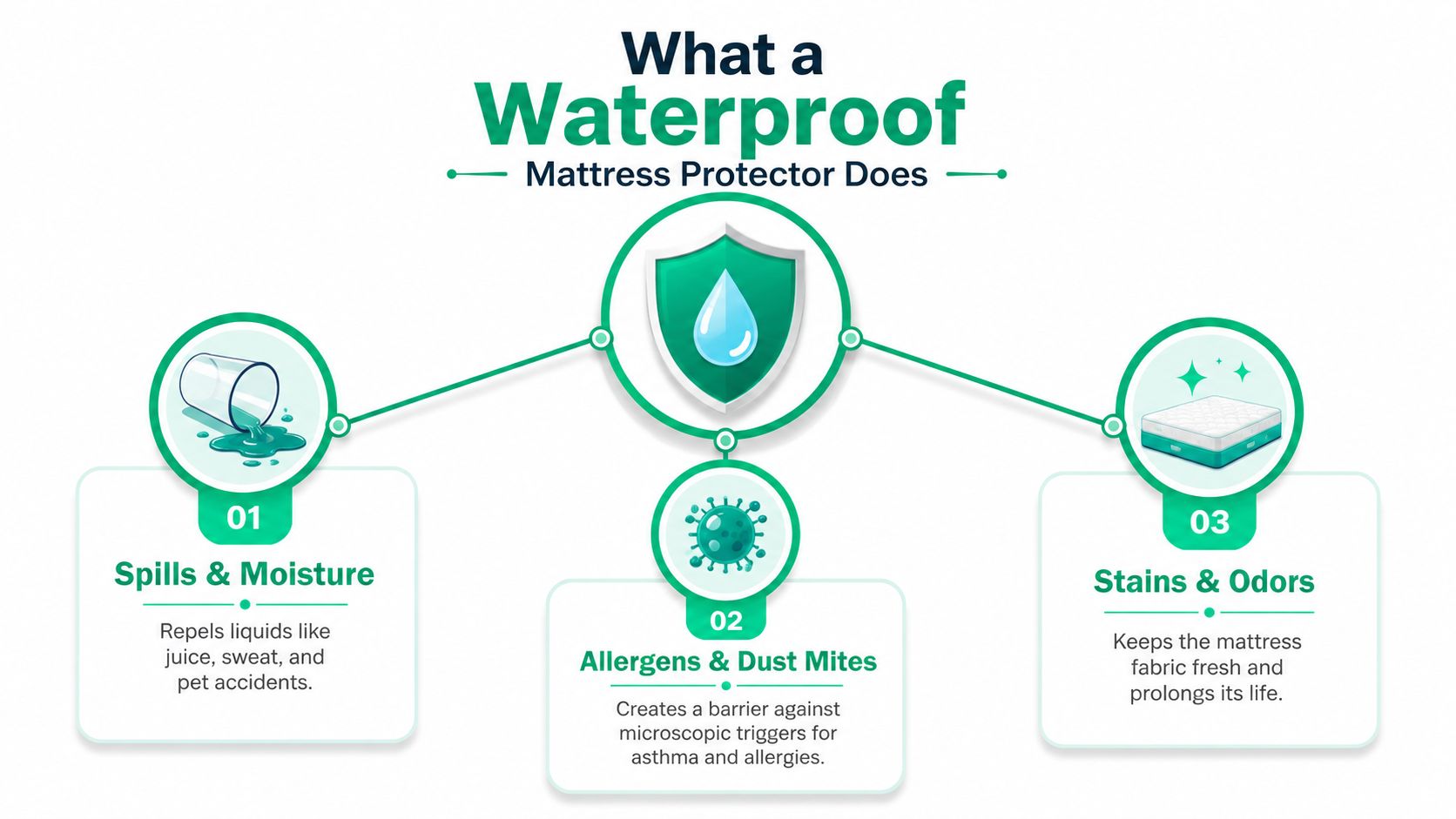
A waterproof mattress protector sits directly over the mattress and underneath the ordinary fitted sheet. Its elasticated skirt holds it in place in the same way as a fitted sheet, while the upper fabric contains a liquid-blocking membrane. You shouldn't sleep directly on the membrane. The sheet remains the surface against your skin.
The basic job is simple. If juice, sweat, urine, pet moisture or another liquid reaches the bed, the membrane helps stop it from soaking into the foam, fibres or springs. That keeps the mattress easier to clean and reduces the risk of persistent stains and odours.
A barrier beneath the sheet
The protector also creates physical separation between the sleeper and the mattress. That matters because mattresses can become reservoirs for dust mite allergen. A Manchester study found the highest Der p 1 allergen levels in mattresses, with a geometric mean of 1.19 microg/g, while two-thirds of homes had Der p 1 above 2 microg/g in at least one dust reservoir and 40.3% exceeded 10 microg/g (NHS Allergy North West guidance on house dust mite avoidance).
The same source links older mattresses with higher allergen levels. A close-fitting protector doesn't make the bedroom allergen-free, but it can reduce direct contact with the mattress dust reservoir, particularly when the protector is washed and fitted correctly.
Practical rule: Treat the protector as a washable shield, not as a replacement for cleaning, ventilation or wider allergy-control measures.
For a broader explanation of why this layer matters, see these benefits of a mattress protector. The useful distinction is between preserving the mattress and changing the feel of the bed. A protector is a hygiene and liquid-control layer. It isn't a mattress topper and shouldn't be expected to alter firmness.
Miracle Membrane and How Modern Waterproofing Works
Older waterproof covers often relied on a thick vinyl or rubberised sheet. They could stop liquid effectively, but the material tended to feel stiff, make noise when the sleeper moved and hold in warmth. That design protects the mattress at the cost of comfort, which is why some people remove the cover and leave the bed exposed.
A modern membrane takes a different approach. A very thin polyurethane film is bonded beneath the surface fabric, creating a flexible barrier that blocks liquid while allowing water vapour to pass through. In practical terms, the construction behaves more like a breathable skin than a plastic sheet.
The membrane is only part of the product
Breathability matters because a fully impermeable layer can increase heat retention and make the bed feel clammy. UK NHS guidance recommends allergen-proof mattress covers that are breathable, fully enclosing and tested to prevent the escape of house dust mite allergen (Cambridge University Hospitals dust mite guidance). For a 90 x 200 protector, the liquid barrier shouldn't be considered successful if it makes the sleeper too hot to use it consistently.
The seams deserve equal attention. A waterproof top can still fail if stitching creates open leakage paths, if the skirt doesn't cover the sides adequately or if the protector shifts away from the corners. Look for clear information about the membrane, seam construction, edge coverage and mattress depth range rather than focusing only on the word “waterproof”.
| Older plastic-style cover | Modern membrane protector |
|---|---|
| Thick, rigid feel | Thin, flexible construction |
| More likely to rustle | Quieter beneath a fitted sheet |
| Can retain heat | Designed to allow vapour movement |
| Protection depends on the sheet of plastic | Protection also depends on bonded seams and correct fit |
Products described as using Miracle Membrane generally refer to this bonded-film approach. You can read more about the construction in this guide to a breathable waterproof membrane. The important buying question isn't whether a membrane exists. It's whether the complete protector remains comfortable, washable and secure after repeated use.
Measuring Your Bed and Getting the Right Fit
Measure the mattress itself, not the bed frame or the space between the surrounding furniture. A protector labelled 90 x 200 is intended for a mattress approximately 90 cm wide and 200 cm long, but those figures don't tell you whether the skirt is deep enough.
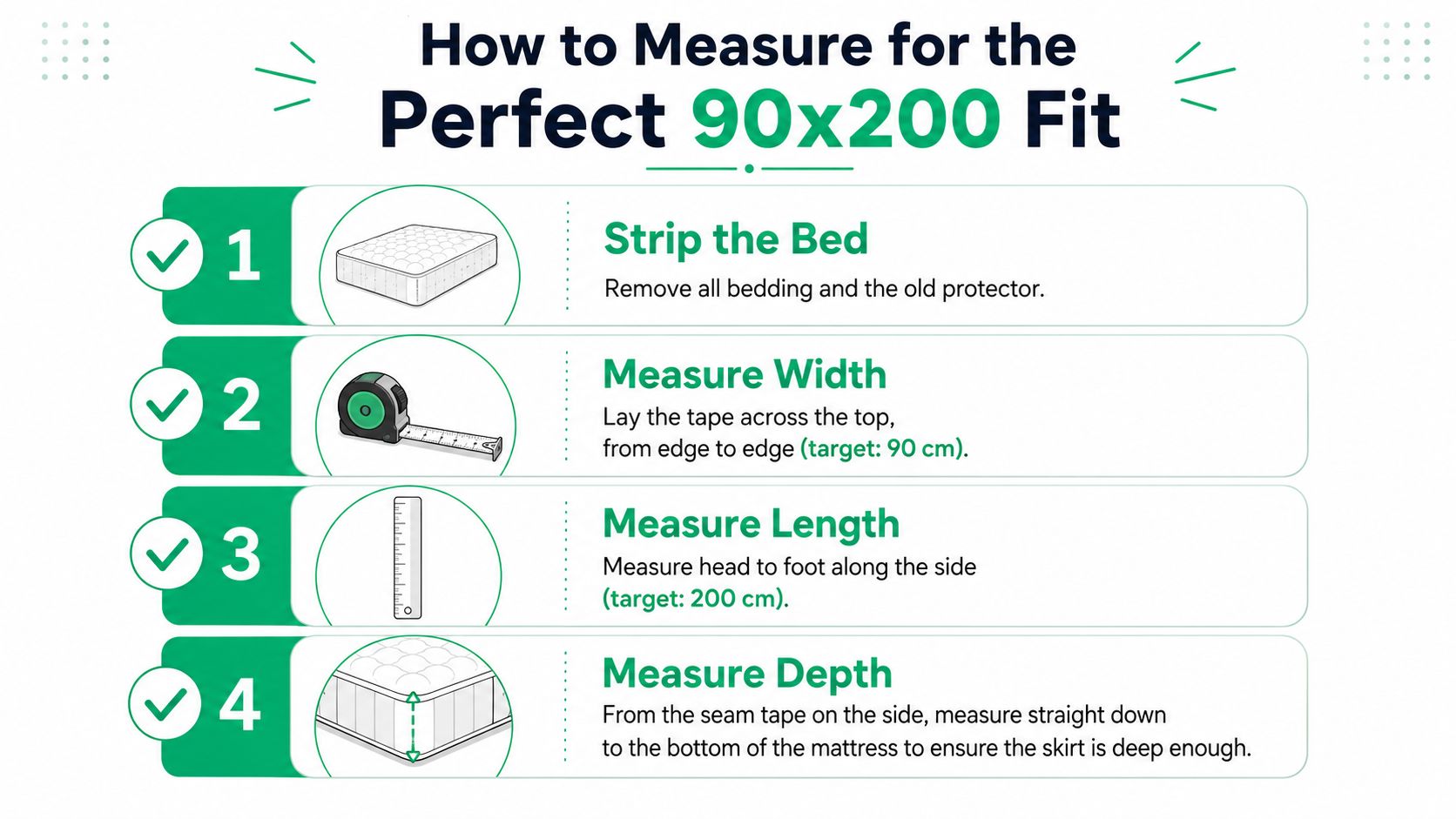
Start with a bare bed. Remove the sheet, topper and existing protector so you can see the mattress edges clearly.
- Measure the width. Lay the tape across the top from one side to the other.
- Measure the length. Run it from the head of the mattress to the foot.
- Measure the depth. Start at the top seam or upper edge and measure straight down to the lowest point of the mattress.
- Include additions. If a topper will sit under the protector, add its thickness to the mattress depth before choosing the pocket range.
Why depth causes most fit failures
The second number in 90 x 200 is the length, not the depth. A 90 x 200 protector designed for a shallower mattress can pull off the corners if your mattress is deeper. An excessively deep model can leave loose fabric that creases, gathers underneath the sleeper and encourages the fitted sheet to shift.
Elastic can accommodate a modest amount of variation, but it shouldn't compensate for a large mismatch. Write down the width, length and total depth, then compare those measurements with the manufacturer's stated depth range.
For a detailed explanation of the measurement process, use this guide on how to measure mattress depth. Pocket-sprung mattresses can be deeper than some foam designs, so check the product specification rather than assuming every UK single protector will fit.
Choosing the Right Fabric for How You Sleep
The waterproof membrane sits below the sleeping surface, so the fabric you feel is largely responsible for the difference in comfort. Choose according to how you sleep, how often the bed is washed and who uses it, not because one label sounds more advanced.
Cotton is the straightforward choice for everyday use. It feels familiar, stays relatively quiet under a sheet and suits households that want a conventional surface. It also makes sense where regular washing is more important than a specialised cooling feel.
Tencel Cool offers a smoother surface and is aimed at sleepers who dislike feeling warm or damp. It may suit someone who experiences night sweats or finds ordinary bedding too heavy, although the rest of the bedding, room temperature and duvet still affect overall comfort.
Charcoal-infused fabric is a practical option for beds where odour management is a concern. That can include a guest bed, shared accommodation or a rental property between cleaning visits. It shouldn't be treated as a substitute for washing, but it may complement a routine where freshness matters.
| Fabric | Best for | Key trade-off |
|---|---|---|
| Cotton | Everyday family and guest use | Familiar comfort, without a specialised cooling surface |
| Tencel Cool | Warm sleepers and people sensitive to dampness | Smoother feel, but comfort still depends on the whole bedding system |
| Charcoal | Shared, rental or short-stay beds | Odour-focused surface, though regular laundering remains necessary |
A child's bed may need a durable, easily washed cotton surface because accidents matter more than a premium hand feel. A warm adult sleeper may prefer Tencel Cool, while a landlord fitting several single beds may value consistency and straightforward care across all rooms.
Don't confuse a protector with a topper. The protector guards the mattress, while a topper changes support and softness. If you use both, the topper sits on the mattress and the protector should cover the topper, beneath the fitted sheet. Remember to include the topper when measuring the depth.
Installing, Washing and Living with a Protector
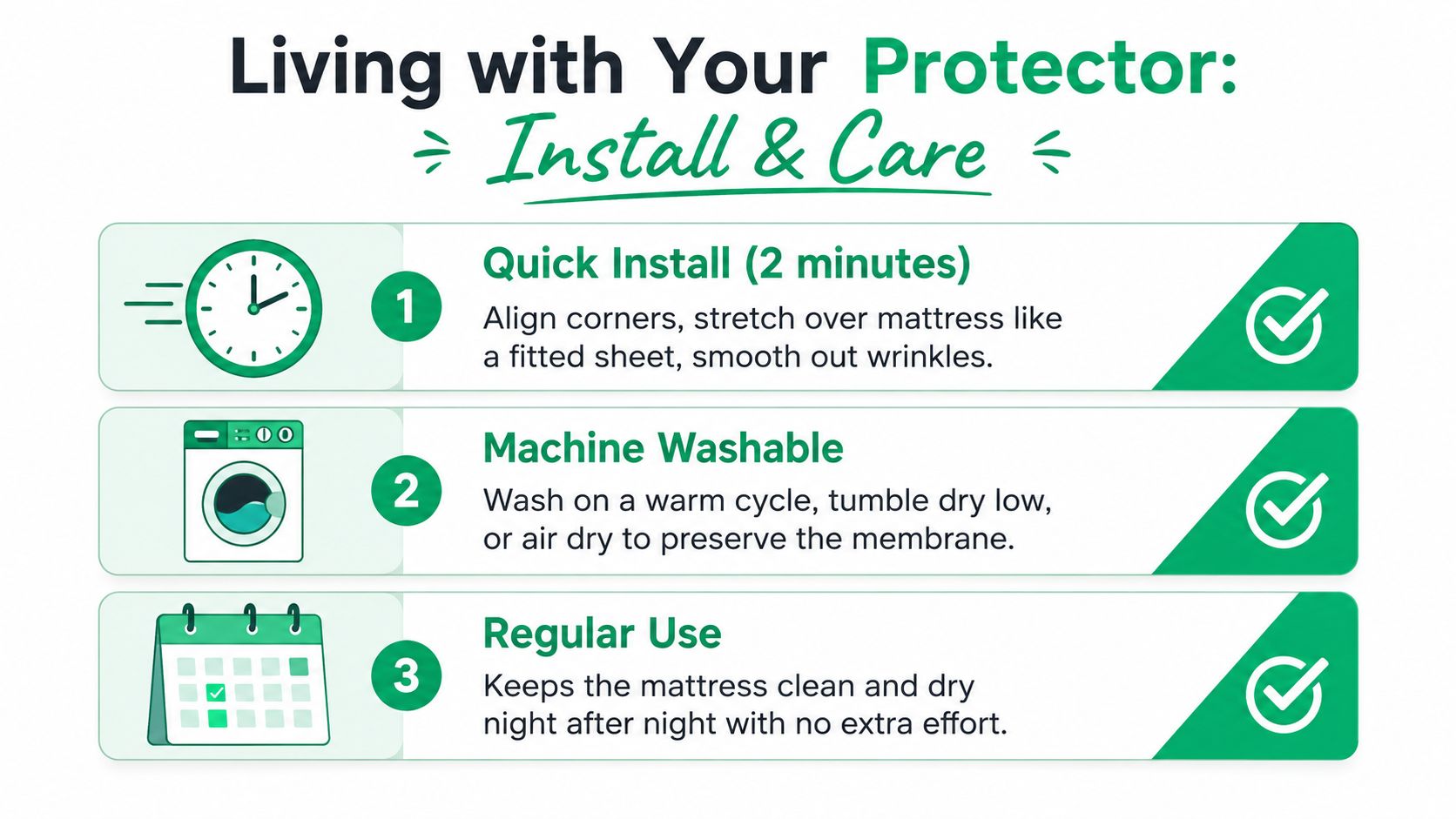
Fit the protector after stripping the bed. Align the top corners first, pull the skirt over the lower corners and smooth the surface before replacing the fitted sheet. Wrinkles can create pressure points, movement and the crinkling sound that some buyers wrongly blame on the waterproof membrane.
The ordinary sheet goes over the protector. It should still fit a 90 x 200 mattress if its pocket depth accommodates the mattress, protector and any topper together. If the sheet is already tight, adding a thick layer can make the corners release overnight.
Washing without weakening the barrier
Follow the care label first, because membrane designs differ. NHS guidance recognises that properly maintained covers form part of dust mite control, and one independent NHS source explains that a close-fitting cover can reduce contact with the mattress dust reservoir and the need for mattress vacuuming (dust mite advice from an NHS hospital trust).
For a protector whose label permits it, a 60°C wash is appropriate when dust mite and hygiene control are priorities. Dry on a low setting only if the care instructions allow tumble drying. Otherwise, air dry it fully before putting it back on the bed.
Avoid bleach, fabric softener and ironing unless the label specifically permits them. These can affect the surface or membrane. A monthly wash may suit ordinary use, while allergy or incontinence needs call for more frequent changes. Keeping a spare protector allows you to wash one without leaving the mattress uncovered.
For more detailed care guidance, follow this resource on how to wash a mattress protector.
Allergens, Bed Bugs and What Protection Really Delivers
A waterproof mattress protector can perform several useful jobs, but those jobs shouldn't be bundled into a promise of guaranteed symptom relief. The strongest immediate benefit is physical: liquid stays away from the mattress, and a correctly fitted barrier separates the sleeper from part of the mattress dust reservoir.
The UK context makes that separation relevant. Allergy UK-linked reporting has cited that at least 12 million people in the UK are allergic to their own home, 58% of allergy sufferers react to house dust mites, and 59% of indoor allergy sufferers say symptoms are worse in the bedroom (UK home allergy reporting). The same source identifies pollen, house dust mite excreta and pet dander as common domestic allergen triggers.
A barrier isn't a medical guarantee
An allergen-impermeable cover can lower allergen levels in mattress dust, but a UK-relevant trial found that this did not improve clinical asthma outcomes in routine adult primary care (trial of allergen-impermeable bed covers). That distinction is important. Buyers can reasonably expect barrier performance, easier washing and reduced direct contact. They shouldn't assume a protector alone will control asthma.
Bed bugs require a separate decision. Rentokil-reported UK activity rose by an average of 44% year-on-year between 2023 and 2025, while councils reported a 35% increase in infestations from 2022 to 2024 (UK bed bug activity reporting). A standard fitted waterproof protector isn't automatically a bed-bug-proof encasement. It may cover the sleeping surface, but seams, zips and exposed sides determine whether a mattress is fully enclosed.
Choose the product for the problem: use a waterproof protector for liquid control, an allergen barrier for mattress separation, and a purpose-designed encasement when bed-bug containment is the requirement.
Inspect the mattress and bed frame if you suspect pests. A practical guide to the signs of bed bug infestation can help you decide whether ordinary protection is insufficient and professional treatment is needed.
Who Benefits Most from a 90 x 200 Protector
The same size can solve very different problems. A parent buying for a child may care most about liquid resistance and washability. A landlord may care more about consistent fit across several single beds, while an allergy household may prioritise a tested, close-fitting barrier.
The family single bed
A child's 90 x 200 bed faces spills, illness and occasional night-time accidents. A cotton-faced waterproof protector gives the sheet a familiar feel while keeping the membrane beneath it. The most useful feature is usually reliable coverage of the whole sleeping area and a skirt that doesn't spring off during movement.
Keep a spare available if the bed is used every night. That turns washing into a routine change rather than an emergency that leaves the mattress exposed.
The rented room
A landlord or property manager needs a protector that remains quiet, sits flat and survives repeated laundering. A correct depth range matters because a loose protector can move, while one that's too shallow can expose the mattress at the corners. Standardising the same 90 x 200 specification across rooms also makes replacement and housekeeping simpler.
The protector won't remove the need to inspect beds or deal with pests. It can, however, help protect the mattress from routine spills and make cleaning between occupants more manageable.
The guest or care setting
A guesthouse, care environment or spare room benefits from repeatable processes. Check the care label, fit range and safety information before buying multiple units, then record which protector belongs to which mattress. If young children will use the bed, look for recognised textile safety certification and follow the manufacturer's instructions rather than assuming every waterproof fabric has the same specification.
People with asthma or allergy concerns may gain from the physical barrier, but clinical expectations should remain realistic. The protector works best as one part of a wider bedroom cleaning and allergen-control routine.
Warranty, Delivery and What to Check Before You Buy
Before checkout, treat the product page as a specification sheet, not a collection of slogans. You should be able to confirm the mattress dimensions, compatible depth range, membrane type, surface fabric, washing instructions and whether the item is a single protector.
Use this checklist:
- Confirm the measurements: Check 90 cm width, 200 cm length and the full depth of the mattress, including any topper.
- Inspect the construction: Look for a stated waterproof membrane, secure edges and coverage that matches your intended use.
- Read the care label: Check the permitted wash temperature, drying method and warnings about bleach, softener or ironing.
- Check the quantity: Make sure the listing is for one 90 x 200 protector if that's what you need, rather than a multipack or a different size.
- Review the warranty: A membrane warranty normally addresses manufacturing defects, not indefinite protection against wear, incorrect washing or accidental tearing.
- Check delivery and returns: Confirm the current delivery estimate, any free-shipping threshold and whether unused goods must remain in their original packaging for return.
- Keep your order details: Save the confirmation email and care information in case you need support later.
Protect-A-Bed offers UK waterproof, breathable protectors in a 90 x 200 cm European Single size, along with bed-bug encasements and several surface fabric options. Its UK storefront states 1 to 3 working day delivery for in-stock items and a £90 free-shipping threshold, so check the live product and delivery terms before ordering.
Choose the 90 x 200 protector by measuring your mattress depth first, then match the fabric and care instructions to the person using the bed. Visit Protect-A-Bed to review the UK range of breathable waterproof protectors and decide whether a standard protector or a dedicated bed-bug encasement suits your needs.