

Waterproof Mattress Protector 140 X 70: A Buyer's Guide

A drink tips over at bedtime, or your toddler wakes after a toilet-training accident. The sheet goes into the wash, but the mattress underneath may still hold significant damage. Choosing a waterproof mattress protector 140 x 70 cm gives a UK cot bed a washable barrier, but size alone won't tell you whether it will stay smooth, feel comfortable, or protect properly.
The practical details matter: mattress depth, skirt construction, membrane material, fabric feel, and washing instructions all affect daily use. This guide explains what to check before buying, so you can choose protection that fits the bed and remains comfortable enough for a child to leave in place.
Table of Contents
- What Is a 140 x 70 Mattress Protector
- Who Needs This Specific Protector Size
- Understanding Protector Technology and Fabric Choices
- How to Measure for a Perfect Fit and Install It
- Washing and Care Instructions for Long Life
- Your UK Buying Checklist
What Is a 140 x 70 Mattress Protector
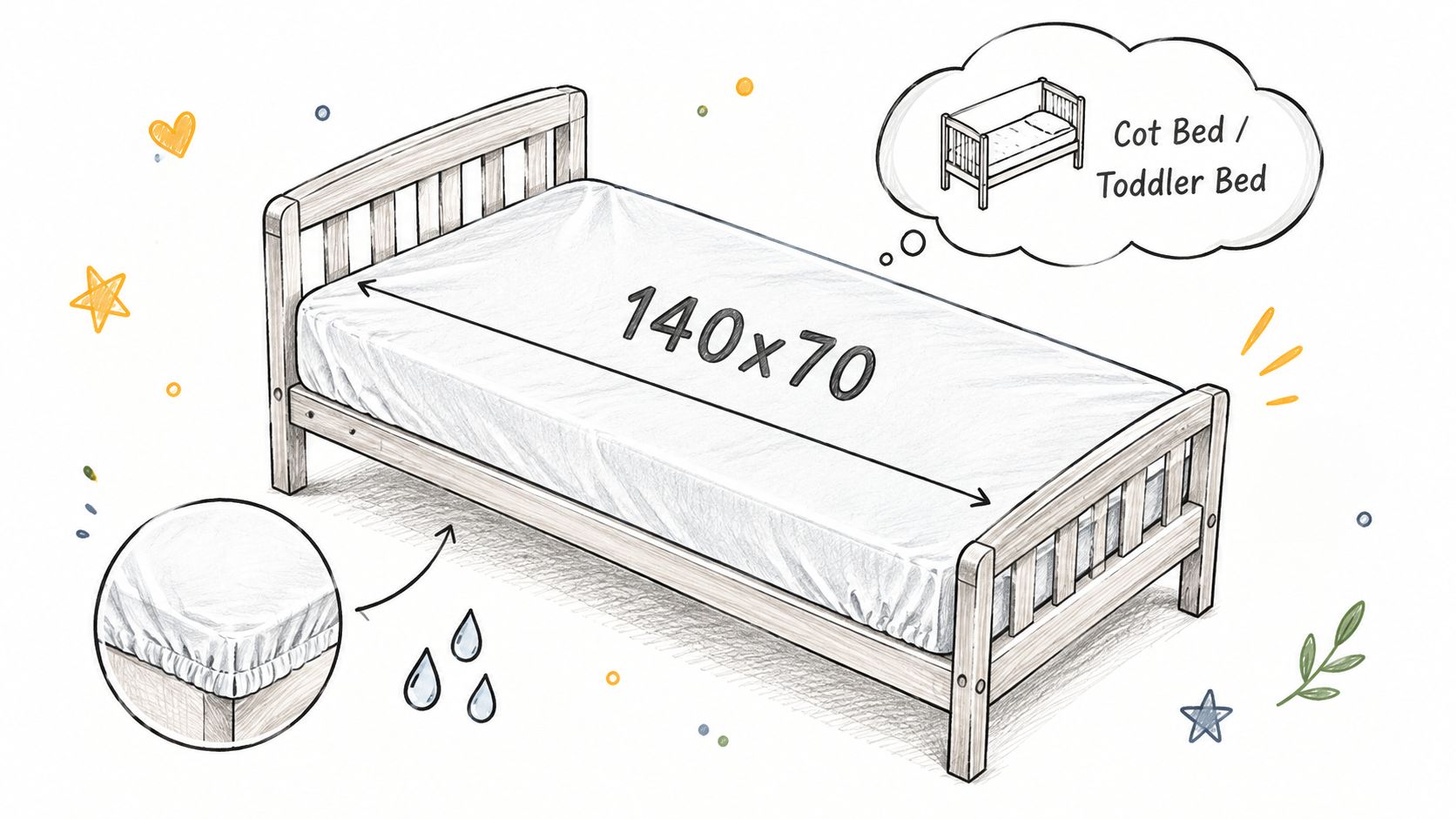
A 140 x 70 cm mattress protector is a washable layer made for the common UK cot-bed format. Cot beds are generally listed as 70 x 140 cm, but those measurements describe the mattress surface, not its thickness. Check the mattress label and the protector's depth range before buying. A protector that is too shallow may pull away from the corners, while excess fabric can bunch beneath the sheet.
The protector rests above the mattress and below the fitted sheet. Its top fabric provides the contact surface, while a waterproof membrane helps prevent liquid from reaching the mattress. This is useful for spills, night-time accidents, perspiration, and illness, especially when the mattress cannot be cleaned easily.
Why the barrier matters
A protector catches moisture before it soaks into the mattress. You can then remove the affected layer for washing instead of treating the entire bed. A fitted design, usually with elasticated corners or a deeper skirt, also helps the protector stay in place as a child moves during sleep.
A clear explanation of what a mattress protector does distinguishes this layer from a sheet or padded topper. It should protect the mattress without changing its intended firmness or structure.
More than waterproofing
Fabric choice affects comfort. A cotton-rich or quilted top can feel softer, while a thin synthetic surface may dry faster after washing. The membrane should block liquid without creating a noisy, warm sleeping surface.
Fit and care matter just as much. Look for a quiet construction, secure corner coverage, a skirt suited to the mattress depth, and washing instructions that match your routine. A protector that slips, crinkles, traps heat, or takes too long to dry is less likely to remain on the bed when it is needed.
Who Needs This Specific Protector Size
A parent buying bedding for a toddler often has a very practical concern. The child is sleeping in a 70 x 140 cm cot bed, and toilet training has introduced unpredictable nights. One accident can soak through a sheet, and a drink or leaking cup can create the same problem. A correctly sized waterproof protector separates the washable bedding from the mattress, making the bed easier to reset.
The size is directly tied to a recognised UK cot-bed category. UK bedding guidance identifies cot bed dimensions as 70 x 140 cm, and positions waterproof protection as especially useful for spills and toilet-training accidents. Washable covers are also recommended as part of reducing exposure to dust-mite allergens in bedding.
Everyday households
This protector size suits:
- Toddlers moving beyond a cot: A fitted waterproof layer gives the mattress protection while the child adjusts to a junior bed.
- Children learning to use the toilet: The barrier limits liquid penetration and simplifies laundry after an accident.
- Messy sleepers: Drinks, food, perspiration, and occasional illness are easier to manage when the mattress has a removable protective layer.
- Allergy-conscious families: A tightly woven or impermeable protective layer can form part of a wider bedroom cleaning routine.
Allergen control needs realistic expectations. In a UK-relevant clinical trial, mattress dust levels for one dust-mite allergen fell from 1.71 µg/g in controls to 0.58 µg/g after six months, but the difference was no longer present at twelve months, and the study found that impermeable covers alone weren't clinically effective for routine asthma management. (London School of Hygiene and Tropical Medicine trial report) A protector can help limit contact with mattress dust, but it shouldn't be treated as a standalone asthma treatment.
Practical rule: Use the protector alongside regular laundering, sensible bedroom cleaning, and any healthcare advice relevant to your child.
Care homes, respite settings, and other facilities with small children's beds may also value this format because a fitted, washable barrier supports consistent bed-turnaround routines. For broader allergy-friendly cleaning principles that can complement mattress protection, Star Cleaner Australia allergy solutions offers additional household guidance.
Understanding Protector Technology and Fabric Choices
A child who sleeps hot or turns often will notice a protector that feels clammy, stiff, or noisy. Waterproofing is only the starting point. For a 140 x 70 cm cot bed, check the membrane, top fabric, and finished depth together, because a comfortable surface still needs to sit securely on the mattress.
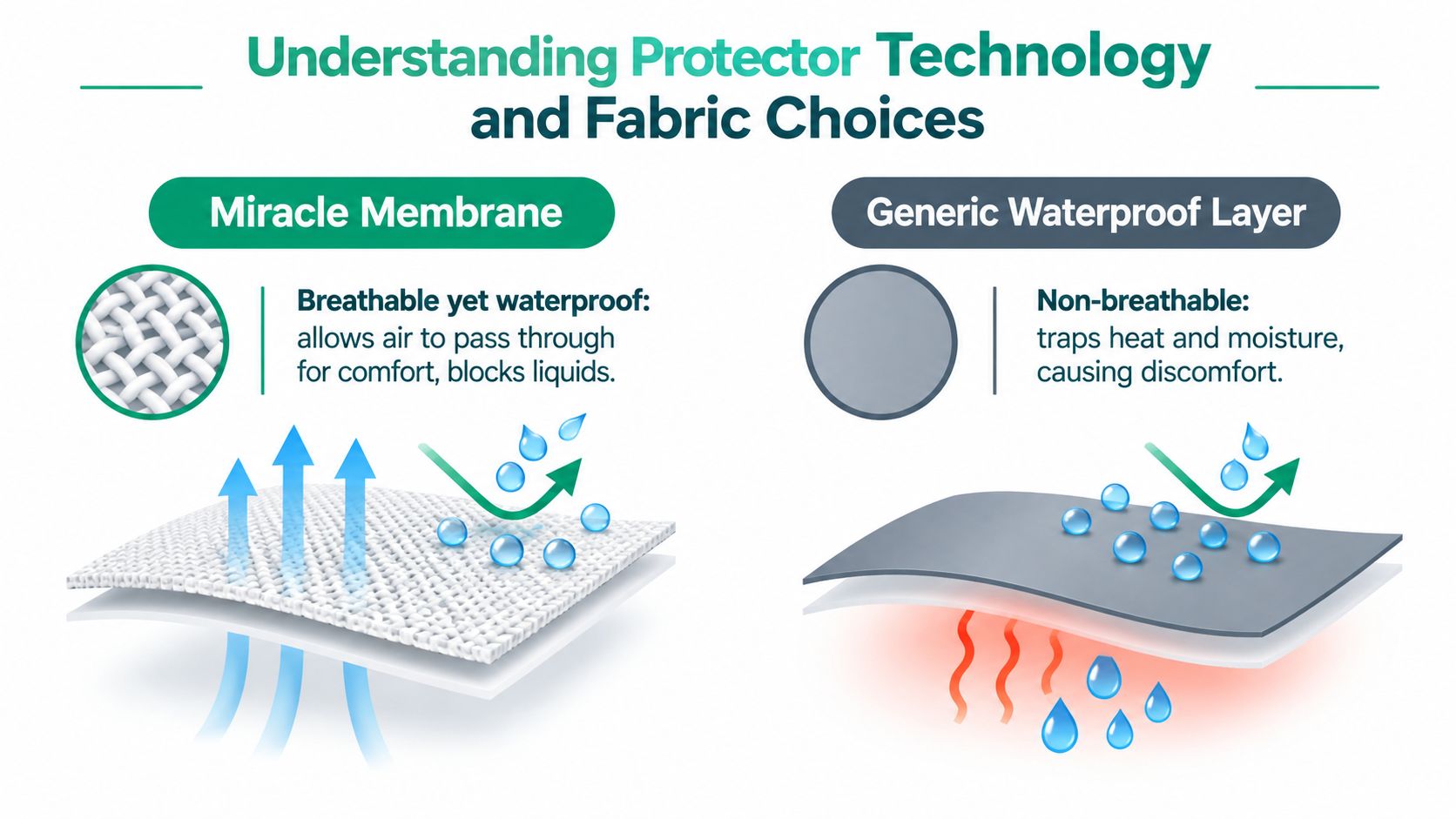
Polyurethane, or PU, membranes are used in waterproof constructions that stop liquid reaching the mattress while allowing air and water vapour to pass through the material. This can feel quieter and less plastic-like than older PVC or vinyl-style layers. The construction guidance for UK waterproof protectors describes PU options as waterproof, silent, and more breathable than those older layers.
Protect-A-Bed's Miracle Membrane follows the same basic comfort principle. It forms a liquid barrier while allowing air and moisture vapour to escape, rather than acting like a solid plastic sheet. That difference matters on a child's bed. If the surface feels sweaty or rustles whenever the child turns, the protector may be pushed aside.
Match the surface to the sleeper
The layer beneath the sheet affects day-to-day comfort more directly than the waterproof membrane. Choose it according to the bedroom temperature, the child's sensitivity to texture, and how often the bedding needs washing.
| Fabric Type | Key Benefit | Best For |
|---|---|---|
| Cotton | Familiar, soft and versatile | Families wanting a straightforward natural-feel surface |
| Tencel Cool | Cooling feel and moisture management | Warm sleepers or bedrooms that become stuffy |
| Charcoal | Practical odour and freshness-focused construction | Caregivers prioritising everyday freshness and easy maintenance |
Cotton usually suits a child who prefers the feel of a conventional sheet. Tencel Cool may feel more comfortable for a child who regularly becomes warm at night. Charcoal can suit households that place particular importance on freshness, but the care label remains the deciding reference for washing and drying.
Keep the protector thin. It should protect the mattress without changing the support or feel enough to resemble a topper. If you are comparing it with foam-based comfort materials, this guide to understanding memory foam for sales success explains why foam changes a bed's feel. A protector has a different job, it should remain unobtrusive.
For a clear explanation of how a breathable waterproof membrane works, check the membrane description rather than relying on the word “waterproof” alone. Look for a soft, quiet upper fabric and confirm that its stated depth and fit style match the 140 x 70 cm cot bed mattress.
How to Measure for a Perfect Fit and Install It
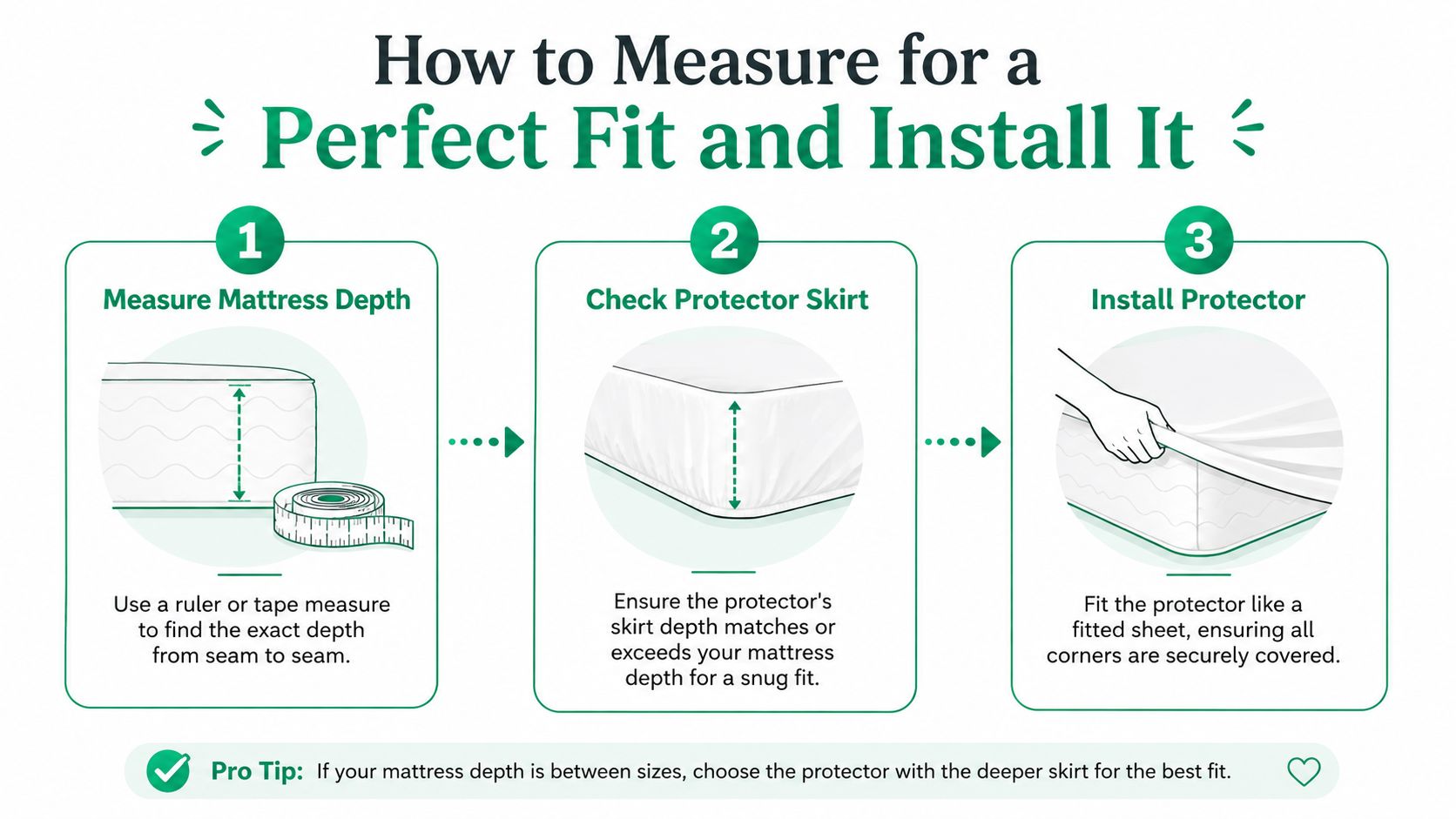
A 140 x 70 cm protector may still fit poorly if the mattress is too deep for its fitted skirt. Measure the mattress depth before choosing a protector, rather than relying only on the length and width in the product title. UK fit guidance covers protector designs for mattresses from 10 cm to 30 cm thick, so the stated depth range remains relevant. (UK 140 x 70 cm mattress-protector fit guidance)
Measure the mattress
Remove the bedding and place the mattress on a flat surface. Measure vertically from the bottom edge to the top sleeping surface. Keep the tape straight and do not compress the mattress. If it has a raised seam, measure across the main sleeping area and check the manufacturer's listed depth as well.
Compare that measurement with the protector's stated skirt range. A skirt that only reaches the underside can pull up at the corners. Too much fabric may allow movement and create wrinkles. The protector should cover the sleeping surface fully and remain anchored underneath.
Fit it like a fitted sheet
- Check the orientation. Position the waterproof layer and fabric surface as directed by the care label or product instructions.
- Start with one corner. Pull the fitted corner over the mattress without forcing the seam or elastic.
- Secure the remaining corners. Fit the opposite corner, then work around the bed until the elastic sits underneath.
- Smooth the surface. Run your hand across the protector before adding the sheet. Remove ridges, folds, and bunched membrane areas.
- Recheck after washing. Fabric can shift slightly during laundering, so inspect the corners whenever you remake the bed.
A fitted-sheet style usually suits a child's everyday bed because all four corners stay attached. Corner straps or flat designs can suit specific arrangements, but they require more frequent checks for movement. The protector should lie flat beneath the sheet, without a loose or folded layer that could affect comfort.
Washing and Care Instructions for Long Life
A waterproof protector works only while its membrane and seams remain intact. Follow the product care label first, particularly where the label sets a lower temperature or restricts tumble drying. Care routines also matter in shared accommodation and hospitality settings, where a clear laundry linen service for hosts process can help staff separate, wash, dry, and return protective bedding consistently.
Do
- Wash with similar bedding: Keep the protector with ordinary sheets and soft items that won't snag the fabric.
- Use a standard detergent: Choose a mild everyday detergent and avoid adding unnecessary treatments.
- Close the fastenings: If the design has closures, secure them before washing to reduce strain on the fabric.
- Inspect the membrane: Check for tears, split seams, or peeling before returning it to the bed.
- Dry it completely: Damp bedding should never go back onto the mattress, because trapped moisture can create hygiene problems.
Don't
- Don't use bleach unless the care label explicitly permits it: Harsh chemicals can weaken the waterproof construction.
- Don't iron the protector: Direct heat can damage the membrane or alter its surface.
- Avoid excessive heat: High temperatures may affect waterproof layers, elastic, and bonded seams.
- Don't use fabric softener casually: It can leave residues that change absorbency and interfere with the surface finish.
- Don't wring aggressively: Twisting can stress the membrane and corners.
A protector needs enough washing to deal with accidents and routine hygiene, but it also needs gentle handling. If you want model-specific guidance, follow this mattress protector washing guide and keep the manufacturer's care instructions available.
Your UK Buying Checklist
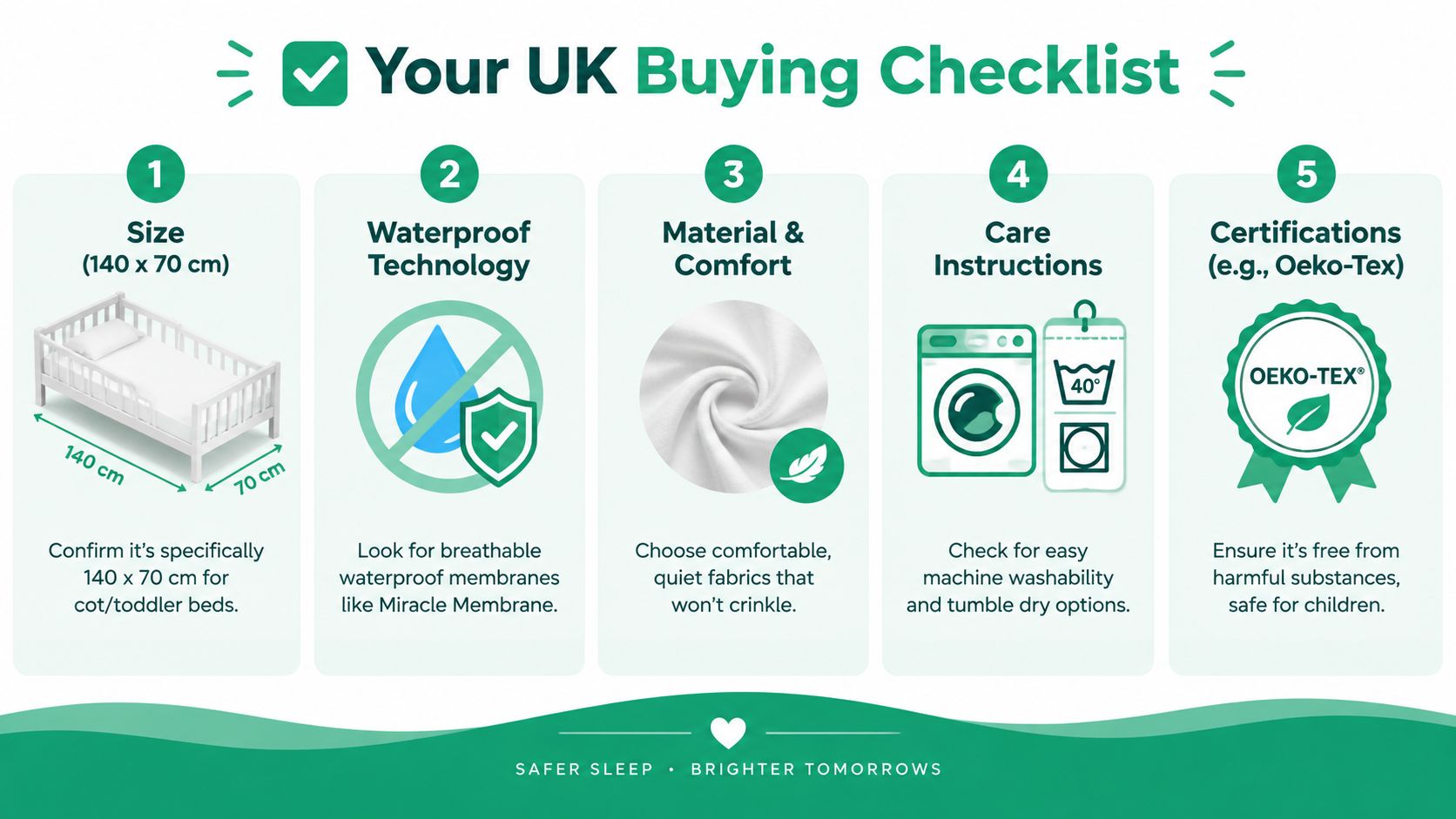
A good purchase starts with the mattress, not the product title. Confirm that your bed uses the 140 x 70 cm cot-bed format, then measure the mattress depth and compare it with the protector's stated skirt range. The verified UK fit guidance shows why this step matters, with products in this size supporting different mattress thicknesses rather than one universal depth. (UK cot-bed protector fit guidance)
Use this checklist before ordering:
- Confirm the dimensions: The label should state 140 x 70 cm, not merely “cot bed” or “toddler size”.
- Measure the depth: Check that the elasticated skirt matches or exceeds the mattress depth without becoming excessively loose.
- Choose breathable waterproofing: PU-based membranes are preferred in UK guidance for liquid protection, quietness, and breathability.
- Assess the sleeping surface: Cotton suits a familiar feel, Tencel Cool may suit warm sleepers, and Charcoal offers a freshness-focused option.
- Read the care label: Confirm machine-washing instructions, drying restrictions, and any limits that could affect your routine.
- Check the returns policy: A clear returns process matters if the stated depth range doesn't suit the mattress.
- Review warranty and delivery terms: Protect-A-Bed's UK storefront describes warranty-backed support, UK delivery for in-stock items, and a range of waterproof protectors in different fabric options.
A protector should be comfortable enough to stay on the bed, secure enough not to wrinkle, and simple enough to wash after an accident. Those details matter just as much as the waterproof claim.
Protect-A-Bed offers UK waterproof mattress protectors with breathable Miracle Membrane technology and fabric options suited to different comfort preferences. Check the 140 x 70 cm size, verify your mattress depth, and visit Protect-A-Bed to choose a fitted protector that matches your child's bed and care routine.