

Mattress Protector Sheet: The Complete UK Buying Guide

You've got a mattress protector sheet on the shopping list, but the details are where many get stuck. The size looks right, the product claims sound similar, and then the key questions show up, will it fit over a deep mattress, should it go over a topper, and will it feel hot or noisy once it's on the bed?
Table of Contents
- What a Mattress Protector Sheet Does
- How Waterproofing and Breathability Work Together
- Protector Sheets vs Encasements vs Standard Sheets
- Who Benefits Most from Mattress Protector Sheets
- Choosing the Right Size and Fit for Your Mattress
- Care Instructions and Long-Term Maintenance
- Common Questions About Mattress Protector Sheets
What a Mattress Protector Sheet Does
A mattress protector sheet earns its place the first time a bed takes a hit. That might be a child's drink, a night of heavy sweating, a guest room mattress that needs to stay fresh between stays, or a shared flat where you want to protect the sleep surface you use without replacing the mattress early. Once liquid reaches foam or fibres, the problem is rarely just the stain. Odour, lingering dampness, and reduced comfort tend to follow.
A protector sheet sits between the mattress and fitted sheet. It is there to form a barrier against liquids, body moisture, dust, and everyday wear, while still feeling like part of the bed rather than a separate cover. UK bedding guidance commonly treats it as a practical layer, not a decorative one, and that is why it is used in homes, rentals, hotels, and care settings. For a straightforward overview of the product category, see this guide to what a mattress protector is.
Practical rule: if you want to protect the sleep surface you use, the protector belongs under the fitted sheet and on top of the mattress, not somewhere loosely draped over the bed.
That placement matters because protection only works where the barrier remains in contact with the mattress. A loose top layer that bunches or shifts can leave edges exposed, which is where spills often travel first. A proper mattress protector sheet is designed to stay put, so the barrier covers the surface you sleep on without changing the bed into something awkward.
Fit is where many UK shoppers run into trouble. Mattress depth, a topper, or a slightly loose corner can all change how well a protector sits, and a poor fit can let the sheet ride up or slip sideways during the night. A protector that matches the mattress profile gives the barrier a better chance of staying flat, which matters just as much as the material itself when you are dealing with real spills and nightly movement.
The broader market picture also shows that this is not a fringe accessory. UK demand sits inside a bedding-protector category that a market study projects will grow at a 4.2% CAGR from 2025 to 2035 in the UK, while the global market rises from USD 2.061 billion in 2024 to USD 3.323 billion by 2035 (Fact.MR). In plain terms, shoppers are treating protection as part of normal bedding upkeep, not an afterthought.
How Waterproofing and Breathability Work Together
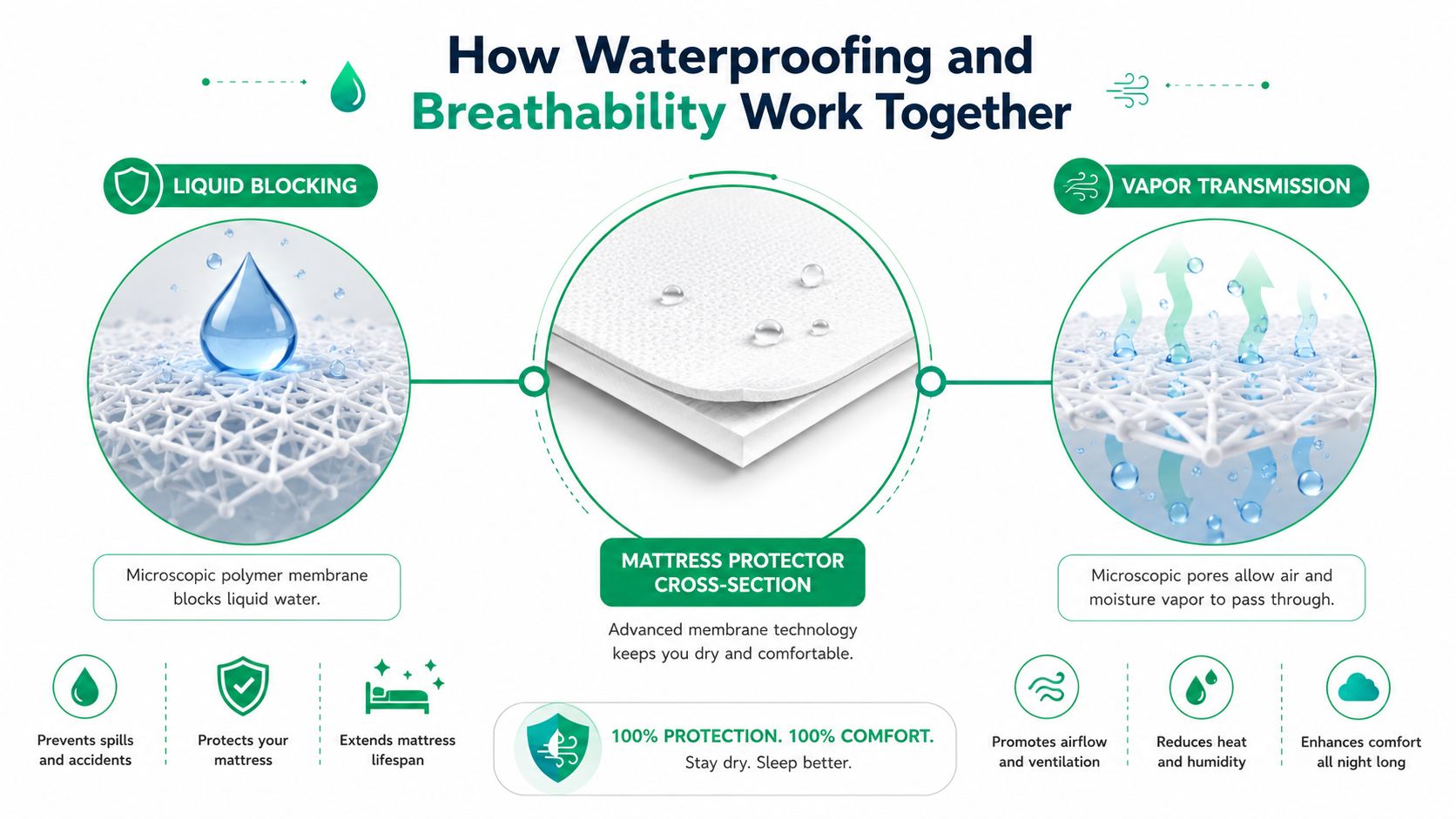
The main trick in a modern mattress protector sheet is that it has to do two opposite jobs at once. It must stop liquid from getting through, yet still let moisture vapour move away from the sleeper. That balance is why membrane-based construction has replaced the old idea that waterproof bedding must feel sweaty or stiff.
What the membrane is doing
A waterproof protector usually relies on a thin barrier layer bonded to the fabric back. In UK specification sheets, that layer is often described as polyurethane-coated and vapour-permeable, which is the technical way of saying it blocks liquid while still allowing water vapour transmission. The same UK spec sheet reports a total fabric mass of 205 g/m² ±15 g/m² and tensile strength >35 daN/5 cm, which matters because a protector that is too weak can fatigue at the seams or edges after repeated use and washing (Orwood specification sheet).
Good waterproofing is not a plastic bag effect. The best protectors block spills without trapping the bed in a clammy layer.
Fabric choice changes the feel, even when the protection layer is doing the same job. Cotton usually feels familiar and stable. Tencel-style surfaces are often chosen by sleepers who prefer a smoother hand feel. Charcoal-infused fabrics are typically selected for a more temperature-aware sleep experience. The important point is that the top fabric influences comfort, but the membrane is what handles the liquid barrier.
What to look for in a product listing
A good specification should tell you three things clearly. First, that the protector is waterproof. Second, that it is breathable or vapour-permeable. Third, that the fit is secure enough for the mattress depth you own. A protector can't perform well if it's technically waterproof but shifts away from the edge.
The older fear about noisy waterproof bedding still comes from older laminated products. Modern membrane protectors are usually much quieter because the barrier layer is thinner and more flexible. If you sleep hot, the right answer is not to skip waterproofing. It's to choose a construction that lets heat and moisture escape more naturally. For a clearer breakdown of breathable waterproof construction, see this explanation of breathable waterproof mattress protectors.
Protector Sheets vs Encasements vs Standard Sheets
A lot of shoppers use these terms interchangeably, but the jobs are different. A fitted sheet is for sleeping comfort. A mattress protector sheet is for surface protection. An encasement seals the whole mattress. Once you separate those roles, choosing becomes much simpler.
| Mattress Protection Options Compared | Coverage Area | Waterproof | Bed Bug Proof | Best For |
|---|---|---|---|---|
| Standard fitted sheet | Top sleeping surface only | No | No | Everyday bedding appearance and feel |
| Mattress protector sheet | Top and sides, with a fitted design | Yes, if specified | No | Spills, sweat, allergens, general hygiene |
| Full encasement | Entire mattress, usually zipped closed | Yes, if specified | Yes, when designed for it | Bed bug prevention, remediation, and sealed protection |
A protector sheet is usually the practical choice for everyday household protection because it is easier to fit, easier to wash, and less disruptive at bedtime. It sits under the fitted sheet and helps guard the mattress against moisture that can shorten usable life. An encasement serves a different purpose. It suits situations where you need a sealed barrier around the whole mattress, especially in multi-occupancy settings or after an infestation. For a more detailed comparison, this UK guide on bed bug mattress protectors versus encasements is worth reading.
Use the simplest product that solves the problem. Don't buy a full encasement if your main issue is spills, and don't rely on a standard sheet if you need a true barrier.
A standard fitted sheet still causes confusion because it looks like it should do more than it does. It covers the bed, but it is not built to shield the mattress core from liquid or allergens. If you are protecting a new mattress, a guest bed, or a mattress in frequent use, the protector sheet is the practical middle ground. If you sleep hot, choose a construction that lets heat and moisture escape more naturally while still keeping the mattress protected.
Who Benefits Most from Mattress Protector Sheets
A spill at bedtime, a dusty guest room, or a mattress that needs to last through another tenancy all point to the same practical question. Which protection matches the way the bed is used, cleaned, and fitted? Different households reach for the same product because they are solving different problems, and the details of the bed matter as much as the problem itself.
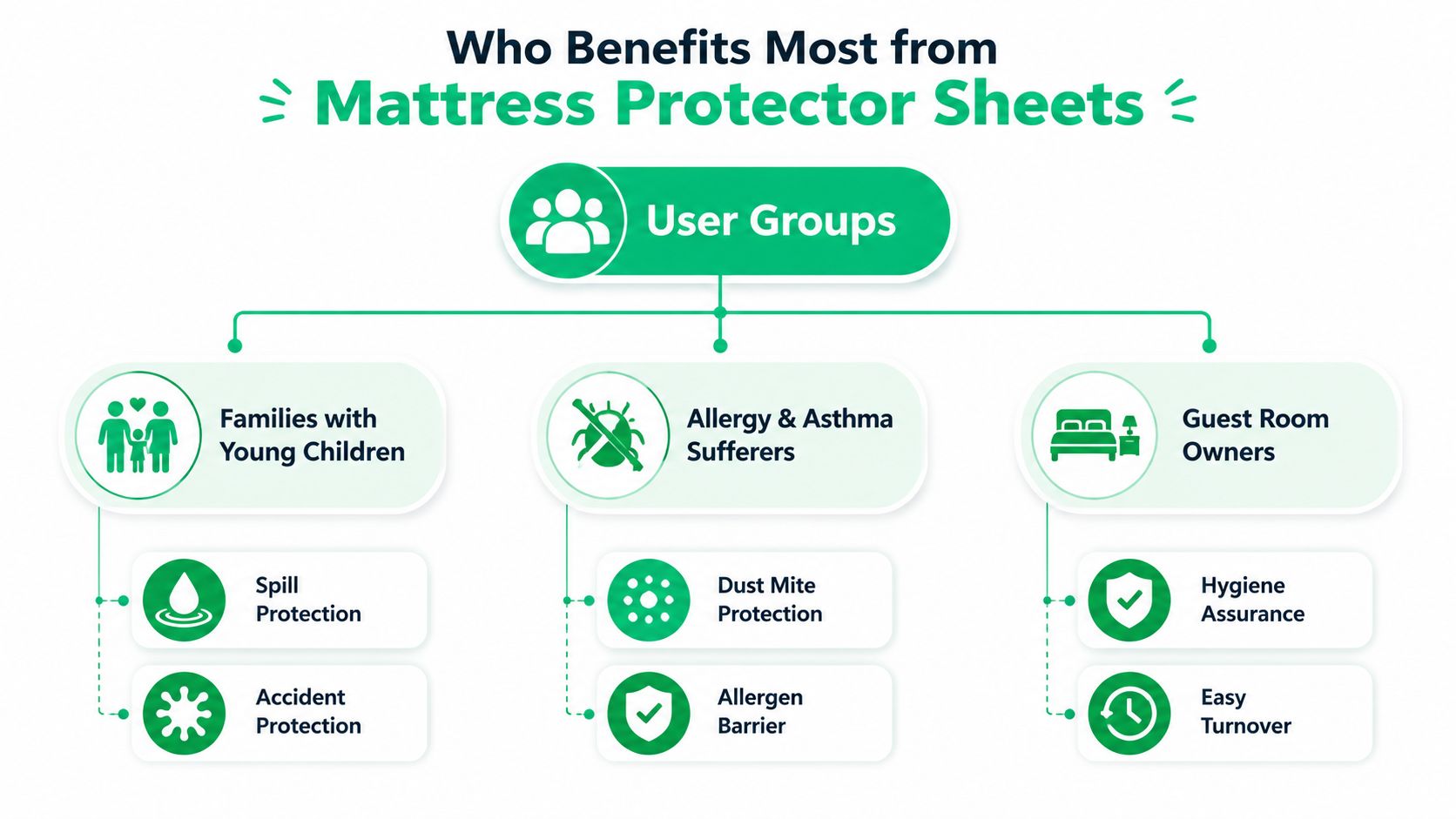
Families, guest rooms, and property turnover
Families usually notice the benefit first. A protector sheet gives you a clean layer that can be washed after accidents, while the mattress beneath stays dry and protected. That matters because a mattress is far harder to clean than bedding, and once a mark sinks into the core, it tends to stay there.
Guest rooms benefit for a similar reason. Beds that are only used now and then still pick up dust, moisture, and the odd spill, so a protector helps the room stay ready for the next stay. In rentals, the same product helps reduce wear between occupants, which is a practical way to delay replacement and keep the mattress in better condition for longer.
The same logic applies in hospitality and care settings, where hygiene routines need to be simple and repeatable. Staff need bedding that can be removed and washed without a complicated process, and a protector sheet suits that job well. It gives the mattress a steadier life cycle and keeps the visible sleep surface cleaner.
Allergy, asthma, and hygiene concerns
UK health guidance identifies dust mites as a common asthma and allergy trigger, which is why barrier protection matters more for some sleepers than for others. A protector does not treat allergies, but it can reduce direct contact between the sleeper and the mattress environment. That is especially useful in homes where bedding is washed regularly, while the mattress itself cannot be cleaned in the same way.
Shared accommodation brings another concern into focus, especially where bed bug risk is discussed more often. UK public-health and housing advice has made that risk more visible because infestations are more likely to spread in multi-occupancy spaces than many people expect. A protector sheet is not the same as a full bed bug encasement, but it still adds a useful hygiene layer in many everyday situations.
Hot sleepers and people worried about heat
Heat control is where membrane technology matters most. Older waterproof bedding earned a bad reputation for feeling hot, but modern protectors can reduce that trade-off. If you sleep warm or deal with night sweats, a breathable fabric top layer combined with a waterproof membrane is a better answer than giving up protection altogether. One option in the UK market is Protect-A-Bed, which uses a waterproof, breathable fitted-sheet style construction across its protector range.
The practical question is which type matches the way you sleep and launder your bed.
Choosing the Right Size and Fit for Your Mattress
Most fit problems start with people measuring only length and width. That is not enough. Mattress depth changes everything, especially once you add a topper or choose a deeper modern mattress. A protector that matches the footprint but ignores height can ride up, pop loose at the corners, or leave the perimeter exposed.
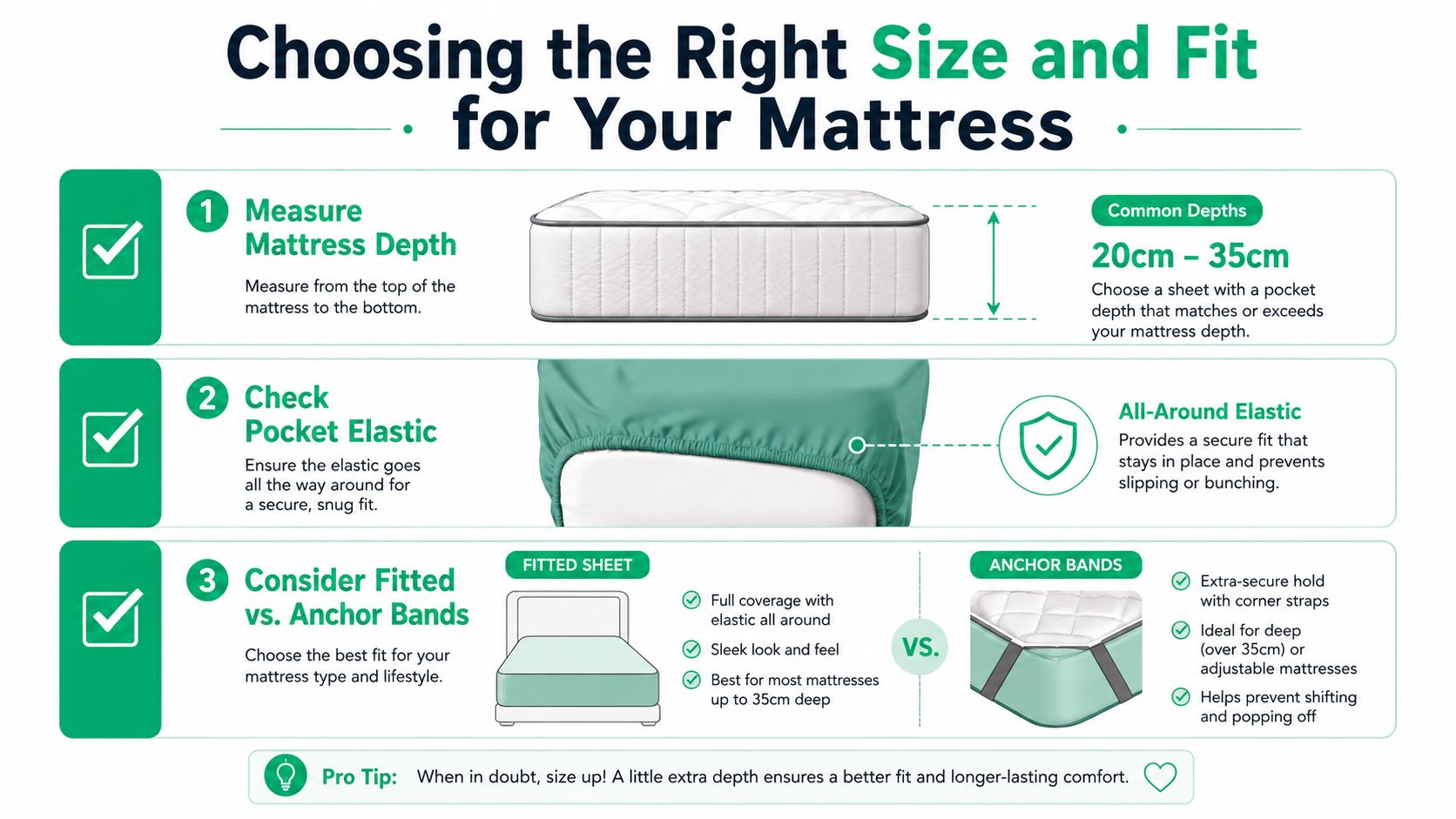
Measure the bed as it sits
Start with the mattress itself, then measure the depth from top to bottom. That is the figure that tells you whether the protector pocket will hold or struggle. UK retail listings commonly specify a suitable mattress height of about 30 cm, which is a useful reference point when you are comparing products, but it is still your bed's depth that decides fit.
Elasticated edges help, but they are not magic. A fitted-sheet design only works when the elastic can maintain contact around the mattress edge, and that is why a protector can look correct on paper but still slip in practice. If you use a topper, the protector usually needs to go over the topper so it protects the sleep surface, not just the mattress below it.
Fit beats fabric marketing. A technically good protector that slips is a poor protector in real life.
What to check before you buy
A quick checklist prevents most sizing mistakes:
- Measure depth first: Do not guess based on the old mattress or the size label alone.
- Look for full corner hold: Elastic that runs securely around the edge usually stays put better than loose corner-only tension.
- Match the protector to the bed system: If you have a topper, deep mattress, or adjustable base, check how the protector is meant to sit before you order.
A cotton protector listing in the UK market shows a fabric weight of 180 g/m², which is a reminder that construction details vary even when the product category is the same. A similar reminder comes from how laundry pods inactivate viruses, where the cleaning method matters as much as the product label. Weight alone does not tell you whether a protector will fit, but it does show that materials differ enough to affect feel and handling.
If your mattress is unusually deep, custom-made, or paired with a thick topper, do not assume the standard size will behave well. In those cases, fit and fastening matter more than almost anything else.
Care Instructions and Long-Term Maintenance
A mattress protector sheet only protects properly if it stays intact. Washing it badly is one of the fastest ways to weaken the barrier layer, distort the fit, or shorten its useful life. The goal is simple, keep it clean without stressing the membrane.
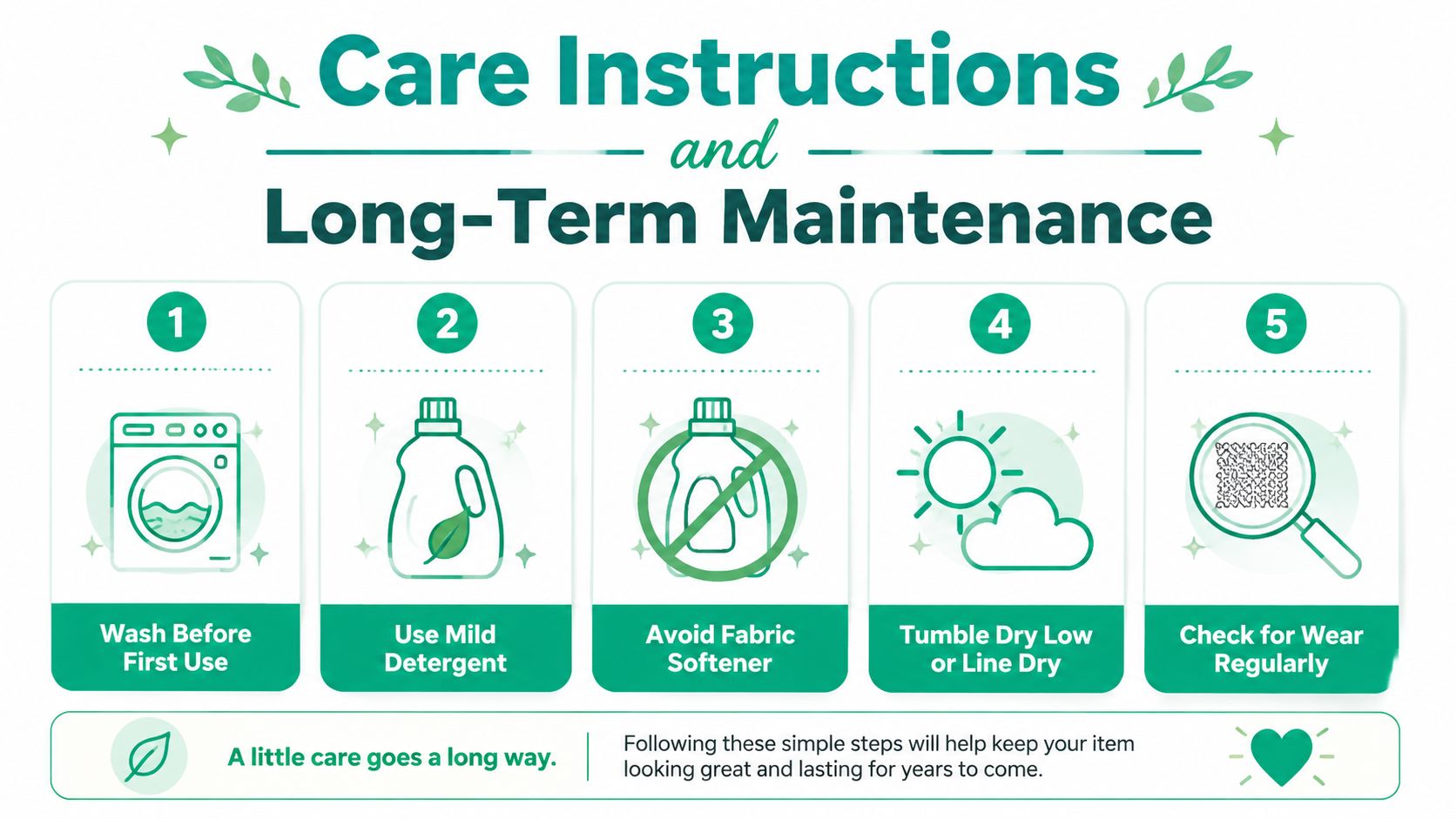
Care habits that protect the barrier
Use a mild detergent and avoid fabric softener, because softeners can interfere with performance layers over time. If the protector label allows machine drying, use a low heat setting or line dry it to reduce heat stress. High heat is the enemy of many bonded waterproof fabrics because it can accelerate wear at the laminate.
It also helps to wash the protector before first use so any manufacturing residue is gone and the fit settles properly. After that, regular washing should depend on who uses the bed. A family bed with accidents or sweat will need more frequent laundering than a rarely used guest bed.
A protector that looks clean but has a damaged membrane is only half doing its job.
What warranty and wear usually mean in practice
Warranty coverage usually centres on material and manufacturing defects, not damage caused by incorrect washing or misuse. That means the care label matters as much as the product description. If the membrane starts to feel patchy, the edges lose their stretch, or liquid no longer beads and stays out, the protector has probably reached the end of its useful life.
For general cleaning habits, it can help to think about the rest of your bedding routine too. If you're already reading about laundry hygiene and want a broader context on detergent and sanitising choices, this article on how laundry pods inactivate viruses gives a useful overview of wash chemistry and hygiene. The main point here is that the protector needs regular, gentle care, not harsh treatment.
Treat it like a technical fabric, not a throwaway cover. That approach keeps the barrier more reliable for longer and reduces the chance of buying a replacement sooner than you should.
Common Questions About Mattress Protector Sheets
Will a mattress protector sheet change how the bed feels? A little, sometimes, but the right one should feel like a thin functional layer rather than a bulky add-on. The fit and fabric choice matter more than the idea of waterproofing itself, which is why breathable membrane construction is so important for comfort.
Do you need one for a new mattress? If you want to keep the surface cleaner and reduce exposure to spills, sweat, and everyday wear, yes, it's worth considering from day one. It's easier to protect a mattress than to repair one later.
Can you use one with an electric blanket or heated pad? Usually yes, but placement and product instructions matter. The protector still belongs under the fitted sheet, and you should make sure the heat source is compatible with the layers you're using.
Are budget protectors the same as premium ones? Not usually. The biggest difference is often in fit stability, membrane quality, and how the fabric feels after washing. Cheap protection can look fine on day one and then disappoint once it starts slipping or feels less comfortable.
What about noise and sensitive skin? Older waterproof products were notorious for crinkling, but modern membrane protectors are much quieter. For sensitive skin, look for a smooth top fabric and a construction that avoids heavy plastic feel.
Protect-A-Bed offers waterproof, breathable mattress protectors and bed bug encasements designed for UK homes, rentals, and hospitality settings. If you want to compare fit, fabric, and protection level for your own bed, visit Protect-A-Bed and choose the style that matches your mattress depth, topper setup, and everyday sleep routine.