

Hypo Allergenic Bed: A UK Guide to Better Sleep 2026

You strip the bed, wash the sheets, and still wake up with a blocked nose. The room looks clean, the mattress looks fine, and yet one person in the house keeps sneezing first thing in the morning while everyone else sleeps through it. That's the point where a hypoallergenic bed stops being a marketing phrase and starts becoming a practical question about what's sitting inside and around your mattress, pillows, and bedding.
Table of Contents
- What a Hypoallergenic Bed Actually Means
- The Bedroom Allergens That Disrupt Sleep
- Mattresses, Encasements, and Pillow Protectors Compared
- Materials and Certifications Worth Looking For
- Why Humidity and Ventilation Matter Just as Much
- Caring for a Hypoallergenic Bed Over Time
- Protect-A-Bed Solutions That Match Each Need
- Building Your Own Hypoallergenic Bed Setup
What a Hypoallergenic Bed Actually Means
A hypoallergenic bed is not one product. It's a sleep setup built to reduce contact with allergens by using a mattress, protector, pillow protector, and bedding that work together as a barrier system. In plain English, the aim is to make the bedroom less friendly to dust mites, pet dander, mould spores, and irritant residues that settle where you sleep.
Start with the problem, not the label
The word “hypoallergenic” sounds reassuring, but on its own it doesn't tell you what the bed is doing. A fitted sheet can feel soft and still let allergens build up underneath. A mattress protector can help a lot, but if the pillow and room are carrying the main trigger, the symptom pattern won't change much.
That's why it helps to think in layers. The mattress holds the largest reservoir, the pillow sits close to your face all night, and the fabric on top affects comfort, heat, and how often you want to wash things. If you want a broader practical guide to the topic, this UK explainer on hypoallergenic bedding basics is a useful companion read.
What people usually mean in real life
Most shoppers are really asking for one of three things. They want less morning congestion, less irritation from dust, or less worry about what's building up inside the bed over time. That's why the phrase hypoallergenic bed makes sense as a category, not a single item.
Practical rule: if the bedroom is the main exposure space, the bed itself needs to do more than look clean. It has to reduce contact with the things that collect while you sleep.
If you're trying to sleep better with allergies, the most useful next step is to match the bed setup to the trigger pattern. This guide from tips to sleep better with allergies gives a good overview of the wider habits that support bedding choice, especially when symptoms keep returning despite regular cleaning.
The Bedroom Allergens That Disrupt Sleep
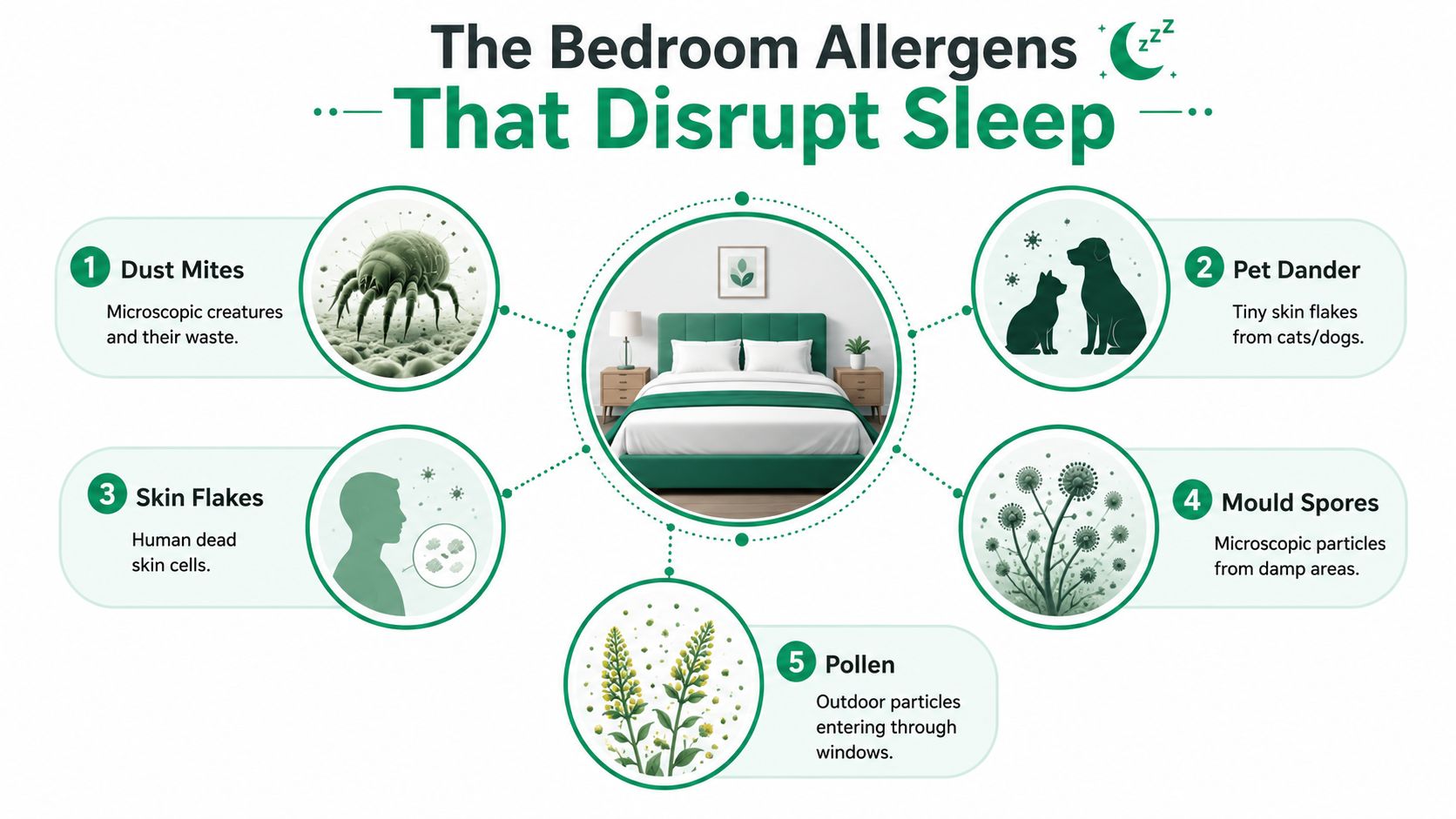
The bed is the easiest place for allergens to accumulate because it's warm, enclosed, and used for hours every night. In UK homes, that usually means the mattress and pillows become a reservoir for dust mites and their waste, skin flakes, pet dander, and anything drifting in from outside, especially when windows are open and bedding is used in a room with changing temperatures.
Why the bed becomes the hotspot
Dust mites are the main reason barrier bedding matters. UK allergy guidance from the NHS-style sources linked in the brief says mites thrive in warm, damp environments, and the bedroom gives them exactly that. People breathe moisture into the bed overnight, they sweat, and the mattress core holds on to that warmth longer than most fabrics do.
That's also why symptoms often show up in the morning rather than during the day. The face has been close to the pillow all night, the nose has been exposed to whatever sits in the fibres, and the body has been in one position long enough for irritation to build.
The main triggers in a typical bedroom
A bed rarely contains just one allergen. It's usually a mix:
- Dust mites and waste particles, which settle deep into bedding and mattress layers.
- Pet dander, which clings to fabrics and circulates when a pet has access to the bedroom.
- Skin flakes, which feed dust mites and add to the organic load in bedding.
- Mould spores, which become more likely when damp or condensation is present.
- Pollen, which enters through windows or rides in on clothes and hair.
If you want a broader view of how indoor air control supports bedding hygiene, this resource on allergy relief with HVAC is worth a look because it shows how ventilation and filtration connect to the same bedroom problem.
Morning congestion isn't always a sign that the mattress itself is “bad”. It often means the sleep environment is holding on to allergens that keep getting reintroduced night after night.
The UK mattress-care discussion on dust mites in bedding is relevant here because it reinforces the central point, the bed is not passive. It's part of the exposure pathway.
Mattresses, Encasements, and Pillow Protectors Compared
People often use “mattress protector” and “encasement” as if they mean the same thing. They don't. Each layer solves a different problem, and a hypoallergenic bed usually needs more than one of them if you want to reduce allergen contact in a meaningful way.
| Product type | What it covers | Main job | Best for |
|---|---|---|---|
| Mattress protector | The top and sides of the mattress | Blocking spills, sweat, and surface contact | Everyday protection and easier cleaning |
| Mattress encasement | The full mattress, usually zip-around | Sealing the mattress core and limiting deep allergen reservoirs | Dust-mite control, older mattresses, bed-bug concerns |
| Pillow protector | Each pillow | Reducing oil, sweat, and allergen build-up near the face | Nightly face-level exposure and pillow hygiene |
Why the difference matters
A standard mattress protector is useful, but it mainly protects the outside layer. That helps with spills and sweat, which matters for cleanliness and mattress life. It doesn't fully solve the issue of what's already inside the mattress.
An encasement goes further because it wraps the whole mattress. That matters if you're dealing with an older bed, a mattress that has already absorbed years of use, or any history of bed-bug risk. The internal mattress core is where a lot of allergen load can sit undisturbed, so sealing it off changes the problem at source.
Pillow protection is easy to overlook
The pillow sits right next to the nose, mouth, and eyes, which makes it a high-contact item. People often replace sheets more regularly than pillows, yet pillows can collect sweat, body oils, and dust-mite material over time. A pillow protector creates a cleaner interface between the sleeper and the fill.
If you're trying to work out how these products fit together in a real shopping decision, the UK guide on hypoallergenic mattress protector options helps separate the “top layer only” idea from full barrier coverage.
The easiest mistake is buying one protector and expecting it to do every job. Surface protection, deep sealing, and pillow hygiene are different tasks.
So if the goal is lower allergen exposure, the mattress protector, encasement, and pillow protector should be chosen as a set, not as interchangeable labels.
Materials and Certifications Worth Looking For
The phrase hypoallergenic isn't usually a regulated promise. That means the test is construction. A shopper in the UK should focus less on the label and more on whether the protector blocks moisture, stays breathable, and is built in a way that prevents gaps where allergens can travel.
What the fabric layer should do
The top surface affects feel first, then temperature, then washability. Cotton is familiar and usually feels straightforward. Tencel-style fabrics are often chosen for a cooler, smoother hand feel. Knits with charcoal or other cooling features are aimed at people who overheat, but the key point is still the same, the fabric needs to work with the barrier underneath rather than fight it.
The barrier membrane is the part that matters most for protection. In a good design, it should be waterproof yet breathable, so liquids and dust-mite allergens are blocked while the bed doesn't feel sealed in or noisy.
What to check before you buy
A practical checklist helps more than vague claims:
- Membrane performance: Look for a barrier that blocks liquid and allergen ingress while staying air-permeable.
- Seam construction: Seams should be finished so allergens can't slip through stitched weak points.
- Washability: If a protector can't be maintained properly, its value drops fast.
- Certification signals: OEKO-TEX and asthma- or allergy-friendly marks are more useful than generic marketing language because they suggest testing or standardised review.
- Hygiene suitability: In care settings, wipe-clean and impermeable yet breathable barrier standards matter because mattress surfaces need to resist contamination while staying usable.
What the label won't tell you
A product can be soft, expensive, and still be the wrong choice for someone who needs serious barrier protection. Likewise, a stiff cover can be technically effective but uncomfortable enough that nobody wants to keep using it. The trade-off is always the same, protection versus sleep comfort.
If the barrier isn't comfortable enough to stay on the bed, it isn't a practical allergy solution.
That's why the smartest buy is usually the one that balances membrane performance, breathable comfort, and easy care, instead of chasing the broadest promise on the packaging.
Why Humidity and Ventilation Matter Just as Much
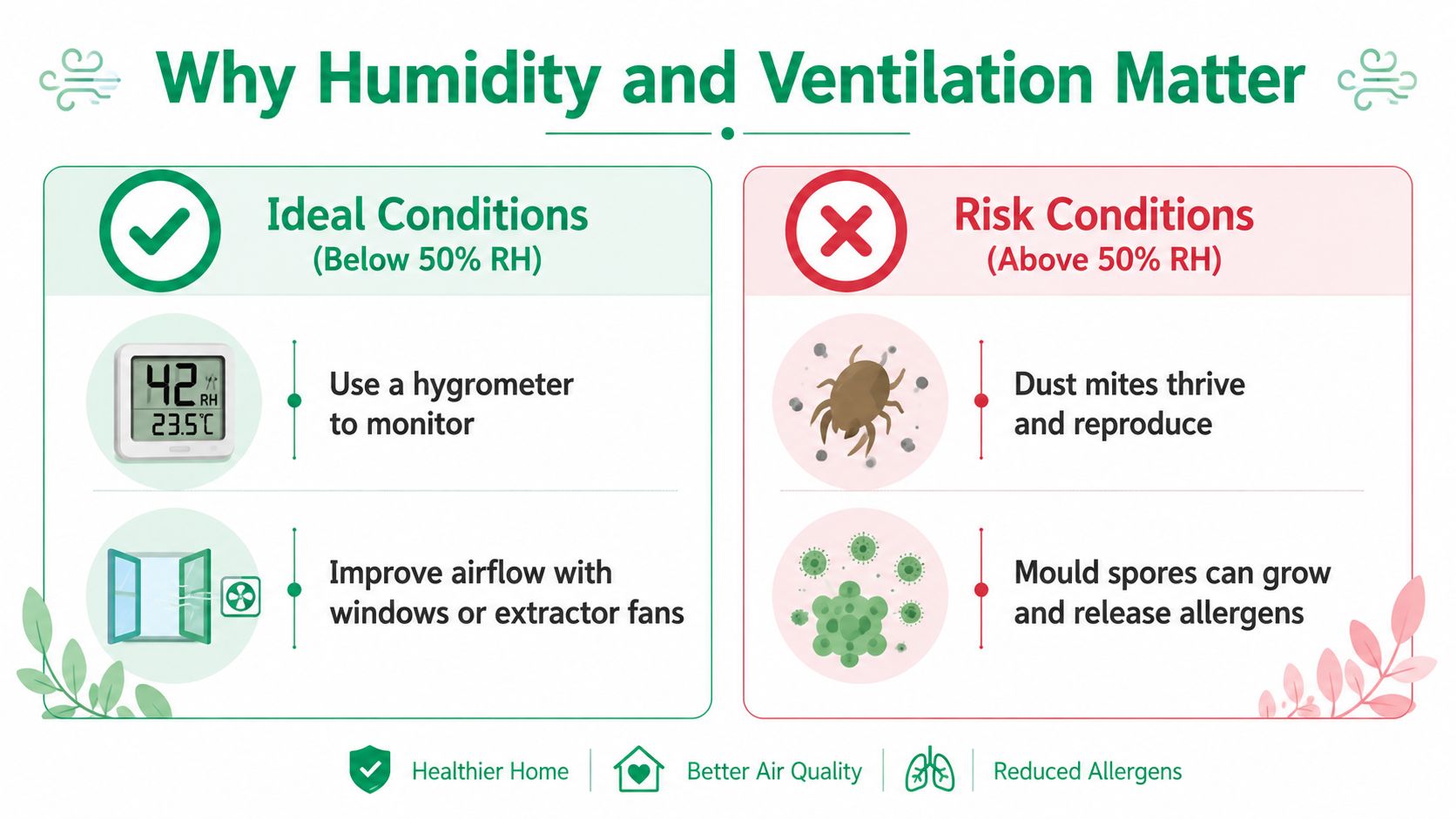
A good protector does not fix a damp bedroom. That is where many people feel let down by a hypoallergenic bed setup, because the mattress cover may be doing its job while the room keeps feeding the problem. Dust mites and mould do better in warm, humid spaces, so home moisture control matters alongside barrier bedding. Guidance that aligns with NHS-style allergy advice says to keep relative humidity at or below 50% where allergens are a concern, because damp air gives mites and mould the conditions they need. Low humidity is part of the solution, not an optional extra.
A sealed bed can still sit in a poor room
If bedding traps moisture and the room does not clear that damp air, comfort drops and the allergy load can stay high. That often happens in UK bedrooms where windows stay shut for long stretches, laundry dries indoors, or condensation builds up on cold walls.
The mattress is only part of the picture. A damp carpet under the bed, mould patches on a wall, or heavy condensation around a window can keep allergens circulating even when the protector itself is working correctly. In that situation, the bedding barrier is doing its job, but the room is still supporting the problem.
The practical trio that works together
The bedroom strategy works best in three parts.
- Barrier bedding: Stops dust mites, sweat, and liquid from entering the mattress and pillows.
- Air control: Lowers humidity and keeps air moving so mites and mould are less likely to thrive.
- Cleaning routine: Removes surface allergen load before it settles deeper.
That approach is more honest than treating bedding as a cure-all. The bed is one exposure point, but it sits inside a whole room system.
A mattress protector can block what reaches the mattress. It cannot fix condensation on the walls or stale air in the room.
If the room feels stuffy, musty, or damp, the next step is to look beyond the bed itself. Barrier bedding still matters, but it works best when the room is not rebuilding the allergen problem overnight.
Caring for a Hypoallergenic Bed Over Time
A protective bed setup only keeps working if the routine stays tight. The barrier matters, but so does washing, drying, and checking for wear. The NHS-style guidance in the brief points to 60°C weekly washing for bedding, because that's the cleaning temperature commonly used to tackle dust mites in a bedroom routine.
The weekly rhythm that makes sense
Bedding should be washed hot enough to matter, and dried fully so it doesn't go back onto the bed holding residual damp. Protectors and pillow covers need cleaning too, not just the sheets on top. If a protector stays on the bed for months without a wash, it starts collecting the same material it was meant to reduce.
A simple routine keeps it manageable:
- Wash sheets and pillowcases weekly at 60°C where the fabric allows.
- Clean the protector and encasement according to the care label, and dry them completely before reuse.
- Vacuum the mattress surface with a HEPA-equipped cleaner to lift settled dust.
- Rotate or inspect pillows so old, packed-down fills don't keep holding allergen load.
Signs the barrier is wearing out
A protector doesn't last forever. If it starts feeling damp after a night of sweating, that's a warning that the surface no longer feels as protective or comfortable as it should. Visible staining on the mattress, a persistent musty smell, or a cover that no longer sits flat can all mean the barrier isn't performing well.
Replacement timing matters because once a membrane is compromised, you lose the very thing you paid for. Small tears, split seams, and degraded waterproof layers are enough to make a formerly good protector much less useful.
For households looking at cleaning habits more broadly, this guide to cleaning products for allergy prone homes can help you think about which cleaning approaches support a low-allergen bedroom without adding harsh residue.
The hidden rule is simple, maintenance is part of the product. A protector that isn't washed and checked regularly stops acting like a barrier and starts acting like another fabric layer.
That's the part many shoppers miss. The promise of a hypoallergenic bed only holds if the cover system and the care routine stay aligned.
Protect-A-Bed Solutions That Match Each Need
The right product depends on which problem you're solving. If the main issue is spills or sweat, a waterproof mattress protector is the logical starting point. If the concern is deeper allergen sealing or bed-bug risk, a full encasement makes more sense. Protect-A-Bed's UK range uses its Miracle Membrane across protectors to block liquids while staying air-permeable, and it offers mattress protectors in Charcoal, Premium, Tencel Cool, and Cotton finishes for different comfort preferences.
Matching the product to the job
For a hot sleeper who still wants barrier protection, a cooler-feeling surface fabric is usually the better starting point. For a household that wants full mattress sealing, the bedbug-proof mattress encasement is the more complete barrier option because it covers the whole mattress rather than just the top surface.
The pillow side matters too. Advanced pillow protectors come in Cotton, Snow, Tencel Cool, Copper, and Copper Cool versions, so the sleeper can match feel and warmth to the way they sleep. That matters more than it first sounds, because the pillow is close to the face for hours and any discomfort there tends to get noticed quickly.
Service details that help the purchase decision
UK shoppers also care about fulfilment and support. The site states 1 to 3 working day delivery, free shipping above £90, and warranty coverage of up to 10 years against material and manufacturing defects. Those service details matter because a protector is only useful if it arrives quickly, fits properly, and stays reliable over time.
The range is best understood as a set of matched solutions, not a one-size-fits-all label. The mattress protector handles the everyday surface job, the encasement handles sealing, and the pillow protectors handle the face-level layer that people often forget.
Building Your Own Hypoallergenic Bed Setup
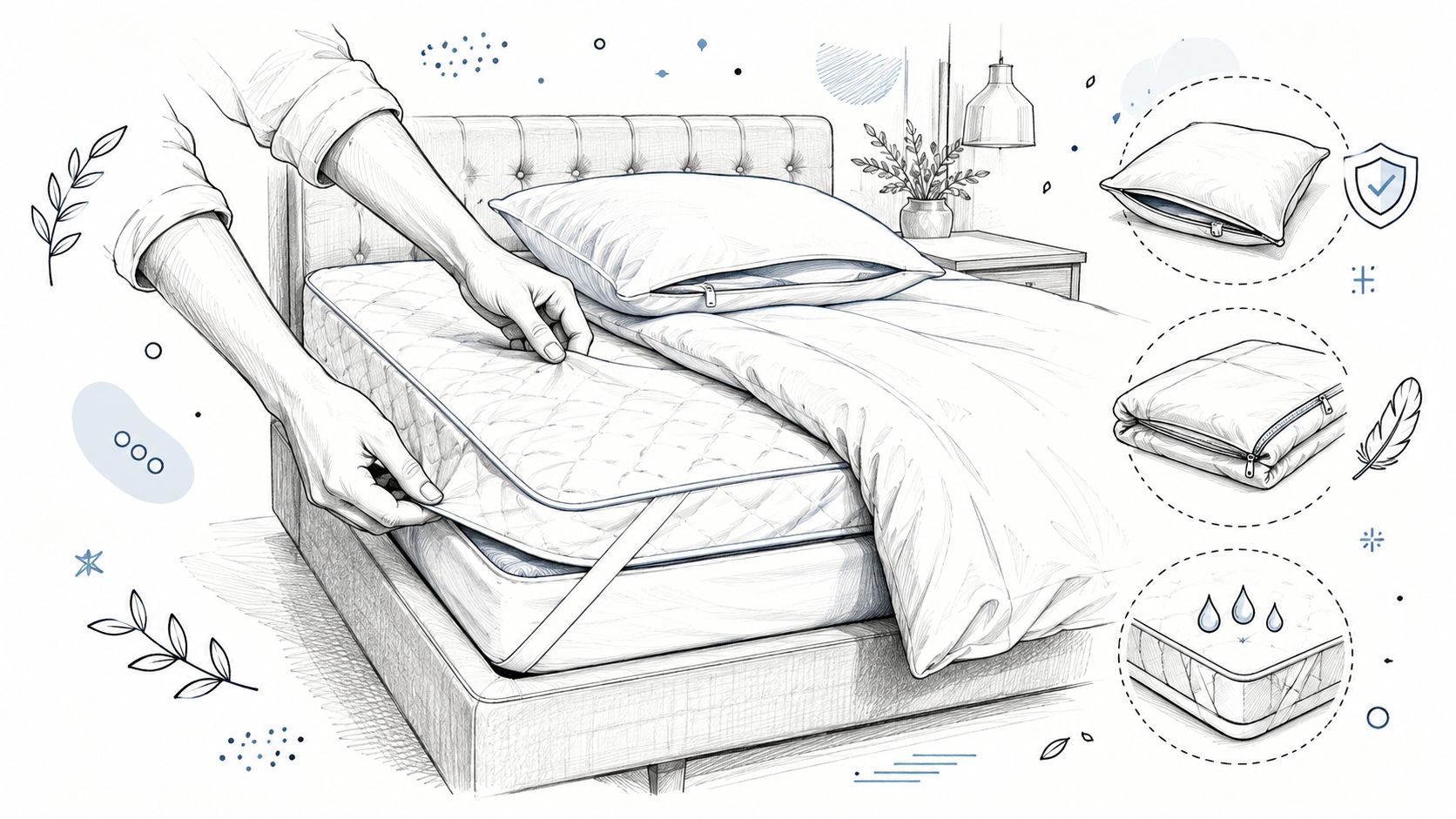
Start with the source of exposure, then build outward. If dust mites or an older mattress are part of the picture, begin with a full encasement. If spills, sweat, or general mattress hygiene are the main concern, add a fitted waterproof protector on top. For pillows, choose a protector that suits how warm you sleep, because comfort affects whether you'll keep using it night after night.
A simple decision path
- Start with encasement: Choose this first if you need to seal an older mattress, reduce deep allergen reservoirs, or address bed-bug worry.
- Add a fitted protector: Use this for daily spills, sweat, and surface cleanliness.
- Match the pillow layer to comfort: A cooler or softer fabric can make the protection easier to live with.
- Keep the room dry and aired: Check humidity, open windows when appropriate, and avoid letting moisture sit in the room.
- Wash consistently: Weekly hot washing is still part of the strategy, not a separate nice-to-have.
What to expect, honestly
A better barrier setup can reduce exposure and make symptoms easier to manage, but it won't fix every trigger. If mould, damp, or poor ventilation is the underlying issue, the room still needs attention. If the main trigger is dust mites, a cleaner, better-sealed bed often makes the night-time environment feel more manageable.
Warranties and delivery windows are useful, but they're not the reason to buy. They matter because a well-chosen protector should fit properly, hold up to washing, and stay part of the routine without becoming a hassle.
If you're ready to turn that plan into a real bedroom setup, visit Protect-A-Bed to compare mattress protectors, encasements, and pillow protectors against the exact allergy or hygiene problem you're trying to solve. Choose the layer that matches your room, your sleep style, and the trigger you're dealing with, then build from there.