

How to Protect Mattress from Bed Bugs

You've just returned from a hotel, student flat, short-let, or visit to a property with a suspected infestation. The suitcase is on the bedroom floor, the bedding is already on the mattress, and you're wondering whether a normal waterproof protector is enough. It isn't.
Learning how to protect a mattress from bed bugs starts with separating two very different jobs. In an uninfested home, you're trying to reduce the chance of bed bugs reaching and colonising the mattress. During or after an infestation, you're trying to contain insects already present while the wider room receives proper treatment. The same cover may support both aims, but the surrounding actions are different.
The practical answer is straightforward. Use a purpose-designed, fully sealed bed bug encasement, inspect the bed and frame, process bedding carefully, keep the room uncluttered, and deal with travel or shared-building risks before they become a second infestation.
Table of Contents
- What You Are Trying to Stop
- Why UK Bed Bug Activity Has Changed the Calculation
- Inspecting the Mattress and Bed Frame Properly
- Choosing and Fitting a Mattress Encasement That Works
- Laundering, Heat Treatment, and Room-Level Cleaning
- Stopping Reintroduction From Travel and Shared Buildings
- Landlord and Homeowner Responsibilities and Timing
What You Are Trying to Stop
A standard mattress protector is not bed bug protection. Waterproof, quilted, and washable covers help with spills, perspiration, and wear, but they usually leave the underside, corners, or zip area exposed. Bed bugs can enter through seams, folds, labels, tufts, handles, and unsealed openings.
A proper encasement serves three clear purposes:
- It limits access to the mattress interior. A sealed outer surface removes exposed seams, piping, buttons, and handles that can provide harbourage.
- It contains insects already inside. After inspection and appropriate treatment, a fully closed encasement can stop trapped bugs escaping and reduce the chance of new bugs entering.
- It simplifies inspection. An intact, smooth cover leaves fewer hiding places and makes fresh marks or insects easier to identify.
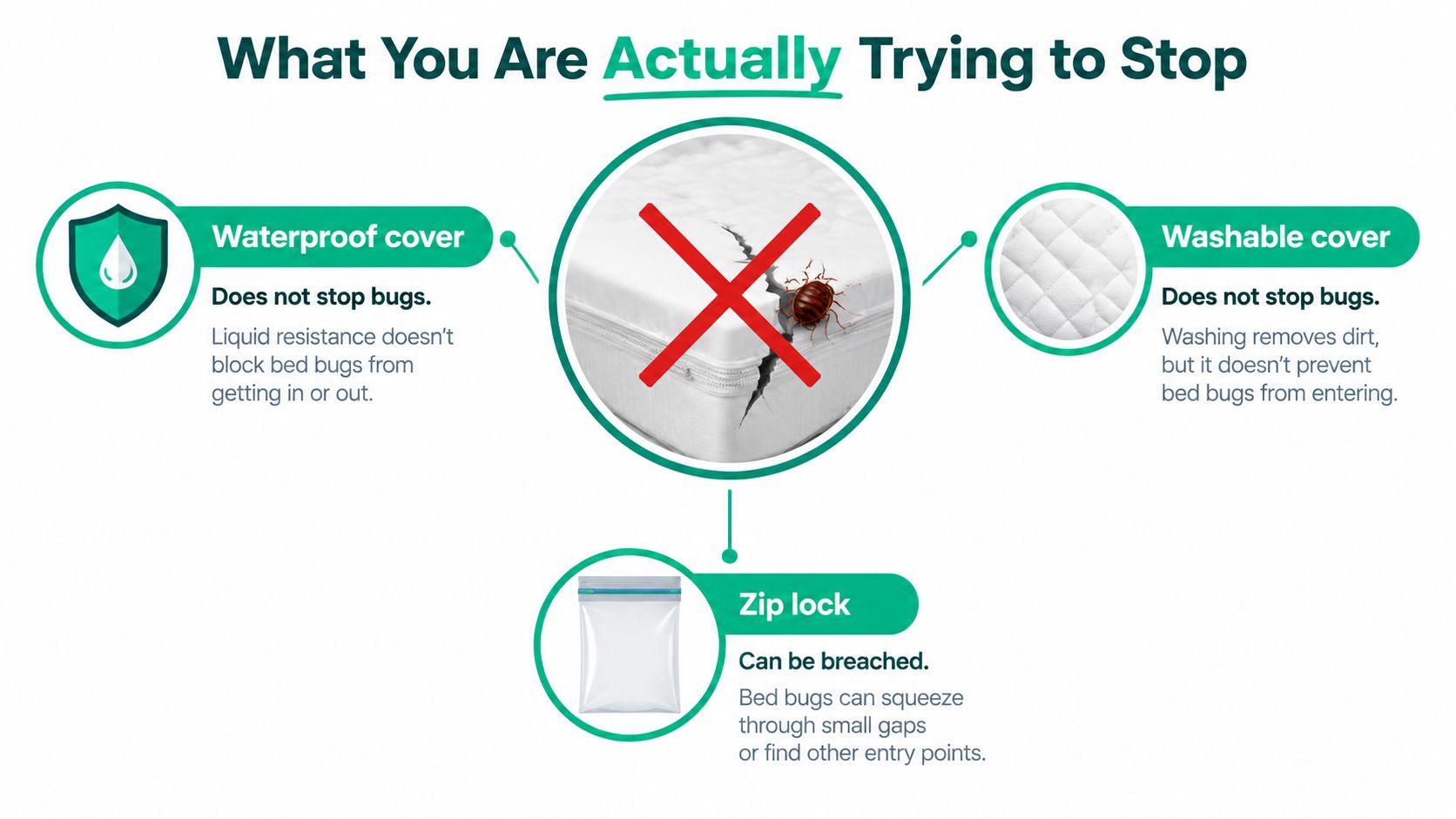
A protector is not an encasement
A comfort-layer protector sits over the mattress. It can support general hygiene, but it does not seal all six sides or cover the full mattress depth. A bed bug encasement surrounds the mattress completely and closes with a bug-resistant zip system.
Fitment must follow inspection and treatment where activity is suspected. Covering an active infestation without checking the mattress can trap insects inside while others remain in the bed frame, headboard, skirting boards, furniture, or adjoining areas. The cover supports control, but it cannot replace room-level treatment.
Use this guide to avoiding bed bugs for practical prevention advice after travel, a move, or time spent in shared accommodation.
Prevention and containment are different jobs
For an uninfested mattress, permanent encasement creates a useful physical barrier, particularly in rented rooms, hotels, student accommodation, and homes with frequent visitors. Travel and multi-occupancy living increase the chance of reintroduction, so inspect luggage, clothing, and sleeping areas before bringing belongings into the bedroom.
During or after a suspected infestation, use a stricter sequence: inspect first, treat confirmed activity, then fit the encasement and keep it fully closed. Check it regularly for tears and zip gaps.
Practical rule: A sealed mattress cover improves control and visibility. It does not remove the need to deal with the rest of the room.
Why UK Bed Bug Activity Has Changed the Calculation
A bed bug problem can move from a hotel room or shared building into a home before anyone notices. That makes mattress protection a practical control measure, not a specialist purchase. UK council records show 14,587 bed bug callouts in 2023, up from 11,819 in 2022, a rise of 23%. Later reporting cited 14,882 infestations in 2024, described as a 35% increase from 2022 to 2024 in the same reporting context. The UK bed bug activity figures show why prevention now matters across homes, rentals, hotels, and shared accommodation.
The same source reports a 68% increase in UK bed bug activity from 2023 to 2024. That figure does not predict the risk at one address, but it shows how quickly pressure can rise. The mattress remains a useful harbourage site, so limiting access to its seams and zip area can make monitoring and later treatment more manageable.
The figures in context
| Indicator | 2022 | 2023 | 2024 |
|---|---|---|---|
| Council bed bug callouts | 11,819 | 14,587 | Not stated in the cited council series |
| Reported infestations | Not stated | Not stated | 14,882 |
| Reported UK activity | Baseline | Baseline | 68% increase from 2023 |
Read these figures as broad indicators, not a forecast for a particular household. The same source records the wider trend, while local risk still depends on travel, occupancy, neighbouring rooms, and how quickly an introduction is identified.
Travel and housing disruption have also been linked with sharp changes in activity. Academic coverage reported a 65% year-on-year increase between the second quarter of 2022 and the second quarter of 2023. Another benchmark cited a 196% increase in bed bug callouts in October 2023 compared with the previous year. The UK and European bed bug review places these patterns in the wider context of travel, housing, and reintroduction risk.
Why prevention is financially sensible
Landlords, hotels, HMO operators, and frequent travellers face more than the cost of a mattress cover. An infestation can disrupt occupancy, require repeated access, create disputes, and spread when residents carry belongings between rooms. A sealed encasement cannot block insects arriving through luggage, walls, furniture, or neighbouring rooms. It does restrict one major harbourage area and makes the bed easier to monitor.
Use physical protection before an infestation starts, then keep it as part of a wider response if activity appears. Prevention and containment need different decisions, but both benefit from a mattress that is sealed, intact, and easy to check.
Inspecting the Mattress and Bed Frame Properly
Don't fit an encasement over a mattress you haven't checked. The inspection decides whether you're in prevention mode or containment mode, and it should include the frame because bed bugs often shelter outside the mattress.
Prepare without spreading insects
Start by stripping the bed. Put sheets, pillowcases, blankets, and removable protectors straight into sealed bags before carrying them to the washing area. Don't shake the bedding, leave it in a laundry basket, or place it on another bed.
Pull the mattress fully off the base so you can reach all four sides. Use a bright torch, a magnifier, a rigid plastic card for gently working along seams, and white gloves or tissues for wiping suspicious marks.
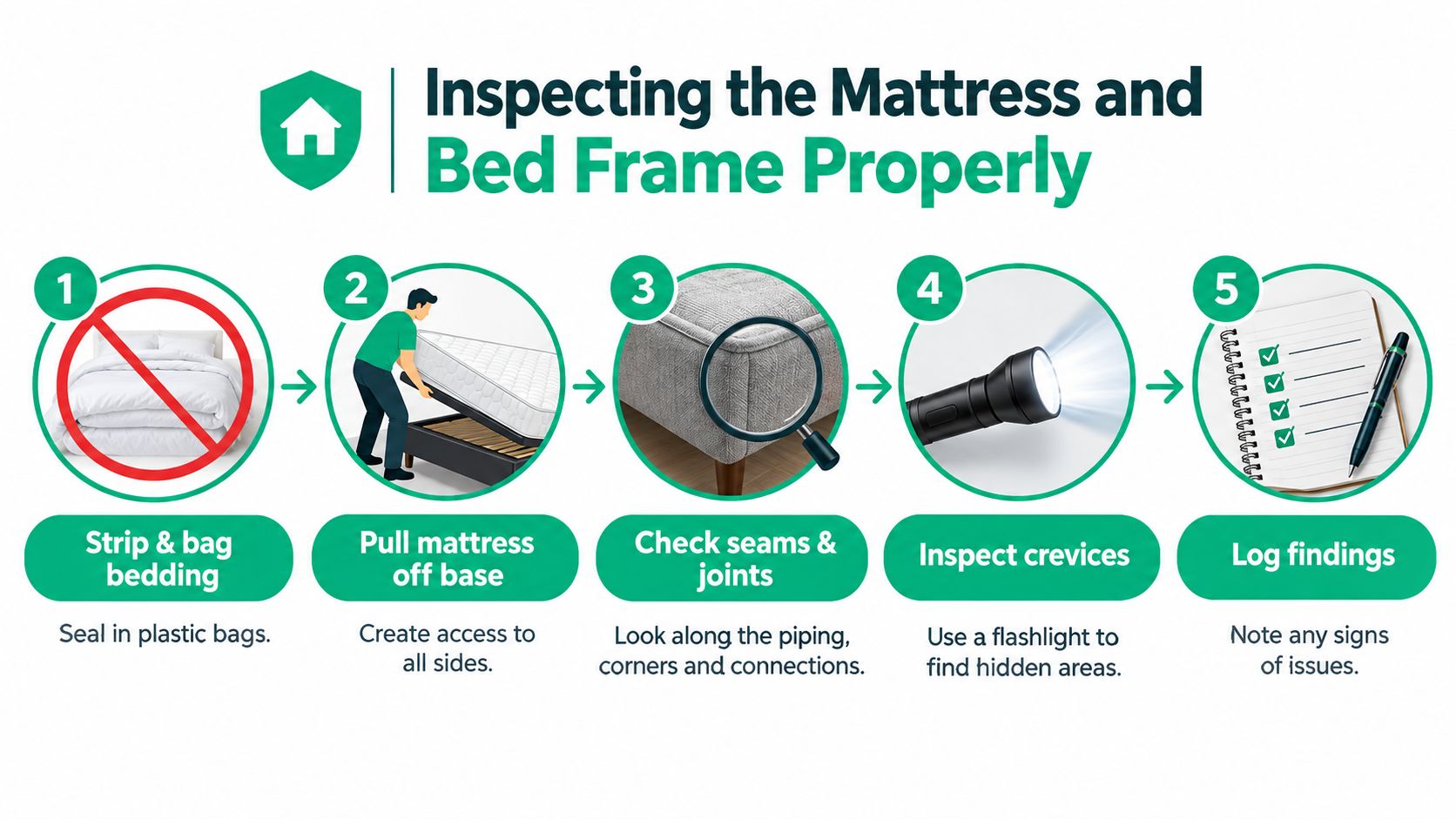
Follow one inspection route
Work methodically rather than jumping between areas.
- Top surface: Check tufts, piping, stitching, labels, and any folds.
- Underside and corners: Examine the bottom edge, corner seams, and fabric stapled to the base.
- Head and foot ends: Look closely around seams, handles, and joins.
- Bed frame: Inspect slats, screw holes, joints, castors, cracks, and the headboard.
- Wall gap: Check where the headboard meets the wall and where the frame approaches skirting boards.
Look for live insects, shed skins, pale eggs, dark faecal spots, and blood smears on sheets. Bed bugs may be around 1 to 5 mm long and range from mahogany to rusty brown, as described in the practical guidance provided for this inspection process. A sweet, musty smell can occur in heavier infestations, but smell alone isn't proof.
Use the card to open a seam slightly, not to tear fabric. Wipe a dark mark with a damp white tissue. Faecal spotting may smear like ink, while ordinary dirt may not.
Find one confirmed sign and stop treating this as routine prevention. Move to containment, arrange treatment, and avoid transferring possessions to other rooms.
Choosing and Fitting a Mattress Encasement That Works
A bed bug encasement is the most useful mattress-specific tool, but only when it is designed for bed bugs and fitted without a weak point. Generic dust-mite covers and ordinary waterproof protectors aren't equivalent. The bed bug mattress encasement guide explains the product distinction, but the fitting principles are the important part.
Choose the barrier, not the marketing label
Look for a purpose-rated encasement with:
- Complete six-sided coverage, including the underside.
- A secure, bug-resistant zip, with protected ends and no opening at the final closure.
- Strong, tightly made fabric, rather than a loose comfort cover.
- Correct depth sizing, so the material doesn't bunch, stretch, or pull at corners.
- Clear retention guidance, particularly when the cover is being used after treatment.
A controlled trial reported in UK pest-control guidance found that fully zipped encasements contained and recovered 100% of the bed bugs, with 20 insects per unit, across all five treated mattresses. Untreated controls began showing escape within one week, and all five had escaped bugs by week four. The controlled encasement trial makes the point clearly: zipper integrity is a control feature, not a cosmetic detail.
Fit it with discipline
After inspection and any required treatment, place the cover over the mattress carefully. Don't drag a suspect mattress through the room uncovered. Close the zip completely, check both endpoints, and follow the manufacturer's instructions for securing the closure.
A poor fit creates folds where insects can hide. An over-tight cover stresses corners and seams, while an oversized one leaves loose fabric on the floor or underneath the mattress. Avoid used encasements because you can't verify their history, closure condition, or contamination.
Check the zip, seams, corners, and folds frequently after installation. The UK guidance recommends continuous retention after fitting, and inspections remain necessary because bugs can shelter in folds on the cover itself. Keep the cover on permanently for prevention. After treatment, follow the specified retention period and don't unzip it for comfort, inspection, or laundering.
Fitting standard: If you can see a gap, stressed seam, open zip end, or loose fold that could harbour an insect, the installation isn't finished.
One further warning matters. A chemically treated liner isn't a reliable replacement for physical containment. A 2023 study found very little efficacy against modern field strains, while even a susceptible UK strain reached only 58% mortality after 21 days. The UK pest-preparation guidance supports choosing a physical barrier with correct sizing and verified closure instead.
Laundering, Heat Treatment, and Room-Level Cleaning
A mattress cover can't protect bedding left contaminated on the floor. Start with every item that has touched the bed, and handle it as if insects or eggs may be present.
Bag bedding before it leaves the bedroom. Wash washable items at 60°C for at least 90 minutes, or use a hot tumble-dry cycle for 30 minutes before placing clean items into a clean sealed bag. The bags matter because treated fabric can be recontaminated during transport or while waiting beside the bed.
| Method | Temperature | Duration | Notes |
|---|---|---|---|
| Hot laundering | 60°C | At least 90 minutes | Bag items before transport and after treatment |
| Hot tumble drying | Hot setting | 30 minutes | Use for suitable washable or dry items |
| Steam treatment | 100°C at the outlet | Slow contact passes | Concentrate on seams, folds, and tufts |
| Sun-heated bag method | More than 45°C internally | Several hours | Only use when the internal temperature is verified |
The laundering guidance and washing advice in the mattress protector care guide should take priority for the specific fabric and product. Don't assume a warm wash or a short drying cycle has dealt with eggs.
Clean the bed zone, not just the mattress
Vacuum the mattress, base, frame, surrounding floor, skirting boards, and nearby furniture during active treatment. Use a crevice tool along seams and joints, then seal the vacuum contents immediately and place the sealed bag in an outside bin.
Steam is useful as a supplementary contact treatment along mattress piping, folds, tufts, frame joints, and other accessible harbourage. Move slowly enough for the heat to reach the surface, and allow damp materials to dry fully before encasing them.
Decluttering is not optional. Clothing, books, storage boxes, and soft items near the bed create hiding places that no mattress cover can address. Keep the bed area clear, avoid moving possessions between rooms, and bag anything that must leave the room.
Keep treatment contained
Don't dismantle the room and carry items around without a plan. Each unbagged move can transport insects to a new hiding place. During treatment, keep the bed as a controlled island, inspect the surrounding structure, and follow the pest controller's instructions rather than layering random sprays over the work.
Stopping Reintroduction From Travel and Shared Buildings
Many people focus on the mattress and ignore the route by which bed bugs arrived. Travel, second-hand furniture, and neighbouring rooms can reintroduce insects after a perfectly competent treatment.
On returning from a hotel, hostel, short-let, or university accommodation, keep luggage off the bed and away from carpet. Unpack on a hard floor where you can inspect the case, and put worn clothing directly into sealed laundry bags.
Process luggage before it reaches the bedroom
Wash suitable clothing at 60°C, then hot-dry it as directed. Items that can't be washed should be treated with an appropriate heat process or kept sealed while you arrange safe handling. Hard cases are easier to wipe down than fabric cases, but neither should be assumed clean without inspection.
Check seams, pockets, wheels, handles, and folds with a torch. Don't store a returning suitcase under the bed, and don't place it on the mattress while unpacking. If you use a bagging method, keep the case isolated and follow a reliable treatment plan rather than relying on sunlight without checking whether the required internal heat has been reached.
Second-hand upholstered furniture deserves a strict policy. Mattresses, headboards, bed frames, sofas, and fabric chairs should be declined unless you can inspect and treat them properly. Direct steam may help with accessible surfaces, but it doesn't prove that hidden internal harbourage is clear.
Shared buildings need shared action
In flats, halls of residence, and HMOs, the source may sit outside your room. Bed bugs can move through adjoining spaces, service routes, shared laundry areas, and belongings carried along corridors. Bag laundry before transit, keep clean items sealed, and avoid leaving baskets or clothing in communal areas.
Tell neighbours, building management, or accommodation staff early. Silence allows the problem to move between rooms and creates arguments about responsibility later. In a block, mattress protection remains useful, but it can't compensate for untreated adjoining rooms.
Use the wider room-level measures already described, including reducing clutter, keeping the bed accessible for inspection, and considering monitoring devices beneath bed legs where appropriate. The aim is to detect movement and prevent reintroduction, not to turn one product into a building-wide solution.
Landlord and Homeowner Responsibilities and Timing
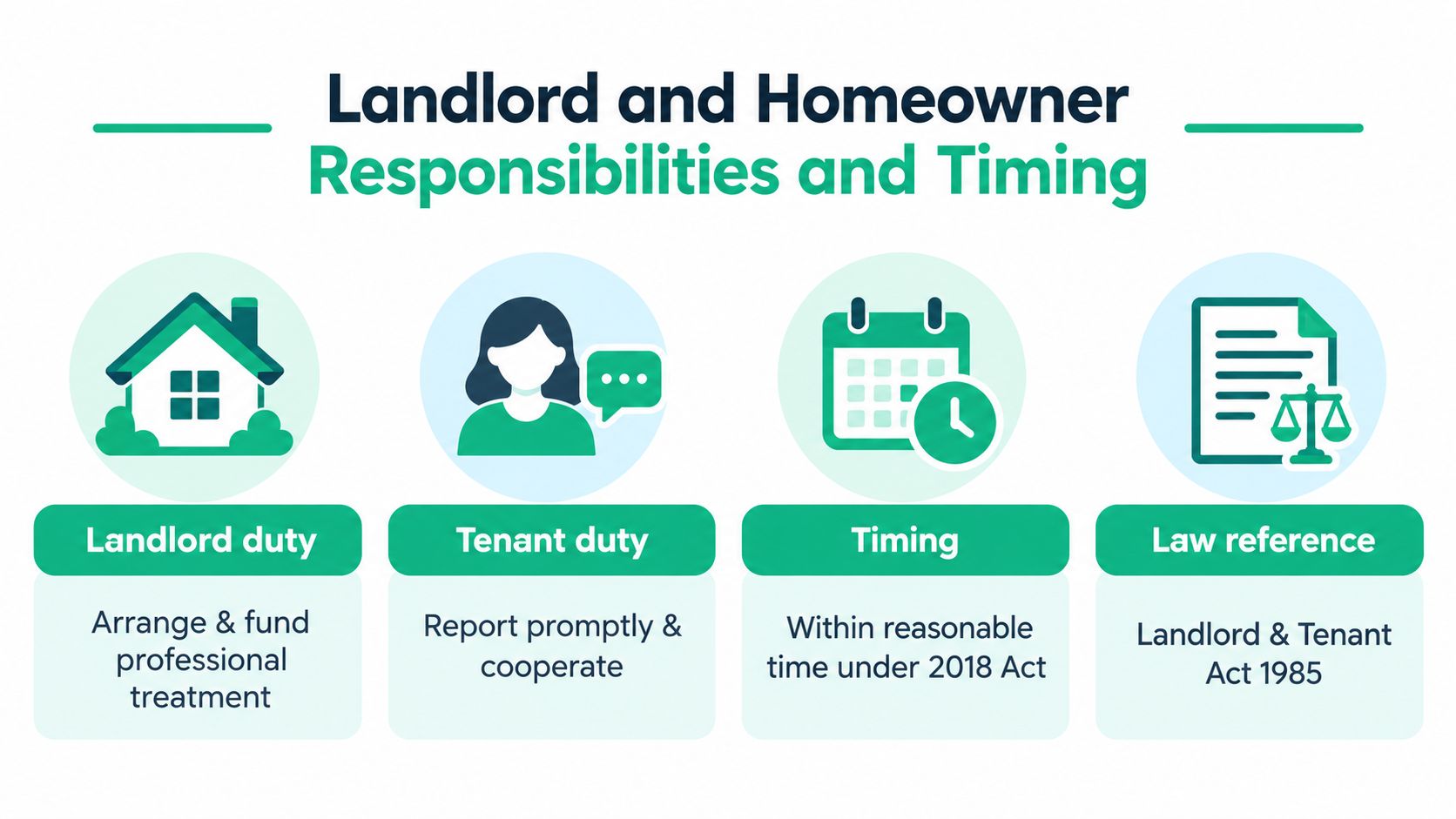
The first responsibility is to establish who controls the property and who can authorise treatment. Homeowners generally carry the cost and responsibility for their own infestation. In rented accommodation, landlords may need to arrange and fund professional treatment where the infestation wasn't caused by the tenant's actions, with the legal position depending on the facts, tenancy terms, and property condition.
The Landlord and Tenant Act 1985 and the Homes (Fitness for Human Habitation) Act 2018 are relevant to housing standards and landlord obligations. They don't justify delay while people argue over blame. Report the issue in writing, provide evidence, and request a clear treatment plan.
Tenants should create a paper trail
Send an email as soon as you have credible evidence. Include dated photographs, the room affected, the signs observed, and any relevant information about neighbouring rooms or shared areas. Don't move furniture or belongings into another room, and don't use uncontrolled sprays that may scatter insects or interfere with professional treatment.
Allow access for inspection and treatment, follow preparation instructions, and keep records of appointments, missed visits, and communications. If the landlord doesn't respond within a reasonable period, contact the local council's environmental health team for guidance and escalation.
For owners of short-term rental property, pest control is only one part of operational risk. A resource on vacation rental coverage costs explained can help put wider property protection and insurance questions into context, although insurance doesn't replace prompt treatment or proper prevention.
Owners should act before disputes grow
Book a qualified pest controller promptly, provide access to adjoining rooms where appropriate, and ask for a written preparation and follow-up plan. Encasements, laundering, vacuuming, and clutter reduction should begin immediately, but professional treatment must address the frame, furniture, floor edges, and any linked rooms.
Don't promise that one spray or one cover will solve an established infestation. UK guidance increasingly favours integrated control because resistance can reduce the reliability of insecticide-only approaches. A controller should explain the treatment sequence, monitoring expectations, and what residents must do between visits.
A tenant's delay can make the problem harder to contain, but an owner's delay can allow an infestation to spread through a property. Act quickly, document everything, and treat the mattress encasement as one controlled layer in a wider response.
Protect-A-Bed offers purpose-designed bed bug mattress encasements alongside waterproof and breathable bedding protection for UK homes and managed properties. If you need a sealed mattress barrier that fits into the inspection, laundering, and post-treatment routine described above, visit Protect-A-Bed and choose the appropriate encasement for your mattress dimensions.