

How Often Change Mattress

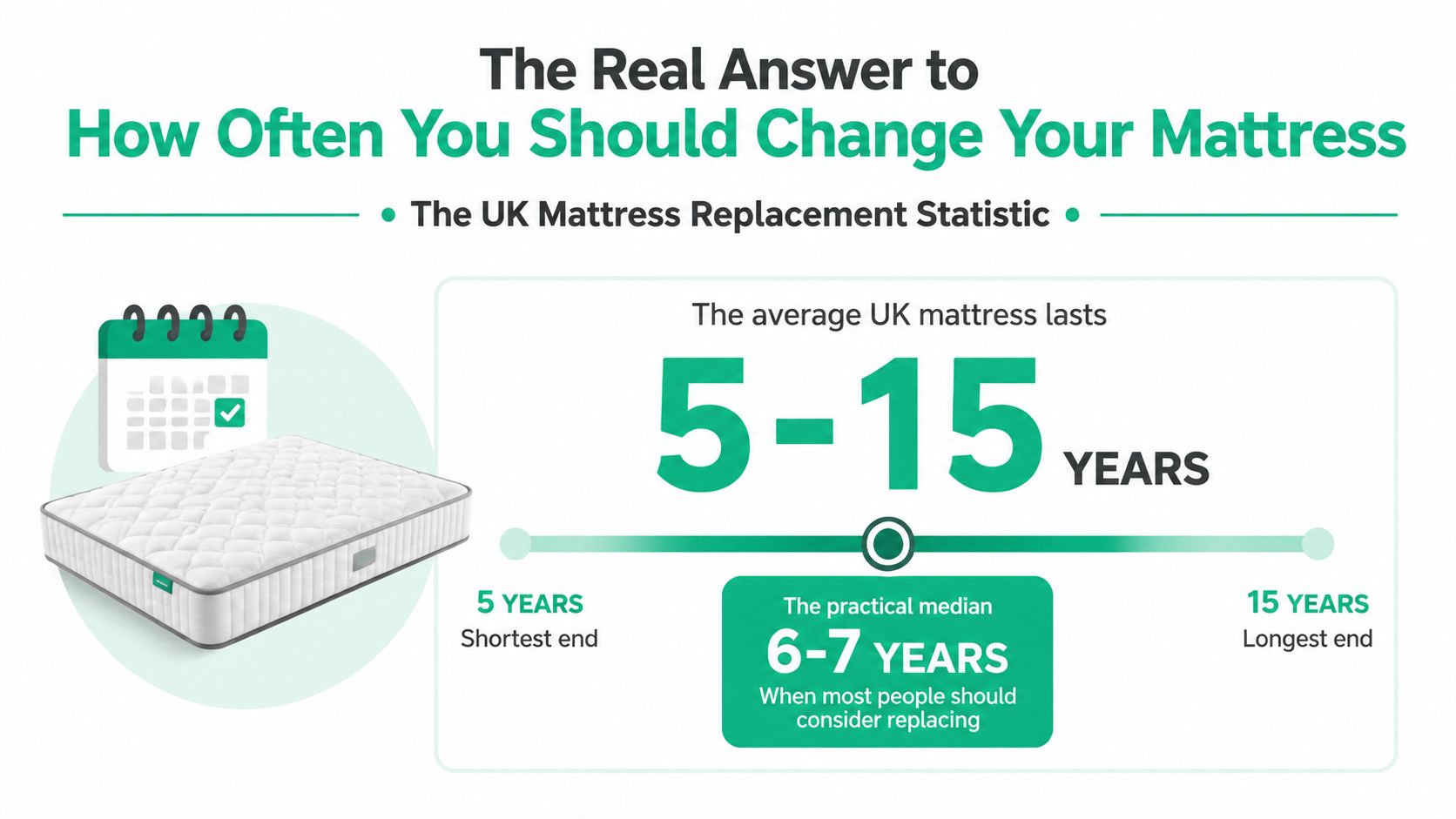
Most UK mattresses are replaced between 5 and 15 years, with the practical replacement point sitting closer to 6 to 7 years for many homes. Change yours when it no longer provides reliable support, feels uncomfortable, or has become difficult to keep hygienic, rather than replacing it solely because a calendar date has arrived.
The familiar seven-year rule is useful, but only as a prompt to inspect your bed. A mattress used every night by two adults in a warm, poorly ventilated bedroom faces very different demands from one in an occasional guest room. Children, pets, spills, sweating, allergies, damp and bed bug exposure can all shorten its useful life.
UK evidence supports a more practical approach. A 2025 report from the North London Waste Authority says 22 million people admitted throwing away their last mattress in under seven years, while almost 1 in 4 disposed of one after less than four years of use. The report also estimates that 2.9 million mattresses a year could be saved from waste if they reached the industry's seven-year benchmark, against more than 7 million mattresses discarded annually in the UK. (UK mattress disposal findings)
This guide gives you a condition-based way to decide. You'll find realistic lifespans by mattress type, a home inspection checklist, risk factors that justify earlier replacement, protector and maintenance advice, and responsible disposal options.
Table of Contents
- How Often You Should Change Your Mattress: A Condition-Based Answer
- Typical Mattress Lifespan by Type
- Signs It Is Time to Replace Your Mattress Now
- Why Some Households Need to Replace Mattresses Sooner
- How a Mattress Protector Extends the Life of Your Bed
- Everyday Habits That Keep a Mattress in Good Condition
- What to Do When the Mattress Has to Go
How Often You Should Change Your Mattress: A Condition-Based Answer
The most useful answer to how often you should change your mattress is not “buy a new one every seven years”. UK end-of-life research places mattress disposal across a broad 5 to 15 years range, but the condition of your individual bed matters more than that general window. (UK end-of-life mattress research)
Dreams' 2026 UK Sleep Survey found that the average mattress in UK bedrooms is 6.4 years old, compared with 6.1 years in 2024. The average bed frame, at 8.1 years, often lasts longer than the mattress, so replacing both together is unnecessary when the frame remains sound. (UK mattress age context)
Use seven years as an inspection milestone, not an automatic disposal date. A well-made mattress used lightly and covered by a properly fitted protector can stay comfortable beyond that point. A cheaper or heavily used mattress may lose support sooner, particularly in a warm, damp or poorly ventilated bedroom. Two adults, children, pets, sweating, spills, allergies and bed bug exposure all increase the strain on the bed and can make early replacement sensible.
Use condition before age
Check these three points:
- Does it support you evenly? You should not sink into a hollow or roll towards the centre.
- Do you sleep comfortably? Persistent morning stiffness, pressure around the shoulders or hips, and repeated tossing indicate that the comfort layers or support system may be failing.
- Can you keep it hygienic? Strong odours, staining, mould or recurring allergy symptoms justify replacement even if the mattress still looks structurally intact.
A mattress that passes all three checks does not need replacing because it has reached a particular birthday. A bed that fails one badly, especially on support or hygiene, has reached the end of its practical life.
Practical rule: Mark seven years in your diary, then inspect the mattress annually. Replace it when it fails the condition test, not when the calendar makes the decision for you.
Typical Mattress Lifespan by Type
Construction determines how a mattress ages. Springs fatigue differently from foam, and foam quality varies considerably. The figures below are practical working ranges, not guarantees, and the lower end becomes more likely when a mattress is used heavily or exposed to moisture without adequate protection.
| Mattress type | Typical UK lifespan | Why it ages |
|---|---|---|
| Open-spring or continuous-coil | Around 5 to 7 years | Linked coils can lose even support as the spring unit fatigues |
| Pocket-sprung | Around 7 to 10 years | Individually responsive springs distribute movement and loading more effectively |
| Standard memory foam | Around 7 to 10 years | Foam can soften, compress and develop lasting impressions |
| High-density memory foam or latex | Around 8 to 12 years | Denser or resilient materials generally resist early compression |
| Hybrid | Around 8 to 12 years | Combines a spring core with comfort layers, so either component can become the limiting factor |
| Specialist orthopaedic or natural-fibre construction | Sometimes beyond 12 years | Durable materials and careful maintenance can support longer use |
Springs and foam fail differently
An open-spring mattress usually shows its age through a general loss of balance. Because the coils work as a connected unit, wear in one area can affect the feel across a wider section of the bed. You may notice rolling towards the middle, increased movement from a partner or a creaking, uneven surface.
Pocket springs work independently, so they can preserve local support more effectively. That doesn't make them immune to wear. The comfort layers above the springs may soften first, particularly where sleepers use the same position every night.
Memory foam commonly loses resilience rather than suddenly breaking. A permanent impression, slower recovery after you get up and a warmer, less responsive feel indicate that the foam is no longer performing as intended. Lower-quality foam can reach that point sooner, while resilient latex tends to hold its shape for longer.
UK bedrooms add pressure
Central heating, limited ventilation and compact flats can create a difficult sleep environment. Moisture from the sleeper needs somewhere to go, and a mattress placed directly on a poorly ventilated base has less opportunity to dry. A protector, breathable bedding and regular airflow help, but they can't restore foam that has already softened or springs that have lost tension.
Use the table as a starting estimate. Then move to the physical and comfort checks below. If your mattress is near the lower end of its construction range and already shows clear deterioration, replacement is the sensible choice.
Signs It Is Time to Replace Your Mattress Now
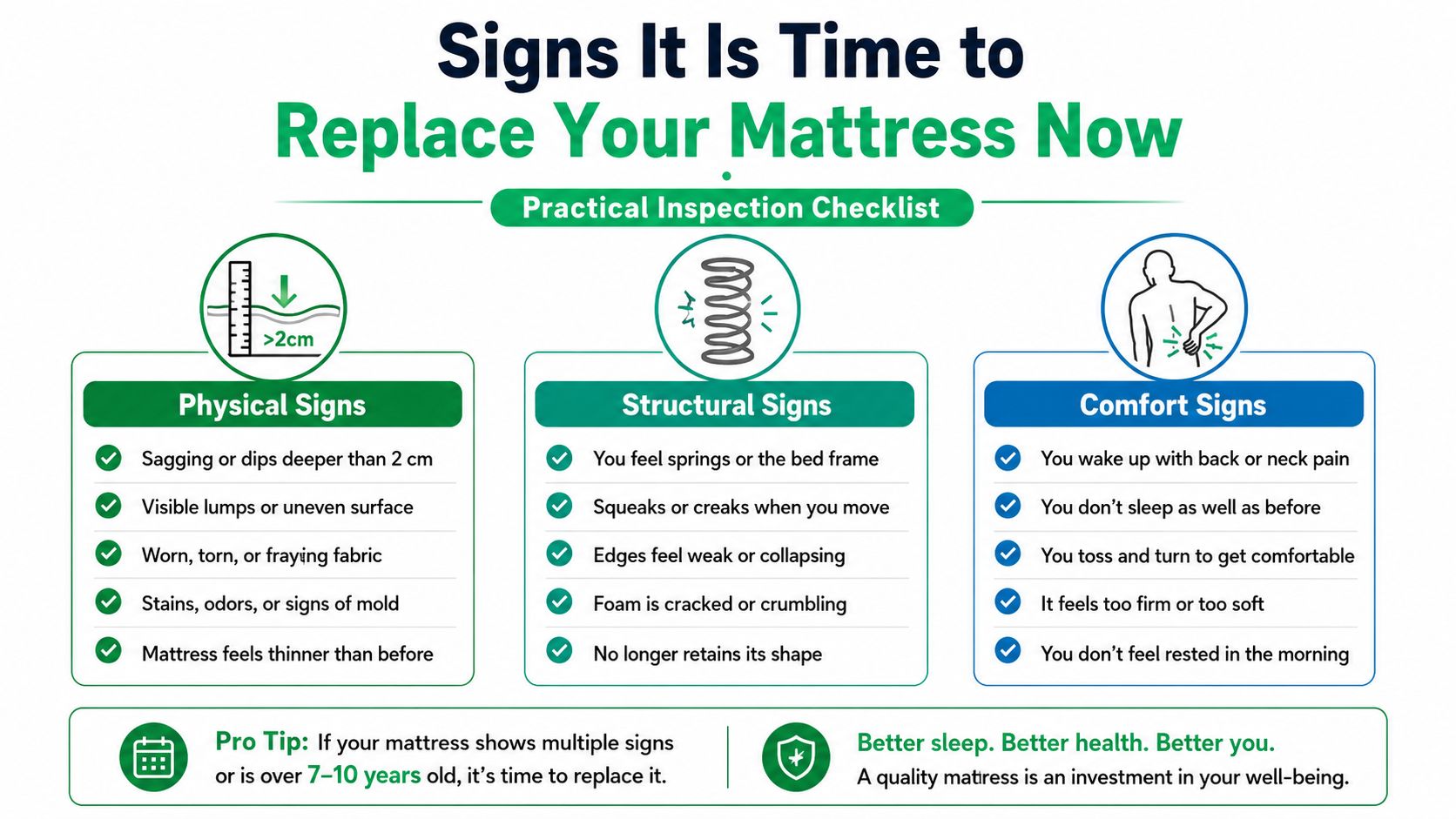
A mattress can fail before the familiar seven-year point. Age is only a starting point. Replace it when its structure, comfort or hygiene has deteriorated beyond what cleaning, rotation and a suitable protector can correct.
Inspect the mattress without bedding
Strip the bed and examine the surface in daylight. Check for:
- Permanent body impressions: A hollow that remains after the mattress has been empty shows lasting compression.
- Visible sagging: Lay a straight edge across the surface and inspect the gap beneath it. A dip deeper than 2cm is a strong practical warning.
- Torn fabric or exposed filling: Damage allows moisture and debris into the inner layers.
- Rusting, broken or protruding springs: Sharp or unstable components make continued use unsafe.
- Persistent discolouration: Staining that remains after suitable spot-cleaning indicates absorbed contamination.
A topper can soften a slightly uncomfortable surface. It cannot repair a structural dip, compressed foam or damaged spring unit. Use an accessory to improve comfort, not to delay a replacement that the mattress now needs.
Check how your body responds
Your body may detect failing support before a visual inspection does. If you regularly wake with new or worsening stiffness in your back, neck, shoulders or hips, sleep elsewhere and compare how you feel the next morning. This is not a diagnosis, but a repeated improvement is useful evidence that the mattress no longer suits you.
Partner disturbance offers another practical test. Lie down together, then have one person turn while the other stays still. Sharp movement transfer, rolling towards a hollow or losing contact with stable support shows that the mattress has lost its original stability.
A mattress should feel supportive when you lie on it, not merely look tidy when you make the bed.
Treat hygiene problems as replacement triggers
Air the mattress and inspect it without sheets. Persistent odour, visible mould after a damp period, or staining that cleaning cannot remove all justify replacement. A washable, well-fitted protector helps prevent premature disposal, but it cannot reverse contamination that has reached the mattress itself.
Allergy symptoms also deserve attention. NHS guidance recommends a fully enclosing, breathable cover, washing bedding at 60°C or above, and regular vacuuming or damp-dusting because house dust mite allergen collects in mattresses and soft furnishings. (NHS house dust mite guidance)
If these controls are already in place but symptoms or contamination persist, replace the mattress rather than waiting for an age-based target. Condition is the better rule.
Why Some Households Need to Replace Mattresses Sooner
A fixed replacement schedule ignores the way people use beds. The same mattress can remain serviceable in a quiet guest room but deteriorate quickly in a family bedroom where it absorbs spills, sweat, pet hair and repeated movement.
Children and pets create moisture risk
Young children bring a straightforward problem, night-time accidents. Liquid can pass through sheets and soak into foam, padding and fabric before anyone notices. Repeated moisture encourages odour and makes thorough drying difficult, so a mattress used by toddlers deserves a stricter inspection routine and earlier replacement if accidents have penetrated beyond the protector.
Pets create a different combination of risks. Hair, dander, outdoor debris and claws affect the cover, while accidents can introduce moisture. A washable protector helps, but a mattress with recurring odour, deep staining or damaged fabric should not be kept just to preserve an arbitrary age target.
Allergies require control, not just a new bed
Replacing an old mattress isn't the whole answer for allergy or asthma management. NHS advice focuses on fully enclosing, breathable covers, hot washing bedding at 60°C or above, and careful cleaning because allergen collects in soft furnishings. A new mattress without those controls can gradually develop the same problem.
For allergy-sensitive homes, protection and cleaning should start on the first night, not after symptoms appear.
If congestion, wheezing or disturbed sleep continues despite proper controls, discuss the symptoms with a healthcare professional. Replace the mattress when contamination, mould or lasting odour remains, rather than assuming a particular age will solve the issue.
Rentals and bed bug exposure need a separate standard
Shared rentals and frequent occupant turnover raise hygiene and inspection demands. A mattress can look acceptable while carrying damage from previous use, so landlords and tenants should record its condition and use a suitable encasement where appropriate.
Bed bug exposure is more serious. Follow professional treatment advice, inspect the bed and surrounding room, and replace the mattress if it remains contaminated, damaged or cannot be reliably contained after treatment. Don't pass a suspect mattress to another household. That shifts the risk rather than solving it.
How a Mattress Protector Extends the Life of Your Bed
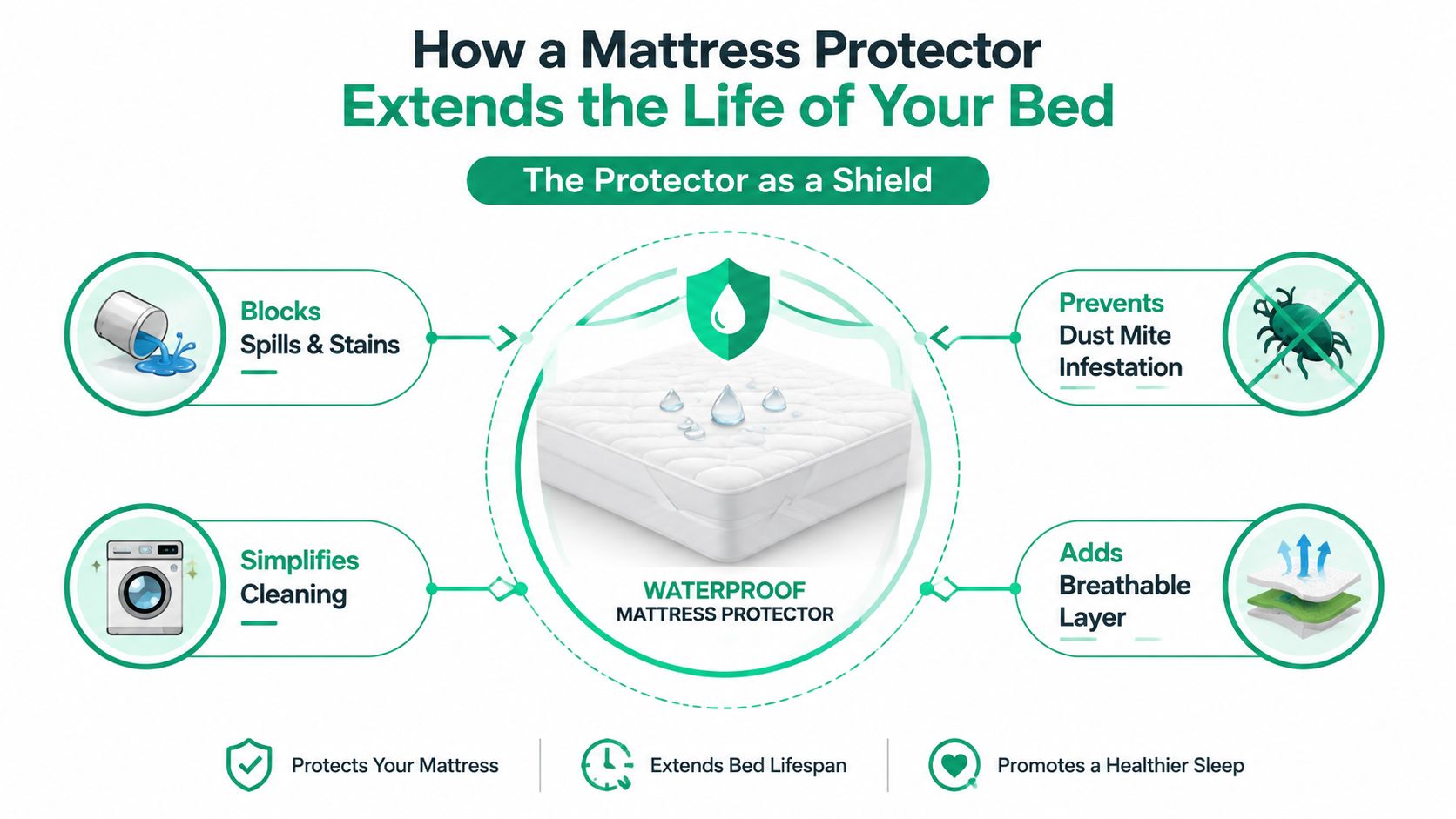
A mattress protector is one of the most effective maintenance purchases for UK households. It shields the mattress from liquid penetration, sweat, allergens and surface abrasion, the everyday problems that can force premature replacement.
A protector cannot restore tired foam or correct a sagging spring unit. It can stop spills reaching the comfort layers, limit body moisture absorbed by the cover and provide a washable barrier between sleepers and the mattress. That protection matters particularly in homes with children, pets, allergies or frequent night sweating.
Choose the barrier carefully
Waterproof covers vary considerably. Choose one with:
- A waterproof membrane: It should block liquid without making the bed noisy or stiff.
- Breathability: A vapour-permeable layer allows moisture to escape rather than trapping heat.
- A comfortable top fabric: Soft, quiet fabric makes regular use more likely. A protector left in the cupboard protects nothing.
- Full mattress coverage: An enclosing design protects more of the mattress than a small, loose pad.
- Dust mite and allergen control: This matters in allergy-sensitive bedrooms.
Protect-A-Bed uses Miracle Membrane technology in protectors designed to block liquids and allergens while remaining air permeable. If you want a natural-feeling surface, find a certified organic mattress topper for use above the protector, provided the mattress still offers sound support.
For a practical explanation of liquid barriers and breathability, read how waterproof mattress protectors work.
Protection changes the replacement decision
A protected mattress can remain usable for longer than an unprotected equivalent in a family home, but the result depends on its construction, usage, washing habits and the protector's condition. Do not treat a protector as a reason to keep a mattress with failed support.
Its real value is avoiding preventable damage. By limiting stains and moisture, it lets you replace the mattress when comfort or support has deteriorated, rather than when the sleep surface becomes unusable. Wash the protector according to its care instructions, inspect it for tears and replace it when the waterproof barrier is compromised.
Everyday Habits That Keep a Mattress in Good Condition
A simple routine protects the mattress cover, limits moisture and helps you catch wear before it becomes a hygiene or support problem. You do not need specialist equipment or a weekly dismantling job.
Follow a simple maintenance rhythm
Each morning, pull back the duvet and sheets for at least 15 minutes before making the bed. Trapped warmth and moisture can disperse, which matters in UK bedrooms that stay cool or poorly ventilated. Open a window when practical, but keep the bed away from rain and excessive humidity.
Once a month, vacuum the surface with an upholstery tool. Move gently across the top, edges and seams, where dust and debris gather. Vacuuming keeps the surface cleaner, but it does not replace an enclosing mattress protector.
Every three to six months, rotate a single-sided or double-sided mattress from head to foot, unless the manufacturer gives different instructions. This spreads regular loading more evenly. Do not flip a one-sided foam mattress. Its support layers are arranged for one sleeping surface, and turning it over can reduce comfort and support.
As soon as a spill occurs, remove the bedding, blot the liquid instead of rubbing it, then spot-clean with mild detergent. Use very little water and dry the area fully. Soaking memory foam can leave moisture inside the core, where it is difficult to remove.
Avoid damaging shortcuts
Steam cleaning can drive heat and moisture into foam layers that dry slowly. Long-term storage on the side can also distort the structure, especially when the mattress lacks the support recommended by its manufacturer.
Check the bed base whenever you rotate the mattress. Warped slats, a broken centre support or an unsuitable frame can make a sound mattress feel saggy and speed up wear. Replace or repair the base before condemning the mattress.
Wash the protective layers properly
Wash bedding and protectors at 60°C or above when the care label permits, particularly in an allergy-sensitive home. This temperature forms part of a wider dust-mite cleaning routine, alongside enclosing covers and regular cleaning, as noted in earlier NHS guidance.
For detailed care instructions, follow our step-by-step guide on how to properly wash a mattress protector. Always check the protector's own label. Waterproof membranes and fabric finishes can require different washing settings, and excessive heat may damage the barrier.
What to Do When the Mattress Has to Go
Replacing a mattress creates a disposal decision, not just a shopping decision. UK households still send many unwanted mattresses to landfill or incineration, so plan the exit route before ordering the replacement. UK mattress recycling data
Check whether the mattress remains covered by a guarantee, warranty service or manufacturer recall. Some suppliers offer collection when you buy a replacement, but ask exactly where the old mattress will go. “Collection” does not automatically mean recycling.
Match the route to the mattress condition
- Donation: A charity or community organisation may accept a mattress only when it is clean, stain-free and structurally sound. Do not donate one with odour, mould, infestation risk or visible damage. Before deciding, read our guide on whether buying a second-hand mattress is a safe choice.
- Council collection: Bulky waste collection is often the practical option when no other route is available. Check your council's collection conditions, charge and disposal pathway before booking.
- Retailer take-back: Ask whether the delivery team will remove the old mattress and whether the retailer works with a recycling partner.
- Specialist recycling: A specialist service may separate springs, foam and fabric for reprocessing. Confirm that it accepts your mattress type and serves your postcode.
- Repair or reuse: A clean mattress with a damaged cover but sound internal support may be suitable for repair. Sagging, contaminated or infested mattresses are not reuse candidates.
Local access and collection charges can affect replacement timing. Check the available route before the new mattress arrives, especially if your council service has limited booking slots or the retailer requires advance notice.
Ask three questions before ordering: Is the mattress hygienic enough to reuse? Is the frame still supportive? Can you arrange responsible collection locally? If the answer to the first is no, do not pass it on. If the frame remains sound, keep it and replace only the mattress. If recycling is unavailable, book an appropriate disposal route rather than leaving the old bed outside.
Responsible replacement means retiring the mattress when it fails, then choosing the cleanest realistic disposal route available in your area.
Protect-A-Bed offers UK mattress protectors and bed bug encasements with waterproof, breathable protection designed to help prevent spills, sweat and allergens reaching the mattress. Visit Protect-A-Bed to choose a suitable protector for your household and keep your next mattress usable for longer.