

Allergy Luxe Mattress Protector: A Complete Guide

You've changed the sheets, washed the pillowcases and vacuumed the bedroom, yet someone still wakes with streaming eyes, a blocked nose or a child's persistent night-time sneezing. The mattress underneath may be the overlooked part of the problem. It holds dust, skin flakes and moisture inside the sleeping environment, while a clean sheet only covers the surface.
That's where an Allergy Luxe mattress protector earns its place. It's designed to sit between the sleeper and the mattress, combining an allergen barrier with everyday waterproofing. The important distinction is that it isn't a padded layer for comfort. Its value depends on how completely it encloses the mattress, how well the barrier performs and whether you'll maintain it properly.
Table of Contents
- The Night Allergies Take Over the Bedroom
- What an Allergy-Focused Mattress Protector Actually Does
- Inside the Allergy Luxe Build and Barrier Design
- How Allergy Luxe Compares to Other Protect-A-Bed Ranges
- Choosing the Right Size and Fitting It Properly
- Washing and Care Habits That Keep the Barrier Working
- UK Delivery, Warranty, and Support Essentials
- Is the Allergy Luxe the Right Protector for You
The Night Allergies Take Over the Bedroom
At two in the morning, a British bedroom can feel like the least likely place to look for an allergy trigger. The heating may be low, the windows closed and the bedding freshly changed. A child is still sneezing into a tissue, or an adult is rubbing irritated eyes and trying to breathe through a blocked nose.
The household might have followed sensible advice, washing sheets at 60°C, yet the symptoms continue. The reason is simple. Sheets touch the sleeper, but they don't seal the mattress beneath them. Dust mite allergen can remain in the mattress and pillows, where mites are found in large numbers according to NHS-linked house dust mite allergy guidance.
The overlooked reservoir beneath clean bedding
A family may notice that symptoms worsen in the bedroom and ease when someone sleeps elsewhere. That pattern doesn't prove the mattress is the only trigger, but it does justify examining the sleep surface rather than repeatedly changing sheets alone. Allergic rhinitis, asthma and eczema can all make the bedroom feel like the problem area, particularly when a child has both eczema and asthma. The same NHS guidance reports that one in 20 children and one in five adults will test positive for house dust mite allergy, although a positive test doesn't always mean symptoms will occur. A child with both eczema and asthma is especially likely to be sensitised, with one in three testing positive, so mattress and pillow protection deserves serious attention in a family bedroom.
The practical response isn't to treat the Allergy Luxe as a medical cure. It's to create a physical separation between the sleeper and the mattress reservoir, while also stopping drinks, sweat and accidents from soaking into the mattress.
Bedroom rule: Clean bedding matters, but it can't compensate for an unprotected mattress.
Before buying, it's also sensible to review the wider sleep environment, including ventilation, clutter and light exposure. The Sleep Consultant's 3 tips for better sleep space offer useful context, but the mattress itself remains the foundation. If the underlying barrier is missing, another set of luxury-feel sheets won't solve the central problem.
What an Allergy-Focused Mattress Protector Actually Does
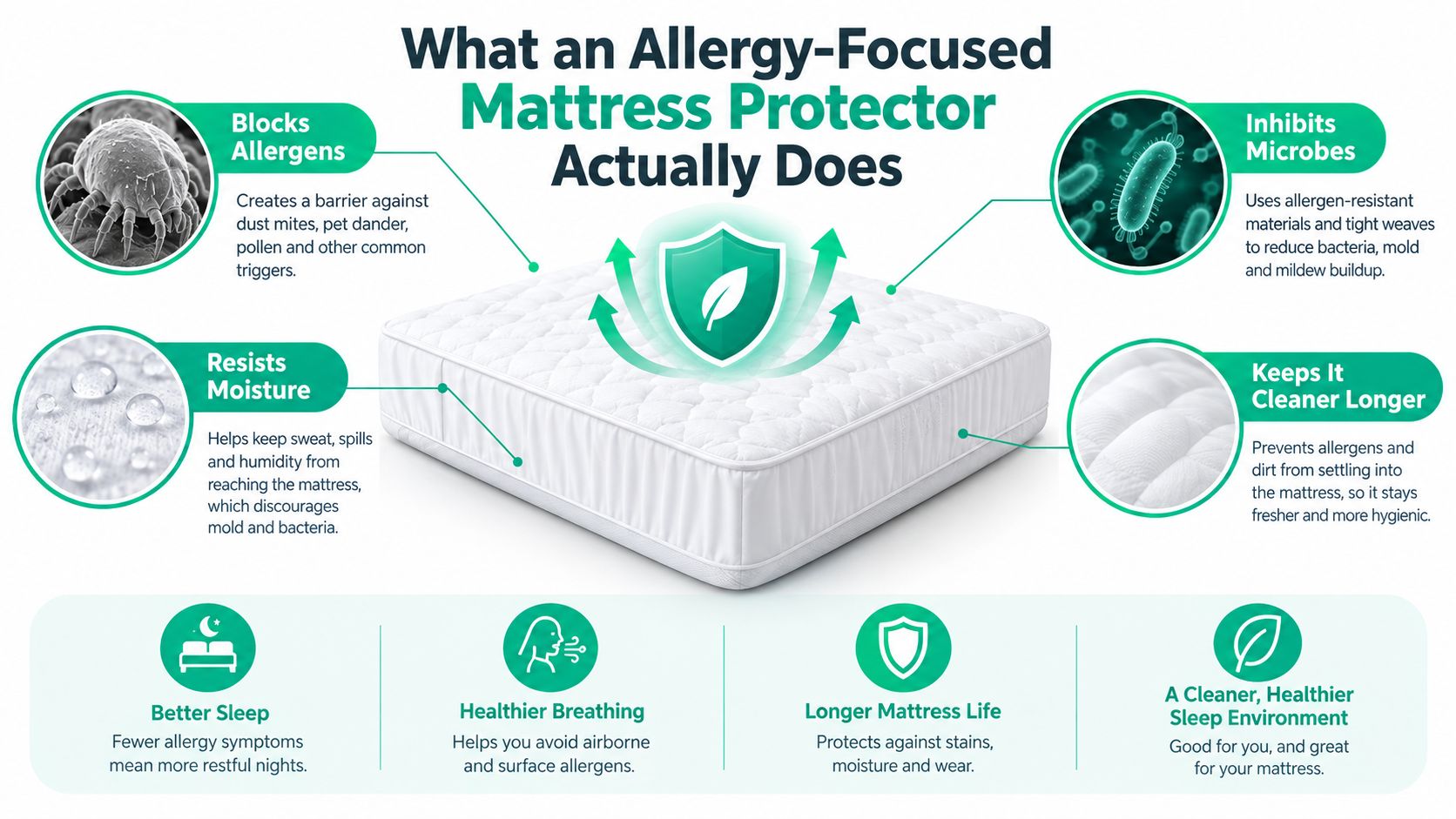
An allergy-focused protector is a barrier system, not just a soft mattress pad. Its job is to limit contact with allergen material already inside the mattress and prevent new moisture and debris from entering. For that reason, a fully enclosed design matters more than decorative quilting or a thick surface pile.
The Allergy Luxe uses the Miracle Membrane concept as its working barrier. The construction combines an ultra-thin polyurethane film with a terry surface. The film is intended to block liquids and allergen-bearing material while remaining air-permeable, so the cover doesn't feel like a sheet of plastic beneath the bedding.
Why full enclosure beats a fitted top layer
A fitted protector covers the sleeping face of the mattress, which is useful for spills and surface dust. It doesn't fully isolate the mattress core, however. An encasement extends around the mattress and closes the sides, reducing the routes through which particles can move in or out when the bed is used or made.
UK allergy guidance describes fully enclosing the mattress as the stronger approach when the aim is to reduce exposure to dust mite allergen embedded in bedding. A large randomised controlled trial found mattress dust Der p 1 fell from 1.71 µg/g in the control group to 0.58 µg/g after six months with allergen-impermeable covers, as reported in the London School of Hygiene and Tropical Medicine trial record. The same trial found no meaningful improvement in asthma medication reduction or peak-flow outcomes when covers were used alone. In plain English, the protector can reduce the allergen reservoir, but it shouldn't be sold as a guaranteed symptom cure.
The anti-allergy mattress cover guidance is useful when checking the difference between a surface protector and an encasement. Choose the complete barrier when allergen containment is the priority. Choose a basic fitted layer only when your main concern is light moisture protection and easier handling.
Inside the Allergy Luxe Build and Barrier Design
The Allergy Luxe makes sense because each layer has a different job. The surface needs to feel like bedding, the membrane needs to block moisture and allergens, and the skirt needs to close the route around the mattress edges. Remove any one of those functions and the product becomes less convincing as an allergy-focused solution.
A layer-by-layer view
The top is a cotton-polyester terry fabric. That familiar towelling texture is intended to absorb and move perspiration away from the immediate skin contact area, rather than leaving a clammy film beneath the sheet. Beneath it sits the Miracle Membrane, a thin polyurethane layer that provides the liquid and allergen barrier.
The encased skirt and elasticated band do the less glamorous but equally important work. They hold the cover around the mattress, including the sides, so the protector isn't merely a waterproof patch on top. A properly fitted cover also reduces bunching, which can create uncomfortable ridges beneath the sheet.
| Layer | Material | Function | What You Feel |
|---|---|---|---|
| Surface | Cotton-polyester terry | Handles perspiration and provides the sleeping surface | Soft, familiar and less plasticky |
| Barrier | Miracle Membrane polyurethane film | Blocks liquids and helps restrict allergen movement | Quiet, flexible protection rather than a vinyl feel |
| Enclosure | Elasticated skirt and fitted side section | Holds the barrier around the mattress edges | A secure fit when the depth is selected correctly |
The technical point buyers should understand
Barrier performance depends on structure, not on the word “anti-allergy” printed on packaging. Allergy UK describes a 5.9-micron tight weave as preventing 99% of house dust mites and their allergens from passing through while remaining suitable as a bed covering, as explained in its Astex Pristine fully encased product guidance. That illustrates the principle behind a tightly constructed barrier. The material excludes mites and allergen-bearing particles mechanically, rather than relying on chemical treatment.
Breathability still matters. A cover that blocks liquid but traps heat and moisture can make sleep uncomfortable, encouraging people to remove it or wash it less often. The breathable waterproof membrane explanation provides useful background on why air permeability matters alongside waterproofing.
Cheaper vinyl or PVC-style covers often announce themselves through a plastic hand-feel, noise and poor flexibility. The Allergy Luxe is the more sensible design for a bed used every night, because comfort determines whether the barrier stays in place and gets cared for.
How Allergy Luxe Compares to Other Protect-A-Bed Ranges
The Allergy Luxe isn't the right answer for every sleeper. Its priority is allergen containment plus waterproofing, so it makes a trade-off against ranges built primarily for cooling, natural fibre feel or odour management.
| Range | Top Fabric | Allergen Barrier | Waterproof | Best For | Price Tier |
|---|---|---|---|---|---|
| Allergy Luxe | Cotton-polyester terry | Full allergy-focused barrier | Yes | Dust mite concerns with spill protection | Higher |
| Premium | Thinner terry surface | General protective coverage | Yes | A softer, simpler waterproof option | Lower |
| Tencel Cool | Moisture-wicking cooling fibre | General protective coverage | Yes | Hot sleepers prioritising surface cooling | Higher |
| Cotton | Cotton-focused surface | Limited compared with full encasement | No Miracle Membrane layer | Natural-fibre feel and breathability | Mid |
| Charcoal | Charcoal-infused surface | General protective coverage | Yes | Sleepers concerned with odour | Higher |
Match the range to the actual problem
Choose Allergy Luxe if the concern is a confirmed or strongly suspected dust mite trigger and you also need a waterproof cover. It's the most logical single-cover approach when you want a soft terry surface without giving up a complete membrane barrier.
A hotter sleeper may prefer the Tencel Cool direction, accepting that cooling feel is the main priority. Someone focused on natural fibres may prefer the Cotton range, but should understand that a natural surface isn't the same thing as a full allergen encasement. Charcoal is aimed at odour management, while Premium keeps the proposition simpler and more budget-conscious.
Protect-A-Bed offers these different sleep-surface protection options, including waterproof protectors, fabric-led variants and bed bug encasements. The decision shouldn't begin with the most luxurious description. Start with the contaminant or comfort issue you need to control, then select the construction that addresses it.
My recommendation: If dust mite allergen is the reason you're shopping, don't downgrade to a general protector just because its fabric sounds cooler. Barrier coverage comes first.
Choosing the Right Size and Fitting It Properly
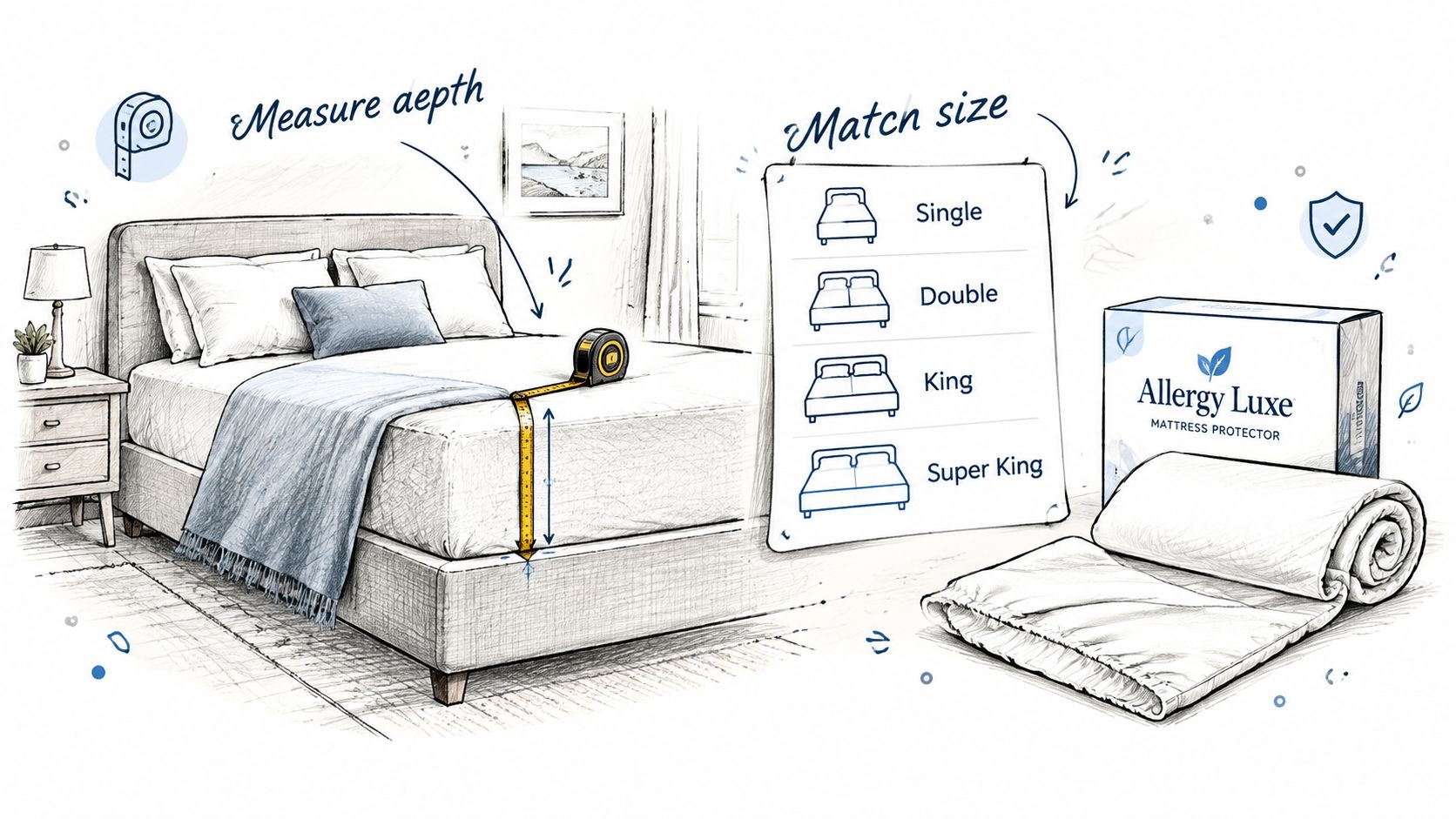
A protector can't seal a mattress it doesn't fit. Measure the mattress before ordering, including its full depth from the bottom edge to the highest point of the sleeping surface. Don't measure only the foam or spring unit, and don't assume a thick topper will fit beneath the same skirt.
The Allergy Luxe is available for common UK bed sizes, including single, double, king and super king. Its fitted-skirt design is intended for deep mattresses up to around 40 cm, but that capacity only helps if you select the correct depth band. A cover that's too shallow will pull away from the corners. One that's too generous can shift and bunch.
Fit it in the right order
- Strip the bed completely. Remove sheets, toppers and loose bedding so you can see every corner and measure accurately.
- Place the protector correctly. Position the Miracle Membrane and protective construction so the cover sits as designed against the mattress. Check the product instructions if the label indicates a specific orientation.
- Work around the corners. Pull the elasticated skirt evenly over each corner instead of forcing one corner into place first. Continue around the mattress until the side section sits without twisting.
- Smooth the surface. Run your hands across the protector and remove creases or air pockets. A flat surface feels better and reduces movement beneath the sheet.
- Inspect the edges. The skirt should remain securely under the mattress around the full perimeter. If it rides up on one side, the depth or fitting may be wrong.
The final test is straightforward. The surface should lie flat, the corners should stay covered and the sheet should go on without dragging the protector out of position. If the encasement is loose or twisted, the weakest point will be around the edges, exactly where dust, skin flakes and moisture can enter most easily.
Washing and Care Habits That Keep the Barrier Working
A protective cover only helps if it stays clean and intact. Allergy guidance recommends washing bedding regularly, with sheets washed weekly at 60°C and protectors or encasements washed monthly at 60°C, as outlined in the NHS-linked guidance referenced earlier. For a household actively managing allergy exposure, I'd wash the Allergy Luxe more often when practical, particularly after illness, accidents or heavy perspiration.
A workable care routine
Wash the protector every one to two weeks at 60°C if the care label permits. Use a mild detergent and skip chlorine bleach and fabric softener. Harsh chemicals and softening agents can affect the feel and may place unnecessary stress on the laminated membrane.
The 60°C setting is important because a cool wash may remove visible dirt without delivering the same mite-control benefit. It won't reverse allergen already embedded in an old mattress, but regular washing prevents the protector's own surface from becoming a neglected collection point.
Dry it thoroughly, then inspect it
Low-heat tumble drying is the safer choice where the care instructions allow it. Avoid high heat, which can place unnecessary strain on the waterproof laminate. Air-drying is also suitable, provided the protector is completely dry before it goes back on the bed.
For guidance on washing a mattress protector, keep the practical sequence simple:
- Before washing: Close zips and check the cover for tears or separated seams.
- During washing: Use the permitted temperature and a mild detergent, without fabric softener.
- After washing: Dry the protector fully before refitting it.
- During inspection: Replace it if the membrane delaminates, leaks or the surface pills heavily.
Spot-clean spills promptly, but don't treat spot-cleaning as a substitute for laundering. A damaged barrier no longer provides reliable allergen or liquid protection, regardless of how clean the terry surface looks.
UK Delivery, Warranty, and Support Essentials
Online bedding purchases succeed or fail on practical details. You need the correct size, a delivery process you can follow and a warranty that explains what happens if the membrane or stitching fails. A technical description is useful, but it won't help if the wrong depth arrives or a claim becomes difficult to document.
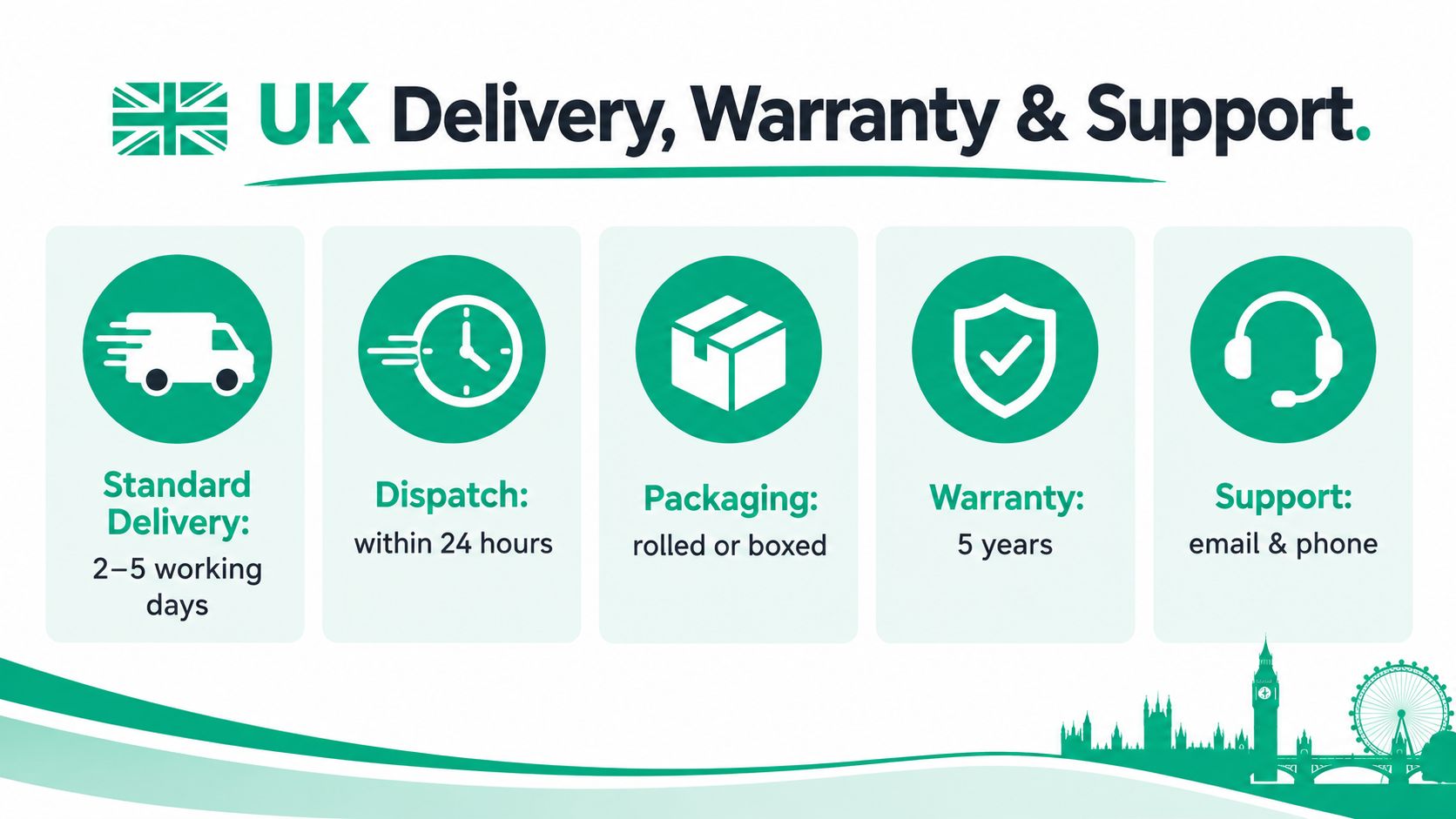
Protect-A-Bed's UK storefront provides delivery and support information for its mattress protection products. Product pages should be checked at checkout for the current dispatch window, packaging format and any delivery conditions, because availability can vary by size and stock position.
Read the warranty in plain English
The published product information describes warranty cover of up to 10 years against material or manufacturing defects, with replacement rather than repair as the stated remedy. That shouldn't be confused with insurance against normal ageing. Staining, incorrect washing, accidental damage, ordinary fabric wear and deterioration caused by unsuitable heat may fall outside a manufacturing-defect warranty.
Keep the order confirmation, product details and photographs of any fault. If the membrane begins separating or the cover develops an unexplained failure during the warranty period, those records give customer support a clear starting point.
What to confirm before ordering
Ask support about the mattress depth if your bed has a thick topper or unusual construction. Confirm the wash instructions if you're unsure about the membrane, and keep the packaging until you've checked the size and fit.
UK consumer rights may also provide a cooling-off period for eligible online purchases, subject to the product's condition and any hygiene-related exceptions. Read the retailer's returns terms before opening or laundering the protector. A long warranty has value only when the claim route, evidence requirements and replacement process are clear.
Is the Allergy Luxe the Right Protector for You
The Allergy Luxe is for a specific buyer. You should choose it if your household is managing dust mite or pet-allergen concerns, you want waterproofing for spills and perspiration, and you prefer a terry sleep surface over a purely cooling fabric. It suits standard pocket-sprung, memory foam and hybrid mattresses when the selected size and depth match the bed.
It isn't the obvious choice for everyone. Hot sleepers who prioritise a cooler surface should investigate the Tencel Cool range. Shoppers who want a predominantly natural-fibre feel may prefer Cotton, although that choice changes the barrier specification. If odour is the main nuisance rather than allergen exposure, Charcoal is the more focused direction.
Make the maintenance decision before the purchase
The membrane is only one part of performance. You also need to be willing to remove the protector, wash it at the permitted hot setting and dry it thoroughly before refitting. Allergy guidance supports regular 60°C washing for bedding, while the controlled trial discussed earlier shows why a physical barrier is valuable but not sufficient as a standalone asthma treatment.
My verdict is clear. Buy the Allergy Luxe when you want one cover to combine a complete allergen-focused barrier, waterproof protection and a comfortable terry surface. Don't buy it expecting a cure, and don't choose it if cooling or natural fibres matter more than dust mite containment.
Final buying check: Measure the mattress depth, confirm the care label and decide whether you'll maintain the cover consistently. Those three checks matter more than a premium-sounding product description.
Protect-A-Bed offers UK mattress protectors with waterproof, breathable barrier construction, alongside fabric options for different comfort priorities and encasements for more specialised protection. If the Allergy Luxe matches your allergy and waterproofing needs, visit Protect-A-Bed to check the current size, care and delivery details before ordering.