

Air Bed Toppers: Comfort, Cooling & Compatibility

Could a layer designed to make your bed more comfortable accidentally make its protection, cooling or support work less effectively? That's the question many UK shoppers miss when they search for air bed toppers. A topper isn't just a thicker piece of bedding. It changes the relationship between your mattress, your body, your protector and, where needed, a full encasement.
The useful way to assess one is as a layered decision. First consider the feel you want. Then look at pressure relief and temperature control. Finally, check whether the topper will fit securely above the protection already on your bed. The right choice can improve an otherwise serviceable mattress, but the wrong thickness or material can create instability, trapped heat or a difficult wash routine.
Table of Contents
- Are Air Bed Toppers Worth It
- What an Air Bed Topper Is
- Benefits and Honest Drawbacks
- Matching Toppers to Different Sleepers
- How Toppers Work With Protectors and Encasements
- Caring for Your Topper Long Term
- Common Misconceptions Worth Clearing Up
- Choosing the Right Setup for Your Bed
Are Air Bed Toppers Worth It
The practical question is simple: are air bed toppers worth buying? The honest answer depends on what you need the layer to change. A topper can soften a mattress that feels too firm, add cushioning beneath the shoulders and hips, or alter how warm the sleep surface feels. It can't turn a badly sagging mattress into a reliable support system, and it won't replace a protector or bed bug encasement.
Start with the mattress you already own. If it's broadly level and supportive but feels uncomfortable at the surface, a topper may be a sensible adjustment. If the mattress has a deep dip, damaged edges or uneven support, adding a soft layer may only disguise the problem for a while. In that situation, the topper can follow a mattress replacement rather than substitute for one.
Four questions to ask first
- What feel do you want? Choose a softer, more cushioning construction if the mattress feels hard. A firmer, low-profile layer may be better if you only need modest comfort adjustment.
- Do you sleep hot? Material choice matters more than thickness alone. A dense foam surface may feel warmer, while breathable fibres, latex or ventilated designs can encourage airflow.
- Do you need pressure relief? Side sleepers and people who feel discomfort at the shoulders or hips usually need controlled give, not merely the deepest possible layer.
- What protection is already on the bed? An encasement, mattress protector and topper protector each have different roles. The topper must fit within that arrangement without making fitted sheets too tight.
A useful buying guide on how to select a mattress topper can help you compare construction, firmness and fit. Treat the purchase as a way to tune a sound mattress, not as a universal cure.
Practical rule: Buy the topper to solve a defined sleep-surface problem. Don't buy the thickest option simply because it looks more substantial.
In UK bedrooms, hygiene also belongs in the calculation. Allergy UK-linked research reported that 58% of allergy sufferers react to house dust mites, while 59% of indoor allergy sufferers say symptoms are worse in the bedroom. The same source estimates that an average bed can harbour about two million house dust mites, so the way your topper interacts with washable barriers matters, especially if allergies are part of the reason you're shopping. Allergy UK-linked research supports treating protection as part of the purchase, not an afterthought.
What an Air Bed Topper Is
What changes when you add an air bed topper to an existing mattress? The answer depends on the layer's construction and on the job you want it to perform. An air bed topper is a cushioned layer placed above a mattress to alter surface comfort, pressure distribution or temperature behaviour. It is not a complete mattress, and it is not normally designed to inflate like a camping bed.
The word “air” can be misleading. Some products use air-filled or ventilated construction, while others use the term to suggest a breathable or buoyant feel. Check the product description before buying. An inflatable air mattress is a self-contained sleeping surface that you inflate and deflate. A topper relies on the mattress underneath for its main support.
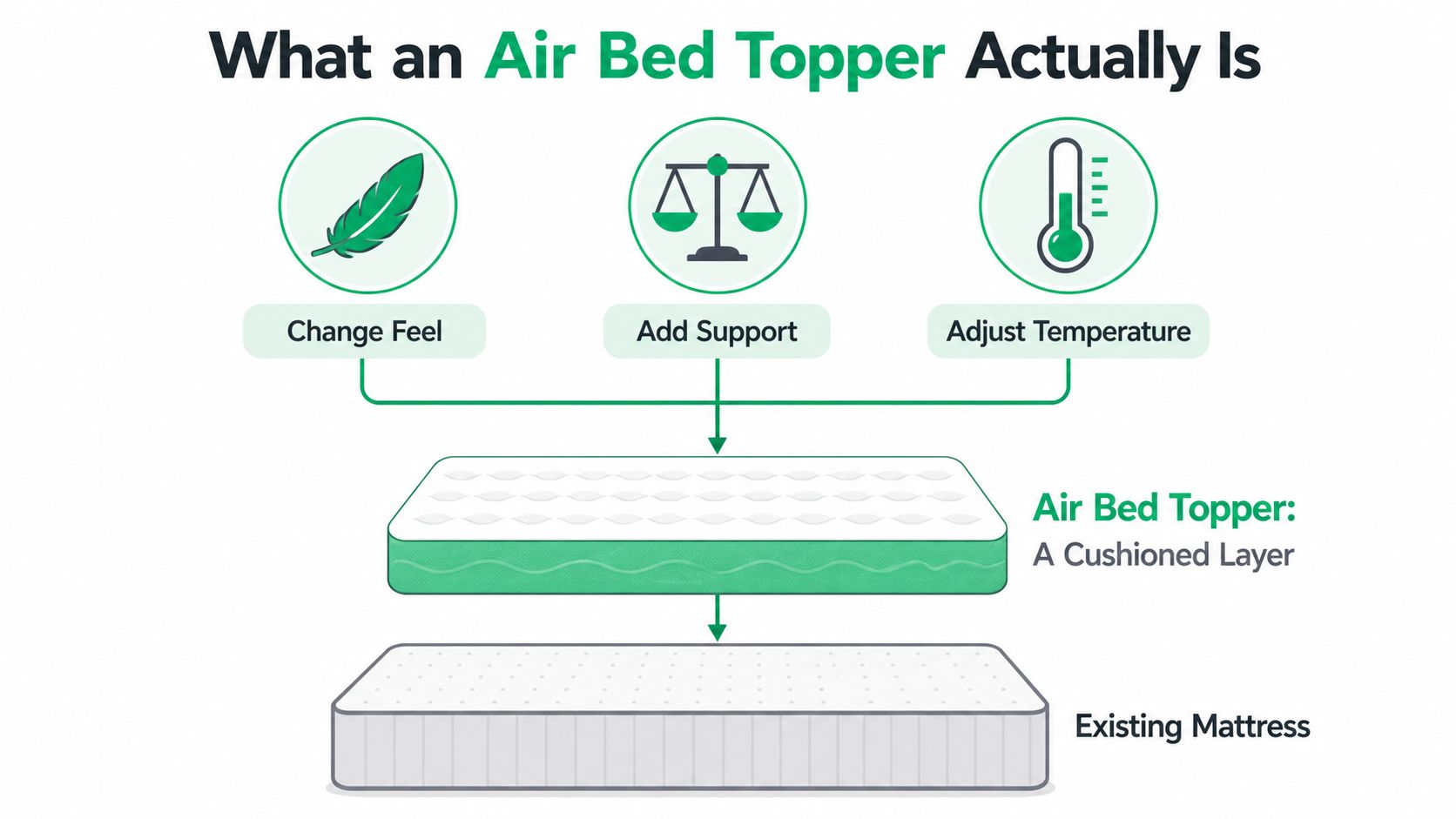
The bed works like a sandwich
Each layer has a separate role:
- Mattress: provides the main support and sets the underlying firmness.
- Mattress protector: shields the mattress from sweat, spills and everyday wear.
- Encasement: surrounds the full mattress, usually with a sealed closure, to form a wider barrier against pests and allergens.
- Topper: changes the comfort surface and may affect pressure relief or temperature.
- Topper protector and sheet: protect the topper and create the washable sleeping surface.
The exact order can vary by design, but the principle remains consistent. A topper is not the same as a mattress pad, although retailers sometimes use those terms interchangeably. A thin pad adds modest cushioning. A thicker topper changes the feel more clearly, so check its weight, height and ability to stay in place.
What a topper can and cannot change
A topper can make a firm mattress feel more forgiving, soften hard contact around the shoulders or hips, and give an older but structurally sound bed a different surface feel. It cannot repair a broken base, restore lost edge support or remove a permanent hollow. If the mattress has failed internally, adding another layer usually hides the problem rather than solving it.
A topper also has a different job from protection. It sits above the mattress protection, while an encasement stays wrapped around the mattress itself. A washable topper protector can then sit over the topper, beneath the sheet. Keeping these functions separate makes cleaning easier and helps each barrier do its intended work.
Before choosing between fibre, foam, latex or an air-responsive design, use this guide on how to select a mattress topper to compare construction, firmness and fit. The right choice should address a clear surface problem without making the bed too high for its fitted sheet.
Benefits and Honest Drawbacks
The strongest case for a topper is that it changes the interface between your body and the mattress. That matters because comfort isn't determined by the mattress label alone. A new topper can alter how the shoulders and hips settle, how evenly weight is spread and how the surface responds when you turn.
Pressure research gives this idea a firmer foundation. A peer-reviewed UK study involving 27 healthy volunteers found that a new mattress-topper solution reduced peak pressure compared with standard hospital and air mattresses, while also improving comfort. It reported that heel and head pressure fell by more than 30%, with p≤0.005, and that adding the topper improved pressure management even on hospital and dynamic air-flow mattresses. The peer-reviewed pressure study doesn't mean every household topper will produce the same result, but it does show that the added layer can materially alter loading rather than merely make a bed feel softer.
Cooling is another possible benefit. A Loughborough University study found that targeted bed cooling increased average total sleep time by 19 minutes and reduced time to fall asleep by 10 minutes, alongside better thermal comfort and less time awake. The Loughborough University bed-cooling study supports the idea that cooling at the sleep surface can reduce thermal load without cooling the whole room.
| Benefit | Drawback |
|---|---|
| Adjusts the feel of a mattress without replacing it | May hide, rather than repair, serious mattress sagging |
| Can redistribute pressure at contact areas | A very soft or thick layer can reduce stability |
| Some constructions support a cooler sleep surface | Dense materials or impermeable covers can trap warmth |
| Adds a washable comfort layer above the mattress | Increases bed height and may make fitted sheets too tight |
| Can improve an existing care or guest-bed setup | May shift if the cover, elastic or sheet doesn't hold it securely |
The trade-off behind the comfort
More cushioning isn't automatically better. A deep, soft topper may allow the body to sink further, which some sleepers enjoy, but it can also make turning harder and reduce the stable feel that a supportive mattress provides. Added height can also affect how easily someone gets into and out of bed, particularly in care settings.
Movement between layers is another practical concern. Smooth fabrics, weak elastic and an overfilled bed can let the topper creep towards the head or sides. Check the topper's dimensions, the protector's depth and the fitted sheet's pocket capacity before buying. The protection below still needs to lie flat and remain intact.
Matching Toppers to Different Sleepers
Different sleepers need different surface behaviour. A hot sleeper usually needs airflow and moisture management, while a side sleeper often needs enough give at the shoulders and hips. Someone buying for allergy reasons should prioritise washable covers and a barrier strategy rather than assuming the topper's filling will solve the whole problem.
| Sleeper Type | Best Topper Qualities | Fills to Consider |
|---|---|---|
| Hot sleeper | Breathable surface, ventilation and moisture control | Fibre fills, latex or ventilated foam |
| Side sleeper | Controlled cushioning around shoulders and hips | Medium-soft latex or zoned foam |
| Allergy sufferer | Washable cover, dust-mite-resistant construction and easy cleaning | Hollowfibre or treated latex |
| Guest-room user | Low profile, manageable weight and quick airing | Firmer fibre or slim foam |
| Care setting | Stable fit, pressure-conscious design and straightforward hygiene routine | Structured foam, latex or specialist air-responsive layers |
Start with the sleeper, not the product name
Hot sleepers should be cautious with dense memory foam if the bedroom already feels warm. Breathable fibre, latex and ventilated foam constructions may allow more air movement through the upper layer, although the cover and protector still influence the final feel. A cooling surface can't perform well if several non-breathable layers seal it in.
Side sleepers need cushioning where the body makes stronger contact with the bed. A medium-soft material can reduce the hard pushback felt at the shoulder and hip, but excessive softness may let the spine settle unevenly. A zoned design can be useful when you want different levels of response across the surface.
For readers comparing cooling materials, this guide to a cooling gel pad offers useful context on how a comfort layer interacts with the rest of a bed. Allergy sufferers should also check whether the cover can be removed and washed, and whether the topper can be aired without damaging its core.
Guest beds reward practicality. A low-profile topper is easier to lift, store and fit beneath bedding, while a care bed requires particular attention to pressure management, stability and cleaning instructions. In every case, thickness should follow the sleeper's need. It shouldn't be the starting point.
How Toppers Work With Protectors and Encasements
A topper normally sits between the mattress protection and the fitted sheet. That position lets it alter comfort while the mattress protector or encasement continues to protect the mattress below. The arrangement becomes unreliable when shoppers place a topper underneath a full encasement or try to force a standard sheet over too many deep layers.
For a typical protected bed, use this order from bottom to top:
- Existing mattress
- Full mattress encasement, if required
- Fitted mattress protector over the encasement
- Air bed topper
- Topper-specific protector, if suitable
- Fitted sheet
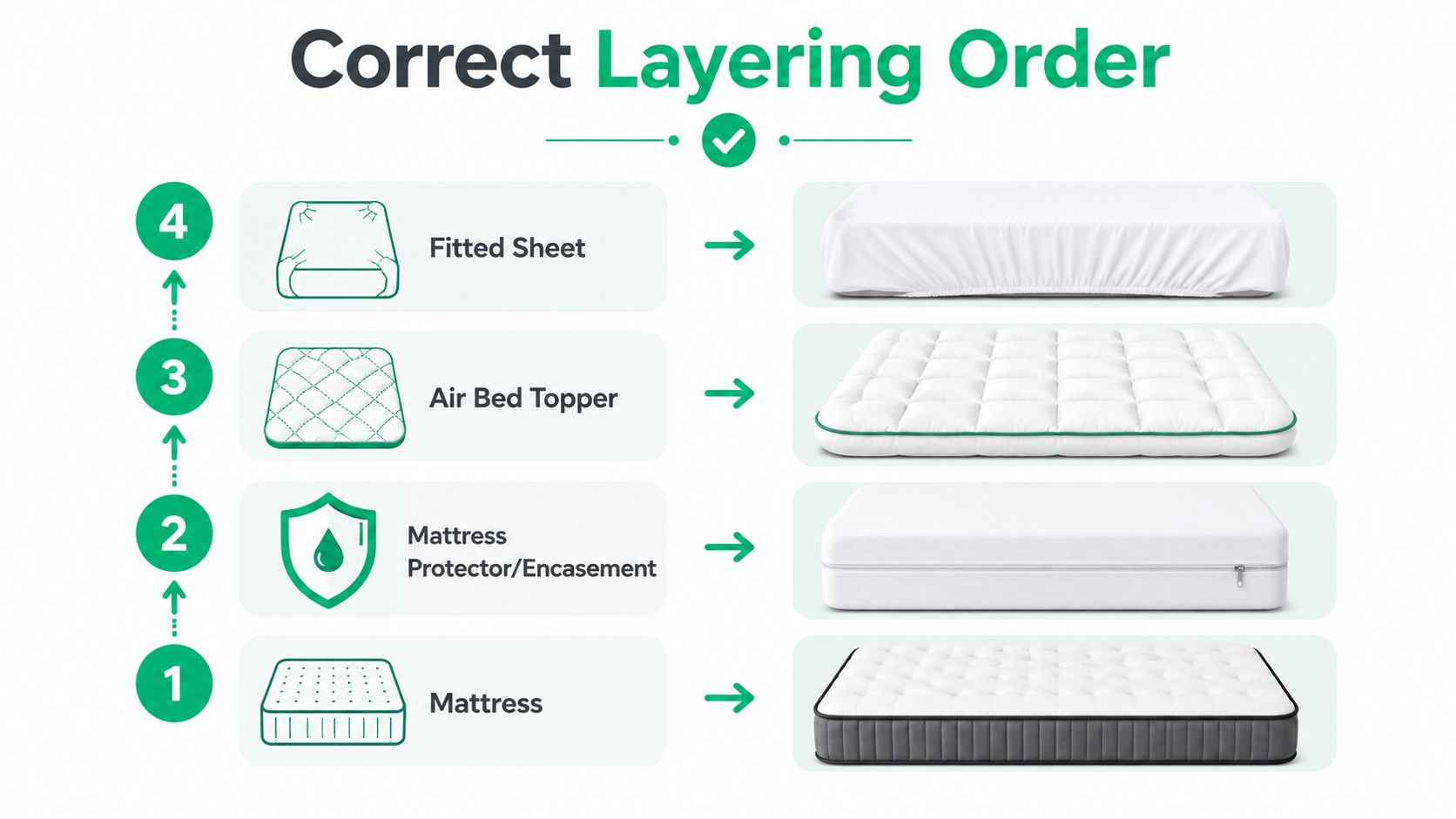
Keep each barrier in its correct place
An encasement surrounds the full mattress, including its sides and usually the base area. It needs to fit the bare mattress depth, not the mattress plus topper. If you try to close it around the extra layer, the zip and seams can be strained, and the encasement may no longer sit as designed.
A mattress protector above the encasement provides another washable barrier for everyday moisture. The topper then changes the feel without being sealed inside the mattress encasement. If you want protection directly over the topper, choose a cover made for that purpose. A breathable, fitted protector can help shield the topper from sweat and spills without placing it inside a thick plastic enclosure that undermines airflow.
The difference between a mattress protector and a topper is important here. One protects the bed, while the other changes how the bed feels. They can work together, but they aren't interchangeable.
Check fit before the first night
Measure the mattress depth before ordering the protector, then measure the total height after adding the topper. Look for deep-pocket sheets with enough stretch and strong elastic. If the sheet is too shallow, it can pull the topper towards the corners or lift the protector underneath.
Bed bug protection also requires a routine, not just a product. UK council guidance recommends inspecting beds and sleeping areas, laundering bedding at 60°C, vacuuming mattresses and nearby furniture, and keeping the room as clear as possible during treatment. Lambeth Council's bed bug guidance shows why an encasement should support inspection and treatment work rather than be presented as a stand-alone answer.
Layering advice: Protect the mattress first, add comfort second, then protect the sleep surface you actually touch.
For wider guidance on how a protector can protect your mattress investment, focus on fit, breathability and washing instructions rather than just choosing the thickest barrier.
Caring for Your Topper Long Term
A topper needs regular care because it sits close to the sleeper and absorbs the moisture, oils and debris that bedding encounters. Start with a simple weekly airing. Pull back the sheet and leave the topper uncovered for around twenty to thirty minutes, allowing the surface to release trapped moisture before remaking the bed.
Dust-mite conditions can persist when bedding is washed infrequently or at lower temperatures. Allergy UK-linked research reported that 16% of people wash bed linen every three weeks or less, while 58% wash bedding at only 30 or 40 degrees, conditions that can allow mites to persist. The UK bedding and dust-mite research makes a washable protector and sensible airing routine particularly relevant for allergy-conscious households.
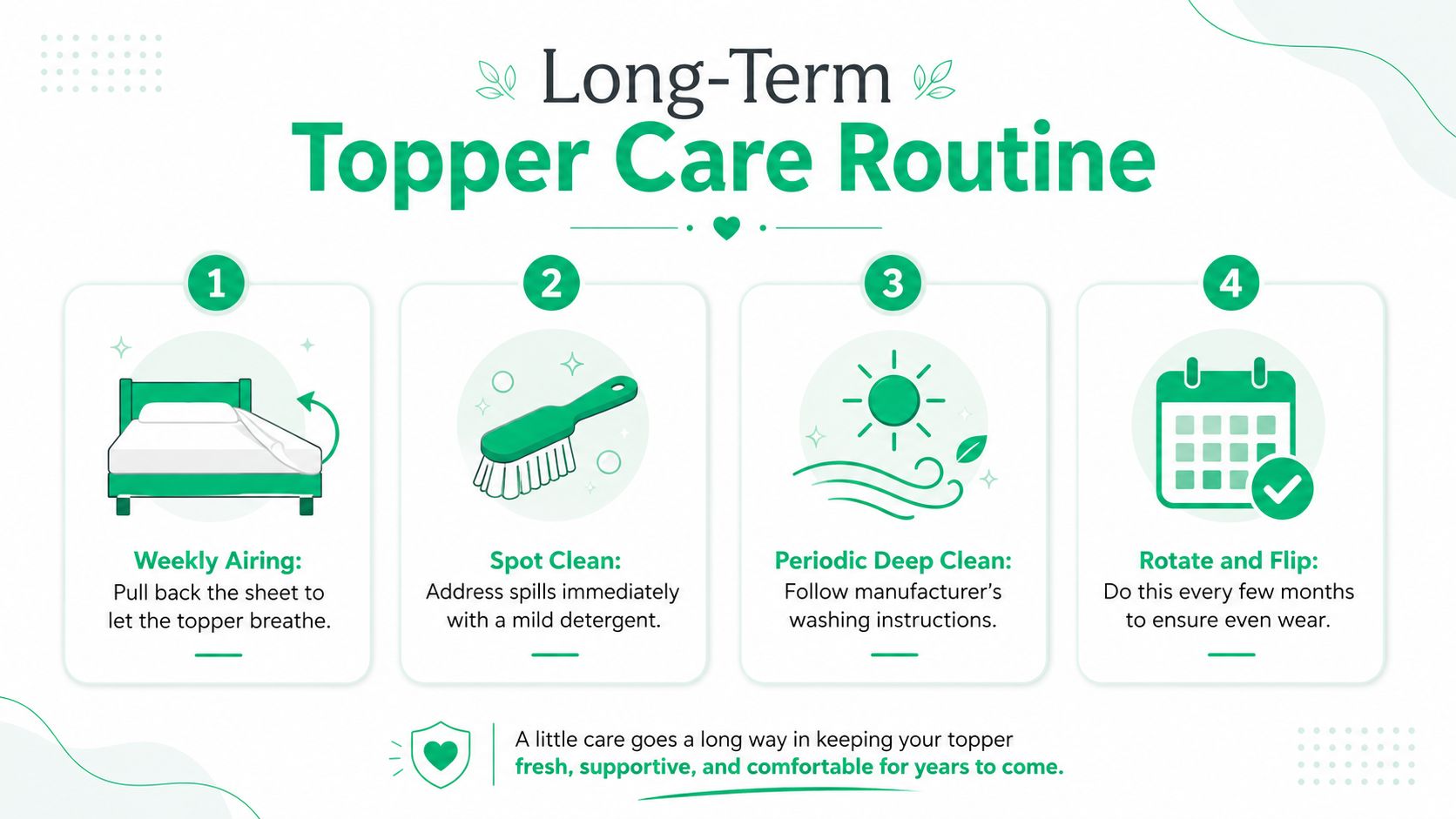
A practical maintenance rhythm
- Vacuum gently: Use an upholstery attachment from time to time to lift surface dust and skin flakes. Avoid aggressive suction on delicate covers or loose fills.
- Treat marks early: Blot spills with cold water and a mild detergent. Don't soak foam, latex or dense fillings unless the manufacturer explicitly allows it.
- Read the care label: Some removable covers can go in a domestic machine, while many foam and latex cores cannot. Never assume a topper is washable because its cover is.
- Turn the layer: Rotate it head-to-foot periodically if the design allows. This spreads repeated loading and can reduce uneven wear.
- Inspect the protector: Look for loose seams, broken elastic or a damaged waterproof layer. Replace a protector when it no longer fits or performs its protective role.
Store the topper flat or in the position recommended by its maker. Folding a material that should remain flat can create permanent creases, while compressing some foams for too long can change their response. Keep the care routine matched to the actual fill, not to general bedding advice.
Common Misconceptions Worth Clearing Up
Myth one, thicker always means better. A deeper topper can provide more cushioning, but it also changes the height and balance of the bed. If the mattress already has enough support, excessive softness may make the surface feel unstable, reduce ease of movement or make the sheet and protector harder to fit.
Myth two, the topper prevents dust mites. A topper doesn't automatically create a dust-mite barrier. Research linked to Allergy UK found that the bedroom is a common problem area for indoor allergy sufferers and that mites can persist under everyday washing conditions. The practical answer is a washable, well-fitted barrier and a care routine, not reliance on the comfort layer alone.
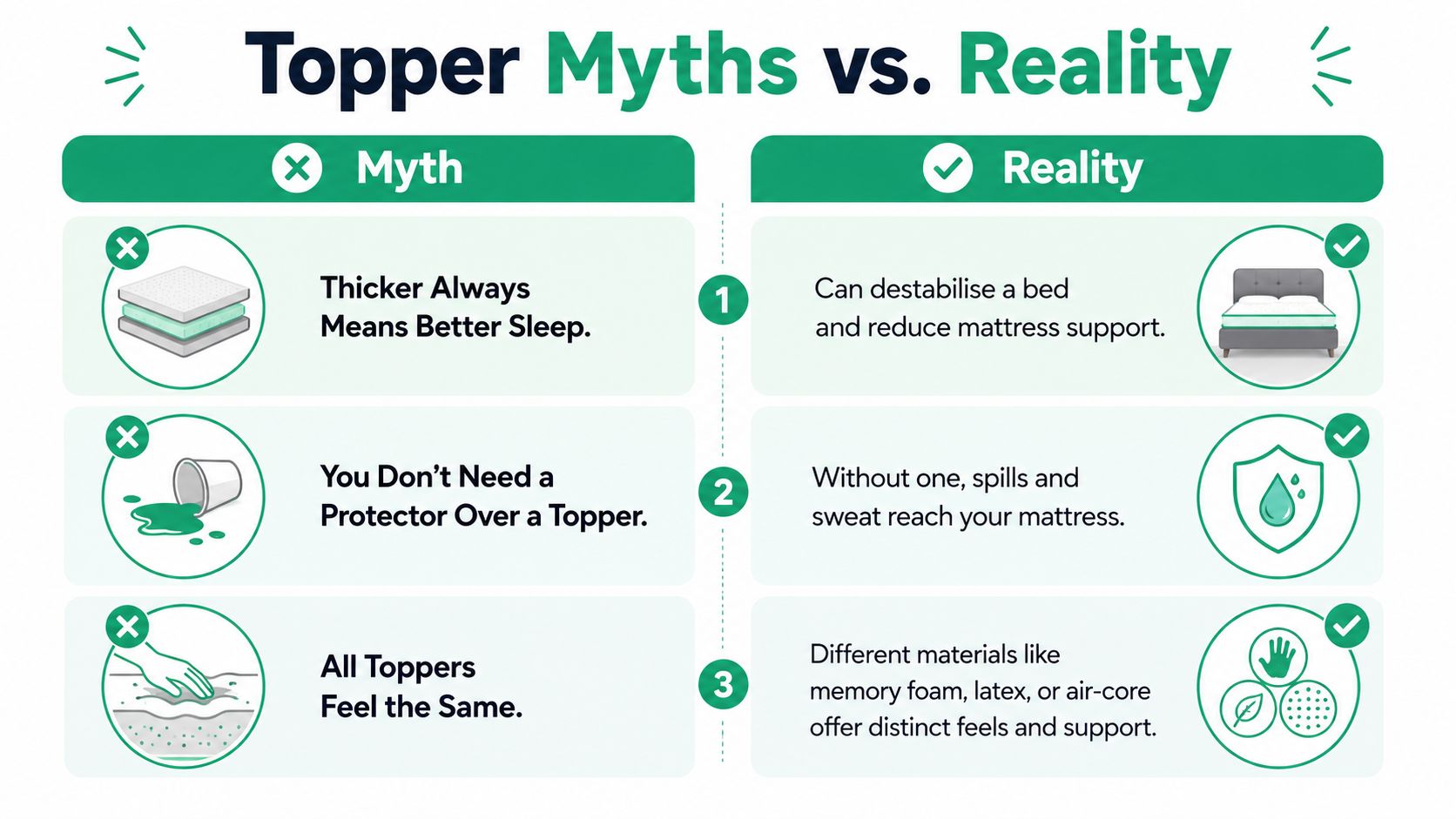
Protection needs more than surface padding
Myth three, a topper stops bed bugs. It doesn't. Bed bugs can remain a serious practical concern in homes, rented accommodation and hospitality settings. A major review describes bed bugs as widespread in early twentieth-century UK housing and records the creation of a Royal Commission on Bed Bugs in the early 1930s. More recent UK pest-control reporting cited a 65% increase in infestations between Q2 2022 and Q2 2023, while later reporting said confirmed activity rose by an average of 44% year-on-year between 2023 and 2025. The UK bed bug review and reporting supports using physical barriers as part of a broader prevention and treatment approach.
Myth four, a topper fixes a sagging mattress. It may make the dip less obvious, but the underlying support remains damaged. A topper is better suited to adjusting a basically sound mattress than compensating for a structural defect.
Myth five, all toppers feel alike. Fibre, latex, memory foam and air-responsive constructions behave differently. Some feel springy, some contour closely and some provide a more floating surface. Compare the material, cover, care instructions and movement control rather than shopping by the word “topper” alone.
Choosing the Right Setup for Your Bed
Bring the decision down to five checks: sleeper, mattress, temperature, protection and care setting. Each answer narrows the type of topper that makes sense.
- Identify the sleeper's main problem. Is the mattress too firm, too warm or uncomfortable at the shoulders and hips? One defined problem is easier to solve than a vague wish for “better sleep”.
- Assess the mattress. Keep a topper in consideration if the mattress is level and structurally sound. Replace the mattress rather than layering over a pronounced hollow or damaged support.
- Choose the material around the room. Hot sleepers may prefer breathable fibre, latex or ventilated foam. Someone seeking more contouring may accept a denser foam feel if temperature isn't the main concern.
- Plan the protection underneath. Put the encasement on the bare mattress, add the mattress protector, place the topper above it and finish with a suitable topper protector and fitted sheet.
- Measure before ordering. Check mattress width, length and depth, then calculate the final height after adding the topper and protectors. Guidance on how to measure mattress depth is useful when checking sheet and encasement compatibility.
Match the configuration to the room
A side sleeper in a warm bedroom who also needs allergen control might favour a medium-soft, breathable topper, a washable cover and a properly fitted mattress barrier beneath it. The priority is balanced cushioning and airflow, not maximum thickness.
A guest room generally benefits from a simpler, lower-profile construction that's easy to lift, air and store. A care bed needs a more careful assessment of pressure redistribution, stability, cleaning access and the requirements of the person using it. The pressure-management evidence discussed earlier shows why the topper's structure can matter, but product choice should still follow individual clinical or care guidance where relevant.
For more help comparing temperature-related mattress features, use this cooling mattress guide as a general reference. Spend on the core material and a washable protector before paying extra for decorative quilting or unnecessary height. A cheap, unstable topper over a poor mattress rarely offers good value.
Protect-A-Bed offers UK mattress protectors, pillow protectors and bed bug encasements, including breathable waterproof options designed to sit within a layered bedding system. Visit Protect-A-Bed to compare protection options and choose the barrier that fits your topper, mattress and household routine.